While everyone is pretending to count down the minutes until the academy awards (I’m not convinced that most people care as much as they let on), we’ve declared February to be TCM Essentials Month, catching up on past Essentials (and yes, oscar winners) that we’ve missed. There’s nothing more essential than The Apartment, which is on every list of great American films made since it came out. Unsurprisingly, we both loved it (much better than Avanti!, that’s for sure).

Jack Lemmon works at an insurance company where all the executives are terrible connivers, cheating on their wives with floozies and office girls they bring to Lemmon’s apartment in exchange for the promise of promotions. He does a good job fitting in, pretending to be a selfish skirt-chasing careerist himself, even outside the office with his neighbors, but ultimately he’s too nice a guy. He’s got a crush on Shirley MacLaine (doing well for herself five years after Artists & Models), a sweet elevator operator who happens to be carrying on a long-term affair with big boss Fred MacMurray (weirdly in the midst of starring in family-friendly Disney films). It all goes wrong, Shirley attempts suicide in Lemmon’s apartment, and he (with his doctor/neighbor) nurses her back to health. All very intense and dark for what’s supposed to be a comedy.

I enjoyed a small Tashlinesque attack on television, as Lemmon tries to watch Grand Hotel on TV only to be put off by the constant commercials.

TCM sez:

Billy Wilder created in The Apartment what many consider the summation of all he had done on screen up to that point. He was the master of a type of bittersweet comedy that had a sadness and a barbed commentary of modern life at its core. … With this film, he managed to make a commercially successful entertainment that, for all its laughter and romance, took a serious stab at the prevailing attitudes and way of life of a country where getting ahead in business had become the greatest measure of personal success.

Won best picture, writing and directing, all for Wilder who did it all himself, but lost the acting awards for Lemmon, MacLaine and Jack Kruschen who played the neighbor/doctor. The writing especially was pretty wonderful, my favorite dialogue of any Wilder movie so far. Also did not win for its glorious b/w widescreen cinematography, which surprised me until I found out a Jack Cardiff movie won instead.

Romantic comedy. Ashton Kutcher is perfect in every way, and Natalie Portman is perfect except for very minor psychological issues. Each has a promising career, a close family and a few supportive friends. Together they form a perfect couple, having excellent sex (hooray for the R-rating) and fall in love. Will she overcome her minor psychological issues in time, or will she lose Kutcher between a valentine’s day fight and her sister’s wedding? I’m not telling!

Embarrassingly it’s the third Ashton Kutcher movie I’ve seen in theaters, but not the worst. In fact, after the first twenty minutes of sex comedy was followed by a half hour of unexciting relationship discussions I started paying attention to my nerdy film details instead of the dialogue, and found it to be a pretty well-made movie. No horribly looped dialogue (until the penultimate line), no jaunty music or ever-gliding camera turning it into a glossy music video.

Reitman cast his ol’ Dave costar Kevin Kline as Kutcher’s dad, trying to stay young by taking the latest drugs and sleeping with his son’s latest girlfriends. Can’t remember a disguised Cary Elwes having any lines at all, and I’m not sure whish one was Greta Gerwig of Baghead and LOL.

When someone in the film world dies I don’t always run out and watch one of their movies – only when it’s someone meaningful to me, like Claude Chabrol, Dennis Hopper and Eric Rohmer. I once considered holding a monthly “death of cinema” screening, inviting people over to watch the work of whoever had died that month (there’s always someone), but as with all my plans to watch movies in groups, it fell through – nobody liked Rohmer’s final film, so Katy suggested I not do that anymore. But Maria Schneider warrants a memorial screening because she starred in one of the few Jacques Rivette films I haven’t yet seen, and I happen to have a nice subtitled copy of it handy.

Maria Schneider at dinner:

Schneider was allegedly exploited in Last Tango in Paris, backed out of Caligula, fired from That Obscure Object of Desire, and not up to the task of leading a Rivette picture, which probably explains her replacement in certain sequences by a different actress. But she’s still revered for her part in The Passenger and for being so naked in the early 70’s. This was actually Schneider’s second movie titled Merry-Go-Round – the first was in 1973, a (West) German remake of La Ronde.

Schneider’s costar is Warhol actor Joe Dallesandro, the houseboy/lover in Blood For Dracula. Yes, this is weird casting for a Rivette movie. But production-wise we’re in familiar territory, with the Out 1/Duelle team of Schiffman, de Gregorio, Tchalgadjieff and Lubtchansky (X2). By the end we’ve got triple-cross conspiracies, psychics, secret weapons, assassinations and meetings in the park, so the Rivette touchstones are all there. It’s also surprisingly good-looking (if not up to Duelle/Noroit standards) for such a reputedly troubled film.

Joe and Maria:

The story goes that Maria’s father is presumed dead and some four million dollars left in his care are unaccounted for. Maria’s elusive sister Liz (Danièle Gegauff, a producer on Out 1 and star of a single Chabrol film) summons Maria and Joe (Liz’s boyfriend) but fails to show up herself, so these two meet and go on an adventure together. Liz shows up briefly, along with a bunch more characters, each of whom want to help either Maria or her possibly-alive father, or more likely, want a share of the money. Most suspicious is Shirley (Sylvie Matton, whose husband directed her and Udo Kier in his adult horror Spermula), who is possibly either Liz’s best friend, the father’s ex-lover, Joe’s sister or none of the above,

Maria’s sister Liz with Suspicious Shirley:

The movie seems to fits neatly in the Rivette filmography, with on-camera musicians like predecessor Duelle, and a couple of characters chasing around the country trying to solve a possibly imagined mystery a la follow-up Pont du Nord. But there are some wrinkles. The grasp on the mystery is soon lost and Joe and Maria ramble, their relationship growing increasingly unpleasant, then the plot returns with a puzzling vengeance in the last half hour. Plus there are unexplained fantasy scenes, with Joe and a suspiciously Maria-like girl (played by Hermine Karagheuz, Marie in Out 1) chasing each other through forests and deserts, with appearances by snakes, rifles and a mounted armored knight.

Marie/Karagheuz:

Jean-Francois Stevenin (“Max” in Le Pont du Nord) is in an early scene with the two sisters, and seems to kidnap Liz (cue Walter: “the girl kidnapped herself”). Seemingly trustworthy lawyer-type Renée (Francoise Prevost of Vadim’s segment in Spirits of the Dead) and the mysterious Shirley put our duo up to collecting the key and combination/location of the father’s safe in order to retrieve the money (this is never done, as far as I could tell). Psychic Mr. Danvers (Maurice Garrel, Philippe Garrel’s father, played Emmanuelle Devos’s dying father in Kings and Queen, also amusingly in a movie called Noli Me Tangere) pretends to be the post-plastic-surgery father of the sisters. Liz is rescued (or “rescued”, depending if we believe Walter) by Maria with Renée’s associate Jerome (Michel Berto, Honeymoon in Out 1, also in a Robbe-Grillet film) armed only with a pipe. In the end it either all goes wrong, or all goes according to plan, as Liz is shot by a sniper and Maria unloads a pistol into poor Mr. Danvers.

Mr. Danvers, we hardly knew thee

Whenever the movie just doesn’t know where to go, it cuts to either the live musicians or the fantasy scenes. I wasn’t sure what to make of them, but they grew on me. I liked the bass-and-clarinet soundtrack, the colorful, mobile cinematography. The physical action, fist-fighting and such, were pretty inept, especially coming right after Duelle starring the sprightly Jean Babilée. Movie was made to fulfill contractual obligations after the collapse of the proposed four-part series that yielded Duelle and Noroit, but then was a huge failure itself, so I’ll bet the exec producers wished they’d just left Rivette alone.

The musicians: Barre Phillips at left worked on the Naked Lunch soundtrack with Ornette Coleman, and John Surman at right has put out 20+ albums and hopefully changed his hairstyle:

Cinema-Talk:

It just has the right amount of disregard for plot that nothing seems remotely forced. This is almost unheard of in Rivette’s world. For as great as his other films are, they (almost) all seemed to be dragged down by unnecessary elements that were thrown in at the last minute. Here, everything is so completely natural (one cannot stress this enough!) that the 150-minute running time feels fairly short.

The two sisters, plus friendly assistant Jerome:

Rivette:

We started work with the two actors, and after 8 days, things were going very badly. It was like a machine that, once set in motion, must continue running despite changing regimes, forced or arbitrary accelerations, until the energy was all burned up, exhausted. That’s not at all how we filmed L’Amour fou, even if there too, the spectator feels he’s witnessing an encounter. … It’s an exaggeration to say that we placed Maria and Joe together in front of the camera and waited to see what would happen. We had a starting point of course, and then we made up the beginning of a story, with a father who had disappeared, but all along we told ourselves, this is just a pretext for Maria and Joe to get to know each other. I like that idea: two people get together because a third, who has arranged to meet them, does not show up. There have no choice but to get to know each other. It’s a situation I imagined in the context of the Resistance. Thinking about it again later, I think it was the subject of Robert Hossein’s Nuit des espions. And since I didn’t feel like making a film about the Resistance or the terrorist underground, it became that more banal situation, two people convoked by a third who is only the sister of the one and the girlfriend of the other. But since the relationship between Maria and Joe rapidly became hostile, we were forced to develop the story-line; from a mere pretext it took on a disproportionate importance. Maybe that gives the film a certain vagabond charm, I don’t know, but it really is a film with a first half-hour that’s quite coherent, and then it searches for itself three times, three times searches for a way out.”

Renée:

E. Howard:

The bulk of the film consists of Ben and Léo wandering around the French countryside, ostensibly searching for clues to Elisabeth’s disappearance or the safe combination needed to get their hands on the missing money. What they actually do is mope around a lot, wander through abandoned houses, and joke and fight and patter, improvising goofy bits like the one where Ben mocks the conspiratorial obsession with the number three by counting off increasingly lengthy numbers consisting entirely of threes. In the film’s best scene, the duo takes a break for dinner at an abandoned house whose refrigerator is improbably well-stocked: they crack open cans of sardines and make salads and drink the juice from jars of cherries, sitting across from one another at a long table with candelabras in the center. Léo jokes that it’s a bourgeois meal, and the two of them have fun playing hide and seek from behind the candle flames, and soon the conversation turns into a lighthearted seduction where it’s obvious that the actors are having as much fun as the characters.

Our heroes, looking tired and frumpy in the morning light:

Rivette again:

I like a film to be an adventure: for those who make it, and for those who see it. The adventure of this filming, I must admit, was a bit fitful: the course which was established at the outset was corrected many times, in response to contrary winds, lulls, or gentle breezes. I only hope that the finished film, with all its detours, keeps something of the dangers of the crossing, of its uncertainties, of its unclouded moments-even if, at the end, one notices that perhaps the voyage has been circular: like a “merry-go-round.”

“We, the Futori family, are the oldest family on the island. In recent years, our transgressions have caused trouble on the island, therefore, I now promise the gods that the Futori family will never go out to sea, and I will keep Nekichi in shackles. We will topple the rock and restore the paddy fields of the gods. Once we have made good our promises, please let us associate with the islanders again, please let us go out to sea again, and please let us participate in the Dongama Festival.”

What island? A primitive place, owned by Japan but left largely untouched until now, when industry is trying to creep in. What rock? The massive one desposited on the fields behind the Futoris’ house by a tidal wave. What transgressions? Nekichi slept with his own daughter because her husband wouldn’t, impregnated her, and even worse as far as the islanders are concerned, he was caught fishing with dynamite.

Nekichi with his father:

I actually lost track of how everybody was related – I know, an unforgivable crime in a family/incest film such as this. But I think I figured it out again. Grandpa Futori has two children, the chained Nekichi (Rentaro Mikuni, lead actor in the first segment of Kwaidan) and island priestess Uma (Yasuko Matsui, who runs the inn of In the Realm of the Senses).

Uma and Kametaro:

Nekichi’s father might also be his grandfather, and Nek’s two kids are the straightforward Kametaro (Choichiro Kawarazaki of Kurosawa’s Rhapsody In August) and retarded Toriko (Hideko Okiyama of Kurosawa’s Dodes’ka-den)

Things look up for the family when Ryu from the local sugar factory (Yoshi Kato of Double Suicide) hires Kametaro as assistant to a visiting engineer. But the engineer falls to the same fate as previous engineers, getting caught up in island life and derailed by sabotage (perpetuated in part by Nekichi, who slips out of his chains regularly). He also gets himself into an affair with daughter Toriko, whose heart is eventually broken when the engineer is sent away and replaced by a team that finally gets the work done.

Toriko makes a dream appearance before Kametaro’s train:

Nekichi, meanwhile, is having an affair with his own sister. They murder Ryu and escape by boat during the festival. Kametaro has finally been allowed to join, which means he must also join the search party that rows out to sea, bludgeoning his father to death and leaving his aunt tied to the mast.

What plot description and screenshots can’t convey is how awesome is this movie, a real masterpiece. It just maybe feels a tiny bit long at three hours, but comes together so well at the end, and is lovely to watch. Peppered with closeups of wildlife, like a more grotesque version of the Thin Red Line cutaways (or more relevantly, a less rampantly indulgent version of A Tale of Africa)

G. Kenny:

Every shot in Imamura’s film (which was lensed by Masao Tochizawa) is a feast of often-golden light. The film is set on the sun-drenched fictional island of Kurage (actually Okinawa, of which the fictional construct is merely a thinly disguised version), and the light here functions as a character, as does the water and all the other natural elements that surround the characters. The film’s narrative is nearly three hours of quintessentially Imamurian insanity, wryness, wisdom and acute anthropological observation.

Our narrator/storyteller:

J. Sharp:

By all accounts, Imamura found himself similarly seduced during the production process, embracing island life with a verve that saw the original shooting schedule expand from six to eighteen months, and the budget snowball accordingly. The film’s resulting commercial flop saw Imamura retreat from fiction filmmaking into television documentary for almost ten years, while the studio that financed it, Nikkatsu, migrated away from such ambitious projects to the low-cost/high-impact world of sex film production with the launch of its Roman Porno line in 1971.

The thin line that exists between man and beast remained a salient point of Imamura’s worldview throughout his career, notably in The Insect Woman, his first collaboration with the surrealist scriptwriter Keiji Hasebe … but seldom has man’s precarious position in the natural order of things been so scintillatingly evoked as here.

Apparently the dirty, ugly unpleasantness of American 70’s cinema made it to Japan. This is basically Shaft as a samurai flick, more icky and less funny than Black Dynamite.

Why did I watch this? One summer at the beach I read an article by Jonathan Rosenbaum about Japanese filmmaker Yasuzo Masumura. I was impressed that so many essential films were made by someone I’d never heard of, so I sought them out when I got home – enjoyed his Afraid to Die and Blind Beast but I didn’t try very hard to find more, got distracted by other things, until I saw his name on this box set of filthy samurai cop films. Years later I am finally watching the first in the trilogy, which is not by Masumura but Kenji Misumi, director of some Zatoichi and Lone Wolf & Cub movies. So this is a bad movie watched in preparation for a bad sequel by a recommended director. Auteurism at work.

Hanzo is played by Zatoichi himself, Shintarô Katsu, also of The Loyal 47 Ronin. The 40-year-old actor’s speed and agility are unimpressive, but he can put on spiked metal knuckles and punch a dude’s eyes out. Hanzo’s main weapon is his cock (“You’re so virile,” exclaims a witness he is raping). Hanzo is so good that the girls give up information not when he threatens to rape them, but when he threatens to STOP raping them. And yes, it’s “them,” because the movie ran out of ideas so it used that one two or three times.

The uncorruptible Hanzo takes on his corrupt boss (Kô Nishimura), the escaped Killer Kanbei, and some sad little girl’s dad who is dying from stomach cancer. In the end, having wreaked some major vengeance upon the criminal justice system and raped every woman in sight (because females don’t deserve justice), he hangs the dad, then his theme song plays and it’s over.

I liked some of the stylish transitions and split-screen and backdrops anyway. IMDB isn’t being cooperative with character names, so I’m not sure exactly who fought whom or who got raped when, but I’m sure all lingering questions will be answered in the sequel.

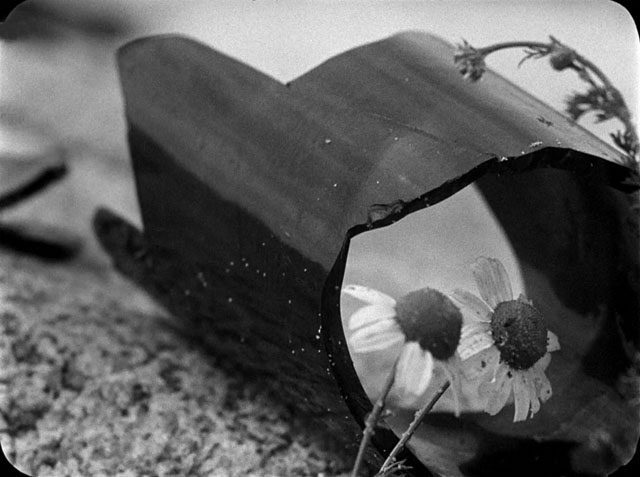
When I realized there is a movie called Finis Terrae from 1929 and another called Finisterrae from eighty years later, I set out to watch them both. Sometimes it’s as simple as that. The latin phrase means “ends of the earth.” There’s a place in Spain (where the 2010 film is set) called Finisterra, and a university in Chile called Finis Terrae (how wonderful), but this Epstein film was set on Ouessant, a small island off the coast of France (today home to an airline called Finistair), and on the even smaller island of Bannec. As the opening titles tell us, “on an island where winter storms wipe out all forms of life, four men come in two teams to spend the summer collecting seaweed in total isolation…”

A gorgeous film, made on location with nearly as many credited cinematographers (one of whom would later work on Vampyr and Hotel du Nord) as actors. Very simple story, a bit too poetically-paced at times, but it worked – I found it very affecting by the end. Apparently not much is known about the film on the web. I’ve seen it listed as a documentary – it’s clearly not, though Epstein seems to have cast local workers instead of film actors.

Strange that the team leaders look to be about sixteen, and their barely-named assistants are large middle-aged men with mustaches – why not the other way around? Ambroise, one of the two young men cuts himself on a broken bottle of liquor belonging to the other, Jean-Marie, causing both a grudge between the men and an infected sore on Ambroise’s finger that gets worse over the next few days, preventing him from working and finally threatening his life … “during a becalmed period making it impossible to cross the waters without the requisite wind in the sails. Cue a rescue mission launched from the mother island, Ouessant, to get them back to at least a semblance of civilisation.” (A. Fish)

D. Cairns:

When the sick boy starts to hallucinate, the movie almost oversteps its stylistic bounds by trying to evoke a state the audience is already in: Epstein snap-cuts a jangling montage of looming ECUs and what look like off-cuts and deleted scenes into an abstract nightmare that threatens to turn the whole experience into abstraction and dissonance, with no way out save the declaration of a cinematic Year Zero from which we can start afresh. Seriously, the movie feels like it was made tomorrow, or at any rate made in 1929 by time-travelers.

A. Fish again:

It would be Epstein’s parting glory; oh, other films would follow in its wake, but they weren’t worthy of him and he’d disappear, a fossil, a megalith one might say, of a silent era, not yet put out to pasture but with the fires not so much raging as flickering in the hearth. He wasn’t alone, one could add Gance, l’Herbier and de Gastyne to that list of exiles, yet his is a name that should stand tall in French film history, but instead often merits at best a paragraph in conventional histories.

Saw some screen shots from this movie and decided I must watch it immediately. Then I found out there are seemingly unrelated films named Finisterrae and Finis Terrae (“ends of the earth” in Latin) and decided I must watch them both. And they were both pretty spectacular, but I can’t pretend that I found any similarities beyond the titles.

Forest of ears:

Two ghosts (played by men wearing sheets) go on a journey. I did not like the high pitched noise produced by the forest of ears, but I liked every other single thing. There are Garrel references, spoken credits, very nice music by Jimi Tenor (also “Ghost Rider” by Suicide), a hippie joke, and it’s all super-quirky in a high-art-film sort of way. Seems like the kind of thing that’s made just for viewers like me, but could fall right on its face if not done perfectly, like that sad attempt at a cult movie, Buckaroo Banzai. But I fell for this one completely, and I’m not the only one; Rotterdam gave it an award a couple days after I watched it.

Cataluña:

Hippie:

The ghosts are Russian, and I think they’re in Cataluña – not sure where Chile and Germany fit in. One rides a horse (later, a wheelchair) and they meet other animal friends: deer, an owl and various stuffed creatures in a museum exhibit where they spend the night. Sometimes their horse turns into a mechanical puppet, and sometimes he is on fire.

It might all make sense in some way, be a huge metaphor for some Spanish thing or other, but I didn’t get any of that. I focused on the surreal fun of it all, the and the beautifully composed images by Caballero and d.p. Edward Grau (also of A Single Man, who at age 30 has made more indelible images than I ever will).

After the ghost thing fizzles out, there is a frog princess story, then a moose or reindeer walking through a fancy house, and back to the museum animals. I would watch this again right now if I supposed that anyone I know would sit through it.

A Jewish family drama called Home For Purim gets oscar buzz for three of its four lead performances. The distributor wants a hit so they tone down the Jewishness and rename it Home For Thanksgiving. Finally the nominations come out and only the fourth, buzzless actor gets nominated, the others returning to their low-profile pre-fame existence.

Seems like this would be a good framework story for some jokes. But Guest didn’t think so… he thought those were the jokes. He reads the above paragraph and he’s already laughing, so why add more jokes? So there’s a jokeless parade of good actors in minor roles. To be fair, I laughed twice – at a sidetrack joke about bad breath and a bit of wordplay about Latin restaurants. Guest knows he’s good at gently skewering eccentric, mostly entertainment oriented subcultures, so after twenty-some years in the movie business (and with ringer cast member Ricky Gervais) I’d have hoped he could make a Hollywood satire with some bite, at least enough to rival Mamet’s State and Main.

Besides Ricky, I was glad to see Catherine O’Hara and Parker Posey as the rival stars, Harry Shearer as their good-natured co-lead, clueless rich producer Jennifer Coolidge, a lezzed-up Rachael Harris, regulars Michael McKean and Bob Balaban as the writers, 30 Rock‘s Scott Adsit in a small role on set, and especially Fred Willard and Jane Lynch (above) as co-hosts of an obnoxious TV morning show.

The kind of movie that I appreciate more after watching it than during. Having read nothing about it beforehand, I spent much of the runtime wondering why P&P made a wartime movie about three strangers casually hanging out in a small country town near Canterbury, trying to solve the mystery of a man who throws glue in girls’ hair. Not that I minded, since it moves along at a fair pace and is lovely to look at, but as it was ending I finally realized it’s another kind of propaganda movie, better and more subtle than 49th Parallel, perhaps with a similar emotional development to The Life and Death of Colonel Blimp (though it’s been a while since I’ve seen that one).

Of course, “more subtle than 49th Parallel” doesn’t mean it was a subtle movie, and I have a caveat about the pacing, too: John Sweet as Bob Johnson (not a film actor, but an actual U.S. army sergeant) delivers his lines with such cowboy cadence, I felt like I could’ve watched a whole other movie during the gaps between words.

On Bob’s way to Canterbury, a proper city with cathedrals and stuff, he gets waylaid in a small town, and a fellow traveler, here to relive a vacation she spent with her presumed-dead soldier fiancee, gets attacked by the glue man. To solve the mystery, the girl (Sheila Sim of Pandora and the Flying Dutchman) asks past glue victims in town for clues, Bob recruits the two warring armies of children (the film’s highlight, like a friendly Rome Open City) and their new British friend Peter (Dennis Price, who would return in Oh… Rosalinda!!) gets to know local historian Thomas Colpeper (Eric Portman of 49th Parallel and One of Our Aircraft is Missing). Colpeper turns out to be the glue man – of course, being the first-billed actor and the main personality about town – but the ‘why’ is more interesting than the ‘who.’ He’s trying to scare local girls from dating visiting soldiers while their own men are off at war. Colpeper has an all-around weird way of seeing things, maybe just too British for my understanding, but he’s not a bad fellow.

L-R: Bob, Sheila and Dennis

In the end our pilgrims make it to Canterbury and each receives a blessing: Bob finds out that his girl hasn’t been responding to his letters because she moved to Sydney, not because she’s leaving him. Dennis, a theater organist before the war, gets to play the Canterbury Cathedral organ. And Sheila finds out her man is still alive. I don’t know how to do the movie justice with my little plot descriptions – it was all very moving. Also notable for being the film that killed Margaret Mitchell. On her way to see it, she got run down by a drunk at Peachtree and 13th, a few miles from here.

P. Von Bagh:

A Canterbury Tale is about clues, not as in a detective story (although the search for the mysterious “glue man” almost qualifies it as one), but clues leading to what is most essential or, perhaps, the real “why we fight” of life: culture, landscape, history, the senses. These things are woven into a slight double narrative, simultaneously very rich and very absurd …

Why do we fight? This wartime question was given an impeccable, contemporary answer by the Frank Capra team, in the United States, and by the documentarian-poet Humphrey Jennings, in England. The Archers, though, were stretching the boundaries, as if reaching for another reality. The film seems to be strictly about the everyday, while at the same time dealing with things almost never touched upon in cinema. The immaterial made concrete by the camera work of Erwin Hillier. A wholly fantastic mise-en-scène by Powell, intriguing because he does exactly the same and more with “realist” and “documentary” material as with studio magic, and with a unique activation of human senses, made sacred through the purest means of cinema. And all this based on the strangest of scenarios, developed by the greatest writer of cinema (at least since F. W. Murnau’s Carl Mayer): Emeric Pressburger.

Eric Portman’s Colpeper can be ranked with another great Powell and Pressburger character, Anton Walbrook’s harsh/gentle impresario Boris Lermontov, in The Red Shoes (1948). Colpeper might expound his philosophy in a ruthless way, but he is certain that he is acting for the cause of Culture (as Lermontov does for the cause of Art), without compromise. For characters with such a twisted perception of the world, their fight can only be strange.

Shots below are from the prologue, which cuts forward hundreds of years, from a pilgrim watching his hunting falcon to a modern soldier watching a spitfire fighter, a possible influence on 2001: A Space Odyssey.