Judex (1963, Georges Franju)

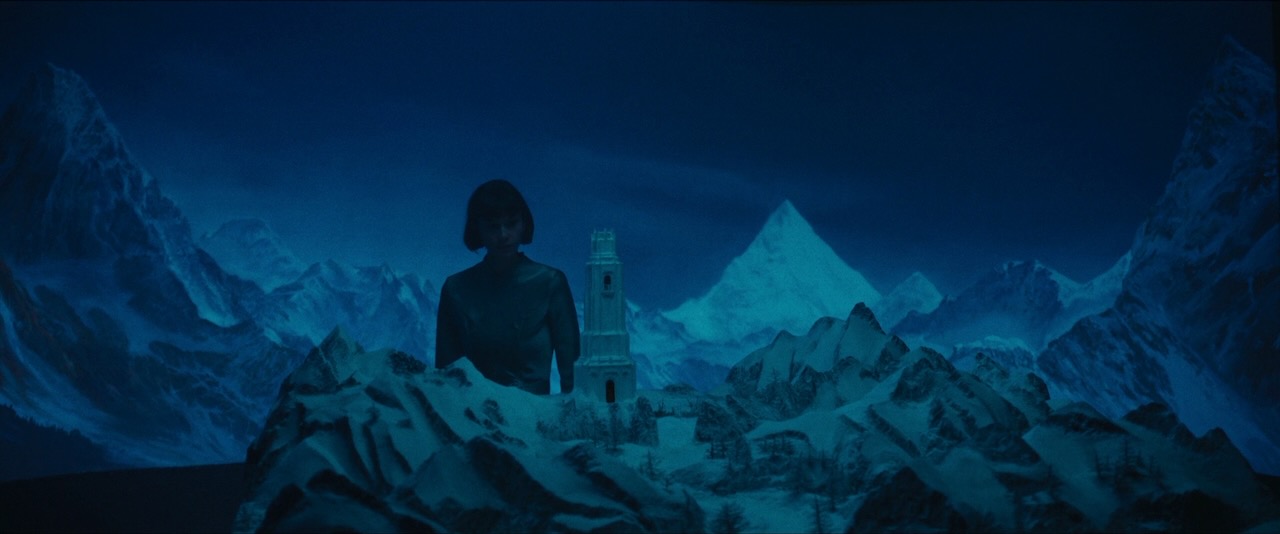
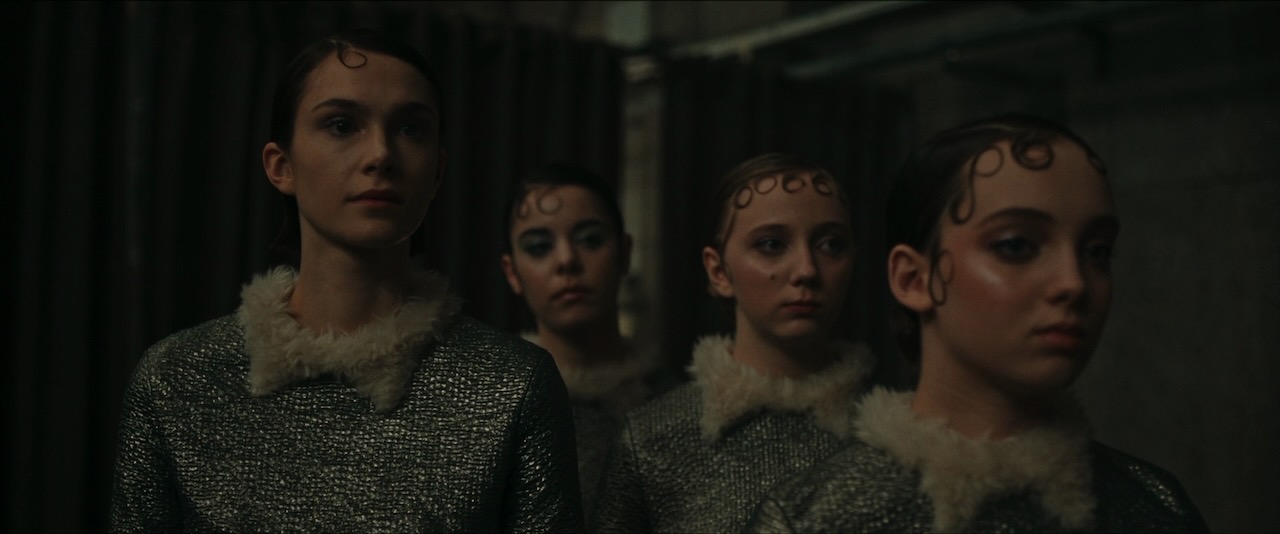
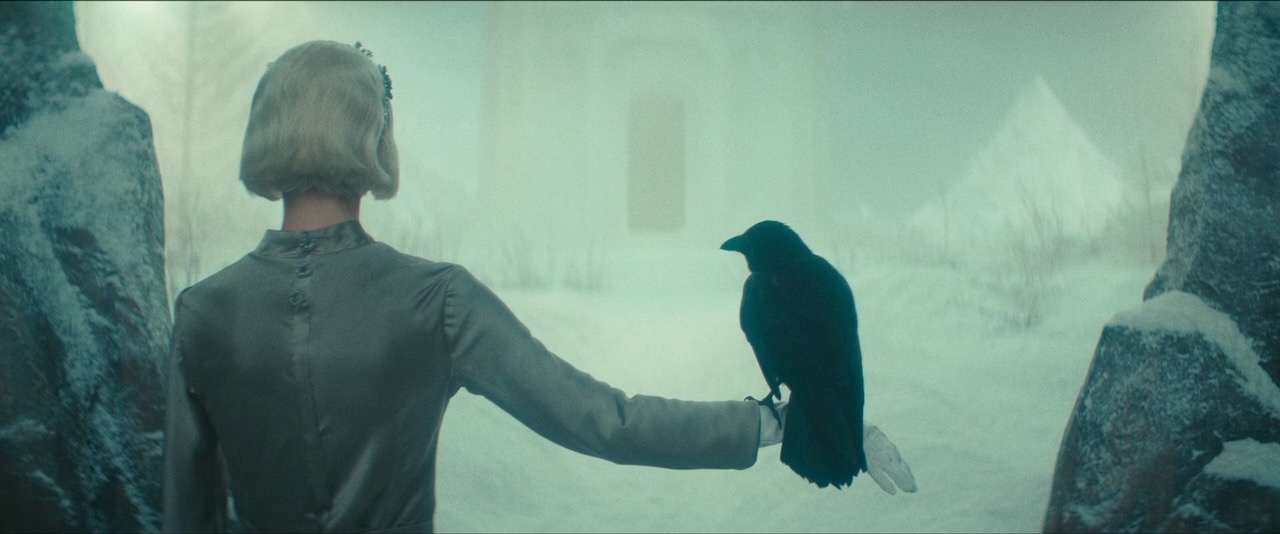
Don’t know why I assumed this was not a good movie. I’d seen screen captures from the DVD (some of the same ones I’ve got below) and somehow I still thought it was possible to make a bad movie using those images. It is not. This was astounding.

image

In a daring but successful shout-out to Feuillade, the story (set in 1910 or 20) is ridiculous. Plot threads do not weave together as in a tapestry of grand design. Each scene seems to have been thought up after the last one was finished filming. This is not a weakness, but adds to the movie’s dreamlike effect.

Master criminal Judex’s evil plans aren’t very broad-ranging in this story. He’s stalking rich guy Favraux acting as his servant, sends a letter demanding Favraux surrender half his fortune or he will die the next night. Next night at the costume ball (seen above), Favraux does die.

But he’s not dead! Imprisoned by Judex!

image

Daughter Jacqueline is left alone in the house!

image

She is easy prey for Marie, the swinding ex-governess of the house who returns to steal Favraux’s valuable papers and kidnaps Jac. when she interferes.

image

But Jac. is rescued by Judex’s dogs!

image

There’s a private eye named Cocantin (seen below reading Fantomas), originally hired by Favraux, and somehow still involved.

image

Can he stop Marie?!? Who can??

image

Judex!

image

Ha, not really. Marie has captured Jac again, has her tied up atop a building along with Marie’s accomplice, a man who found his long-lost father earlier after Favraux tried to have the father killed, but that’s another story. Highlight of the movie here, Cocantin is wondering how to get atop that building when a circus caravan rolls past. Why, it’s the circus of his old friend Daisy, an acrobat who easily climbs the building!

image

Rooftop fight! Marie grabs the gutter! Will she fall??

image

Yes!

image

I think the only actor I knew was Edith Scob as Jacqueline - just saw her as Mary in The Milky Way. Sylva Koscina (Daisy) was in some MST3K-approved Hercules films. Francine Bergé (Marie) was later in Mr. Klein, Rivette’s The Nun and Roger Vadim’s La Ronde remake. Channing Pollock (Judex) was a magician with only a few other film roles. René Génin (Pierre Kerjean) had appeared in Renoir and Carné films in the 30’s. This movie was co-written by Feuillade’s grandson, heh.

G. Gardner with Senses of Cinema:

Franju sought in particular to recapture Feuillade’s sense of documentary and his playfulness. He reproduced with as much exactitude as possible the costumes and settings which Feuillade filmed in scrupulous detail. Feuillade’s street-scapes are now an invaluable documentary record, but Franju also paid particular attention to reproducing the elaborate interior designs and furnishings of the day, resulting in settings of quite extraordinary detail and clutter. Franju also sought, despite the playfulness, to avoid any camp satire of these elements by over-emphasis or any special attention being paid to them.

In the title role, Franju pulled off his most brilliant coup by casting the master prestidigator of his day, near godlike in his handsomeness, Channing Pollock. Pollock’s skills as a magician were employed to produce a dazzling array of apparent magical occurrences involving, most particularly, disappearing doves, a plot device that Feuillade uses to enable the regular rescue of the heroine and others by Judex. Franju’s Judex is a far livelier, less sombre, more inventive and more mysterious character than that of Feuillade.

Tags: , , , , ,

Comments

Hidden In Plain Sight (2008, Mark Street)

World premiere of this doc, which will double-feature with Profit Motive and the Whispering Wind at Tribeca in a couple weeks, so I watched Profit Motive on video then ran out to see this one in the theater. Unfortunately, Hidden In Plain Sight was also on video, and looked considerably worse projected in the theater than Profit Motive looked on DVD on my laptop. Shot in 16mm and video (you can sometimes see interlacing, especially at the end), then the whole thing thrown into an ugly low-grade digital video mash. If this bothered the director (in attendance), he didn’t mention it, nor did he mention how the music seemed to skip every couple of seconds, so I have to assume these things were intentional. It’s a movie about looking and seeing. Street, somewhat pretentiously (and comparing himself to Godard and Vertov along the way) wants to teach us new ways to look at city scapes. Leaving the theater I was very happy that my city was full of natural light and color, non-interlaced, without any of the dull ambient music (seemingly ripped from last night’s “experimental” shorts) that plagued Hidden.

Street visits Dakar, Santiago, Marseilles and Hanoi, stands on street corners and films stuff. Just whatever. Then there’ll be some black and an intertitle with a quote or an organizational header, then more street corners. Sometimes sync sound, sometimes sound from elsewhere or ambient music or silence. I was content to be bored for the hour, but Street lost some goodwill when he talked some crap about how he enjoyed seeing San Francisco disfigured by the 1989 earthquake… then lost more when he tried to make a point about tourists seeing a wide view of the city, and locals seeing more narrowly, observing finer details. It’s actually a fine point, but he is a tourist, and his street-corner tourist-gaze is far from a local’s view of the city. Shooting stuff that tourists aren’t expected to shoot (walls, locals walking around, more walls) does not make one a local and I resent his attempt to educate the audience and show us “unique perspectives” via banal images. Gianvito’s Profit Motive (or Marker’s Sans Soleil, or Vertov’s Man with the Movie Camera, or Akerman’s From the Other Side) this ain’t.

Tags: , , , , ,

Comments

Experimental Shorts 2008

Program kinda sucked this year. Feels like I spent enough time on it already, so not gonna spend too much more writing about it. I’m sure each film felt “experimental” to its creator, but there was nothing here we hadn’t seen before. Also with few exceptions people feel the need to accompany their “experimental” images with “abstract” blippy swimmy music, ugh. Also also, forget any references to “film” below, since everything but “Shake Off” was on video (and “Shake Off” either originated on HD or at least had mostly digital components). Why can’t everyone call ‘em “movies” like I do? All quotes are from the film festival booklet, with their queer use of commas intact.

Doxology (Michael Langan)
“An experimental comedy…” Cute. Tennis balls and automobiles and vegetables defy space and time - funny and not overlong. Probably would’ve been my favorite here, but the picture was fucked and distorted, stretched out much wider than it should have been. Thanks, AFF365/Landmark.

Such As It Is (Walter Ungerer)
“The film is divided into four parts and four themes: the underground in the city; above ground in the city; a field in the country; and fog and the ocean. Each theme has its separate identity, yet they are not separate. Through manipulation and abstraction of imagery the four parts are joined, as the land, and the air, and the oceans are joined by the earth.” Besides the over-use of commas at the end there, this description is far better than the film it describes. The interminable subway bit, tiny flicks of reflected light turned into digital noise on an ugly gray glowing background, seemed suddenly less crappy in comparison when I saw a cityscape turned into spinning 3D cubes within cubes. What did they mean by the title? How is it? This was the first of a bunch of ugly video-projected shorts (from digibeta or dvd?). I do a bit of quality-control on our video deliveries at work, and I never would’ve allowed this thing to go out with all the banding issues it had. Go check your After Effects settings, re-render in 16-bit and bring it back to me later.

A Convolution of Imagined Histories (Micah Stansell)
“The film is comprised of four chapters, telling four separate stories that make up a meta-narrative. The works are the result of imagining the visual track to the story of someone else’s memories.” One of those short films where a narrator talks about shit their parents did when they were young or before they were born, like The Moon and the Son but with less animation and more overlapping sounds and video and slow/fast effects… anything to make it seem interesting (which it was, but only barely). Director in attendance seemed a nice enough guy. Talks not about “filmmaking” but “compositing”. Experimental Short Composites would be a more honest name for the program.

Dear Bill Gates (Sarah J. Christman)
“A poetic visual essay exploring the ownership of our visual history and culture.” Thought I was in trouble when the voiceover said “40,000 years ago…” but it was well-done, with deep storage of photos in old mines subliminally connected with “data-mining” and the mining of our memories. The longest of the shorts, and interesting enough to justify its runtime.

Passage (Peter Byrne)
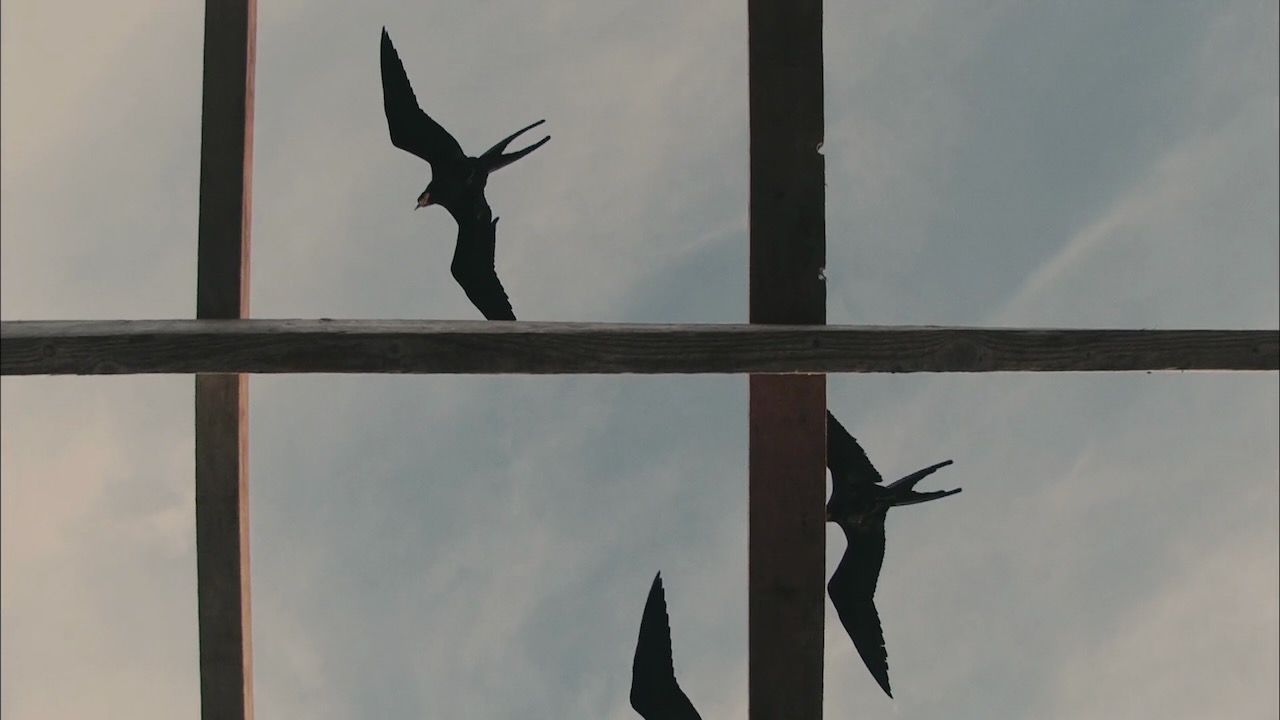
“A reflection on the peripheral… this work visually catches sight of experience, as it moves past.” Notes I took in the theater read: “flickering, fluttering digital colored mess overlapped w/ blurry video of birds w/ sucky jangly music. These all have crappy music. I can hear yawning.” Film festival directors: I am available to write blurbs for your shorts programs!

Office Mobius (Seung Hyung Lee)
“An abstract story…” I didn’t find it abstract at all. Kinda cute buncha office collisions, with one character who got laughter whenever he’s on screen - a star in the making. My notes say “butt-ugly digi credit titles.” Letterboxed within the 1.33:1 projector frame within the 1.85 movie screen.

24 Frames Per Day (Sonali Gulati)
“The film raises important questions around immigration, cultural stereotypes, and the meaning of home from a transnational perspective.” Bunch of field recordings interspersed with a fake-sounding conversation (perhaps based on a real one) between director and “cab driver”. The stop-motion visuals of a hallway manage to be less interesting than the soundtrack. They say it was shot 24fpd over nine months, but La Region Centrale (or even 37/78 Tree Again) this ain’t.

Drop (Bryan Leister)
“The aesthetic journey of a drop of water - animation sound and image are combined to create a zen-like exploration of fluidity and nature.” I might have written: “a bit of nothing to fill out four minutes in the program.” Nice to hear actual music, though.

Rewind (Atul Taishete)
“The film moves in reverse towards the beginning as the opening of the film evolves as the climax.” Clumsily worded, but what they mean is the film’s shot totally in reverse, not just in reverse-ordered segments like Memento. Unlike Memento, there’s no reason within the narrative to justify the reversal, except I suppose that it wouldn’t have been as cool (or “experimental”) in regular motion. It’s about a blind guy in a diamond heist and ahhh, I’m not going into it. This also had music.

Shake Off (Hans Beenhakker)
“A perspiring boy dances magically across borders.” Seriously, a perspiring boy? I would’ve called him a “dancer” as do the credits, but then they would’ve had to think of a synonym for “dances” as an action verb. Can’t tell if it was the same dance footage looped four times, or just a similar performance. The dance and fluid camera movements weren’t enough - they had to put fakey digital backdrops behind the guy and with David Fincher zooms and cuts that appear seamless. A nice dance & technology demo.

The last two (both non-U.S.) are the only ones listed on IMDB. I spend so much time on that site, sometimes I consider making a film JUST so I can be listed on IMDB. These compositors have different ambitions than I do.

Sometimes I consider taking this “blog” off the internet and making it for my eyes only. I just know one of the filmmakers is going to google themselves, find this page and be offended. I’m sorry! Go rent “The Edge of Heaven” - it’ll help take your mind off things.

Tags: , , , , , , , , ,

Comments