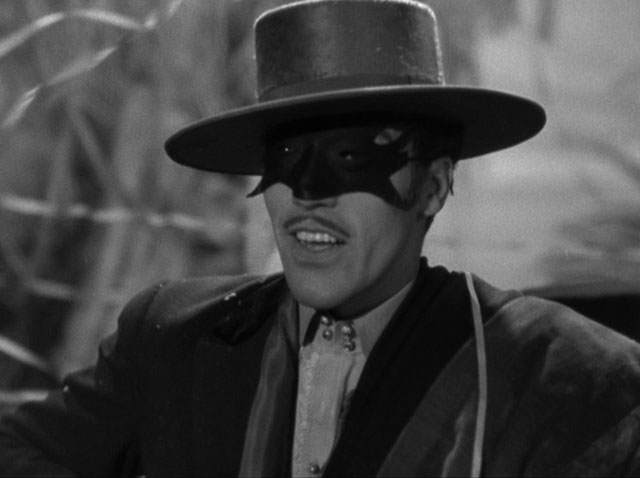
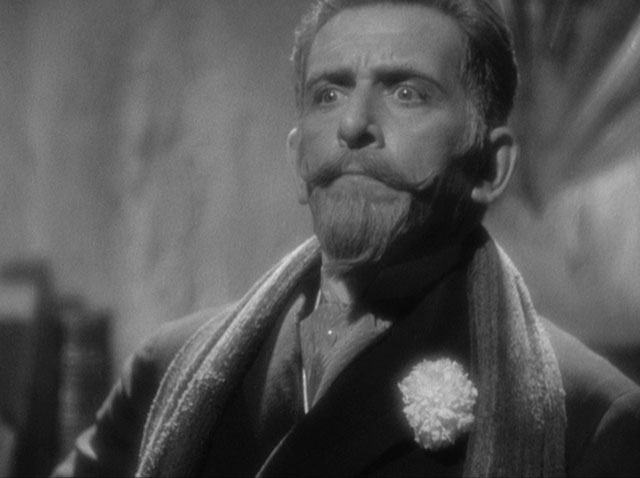
Oh whoops – I planned to watch Weekend first, to go from the end of Godard’s beloved 60’s period, skip over his purely political post-May-’68 work with Gorin as the Dziga Vertov Group, and resume with Tout Va Bien and Letter to Jane. But I forgot, and watched this before Weekend. No matter, probably. But as I’d heard, the Godard of the 60’s never returned after ’68. This is so similar to his 60’s movies, despite the bright pop color, the custom-built sets, meta-movie voiceover, married-couple storyline and (especially) major stars. No, it’s as talky as The Owl’s Legacy.

Long-Distance Singer Yves Montand and newly-oscar-winning Jane Fonda were both known to be politically-engaged, and both were hugely popular at the time, so it was perfect casting for Godard and Gorin – plus an opportunity for them to gripe about Montand’s previous “problematic” political films. But G & G really want to polemicize at length, so they note in the voiceover that the stars were cast and given a jaded love story out of commercial necessity.

Unwitting pawns in Godard and Gorin’s political agenda:

Boss Caprioli:

Opens with JLG’s most cinematic-illusion-shattering move yet, close-ups on all the checks he’s cutting for the film’s stars, technicians, sets and so on. The juicy center of the film (shot in nice loooong shots, many of them motionless) consists mainly of dudes giving long speeches about union labor, class divisions, the political system.

“Under a calm surface, everything’s changing. Everything’s changing within every class. And She and He, swept up in it, also change.” Yves is a formerly-idealistic filmmaker (“a screenwriter during the New Wave”), now doing commercial work. Jane is a radio news reporter, and the two are at a factory office when the workers hold a major strike and lock the boss in his office for five days. So we get interviews with the boss (Vittorio Caprioli of Il Generale della Rovere): “the glaring injustices of Marx’ and Engels’ day are over,” and the shop steward: “our salaries haven’t kept up with increasing production, and even less with corporate profits.” It’s weird for a leftist, pro-workers movie that I can easily find who played the company manager, but not which actor played Stacquet the shop steward.

Some business in a supermarket that I didn’t understand because I wasn’t paying close attention anymore, but the long back-and-forth dolly shot reminded me of the factory scene in Manufactured Landscapes. Yves and Jane at their day jobs. Scenes of the factory in operation, of struggle in the streets. A token love-story-resolution ending in a cafe, which seems extraneous even as a joke, since the couple never got any development.

Great cross-section of the factory offices:

Yves, disillusioned:

From an interview with a wide-eyed bathrobe-clad Godard: “It’s quite striking. When workers are interviewed [on TV], these people are given 15 brief seconds when they haven’t opened their mouths all year. We give them 15 seconds, or even three minutes, to speak. ‘What do you think of the strike? What do you think of your lot in life?’ Who can answer when he’s had his mouth sewn shut?”

Letter To Jane (1972)

An hour-long photo-essay posed as a letter to Jane Fonda, analyzing a newspaper photo of her in Vietnam talking (or, as Godard & Gorin rightly point out, listening) to some unidentified men. She’d visited the country after the filming of Tout Va Bien but before its release, starting the ridiculous “Hanoi Jane” controversy, during which the press took the actions of a movie star more seriously than the war itself.

Godard and Gorin take turns narrating (in English), and each takes pains to avoid any interest in their voice, so the movie becomes a didactic lullaby. I got bored almost immediately.

See also: Every Revolution is a Throw of the Dice and Farocki’s Workers Leaving The Factory

Celebrate!

Over 1400 features now on the blog, plus a bunch of shorts round-ups, TV shows and miscellaneous. And posts like these, cluttering things up.

I guess I’ve usually tallied my different list-watching goals on past anniversaries, but I just did that in December, so let’s skip it. Currently 7500 titles on the ol’ must-watch list. That’s two decades’ worth of movies if I watch one daily. Something to look forward to!

What’s new? Been watching more television lately (collected here) since finishing The Wire. Also been rewatching The Wire, for that matter. Also working behind the scenes on the database and of course more lists. More on that when it’s finished. I downloaded some “themes” to change the stale look of the blog (not to mention the messed-up next/previous-page links at the bottom) but haven’t gotten around to implementing those yet.

Latest statistics:
I think I account for some 20% of my own traffic. Don’t know why my google image search traffic is way down – maybe it’s something I did last year, since I was almost going over my bandwidth limit from people leeching my horror movie screenshots. Most popular posts at the moment are My Night at Maud’s and Metropolis. Most hits come from Google, where some of the most popular searches include “human centipede” (get over that stupid movie, everybody), “vic morrow death photos” (I don’t have any), “fanny ardant nude” (don’t have any of these either, but if you send some I will post them), “begotten movie” (even though I’ve never posted on it), “lee van cleef finger” (huh?), “girls with sideburns”, and “fucked up freaked out bird”.

Best of the Blog (or at least some posts that I enjoyed writing and/or researching):
Super 8 vs. Contagion
The Turin Horse
Too Early, Too Late
Even Dwarfs Started Small
Intolerance
L’Amour Fou
Tourneur Triple-Feature
People On Sunday
Stromboli
Road to Nowhere (only because I got a comment from the film’s writer)
City of Pirates
Manuel on the Island of Wonders
Class Relations
Deep Red
La Prisonierre
Finisterrae
Le Pont du Nord

The bookend segment implies that the movie will be more fun than it is, opening during “Carnival Week” in Spain with the chief of police telling his men to shoot criminals during the festivities rather than arrest them, so the jail doesn’t overfill. Then straight into a party scene where masked Antonio (Cesar Romero, recently of The Thin Man) glimpses masked Marlene Dietrich. It immediately recalls the similarly-streamer-filled party in Dishonored with a masked Victor McLaglen (who has a much better smile than Cesar does). It’s a great-looking movie, if less gloriously so than the other Sternbergs I’ve been watching. Its best moments recall those earlier films: characters trapped together on a train (Shanghai Express), a man obsessed with Dietrich to his own humiliation and ruin (The Blue Angel) and all the carefully-composed obscured-vision shots. But it doesn’t add much original flavor of its own (besides a good dueling scene), and the middle of the movie drags from its uninteresting story.

Cesar trails Dietrich to her house but can’t get in, so he meets buddy Pasqual (Lionel Atwill, in the To Be Or Not To Be acting troupe) and listens to him talk for the majority of the movie. Pasqual recalls meeting Dietrich on an avalanche-bound train, giving money to her and her mother (Alison Skipworth of the similarly-titled Satan Met a Lady), then watching her escape with another man. This happens again. Then again and again. Then he rapes her, I think. The point of his story is that Cesar needs to stay away from the girl, but all I’m getting is that Pasqual is extremely pathetic. Cesar must’ve gotten that too, because he shows up at her house again. Pasqual sees, challenges him to a duel, then fires into the air, a suicide move. Dietrich pulls a total Casablanca on Cesar, getting travel papers for both of them (from cameo-governor Edward Everett Horton) then hopping off the train.

L-R: Pasqual, Marlene, Cesar:

Guest star E. Everett:

C. Silver:

The film is neither as warm as Morocco nor as accessible as The Blue Angel. If it is perhaps the most perfect film ever made in some ways, its very precision conveys a coldness, a diamond-like hardness; the romanticism of Morocco transformed into cynical introspection and fatalism. If Sternberg is any closer to understanding Dietrich, he is unwilling to solve the puzzle for the audience; the film remains one of the most beautifully realized enigmas in the history of the cinema.

Marlene with a duck in a basket:

from A. Sennwald’s original NY Times review:

The talented director-photographer, in The Devil Is a Woman, makes a cruel and mocking assault upon the romantic sex motif which Hollywood has been gravely celebrating all these years. His success is also his failure. Having composed one of the most sophisticated films ever produced in America, he makes it inevitable that it will be misunderstood and disliked by nine-tenths of the normal motion picture public. . . . a heartless parable of man’s eternal humiliation in the sex struggle. As Don Pasqual dances foolishly at the bidding of the young woman who has him biologically trapped, we begin by laughing with the director at the ludicrous spectacle and end by suspecting that the joke has been a grisly one.

A very light-hearted, beautiful, episodic film about a group of monks who follow St. Francis. I didn’t know Rossellini was capable of humor and lightness – this comes as pleasantly surprising as Smiles of a Summer Night. The monks look silly running everywhere they go, and they take in a village idiot who never quite gets the hang of things, so I thought for a while that this was a religion-mocking predecessor of Life of Brian, but the underlying seriousness about their faith and Francis’s lessons on humility come through by the end.

Rossellini:

“As the title indicates, my film wants to focus on the merrier aspect of the Franciscan experience, on the playfulness, the ‘perfect delight,’ the freedom that the spirit finds in poverty and in an absolute detachment from material things. . . . I believe that certain aspects of primitive Franciscanism could best satisfy the deepest aspirations and needs of a humanity who, enslaved by its greed and having totally forgotten the Poverello’s lesson, has also lost its joy of life.”

I. Francesco returns from Rome with his companions, having been given the Pope’s permission to preach. Someone has taken over their old hut, so they wander off in the pouring rain to build a new one.

II. Brother Ginepro gave away his clothes to a beggar. Francesco tells him not to do this anymore.

III. Francesco talks to birds. Wrinkled ol’ Giovanni The Simple is given permission to join the group. I can’t remember where I read this, but it said the actor who played Giovanni was too drunk to learn any lines, so they’d shove him in front of camera to improvise his scenes. He’d played a monk earlier in L’Amore.

Francis with bird:

IV. Sister Chiara comes to visit, has dinner with Francesco. It’s said that she first became a nun in their chapel, but I thought they just built the chapel in the middle of nowhere. Guess not.

V. Troublesome Ginepro cuts off the foot of a neighboring farmer’s pig to offer to a sick comrade. The farmer gets understandably angry. Ginepro tries to apologize.

VI. A wordless section: “How San Francesco, praying in the forest at night, met the leper.” Francis silently commisserates.

VII. Ginepro again, makes enough stew to last two weeks so the guys don’t have to stop preaching to cook. Francesco is impressed, gives him permission to go preach, but he must always begin by humbly saying “Baa, baa, baa, much I say, little I do.”

VIII. Ginepro “baa baa”s his way into a violent village of warrior-thugs, who beat the shit out of him and play jumprope with his body. He gets a private conference with heavily armored warlord Aldo Fabrizi (the priest of Rome Open City – I didn’t recognize him in the mop wig and fake mustache) who finally figures out that Ginepro is obviously not a threat.

IX. Francesco is sad because he sees a bandit killed. He and brother Leone try to preach at a house but get tossed out into the mud. He explains that this suffering is “perfect happiness.”

X. The group breaks up. Francesco has everyone spin in circles until they fall down dizzy – whichever city they’re now facing is where they must go preach.

M. Porro: “Rossellini said that his film was a humble and austere work, realistically describing the spirit of the story. … In the cinema, biblical and evangelical subjects took the form of big American films. Think of a film like The Bible by John Huston, The Robe, King of Kings, The Greatest Story Ever Told. The rhetoric of these films interferes with the spiritual message.”

Portlandia season 1 (2011)

Carrie Brownstein is funny! Who knew? Wonderful show, as long as it doesn’t interfere with Wild Flag. Highlights: anything involving mayor Kyle MacLachlan or the women’s bookstore (customers include Steve Buscemi, Aubrey Plaza and Heather Graham), housekeeper Aimee Mann and the opening theme song.

Delocated season 1 (2009)

Was prompted to watch this after hearing a Hanukkah recording in which Jon Glaser sings through a flat voice modulator. I didn’t get it. So now I do. Kinda low-key show with a single season-long story (not a sketch show) in which Jon and family are in witness protection and starring in a reality show about it. Eugene Mirman is assigned to find and murder Jon Glaser, and ends up with a reality show of his own. Mirman only manages to kill Paul Rudd in the first episode, Michael Shannon in the last, and some bystanders in between. Glaser’s relationship with his bodyguard Kevin Dorff seems more important to him than his own wife, so the marriage doesn’t last, but he meets a new girl when he opens a business where people can pay to smash things with a bat.

Steve Albini cameo:

Important Things With Demetri Martin season 1 (2009)

Things: timing, power, brains, chairs, safety, coolness, games.
Very simple-looking, but smart and hilarious show.
Jon Benjamin is a regular.

30 Rock season 5 (2010-11)

KableTown buys the network, Baldwin has a baby with Elizabeth Banks, Tina breaks up with Matt Damon, Kenneth leaves then returns, Tracy leaves then returns (and his wife gets a reality show), Jenna is in love with cross-dressing Will Forte, Will Arnett returns as Baldwin’s nemesis and Margaret Cho plays Kim Jong-Il.

It wasn’t as good as season 4.

Great movie, not in the sense that I’d want to watch it over and over, but that the doomed feeling of the final scene has stuck with me intensely for the past two weeks. AV Club says the movie’s got an open-ended, ambiguous finale, but I didn’t see it that way. I see Michael Shannon and his family as unambiguously screwed.

Shannon (perfectly cast, his voice a Sling Blade croak, less manic than in Bug) is having apocalyptic dreams of oil-colored rain, bird swarms and terrible storms, becomes obsessed with building a survival shelter in the back yard, with food stocks and gas masks, at the expense of his job and personal relationships. Wife Jessica Chastain (“grace” in The Tree of Life) tries pretty hard, harder than most movie-wives, to understand and help her husband. But he blows the money they need for their hearing-impaired daughter Hannah’s corrective surgery, and she becomes less forgiving. Shannon also gets a helpful employee (Shea Whigham of Splinter, All The Real Girls) into trouble. Finally after he overreacts to a regular summer storm, he agrees to cool it for a while, and the family takes a quiet trip to the coast. Then the oily rain begins.

Adding to the mystery, Shannon’s mom (Kathy Baker, the sexy neighbor in Edward Scissorhands) has long-term psychological problems which began when she was his age. He visits her to compare notes, not-so-helpfully. No help either from brother Ray McKinnon or boss Robert Longstreet, and little from psych counselor LisaGay Hamilton.

R. Koehler in Cinema Scope says it “gives expression to an extremely nervous country” and that each Sundance audience member thought it expressed his own particular conspiracy theory. Nichols sounds like a smart, engaged writer/director from his interview. And I’d been wondering if he watched Todd Haynes’ Safe before making this – he did.

Apparently Myrna Loy and William Powell made a bunch more movies together besides the Thin Man series. This one came between Another Thin Man (3) and Shadow of the Thin Man (4). A miscommunication comedy full of contrived obstacles to Loy & Powell’s marriage. He spends an evening at a bar with ex-girlfriend Gail Patrick (Lombard’s bad sister in My Man Godfrey, Irene Dunne’s rival in My Favorite Wife) and wifey Loy schemes to get even by kissing on hunky neighbor Jack Carson (Red Garters, Arsenic and Old Lace). But then Loy thinks Powell has lied about some detail and leaves with the hunk, starting divorce proceedings. Powell finds that he can delay the divorce if he’s declared insane, so now it’s a fine line between staying convincingly crazy and winning his wife back.

Some unusual sights: Powell acting wide-eyed nuts instead of cool/collected/drunk. Florence Bates as Loy’s mother crosses an important line. She’s supposed to be a comic character who’s a constant annoyance to the leads, but she overplays and becomes a constant annoyance to the viewer. I remember her playing a similarly unbearable role in The Tall Target, but fortunately with far less screen time. Didn’t recognize Elisha Cook Jr. (sex-crazed drummer in Phantom Lady) as the elevator boy. From the writers of Blackmail with help from Charles Lederer, just off His Girl Friday.

Stroheim’s directorial debut, a very straightforward movie, with prominent mountain-climbing scenes (cuz you can take the filmmaker out of Austria, but you can’t take a love for mountain-climbing movies out of an Austrian filmmaker) along with tassels, feathers, pipes, silly hats and monocles.

The director’s grinning, monocled death’s head:

A single travelling shot at the end (at least I didn’t notice any camera movement before that). Some great edits (from 3 mountain climbers to 3 crosses), a great mirror shot, a few flashbacks. Divided into acts, which are announced by title cards that usually appear right in the middle of a conversation, weird.

Dr. Armstrong (Sam De Grasse, Prince John in the Fairbanks Robin Hood) and his pretty wife Francelia Billington are on a mountain vacation, and womanizer/fraud Stroheim tags along, plots to steal away Francelia for himself. To prove his villainy, Stroheim seduces the waitress at their inn along the way.

Hero and wife:

Silent Sepp:

Armstrong sets off with his mountain buddy Silent Sepp (Gibson Gowland, star of Greed) to rescue a couple of imperiled climbers, even though this is supposed to be Armstrong’s vacation, and Stroheim makes his move, is rebuffed. But that night F. ponders how her husband pays her no attention, and when Stroheim tries it again during their climactic climb to the peak, she reconsiders. Husband responds by hurling Stroheim off the cliff.

Not even detail-oriented Stroheim could control the birds: when Francelia tries to play with this white bird, to show her playful innocence, the bird clearly wants nothing to do with her:

Francelia “sees” a happy young married couple in her mirror, while her neglectful husband lies asleep: