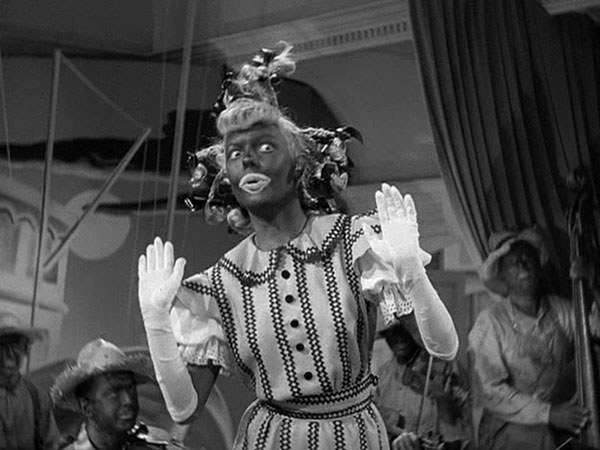
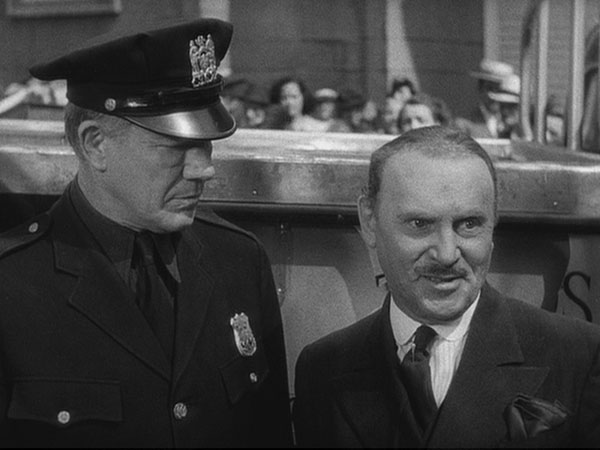
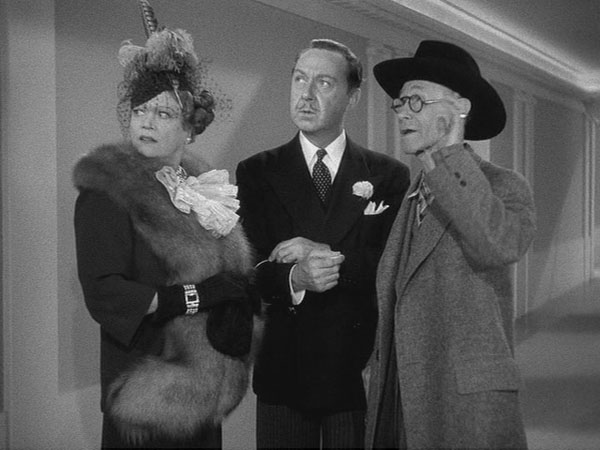
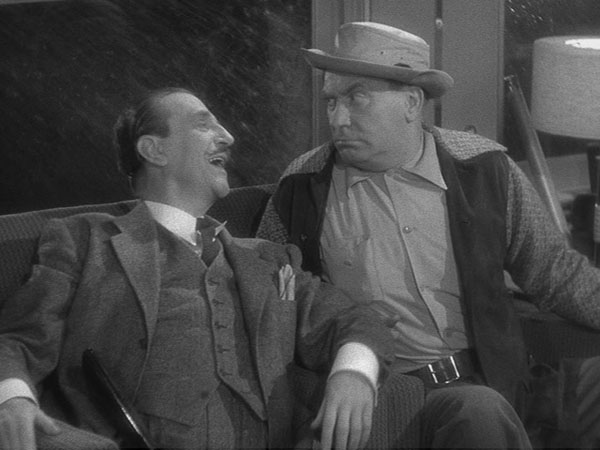
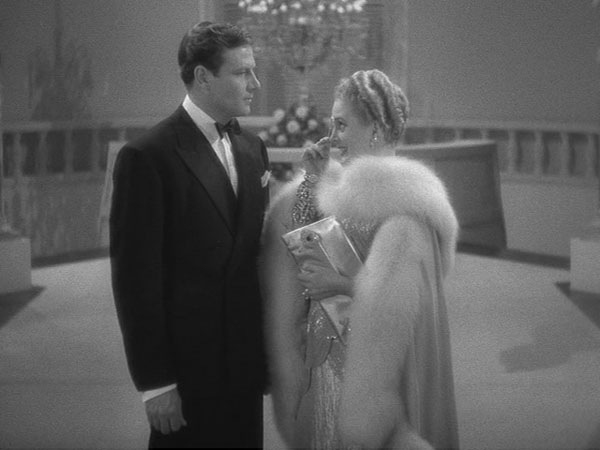
“Stop being melodramatic” – Harry Wesson to Jenny Marsh… in a Douglas Sirk movie!

Did I even have to be told that Samuel Fuller wrote this, when the lead character is named Griff?

Jenny Marsh (Patricia Knight, Cornell Wilde’s wife of 14 years, career fell apart after their divorce soon after this movie came out) is a bad girl just out of jail. She went there covering for her boyfriend Harry Wesson (John Baragrey, appealingly slimy, pretty much a TV actor except for this movie). Gets out and meets parole officer Griff Marat (Cornell Wilde, kinda big star in the 40’s). Trouble ensues.

To keep an eye on the girl, Griff naively hires her to live/work at his house and care for his blind mother. She still visits Wesson on the side and schemes to fake falling in love with Griff to corrupt him and ease her situation. But of course they really fall in love, and she shoots Wesson in a struggle. She’s back in trouble, and Griff will be in trouble if he’s found out for marrying a parolee, so they escape to an oil town to start a new life (leaving behind blind mom and super-irritating younger brother). “But the strain of poverty and fear of apprehension begin to corrode” and they turn themselves in. In a suspiciously happy twist ending, a recovering Harry Wesson lets them both off the hook and they live happily etc.

Tight little 80-minute noir drama. I don’t know much about Sirk, but the Fuller element is there in traces. Fuller’s own debut, I Shot Jesse James, came out the same year.

IMDB reviewer points out: “The title, by the way, seems basically meaningless but to have been chosen for its purely abstract, noirish resonance.”

First movie Bunuel directed in 14 years, beginning his Mexican period with producer Oscar Dancigers.

Guitar guy in the prison in opening scene glances at the camera a couple times. Not on purpose, was it? Guess I’d have to hear the lyrics to know for sure. Damn cheap Lionsgate paid for an audio commentary but didn’t subtitle any of the songs. Why? It’s a musical. Lyrics might be meaningful. I can understand about half of the spoken Spanish dialogue but hardly any of the song lyrics. Wotever.

image

Dreamy Gerardo and his mechanic friend Demetrio break out of prison and go looking for work… meet up with Heriberto, who introduces to Jose Enrique, owner of The National oil field, under siege from evil oil barons who threaten the workers. G & D are naive and need work so they recruit people easily and get the place running again. all is fine until baddie oilman Fabio has owner Jose Enrique killed.

Demetrio takes over the National next. The night before the oil is to start pumping, he goes to the casino and falls for Camelia, same girl J.E. was last seen with, and he too disappears courtesy of Fabio’s goons.

Well, Gerardo isn’t gonna take this anymore. When the beautiful Mercedes, J.E.’s sister, arrives from South America, she gets a job as a singer at the casino in order to find out more. Initially thinks G. is in on the plot, but belatedly teams up with him and helps foil Fabio. In the end she sells the National to the big big oilman, knowing that G has rigged the whole place to explode if he doesn’t make it back on time (and he doesn’t). Poor Heriberto and his kleptomaniac girlfriend Nanette are presumably left back in town with no work, as Mercedes and Gerardo ride the train outta town.

image

A few, very few, possibly Bunuelian touches through psychologically meaningful shots… a drunk Gerardo stares at Nanette’s distorted, fading reflection in an ice bucket… a pane of breaking glass is superimposed on the image when G. knocks a guy out. Other than that, this is a very straightforward little studio movie. Looks awfully cheap for a musical, but not in a shoddy way, just in a non-Hollywood scaled-down way. We mustn’t blame Bunuel for the trite flicks he made in order to get by… it’s films like these that got him back in the director’s seat again, directly leading to Los Olvidados a few years later.

image

Co-directed with Gunther von Fritsch, but I’ve never heard of that guy.

Watched the first Cat People again, and I still like it. Cool movie. Male lead Kent Smith (later of The Fountainhead and Party Girl) is like a ten-year-old in love, simple and naive, which only makes Simone Simon (who has the most excellent mouth of any actress) more interesting and mysterious. Smith’s character name is Oliver Reed. Oliver Reed the actor was only five when this came out.

Curse, the sequel, has Kent and his friend (now wife) Alice returning from the first movie, now with their young daughter Amy, who is seeing the ghost (?) of Simone Simon in the back yard. Not super interesting movie, and even if it was, I wasn’t paying much attention, but it did have a rollicking Christmas carol singalong. Has a nice spooky part at the end, when the reclusive Old Lady Farren (who the young girl befriends) dies on the stairwell and the woman’s grown daughter threatens to kill Amy since Farren preferred Amy to her own daughter (whom she accused of being an impostor, “my daughter is dead!”). So two “ghosts” in one movie, although clearly daughter Farren is not really dead, and the returned Simone Simon might be in the little girl’s imagination. So, it’s like Cat People, another spook movie that might not contain any actual spooks.

First of three anthology films in which famed author W. Somerset Maugham introduces short films made from his short stories. Each segment is from a different director, but you couldn’t tell… just plays like a classy studio picture all the way through (so that’s the producer’s name up top).

The Facts of Life – dad tells his college son, going to Atlantic City to play tennis, never to gamble, lend money or get involved with women. Son immediately does all three, wins a bundle, goes home with hot girl who steals it in the night. But he saw her and stole it back, accidentally grabbing her entire cash stash along with his winnings.

The Alien Corn – rich kid wants to be concert pianist, makes a deal with his parents and adoring wannabe-girlfriend, he’ll study piano for two years then play and be judged by someone trustworthy – if they say he’s good enough, he’ll devote his life to it, otherwise he has to quit and do something regular. Well he does, and a famous concert pianist comes to the house and tells him he sucks, to the delight of everyone but him.

The Kite – stupid one, dumb guy with awful parents is in jail for abandoning his bitchy wife because she trashed his prize kite. Wife learns to appreciate kites and they’re back together in the end. Katy compared the guy’s awful mother to my mom because Katy is mean.

The Colonel’s Lady – Katy already wrote a long comment about this one – I agree, it’s the only great piece in the bunch.

A pretty alright little movie, full of British people calling each other “old boy” and acting stuffy and proper to each other.

Not as interesting as Sam Fuller’s later I Shot Jesse James, but a lot better than I’d expected. Maybe I can enjoy a Western more than I’d thought. Some story differences, too… for instance, Fuller’s movie has Bob Ford re-enacting the murder as a play pretty much the same way it happened, while Lang’s has the Fords camping it up onstage and acting the heroes. Don’t know which really happened, but each version was well-suited to its own movie.

Henry Fonda is James, hears news of Jesse’s death and sets out with young Jackie Cooper (not Jackie Coogan) to get Bob Ford (a nervous bearded John Carradine) and brother Charlie.

Not technically the last Fritz Lang film I have to see, but the last one available until Human Desire shows up on cable again. That’s 36 down, 1 to go! Guess I’ve been trying to watch all of Lang’s movies since college, so seven years. At around five per year, it didn’t go nearly as fast as my Sam Fuller quest. Even if I didn’t pick up on the geometric patterns hidden within Lang’s mise-en-scene that auteurists wet themselves over, it was neat to see forty years of cinema from one director’s perspective. He covered 1920 to 1960, the period I know least about, and Sam Fuller was 1950 to 1990. And they both made so many movies… gives me a convenient handle on chronology. Oh, 1953, that was the year Pickup On South Street and The Big Heat came out. Anyway, on now to Bunuel, Rivette, Marker and Resnais for a western european perspective.

image

image

image

image

Ah, Preston Sturges movies… always worth watching over and over.

You’d think I’d really know who Henry Fonda is, but you’d be wrong. Anyway, now after this and Return of Frank James, I could probably pick him out of a lineup. Terrific, funny cast between him, Barbara Stanwyck, Charles Coburn as the card shark and William Demarest (the dad in Morgan’s Creek) as Muggsy. Writing is at least as good as the acting… was beaten for an oscar by a Robert Montgomery / Claude Rains comedy.

image

image

Henry’s been up the amazon collecting snakes and meets Stanwyck on the ship back home. They fall in love while she’s conning him out of some money with partner Coburn, and when he finds out about the con he leaves her wanting payback. She reinvents herself as The Lady Eve and gets invited to his family estate via mutual monocled friend Eric Blore (played a valet in Sullivan’s Travels). They get married then she runs off and reappears as her card-playing self to have an “affair” with Henry… the end. Overcomplicated, but a proper comedy should be.

image

image

Did Katy like it? Don’t know for sure but I’d think so.

Update Jan 2015: Katy definitely likes it.

Set in Vienna, 1900, same as La Ronde. My third Ophuls movie, and the third with horse-drawn carriages.

Seems a straightforward old-hollywood love story at first, then seems a lot more grown-up and complex than its contemporaries after it’s over (and especially after checking out the DVD extras which conveniently explain everything so I don’t have to put in much thought myself).

Joan Fontaine lives in the same building as a famous concert pianist and falls madly in love with him. She lives her whole life thinking of him, but only meets him twice… once for a dream date at the end of which she gets pregnant, and again years later in a sad imitation of that date, where she desperately hopes he’ll recognize her, but he just recycles the same lines he used years earlier. She flees again, and as she and their son are dying of cholera, she writes him a letter telling her life story. He stays up all night reading it, forgetting to flee the duel he’d agreed to the night before with her husband. Nice.

Lots of graceful camera movements, one sick super excellent part I didn’t notice until watching the documentary (bottom screenshot) where she stands atop a staircase and watches him enter his apartment with a girl, repeated again later in the movie with the same camera position but with her as the girl. The kind of movie I like somewhat while watching, and like a lot more when it’s over… worth seeing again.

The novel by Stefan Zweig was filmed at least four other times. Ophuls made this between The Exile and Caught during his Hollywood period. The same year Welles made Macbeth, Hawks made Red River, Hitchcock made Rope, and the Italian Neorealist movement was taking off.

Joan Fontaine, star of Rebecca, Suspicion and Beyond a Reasonable Doubt:
image

Candy apple scene:
image

Louis Jordan, also of The Paradine Case, The VIPs, Octopussy and Swamp Thing:
image

Suspicion:
image

Fireworks (1947) – the one where young Ken daydreams that he is beaten by sailors and a roman candle is set off in his pants.

Didn’t blow me away as much this time, but maybe I’ve seen it too many times. Would still recommend to everyone as the definitive statement on being gay & 17, the United States Navy, American Christmas, and the Fourth of July. Just unbelievable that this was made in 1947, with practically no precedent… before even Stan Brakhage had picked up a camera. I guess Anger wasn’t old enough to know that this kind of thing was not done.

Fireworks sailors:
image

Puce Moment (1949) – the one where a glamourous actress lives in her glamorous house, and a bunch of classic hollywood dresses are paraded in front of the camera.

Guess I didn’t see the point because I don’t care about dresses and glamour. Commentary was the best part. Anger’s mom or aunt or someone was a costume designer for the silent films, so he’s filming these dresses in vivid color which have only been seen on screen before in black and white. Part of a longer movie that got scrapped.

Puce woman:
image

Rabbit’s Moon (1950) – the one where mimes do a dance in a forest, and one tries to reach the moon to impress a girl and I’m pretty sure he dies in the end, oh and there’s pop music playing.

Really neat, wasn’t expecting to find a mime movie on here. Anger says the film was commissioned and the actors were hired from the Marcel Marceau school. He talked about the storyline too, but I can’t remember much of that. Cool little movie – the one from this disc that I’d show off to people in my never-gonna-happen short-films fest.

Rabbit mime:
image

Eaux d’artifice (1953) – the blue-tinged one where Ken just photographs water in some garden fountains and sometimes a woman (actually a very small woman) runs by in a fancy dress.

Maybe my favorite of the bunch. Just light sparkling through water, opera music playing. Peaceful.

Eaux d’artifice:
image

Inauguration of the Pleasure Dome (1954) – the slow one where people in fancy costumes stand around and do stuff and finally blend in weird montages (or “the one with Anaïs Nin”).

I was dozing off, should watch again with the commentary on. A long, pretty, entrancing and colorful movie. Maybe best to watch while dozing, really.

Pleasure Dome montage:
image

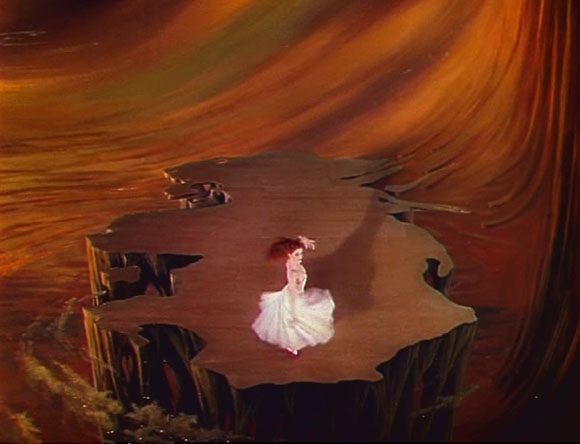
Fantasia is exactly how I remember it. A drowsy opening, some pretty business, The Sorcerer’s Apprentice, some more neat stuff, then the conductor announces the halfway point and I fall asleep, only waking up for the Night On Bald Mountain segment and the closing credits.

I guess the animation purists love it, but I just find it a pleasant excuse for a nap. Sorry!