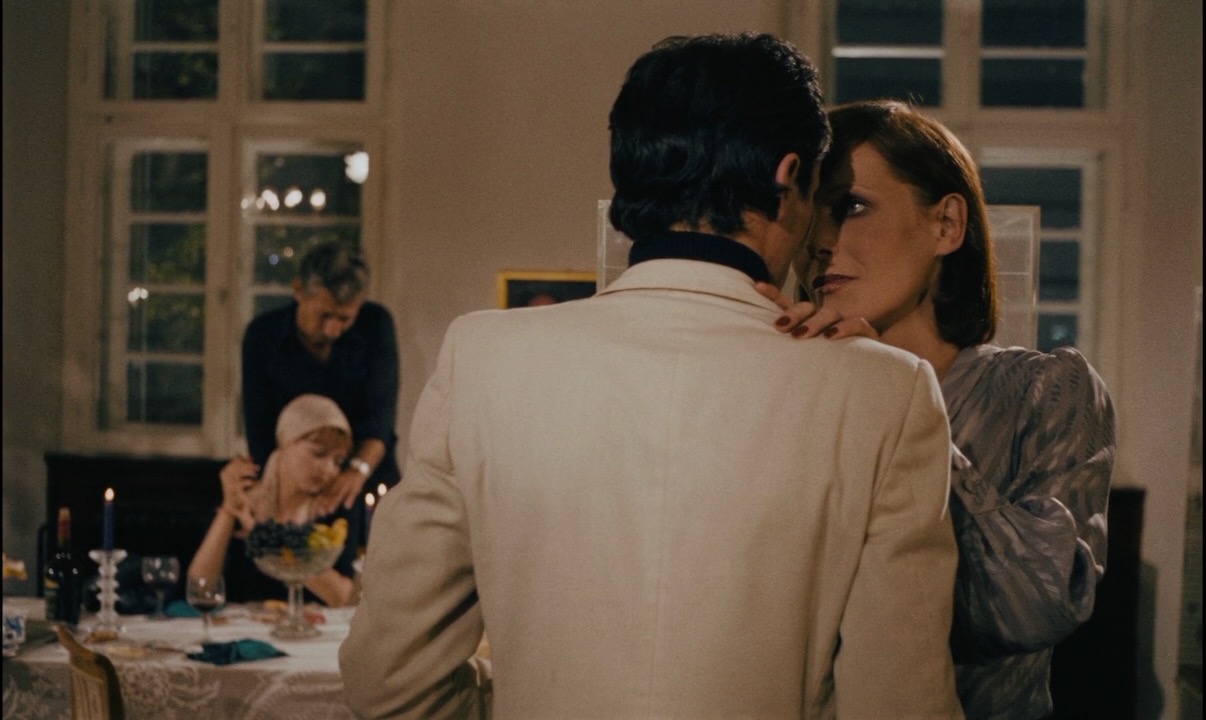
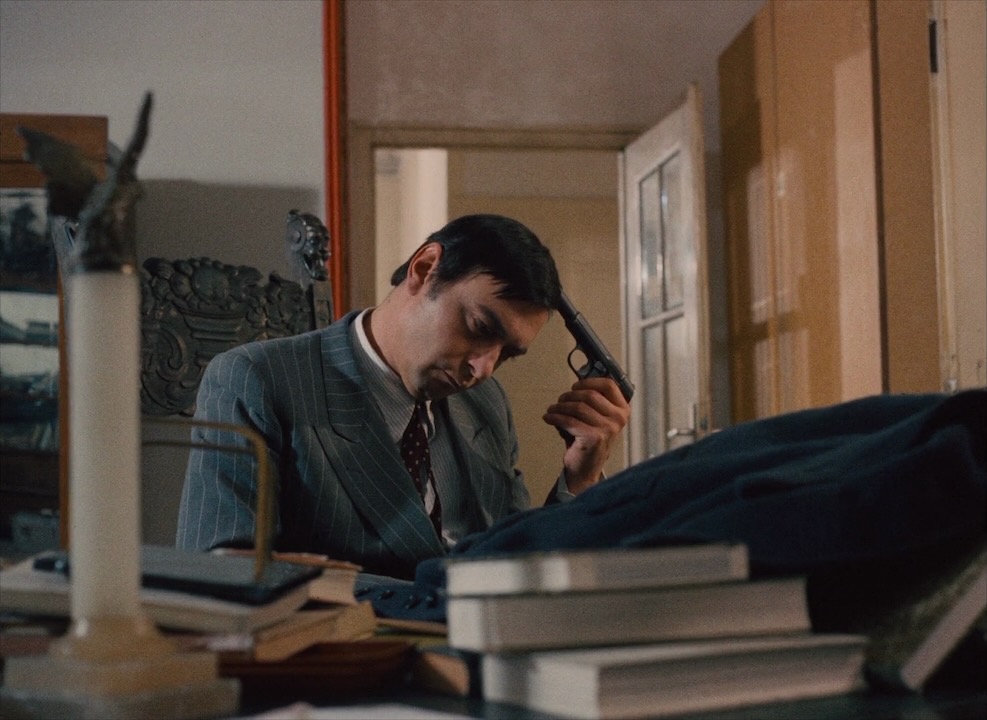
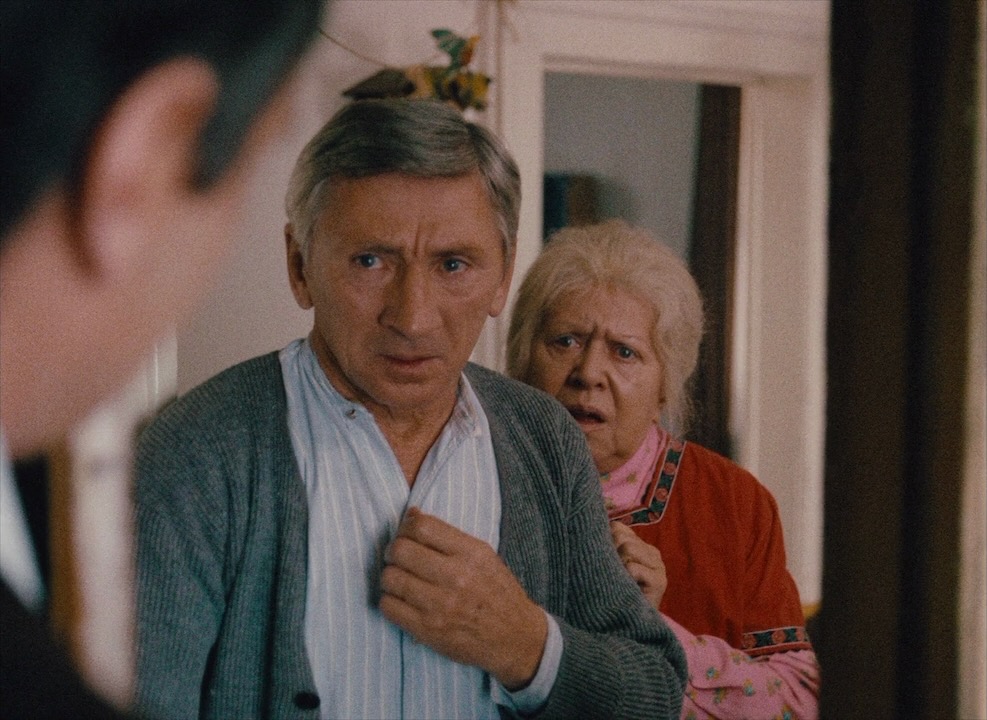
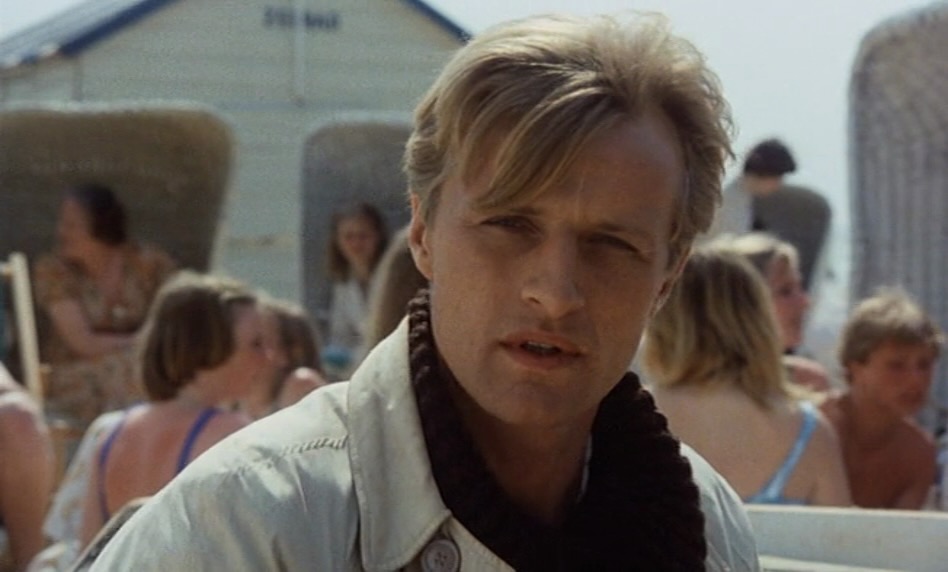
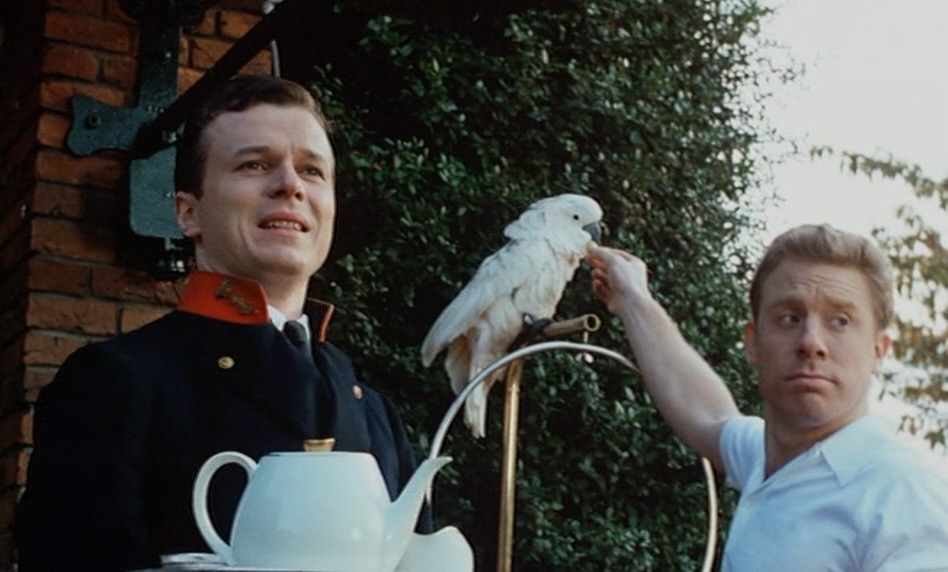
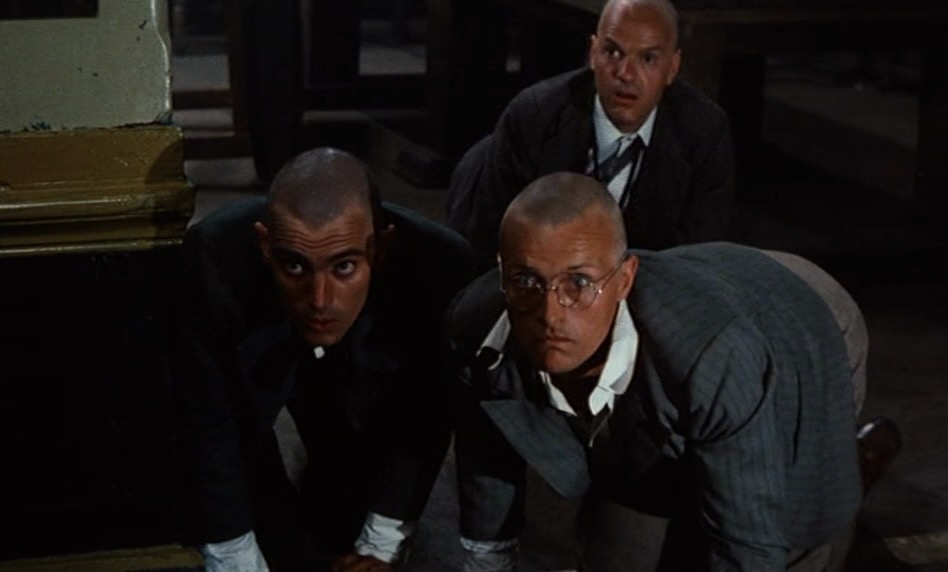
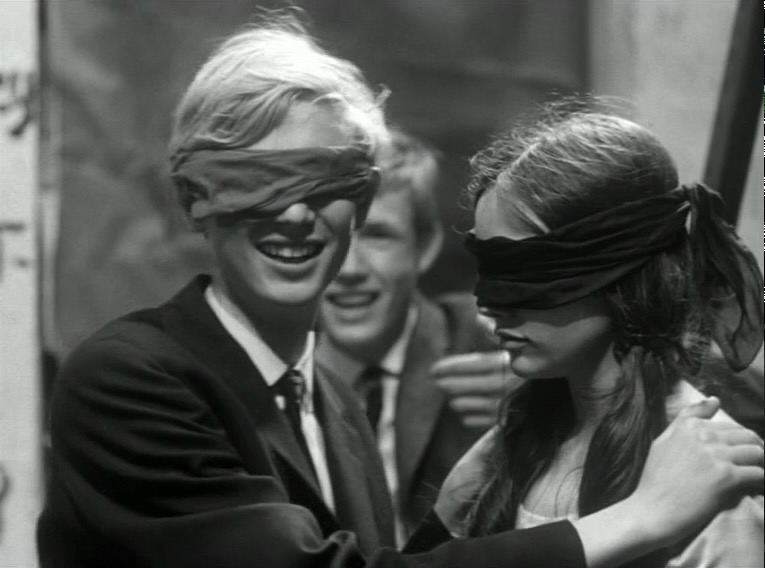
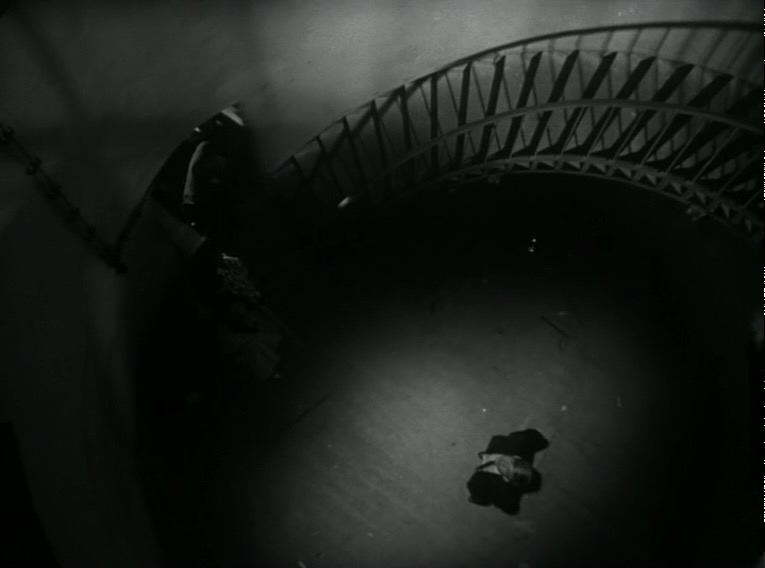
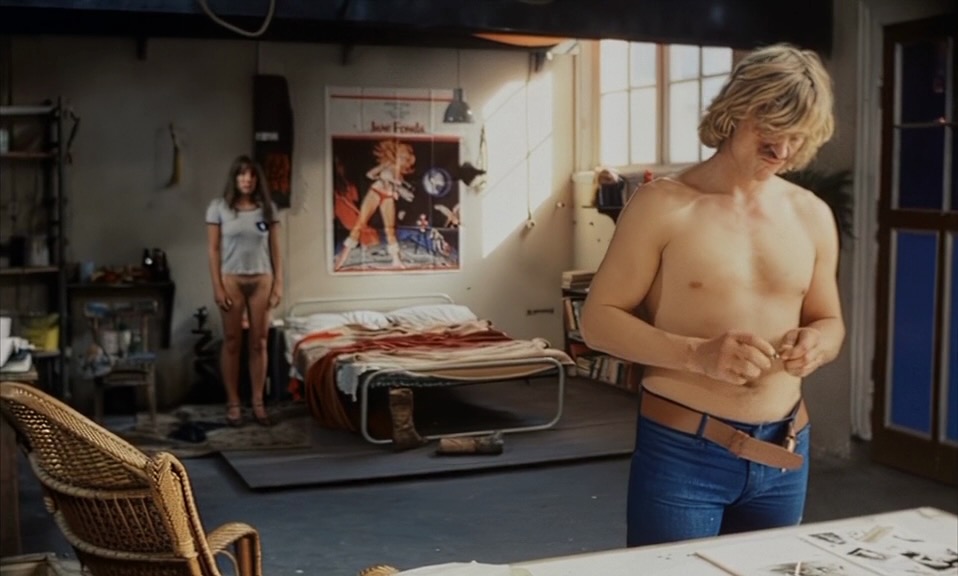
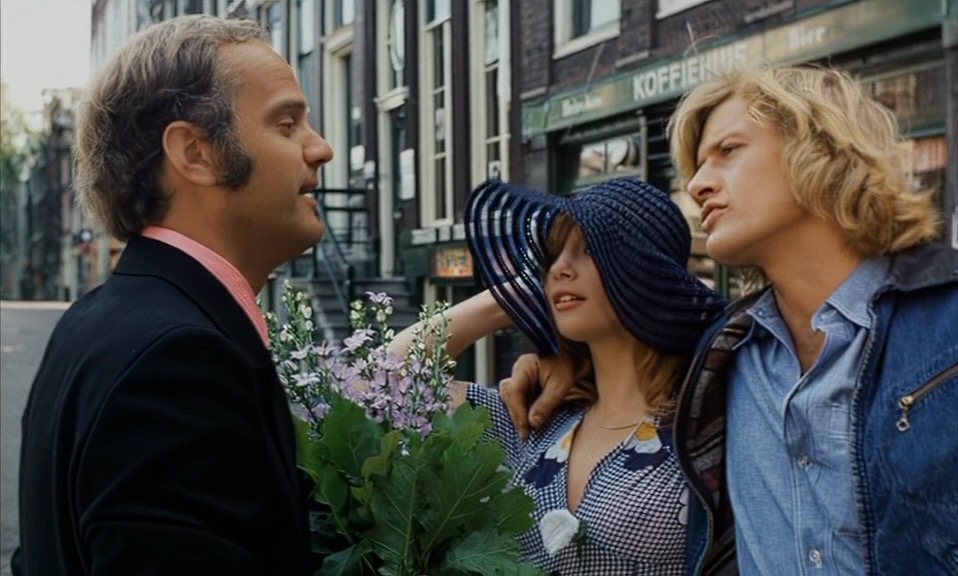
Rutger is an impulsive dickhead artist, until he meets redheaded Olga while hitchhiking and they get the amour fou. He does not murder her – that was a fantasy scene to set a sour doomed tone early on, but she does crash the car while he’s being reckless, my second one of those in consecutive weeks.

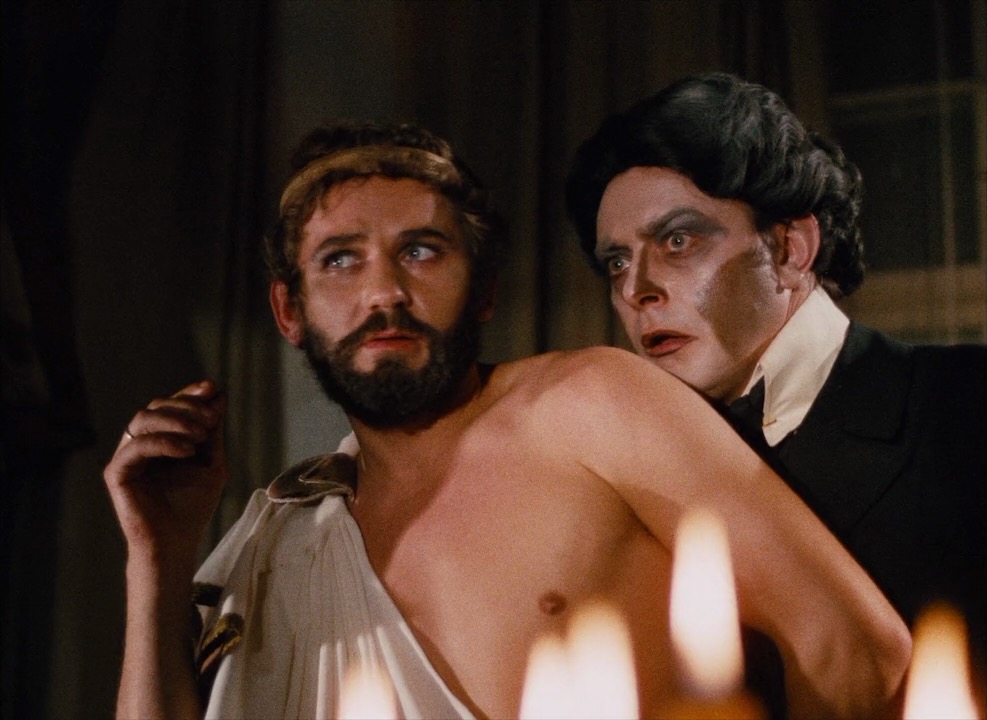
Rutger with a different girl and Jane Fonda:

The couple with his friend Paul (Dolf de Vries, whose name was stolen for Black Book):

No normal scenes in this movie, there’s something intense or extreme in every one. Feature debut of both leads (who would reunite in Verhoeven’s Katie Tippel) and a bold statement of perversity from the new-ish director.

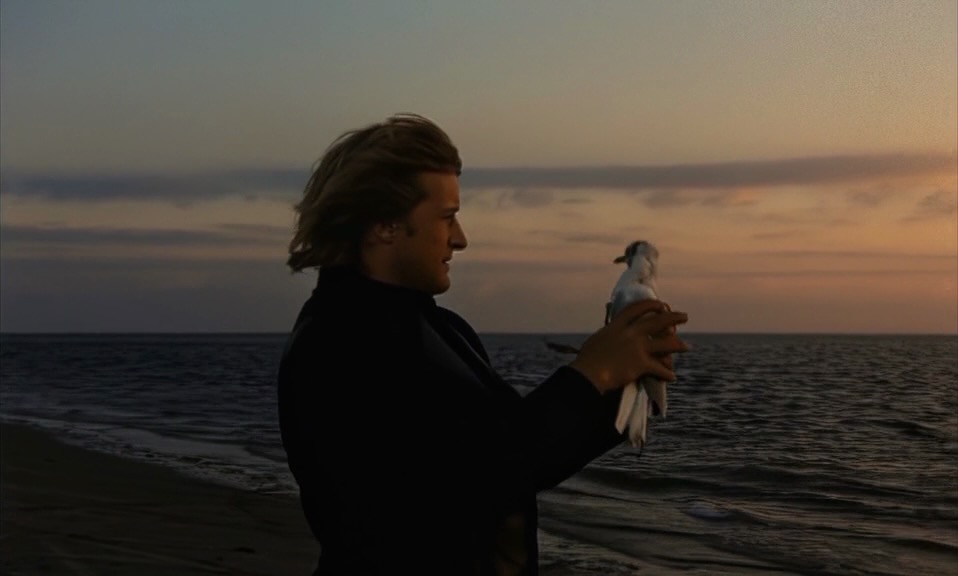
Our lovers get married, as the movie flits between body horror and sex comedy. Two years after the hitchhiking incident she leaves him when he’s horrible at a restaurant, vomiting on everyone, and the movie loops back to the beginning. Rutger has acted unforgivably to everyone he’s met for years, but he also helps an injured seagull one time, so we’ll call it even. They both clean themselves up, Rutger in particular becoming more civilized than ever, but she’s acting erratic, dying from a brain tumor.

Is it coincidence, or was it planned,
that you can sing the words to Silkworm’s “Slow Hands”
to the tune of “The Weight” by The Band

Went out in a thunderstorm and watched the movie by the band The Band. People who know the setlist take their bathroom break during Neil Diamond, but I’d argue if you can wait until Paul Butterfield is jamming on harmonica, he is even less essential. Dylan has finally gone the correct amount of electric (Very Electric) and sounds good. Joni Mitchell also comes off well as a rocker. The Staple Singers jumpscare “The Weight,” after the band plays the whole first verse and chorus without the cameras revealing anyone else is onstage then Mavis blasts into verse two. The cocaine isn’t even the worst part of Neil Young’s appearance – he looks like shit overall, but he has never sounded better. Only one Mekons cover (“Makes No Difference”). I’m annoyed to have finally found a Dylan movie that Joan Baez isn’t in, but Emmylou Harris makes up for it. I knew two thirds of the guests by face/voice, but the whole time Van Morrison was on I thought of him as The White James Brown. Good show – I can see why people come out declaring it The Greatest Rock & Roll Movie Ever Made, or at least why someone would want to put together a Levon Helm tribute night at the Hideout.

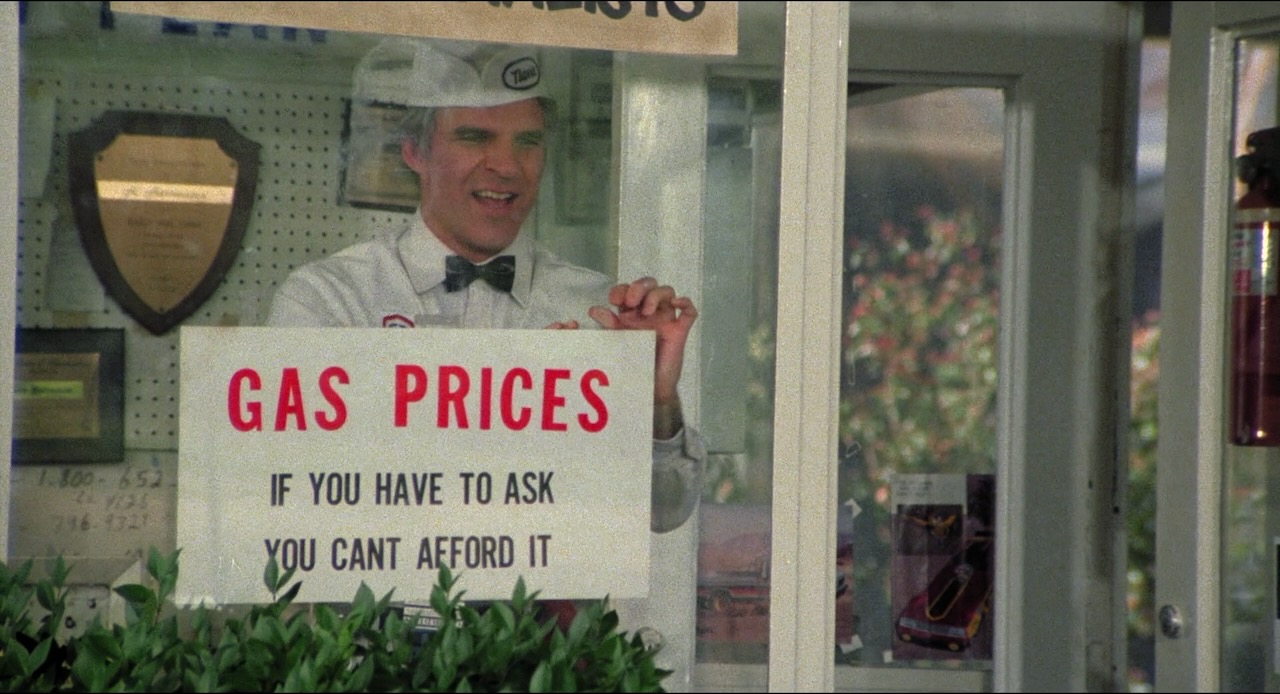
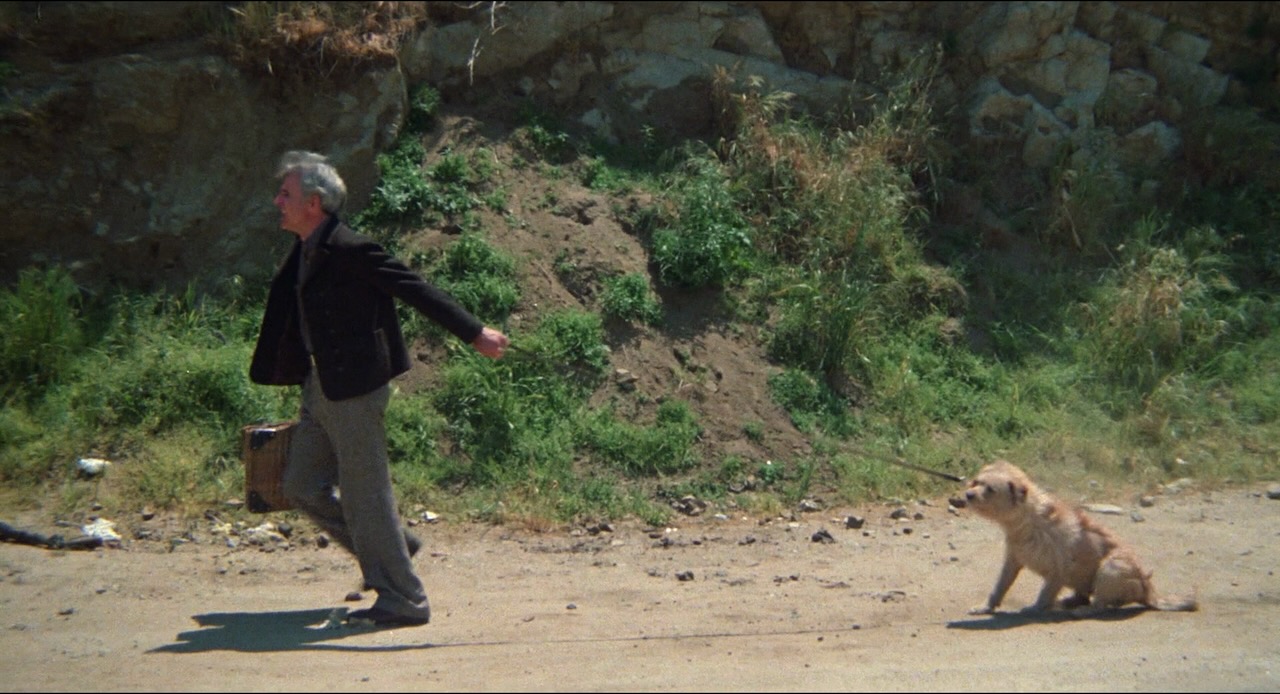
Steve Martin, grey-haired at 33, is raised by a Black family in Mississippi (mom from Ganja & Hess, dad from Across 110th Street) until one day he hears white music on the radio and goes to St. Louis to find its source. He gets hired by Jackie Mason at a gas station until madman M. Emmet of Blood Simple chases him into a traveling circus, where he’s taken home by the daredevil (Catlin Adams, later a director who discovered Ben Affleck). He meets cornet player Bernadette Peters and they move out west, getting rich off his glasses invention until sued by crosseyed Carl Reiner. Homeless, he tells his story to the movie camera, then is immediately reunited with his family.

Not a rapid-fire gag machine, but a few of the jokes are extremely good, including a couple of extended Martin routines: one about the precise math of “days feel longer when we’re together,” and one mopily collecting objects from the house after losing his fortune, leading to the poster image. Steve and Bernadette are cute together, and would costar in the even better Pennies From Heaven. The director of Car Wash made a Martin-less sequel to this, which nobody has ever watched.

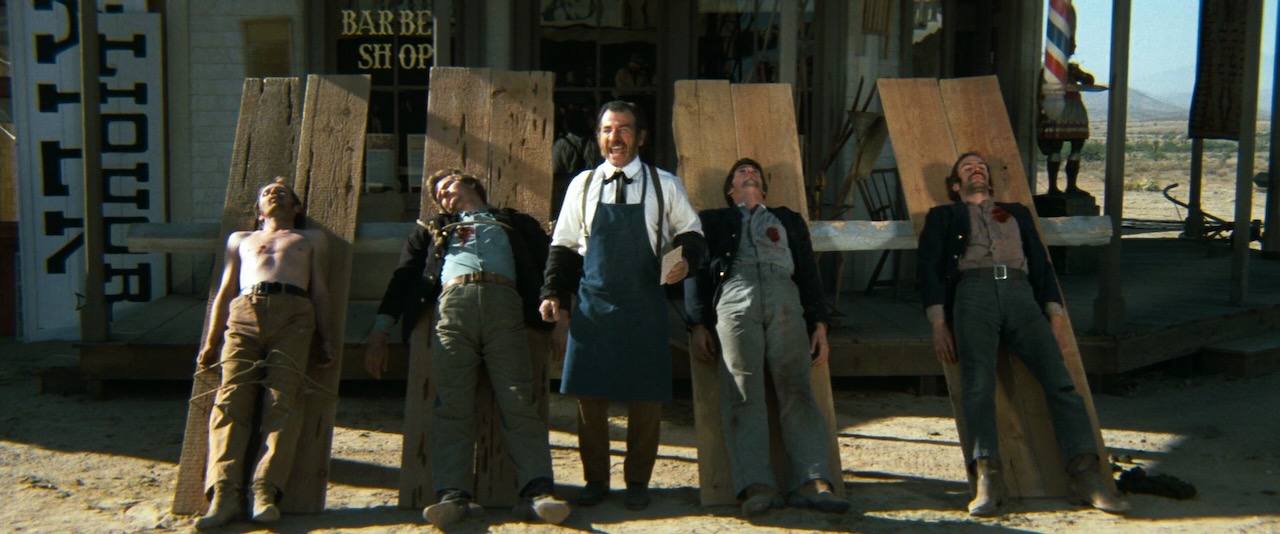
Clint was just innocently farming when some assholes come along, steal his wife, murder his kid and burn down his house. Cue a training montage! The assholes are a murderous rogue group in the union army, so Clint joins the confederates. Cue a war montage! The last of the confederates surrender when the war is over, and while pledging their loyalty to the revived union they’re all gunned down. Clint sees this, chain-guns 100 unioners, and goes on the run.

“After I get to likin’ someone they ain’t around long.” A dumb blunt movie, Clint now wandering the earth, gathering traveling companions (wide-eyed Sandra Locke, doomed kid, The Chief), tending to arrive at some conflict or another just in time to dispense cold justice. Clint’s fifth movie as director, and the earliest I’ve seen by a decade. Confed troop leader Fletcher (Killer Klowns From Outer Space) is allowed to live, Evil Unioner Terrill (Deliverance rapist typecast as a violent hillbilly) killed on his own sword.

Table (Ernie Gehr)

Flicker film of a table setting, with a teapot and some cups and saucers, maybe some scissors back there. A shot from one angle in red light, another shot slightly offset in blue light, a third in white, giving the impression of a 3D movie gone haywire in editing, or a preview of late-period Ken Jacobs. Watched this as the director intended (a video copy at home, which was seemingly rephotographed off a film projection, while listening to Makaya McCraven in the headphones).


Window (Stan Brakhage)

Stan aims his camera at/through a window for ten minutes. Unfortunately for the haters, this is incredible, because Stan is able to aim his camera at/through objects until they reveal their spirits inside.


Leisure (Bruce Petty)

“Everybody expressing themselves simultaneously was causing tension and blood pressure… work had been planned for, and leisure had not.” See, this is why I sketch out the month’s moviewatching in advance, to lower the blood pressure. “Plans were laid to get fitness into offices, design into chairs.” Very jumbled and busy, by design. Pencil sketches meets cutup animation, the narrator sounding like he’s advertising to us.

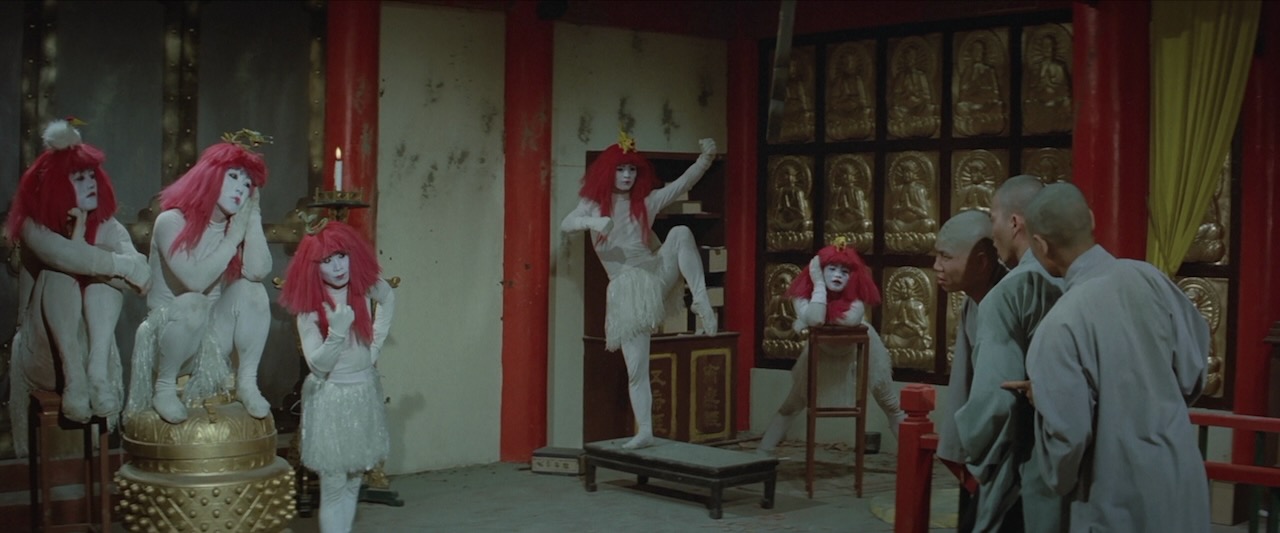
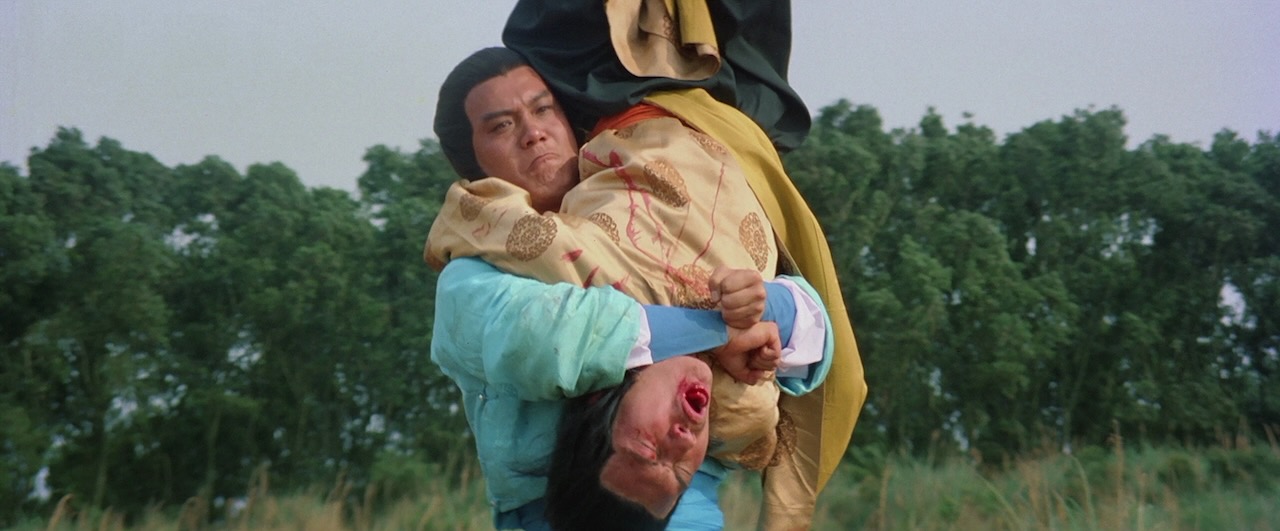
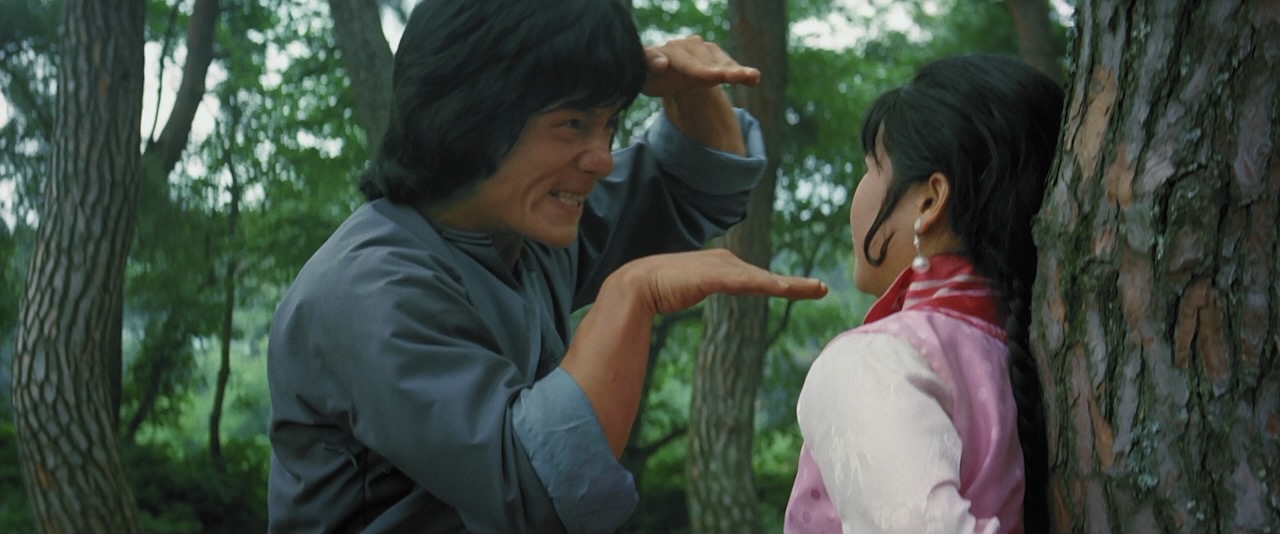
A pretty poor movie to split up and watch across two nights. The first half is pure episodic comedy, vaguely setting up the characters and detective agency (very good!) and the second is episodic plotty stuff, the guys working somewhat-together to solve cases and/or foil a big robbery they accidentally got in the middle of (pretty average!). So after tonight’s mid-70s grey/brown adventures, trying to hold on to the laughs from the night before.

Neckbrace Ricky costarred in Mr. Vampire, kung-fu Sam starred in Tsui Hark’s Swordsman, and detective Michael (also of Chinese Box) was known as Hong Kong’s lead comedy director until Stephen Chow showed up. Sean Gilman says The Contract is better, but it’s 1976 Week, so that one’ll have to wait a couple years.

A near-doc, near-drama with flights of fantasy, it must’ve looked like a whole new thing at the time. Luis and Armando pass some ladies at a mysterious cave and end up traveling seven generations into the future. A silent episode, serving snow for dinner. Too much with the rural rhythms, but quite beautiful, even in my TV copy.

Cordeiro and Reis were a married couple who made three features together set in this region of Portugal, which is convenient for film viewers who are obsessed with trilogies. Not shockingly, the cinematographer also worked on Monteiro and Ruiz films, and Paulo Branco produced.

Why did I have this listed as A Life Well Spent? Hangout doc with blues guitarist Mance Lipscomb. There’s a rock doc out there for everyone who ever picked up a guitar, and most are in the style of the Beatles or the Devo things, but we need more that are like this.

Brooks-as-himself tells the people of Phoenix he’s capturing real life, so not to play up for the camera while his crew films the Charles Grodin family going about their daily business. His psychologists turn against him, Brooks makes everything about himself as usual, and finally burns Grodin’s house down to create drama for his film. Brooks imploding for 90 minutes is a little tedious – fortunately the movie is saved by the camera-headed people, who are funny every single time I see them.

Dave Kehr:

With its deliberate avoidance of punch lines and insistent drift into darkness and disaster, Albert Brooks’s 1979 film left audiences baffled when first released. It now seems like one of the most innovative comedies of the decade, suggesting a hundred different ways in which movie comedy could escape the gag-heavy, character-destroying styles imposed by television (if only it wanted to).