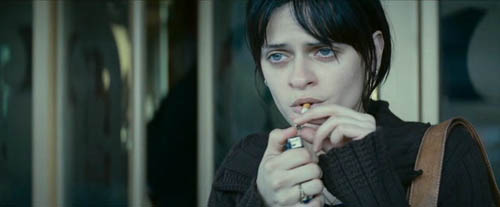
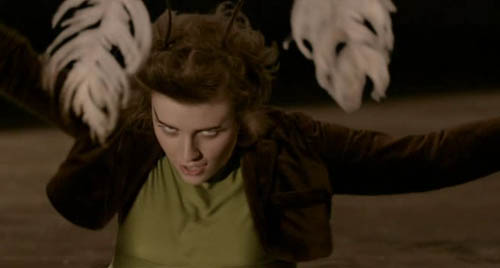
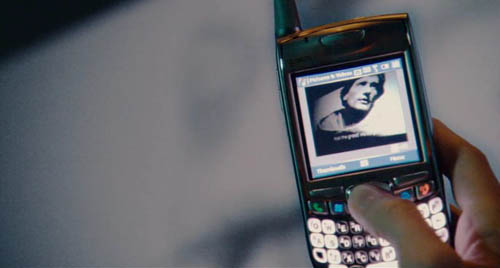
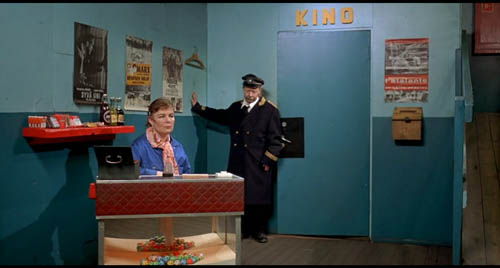
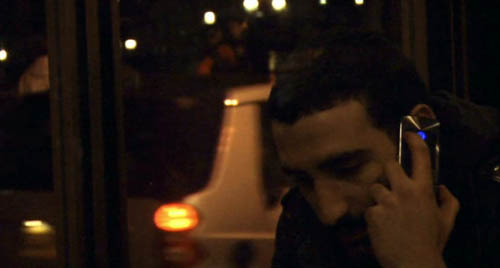
Anthology films are never great, but are usually at least interesting, so I was surprised when this one started out great. But of course it was just front-loaded, and got less great as the other episodes appeared. Didn’t realize at the time that the great one was by Ermanno Olmi (a director who, like Ronald Neame yesterday, has done a couple criterion-dvd-released movies that I know nothing about). Was less of a straightforward story than the other two – an important-seeming older guy leaves business meeting and boards train with this woman’s help, then sits in the dining car thinking about writing the woman a letter, thinking about falling in love with her, all the while surrounded by other passengers incl. a bunch of army and security guys. Doesn’t sound like all that, but I really dug it, balancing the tense (because of the army guys) train ride with the flashbacks and an almost-love story, seemed very beautifully done.

In the third part, Loach lowers the class level a few more notches (after the woman in Kiarostami’s piece had already knocked it down a little) portraying three excitable young men with shit jobs who have been saving up to see this soccer match in Rome. On the train, one shows off his soccer ticket to a refugee kid, who takes the opportunity to swipe his train ticket. The soccer kids realize what has happened – do they demand their ticket back themselves, have the train personnel mediate, or let the cute kid and his poor jail-threatened family keep the ticket then run away from the cops at the station while fellow soccer fans run interference? The latter, and valuable lessons about humanity are learned by all. Actually I found it pretty lame, a crappy version of the triumphant ending of Offside. A valuable lesson about humanity is learned at the end of the first segment as well, the man getting a glass of milk for the mother of a baby in the standing-room section – not the highlight of that segment, but still less hacky than this one’s ending.

In the center slot, Kiarostami shows a kid assigned (through some community service program) to assist a general’s widow, a horrible woman who steals one man’s seat but does not steal another man’s cell phone, and gets into unbudging arguments with both of them. Meanwhile our kid is trying to have a surreal conversation with a young girl who remembers him from his hometown – he never noticed the girl before but she’s a friend of his younger sister. The conversation seems like she’s telling him about someone else, as if he doesn’t remember his own past, but maybe she remembers his past from a different angle; she only knows the parts he had been ignoring. We don’t get much about this guy in the present, what he’s like, but finally the widow gets to be too much and he hides from her somewhere on the train, letting her exit confused without him (with baggage help from the cellphone-argument man, a minor version of the Valuable Lesson About Humanity).

An alright movie – not much innovation in story or composition or anything else, but I’m glad I watched it, and I might make Katy check out that particularly moving first segment sometime if she’s got a half hour to kill.

image

image

image

On the DVD: a 40-min behind-the-scenes doc where we learn that it took a while to come up with the transitional segments to join the three main pieces. That’s something I could’ve been told in under forty minutes, thanks.
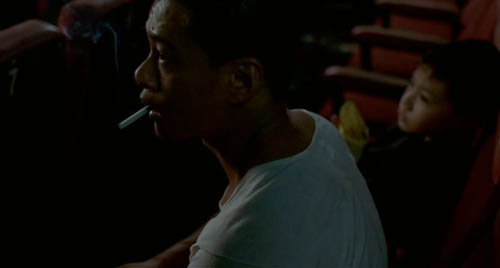
“Still, it’s very sad.”
“But, my friend, happiness is not a joyful thing.”

Three filmed short stories by Guy de Maupassant, reminding me of Quartet. It wasn’t great and made me not want to seek out any of the author’s books… there it also reminds me of Quartet. Not narrated by the author like Quartet was, since the author is dead, but rather by a sort of author character who shows up as an active participant (the artist’s friend) in part 3.

So, Lola Montes and La Ronde, and even Letter From An Unknown Woman would have been wonderful, but I chose to show Katy Le Plaisir instead and now she thinks I enjoy stodgy period pieces. Sure it had some sparks of life in it, but even the documentary extras on the DVD wanted to talk up the difficulty in finding locations and in making the film rather than giving a reason why people seem to like it. Stanley Kubrick once called it his favorite film, so surely there’s something there.

Movie starts out weird, kicking it into high gear with a creepy-looking masked man dancing gaily at a fancy ball, then quickly passing out. It is discovered that he’s an old man trying badly to recapture his youth and hit on young girls, to his wife’s patient dismay.

Centerpiece segment seems like it wanted to be the entire movie, but wasn’t quite long enough so they tacked on the other two bits… it must be over an hour long, about a whorehouse that the camera can never bring itself to go inside. Fortunately, the whores all come outside, closing up shop to take a trip to the country for an unexpectedly moving wedding, before returning home to the glee of the townsfolk.

Last bit, a model and artist fall for each other, but when things get rough and he might leave her, she tries to kill herself… they end up together forever, she in a wheelchair.

Haven’t seen a Max Ophuls movie yet that takes place in modern day… guy liked to create ornate depictions of times past. Some fantastic shots made the whole thing worth watching, incl. the artist meeting the model in the start of segment 3, and her suicide later, which switches fluidly from an objective to a subjective camera, climbs the stairs with her shadow cast before us then crashes through the window and down.

I am so bad at recognizing people, because Simone Simon played the model and I didn’t know it. Jean Gabin was unmissable as the friend/host in the country in the middle segment at least. Claude Dauphin (President of Earth in Barbarella) was the doctor in the first segment.

Second half of shorts listing from Cannes 60th anniv. celebration (first half is here):

It’s A Dream by Tsai Ming-liang
image

Occupations by a hatchet-wielding Lars Von Trier
image

The Gift, more weirdness by Raoul Ruiz
image

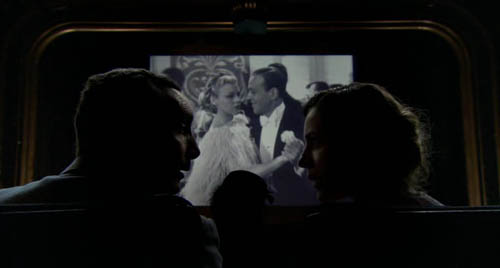
The Cinema Around The Corner, happy reminiscing by Claude Lelouch
image

First Kiss, pretty but obvious, by Gus Van Sant.
image

Cinema Erotique, a funny gag by Roman Polanksi with one of Jean-Pierre Jeunet’s large-faced actors.
image

No Translation Needed, almost too bizarre to be considered self-indulgent, first Michael Cimino movie since 1996.
image

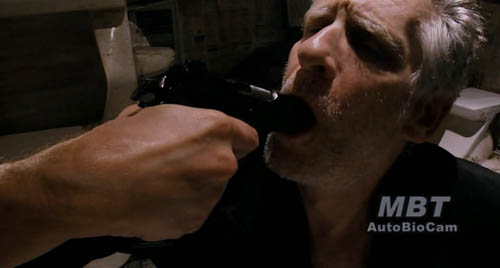
At the Suicide of the Last Jew in the World in the Last Cinema in the World by and starring David Cronenberg, one of his funniest and most disturbing movies.
image

I Travelled 9,000 km To Give It To You by Wong Kar-Wai.
image

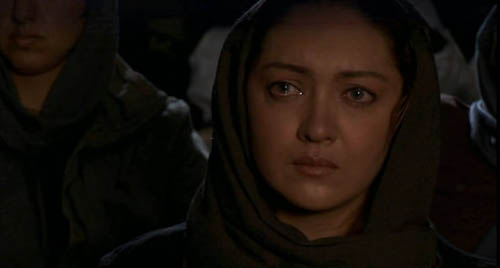
Where Is My Romeo? – Abbas Kiarostami films women crying at a movie.
image

The Last Dating Show, funny joke on dating and racial tension by Bille August.
image

Awkward featuring Elia Suleiman as himself.
image

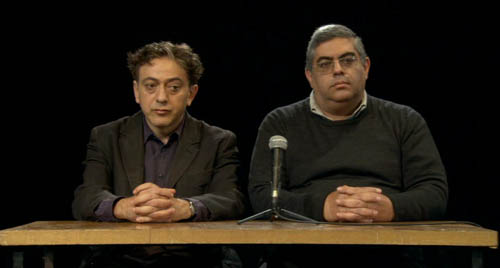
Sole Meeting, another gag, by Manoel de Oliveira and starring Michel Piccoli (left) and MdO fave Duarte de Almeida (right).
image

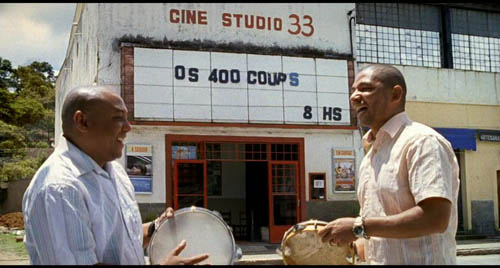
8,944 km From Cannes, a very pleasurable musical gag by Walter Salles.
image

War In Peace, either perverse or tragic, I don’t know which, by Wim Wenders.
image

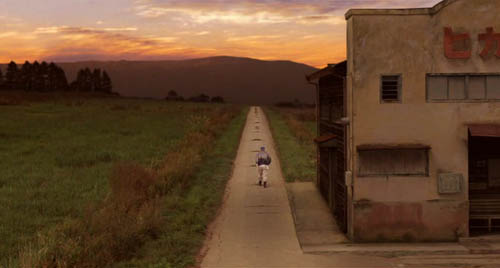
Zhanxiou Village, supreme childhood pleasure by Chen Kaige.
image

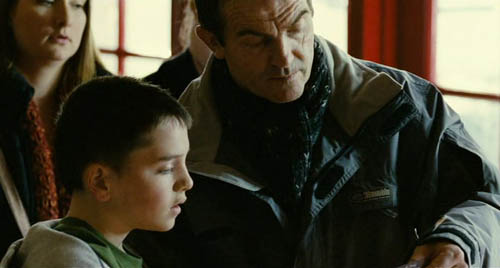
Happy Ending, ironically funny ending by Ken Loach.
image

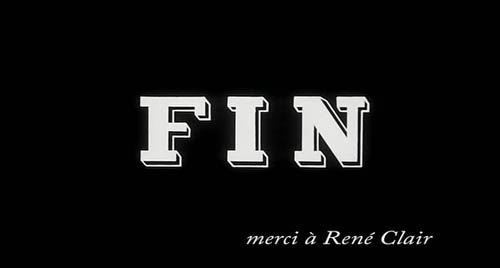
Epilogue is an excerpt from a Rene Clair film.
image

Not included in the DVD version was World Cinema by Joel & Ethan Coen and reportedly a second Walter Salles segment.

Not included in the program at all was Absurda by David Lynch (reportedly he submitted too late, so his short was shown separately). I saw a download copy… some digital business with crazed sound effects and giant scissors.

A program of shorts that played at the 2007 Cannes Film Festival to mark its 60th anniversary. Pretty terrific bunch of 3-5 minute shorts by possibly the best group of directors ever assembled… worth watching more than once. Each is about the cinema in some way or another, with a few recurring themes (blind people and darkness, flashbacks and personal stories). Katy watched/liked it too!

First half of shorts (second half is here):

Open-Air Cinema by Raymond Depardon
image

One Fine Day by Takeshi Kitano, continuing his self-referential streak.
image

Three Minutes by Theo Angelopolous is a Marcello Mastroianni tribute starring the great Jeanne Moreau.
image

In The Dark by Andrei Konchalovsky
image

Diary of a Moviegoer by Nanni Moretti
image

The Electric Princess Picture House by Hou Hsiao-hsien
image

Darkness by the bros. Dardenne
image

Anna by Alejandro González Iñárritu
image

Movie Night, the first of two gorgeously-shot outdoor movie starring chinese children, by Zhang Yimou.
image

Dibbouk de Haifa, annoying business by Amos Gitai.
image

The Lady Bug by Jane Campion.
image

Artaud Double Bill by Atom Egoyan.
image

The Foundry, comic greatness by Aki Kaurismäki.
image

Recrudescence, stolen cell-phone bit by Olivier Assayas.
image

47 Years Later very self-indulgent by Youssef Chahine.
image