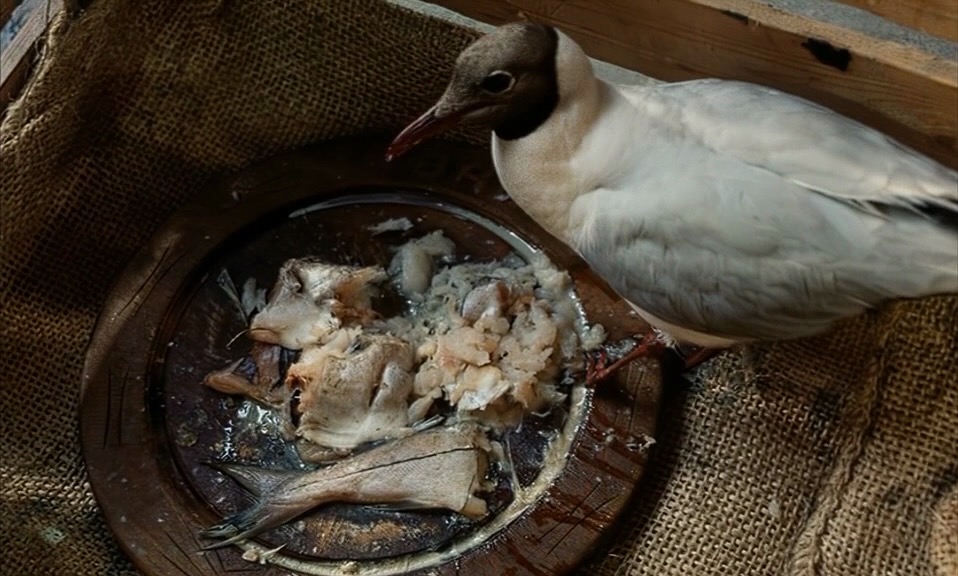
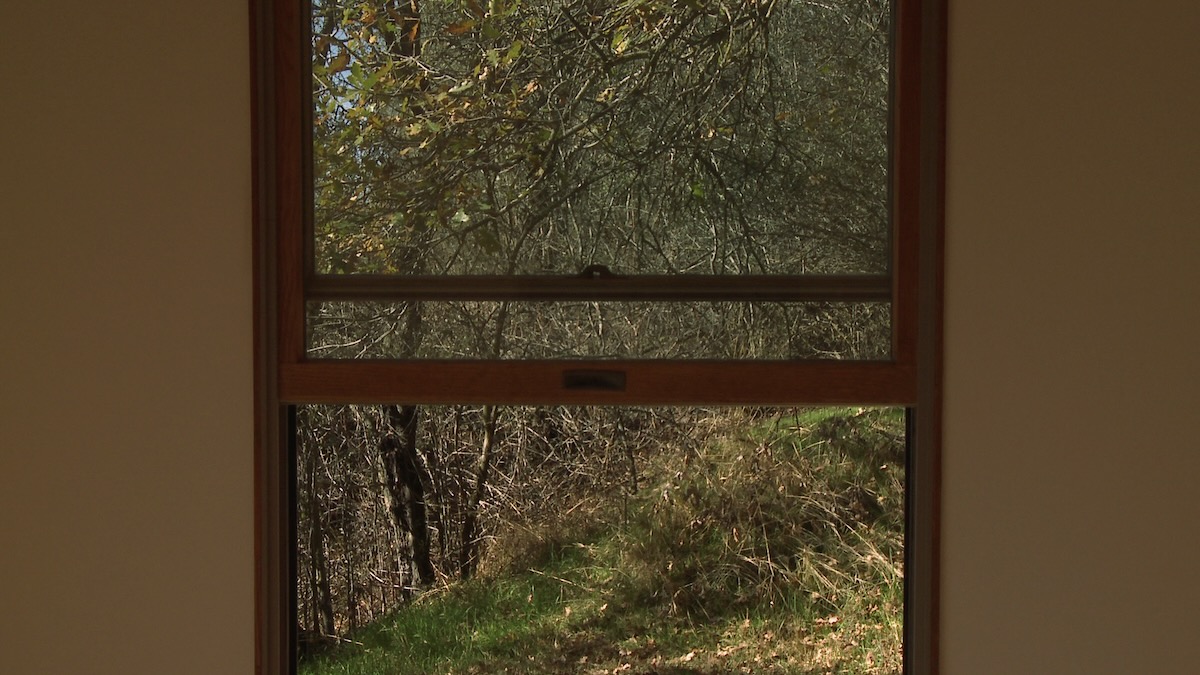
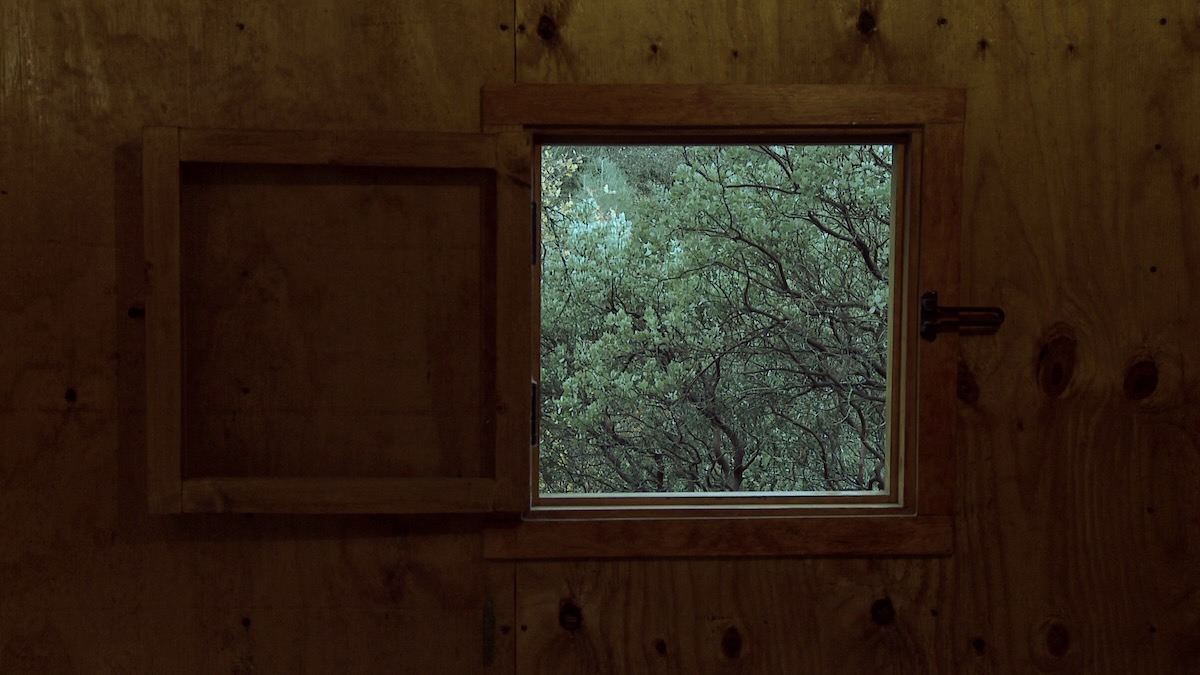
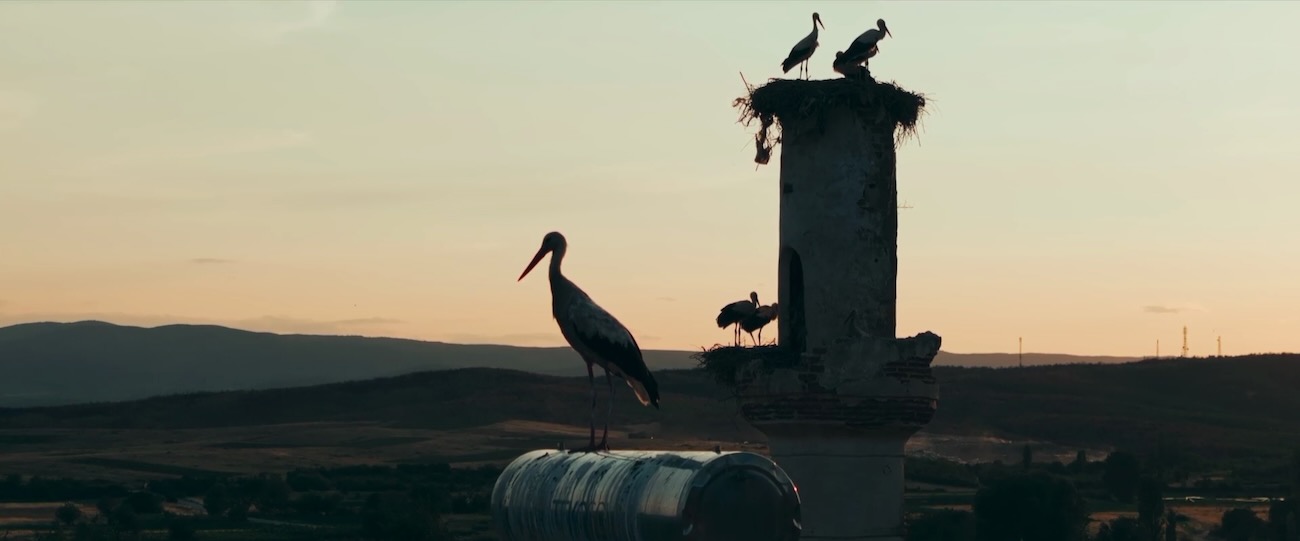
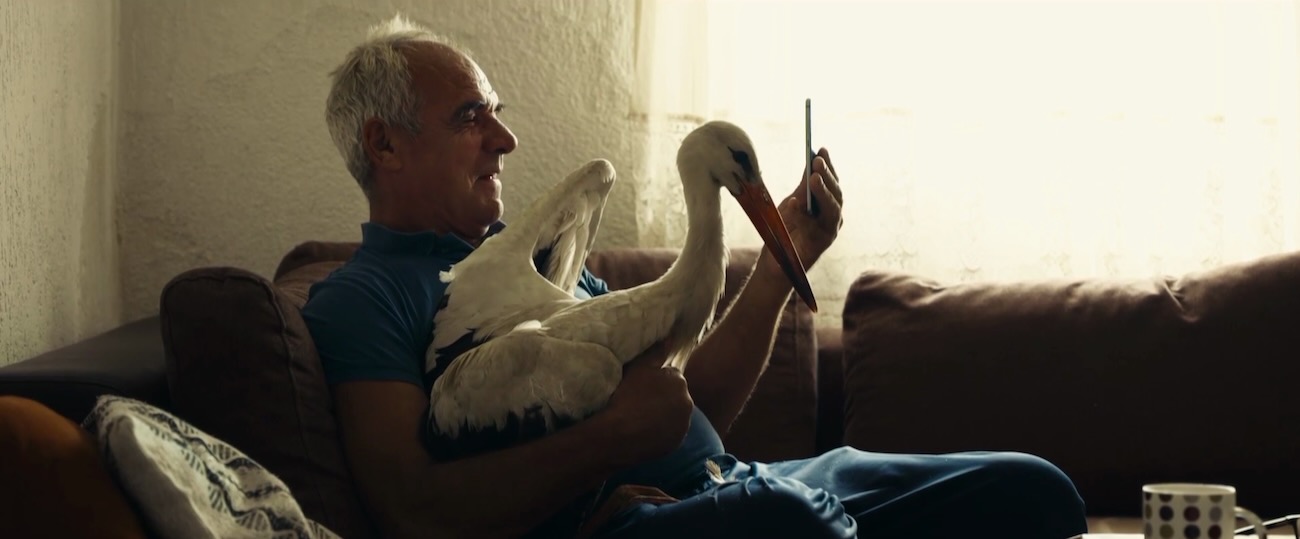
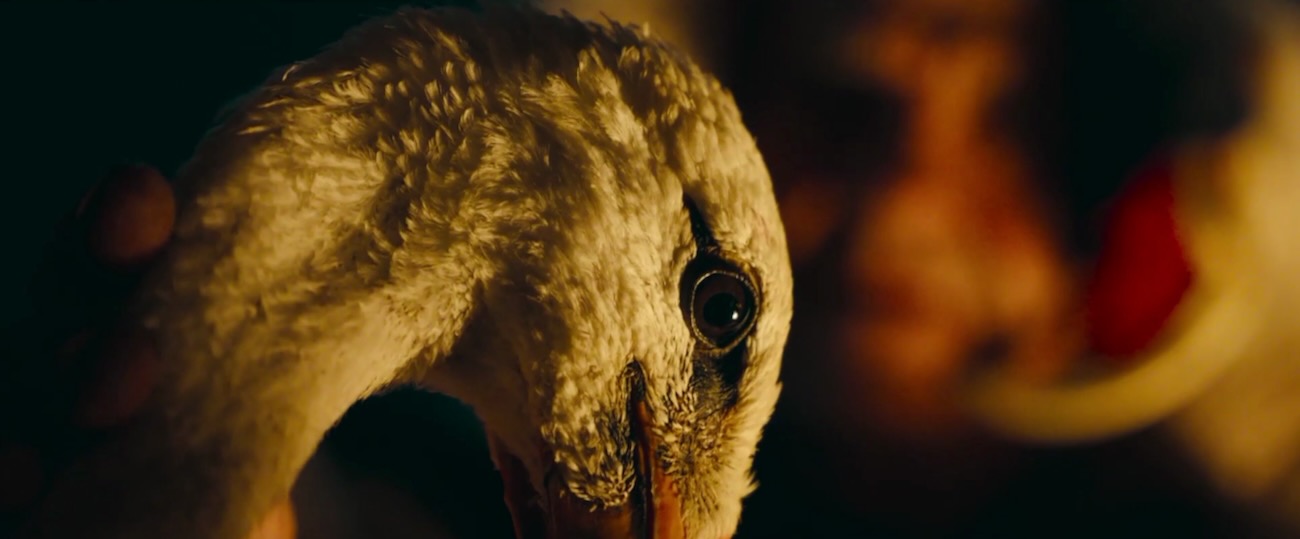
People who watch movies for the human drama, the “empathy machine” people, are the overwhelming majority in the arthouse realm, leaving us bird people to scan every title and plot description for some sign of avian life and not bird-as-metaphor. Once a decade we hit absolute gold, and coincidentally the same month H Is For Hawk came out, right around when I was watching the egret of Alamar, this incredible crane movie popped up. This is what the cinema could be: vague stories featuring doc footage of storks eating frogs, and by that measure the greatest movies would be this and The Enigma of Kaspar Hauser.

That said, there’s much time spent on non-crane activity, as the movie contrasts fallen corrupted human economic life with timeless biological bird life. Priced out of farming, a Macedonian man spends his time helping an injured stork.

Corey Atad:

It works for several reasons. The Fonda family’s history in the colonies dating back to the 1600s, for one, giving the project a remarkable historical breadth. But there’s also something to Fonda being born as The Movies begin to take shape, with a career spanning the real golden eras of Hollywood filmmaking. He becomes, in the context of this film, a figure through which to understand America’s good spirit, and how it lost out to America’s evil delusions.

After convincing us for three hours that Henry Fonda represents America itself, weaving film and interview clips and bringing in political history and Henry’s outspoken actor kids, the doc closes on a shot of pelicans, affirming its greatness.

Kid is visiting Dad, who catches fish and lobsters along the coral reef.

I chilled out to the movie’s rhythms, and could’ve fallen asleep if not for this excellent egret.

The producer is a powerhouse, the director has some little-seen followup films, and you could (and probably should) watch three of ’em together in the same runtime as the Henry Fonda doc.

Adam Nayman writes that Gonzalez-Rubio “gets a film’s worth of astonishing footage, almost all of it shot by the filmmaker himself with a single HD camera,” and they discuss the “fiction inside the story” (the egret was an unstaged wild encounter). G-R: “I wouldn’t have been honest if I had shot this intimate story and then slept at night in another place, rather than in the palafitte on a hammock, waking up with the first rays of the sun.”

Think I prefer Luci-Hadz’s bizarre movies where I don’t ever know what’s happening to the ones where a runaway girl hides out on a movie set, ending up as stand-in then rival to the movie’s diva star, the titular Ice Queen. Feels like they’re telling a story but not getting anywhere with it, all long pauses and people staring silently, while that approach seems to work for me if I’m as lost as the characters. Either way, Hadz has conjured another couple hours of splendid images.

Marion Cotillard (only the second time I’ve seen her in the last decade) is our Queen, Clara Pacini the runaway, August Diehl (A Hidden Life) a sinister assistant. The Ice Queen movie doubles as Clara’s childhood storytime and present fantasy world. There’s a crystal / refraction / kaleidoscope theme, the movie’s distorted ending recalling the fever dreams of Mysteries of Lisbon.

Absolute charmer of a birdwatching doc – free on youtube and better than most fest-premiering docs we’ve seen lately. Clear from the opening credits that Owen has got visual ideas to spare. His brother Quentin gets most of the face time and has got the charisma to back that up. Most importantly we see hundreds of beautiful birds.

O’er the Land (2009)

Military marching, war reenactments, an RV sales pitch, immigration cops, narration by a guy who ejected from a plane and bounced through a thunderstorm.

Guys who refer to machine guns as “freedom”
Firefighters, flamethrowers, waterwall

Wild birds in some kind of audio experiment
If i understand the credits, the archival-sounding stories were performances


Ray’s Birds (2010)

Ray runs a raptor center – Stratman films his public demonstrations and splinters them into fragments.


Hacked Circuit (2014)

The first voice we hear is someone getting a crank call from a flock of birds, so there are birds in all her movies. High-tech studio where a foley artist is recreating sounds from The Conversation. Our camera roving, invisible, goes into the studio and back outside in a loop, and jeez, that wasn’t a single take, was it? Michael Sicinski saw it at True/False.

Found-footage horrors are rarely good – I’m thinking of Willow Creek and The Poughkeepsie Tapes and V/H/S and its sequels (which also suffer from being anthology horrors, which are also rarely good). If nothing else, the found-footage conceit is an excuse for shitty handheld camerawork, and we’ve got that here, and also clips from fake TV programs with insufferable narrators and graphics. Movie is also not nice to birds. Still, pretty good, I’d check out the director’s torture video Grotesque.

Ghost investigator on the trail of a kidnapped girl pieces together a documentary stitching various hauntings he filmed that turn out to be related. Doc guy Kobayashi pulls in haunted actress Marika and foil-hat “super psychic” Hori, and they have a blairwitchy experience at the dammed/damned lake where a village once existed. Apparently the village had a ritual to keep demons at bay, no longer being performed as everyone moved away, now wherever the demon-possessed abortionist from the drowned village goes, her neighbors are driven murderously mad from the sounds of her ghost babies. Our team tracks her down, the doc guy rescues her hostages, but fails to banish the evil, uh oh. Not to be confused with magic pirate revenge movie Noroît. The actors here also appeared in various Rings and Grudges, and two were in Kurosawa’s Retribution.

Zombie conspiracy movie with lots of birds and boobs, from the director of O.G. Puppet Master, this videotape was very popular with some teens I could mention who were stuck at their great aunt’s house. The wannabe-Phantasm flying stone hand never looked extremely cool, and holds up even worse in HD, but the birdies have never looked better. The stone hand facehugs a would-be rapist using its barbwire grapples and maybe transforms the guy into a bird, and we’re off.

These red-crested cardinals and a cockatoo get carted into the background of every room/scene:

Verbose young man Corey arrives at his late dad’s estate and meets the staff, including lawyer Robert Burr (a doctor in Return to Salem’s Lot), Anjanette Comer who runs the place (she starred in The Baby with Arletty from Messiah of Evil), and her hot young horsegirl daughter who is constantly hitting on Corey (naming her “Diane Palmer” was probably supposed to spark some connections I didn’t catch at the time). The horsegirl says to stay away from the feather-eared bird people at the brothel next door, but her mom is one of them. Corey got a note from his late dad saying someone named Dolores can help resurrect him, and guess where Dolores hangs out.

The director appears onscreen, at left, as if to say “don’t take any of this too seriously”:

Corey keeps acting confident as he blunders around, way over his head, risking his ass to save the father he never met. He gets it on with his dad’s girlfriend while guest star Edgar Winter blows a sax solo. Anjanette maybe tries to kill him, but gets blinded by Dolores. The alliances are confusing… and the meaning of the stone hand… lotta good birds though. Zombie Dad gets almost-resurrected, intending to inhabit his son’s body, but Corey fights back at the last minute and dad turns into a zombie muppet eclectus.

Intro with a storyteller and a poem sets this up as a fable or legend, then some great storytelling economy as Klaus Kinski going from mourning his dead mother, leaving home, to penniless gold digger, to merciless bandit in a few minutes.

Kinski is hired as slavedriver of a sugarcane plantation. There among macaws and storks, bats and crabs, he knocks up all three of the owner’s daughters so they decide to send him to certain death in the deadly kingdom of Dahomey within Benin. He’s rescued from the insane king by an insane prince, and trains a woman army, but is he happy? He is not.

Werner Herzog’s Black Panther:

Entire movie was worth making for the scene of a goat taking communion: