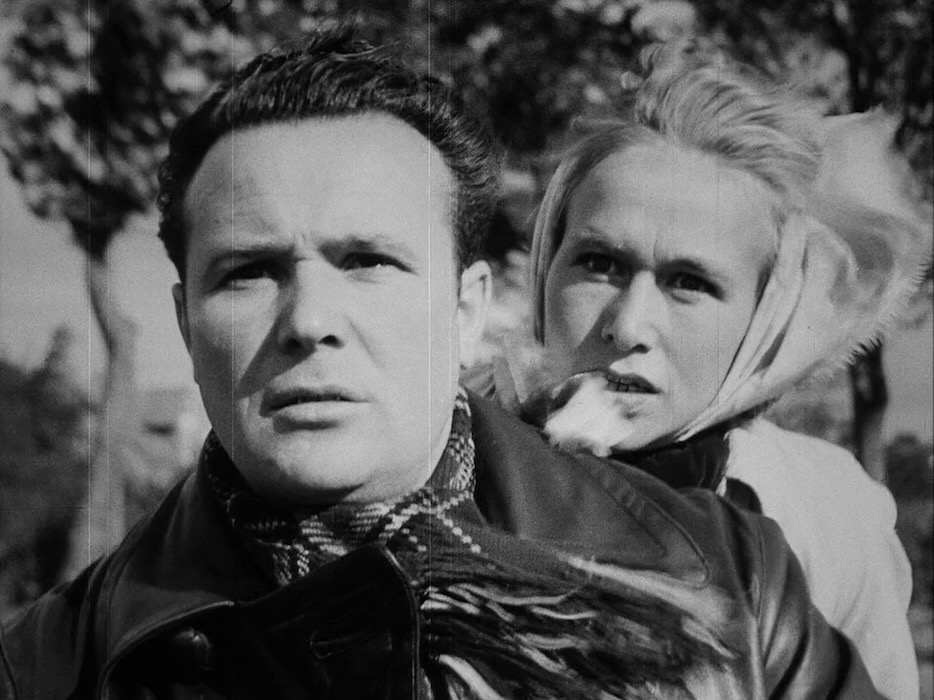
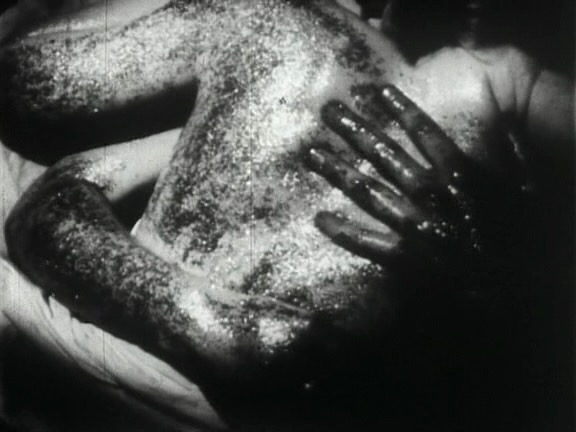
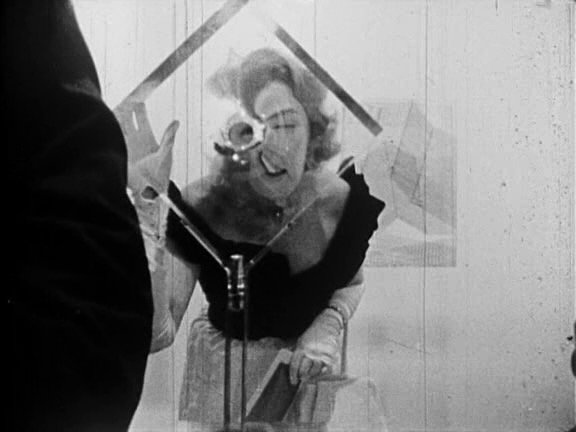
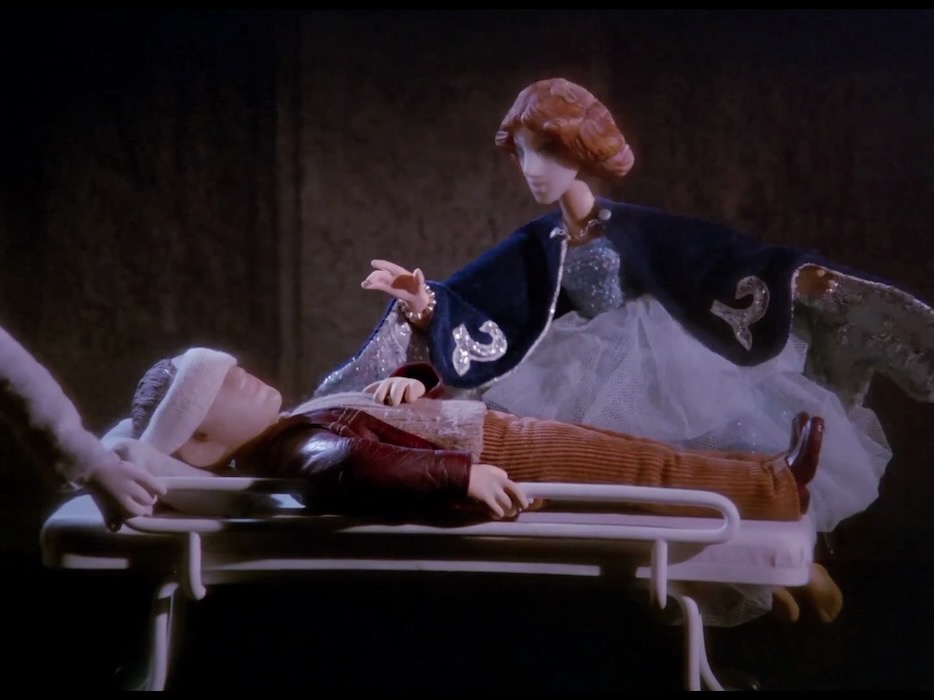
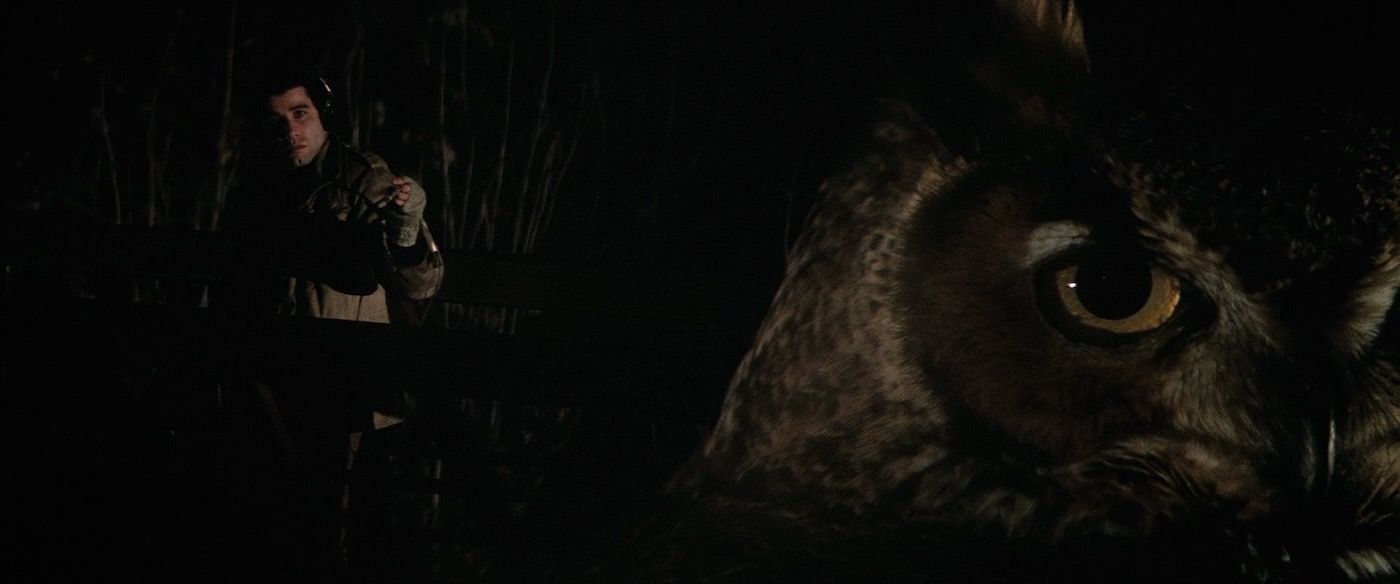
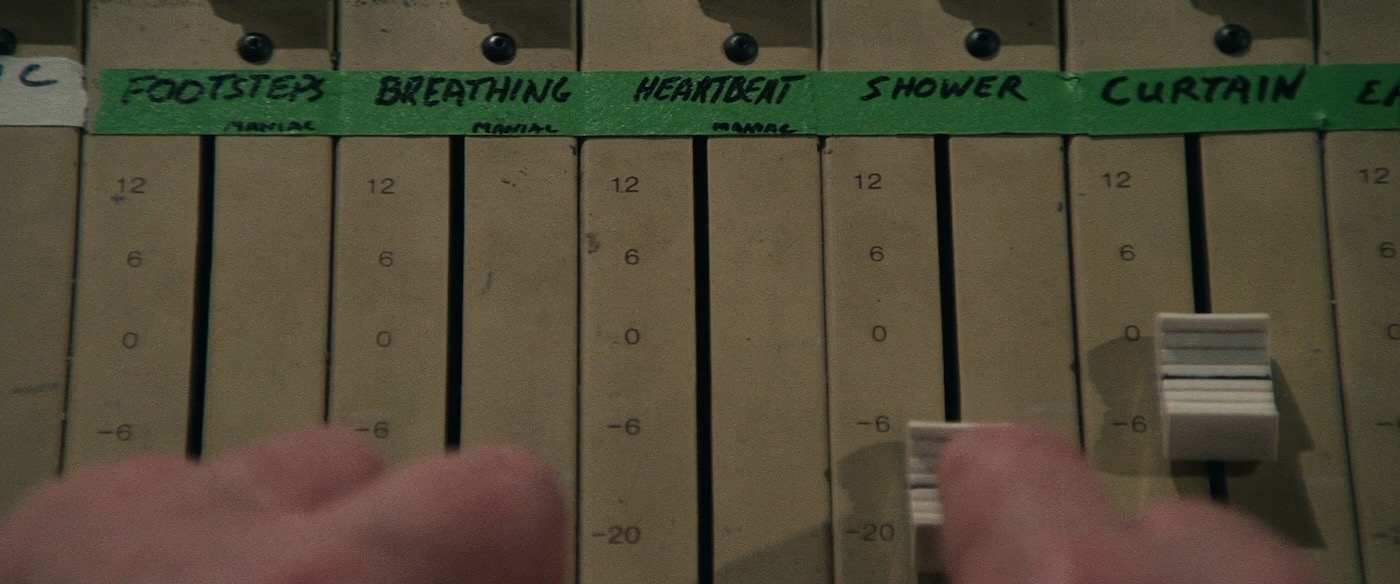
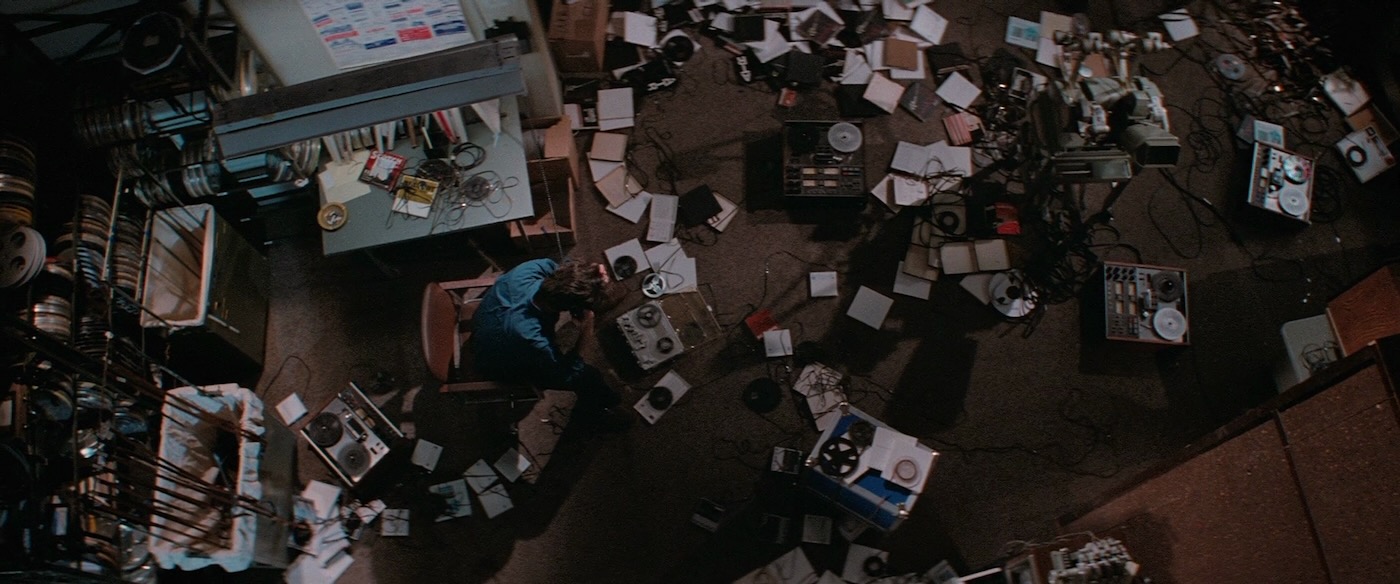
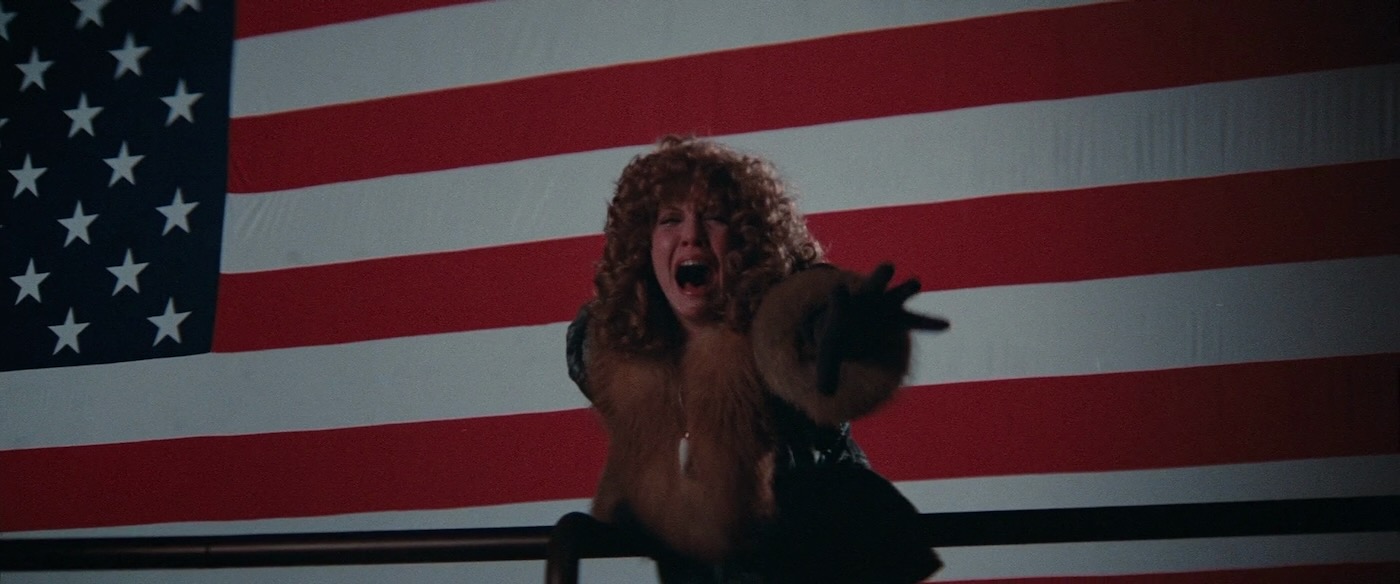
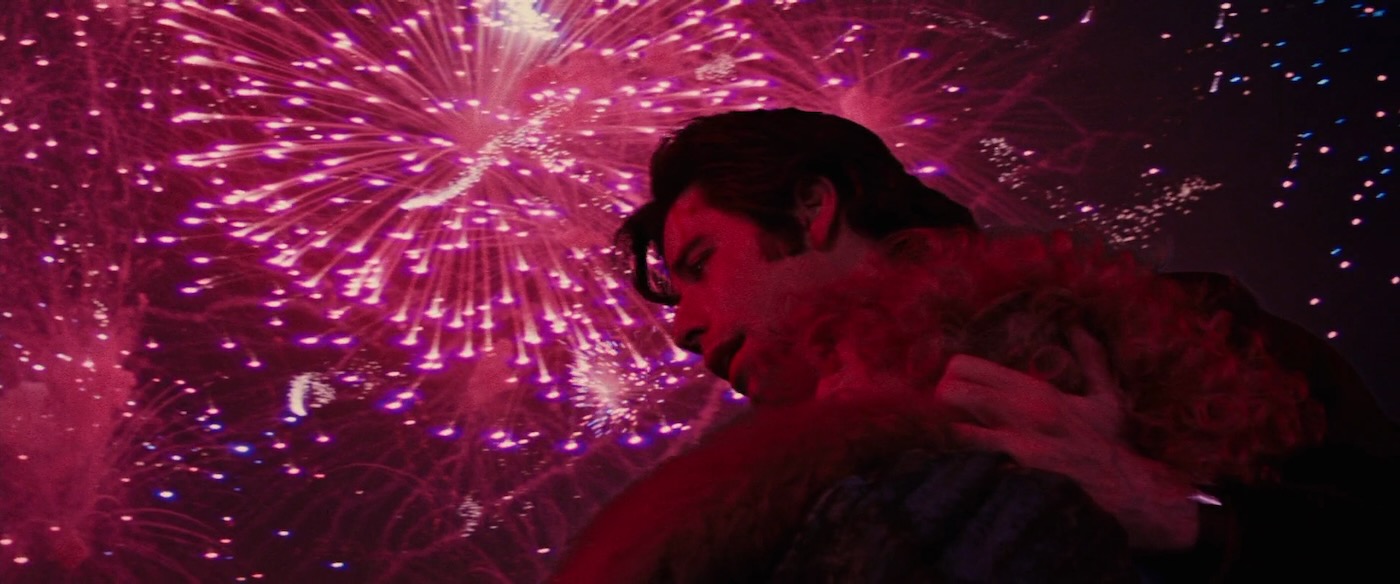
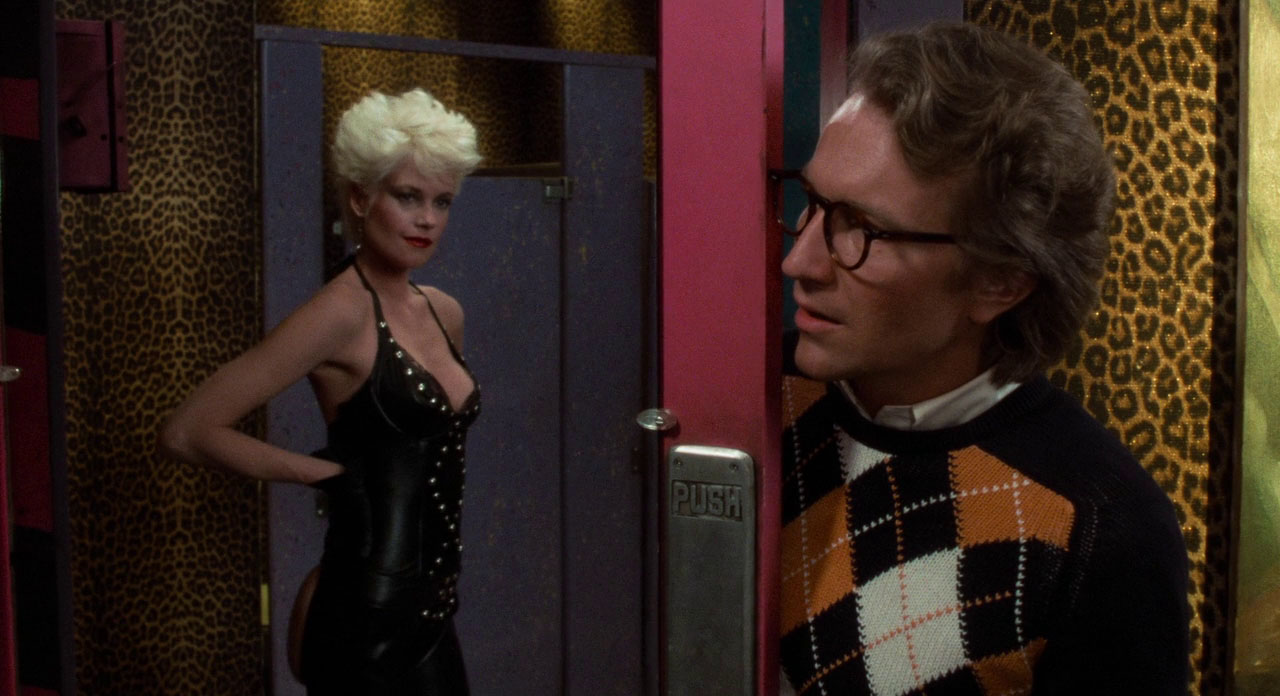
Haven’t seen this in a while… probably De Palma’s best movie, but I’d probably say that about ten different De Palma movies if I’d rewatched them this week. Sound recordist Travolta works at a movie production house with a framed poster of Squirm, rescues Nancy Allen from a car crash, and gradually uncovers her role in the “accident.” Unfortunately for everyone, killer John Lithgow has gone rogue, starts a side project murdering girls who look like Nancy so her eventual death will be blamed on the serial killer instead of politics. Nancy’s accomplice, blackmail-photographer Dennis Franz, relaxes at home watching De Palma’s Murder a la Mod, while his shadowy co-conspirators erase Travolta’s entire tape library (filmed in an Akerman spin take).

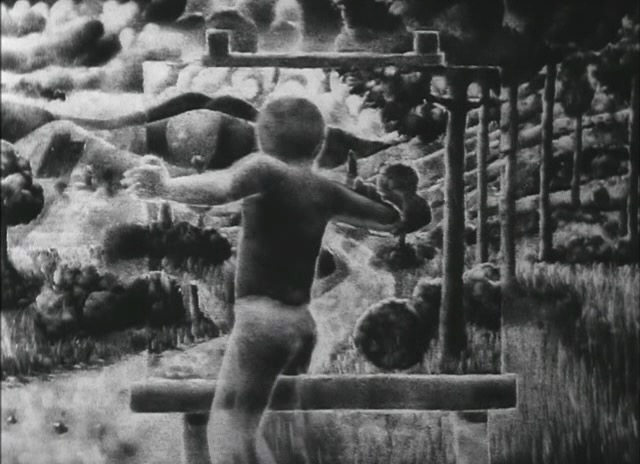
A tale of two icepicks and a handful of murders, in De Palma’s first Blow Up remake. Jumping back and forth in time, we follow Karen, who’s dating reluctant pornographer Chris, and her friend Tracey, who is withdrawing all her family valuables from the bank and putting them in an envelope under the seat of her illegally parked car then leaving the windows open. Introducing a creepy voyeur in a way that feels as if either De Palma or we the viewers might also be creepy voyeurs, and finally the movie’s secret weapon Otto, an undercranked maniac prankster, but not (on purpose) a murderer. Right as the murder mystery was escalating, Otto’s silent comedy bit takes over, his racing thoughts narrating the action.

Decent music, nice photography – the DP went on to shoot Basket Case and Brain Damage for Henenlotter. Against all odds, some of these people worked in movies again. Tracey is in Desert Hearts, Chris starred in a Fulci picture, and Otto became a De Palma regular, most notably starring as The Phantom of the Paradise.

Ness/Costner, a true believer, says “let’s do some good” before busting up a joint he falsely heard is importing liquor, then the others make fun of him for the action-movie quip. He puts a team together in honest cop Sean Connery, sharpshooter Andy Garcia, and accountant Charles Stone (future director of Air Bud) to go after Al “De Niro” Capone for tax evasion since they can’t get him for anything else, and do-gooder Ness learns that he can’t stay clean when everyone else plays dirty.

Towards the end of this movie I wrote that it’s “THE 1987 movie” – not the best or most popular, but it’s the movie, and I wondered if I could find the movie for every other year – but the next morning I wasn’t sure what I meant by that.

It is hilarious that Connery won a supporting oscar for his Highlander II-ass performance instead of… I dunno, John Goodman in Raising Arizona, or The Cowboy in Innerspace, or Alice Cooper in Prince of Darkness, or That 70’s Dad in RoboCop.

De Palma makes a theme of child endangerment leading up to his stairway setpiece:

After Rotterdance I was in a Rear Vertigo Window Remix mood, and De Palma got me covered. It’s suspense-comedy, with lead guy Jake (Nancy’s sympathetic doctor in Nightmare on Elm Street 3) as the world’s most awkward loser, set up to witness a fake crime. He’s introduced being fired from the movie Vampire’s Kiss since he can’t perform his grave scene due to high anxiety claustrophobia, then going home to catch his wife enthusiastically cheating. He does get to kiss the girl he’s stalking (Deborah Shelton of Plughead Rewired: Circuitry Man II) after almost chasing down her purse snatcher, but fails to save her life in an absolute mess of a driller-killer murder scene.

Enter Melanie Griffith, too thin to be a porn star. Now an accomplished stalker, Jake starts acting money after his sex scene with Melanie, impresses her with the fancy place where he’s staying, then reveals that he’s familiar enough with her work to have recognized her through the telescope in the staged crime scene. He overcomes his claustrophobia, defeats the murderer, and gets re-cast in Vampire’s Kiss. Really not a great movie but pretty fun. Between Scarface and Wise Guys, De Palma had to get the 1980s out of his system, making a movie that contains a whole Frankie Goes to Hollywood music video.

Home Movies (1980)

Framed as a lecture by professor Kirk Douglas on student Dennis, “an extra in his own life.” Some of the framing in this is nice if one seeks that De Palma magic, but the action is silly-ass, with sped-up-film goofiness and pauses for laughter after clunker jokes. It’s some consolation that it’s all meant to be a film-in-a-film with a self-consciously big music score.

Kirk must’ve done this as a favor after The Fury. Our main boy who films everything (including his cheating dad) is Keith Gordon, his girl is Nancy Allen, a year before they both appeared in the great Dressed to Kill. I dig the energy of Keith’s cult leader brother Gerrit Graham, just off playing the title role in C.H.U.D. II: Bud the Chud. As a cheapie exercise in film production assigned to De Palma’s real college students, it came out mostly fine, except maybe the blackface bit.


The Wedding Party (1969)

Another collaboration with Sarah Lawrence college, this time with De Palma the student, shot before Greetings but released after Robert De Niro’s star rose. More undercranking and dubbed voiceover, opening as madcap silent comedy – so this is where he learned it – and references to cross-dressing in both films prefigure Dressed to Kill.

Charlie is a nervous groom, arriving with two groomsmen (RDN +1) at a wedding site with the bride’s too-large family. Bride Jill Clayburgh is ironically best known for a film called An Unmarried Woman. They each get advice from their people, Charlie waffles on the marriage and/or cheating with piano girl Celeste. The dialogue is better than the other movie, and editing is very fun, with jump cuts galore. It gets a little long – hard to sustain wacky comedy for 90 minutes.

Rewatched for the first time since theaters (?) in prep for M:I:6:Fallout, and it was much fun. I remembered Emilio Estevez’s elevator death, but not that it happens in the opening sequence and that he dies along with the entire team of Kristin Scott Thomas, Emmanuelle Béart (not really dead) and her husband and team leader Jon Voight (also not dead, and the secret double-agent mole who planned the whole thing to frame Tom Cruise and make off with the secret documents or whatever). On the side of evil Voight are Jean Reno, who dies in the preposterous helicopter-in-the-train-tunnel finale, and Vanessa Redgrave, who is just quietly arrested. I was impressed by the rubber-masks game, recalling the advanced digital trickery in M:I:4:Ghost:Protocol, and then happily, part six featured just as many rubber masks.

Dramatic camera angles, first-person shots and entire subjective scenes which play differently in flashback, because it’s still De Palma.

Team 1: Estevez (his last appearance in a theatrical film that he didn’t direct), Cruise (same year as Jerry Maguire), Béart (right between her two major Rivette films), and Burnt by the Sun star Ingeborga Dapkunaite:

Cruise and K.S.T., lurking:

While the Lady Gaga superbowl party raged downstairs, I was upstairs watching one of the most emotionally upsetting war films ever made…

Americans in the Vietnam war get into a battle while De Palma lowers his camera into the tunnels where someone is creeping up on Michael J. Fox, who has fallen partway through before being rescued. So the movie opens with Fox not being a huge help to his squad, and his reputation only gets worse. The men survive, but a few (movie) minutes later, Fox rescuer Erik King gets shot at a supposedly friendly village. Back at camp, Fox’s teammates (leader Sean Penn, Sean’s violent buddy Don Harvey, John C. Reilly and timid new replacement John Leguizamo) are frustrated that the whorehouse is off limits, so on the way out to their next assignment they kidnap a village girl (Thuy Thu Le) as a sex slave. After she’s raped and tortured for a couple days, they stab and shoot her during a battle atop a train trestle (during which, if I’m not mistaken, there’s a friendly-fire disaster down below) and toss her body off a cliff.

Fox has never gone along with this, trying to free the girl and once standing up armed against his men. Later as he’s recovering from a head injury back at base, he’s told “what happens in the field stays in the field” but reports his men’s actions to Lt. Ving Rhames, who says he’ll break the men into new squads and that Fox should forget it. Fox persists and finds sympathetic Sgt. Dale Dye (a Vietnam vet and the film’s technical advisor) who helps him take the men to military court, but not before Clark attempts to assassinate Fox with a latrine grenade (with some impressive first-person camera) and Fox strikes back with a shovel. The investigators find the girl’s body, each soldier is sentenced to at least eight years in prison, then back to Framing Story Fox, who still has nightmare/daydreams.

While Fox is distracted:

Such an intense and brutal movie. De Palma seems to borrow some of the obvious war stuff from Apocalypse Now and Full Metal Jacket, but the acting and filmmaking are on point, and the bitter fury comes through loud and clear. It’s not so much an anti-war movie, more about extremes of human nature, but obviously Redacted is a companion piece. Michael (not Paul) Verhoeven shot a 1970 feature called O.K. covering the same story, which caused outrage at its Berlin Film Festival premiere.


De Palma (2015, Noah Baumbach & Jake Paltrow)

After finally catching up with Casualties (glad I waited for blu-ray) I watched the recent career-summary documentary, finding it amusing that the guy who directed the swearingest movie of the 1980’s looks like Uncle Toad and keeps saying “holy mackerel.” He’s proud that his generation of buddy filmmakers (Spielberg, Scorsese, Lucas, Coppola) were able to do great work inside the studio system “before the businessmen took over again.”

On Carrie remakes: “It’s wonderful to see what happens when somebody takes a piece of material and makes all the mistakes that you avoided.” He wrote the spy kid in Dressed To Kill as himself. “I used to follow my father around when he was cheating on my mother.” I finally got to see the alternate tidal-wave ending in Snake Eyes, and as suspected it’s cooler than the real ending.

B. Ebiri:

Paltrow and Baumbach don’t get fancy with the filmmaking. They’re smart enough to let De Palma’s own resonant images — his gorgeous compositions, his smooth camera moves — do much of the work. (After all, if you can’t make an awesome clip reel out of Brian De Palma films, then what good are you?)

Directing Dancing in the Dark:

A. Nayman, who does a good job discussing the doc itself, instead of using it as an excuse to talk about De Palma’s career:

De Palma’s pride at taking a potentially ordinary, corporately backed genre exercise and hotwiring it into a slick and enjoyable piece of craftsmanship seems tied to the fact that Mission: Impossible made a lot of money. Whatever their technical or artistic merits, the successes of Carrie, The Untouchables, and Mission: Impossible differentiates them within a body of work that’s typically been more notable — and in some corners, largely validated — on the grounds of failing to connect with audiences. For all the glee De Palma says he takes in making viewers uncomfortable, he seems to get off even more on getting big crowds into the theater in the first place.

Me, I’m using it as an excuse to talk about De Palma’s career. It’s time to rewatch them all, but I’m in the middle of a hundred other things so it’ll probably have to wait. The ones I most need to watch are Hi, Mom! and Wise Guys. And to rewatch, in order:

The Untouchables
Carlito’s Way
Scarface
Mission: Impossible
Body Double
Femme Fatale
Blow Out
Raising Cain (the new edit)
Mission to Mars
Phantom of the Paradise
Sisters

I had high expectations, and this was kinda ordinary. Nothing I haven’t seen from De Palma – a 1970’s-looking Hitchcock knockoff (Vertigo this time) with a few of his typically stylish shots and a not-too-distinctive lead actor (Cliff Robertson, lead of Underworld USA). Better is Genevieve Bujold as the love interest and John Lithgow as the villain/business partner. Speaking of which, it didn’t help that I could see the movie’s ending coming a mile away. Cliff’s wife and daughter are kidnapped, wife is killed in a botched police operation, daughter disappears and 15 years later Cliff sees a girl who looks remarkably like his dead wife. Who could it be? Some creepiness later he finally figures it out, and I wonder if Park Chan-wook was paying close attention.

Written by Paul Schrader (same year as Taxi Driver), shot by Vilmos Zsigmond (McCabe & Mrs. Miller, Blow Out) and scored by Bernard Herrmann, who split the vote with his own Taxi Driver score.

B. Westcott in Reverse Shot:

Courtland’s obsession is so all-consuming that he’s blinded to anything beyond doing right by his “second chance.” Confronted with a second ransom note, a newspaper clipping of the exact message he’d received 15 years earlier, Courtland stops nary a moment to consider the irony or ponder the identity of the kidnappers, instead rushing frantically to borrow money from the very man so clearly behind his longstanding misery. The drive towards desperation and doom so inherent to Vertigo (and so clearly voiced in Hermann’s score for both films) is thoughtfully and ambiguously upended in Obsession’s climax. What seemed certain to end tragically is instead resolved in an ostensibly joyous reunion. As the camera swirls around Michael and Sandra locked in embrace, finally coming to rest on a freeze-frame of the gleeful pair, we have to wonder what the image really means.

A twisty triple-cross murder thriller, sleek and sexy and fun while it’s playing, with very good performances, but pretty instantly forgettable. Too bad, I was hoping for another Femme Fatale. American remake of Alain Corneau’s final film Crime d’amour which starred Ludivine Sagnier and Kristin Scott Thomas.

Rachel McAdams (To The Wonder) steals credit for her employee Noomi Rapace’s successful advertising idea, is in line for a big promotion, and is dating hottie Paul Anderson who is stealing from the company on the side. Noomi (also great in Prometheus) does all the work while Rachel enjoys being rich and powerful, repeatedly humiliating Noomi until she murders Rachel in the midst of a downward spiral of pill addiction with blue-toned noir lighting.

But wait! After being arrested Noomi manages to prove her innocence with some belated evidence and pin it on the boyfriend instead. And she’s secretly dating her hot red-haired secretary Dani (Karoline Herfurth of We Are The Night, not We Own The Night). The ending gets confusing, since Rachel is apparently alive again (Wikipedia says it’s her twin sister but whatever) and poor Dani gets murdered by either Noomi, Rachel, Rachel’s sister or maybe a ghost or it didn’t happen at all, I dunno. I figured it as a twist on the twist ending, not actually revealing how the final murder happened.

De Palma’s still got the smoothest moving camera in the business (shot by veteran DP José Luis Alcaine, who did at least six Almodovar movies), an excellent looking and sounding movie. I feel like I should’ve liked it more – not that anyone else did (A. Tracy’s takedown in Cinema Scope is the most amusing of the bunch).