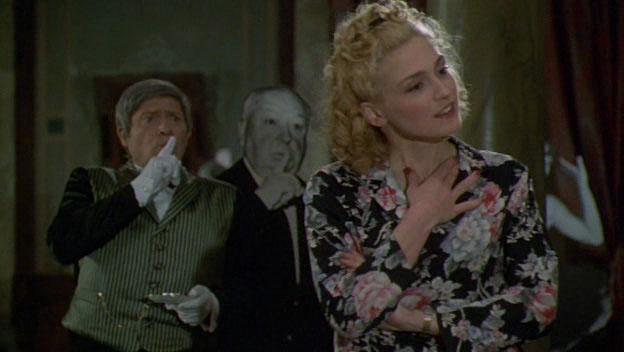
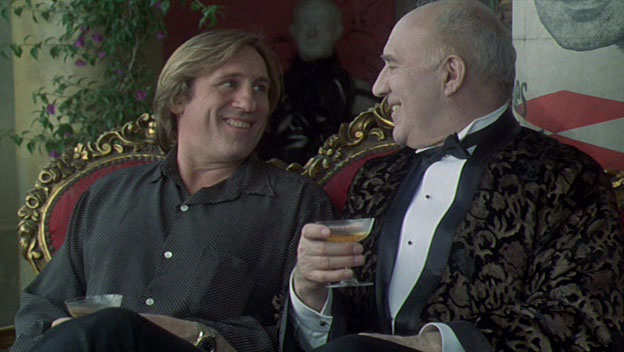
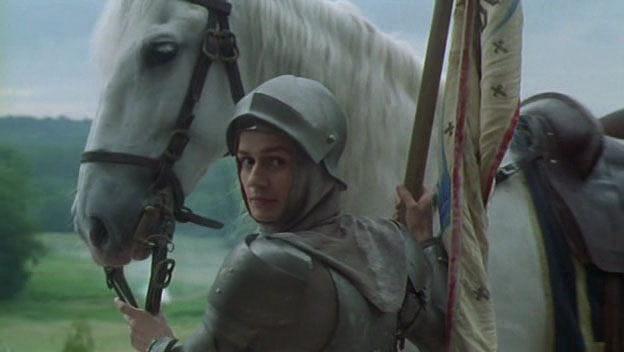
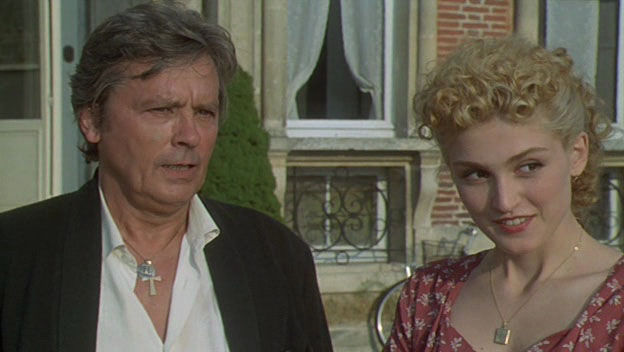
“It’s a great script – feel how much it weighs.”

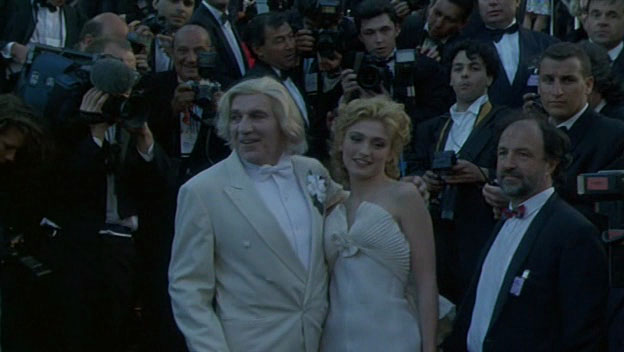
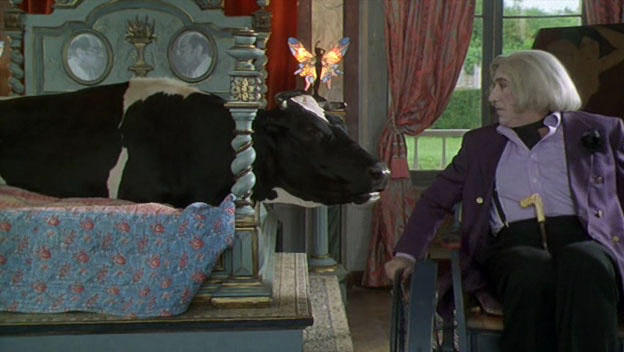
Seeing how it’s Academy Awards season, I’ve been watching bizarrely oscar-related movies… first Susan Slept Here was narrated by an oscar statue, and now this one, the only movie to be nominated by accident. It seems a song called “Pig Foot Pete” appeared in an Abbott and Costello movie with the same singer (Martha Raye) and songwriters who worked on this movie, which probably accounts for the never-properly-explained discrepancy of “Pig Foot Pete” getting Hellzapoppin’ awarded an oscar nomination. It’s all beside the point, since nothing stood a chance against the song White Christmas from Holiday Inn.

The story involves mistaken identity, Martha Raye (Monsieur Verdoux) running after Mischa Auer (My Man Godfrey) because she believes he’s an eligible millionaire, while he tries to score Jane Frazee – but the movie (based on a fourth-wall-smashing hit broadway play) is really just an excuse for popular comics Ole Olsen and Chic Johnson to riff on everything around them, including the film itself. Goofy-looking Hugh Herbert (whose “hoo-hoo-hoo!” laugh supposedly inspired the creation of Daffy Duck) of Footlight Parade, Sh! The Octopus and The Beautiful Blonde From Bashful Bend, also wanders about making jokes.

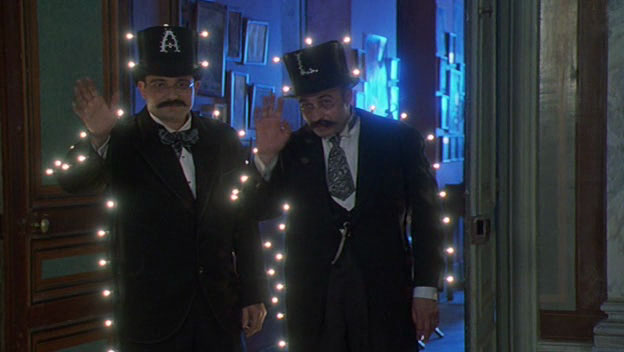
Chic and Ole – don’t ask me which is which:
image

Movies like this (and there aren’t many movies like this) make the phrase “screwball comedy” seem inappropriately applied to such relatively calm, normal films as Bringing Up Baby. Surely the Marx Brothers movies were an influence. I’d like to think that Frank Tashlin, who was working in cartoons at the time this came out, was heavily influenced by its high-energy cartoony gags and unhinged self-reflexivity. Some of the jokes (many of the jokes!) are very bad, but you’ve gotta forgive them because overall the movie is too amusingly nuts to dislike.

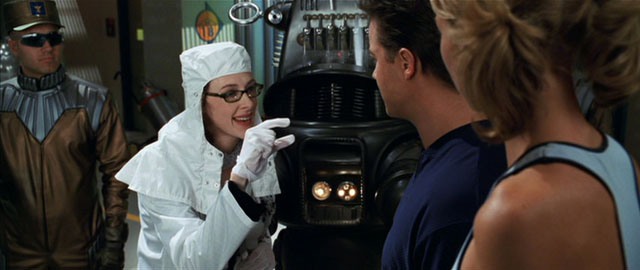
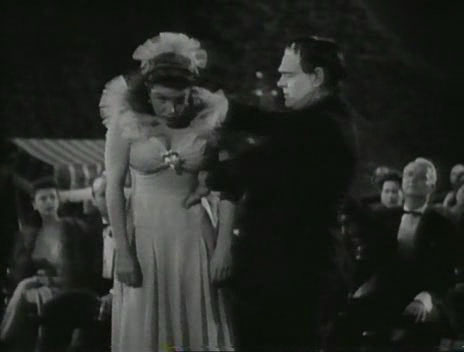
Frankenstein’s Monster, about to helpfully toss Martha Raye:
image

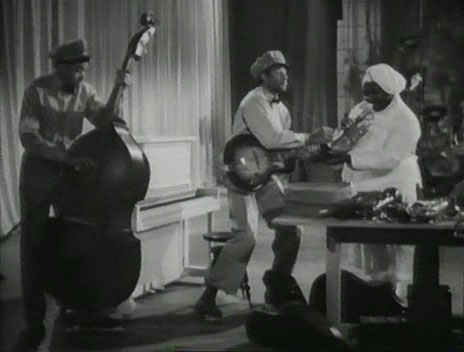
Kevin Lee: “The show-stopper is the much celebrated Lindy Hop sequence involving several Black domestic servants who without warning launch into the most jaw-dropping swing number captured on film.”

Here’s the precursor to that swing number, which is indeed jaw-dropping:
image

Director Potter would work with all the biggest stars in his other films, and eventually make a sequel to this year’s biggest oscar-winner Mrs. Miniver.

Pretty girls are roasted on a spit in hell – the movie opens with this!
image

The legal battle of Olsen vs. Johnson vs. Universal Pictures has led to the commercial unavailability of their work for so long that if it finally came out now, in sparkling restored deluxe DVD editions, nobody much would care since they are barely remembered. Good job there, guys.

Martha mooning after Mischa Auer:
image

NY Times called it “an anarchic collection of unfunny gags,” but then, they also spelled “alittle” as one word.

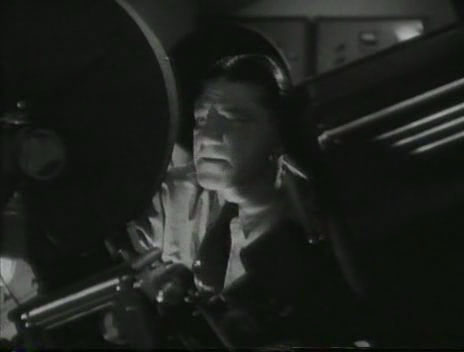
Once and future stooge Shemp Howard is the film projectionist. I love how he, not the cameraman, can change the framing of the movie by panning to follow women in swimsuits.
image

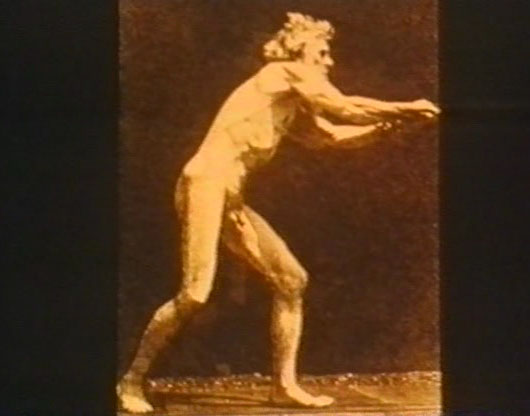
“He was the first and only zoopraxographer.”

image

Hour-long doc about the man who invented a form of motion photography (the famous series of tripwire-triggered photos of horses running), spending half his career as a successful still photographer, and the other half capturing and studying human and animal motion with his zoopraxiscope.

Visually, the movie is mostly composed of Muybridge’s work, nicely assembled and presented, including moving reproductions of his motion series. Voiceover tells us his story (memorable detail: he was acquitted for murdering his wife’s lover in 1875).

For his location still photography Muybridge (pronounced “Edward Mybridge” – people added extra letters to seem fancy back then) travelled with a “darkroom wagon”, foreshadowing Medvedkin’s cinetrain.

Muybridge photographed the effects of the Great San Francisco Earthquake… but not the one in 1906 – this is from October 1868!
image

Muybridge died in 1904, having seen the birth of Edison’s cameras and Lumiere’s cinema which shuttled his own inventions to the sidelines. It would be 90 more years before The Matrix would combine Edison’s motion photography with Muybridge’s circular camera arrays to create the bullet-time effect. Muybridge’s photographs of San Francisco are valued as a record of the city before it was leveled by the Even Greater Earthquake of 1906.

Movie is narrated by two-time Cannes best-actor-winner (and future Blue Velvet crooner) Dean Stockwell. Editor Morgan Fisher went on to make that movie I read about which is composed of all insert shots, and the same year, director Andersen made the stock-footage masterpiece Los Angeles Plays Itself. All Movie Guide says this film took ten years to make, and J. Rosenbaum calls it “one of the best essay films ever made on a cinematic subject.”

Muybridge self-portrait:
image

I started reading the BFI’s excellent, thorough book on Frank Tashlin, and realized I’ve hardly seen any of his movies. Here’s a quick remedy.


Susan Slept Here (1954)

A screenwriter with an oscar-winning career of “light, frothy comedies” wants to make a more serious picture, needs a dose of hard, cold reality (with the help of a girl who’s too young for him) to gain inspiration for his writing.

But enough about Sullivan’s Travels!

Dreamy teen Debbie Reynolds was actually 21:
image

TCM notes that it “has the distinction of being the only film in history narrated by an Academy Award,” as the fictional screenwriter’s oscar presents the story in a framing device which doesn’t quite work besides providing some Tashlinesque self-reflexivity. Lead actor Dick Powell (selected by studio head Howard Hughes “after his first choice Robert Mitchum declined”) in his final film, retaining none of the energy he displayed in Christmas In July, is our author and Debbie Reynolds of Singin’ in the Rain, providing plenty enough energy for the both of them, is the girl. How they end up together is too stupid to relay in detail – friendly cops leave her with Dick over Christmas, they reluctantly bond, he marries her to keep her from being sent to a foster home (she’s 17) then leaves town to write his screenplay, comes home to annul their marriage but she decides to keep him and he’s not hard to convince.

image

The whole situation aims to be risque, but comes off a bit icky. It’s still a fun movie, a bit awkward but light enough to write off any ickyness or awkwardness at the end, tell myself “gee, that was nice”, then forget most of it a week later.

Dick Powell doesn’t quite work in close-up:
image

Anne Francis (Blackboard Jungle, Bad Day at Black Rock), seen below as the threatening spider-lady of Debbie’s dreams, is Dick’s girlfriend, who leaves him over some misunderstandings over Dick and Debbie (or are they understandings since those two end up together?).
image

Alvy Moore (later one of the underground crazies in A Boy And His Dog) is perfect as Dick’s boy-wonder, a kiss-up assistant who tries to stay out of the sexual escapades.
image

Glenda Farrell (of Little Caesar and star of the 1930’s Torchy Blane series), a Thelma Ritter type (Thelma was busy on Rear Window this year), is Dick’s drunken typist. Glenda and Alvy make the movie worth watching.
image

Everyone notes the Red Skelton guest appearance. I’ll dutifully note it too, though I don’t know who Red Skelton is.

Noel Simsolo:

The key note is elegance. Frank Tashlin uses smooth camera moves, rigorous composition and classical editing to make a scabrous play and an already completed script even more subversive, lodging his directorial presence in a physical and moral space not of his own making. … As in the rest of Tashlin’s oeuvre, Susan Slept Here shows an immature character intruding into, and at first wanting to destroy, a closed adult world. … Tashlin then shows the way in which the character appropriates the space, and concludes with their desire to be integrated into it.


Hollywood Or Bust (1956)

Jean-Luc Godard wrote a glowing review of this when it came out, identifying Tashlin as an auteur whose style would be world-recognized in the future. This only came true among hardcore cinephiles, unfortunately.

This final Martin & Lewis picture doesn’t hold a candle to Artists and Models, but I still thought it was surprisingly good, especially considering the two leads were reportedly not speaking to each other anymore. Tashlin, right before his two terrific Jayne Mansfield movies, keeps things bouncing along quickly enough that there’s no time for a bitter showdown.

a plug for the widescreen process… Tashlin was into drawing attention to his color or aspect ratios, and congratulating his audience for leaving their couches and televisions to attend his pictures:
image

Dean scams a winning ticket for a car raffle (by getting duplicates of every ticket) in order to either sell the car and pay his bookie, or skip town and avoid his bookie – it’s supposed to be the former, but sometimes it seems like the latter. But Jerry has the legitimate winning ticket, so they share the car, and Dean reluctantly shares Jerry’s dream of driving to Hollywood and meeting dream girl Anita Ekberg (of The Alphabet Murders, French Sex Murders, Killer Nun).

Jerry pushes the old oil-rig-in-a-hat bit:
image

Complications ensue. Pat Crowley (the young latina girl in Red Garters) gives them a ride when their car is stolen (later recovered) then they give her a ride when hers is destroyed. Jerry’s dog threatens Dean when he tries to make off with the car. Jerry finds Anita but pushes her into a pool. After a nice cartoony soundstage chase, Jerry’s dog is cast to costar with Anita, everyone attends the premiere, and I can’t remember if the bookie thing works itself out but I suppose it does.

Dean’s seduction method of choice (see also: Artists and Models) is blatant sexual harassment:
image

I thought Dean’s line “I’d have gotten away with it if it wasn’t for that hound of yours” was a Scooby Doo reference until I realized Scooby was still a decade away from being created. Maybe Scooby was referencing Hollywood Or Bust, then!

image

Anita (left) and Pat:
image

David Ehrenstein:

Having just examined America’s obsession with comic books in Artists and Models, and poised to assault the world of rock ‘n’ roll in his next film The Girl Can’t Help It, Hollywood or Bust finds Tashlin in a relaxed, easy going mood. Hollywood may figure in the title – or more precisely the credit sequence, where Anita poses like a living statue before various Hollywood tourist sites – but the film isn’t about the world of movie making in any straightforward Rear Window way. Rather, through the figures of Dean and Jerry, Tashlin explores an American psyche populated by Hollywood imagery, particularly images of women. Images being static entities, it is therefore appropriate that the trip to Hollywood supposedly depicted in this early entry in the “road movie” sub-genre isn’t a real trip at all. Dean and Jerry’s adventures begin and end on a Hollywood sound stage as every artificial set, painted backdrop and second unit photographed exterior of the film makes clear. … The sets of Hollywood or Bust represent nothing other than movie sets.

One of the least jokey of Sturges’s films (up there with Unfaithfully Yours), but makes up for that by being completely wonderful. Katy and I watched together for the first time. Even when I know it’s coming, I can’t help but jump when Sullivan says how much he wants to make O Brother Where Are Thou. No plot overview needed, watched it enough times.

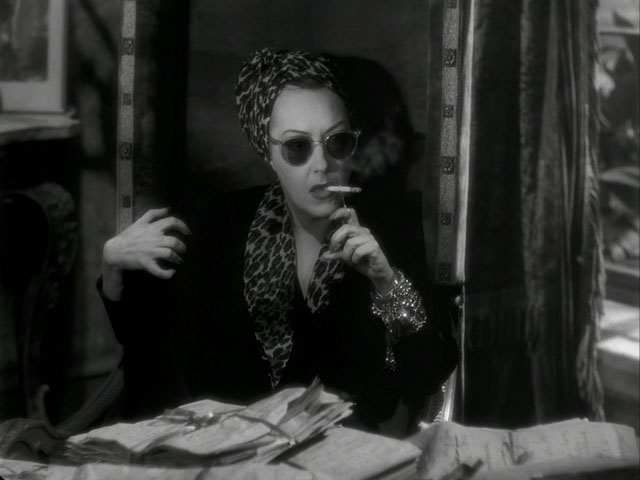
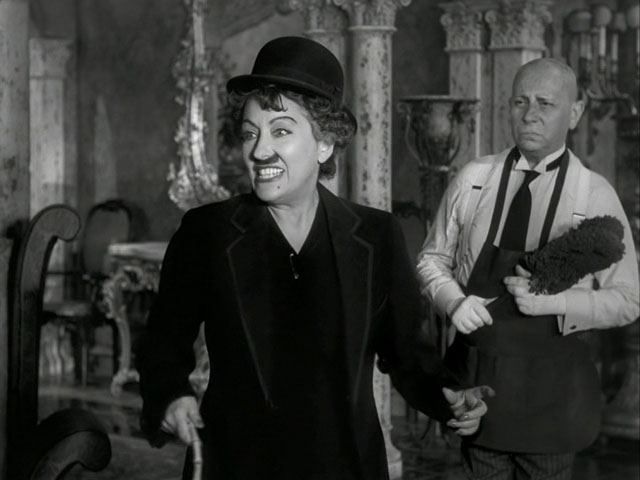
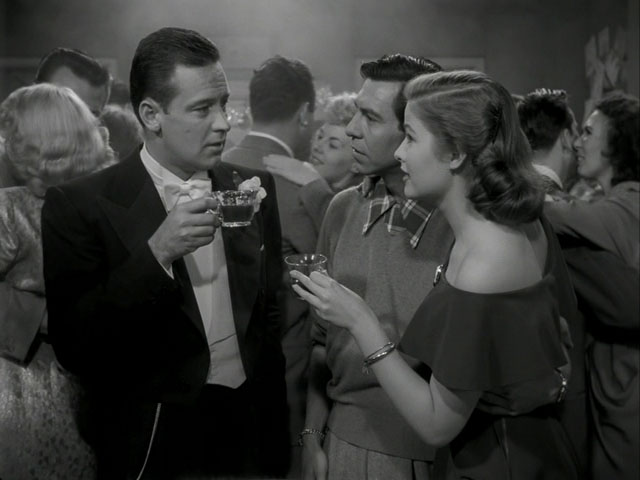
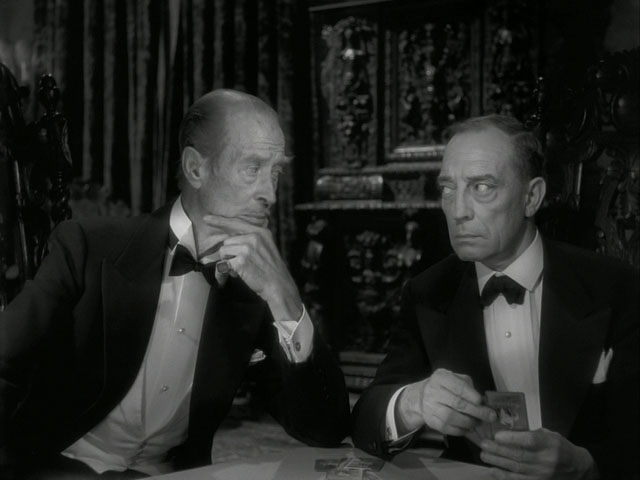
William “Muggsy” Demarest, one of my favorites, plays the same type as always. More prominent in this movie are the butler and valet, Eric Blore and Robert Grieg, who were apparently professional butler-actors throughout the 30’s and 40’s. Veronica Lake was 21 when this was shot, looks younger. As famous as I thought she was, I’ve only heard of three of her movies (also The Blue Dahlia and I Married a Witch). Looks like after the 40’s, she switched careers from acting to drinking. I mainly know Joel McCrae from this, but apparently he was in a bunch of westerns. The poor “colored chef”, Charles R. Moore, has 100+ movie roles, all of them listed as porter, driver, bootblack, elevator operator or prisoner. Lot of in-film shouts-out to Capra and Lubitsch, who at this time were working on Meet John Doe and To Be or Not to Be.

image

Todd McCarthy calls Sturges “the first screenwriter to decisively break through as a director”… guess I never realized that’d never happened before 1940. Now it happens all the time (see Synecdoche New York).

The DVD commentary starts out funny, mostly a good time but sometimes one of them will resort to narrating and saying “that’s so great”. The Rise and Fall of an American Dreamer doc is better, with a full career overview of Sturges, going into the whole post-Conquering Hero part of his life which I had wondered about – it’s sad stuff.

Allures (1961, Jordan Belson)
I don’t know Belson very well, but this reminds me of my favorite parts of Norman McLaren and Len Lye, abstract animation set to music. Not frenetic, slow swirls and twirls, overlapped colored light patterns set to sparse music with dark electronic manipulation (composed by Belson and Oscar-nom musician/humorist Henry Jacobs). Must see again.
image
Allures (c) Jordan Belson

Finger-Fan (1982, Linda Christanell)
Austrian title is FINGERFÄCHER so I thought I’d get something racy for my lunch hour, but no, we’ve got some hands fanning out some fabric on a table… a finger-fan. Synopsis says “objects tell a random story – objects are bearers of obsessions-issuing energy as fetishes,” which might be badly translated or it might not… with the avant-garde it is hard to tell. Camera shoots some objects and photographs, a mirror re-directs part of the frame, there are some basic stop-motion and optical effects, and I remain unimpressed but lightly amused.
image

La Cravate (1957, Alejandro Jodorowsky)
Glad it was short, I couldn’t have taken much more of that accordian score. Goofy mimes swap heads at the head-swap shop while a guy with a silly tie tries to land a girl. Strong, bright colors. I guess the concept of swapping heads can be kind of dark, but otherwise this is like a kid’s fairytale compared to El Topo. Fun movie.
image

The House With Closed Shutters (1910, DW Griffith)
A Dixie-loyal young girl runs a message to the confederate front lines after her supposed-to-be-messenger brother comes home drunk and afraid. When she’s killed (because she was playing like a kid in no man’s land), their mother covers it up by acting like her son was killed and forbidding her “daughter” to ever leave the house or open the shutters. Decades later his old friends walk by the house, he swings the shutters open and dies from the shock.

Dead guy on chair (left) while his mother orders the friends to leave
image

Suspense. (1913, Lois Weber & Philips Smalley)
After the servant quits and leaves the key under the mat, a vagabond takes the opportunity to enter the house, eat a sandwich and stab the woman and her baby to death with a knife. Or he would – but she calls her husband who races home from work in a stolen car followed closely by the cops (who, as cops do in silent movies, shoot their guns constantly not worrying about the casual damage they might cause – not to mention that it hardly seems fair to shoot a guy dead for stealing a car). Worth watching for the titular suspense, and the reaction of the guy whose car the husband stole when he finally catches up and sees the wife & baby safe: a big “well whattaya know” shrug to camera and a pat on the husband’s back. Co-director Weber played the wife.

Sweet split-screen:
image

Return of Reason (1923, Man Ray)
Whirling carnival lights at night, nails and tiny beads exposed directly on the film, a tic-tac-toe structure twirling on a string, all in stark black and white. Ends with negative image of a topless woman with psychedelic light patterns on her body.
image

The Starfish (1928, Man Ray)
A reputedly beautiful woman is shown behind distorting glass. A man holds a starfish in a jar. Terrifying close-up of starfish. Mirrors, split-screens and superimpositions. This is nice – how come poets don’t make movies anymore? Adaptation of a poem by Robert Desnos.

image

image

Emak-Bakia / Leave Me Alone (1926, Man Ray)
Twirling, swirling light patterns, spinning prisms, a girl with painted eyelids (paging Mr. Cocteau), broken dice, a tad of stop motion. The notes say Ray uses ‘all the tricks that might annoy certain spectators,’ and eighty years later he has annoyed me. Or maybe I’ve just watched too many of his movies in a row. I’d seen no films by Man Ray, then poof, I’ve seen half of them. Good stuff.

image

Oooh look, her painted lids are half-closed so you can see all four eyes:
image

The Life and Death of 9413: A Hollywood Extra (1928, Robert Florey & Slavko Vorkapich)
Far and away the greatest of these shorts. Intense shadowy miniatures interspersed with close-up photography of actors tells the story of a young hopeful actor defeated by the ruthless Hollywood star system. After he dies, he rises to heaven, where there is always open casting. A predecessor to Mulholland Dr.? Incredible-looking homemade film, very expressionist-influenced. Florey went on to direct 60+ features before moving to television, Vorkapich edited montage sequences for Hollywood films in the 30’s, and assistant cinematographer Gregg Toland shot Citizen Kane.
image

image

Rhythmus 21 (1921, Hans Richter)
“generally regarded as the first abstract animated film”, wow! Squares of light and dark get bigger/smaller, more complex patterns start to appear, pretty slow movement, never gets outrageously intricate, but if it’s the first film of its kind, it’s a great start.
image

Behind the scenes on Akira Kurosawa’s Ran. I didn’t believe the hype that this would be one of Marker’s best films, but the hype was right! Gorgeous movie, more following general daily activity on-set than Kurosawa himself, to the great annoyance of the IMDB reviewers. Besides CM, praise to cameraman Frans-Yves Marescot (no other credits) and the great Tôru Takemitsu whose music is used extensively.
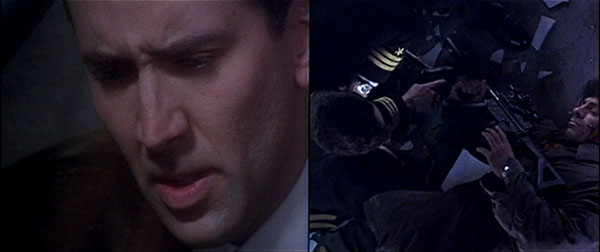
Tôru Takemitsu visits the set looking for musical inspiration:
image

image

“In this kind of shooting the first pitfall to avoid is appropriating a beauty that does not belong to us, to play up the lovely backlit shot. Of course some of that borrowed beauty will come through anyway. But we shall try to show what we see the way we see it, from our eye-level.”
image

On the TV is The Horse, the last movie Kurosawa assistant-directed before beginning to make his own films
image

Movie was shot around Mt. Fuji, but apparently the mountain isn’t seen in Ran.
image

“When cement has been added to the black earth of Mt. Fuji so that the horses’ hooves can kick up clouds of dust, the assistant director and the script girl pitch in as enthusiastically as the grips. It’s as though each person, however great his or her professional qualifications regarded the film as a whole, as a collective endeavor in which there is no such thing as a noble or a menial task. We saw, for example, Kurosawa’s closest aide helping with makeup, the head electrician cutting the grass side by side with the art director, the clapman rehearsing stunts. Most unusual.”

image

Sound recordist Fumio Yanoguchi, who died during the editing of A.K., had worked with Kurosawa since the late 40’s:
image

Ishiro Honda himself – director of Mothra, Rodan and the original Godzilla:
image

Fallen warrior, or an extra taking a nap?
image

“The sensei is he who, by achieving technical perfection, has got a sort of spiritual bonus out of it. The aura of respect that surrounds and protects Kurosawa is nothing like the reign of terror that some lesser directors impose on the set. And just like the great sword masters of the past, sensei has no time for abstraction. When he speaks of his work he reflects on factual experiences. When asked why he did this or that he says “I simply make a film as I want it to be”.

Sensei:
image

NAFF says: “We celebrate their 45th birthday with this meticulously-chosen collection selected and introduced by Canyon Cinema’s executive director Dominic Angerame.” I don’t know what it means to be meticulously chosen. I mean, I assume Dominic is well familiar with Canyon’s films and he might’ve agonized over the selection, wondering how best to artistically and effectively represent his company’s holdings. Anyway, it was a very good selection, but NAFF could’ve been more meticulous with the presentation, misthreading one film which caused delays during which half the audience left early. But let’s face it, half the audience always leaves early during avant-garde film presentations. On with the descriptions… italic text is quoted from NAFF’s descriptions, regular text is from me.

Alone. Life Wastes Andy Hardy (Martin Arnold, Austria 1998, 15 min.), where Arnold remixes several clips of a Mickey Rooney/Judy Garland Andy Hardy film to form an erotic Oedipal musical.

I talked briefly about this one here and here. Seeing again on a giant screen in a nice theater with a packed audience was rewarding. Lots of laughter when people caught onto the oedipal/sexual jokes. Brilliant movie and concept – still one of my favorites.

Autumn Leaves (Donna Cameron, USA 1994, 6 min.), where the splendor and pleasures of autumn are the focus of this richly textured and brilliantly colored paper emulsion film.

I don’t remember it! I know I liked it – I liked all of these, but I do not remember in what specific ways I liked it. A shame, possibly.

China Girls (Michelle Silva, USA 2006, 3 min.), a short composition of women posing for skin tone and color slates used in film leaders that reveal some skin and the aesthetics of their day through film stocks and fashions.

Didn’t love this one, actually – all slates and countdowns and blips and test patterns. I see that stuff at work all day. I mean, yeah they were vintage test patterns with subliminal shots of women with carefully-maintained hairdos. A minute longer might’ve been too much, but this was harmless, probably of interest to someone else.

Delicacies of Molten Horror Synapse (Stan Brakhage, USA 1991, 10 min.), where four superimposed rolls of hand-painted and bi-packed television negative imagery are edited so as to approximate the hypnagogic process whereby the optic nerves resist grotesque infusions of luminescent light.

I mentioned this one previously here. Silent and gorgeous. Audience didn’t rustle around or yawn loudly or start to leave – they liked it too! Some of the multi-layered visuals are television images, and given the “molten horror” title you’d expect something like Light Is Waiting, but thankfully that’s not what you get.

Eaux D’Artifice (Kenneth Anger, USA 1953, 12 min.). Filmed in the gardens of the Villa D’Este in Tivoli, Italy, and accompanied by the music of Vivaldi, Camilla Salvatore plays hide and seek in a baroque night-time labyrinth of staircases, fountains, gargoyles, and balustrades.

Covered this one here. Light through water!

Ellipses (Frédé Devaux, France 1999, 6 min.), where a ripped strip of film is sewed back together following an aesthetic mode, in a celebratory end-of-century apocalypse of positive, negative, super-8, regular-8, black and white, color, saturated and faded found footage.

Oh god, I don’t remember this one either!

Georgetown Loop (Ken Jacobs, USA 1997, 11 min.), a reworking of 1905 footage of a train trip through the Colorado Rockies, where the original image is mirrored side by side to produce a stunning widescreen kaleidoscope effect.

Opens with the original film (discussed here) on the right half of a wide screen, kind of unnerving, then gloriously mirrors it onto the left. Images don’t overlap over themselves like in Light Is Waiting, but vanish into the center line, expanding and contracting, the train’s always-curving motion making it constantly split and merge. But it’s kind of an easy trick, doesn’t seem worth being called a great film, or even very “experimental.” I’m guessing they wanted to show something by big-name artist Jacobs and this was his shortest film?

In Kaleidoscope and Colour Flight (Len Lye, 1935/1938, 8 min.), Len Lye, pioneer kinetic artist, sculptor and experimental filmmaker, painted colorful designs onto celluloid, matching them to dance music.

Zowie wow, these are electric. They start out all hoppin’ jazz, colors and shapes and stripes and light and love, all in fast motion to the beat, then about three minutes in when you least expect it, they hit you with a cigarette ad. More, please!

Psalm III: Night of the Meek (Philip S. Solomon, USA 2002, 23 min.), a meditation on the twentieth century at closing time. Psalm III is a kindertotenlied in black and silver on a night of gods and monsters…

I guess it’s scenes from other films turned grey and treated with a heavy emboss filter. Often no recognizable details, then they’ll emerge suddenly from the murk. We see some nazi imagery at one point, pretty sure I saw Frankenstein a few times, and little Elsie’s balloon from M caught in the power lines. Longish, but nice, enjoyed it. Can’t remember the audio at all.

“Cinema is the ultimate pervert art. It doesn’t give you what you desire; it tells you what to desire.”

With his focus on the “traumatic dimension of the voice… which distorts reality”, I must believe that narrator Slavoj Zizek, with his heavily accented voice, is watching and interpreting slightly different versions of these movies than the ones I have seen. After all, I watch films and he watches “fillums”.

image

A few bits: the three levels of Norman Bates’s house representing the id / ego / superego… the power of the voice represented by Dr. Mabuse… “Music is potentially always a threat”… a look at the intersecting fantasies in Blue Velvet, and the related horror themes of Blue Velvet and Mulholland Drive.

Calls a scene in The Piano Teacher “the most depressive sexual act in the entire history of cinema.” To think I once showed that movie to my girlfriend’s parents!

Wish Katy had finished watching this with me, could’ve helped defend my position on David Lynch movies. And for stupid cinephiles like myself, who love Lynch movies (and The Piano Teacher, and Eyes Wide Shut, and Blue) but get lost in their images and atmosphere without thinking too hard about their psychological implications, he handily explains the stories and characters from a psych point-of-view.

“I think that flowers should be forbidden to children.”

The movie might teach the rewards of closely analyzing a few great movies instead of trying to watch every potentially great movie. This is a lesson I will not be following. Maybe one day…

I feel so vindicated that he picks Alien Resurrection as a film worth discussing. When oh when will that gem get its due? Only the second of the series (after the Ridley Scott original) to count as a horror film, plus it’s good sci-fi and an innovative sequel/reboot that hasn’t been matched since (well, maybe those Chucky movies).

“All modern films are ultimately films about the possibility or impossibility to make a film.”

He compares Cecil B. DeMille to the Wizard of Oz to the mystery man in Lost Highway.

“In order to understand today’s world, we need cinema, literally. It’s only in cinema that we get that crucial dimension which we are not ready to confront in our reality. If you are looking for what is in reality more real than reality itself, look into the cinematic fiction.”

I, An Actress (1977)
“This film gives an insight into my directing techniques while under pressure.”
A good way to start things off… George directs a screen test for a young actress and ends up in front of the camera flamboyantly showing her how he wants the scene performed. The funniest film of the evening, and it wasn’t even “written” to be funny. J. Steffen says it “becomes a commentary on his own camp persona and on the eternal problem of directing actors with wills and personalities of their own.”

Hold Me While I’m Naked (1966)
The famous one! Kuchar plays a film director whose actress quits mid-shoot out of disinterest and because George has asked her to take her clothes off. He calls around but finds nobody else, and falls into a crisis. Hilarious little movie. Played very straight, as George claims he was actually quite depressed. I wouldn’t say that the editing reminded me of Breathless and Parajanov, but Steffen did say that.

I Was a Teenage Rumpot (1960)
The young Kuchar brothers discovered three people who look completely unlike movie stars and began filmmaking careers in order to get these people onscreen. This sums up what makes Kuchar interesting and worth watching, and where all the John Waters comparisons come from. A glorious no-budget fake melodrama starring the ‘differently-shaped’ Arline, Edie and Harry.

Sylvia’s Promise (1962)
Sylvia promises that if Mike will only settle down and marry her, she’ll lose weight. The joke ending is that eight years later, they’re married and she’s lost three pounds.

Anita Needs Me (1963)
I’m not doing a good job describing these movies, and I don’t even remember which one this is because I’ve waited too long after the screening to write about ’em (ten days is too long?!?), but they’re totally fun to watch, short enough to never outstay their welcome, and different enough from each other to make seeing a bunch in a row worthwhile. It was a hoot of a screening, and I’d watch any one of ’em again.

Eclipse of the Sun Virgin (1967)
GK: “Painstakingly filmed and edited, it will be painful to watch, too.” This was my favorite of the bunch, just awesome. Unbelievably, I couldn’t remember what to say about it so I just watched it again on Ubu web… and I still don’t know what to say about it! Um, something about piano playing and humiliation and the color red? It’s poetry, and it is awesome.

Knocturne (1968)
Starring Joyce Wieland, Michael Snow’s wife. I think this one was less narrative than the others, and I’ll leave it at that.

The Mongreloid (1978)
George with a late-70’s mustache reminiscing on the time he shared with his dog Bocko. Brief sound dropouts were replaced in post-production with tiny bursts of music, keeping a playful edge on this otherwise diary-like personal short.

This was a very good program, and Kuchar is a good speaker, full of stories about an entire adult life spent making cool underground films, and the people he’s known (John Waters, Michael Snow, Ken Jacobs, Jack Smith, Jonas Mekas). Wish I could’ve made it to the other nights of screenings, featuring his storm-chasing films and diary videos. Wait, this just in:

Wild Night In El Reno (1977)
As watched on Ubu web. 6 minutes long, storm over a motel builds into the night. Probably some nice footage, but the online video flattens it out and uglies it up, and my sound dropped out after a minute. No substitute for the wonderful Eyedrum screening.

GK: “At the age of 12 I made a transvestite movie on the roof and was brutally beaten by my mother for having disgraced her and also for soiling her nightgown. She didn’t realize how hard it is for a 12-year-old director to get real girls in his movies.”