Wallace & Gromit’s Cracking Contraptions (2002)
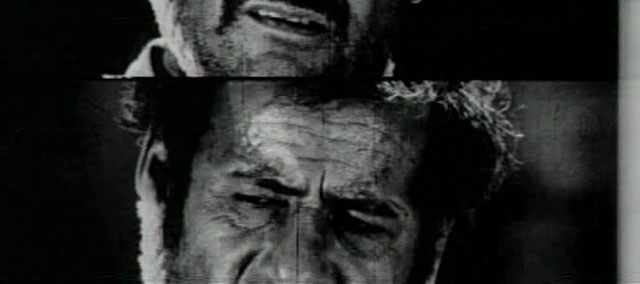
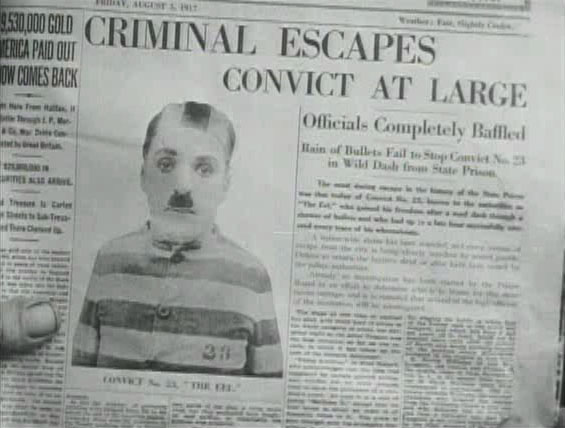
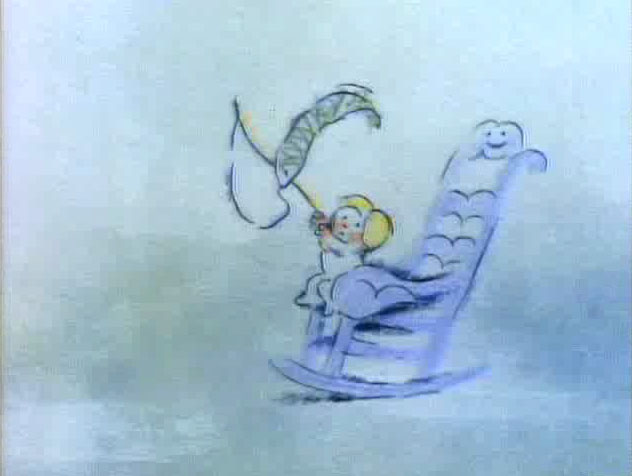
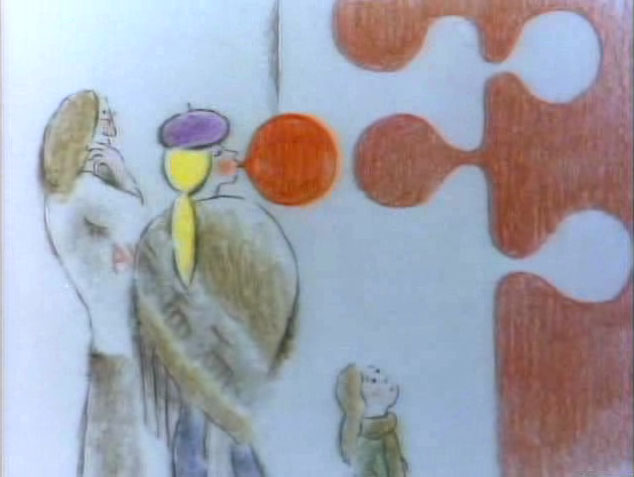
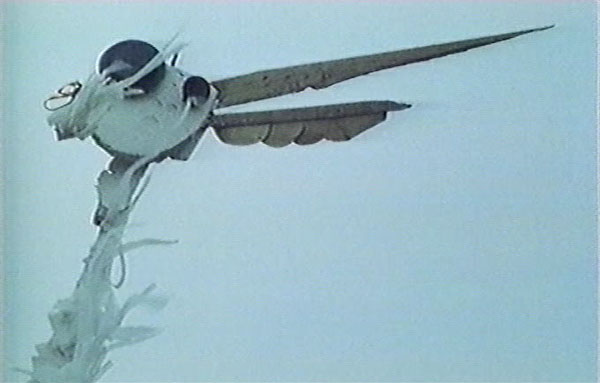
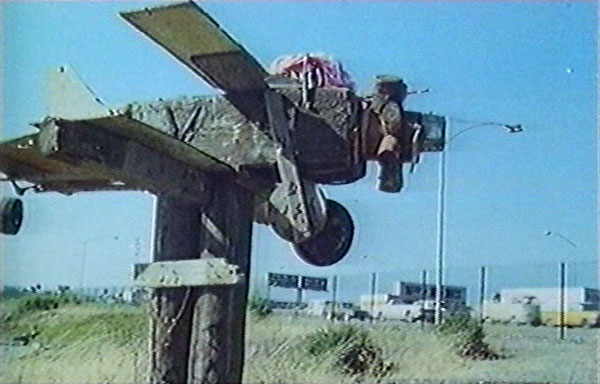
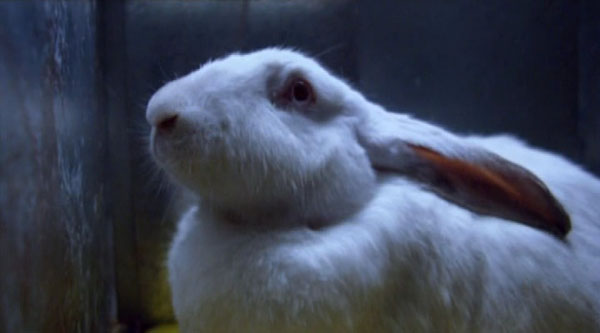
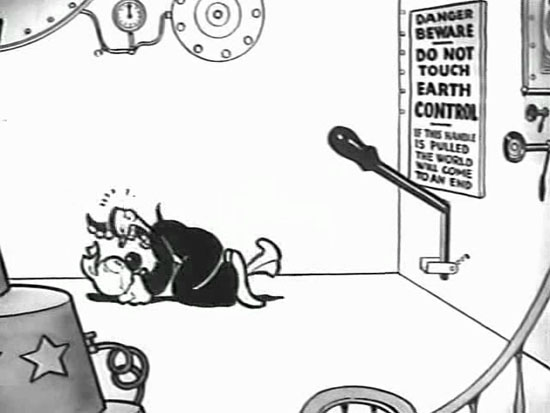
Ten W&G shorts. I think these were made to promote the full-length film… of course I had the chance to watch them back then and somehow put it off for seven years. Anyway these are cute – faves were The Snoozatron (a machine that dresses G. up as a sheep and flips him on a trampoline so W. can “count” him and fall asleep) and The Turbo Diner (a table-setting device exactly a la Charley Bowers in He Done His Best).


All This And Rabbit Stew (1941, Tex Avery)
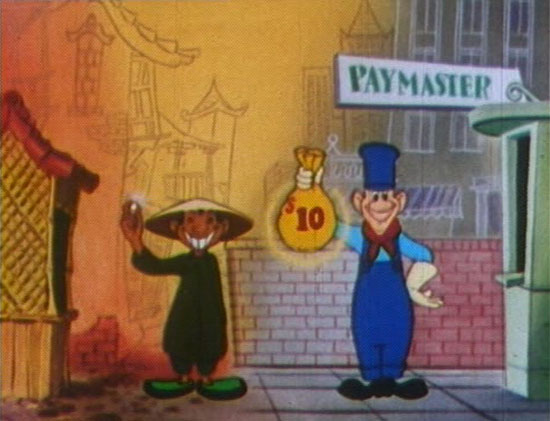
Tex’s final Bugs short before moving to MGM. Hooray, now that I’ve watched those John Ford movies I can recognize that the offensive black stereotype hunter is based on Stepin Fetchit. I tried telling myself that if he didn’t look African the character would basically be Elmer Fudd – but then Bugs gets out of being held at gunpoint by shaking some dice and that idea goes out the window. Ouch.
image


Vivian (Bruce Conner, 1964)
If you liked a girl in the 1960’s, you made an avant-garde film of her. Harvard Film Archive: “An ecstatic portrait of actress Vivian Kurtz that features footage of a 1964 Conner exhibition and couches a humorous critique of the art market.” Set to a pop song called Mona Lisa, loads of fun and only three minutes long. This would go on my “best of a-g” gift reel if it wasn’t such a problem to make such a thing.
image


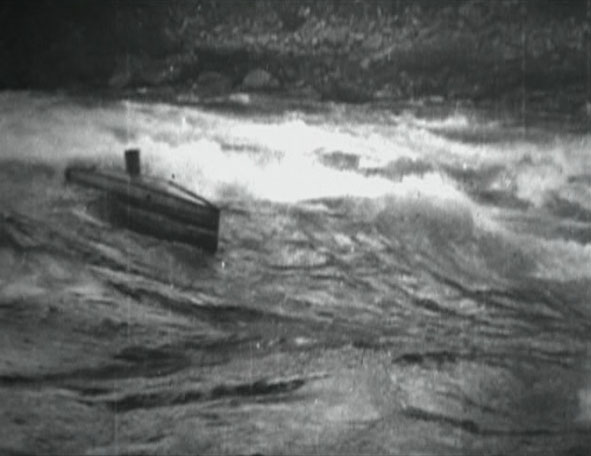
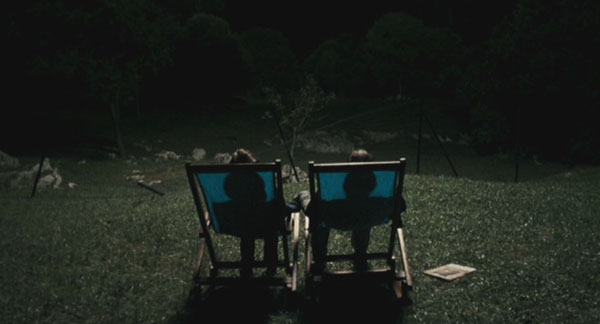
Journey on the Plain (1995, Bela Tarr)
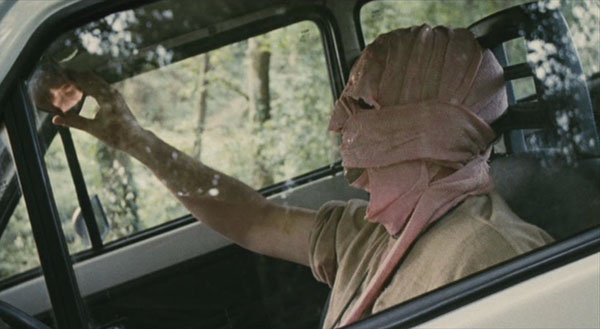
Poems about friendship loss, life and death, each with a long tracking shot (imagine that), written by famed Hungarian poet Sándor Petöfi and performed by one of my favorite film music composers, Mihály Vig (Irimiás from Sátántangó, in color!). Suddenly in one scene 20 minutes in, he’s on a truck loudly playing a doomed keyboard. An odd movie, peaceful and beautiful. I would gladly watch again, paying more attention to the words of the poems.

image

image


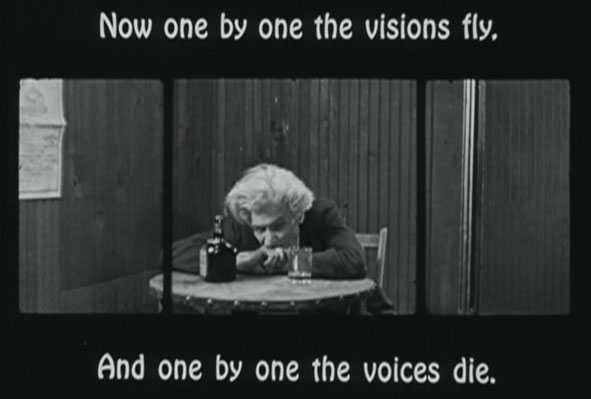
Thriller (1979, Sally Potter)

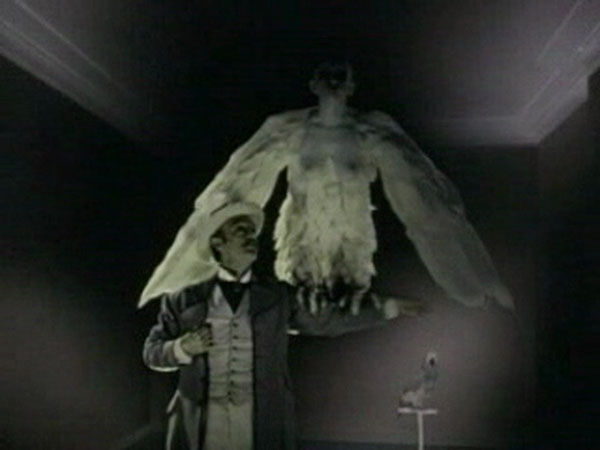
A narrator goes over the story and characters of an opera, then analyzes it while staring into a mirror, memory and identity swirling about. Very art-film, told in black-and-white stills and scenes, narrator all heavily french-accented. Kind of entrancing, really, with repeated poses and images and phrases, never quite turning into something I can make sense of (though I hear it’s some kind of marxist-feminist critique of Freud and contemplation of human existence, thanks to a useful, knowledgeable and well-considered review on the IMDB – a rare thing indeed).

Sony Pictures: “a critical re-working of Puccini’s opera La Boheme, was a cult hit on the international festival circuit.” Sudden bursts of the shower theme from Psycho. “Yes, it was murder. We never got to know each other. Perhaps we could have loved each other.” I need to see it again, obviously, but I’m not dying to do so anytime soon.

from K. McKim’s great Senses of Cinema article

Potter’s 16 mm black and white cult hit Thriller (1979) overtly equates revision with survival; the film invokes formal conventions to interrogate the narrative necessity of Mimi’s death. Inscribing this inquiry within allusion to female murder victims (Thriller cites Bernard Hermann’s screeching Psycho score), Mimi questions the conventions that locate meaning in the death of a young beautiful woman. Scripted, edited, produced and directed by Potter, Thriller transforms the opera into, as the title suggests, a thriller that uncovers operatic form’s generic and gendered hypocrisy.

image

image


Dottie Gets Spanked (1993, Todd Haynes)
Wow, this was great. Boy with a mommy complex idolizes an I Love Lucy-esque TV show, wins a contest and gets to visit the set. Movie swirls with repression and fantasy and budding sexuality.

The distributor: “anticipates … Far from Heaven with its excavation of placid mid-century surfaces and deeply-buried emotions.” R. Lineberger: “This short film was commissioned by the Independent Television Service as part of a search for short films about American television. The pairing is perfect. Haynes is subversive, but approachable. His film deals with ominous and disturbing themes, but he never comes out and says anything objectionable. For example, Steven’s father is suggested to be violent, or at least sharply critical, but we never actually see any aggressiveness from him. The whispered consequences and punishments exist in glances, or in Steven’s thoughts.”
image

image


13 Screen Tests (1964-66, Andy Warhol)

Rented Warhol’s screen tests sorta against my will (I just wanted to hear the new Dean & Britta songs) then proceeded to half-watch ’em while listening to the music. The films were better than I thought (that Edie Sedgwick has got something, and Lou Reed and Dennis Hopper are funny) and the music was worse (standard instrumentals, a few new songs and some covers). I did try watching a screen test straight through, the way I’m supposed to, to see if I experienced a sudden tingly appreciation for the Cult of Andy, but it didn’t work; maybe I picked the wrong one.

G. Comenas:

Factory visitors who had potential “star” quality would be seated in front of a tripod mounted camera, asked to be as still as possible, and told not to blink while the camera was running. … Some of the earliest Screen Tests were those included in Warhol’s film The Thirteen Most Beautiful Boys. … More than 500 Screen Tests were made. In addition to The 13 Most Beautiful Boys, some of the footage was incorporated into other compilation reels such as The 13 Most Beautiful Women (1964) and 50 Fantastics and 50 Personalities (1964).

LA Times:

Each test lasted as long as a single 100-foot roll of film. Each was shot at 24 frames per second and projected at two-thirds of that speed, a trick Warhol often used. Each took a little less than three minutes to film, and takes a little more than four to watch. The slow-motion effect adds a discernible flicker, heightens every movement and contributes to the dreamy, ghostly quality.

image

The Freshman (1925, Newmeyer & Taylor)
The sad truth about Harold Lloyd is that I loved him when I first saw him, but every time I rewatch a movie I like it less. So far I’ve seen Safety Last! and The Freshman twice, and each dropped from “great” down to around “pretty good”. I’m afraid to rewatch the ones I thought were pretty good to begin with.

image

Young Harold (he was actually 32) watches imaginary film The College Hero over and over to prepare himself for college, filling his head with stupid ideas about college life. I would’ve loved it if they’d done more movie-vs.-reality comparisons, but it seems the only thing he took away from the film was the hero’s nickname (“Speedy”), catchphrase (“I’m just a regular guy”) and silly jig, which everyone at college mocks until Harold manages to win the big football game, then the jig becomes the coolest thing. It’s a wonder that nobody else at school had seen this movie and figured out Harold wasn’t even an original nut, just a nerdy guy ripping off a bad movie joke. But my biggest surprise was finding that the silly hat Harold wears wasn’t an invention of his silly movie – college kids (according to this silly movie anyway) actually wore those hats!

Below: Harold and “the college cad” in silly hats. The cad, Brooks Benedict, later appeared in Leo McCarey’s not-sequel The Sophomore.
image

In the scene below, Harold’s tailor hides behind a curtain, ready to patch Harold’s unfinished suit should the need arise, but the two get their signals crossed because of a dude at a table ringing a bell. Supposedly the bell ringer is Charles Farrell, star of Street Angel, but he sure doesn’t look like he does in my screengrabs from that movie.

image

The girl who likes Harold, cutie Jobyna Ralston, was in The Kid Brother and Wings, didn’t make it in the sound era.

image

The Mystery of the Leaping Fish (1916, Christy Cabanne & John Emerson)
Written by DW Griffith and Tod Browning, the same year they did Intolerance, and co-produced by Keystone. Douglas Fairbanks was apparently famous enough to play himself in a framing scene – I think he plays himself, and the rest of the film (starring himself) is his rejected pitch to a producer for a film to star himself. That’d already be plenty to wrap one’s head around for a 1916 short, but that’s before we even get to the main story, which involves incompetent and extremely drug-addicted hero Coke Ennyday trying to stop criminals from smuggling contraband via one-man inflatable toy rafts, and stop the criminal mastermind from forcing the lovely Fish Blower to marry him. Coke gets the drugs and the girl, and I didn’t know I could have my mind blown by Douglas Fairbanks. Bessie Love, the Fish Blower, appeared in three major films in the early 1980’s, sixty-five years after this one. I wonder if anyone on those sets asked her about her cult druggie silent short.

The Play House (1921, Buster Keaton & Eddie Cline)
I’d seen almost all of Keaton’s solo silent shorts, but I’d missed this major one, in which he plays all the characters in a trippy dream sequence that lasts the first half of the film. Reliable heavy Joe Roberts finally wakes Buster from his funhouse-mirrored delusion and he goes to work as a stagehand, where he’s spooked by a pair of identical twins with mirrors. A sheer delight of visual invention only grudgingly held together by a plot.

That’s two of Virginia Fox, daughter of William Fox:
image

Buster Keaton’s minstrels:
image

Cops (1922, Buster Keaton & Eddie Cline)
The Freshman was a movie about a boy whose ideas about life have been warped by the movies, Leaping Fish had Douglas Fairbanks the actor playing Douglas Fairbanks the aspiring screenwriter, and The Playhouse featured Buster Keaton playing a hundred of himself in a stage performance viewed by even more of himself. Cops has no self-conscious reflection that I can think of. It’s just a damn fine heist/love/chase flick with great invention in props and situations. However it does fit in with the outrageousness of last two films in its ending: snubbed by his intended love, Buster effectively commits suicide by running back into the police station where he has just locked up hundreds of angry cops.

Bunch of Chuck Jones movies on TCM accompanied their new documentary Chuck Jones: Memories of Childhood by Peggy Stern, partially animated by John Canemaker, the duo who made The Moon and the Son. I’m not a huge fan of the TM&TS approach, and they take a similar animated-documentary-reminiscence approach here, but it’s lovely to hear Mr. Jones talk about his youth and how different events and memories shaped his life and the characters in his cartoons.

Haredevil Hare (1948), already a decade into CJ’s directing career, sent Bugs to the moon and introduced Marvin the Martian. A silly episode, ends with them blowing up the moon and me unavoidably obsessing over that Mr. Show episode. Marvin has a different, less distinctive voice, but his character was supposed to be a one-off, so I guess Mel didn’t worry about coming up with a brand new one until Marvin became a recurring thing.

Duck Amuck (1953), supposedly one of the most groundbreaking, original WB shorts with Bugs as Daffy’s animator, tormenting him with pen and eraser, and lines like “It may come as a complete surprise to you to find that this… is an animated cartoon.” It is an outrageous conceit, and there’s nothing more fun than pushing Daffy until he flies into a rage, but maybe I’ve seen this too many times because I find it kinda unsatisfying these days. Would rather see all those wild effects going into something with a story. I’m sure I’m just being a negative nelly… it’d probably still rank in my top ten CJ shorts, but whatever… I was anxious to get through it tonight. Most outstanding Daffy line: “Thanks for the sour persimmons, cousin.”

One Froggy Evening (1955) – one of my all-time fave shorts, and from Robert Osbourne’s loving introduction, it seems like it’s a lotta people’s favorite. A construction worker finds a singing frog in the cornerstone of a 100-year-old building and thinks he’ll get rich exploiting it, but finds the frog will only sing for him. Ruined, he buries the frog again, where it’s discovered in 2056 A.D. by a space-construction-worker. No spoken dialogue except by the frog, who has about ten wonderful old-timey songs.

What’s Opera, Doc? (1956) – Maybe it’s the musical ones that grab me, because I could sit through this one and the last three times in a row. Tells the same story as Fritz Lang’s Nibelungen but this is way shorter. Also the only movie in which Elmer actually kills the wabbit. I suppose operas can’t have happy endings. Some credit should finally be given to Michael Maltese, who wrote the last four shorts.

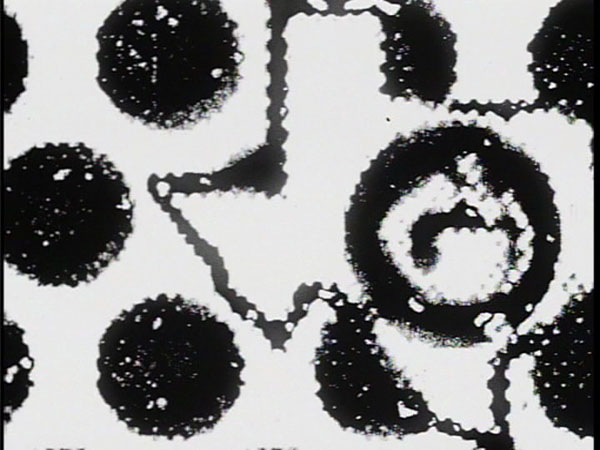
The Dot and the Line (1965), ahh, finally something new. By now, Bugs’ heyday is over and Chuck is working at MGM doing more independent work but with much lower budgets. Writer of The Phantom Tollbooth contributed this story of a line (not just a line segment – he always extends past the screen in both directions) in love with a free-spirited dot, who in turn is enamored with a wild squiggle. Seems awfully 60’s, and not as much fun as its oscar-winning cannes-nominated reputation would imply, but it’s cute… and short. The line learns to impress by forming shapes and super-complex patterns and formulas, and all the squiggle can do in response is freak out and wriggle about, so the faithless dot hooks up with the line for our happy ending. My favorite bit was near the start, trying to convince the dot verbally rather than through shape-shifting physical prowess, the line tries telling her “I know where I’m going!

The Bear That Wasn’t (1967), based on the story by the great Frank Tashlin, and just in time – R.O. says it was the last-ever MGM theatrical animated short. The premise is super, and typical of Tashlin’s cynicism and distrust of “progress” and technology: while a bear hibernates, a giant factory is built over his cave, and when he wakes up nobody believes he’s a bear. If he’s in the factory, he must be an employee, or as they call him, “a silly man who needs a shave and wears a fur coat.” Finally the factory chain-of-command’s pigheaded insistence convinces the bear that he isn’t a bear, and he goes to work… but when winter comes, he returns to the cave (through a maintenance closet) to hibernate again, a cautiously optimistic ending. Unfortunately the movie itself is repetitive (probably the book too – children’s books sure can be), harping on the “silly man” line, and watching the bear’s spirit get crushed is surely less satisfying than watching Daffy get poked and prodded into a rage, and the happenin’ title song is played too often, but I still liked it more than The Dot and the Line. Maybe I’m a sucker for talking animal cartoons, or abstract math stories are too high-class for the likes of me.

Finally I tried to watch the feature-length The Phantom Tollbooth (1970). It seems cute enough, but perhaps too much of a kids movie for me to completely enjoy. After a live-action intro with some famous child actor it goes all animation. Our kid, who keeps learning slow and pointed Valuable Lessons about things, ends up in a swamp called The Doldrums at which point the sludgy narcoleptic music put our hero to sleep, and me with him.

The Ugly Duckling (1939, Jack Cutting)
Katy said the baby swan wasn’t ugly enough, but I think it’s that (1) he’s different from the ducks and therefore ugly to them, and (2) when he sees his reflection in the funhouse ripples of the water he appears ugly. IMDB says it was the final Silly Symphony cartoon, but it wasn’t very musical… no songs about what it’s like to be a duckling.

Katy: “They’ve turned The Ugly Duckling into a marital dispute.”
image

Me: “Hey there were six baby swans in that shot! There are only s’posed to be five.”
image


Atlanta (1996, Miranda July)
Miranda July’s performance as both the 12-year-old swimmer and her overbearing mother is wonderful. However, this is “video art”, which means it’s like a short film but it’s full of video static and looks like shit. The sound was defective on my copy, and since it’s all interviews, the sound is kinda important.
image

The Summit (1995, The Bros. Quay)
For the first minute I thought “hey wow, the Quays have made something totally different from their usual pretentious goth stop-motion” and I was happy. A few minutes later that thought still stands, but I am not happy. In what language are these guys giving monologues in a featureless room? Oh wait, I get it, “summit”. Funny. Some sites list this as a short satirical art piece, another calls it a 70-minute failed pilot. I saw the short version. The Quays come out and shake their hands at the end. Jonathan Stone, one of the two guys, was in Institute Benjamenta.
image

Jumping (1984, Osamu Tezuka)
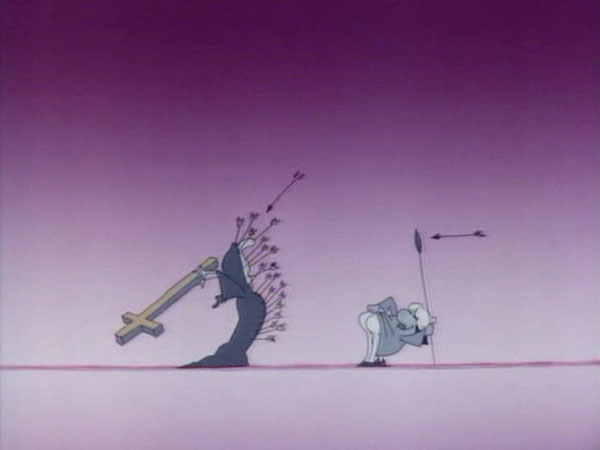
Half a funny concept piece about someone who is an awfully good jumper and the places he ends up (incl. stereotype-africa and hell itself), and half a showoff reel of first-person perspective animation. Excels at both… wonderful.
image

Sisyphus (1975, Marcell Jankovics)
Another showoff reel, this time of bodily poses and stress as Sis. rolls the rock uphill, but this one not as delightfully enjoyable as Jumping, and all full of horrible gasping groaning noises.
image

5/4 (1974, Hieronim Neumann)
A split-screen stunt used to more wonderful effect than Timecode (or About Time 2), sometimes seeming to fragment a single image, and sometimes looking like different takes of the same action. Playful. Music is light and quiet and not in 5-4 and there are spacey 70’s-sci-fi sound effects whenever something cool happens, which is most of the time.
image

I took advantage of the huge weekend snowfall in Atlanta by huddling on the couch with a pile of DVDs of short films which I’ve long delayed watching, followed by two obscure features, totaling eight newly-seen titles on Jonathan Rosenbaum’s hallowed list of 1,000 favorite movies. At this rate of eight per day, I’ll be through the list in no time, so anyone else can feel free to send me their own thousand-faves list and I’ll get to it shortly.


First off, two by Jane Campion. I wasn’t too kind to Sweetie or The Piano, was hoping I’d enjoy the early shorts more. A Girl’s Own Story (1984) is a vaguely Terence Davies-reminiscent period piece about two sisters and a friend one winter in the 60’s – having fun, going to school, singing Beatles songs and dealing with family trauma. The parents only speak to each other through their children, and dad brings his girlfriend to Pam’s birthday dinner… meanwhile friend Gloria leaves school because she is pregnant by her brother. Passionless Moments (1983) is a series of humorous sketches (each with its own title: “Clear Up Sleepy Jeans”, “No Woodpeckers In Australia”) with an ethnographic narrator telling us somebody’s mostly-insignificant stray thoughts (misheard lyrics to “Daydream Believer”, identifying a strange sound outdoors).

A Girl’s Own Story:
image

These were two of the most enjoyable shorts I watched all day, so hooray for Jane Campion. Both were worked on by Alex Proyas, director of Dark City, whose new Nic Cage movie opens this month, and Passionless was made in collaboration with Gerard Lee, who wrote/directed a comedy in 1995 involving marital strife because of a sold piano, hmmmm.

Passionless Moments:
image


Franz Kafka’s It’s a Wonderful Life (1993, Peter Capaldi)
I’d always admired the title of this and assumed it to be blending of Kafka’s and Capra’s sensibilities, but no such luck… it’s more of a Franz Kafka In Love, as the writer struggles to complete the first line to The Metamorphosis. Might’ve been nicer if I’d watched it earlier then, since by now every known artist’s inspiration has been illustrated by the movies, either as a serious drama or a light fantasy. Richard Grant (same year as The Age of Innocence) is Kafka, and his work-interrupting neighbors include Ken Stott (who’d soon play the lead detective in Shallow Grave) as a knife seller with a missing pet cockroach, and Phyllis Logan (a Michael Radford regular) as a novelty salesman. Our director is better known as an actor (Local Hero, Lair of the White Worm). My favorite detail: being friendly to a neighbor Kafka says “call me F.”

image

image


There’s time in any shorts program for some Norman McLaren. I checked out a section on the DVDs of work he did with Grant Munro, one of the few men strong and patient enough to animate himself with stop-motion. A piece I’ve seen before called Two Bagatelles (1953) has Grant zooming around to music (Katy came in from the other room to express disapproval at the music), a fun exploration of their live-stop-motion ideas. An unreleased set of sketches and experiments called either On The Farm or Pixillation adds slow-mo, film-reversal and mattes into the mix. Canon (1964) features a blippy electronic version of “Frere Jacques” and has four Grant Munroes at once, moving across a stage and interacting. And A Christmas Cracker (1962), for which McLaren/Munro did great dis/appearing stop-motion jester titles and transitions, is a compilation of short holiday cartoons.

On The Farm/Pixillation:
image

A Christmas Cracker:
image

One of the non-McLaren segments of A Christmas Cracker, in which an inventor travels to space to retrieve a real star to top his Christmas tree:
image


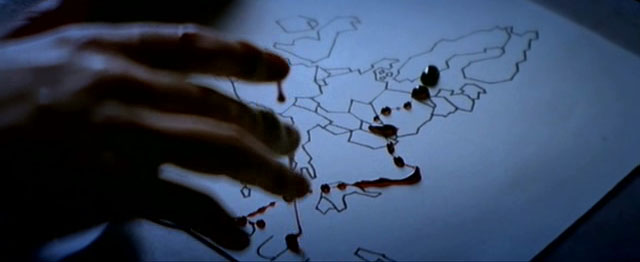
Wong Kar-Wai’s Hua yang de nian hua (2000) is a montage of rotting nitrate footage from newly-discovered vintage Hong Kong films. Two minutes long, fast-paced and wordless, set to a song used in In The Mood For Love.
image

Two by Santiago Alvarez. Now! (1965) is a montage of upsetting footage, still and moving images, as Lena Horne belts out the title song, and Hasta La Victoria Siempre (1967) is twenty looong minutes of music and stock footage focusing on Che Guevara and other revolutions and revolutionaries. A chore to sit through – I’m gonna stop watching Alvarez movies for a while now.

Now!
image

Hasta la victoria siempre
image

Two early shorts by D.W. Griffith… although he made about 200 films in the two years between them (those were the days!) so maybe only the first one can be called “early.”

A Corner In Wheat (1909)
Wealthy trader corners the market in wheat, meaning less money for the farmer and higher prices at the market. As unrest grows and the cops are called to protect a bakery, the now even richer trader and some classy women tour the grain elevator to symbolically survey their fortune. He slips and is buried in grain, an ending stolen by Vampyr a couple decades later.
image

Tom Gunning via Erik Ulman says: “the editing has special appropriateness in this film, as it represents the ‘new topography’ of modern capitalist economics, and its ‘lack of face-to-face encounters with the forces which determine our lives.'” Based on a book by the novelist who wrote McTeague (Greed). Actor who played the farmer appeared 45 years later in Ford’s The Sun Shines Bright.
image

Musketeers of Pig Alley (1912)
A musician, just back in town after some weeks away working, gets all his money stolen by the titular gang. A rival crime gang fights the musketeers, and during the fracas our man gets his money back. When the rival gangleader is about to be arrested, the musician and his girl vouch for him, lying that he’d been with them the whole time, as thanks for his help. The enemy of my enemy is my friend, and all that.
image

Wikipedia claims this “probably the first ever film about organized crime” and an influence on Gangs of New York – as if Scorsese’s first exposure to crime was in DW Griffith films. Lillian Gish, star of many Griffith movies, plays the girl.
image

Report (1967, Bruce Conner)
Recording of radio broadcasts from when JFK was shot. Sometimes the visuals are robotically repeated loops of newsreels, sometimes film countdown leader, sometimes all white and black flash flickers, which do not translate well to medium-grade internet video. The second half is excellent, still the radio announcers but with shock associative visual editing from all manner of sources: a bullfight, advertisements, war movies and so on.
image

Tunneling the English Channel (1907, Georges Méliès) has long bothered me because it’s the earliest film on Jonathan Rosenbaum’s 100 favorite films list but hasn’t been available anywhere on video. Fortunately the new Flicker Alley set remedied that, and I could finally see it, in fine condition with wonderful hand-coloring. It’s a cute story and a technically superior film, with the color and the combination of animation, live action and Melies’ usual fun effects. Story goes that the leaders of France and England agree to build a tunnel under the channel, and all goes well until the train crashes. As the tunnel fills with water undoing months of work and drowning the prime minister, they wake up – it was all a dream and they decide not to build the tunnel after all.
image

LMNO (1978, Robert Breer)
A hammer, a faucet, a headless naked woman. Rapid-fire comic-book situations. Mainly-irritating soundtrack of running people, running water, and running tape static. Next time I’ll feel free to see how it works with a couple Kinks songs instead. Not my favorite Breer, but I’ve actually seen his films projected in a theater before, so this one obviously suffers from being a bootleg download watched on a laptop.
image

Chris Stults, Film/Video Assistant Curator at the Wexner Center in Columbus, says (out of context): “The thing that has always drawn me the most to avant-garde cinema is that it is intended for an individual viewer, not a mass audience. The individual has to complete the work. To go back to the idea of seeing cinema anew, the viewer often has to figure out how to watch the particular film or video and then from that process of learning how to watch, meaning and interpretation can follow.”

Torture Money (1937, Harold S. Bucquet)
Caught on TCM’s Oscar Month – this beat out Deep South and Should Wives Marry? for best two-reeler. A cop from the Bunco Squad goes undercover to investigate a ring of scammers who beat a guy up in a back room then fake a car accident complete with paid “witnesses” to fraud insurance companies. The scammers purposely run over a little girl, just in case insurance fraud wasn’t enough of a crime to get our attention. Our officer blends in successfully thanks to his knowledge of 30’s street slang and his ability to fake a hatred of cops. He’s chosen to be the “accident victim” (that’d be the titular torture), manages to contact his men, spring the trap and send the baddies to jail. I don’t recall the character names, so our cop was either George Lynn (I Was a Teenage Frankenstein) or Edwin Maxwell (The Great Moment, His Girl Friday). The director went on to better things (a Katharine Hepburn feature, the Dr. Kilgare series), as did the writer (T-Men, Robinson Crusoe On Mars).


Three half-hour shorts from the 1997 Africa Dreaming series:

Sophia’s Homecoming (Richard Pakleppa, Namibia)
Sophia arrives in town after years in South Africa and finds that her husband, kids and sister aren’t so happy to see her. Turns out the sister and husband are in love… Soph tries to break it up, but when the sister says she’s expecting the husband’s baby, Sophia packs up her kids and returns to S. Africa. Other than a solo dish-destroying kitchen tantrum, there’s surprisingly little screaming and fighting, considering the situation.

Sabriya (Abderrahmane Sissako, Tunisia)
Hot, uninhibited, waterfall-loving foreign woman comes to town and shakes up the home life of a local chess-playing tavern dweller. He falls in love, but I think she leaves town without him at the end… I was too busy staring at the nice visuals and trying to remember scenes from Waiting For Happiness.

So Be It (Joseph Gai Ramaka, Senegal)
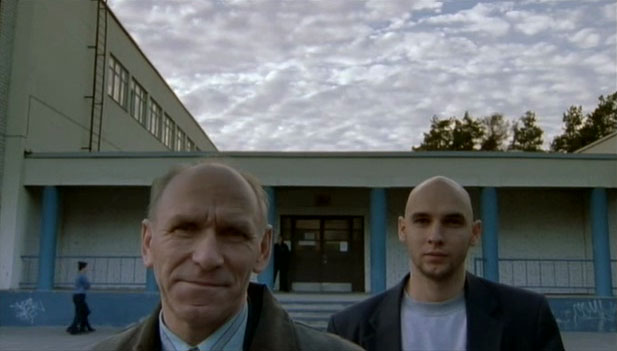
Doctor arrives in town (people are always arriving in town in these movies), sees a mute retarded kid who hangs around. Everyone seems to dump on the retarded kid… finally outta nowhere (actually I predicted it, but I was kidding) the townsfolk come with torches to kill the kid. Why? I dunno, but the doctor is right upset. The written description on the box calls it an African Heart of Darkness (although I would prefer an African Heart of Darkness to concern an adventurer from the Congo on a dangerous mission to England to retrieve a countryman who’d encamped in a rural British village up the Thames and established himself as a god among the locals). The box seems to know a lot that I couldn’t figure out from the movies. Maybe I wasn’t paying attention?


Egged On (1926, Charley Bowers)

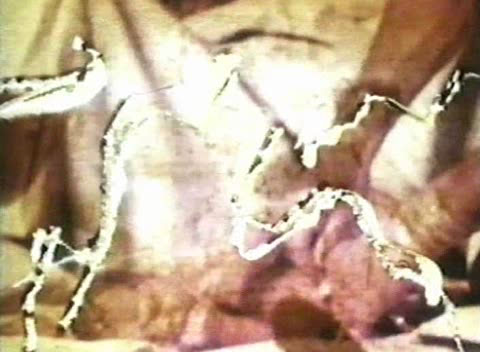
Charley invents an overly-complicated machine in his girlfriend’s parents’ barn which makes eggs unbreakable (rubbery, you open them with scissors) and aims to sell it to the egg-shipping industry. The investors are coming, but Charley has no eggs for the demonstration, so he fails to gather some in various ways. Finally gets an egg from a hen who’s been eating dynamite… test goes well until he hits the egg with a hammer to prove its indestructibility and destroys the whole barn. Worth watching for the scene shown below in which a batch of eggs, incubated by Charley’s car engine, hatch into hundreds of little cars in a massive and delightful stop-motion display.

image

image

He Done His Best (1926, Charley Bowers)
Another one involving eggs, and complicated machinery, overall more entertaining then Egged On. Charley needs his girl’s dad’s consent for marriage, ends up working at his restaurant. Gets dad in union trouble, so invents an automatic server/cook machine (powered by stop-motion, natch). Dad is cheered immensely, girl holds wedding at the restaurant, but she’s marrying some other guy which is supposed to be a funny surprise but is instead kind of an anticlimactic ending after a great movie, a la Chaplin’s One A.M.
image


Azur and Asmar (2006, Michel Ocelot)
Not supposed to be a short, but we ditched after 45 minutes because this was so bad. I can’t even think when’s the last time I walked out on a movie (though I remember itching to leave Sam Raimi’s The Gift). The critically-raved-on animation looked to me like weakly-puppeted low-detail Flash, and the story was going nowhere we couldn’t easily predict, so there seemed no point in staying. As a rule, I don’t put half-seen movies on the website, but I’m making an exception here and I don’t need a reason, nyeah.

Euro/African kids grow up with same mum/caretaker, Euro kid is sent away to become classy, African kid/mum is kicked out of house, sent back to whatever country to become super-rich merchants. Eurokid goes to africa, hides his blue eyes, runs into his mum and a hunchback liar fellow, and sets out to locate the three keys and marry some mythic fairy. Africa stuff is all Eurocentric wide-eyed wonder, and the other kid disappears for huge chunks of the movie, so the idea that we were seeing some kind of African tale faithfully told by a Frenchman went out the window.

Then we snuck into the animated shorts program and caught Varmints (Marc Craste) – wordless depresso-short with very good CGI about a bunny in a polluted Wall-E world trying to use his potted plant in order to get captured by giant floating jellyfish to live in meadowy heaven with the girl he met in the elevator – Gopher Broke (Blur Studios) – slick, commercial-looking animal comedy, unlucky gopher upsetting trucks on their way to the farmer’s market in order to get himself some food – Skhizein (Jeremy Clapin) – guy is hit by an asteroid and finds that his consciousness is some number of centimeters to the side of his body, neat premise but in the end it turns out he is just deranged – and Hot Dog and John and Karen which I’d already seen in The Animation Show 4 but played better with a crowd.

Flight of the Conchords: A Texan Odyssey
Short doc of the duo band at SXSW. Funny! Seen below massaging the feet of Peaches.
image

Wallace and Gromit in A Matter of Loaf and Death (2008, Nick Park)
This was as fast-paced as the action scenes in the Wallace & Gromit full-length, and packed full of jokes and puns. Our heroes are bakers now, and a former bread company model, now grown fat on breads and pastries, is out for revenge on the bakery world. She gets cozy with Wallace, plotting to murder him with a giant cartoon bomb (among other things) while Gromit and the woman’s terrified pet poodle try to ruin her plans. Lovely movie, probably inspired by the name of cowriter Bob Baker and/or voice actor Peter Sallis’s appearance in the movie Who Is Killing The Great Chefs of Europe. Must check out Nick Park’s series Shaun The Sheep.
image

Living in a Reversed World
Educational doc. Sadistic Austrian professor, trying to prove a point about perception, gets students to wear special mirror/prism glasses which reverse left/right or up/down and see if they can adjust. They can. He also puts goggles on a chicken, which I don’t think is a good idea.
image

The Contraption (1977, James Dearden)
Closeups of construction. What’s he building in there? What the hell… is he building in there? Turns out to be a giant mousetrap for our suicidal handyman. Dearden later made Matt Dillon thriller A Kiss Before Dying. Contraption-builder Richard O’Brien had lately been in Rocky Horror, would play Mr. Hand in Dark City. Tied for best short at the Berlin fest… this is pretty neat, but I wouldn’t have thought it an award-winner.
image

Cameras Take Five (2003, Stephen Woloshen)
Abstract hand-drawn animation set to Dave Brubeck’s Take Five. Liked it, not super busy, didn’t think people were doing stuff like this anymore.
image

Herb Alpert and the Tijuana Brass Double Feature (1966, Hubleys)
John & Faith animate two short musical numbers to Spanish Flea and Tijuana Taxi. Not slick like the Doonesbury short, homemade-looking. Cute pieces though (predictably about a flea and a taxi). Beat out a Pink Panther short and an anti-smoking PSA for the oscar. Rough year for animation, I guess. Lost at Cannes to a documentary on Holland (not by Bert Haanstra).
image

The Tortoise and the Hare (1935, Wilfred Jackson)
Hare is kinda an asshole – supposedly his character was stolen by Warners as a prototype for Bugs Bunny. This plays like the other Silly Symphonies, not as good as the Three Little Pigs though.
image

A Perfect Place (2008, Derrick Scocchera)
Sharp b-w cinematography and two very dryly comic actors (Mark Boone Jr. of Memento & Thin Red Line and Bill Moseley of all the Rob Zombie films) make for a good movie. In the first second, MBJ “kills” an acquaintance who was cheating at cards, then they spend the next 25 min trying to dispose of the body. Not the usual over-the-top situations either, movie keeps it cool. I guessed early on that the cheat wasn’t really dead but that didn’t make it less enjoyable. Dig the theme song by Mike Patton.
image

MANT! (1993, Joe Dante)
Tracigally not a full feature. All the scenes shot for the film-in-a-film of Dante’s awesome Matinee were assembled into this short included with the laserdisc.
image

Three excellent shorts by Norman McLaren. Fiddle-de-dee (1947, painted to an upbeat fiddle tune), Boogie-Doodle (1948, drawn with pen to a piano boogie) and Serenal (1959, etched and hand-colored to a Trinidadian string quartet number)

Fiddle-de-dee:
image

Boogie-Doodle:
image

Serenal:
image

Wow, remember the ambition of vol. 2? Those days are gone. I guess half of these were good, which is fine for a shorts program, but the bad ones were worse than ever.

A good one: oscar-nominated This Way Up:
image

Not worth going into: Corky Quakenbush’s claymation Yompi The Crotch-Biting Sloup and Dave Carter’s construction-paper Psychotown – each of which annoyed me the first time, then came back to annoy me two more times.

Voodoo:
image

Lame in the “let’s record a dull conversation then animate it” approach were Operator (man calls information and gets God’s number), John and Karen (relationship trouble between a penguin and polar bear) and Angry Unpaid Hooker (this and Psychotown are stupid enough to make me worry about The Animation Show’s future). Professor Nieto Show (class watches brazilian insects that play soccer) and Jeu (things spin and morph into each other kaleidoscopically, like a Gondry video but more pixellated) were pretty alright.

Blind Spot:
image

Bill Plympton’s Hot Dog is fine, but I’m ready for something new from him. Cocotte Minute (chickens race in a dangerous kitchen) and Blind Spot (old woman is blamed for deadly robbery because of poor security-camera placement) were inventive little violent-death shorts, and I liked Usavich (two rabbits take a totally mad car ride) much more than I should. Forgetfulness is an illustrated Billy Collins poem. I already can’t remember Burning Safari, something to do with monkeys and robots.

Mr. Schwartz, Mr. Hazen & Mr. Horlocker:
image

My faves were Mr. Schwartz, Mr. Hazen & Mr. Horlocker (cop arrives at an apartment for a noise complaint and gets confusing reactions from the residents), This Way Up (two undertakers have a hell of a time making their delivery – I liked the rube goldberg bit near the beginning better than the climactic trip through hell), Key Lime Pie (hardboiled tough guy with a weak heart is over the moon about pie) and of course PES’s Western Spaghetti.

Key Lime Pie:
image

Last time I saw a filmmaker personally touring his film trilogy around the country it was Crispin Glover, whose new one is called It Is Fine! Everything Is Fine. Hertzfeldt’s first two are called Everything Will Be OK and I Am So Proud Of You. Similarities end there, though.

Kicked it off with The Meaning of Life, which I hadn’t seen in a while but didn’t remember liking. Removed from the post-Rejected anticipation and taken in context of his recent introspective films, it’s not bad at all, just a bit one-note. We all die, and we are only one step in the evolutionary chain, not necessarily the best and final form of life. Wotever, Mr. Hertzfeldt. Looks super-nice on 35mm. I said mean things last time I saw it.

He played Rejected and Billy’s Balloon, both of which I have memorized and I think most of the crowd has too. Broke up the next two movies with Intermission in the 3rd Dimension, a fluffy piece of ridiculousness which I think both Don and the crowd wish he’d do more of.

Everything Will Be OK and I Am So Proud Of You are the first two parts of a planned trilogy about Bill. The first section focuses on Bill’s unnamed illness, his inability to function in everyday life. The second flashes back and forth through time exploring Bill’s childhood, present, old age, and ancestors and all the awful ways they all died. They’re good movies, and I love the look of the peephole split-screens. I mostly feel they’re depressing midlife-crisis movies, but there’s just (barely) enough warmth and love in there to keep it from falling apart.