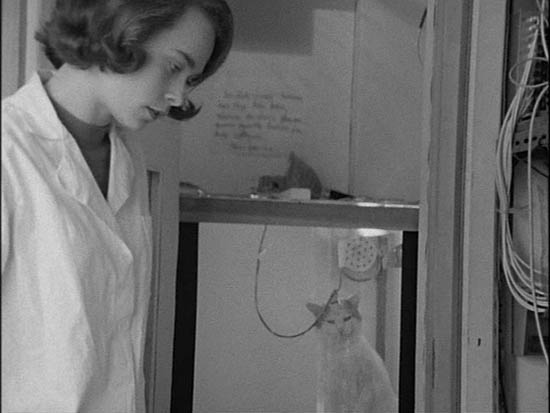
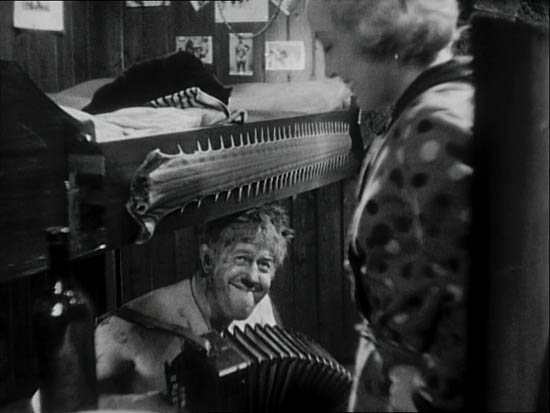
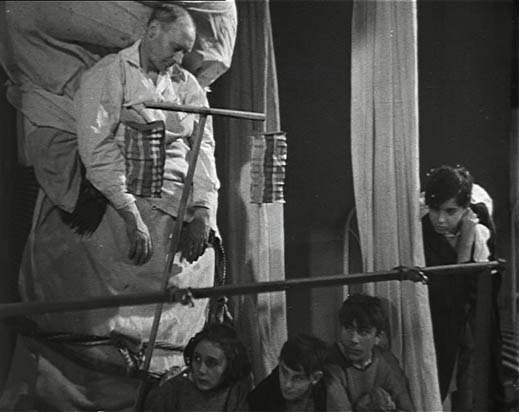
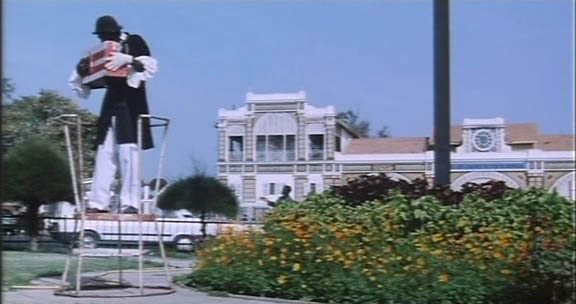
Congoma-player Marigo hasn’t paid the rent in a few months, so his landlady (the griot from Touki Bouki) has confiscated his instrument until he pays up.
image

With no way to earn a living, Marigo buys a lotto ticket from an optimistic dwarf acquaintance.
image

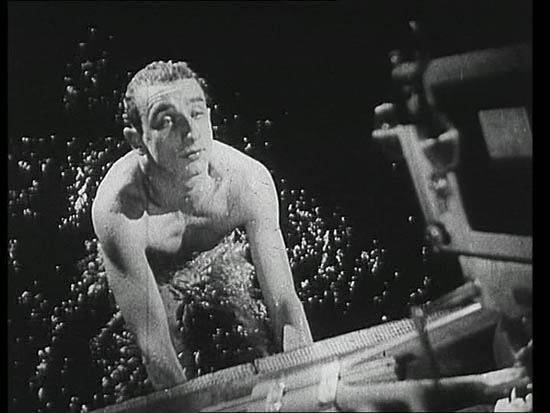
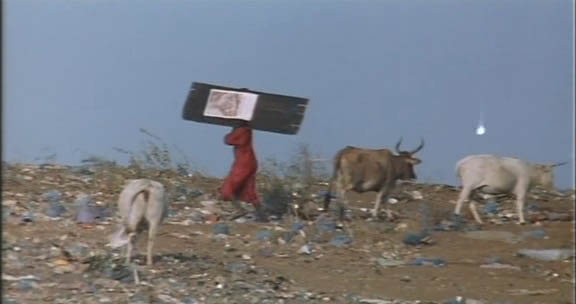
Marigo has got the winning number… but he pasted the ticket to his front door behind a poster of Yadikoon (“an African robin hood”), so he has to take the whole door to the lottery office.
image

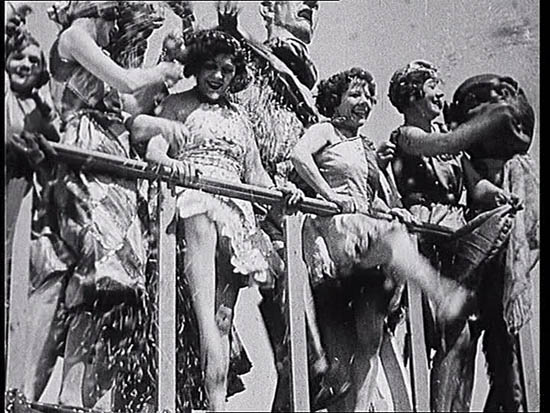
…along the way, dreaming of the rich life…
image

…only to be told that the ticket needs to be detached from the door to be authorized.
image

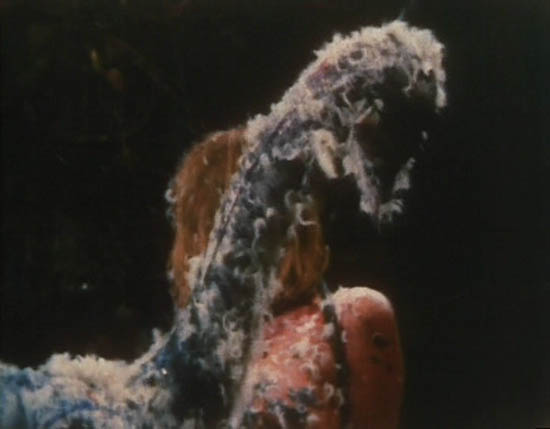
So Marigo makes a run for the beach and uses the pounding surf to remove the ticket, dancing and dreaming on the rocks, losing his poster but getting the ticket off successfully, screaming ecstatic laughter.
image

I pretty much loved it.

Culturebase.net:
“We have sold our souls cheaply!“, Mambety concludes, though he never described himself as a political director. Yet his films always refer to the economic reality of his country, which is entirely dependent on the World Bank, monetary funds and French economic policy. This is true for his last two films. They were part of a trilogy on “The story of small people.” “Le Franc” and “La petite vendeuse de soleil” are from parables on the lives of people who must ask themselves the same question every morning, namely how to gather the most fundamentally necessary means to survive. The small people in this trilogy are the counterparts to the greed of the hyenas in his longer feature films.”

Filmref.com:
“Mambéty introduces the trenchant idea that the power of the imagination to raise post-colonial African consciousness does not exist in fanciful, but ultimately empty, idle dreams or wistfully dwelling over a lost – and stolen – noble past (a theme that is also articulated in Jean-Marie Téno’s films, as well as Ousmane Sembene’s Borom Sarret), but in a certain wide-eyed innocence and naïve determination that recovery and advancement are still possible with dedicated effort.”

California Newsreel:
“In both films there are conspicuous references to Yadikoon, a semi-legendary figure who in popular memory became a kind of Senegalese Robin Hood, robbing from the rich to give to the poor. In Le Franc, the main character, Marigo has a poster of Yadikoon in his room. Mambety himself named a foundation he established for Dakar’s street children after Yadikoon.”

The only hits I get from “Yadikoon” on google are from articles on these films, so either he’s a Mambety-created character or we are all spelling his name wrong.

Also watched “Echek” again, fun little flick by Adan Jodorowsky:
image

The Landmark theater of course played these Academy-ratio films in widescreen, ho-hum.

WHITE MANE, b/w, boy who lives on the marshes in southern France with his father and little brother (played by director’s son / star of Red Balloon) loves a wild horse, wants to capture it. Nearby ranchers also want to capture it. After a chase, boy rides the horse into the river and floats away, swept out to sea.

RED BALLOON, bright color, boy finds balloon which magically follows him around the city. Adults conspire to keep him away from his balloon, and other kids want to steal and destroy it. When the kids are successful, balloons from all over the city fly over and lift the kid up over Paris.

Jimmy says both movies are about the perils of acquisition. Both have somewhat the same ending… the kid getting (more or less) what he’d desired, a sense of freedom and imminent danger.

The two won a bunch of awards at Cannes, and Red Balloon got an original screenplay Oscar beating out The Ladykillers and La Strada. Remarkable for a movie with almost no dialogue. The two share excellent camerawork and primitive post-synched sound. I haven’t heard of anything else by photographer Edmond Séchan. Lamorisse made some other lesser-known children’s movies, including the earlier “Bim” and a widescreen Red Balloon sequel “Stowaway in the Sky”. The documentary he was filming over Iran when he died in an accident got an Oscar nomination after its completion. Best of all, he invented the board game RISK in ’57.

More shorts from “The Movies Begin” disc 1.

President McKinley at Home (1897): the first president on film plays with his hat and looks uncomfortable.
image

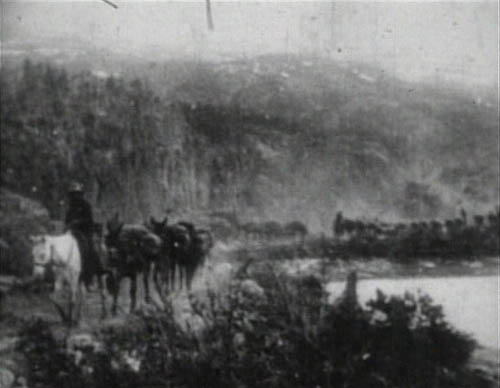
Pack Train at Chilkoot Pass (1898), reportedly recreated at the start of chaplin’s gold rush but I couldn’t say for sure.
image

Sky Scrapers of New York City from North River (1903)
image

Georgetown Loop, Colorado (1903) – those are passengers waving their hankies out the window to be on camera.
image

San Francisco: Aftermath of Earthquake (1906) – awesome film, I had no idea.
image

The Dog and His Various Merits (1908)
image

Moscow Clad In Snow (1908) – just what it says
image

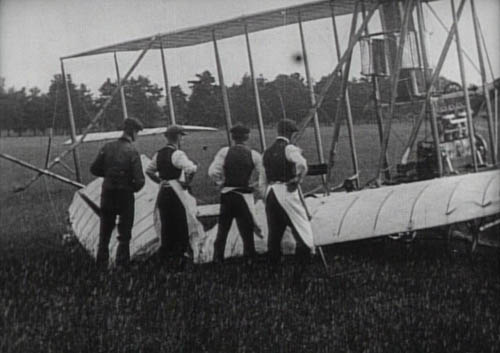
Aeroplane Flight and Wreck (1910)
image

“Innocence will overcome destruction.”

More poetry (written and filmed) on death and war. Narration is about the town of Guernica destroyed by German (film says Nazi?) bombings in ’37 during the Spanish Civil War, while the visuals are of Picasso paintings, then a sculpture at the end. Mournful in tone, dark, with crossfades between paintings and segments, a few lighting and editing tricks to tell the story. Most of the screen time is not the Guernica painting – that’s just one of the ones they use. The writing by Paul Éluard is good but didn’t strike me as great as the Night and Fog narration. I enjoyed the score by Guy Bernard (Statues Also Die). The visuals are more of a Picasso showcase than a filmmaker showoff, though it’s all cut together very effectively.

image

image

Co-directed by Robert Hessens, Resnais’s Oscar-winning accomplice on the Van Gogh short.

Paul Éluard was a poet who associated with Dali, appeared in L’Age d’or, was quoted in Alphaville, and died shortly after this film was released. Same photographer as on Gauguin and Van Gogh. Resnais credited as editing himself. Narration by the princess from Cocteau’s Orpheus.

image

image

The Kiss – The raciest, most controversial film of its time.
image

Serpentine Dances
image

Sandow
image

Comic Boxing
image

Cock Fight – some early animal cruelty from our man Edison, who would later outdo himself with the classic “Electrocuting an Elephant”.
image

The Barber Shop – Can’t imagine the appeal here, watching someone get a shave. One of the earliest films ever made and the “latest wonder” is a cheap/quick shave, not the motion picture itself?
image

Feeding the Doves
image

Seminary Girls
image

Swimming in the Sea
image

Children Digging For Clams – the best short for watching children dressed in silly period garb
image

Loading a Boiler, or, “the one where nothing happens”.
image

Dragoons Crossing the Sâone – dragoon: noun, cavalryman, a member of a European military unit formerly composed of heavily armed mounted troops.
image

Promenade of Ostriches – actually only one ostrich, also a camel and some elephants
image

Childish Quarrel
image

Lion, London Zoological Garden – more animals getting taunted for the camera
image

Photograph
image

Transformation by Hats
image

Carmaux: Drawing Out The Coke – coke: noun, the residue of coal left after destructive distillation and used as fuel.
image

Poultry-Yard – an inferior remake of Edison’s “Feeding the Doves”
image

Arab Cortege, Geneva – first appearance of a black person in the cinema?
image

New York: Brooklyn Bridge
image

New York: Broadway and Union Square
image

Policeman’s Parade, Chicago
image

Hellraiser Prophecy
Holy crap this was bad. I’ve avoided fan films for this long, so why did I watch this one? Oh yeah – I’ll watch anything in the Hellraiser series. I’m sure this guy was proud of his fan script, trying to tie the Leviathan thing from Hellraiser 2 together with the lead character who I don’t remember from Hellraiser 4 and introducing Lucifer himself into the Hellraiser world for a collision of different hells. That’s all fine and good – the mistake was to actually shoot the thing, with dismal actors who stumble over their lines and no sense of skill or vision behind the camera, just some series-aping tribute bits with the chains and some good makeup and costumes on the cenobites. Guess I’m not sorry I watched it (only 20 minutes long) but I won’t be checking out the hour of DVD bonus features.

Flowers and Trees
First technicolor cartoon AND first oscar-winner for best animated short (probably no coincidence) is a disney “silly symphonies” musical. Two trees (a nasty gnarled one and a strong young one) compete for a beautiful girl tree, and there’s a forest fire and singing and stuff. Like a popeye episode, but with plants.

Super Mario Movie
Clever: guy hacks a super mario bros. cartridge and turns it into a “movie” installation piece. It’s over-long at 15 minutes, but cute. The “plot” is that Mario is trapped inside an old game cart in a closet somewhere while the code is starting to break down. Like Rejected, but in 8-bit.

Hyas and Stenorhynchus & Love Life of the Octopus by Jean Painlevé
These are a lot cooler looking than I thought they’d be. The Yo La Tengo music works fine – I was going to try synching up the live versions, but I don’t suppose exact timing matters much in this case. Katy is grossed out by the idea of octopus sex.

Jason Schwartzman is a sad man who has exiled himself to a Paris hotel after breaking up with his girlfriend. Natalie Portman is the girlfriend who finds him and comes to visit.

The main reason to watch this short:
nudie portman

Jason has his personal artifacts very carefully littering his room and he plays a specific song on his iPod speaker system when he hears Natalie coming upstairs. He’s got the typical Wes Anderson sadly introspective male performance, and she delicately shows off her quirky side by brushing her teeth with his brush as soon as she arrives. The camera compositions are meticulous and familiar.

So… why? I know it’s a back-story bit for The Darjeeling Limited, but why? Is it a marketing gimmick? It’s not a deleted sequence from the film itself – was shot separately. Does Anderson now think of it as part of the Darjeeling film? Does he wish it’d been included? No, because the short is on iTunes but won’t be included with the film release in U.S. theaters. So maybe I’m being a jerk about this, but a short should stand on its own as a short, not be a clever taster for the new theatrical product or a bonus to sell more DVDs. That’s an advertisement. This one doesn’t really hold up as a short. If there was no Darjeeling Limited and this was just released on its own, it’d just be a further downhill slide in quality after the crowning peak of The Royal Tenenbaums, and even that great movie threatens to get sullied each time Wes makes another sad dysfunctional-family-with-father-issues comedy with his now-trademarked music and visual style. Hopefully Darjeeling ends up having a reason to exist, and can provide this short with one, too.

Frank Film
image
Barebones story of Frank Mouris’s life narrated on the soundtrack blended with a free-association list of words. Visual is a fast-motion collage of magazine-clipped images. Neat, must’ve taken forever. Won the Oscar, kickstarting a long life of filmmaking obscurity for Frank, poor guy.

Valse Triste
image
Looks like a montage of found footage from rural America in the 1940’s set to sweeping sad music. Sepia-tinted, only 5 minutes long. Took me a visit to IMDB to realize the montage represents the wet dream of the boy who goes to sleep at the beginning of the film, damn. I get it now. Bruce Conner born in Kansas in 1933, so he WAS that boy!

Adam, 5 to 12
image
Begin the rhythmic Estonian vocal music. Trippy animation doesn’t do much, then the clock appears, then a whole pile of grim images of war and death are overlaid on the clock. Adam tries to turn the clock back but it’s frozen at 5 to 12. Finally it moves dramatically to THE END. Director Petar Gligorovski died in 1995.

V. Gligorijevic (via email) on the music: “Its composer, Veljo Tormis, had clash with Soviet authorities which perceived Estonian nationalist overtones in Tormis’s music, from which the Curse to the Iron, the featured background, is considered one of his most recognizable works.”

Reflecting Pool
image
Wow, this is great. Seven minutes of a reflecting pool with some video effects. A man motions to jump in, but is frozen in midair while the pool stays in gentle motion. The man slowly fades out, and most of the rest of the action takes place in the pool’s reflection and through its varying levels of agitation. Probably just a more complicated metaphor for sex than the last film… I don’t pick up on those things easily. Bill Viola is only 56 and still working.

Sweet Light
image
Another by Bill Viola. Close-up: some flies on a windowsill. Camera moves slowly and evenly away and turns toward a man writing at a desk. Camera fast follows a ball of paper he hurls on the floor. Abrupt change to camera spinning around a dinner table candle, then insects leaving vapor trails in the air. There is light involved, and it’s all pretty sweet, so there’s your title.

Pause!
image
A man against a wall making hand gestures, distorting his face and making breathy sounds. Gets violent at times. Probably also a metaphor for sex. My copy was dark and muddy but it’s not like I’ll be scouring rare video stores looking for a better version. Oh, I looked it up and the man is Arnulf Rainer, a surrealist-influenced artist known for “body art and painting under drug influence”. This must be body art. I wouldn’t have named a museum after this guy, but I guess the New York art scene knows better than I do. Directed by Peter Kubelka.

Powers of Ten
image
By famous designers/architects/filmmakers Charles and Ray Eames. “A film dealing with the relative size of things in the universe and the effect of adding another zero”, made for IBM. A man is laying in a park in Chicago. We zoom out from him to 100 million light years (10^24 m) then zoom into his hand to 0.000001 angstroms (10^-16 m). Both Eames died on August 21, ten years apart. Music by Elmer Bernstein (also dead) of Far From Heaven and Ghostbusters.

The Metamorphosis of Mr. Samsa
image
The Kafka story done with cool mushy black and white perspective-shifting animation (paint on glass?). Samsa might be some sort of spider/beetle. Caroline Leaf works with the National Film Board of Canada.

Elimination Dance
image
Co-written and starring Don McKellar (Last Night). Dir. by Bruce McDonald, who made cult films Roadkill and Hard Core Logo. Couples dance all night while an announcer reads off descriptions (“anyone who has lost a urine sample in the mail”) eliminating them one by one, as the cops slowly close in fearing unrest. A comedy, cute. Not from the seventies, I realize (1998).

A Doonesbury Special
image
Kind of limited animation, but that’s not a cool criticism to make of a well-intentioned independent production like this one. Neat movie, could’ve stood to be another half hour longer. A regular day at the commune with a bunch of flashbacks, “feeling the present as it moves by”. A little sad, some disillusionment about the fallen ideals of the late 60’s, probably a nice companion to the comics (which I haven’t read since Hunter died). Both Hubleys have died, Trudeau cowrote the Tanner movies.

La Soufriere
image
“This is the police station. It was totally abandoned. It was a comfort for us not having the law hanging around.” Would’ve probably been one of Werner Herzog’s best-known movies (OR have led to Herzog’s fiery death) if the volcano had exploded as predicted, but since it didn’t, this is an obscurity on a DVD of documentary shorts. “There was something pathetic for us in the shooting of this picture, and therefore it ended a little bit embarrassing. Now it has become a report on an inevitable catastrophe that did not take place.” Herz and crew tromp about an extremely dangerous volcano site in the Caribbean, explore the completely empty towns below, and interview what few stragglers remain. One of the cameramen is from Morristown NJ, also shot Far From Heaven, A Prairie Home Companion, Tokyo-ga, True Stories and The Limey.

Most of these movies are as old as I am.