It’s fun to see the pre-Awful Truth days when every corporate headquarters didn’t have an Official Michael Moore Policy and when Moore was thrown out of an event not because of who he is but because one of Ralph Nader’s relatives was with him. It’s also fun to see what a good movie Moore can make when he devotes all his time and energy to a single cause instead of bouncing from one populist hot topic to the next (Columbine, Fahrenheit) or tackling issues that are too large to fit in a movie (Sicko). He stays (mostly) in Michigan, covers a couple years’ worth of plant closings, visits and revisits local people (the eviction deputy, for one) and tries to get answers from (and stir up debate against) the corporate overlords and policies seen to be the cause of the problems. We’d been meaning to watch this for a long time, and thought the week of G.M.’s collapse (and Moore’s latest email about it) made for good timing.

These days when I hear “Sam Raimi’s got a new movie” I’m not all that excited. When I hear he’s got a new horror movie it sounds slightly desperate so I’ll wait for reviews. When the reviews are all positive I run out to see it. But I am hereby calling bullshit on those reviews, because this isn’t a great movie, or a creative revitalization – it’s a generic horror flick. Alison Lohman (the lead reporter who I don’t remember liking much in Where The Truth Lies, also in Big Fish) gets gypsy curse, spends the whole film understanding then trying to rid herself of said curse, puts boyfriend (Justin “Mac Guy” Long) and spirit guide in danger (not to mention getting herself in all sorts of embarrassing situations), and so on. It’s funny/horrifying that she does get dragged to hell in the final minute, her screaming face melting off as demon claws pull her beneath the molten rocks, but the 99 minutes before that weren’t worth the payoff. What’s worse is the visual style… I don’t mind missing those Evil Dead low-budget hallmarks like the anamorphic lens spin, the stop-motion and camera-speed effects and the slow 360-degree “where’d the danger go?” pan, and I don’t miss Bruce Campbell (not after My Name Is Bruce), but these things are replaced by a movie consisting of close-ups 85% of the time, as if shot by a damned TV director or an indie neo-realist. I mean, the movie had its effective shocks and a sad/hilarious old gypsy woman and David Paymer, so I don’t regret watching it, but I do regret that it wasn’t a whole lot better.

I knew that an old guy flies away with his house using hundreds of balloons, along with a boy scout stowaway, and that’s all I knew. If I’d have realized there would be a giant comic bird and a pack of talking dogs I might’ve been less anxious to watch this – but shit, it’s Pixar and they can do no wrong, so we ended up loving it.

Features a montage of a happy couple from childhood to marriage to her death many years later – the saddest thing I’ve seen in ages, used to give us insight into our seemingly cranky protagonist… a boy with an absentee father… a childhood hero turning out to be unworthy (actually a murderous egomaniac, an Incredibles-reminiscent supervillain). It’s a very adult cartoon.

Also a fun short about storks and clouds, Partly Cloudy, directed by animator Peter Sohn (who also did a voice in Ratatouille).

I assume this was on my must-see list because a bunch of New Yorker critics put it on their best-of-year lists paired with Still Life. Given how unimpressed I was with Still Life overall, I should’ve known better than to seek out its lesser-known companion piece. But I’m also drawn to 70-minute movies and figured it couldn’t hurt (it did; it put me to sleep).

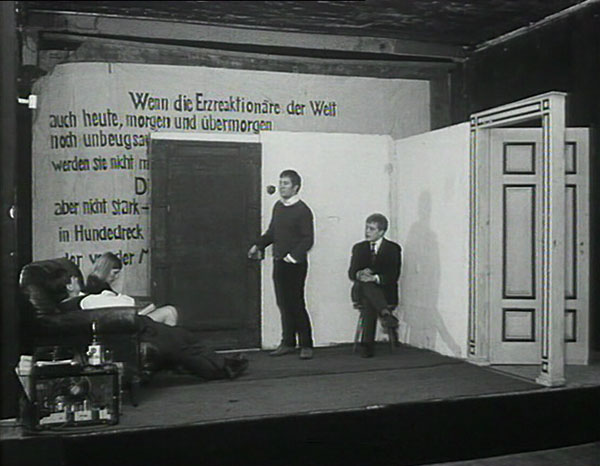
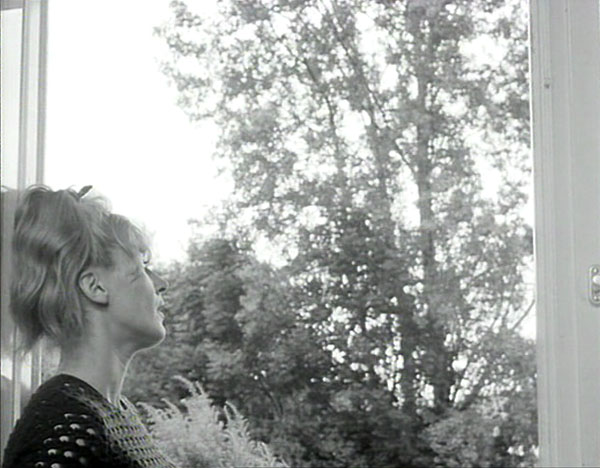
We meet a painter at Three Gorges Dam.

Later he goes to Thailand.

Recommended listening: Psalm 69 by Ministry.

image

Supposedly “Dong” means “East” in Mandarin – not to be confised with Tsai Ming-liang’s Dong, which means “The Hole” in Taiwanese.

Ian Johnston for Bright Lights:

A week after starting on Dong, Jia decided to make Still Life, from then on shooting the two films in parallel. In fact, the films share some of the same footage, including nonprofessional actor Han Sanming. Han’s appearance in both films playing a demolition worker alongside real workers raises some interesting questions about the “documentary” nature of Dong. It seems to share here the aesthetics of Jia’s fiction filmmaking, where questions of form – the composition of the image, the placement and movement or lack of movement of the camera, shot length – have as important a role as a film’s content, and the way that content reflects a social reality. This slippage between documentary and artifice in Dong is interesting, but the film itself is a minor work of limited appeal. One of its problems is that although Jia feels a generational and artistic affinity with Liu, Liu’s painting style – the focus of Dong – is of the most banal representational realism, far away from the challenges of Jia’s aesthetics. Moreover, the second half of Dong is very weak, with the scenes in Bangkok, in striking contrast to those in Fengjie, appearing touristic and inauthentic.

Scott Tobias: “In every case, the backdrops of Jia’s films are extraordinary: Momentous, politically engaged, and strongly attuned to the consequences of progress on a macro scale. And in every case, he also seems oddly incapable of doing anything interesting in the foreground.”

The two stars of Big Bang Love: Juvenile A are back – Ryuhei Matsuda (the weak hero) as the titular Nightmare Detective and Masanobu Ando (tattooed superdude) as a curly-haired regular detective. It would seem like an inversion of their roles in the other film, except amazingly it’s not – the title character is weaker than everyone else in this movie. He has the power (at great personal risk) to enter the nightmares of others, but not to do anything else, so once inside he’s just bitter and afraid. It’d be kind of hilarious but there were always too many terrifying blurs of action to laugh.

your (very upset) nightmare detective:
image

I suppose our main character is Keiko (played by singularly-named Hitomi). That’s her at the bottom warming her hands on a giant plastic brain-looking creature. Keiko works with rookie Wakamiya (Masanobu Ando) under chief Sekiya (Ren Osugi of MPD Psycho and Achilles and the Tortoise). Initially Keiko has a strained relationship with the others, since she formerly worked a desk job and doesn’t handle crime scenes well but all that’s forgotten when the shit goes down.

Ando and Osugi:
image

Movie has a very video look, a la Haze or MPD Psycho. The horror action is never seen – pieces of blades or the color red may be glimpsed, but mostly you know that a fast, screaming blur is approaching the character, something unstoppable and terrifying (Tetsuo-like).

image

The screaming blur is actually nightmare terrorist/suicide-assistance provider Zero (played by our director), who takes phone calls from depressed people then comes to slaughter them in their dreams, causing them to kill themselves (all with stabbing implements, I believe) in reality while still sleeping. He’s sort of a Freddy Krueger for hire. After a couple of people die, Wakamiya dials Zero (ha) as part of the investigation and ends up suffering the same fate, telling Keiko as he awakens “I didn’t even realize that I wanted to die.”

Zero/Shinya Tsukamoto:
image

So Kagenuma, the nightmare detective, is drawn quite unwillingly into the investigation, more than halfway through the movie. He turns out to be juuust enough of a hero to get the job done, actually rushing the villain in a fit of bravery. Keiko, having dialed up Zero herself leading to a three-way battle inside her head, decides to live after all.

Tsukamoto: “The killer appears to be revealing the true terror of death to the willing.”

image

Much of the online writing on this movie mentions the crappy performance of Hitomi in the lead role. I guess I just figured she was your typical buttoned-up brainiac movie detective and wasn’t supposed to emote. Or I was spending all my energy thinking “where is the nightmare detective? why is he barely in the movie?” From the look of the trailer, the upcoming sequel looks quieter, more contemplative, with less violent stabbing. This was great – Tsukamoto’s movies seem to get better and better – so I’m looking forward to it.
Ah, I was right when I watched Scars of the Sun and assumed that it wasn’t Miike’s primary focus of 2006. This movie (AKA 4.6 Billion Years of Love) is where all the innovation went. After all, the man himself called this his masterpiece.

Opens with a clapboard, a guy reading poetry about light and the past and the five senses, an older fellow telling a kid about homoerotic rites of manhood, then suddenly Masanobu Ando is doing a frenetic dance against a white background. Later there are intertitles, crazy sets, unusual CGI, and an animated segment of someone frying on the electric fence.

image

Masanobu Ando also starred in Kids Return, played a villain in Battle Royale:
image

Once you unlock the story from all the craziness, it’s about two guys sent to prison together – tattooed tough-guy Kazuki (Ando) and weak, sensitive, gay Ariyoshi. K likes A and looks after him, but doesn’t quite warm to his sexual affections. Both are frustrated, yearning for escape (symbolized by their long conversation in an imaginary outdoor field in front of a pyramid and a space shuttle).

Ryuhei Matsuda (Ariyoshi) is the guy on the poster of Oshima’s Gohatto and the star of Nightmare Detective:
image

At the end it turns into a whodunit, as Ariyoshi is suspected of strangling Kazuki to death. He’s caught in the act, and tells everyone he did it but nobody believes him capable so the investigation continues.

Warden Takatsu is Ryo Ishibashi, star of Audition, recently seen in Suicide Circle:
image

But it’s not the kind of whodunit where the audience participates and could possibly guess the culprit. We’re just left to wonder “Did Ariyoshi kill him, and how?” because the other inmates don’t get much to say until after the investigation is underway. I figured Kazuki could’ve let A. kill him, a la In the Realm of the Senses, but no – it was giant Tsuchiya who works in the infirmary and regularly summons A.’s co-worker from laundry duty for sexual liasons. Even Tsuchiya didn’t think he could take Kazuki – he attacked him as a way to commit suicide, and when K. let himself die, T. took his own life a couple days (hours?) later.

image

Sounds like kind of a sad story, but the filmmaking is so invigorating there’s no time to be bummed out.

D. Kalat from TCM (?):

For a film whose premise is a homoerotic romance set in a prison, Miike has studiously avoided the obvious, the cheap, and the cliché. The prison itself is not so much a set as an abstraction—the architect appears to have run out of ink and paper before he got around to designing the usual attributes of a prison: cells, bars, walls.

image

Tom Mes:

There is a lot of meditation in Big Bang Love, Juvenile A too. It’s perhaps one of Miike’s most meditative films ever. Oddly, on the one hand, because it was produced by Hisao Maki, responsible for Silver, Family and several other of the most thick-headed turkeys in Miike’s career. Not so oddly, on the other, because it was scripted by the great Masa Nakamura, writer of Dead or Alive 2, The Bird People in China, Young Thugs: Nostalgia and several other of the very finest films in that same career. The big bang of the title is also the clash between the two furthest extremes in Miike’s filmography and the spectacle of its scattering stardust is one to behold.

Yes, but is it any good? This is a Takashi Miike film. It will make you wonder, curse, marvel, tremble, scratch your head, grow bored, and awaken rudely. Celebrate it.

Unfortunately, I’d already heard that Isaach is a hitman. So when he has a quizzical conversation (opening with “You don’t speak Spanish, right?” “No.”) is given a matchbox with a coded message on it then flies to Madrid, I knew this was the first step in his assignment to kill someone. Then this happens again, and again, a train ride, and again and again, a guitar changes hands, and again and again before reaching his assignment. Along the way I forgot the comparisons I’d read (Dead Man, Le Samourai and Point Blank) and let my mind synch with the rhythm of the film, occasionally wondering if Isaach gets enough to eat or if he has taken a shower. The main interruption/alteration is the naked girl who lives with him for three days, even sleeping at his side while he remains fully clothed. Her presence (and subsequent death and imagined reappearance), the repetition of story elements, the paintings and music, black helicopters and abductions, the foreboding background score (by Boris) and the continual spoken and written phrases about life being meaningless began to build until, during a flamenco dancing scene, I wondered if this all wasn’t some kind of Lynchian nightmare. Maybe it’s Dead Man taken a step further; Isaach is dead, having some kind of hallucination (peyote is mentioned in dialogue), reliving the day-to-day life of his profession and of Jarmusch’s profession: the broken flowers on the street, pigeons on the rooftop. But then he reaches the end of his journey, finds a powerful American in a bunker, gets himself inside (the movie’s biggest joke: after all that workaday buildup it doesn’t show us how he gets inside – “I used my imagination”), strangles him, escapes, changes out of the suit and re-enters the world.

The other day I thought about telling Katy that Jarmusch is a feminist in order to get her to watch the movie with me, but I couldn’t come up with any evidence for that… in fact, all I could think of was evidence against. The only woman in Dead Man is a dead prostitute… the only one in Ghost Dog is a troublesome slut who indirectly causes the hero’s death… and I think the title of Broken Flowers refers to Murray’s damaged ex-girlfriends, who get progressively more depressing as the movie progresses. So I thought about that during this movie, figuring the very presence of Tilda Swinton should change things, but then there’s the nude girl, and Tilda is cool but gets kidnapped, which leaves the driver and a bunch of men.

A day later I’m more forgiving. It’s hard to fault any movie for artistic indulgence when you’re thrilling to the latest Takashi Miike mind-fuck. The civilized, art-loving europeans vs. shadowy, violent americans plot isn’t subtle but the movie is also too pleasurable to write off.

Isaach De Bankolé is a wonder to behold. The guy is an obvious movie star, and watching his impassive face for two hours is no problem at all. I admit I was excited that the ice cream man in Ghost Dog is starring in a film, but he was better in this role than I could’ve imagined. Black guy speaking French at an airport in the first scene was Alex Descas, a Claire Denis and Olivier Assayas regular. Girl on the train was Youki Kudoh, one of the Japanese leads in Mystery Train. Everyone else I was either already familiar with (white-wigged Tilda, foul-mouthed Bill Murray, guitar bearer John Hurt, guitar appreciator and inexpert spy Gael Garcia Bernal) or I’ve at least seen before and don’t recognize, like the naked girl was in Cider House Rules a decade ago but nobody can be expected to remember that.

When Isaach is given a new assignment, he’ll go to the art museum and study an appropriate painting. So the instruction “wait for the violin” had him studying a painting featuring a violin, etc. At the end he’s given a black piece of paper and no instructions so he visits the museum and studies an artwork featuring a large white sheet, maybe to clear his mind and ease himself out of his mission.

Kaurismäki’s La vie de bohème is pointedly mentioned. Anything in this movie that is mentioned is done so pointedly. I misunderstood the constant pointed warning “he who tries to be bigger than all the others should go to the cemetery to understand a little bit better what life is: a handful of dust” to be directed at Isaach, but they were talking about Murray

This has been compared to Primer, and the Hollywood remake machine is already rolling over it, so I thought it’d be a better time-travel movie to watch than Terminator 4 this weekend.

image

Hector is settling into his new house with his wife – one day sees a naked girl in the distance, goes to check it out and is attacked by a man with a bandaged head. This being a movie called TIMECRIMES I figure the bandaged man is Hector himself come from the past or future, and I’m right, but the movie doesn’t hide this for long, and there’s more to enjoy than just trying to guess the future/past. Doesn’t tell the story in real chronological order, but follows Hector’s own personal chronology as he is tricked by a scientist (played by the director) into entering a time machine and beaming into the past a few hours. Now Hector 2, he gets in an accident and bandages his face, goes around stalking himself and trying to figure how to get out of this. The bit I didn’t see coming is when he beams himself 30 seconds earlier than he did before, becoming the behind-the-scenes manipulator Hector 3 who ensures that the woman who falls to her death (causing Hector 2 to become Hector 3) is the poor previously-naked bicyclist who tried to help him, and not his beloved wife. Back in the normal flow of time, he sits with his wife as night falls.

image

Also checked out the shorts on the disc. Nacho is the king of the clever concept.

7:35 In The Morning (2003) is a musical – guy (Nacho himself) sings a song for a girl he sees every day at the diner and gets everybody there to participate. Thoroughly unexpected finale when she calls the cops and he turns out to be strapped with dynamite.
image

Crash (2005) is hilarious – guy (Nacho again, imagine that) out with his girl wants to ride the bumper cars just like old times, but he gets increasingly frustrated, angry, embarrassed and injured.
image

From the director of… I’m not sure. The writers won an oscar for this, beating their own screenplay for Operation Petticoat as well as beloved classics North By Northwest (admittedly the writing isn’t the best thing about NxNW) and The 400 Blows and Wild Strawberries (disadvantage: foreign).

image

Kinda surprising, because it’s just your standard gimmicky romantic comedy. I mean, we liked it and all, I’m just saying I wouldn’t have thought “best writing of the year.” Doris Day (in between her Hitchcock film and her Tashlin films) and Rock Hudson (a few years after Written on the Wind and Magnificent Obsession) share a phone line (because the phone company doesn’t have enough!) and hate each other. The problem is that she occasionally needs the phone for business, but he’s always chatting up some woman – always a different woman. Day, a serious businessperson with no need for a man in her life, resents him and makes rules and starts fights.

Katy said Doris Day isn’t pretty. Insanity!
image

So Rock disguises his voice when he meets her in person and romances her as hard as he can as a practical joke, leading to lots of fun visual innuendo…

image

And more, even saucier innuendo!

image

She learns what he’s up to and takes revenge as only a professional interior decorator can – by redecorating his apartment. Ho! But of course they fall truly in love at the end.

I’d assumed Thelma Ritter would be my favorite actor in this movie, but that turned out to be Tony Randall. Maybe after Pickup On South Street I hold her to unrealistically high expectations… all she does here is drink and then act hungover, albeit hilariously. That was still enough to get her a fifth oscar nomination.
image

Tony “Rock Hunter” Randall is a rich guy who’s always after Doris. He thinks he might end up with her there at the end, but he’s just her fallback guy while she works out her feelings for Rock. Poor Tony.
image