Chris Marker Movies I Haven’t Seen

It’s my first-ever post on movies I haven’t seen!

Here are some movies I have not watched because I can not understand them.
More reasons to learn French.

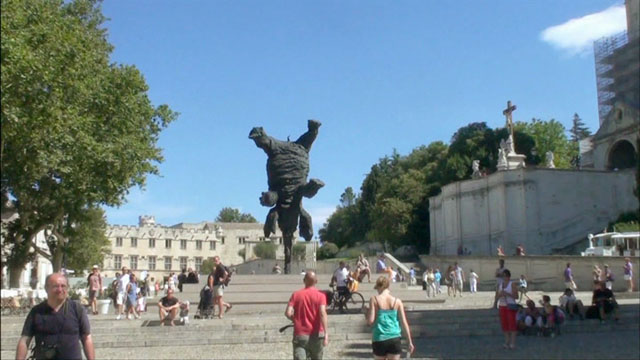
If I Had Four Dromedaries, 1966

image

image

image

image

-
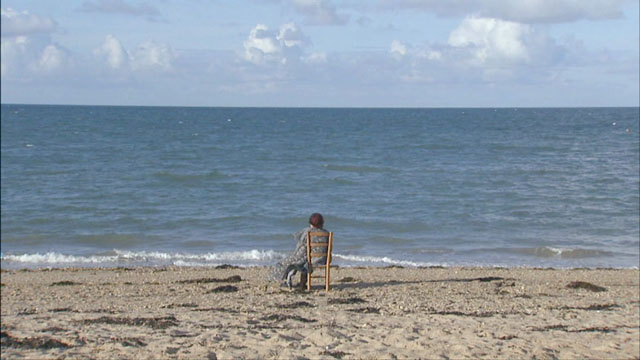
Far From Vietnam, 1967

image

image

-
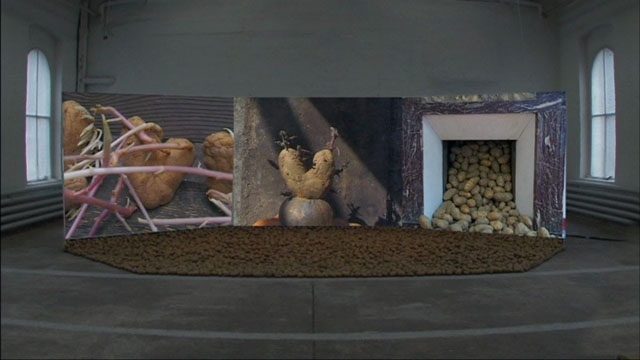
Maspero, les mots ont un sens, 1970
(also mentioned in one of my previous Marker round-ups)

image

image

-
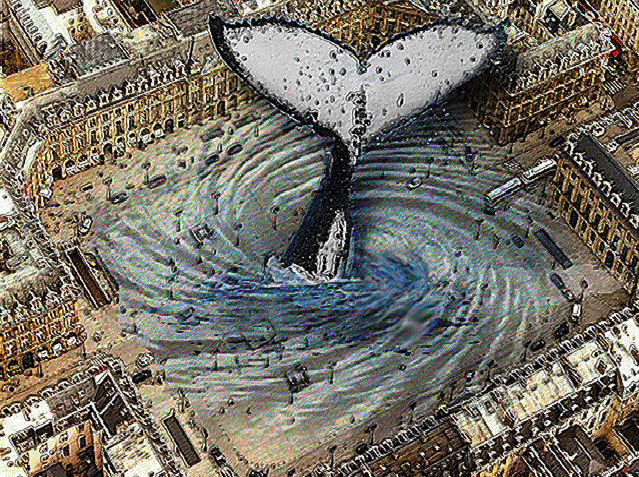
Blue Helmet, 1995

image

image

-
Silent Movie, 1995 (and/or Owl Gets In Your Eyes)
(The girl is Catherine Belkhodja, star of Level Five – note the cartoon owls reflected in her sunglasses)

image

image

-
A Mayor in Kosovo, 2000

image

image

-
Commentaires

image

image

Tags: ,

Comments

Chris Marker round-up, 1986-1993

This page from the Catherine Lupton book gives a good intro to this post on three Chris Marker movies I just watched, and this other post on some Chris Marker movies I did not watch.

Marker has also continued to engage directly with contemporary political events and debates. In The Last Bolshevik and in Berliner Ballade (1990), a report produced for a French television current affairs strand, Marker reflects on the political ideals that collapsed at a stroke with the fall of the Berlin Wall and the end of Communist rule over the Soviet Union and Eastern Europe, and attempts to hold open a space for those who still believe in the founding principles of Socialism. Coinciding with this abrupt shift in the political landscape of Europe, the welter of savage inter-ethnic conflicts triggered by ultra-nationalist movements in the former Yugoslavia during the early 1990s (and again more recently in Kosovo) has focused Marker’s attention through a series of candid engagements with people caught up in the long drawn-out war. Les 20 heures dans les camps (1993, Prime Time in the Camps) focuses on a group of Bosnian refugees who are producing their own television broadcasts. Casque bleu (1996, Blue Helmet) is an extended interview with a French soldier who served with the UN peacekeeping force in the former Yugoslavia, and now voices his disillusion with UN policy towards the region. Two as yet unreleased works, Un Maire au Kosovo (2000, A Mayor in Kosovo) and Avril inquiet (2001, currently unfinished, Worried April), are built around interviews with Kosovans involved in the most recent stage of the conflict. This cluster of short, pointed, interview-driven videos is the direct descendant of Marker’s unsigned political films of the 1960s and ’70s, and retains the same ambition: to give a voice to people who are spoken about, but never heard, in mainstream news reporting.

Tokyo Days, 1986

Twenty minutes long, seems very much like outtakes from Sans Soleil. We watch people dreaming on the subway, check out Japanese television… all very familiar. Of course I’m not complaining. There’s always room for more Sans Soleil. Wish this had been an extra on its DVD, instead of a hyper-obscure oddity on a bittorrent site.

image

No dialogue except in this part – French, of course, so I’m not sure what she said. This girl is Arielle Dombasle – an actress in the films of Raoul Ruiz, Eric Rohmer and Alain Robbe-Grillet (she’s the one labeled “one goofy actress” in my La Belle Captive entry), who also appeared in Sans Soleil and The Owl’s Legacy. I think we hear Marker himself talking to her in this segment.

image

image

image

image

-
Berlin ’90
I thought this was the same film as Berliner Ballade but apparently this is its sequel which accompanied Tokyo Days in the installation project Zapping Zone. I wasn’t always sure what was going on… yeah, the Berlin Wall and elections, but I didn’t get as much out of it as other viewers have. Nothing wrong with it, just some news/reportage footage.

EAI:
Berlin 1990 travels the streets and the political landscape of the recently re-unified Berlin. In the tumultuous atmosphere of 1990, we watch Berliners walk through check points manned by soldiers, past street vendors selling sausages and “actual” pieces of the Berlin Wall, and watch as they watch the election results come in for another “new” Germany.”

Frieze:
Berlin (1990) records daily life by the Berlin wall during its dismantling. Formerly capitalism’s outer limit and the most striking emblem of world economic division, the wall itself became just another commodity, as pieces of it sprayed with fake graffiti were sold next to East German police uniforms and frankfurters. Though Marker documents the optimism of the first East German elections, a stunning montage to the lilting melody I Can Hardly Wait for Spring suddenly evokes the darker memories hiding behind German reunification: flowers strewn along the streets for Hitler, and the burning of Berlin.”

image

image

image

image

image

-
Prime Time in the Camps, 1993

In the Bosnian refugee camps during the war in Sarajevo, some amateurs take over a TV station, dedicated to collecting the news, sorting out the truth and re-broadcasting along with their own reportage to fellow refugees. “They are young people who never imagined that one day they’d be behind a television camera or holding a microphone.” One of the reporters: “People had a particular model in their heads of what television was. So we had to make the news look like the news, which meant making it look like what people are used to seeing. It was then that it became credible.”

At the end we see people watching the show that their neighbors had just finished assembling, a la Medvedkin on his train. If there was a topic in ’93 more custom-made for the interests of Chris Marker, I can’t think of it. Peter Watkins should have been there too (see Frieze quote below).

Wikipedia: “The Siege of Sarajevo was the longest siege in the history of modern warfare, conducted by the Serb forces of self-proclaimed Republika Srpska and Yugoslav People’s Army (later transformed to the Army of Serbia and Montenegro), lasting from 5 April 1992 to 29 February 1996.”

BFI: “Documentary on the Ruska refugee camp in Ljubliana (Slovenia), where a group of Bosnian refugees present news every night on VHS video. Documentary on the making of the news.”

Frieze Magazine: “The amateur journalists sift information from three or four news sources: ‘I ask myself who might want to lie, and who might have the ability.’ Ordinary people, they have slowly come to realise that television news is a vast form of manipulation.”

Frieze 2: “Marker was Resnais’ assistant on Night and Fog (1955), one of the first films to document the Nazi death camps. This early moral imperative to remember is echoed in the Bosnian conflict. News, for those who live within violent struggle, is part of the work of mourning.”

image

image

image

Katy asked why I like Chris Marker movies so much. I told her that Sans Soleil is one of my very favorite movies, and that everything else he has made connects with it in some way, that more than most other filmmakers he seems to be making one long work, rather than a bunch of disconnected movies, and I hope to see as much of that work as possible.

Songs heard:
Tokyo Days: Good Morning from Singin’ in the Rain
Prime Time in the Camps: Leonard Cohen’s Everybody Knows
Berlin ’90: The Air That I Breathe

Tags: , , , , ,

Comments

Chris Marker round-up, 1960′s-2000

À bientôt, j’espère [Be Seeing You] (1968, with Mario Marret)

“Almost 10,000 workers have lost a day’s pay, just like that. It is not a prowess, it’s solidarity and it is something formidable compared to TV games or trash papers. It’s far better, it’s wonderful. It’s normal, it’s the working class… that’s what we must be aware of. What is beautiful is not what is written in the tabloids. It’s what the working class does. It’s to lose 5000 francs to support our sacked mates, and to contribute today again to make up for their lost pay. If only this was advertised and spread. Isn’t that culture? I want to tell management we’ll win thanks to the solidarity they know nothing about. We’ll get you. We’re not mad at those who think wrongly they are the boss, but we’ll get those who own capital. It has to be, it’s natural, and we’ll be seeing you.”

Unfortunately this does not seem like an intricate film which will grow deeper in meaning with repeat viewings – just on-the-spot reporting, interviews with striking factory workers who calmly explain what’s wrong with factory conditions and the effects (both actual and hopeful) of their strike. The only good speech is the one quoted above, at the very end. Movie was a letdown considering the great strike movies I’ve seen lately, including Harlan County USA just last week… but this wasn’t aiming to be similar to that film, or to The Battle of Chile, just small-scale reporting of a single event, leading (hopefully, but not actually) to a revolution of working-class-created films.

image

image

-
2084 (1984)

Filmmakers are asked to commemorate the hundredth anniversary of the 1884 start of trade unionism in France. “They were rather at a loss, so they had this idea of simply jumping ahead a century… afraid of defining the state of the movement today.” Their software and studies predict three possible futures, color-coded.

The Grey Alternative: a never-ending crisis. “When it takes all your energy just to stay afloat, there’s not much imagination left for creating a future.” An alternative with the possibility of “a social or nuclear explosion”, “a fearful society huddled in its blankets of false security, staking its hopes on a precarious balance that is forever in jeopardy. Here the union is at best a powerful protective organization” to “safeguard your job, keep you as comfortable as possible… A union like that doesn’t bother with changing the world.” “Union ritual becomes… nothing but congresses, meetings, demos, slogans. What a drag.”

The Black Alternative: “it could be fascism, it could be stalinism… it’s not easy to forsee a world where the technical developments replace ideology… The appropriation of this technology: who is to benefit from it, who should control its development, was the overriding question of the late 20th century, its real challenge. Because we didn’t understand in time what was really at stake, it was left to a new type of leader to govern the future: the techno-totalitarians.” It forsees “violent workers revolts [in] the 80′s and 90′s and their repression.” This leads to a Wall-E utopia. “At home you get more images than your eyes can absorb and more information than your memory can stock… Anger too belongs to a bygone age. The state is a well-oiled feeding machine and the union nothing more than the engineer who keeps it working, the one who detects the little glitches, little breakdowns, and who can’t even imagine that the machine can serve some other purpose. In fact, of ‘union’, only the name remains. Trade unionism passed away with the dawn of the year 2000″ because of infighting.

The Blue Alternative: a tentative hope. “before our eyes, technology is beginning to prove itself a fantastic tool for changing the world, and this transformation includes the struggle against hunger, against suffering, the struggle against ignorance and against prejudice. It is still a struggle, but in the context of the 21st century, not the 19th.”

image

“The 20th century hasn’t even existed. It was nothing but a long, painful transition from barbarism to civilization. In the 1980′s those who still felt angry about poverty, about the injustice of industrial societies were right. Those who felt there was hope for change were right too. The part unions played was to bridge the gap between this anger and this hope. They were the instrument of a new struggle, a place where imaginations could meet and create new solidarities, where people could… learn how to make good use of their differences, and how to win control of their days.”

The film proclaims that it has been “talking less about what has been done already than about what remains to be done. Nothing is programmed yet. The three alternatives are open to us.” “We’ve just got one century left.”

Definitely had to watch this a second time to make sense of it because of the rapid-fire low-key narration and the bizarre images (mostly of film students in a lab combing through 20th century film images), which I would focus on and lose the train of thought of the narration. They don’t exactly work together most of the time. It’s a great commentary though, and a strong little film.

image

-
Remembrance of Things to Come (2001, with Yannick Bellon)

Excellent movie by two 80-year-old artists celebrating the photography of Yannick’s mother Denise Bellon. Tells stories through Denise’s photographs of France and surrounding countries (including colonized north Africa) and of her friends the Surrealists, first in the pre-war 30′s, then the lead-up to WWII, and briefly post-war (incl. a surrealist reunion photo). Nothing afterwards, though Denise lived until 1999 – makes for a short, focused movie. Electro-sounds and female narration by the Sans Soleil crew of Michel Krasna and Alexandra Stewart.

“Each of her photographs shows a past yet deciphers a future.” This is the kind of movie I’d been waiting for while sorting through Marker’s lesser-known 70′s stuff – poetic commentary weaving history and art around the images. Don’t know how the collaboration with Yannick Bellon worked, but this feels very much like a Marker movie, and a great one at that. There are cats, of course (see below), and the second mention I’ve seen him make of the 1952 Olympics.

From what Acquarello writes about this, you’d think he was talking about Sans Soleil: “It is in this analytical deconstruction between the integral art of composing an image and the cognitive assignment of significance behind the captured image that filmmakers Chris Marker and Yannick Bellon create a compelling exposition on the processing and (subconscious) self-actualization of human memory.”

Movie opens on Dali’s Rainy Taxi, which I saw in Spain.

image

image

The Bellon sisters:
image

Auguste Lumiere:
image

image

The Pont-Neuf, which I recognized from Lovers on the Bridge:
image

The commentary on this part, about scrap metal used to fuel the war effort, is one of Marker’s finest:
image

-
Puisqu’on vous dit que c’est possible [We Maintain It Is Possible] (1973)

“We can now point out that the government preferred to surrender to multinationals rather than grant anything to the workers. That’s what we can say for now.” [via megaphone]

Movie about worker occupation of a factory in 1973, with an intro saying the movie was shot by “Scopecolor”, edited by Marker, and is the sole responsibility of those involved – the strike participants’ way of distancing themselves from the film, perhaps. A watch factory called Lip is to be shut down, then bought out, then restructured with massive layoffs, and the workers decide not to accept this, to take the factory and sell the watches themselves. Negotiations don’t go well (the workers have all sorts of demands, the owner simply says it’s not profitable so he’s shutting it down) then the police evacuate the building and demonstrations hit the streets.

Has much more interesting editing than À bientôt, j’espère but that’s not saying much. Still, for the most part, video interviews and a few photographs for a while, then footage from inside the factory, nothing exciting to watch. I mean, all praise to Mr. Medvedkin, and I agree that cinema can have many useful purposes, but personally I’ve seen an unusually high number of movies about worker strikes, so forgive me if I yawn when this one’s narrator goes on about how exciting are union meetings.

“The outrage lies in labor exploitation and the alienation that capitalism inflicts on workers.” says a speaker during a convincing speech – which is exactly the point here. Rich factory-owners aren’t going to freely hand their factories over to the workers, and the government isn’t going to allow one group to occupy another group’s buildings against the owner’s will, so the only way to win is the change the system, to reform capitalism. It happened, however briefly, in Chile, but the watchmakers at Lip failed to overthrow the French capitalist system.

image

image

-
Set Theory (1985)

An ugly slideshow done entirely in HyperStudio, accompanied strangely enough by string music by Russian composer Alfred Schnittke instead of the electronic sounds Marker is fond of using. The story goes: Noah is on his ark wondering how to sort out all these animals, when two wise owls come by and teach him set theory. “Eureka,” cries Noah, who now understands all manners of mathematics through understanding set theory. Since it uses French intertitles instead of spoken narration, I transcribed the titles and ran ‘em through google translator to make a subtitle track with helpful program Media Subtitler. The movie itself was only halfway worth the effort – it seems a very minor work (though more amusing than À bientôt, j’espère) – but it was fun to play around with. Some of the clip-art and dialogue is actually pretty cute – a tiger being confused with a house cat due to faulty classification and taken home is portrayed using an oversized tiger in a bathtub, with E. Munch’s “The Scream” in the foreground.

image

image

Tags: , , , , , , , , , , , , , ,

Comments

Shorts watched June 2008

Gymnopedies (1965, Larry Jordan)
An egg floats around on different backdrops interacting with various objects, all cut-out animation a la Gilliam or Borowczyk, set to calm piano music. Feels more like a proof of concept than anything else – if there was a narrative present, I didn’t catch it. Cute, though.
image

Lipstick (1999, Pascal Aubier)
Single 6-minute shot beginning under a bed, unsubtitled. Family is getting ready to leave for a trip, the mother is briefly visited by her lover who comes in through the window. Aubier was assistant director on some French New Wave classics in the 60′s, now an actor and a director of (mostly) comic shorts. Liked this a lot (and not only because of the naked dancing), will have to check out more of his stuff.
image

Ark (2007, Grzegorz Jonkajtys)
Iffy-looking 3D animation tells apocalyptic story with a twist ending. Our guy wasn’t really the lead scientist onboard an ark of the last surviving humans searching the oceans for new land, just a crazy old man in a convalescent home. Ha! Bah.
image

Happy-End (1996, Peter Tscherkassky)
Found footage of a couple sitting down for dinner, toasting the camera, drinking… and drinking and drinking! Dancing, drinking, sitting, more drinking. Different days, different clothes, edited together, eventually with scenes superimposed atop each other, a haunted distortion of a French pop song as the soundtrack.
image

Two Solutions To One Problem (1975, Abbas Kiarostami)
Very short with narrator, two kids get in a fight over a torn book. We tally the damages then rewind, and instead of starting a fight, they help repair the book and remain friends. Nice.
image

Blah Blah Blah (2006, Dietmar Brehm)
Liquor bottles. Close-ups of objects with strong textures, overexposed porno, an action film in extreme-fast-forward, long pause on an ashtray, back to the liquor bottles, etc. Audio is a quietly rainy/windy day with a metronome hit every three seconds. Looks like old 8mm or 16mm color with some monochrome sections. Pretty alright, probably better in a theater surrounded by like-minded shorts instead of following up a cute Kiarostami piece.
image

A Girl, She is 100% (1983, Naoto Yamakawa)
Wow, that wasn’t very good at all. They must’ve thought it’d be the simplest Haruki Murakami story to film. Straightforward, with some good still photography and some bad acting by our IMDB-unknown hero, closing with some rockin’ 80′s music.
image

Foutaisies (1989, Jean-Pierre Jeunet)
Young Dominique Pinon with 80′s hair tells us about the things he likes and does not like. Very Amelie-feeling, with Delicatessen opening titles (and Deli‘s lead actress).
image

image

image

The Hitman (2001, Ruben Fleischer)
Mary Lynn Rajskub decides to be a hitman, but her first mark (Paul F. Tompkins) decides not to go through with it and asks her out instead. Just your typical indie comedy short. From the director of Girls Guitar Club, whose film career didn’t take off, I guess.

What Is That (2001, Run Wrake)
Buncha funny animated business involving insects and meat and ringing sounds. Cute, but only three minutes long and pretty inconsequential… not up to Rabbit level. Guess it’s an early work.
image

Film Noir (2005, Osbert Parker)
Awesome, very short. Like Fast Film but slower. Some After-Effects-lookin’ animation combined with models and lots of cutouts – not trying to tell a story, just cool visuals/mood. Ahhh, the internet reveals that it was all created in-camera – impressive!
image

image

image

Banquize (2005, Claude Barras)
Boyer’s French Dictionary: “banquize – heap of floating ice frozen together in close masses.” Might be called Banquise, actually. Simple animation, fat kid wears his snow clothes in summer, dreams of living on banquize and playing with penguins. One day trying to hitchhike there he drops dead from heat/dehydration. Hmm.
image

Herakles (1962, Werner Herzog)
Herzog’s very first film, six years before his first feature. This was really good, and not like anything else I’ve seen by WH. Pretty simple structure so I’ll let wikipedia take it below.
image

The film relates to six of the twelve labours of Heracles. The film starts with shots of young male bodybuilders working out in a gym, posing on a stage and flexing their muscles. Each of the labours are then announced by on-screen text in the form of a question, followed by related scenes of modern challenges intercut with the bodybuilders. The audio track of the film is saxophone jazz and sounds from a gym.

The question “Will he clean the Augean stables?” is followed by scenes of a garbage dump, “Will he kill the Lernaean Hydra?” is followed by a huge line of stopped traffic on a motorway and people walking around outside their cars, “Will he tame the Mares of Diomedes?” is followed by scenes of car racing and several race crashes including a crash into the spectators and shots of the subsequent disaster and piles of bodies, “Will he defeat the Amazonians?” is followed by scores of young women marching in uniform, “Will he conquer the giants?” is followed by shots of rubble of a destroyed apartment building and men in uniform searching the wreckage, “Will he resist the Stymphalian birds?” is followed by jets flying in formation, shooting missiles and dropping bombs on training targets. The last shot of the film is of a bodybuilder’s buttocks as he goes off the stage through the stage curtains.

image

Matta (1985, Chris Marker)
“What I am showing here is no exhibition. It is an appeal: Come and play with me! It’s a very lively game, but nothing happens.” Simple interview with Chilean artist Matta (not surprisingly an Allende supporter), an original member of the surrealist group, talking coherently about his art and all art, human beings, dimension and meaning. Would be nice to get/make a transcript. Would be even nicer to have been able to see the Matta paintings that Marker frames him against, but my video was too low-quality to make out much visual detail.
image

Tags: , , , , , , , , , , , , , , ,

Comments

Grin Without a Cat (1977, Chris Marker)

“Why sometimes do images begin to tremble?”

From the film:

1967 saw the arrival of a rather peculiar breed of adolescents. They all looked alike. They would immediately recognize each other. They seemed to posses a silent but absolute knowledge of certain issues but to be totally ignorant about others. Their hands were unbelievable skillful at pasting up posters, handing paving stones, spraying on walls short and cryptic messages which stuck in the memory, all the while calling for more hands to pass on the message they’d received but had not completely deciphered. Those fragile hands have left us the mark of their fragility. Once they even wrote it on a banner. “The workers will take the flag of struggle from the fragile hands of the students.” But that was the following year.

image

Watched the 3-hour 2008 edit with English narration. There are so many versions of this out there… maybe next time I can watch the 2008 or 1977 French with subtitles.

I thought I’d have more to say about it… three hours’ worth of Chris Marker’s most celebrated film, but I don’t really. Marker is mainly credited as an editor here, arranging others’ footage to show a bigger picture. There’s no wall-to-wall narration, just pops up occasionally. And I’m starting to notice a real sadness beneath many of Marker’s films… the same feeling in Chats Perches is present here. Glad I prepped a little by watching Sixth Side of the Pentagon and Battle of Chile, but I still had to check on wikipedia to see what exactly happened in Bolivia (Che Guevara killed Oct. 1967) and Prague (Jan-Aug 1968, attempted reform of Czech socialism led to 30 years of Soviet military occupation). The movie isn’t here to teach basic history of revolution – assumes you know something already, and since I quit reading The People’s History of the United States before it reached the 1900′s, I do not. Still, was able to follow the movie, thought lots of the footage was excellent, enjoyed watching and learned a little. Some segments have little gems of Marker wit in their editing or narration, but much of it is making connections between different scenes of revolution, both real and wishful, and thinking about what has been achieved, what might have been achieved. Really have to watch again sometime.
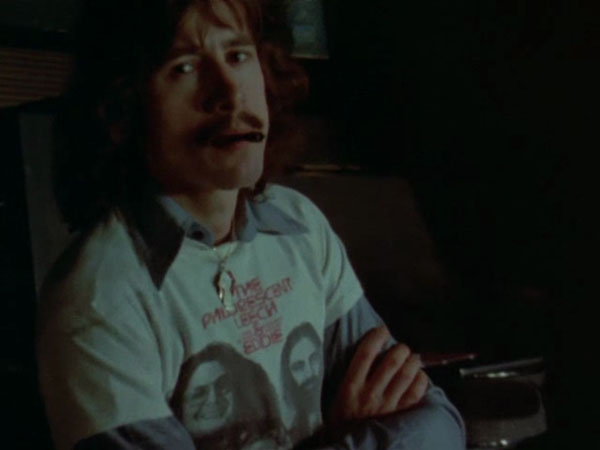
image

Either this was an early use of the electronic soundtracks that Marker would use in Sans Soleil and beyond, or the sound on my copy of the movie was pretty badly distorted. Or, more likely, both. The sound got worse during part two – there were some sections when I couldn’t make out any of the (English) dialogue.

image

Video and audio footage by: Pierre Lhomme (Mother and the Whore, Le Joli Mai, Army of Shadows), Etienne Becker (The Spiral, Le Joli Mai, Malle’s Calcutta), Michele Ray (Latcho Drom), Francois Reichenbach and his crew, Harald & Harrick Maury (The Owl’s Legacy, Day For Night, In the Year of the Pig), Théo Robichet (Band of Outsiders), Pierre Dupouey (Silence… on tourne), Raymond Adam (Jodorowsky’s Tusk), Paul Bourron of the Dziga Vertov Group, Willy Kurant (Far From Vietnam, Masculin-Feminin, Pootie Tang), Peter Kassovitz (Jakob the Liar), Paul Seban (Welles’s The Trial), Michel Fano (Rivette’s The Nun), Fernand Moskovitz (Last Tango in Paris), Yann Le Masson (Je t’aime moi non plus), Mario Marret & Carlos de los Llanos (À bientôt, j’espère), Jimmy Glasberg (Sans Soleil, Shoah), Robert Dianoux (Africa, I Will Fleece You), Jean Boffety (Thieves Like Us, Je t’aime je t’aime, Adieu Philippine), Robert Destanque (Joris Ivens’s The Threatening Sky), Hiroko Govaers (Terayama’s Fruits of Passion), Michel Cenet (Celine and Julie Go Boating), and an excerpt from Volker Schlöndorff’s The Lost Honor of Katharina Blum. That is quite a list of collaborators, though you never hear anyone talking about them.

image

English voices: Jim Broadbent (Brazil), Cyril Cusack (Fahrenheit 451), Robert Kramer (dir. Ice, Against Oblivion), Alfred Lynch (The Hill), and numerous British 1970′s TV actors.

“You can never tell what you might be filming.”

Quotes and other reactions:

Icarus Films calls it an “epic film-essay on the worldwide political wars of the 60′s and 70′s: Vietnam, Bolivia, May ’68, Prague, Chile, and the fate of the New Left.”

image

J. Hoberman: “Marker begins by evoking Battleship Potemkin, and although hardly agitprop, A Grin Without a Cat is in that tradition—a montage film with a mass hero. Unlike Eisenstein, however, Marker isn’t out to invent historical truth so much as to look for it. (The untranslatable French title, Le Fond de l’air est rouge, is a play on words suggesting that revolution was in the air but not on the ground.)”

Paul Arthur: “In its rhythms and editing structures, Grin tries to embody the very shape and textures of historical transformation, rendering the abstraction of change as an amalgam of rapid, plurivocal, uneven, and, at times, contradictory forces aligned in provisional symmetries encompassing past, present and future perspectives.”

image

Y. Meranda: “The editing de-emphasizes the narrative structure and instead stresses the poetical interrelationships of the sequences by putting almost all of them out-of-context. … Paralleling the visual editing, the sound editing is more based on poetical considerations than on intellectual ones. … Because there is very little attention paid to the intellectual arguments and because the style goes beyond making statements about a political ideology, A Grin Without a Cat becomes much more than a left wing documentary about the left: It achieves to be a poem about revolting against the system (and not just the political system), the conformity and the order. It suggests that it is an eternal struggle that is supposed to fail (as was in the case of the New Left) most of the times. This universality, achieved by Marker’s distinctive style, is what makes the film great.”

image

Excerpts from the Lupton book:

“Marker explicitly pitched the film against what he saw as the historical amnesia surrounding the period promoted by its treatment on television, where ‘one event is swept away by another, living ideals are replaced by cold facts, and it all finally descends into collective oblivion.’”

Movie is partially composed of outtakes from other projects. “Introducing the published script, Marker wrote that he had become curious about all the material that had been left out of militant films in order to obtain an idealogically ‘correct’ image, and now wondered if these abandoned fragments might not yield up the essential matter of history better than the completed films.”

“As a groundbreaking work of visual historiography, Le Fond attempts nothing less than to give cinematic form to the chaotic and contradictory movement of world history during the tumultuous decade that it covers.”

“The reappearance of cats, even in this thoroughly politicized context, is a signal that Chris Marker was beginning to re-emerge from the anonymity of unsigned militant productions and to reintroduce into his work the familiar tokens of his own distinct presence.”

image

Chris Marker:

Scenes of the third World War 1967-1977

Some think the third World War will be set off by a nuclear missile. For me, that’s the way it will end. In the meantime, the figures of an intricate game are developing, a game whose de-coding will give historians of the future – if they are still around – a very hard time.

A weird game. Its rules change as the match evolves. To start with, the super powers’ rivalry transforms itself not only into a Holy Alliance of the Rich against the Poor, but also into a selective co-elimination of Revolutionary Vanguards, wherever bombs would endanger sources of raw materials. As well as into the manipulation of these vanguards to pursue goals that are not their own.

During the last ten years, some groups of forces (often more instinctive than organized) have been trying to play the game themselves – even if they knocked over the pieces. Wherever they tried, they failed. Nevertheless, it’s been their being that has the most profoundly transformed politics in our time. This film intends to show some of the steps of this transformation.

More images:

image

image

The Chairman:
image

Funeral in Prague:
image

Last footage ever shot of Salvador Allende:
image

Allende’s daughter, who would commit suicide in 1977:
image

Fidel in Russia:
image

Enormous cats (no owls):
image

Nixon looks on:
image

Tags: , , , , , , , , , , , , , ,

Comments

Chats Perches / Case of the Grinning Cat (2004, Chris Marker)

A different kind of movie than the other Marker works I’ve seen. Really this is what I’d been waiting for: the politically-engaged street filmmaking of the 60′s and 70′s combined with the travelogue gaze and personal essay style (with distancing commentary) of Sans Soleil. Didn’t fill me with joy like most of Marker’s movies do, however… more contemplative and sadder, takes more time to think about each section and let them all sink in. Uses public artwork of cats to weave from Sept. 11th reactions to political situations in France to the death and imprisonment of friends and entertainers in such a way that, like Sans Soleil, I don’t realize what the film is about until I watch it again. Two versions of the film… first time I played it with English narration, then a couple weeks later I ran the French version with live sound and no narration, just scattered intertitles. Shockingly (since I usually love Marker’s narrations) I liked the second way better. But then, I got more out of it having just seen the English version. So I’d recommend both as a double-feature!
image

Quotes below are from the English commentary.

Opens with a flash mob in Paris. People mill around opening and closing umbrellas, to music from Alfred Hitchcock Presents.
image

November 2001 Paris. September 2001 New York.
image

Cats on a roof, on buildings high and low, hidden in a tree.
image

The metro, a bridge, signs of Paris from long ago. Presidential election at the end of year… the left is split, so the far-right candidate Le Pen comes close to challenging the incumbent Chirac, who is defensively re-elected after protests in the streets against Le Pen.
image

“Let’s face it: these girls with their war paint are lovely, but the fascist legions are not besieging our gates. And if Le Pen is a dictator, it’s mainly against his own people. Yet what we see here coming onstage is an entire generation that was spoken of as being apolitical.”
image

More about the cat, appearing in the evening news and all over the internet.
image

March 19th, Bush (backed by Blair) declares war on Iraq, but UN inspectors find no weapons. More street protests in Paris, but as with the American protests of the time, they’ve splintered into hundreds of mini-demonstrations. “Why should the streets of Paris be less chaotic than the rest of the world.”
image

The plundering of Iraqi museums in April, a “die-in” for the victims of AIDS in June. “In these times, we the people gathered to watch eleven billionaires kicking a ball. What about the French team? Stalinesque-sized posters, as we had never seen the like of in Paris – and not one goal recorded.” More about street demonstrations with “a certain fuzziness in the symbols.” “It’s a great asset in life, not to know what you’re talking about. Marker follows political and popular developments with great interest but without total enthusiasm, removed from it all. Seems like he’s either saying “it’s nice that they’re trying, but their struggles are shadows of the struggles I lived through” or “this is what I was once like, with the same futility and wasted energy.”
image

Sees a personal friend (below) in a street crowd, then records news footage relaying that friend’s death at age 79 soon afterwards. Flashback to 1999, at a concert benefitting a cause that same activist friend had supported, Marker had filmed a young singer, who five years later had become famous for accidentally killing his actress girlfriend. “And you wonder why the Cats abandon us?”
image

What if they left us for good?”
‘We were the Freedom Cats. If you didn’t catch the message, just move on!’
And then – comes a sign.
The same unknown hand has painted circles of Cats on the sidewalk, to watch over our sleep.
Thank you, Cats.
We will badly need you…
…wherever we go.

image

This film is dedicated to M. Chat and those who, like him, are creating a new culture.
image

Tags: , , , ,

Comments

Three (plus five) by Chris Marker

Embassy, 1973
When I first watched Embassy in February, I didn’t like it very much, and never dreamed I’d be watching it again in three months on a commercial U.S. DVD… but here we are! Nice of First Run/Icarus to release it, but it would’ve been even nicer to provide a translation for the opening titles that claim the film was found in an embassy. Maybe it’s mentioned in the packaging. Anyway, clearer image for this not-clear-at-all film, and after watching The Battle of Chile this one is making more sense, since I know what Marker was reacting to. It’s still never gonna be a favorite film, but it’s a cool idea to make something that immediate as a reaction to current events.

image

image

image

The Sixth Side of the Pentagon, 1967
Filmed during “World War III: Vietnam, Bolivia, Israel” on October 15-16, 1967, a recording of the anti-war march on the Pentagon in which Abbie Hoffman and the Yippies participated. Marker gets to combine his budding obsession with anti-authoritarian political protest with his love for filming faces of people on the street. One of his most famous images was in here – an angry man shouting, his head covered in blood – I always thought that was from Grin Without a Cat. Co-director François Reichenbach would later act as cinematographer and producer on F For Fake.

image

image

image

image

image

image

Vive la baleine [Long Live The Whale], 1972
A short film about and against industrialized whale-hunting using mostly illustrations with some archive footage, saving the gruesome modern footage for the last few minutes.

Petit bestiare
Cats and owls! In and out of zoos, off and on pianos. Bullfight and the reminder that these animals are behind bars bring a touch of darkness to otherwise straightforward set of nice animal shorts.

Tags: , , , ,

Comments

A Valparaíso (1962, Joris Ivens)

UPDATE DEC. 2008: Wow, check out these stills from the new restoration. DVD box set will be out soon – check http://www.ivens.nl/ for updates.

image

image

image

—————
Directed by Ivens, narration written by Chris Marker, assistant camera by Patricio Guzman. Wow! Not to discount Ivens’s achievement, but this plays just like Marker’s travel documentaries. Definitely belongs with that group in some imaginary DVD box set, hopefully with far improved image quality over the awful version I just watched. I want to say this had better camera work than the Marker docs, but in this state, it is hard to tell.

image

A decade before the Battle of Chile events would begin, Ivens and crew give us an overview of life in this port city built on a series of steep hills. Focus is on things that affect the residents (like the funicular system) and events they participate in (huge annual fireworks show, a kite flying festival), not the popular tourist sites and historic buildings mentioned on wikipedia. Or maybe Ivens just hired a local tour guide and didn’t check wikipedia before going over there. A humorous tone to the commentary (when appropriate), shots of penguins, seals, pelicans and cats (no owls in town), a fire, some jump-cutting in line for the funicular. One very non-Marker-esque bit when a staged (I assume) bar-fight shatters a mirror and leads to a splash of blood, audio dissonance, a kaleidoscopic shot cutting to a burning pirate flag to introduce a history of colonialism in the state… awesome.

buildings that look like ships:
image

Wikipedia: The opening of the Panama Canal and reduction in ship traffic dealt a staggering blow to Valparaíso, though the city has staged an impressive renaissance in recent years.
image

Senses of Cinema gives a shout out to Ivens:

… à Valparaiso has regularly been regarded as more of a Marker film than one truly belonging to Ivens. This reading prioritises and favours sound over image – a common mistake even when reading Marker’s wholly “owned” work – and fails to recognise the range and often explicitly lyrical nature of Ivens’ broader filmography.

Tags: , , , ,

Comments (5)

The Battle of Chile (1975-78, Patricio Guzmán)

“Popular unity against the criminal bourgeoisie!”
image

Other street protest chants:
“Bourgeois shit, the street belongs to the left!”
“We need an iron hand!” (?!)

I alternately see this referred to as an epic 1979 movie, a long two-parter with a third-part postscript, or three separate movies. I guess they were presented theatrically in different ways in different countries. The 2/1 split seems right to me, as I’ll explain.

Part one drops me into the middle of an election in March 1973, which I didn’t understand until towards the end of the movie. I wondered why nobody was saying Salvador Allende’s name – turns out it was a senate election, and either the pro-Allende party lost, or they just did not gain enough seats in congress to prevent the opposition from holding a majority. So for the rest of Allende’s short reign as president, the country’s senate is mostly against him, undermining his authority. Movie is on the street, taking opinions from everyone, kind of slow at the start since I don’t know what’s happening, but excitement is in the air, and things straighten out soon enough. Cameraman is terrific, patient but curious, always looking for the best thing to shoot even if it means wandering off the person talking. I can’t believe the sound guy can keep up with him, but he does.

Salvador Allende:
image

A politician:
image

image

image

Part two picks up right where the first one ends, with an attempted military coup on June 29 1973, and part two ends Sept. 11 1973 with the successful coup that killed Allende and instated General Pinochet as ruler. In between those dates, Guzmán covers everything that happens in the whole country, it seems, with access to the marches, the debates, worker meetings, everything but the secretive military that turns against its country (with help and provocation, it turns out, from the U.S. government). This is by far my favorite of the three parts, and could easily work as a standalone movie… I see the Film Forum in NYC thought so as well. The events themselves, a democratic country swerving communist then falling military-dictatorship, is the best movie material you could hope for and Guzmán and his crew make the best of it, watching from ground zero as history is made, producing one of the best docs I’ve ever seen.

Military man who shot and killed Argentine cameraman Leonard Hendrickson at the end of part one:
image

Salvador Allende, file photo:
image

Bombing of the presidential palace:
image

Pinochet addressing the nation on TV:
image

Military rule:
image

Pinochet: “After three years of support for the Marxist cancer we have been given a disaster that is economic, moral and social, that could not continue to be tolerated by the sacred interests of the mother country.” (or something like that – I think it’s all amateur-translated)

Guzmán: “From the 11th of September, all resources of the Chilean army are mobilized to repress the popular movement with the compacency of the North American government. The first armed resistance offered by some industrial cords, agricultural populations and student centers are squashed quickly in unequal fight. Thousands of people are killed and the main sport fields become concentration camps. The longest democracy in the history of Latin America ceases to exist.”

I don’t exactly wish I’d skipped part 3, but it would’ve made a nice recap six months later instead of watching it right after 1 and 2. Filmmaking in Chile wasn’t easy during Pinochet’s rule, since Pinochet was killing and imprisoning everyone who disagreed with him, including the cameraman of Battle of Chile (to whom the completed work was dedicated), so Guzmán backs up and shows further details of the workers’ movements during Allende’s presidency, not again mentioning Pinochet or the violence. The many worker meetings and the creation of multi-factory blocs and the attempted attack on Allende’s credibility by the “Christian Democrats” (his primary opposition) via a U.S.-funded transportation strike had all been covered in the previous films, but now we see them in greater depth… “depth” meaning lots of guys with sideburns talking into microphones at meetings. Since I’m not personally interested in creating a communist worker’s paradise in my own neighborhood, part three wasn’t of much use to me, but I’ll bet it’s exactly what Chris Marker was hoping for when he helped fund Guzmán’s efforts to document what was happening in the country. Marker’s own angry reaction to the coup is documented in his short Embassy, which I’ll have to watch again now that it’s on a new, clean DVD.

The transportation strike:
image

The people:
image

The sideburns:
image

The revolution:
image

Tags: , , , , , , , ,

Comments

« Previous Page« Earlier entries « Previous Page · Next Page » Later entries »Next Page »