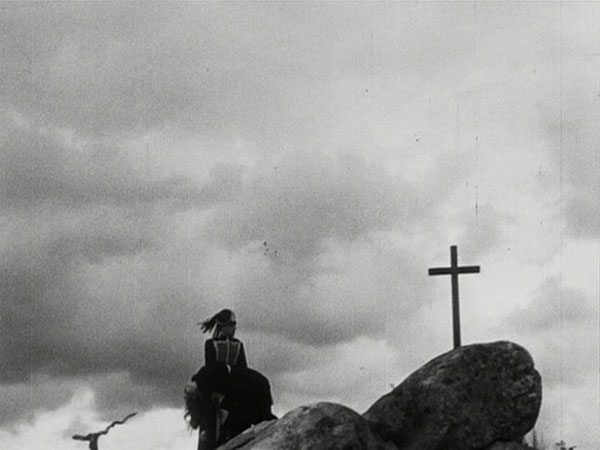
Methuselah (1927, Jean Painlevé)
The title character is a dog-masked shoe-obsessed megalomaniac. Painlevé himself plays Hamlet, and surrealist poet Antonin Artaud found time to appear in this between Abel Gance’s Napoleon and The Passion of Joan of Arc. Doesn’t really make sense on its own – five filmed episodes that were projected during a stage play, strung together here with a stereotypical silent-film piano score.
The Vampire (1945, Jean Painlevé)
Portrait of the South American vampire bat set to happy jazz. They put a bat and a guinea pig in a cage and let the one eat the other. Don’t think I’ll be showing this one to Katy.
Bluebeard (1938, Jean Painlevé)
An opera version of Bluebeard, comically told with awesome and elaborate claymation.
The High Sign (1921, Keaton & Cline)
Buster steals a cop’s gun, runs a shooting gallery, becomes a rich guy’s bodyguard and becomes the same guy’s hired killer. Gags involving ropes and dogs and a house full of traps – one of BK’s funniest and most complicated shorts. So many film scraches I thought it was supposed to be raining. Features Al St. John (the clown who would one day be known as Fuzzy Q. Jones in a hundred westerns) and the gigantic Joe Roberts.

One Week (1920, Keaton & Cline)
Opens with the same calendar we just saw in The High Sign and Buster getting married… nice transition from the last movie except that it’s a different girl. The one in which he builds a house. More acrobatic stunts than the previous movie – the two make a good pairing. Ooh, a meta camera gag and some near-nudity. I think more work went into this than all of Go West.
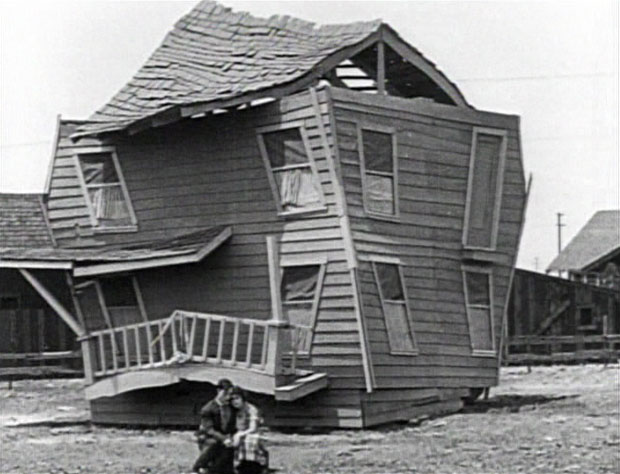
A Wild Roomer (1927, Charley Bowers)
Charley (who not-so-subtly calls himself an “unknown genius” in the intertitles) makes a God Machine which creates self-aware puppets.
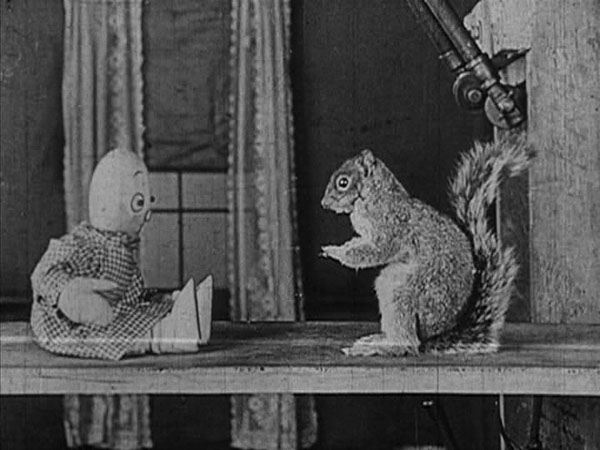
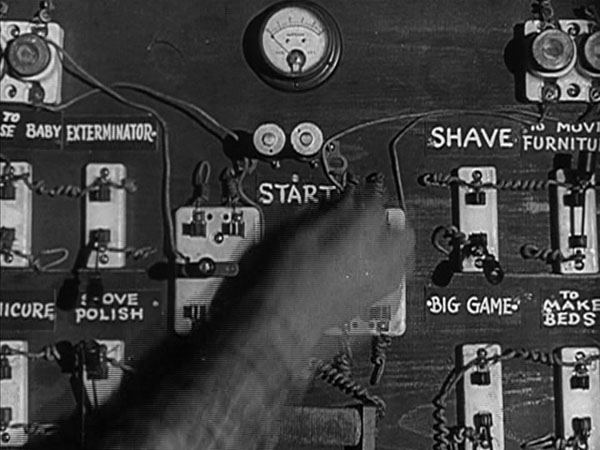
Actually I’m not sure what that was about, besides being an extended stop-motion demonstration – the machine is supposed to take care of all your household chores. As with both of the other Bowers films I’ve watched recently, he has unquestionably made an excellent machine, so the conflict comes from the complications from having to show it off to others (in this case a cranky saboteur uncle with an inheritance at stake).
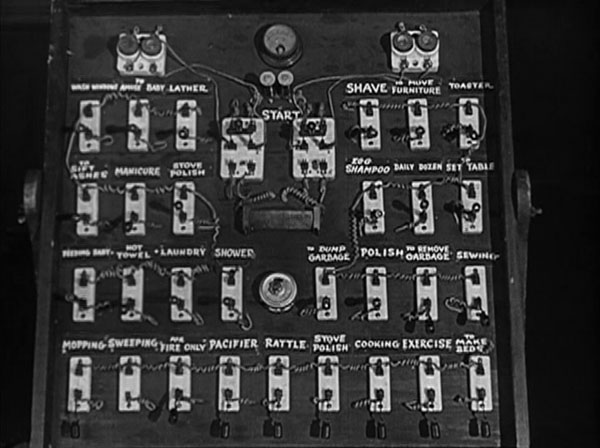
Zooming in further one finds… a baby exterminator??
Fatal Footsteps (1926, Charley Bowers)
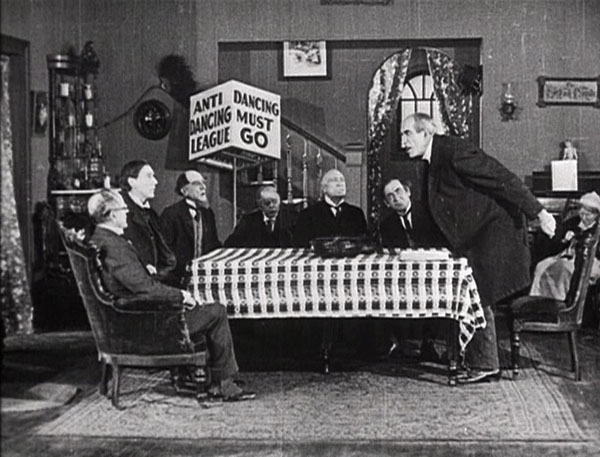
“If there were a tax on idiots, Tom would send his dad to the poorhouse.” Well that makes up for the “unknown genius” line. Charley is trying to learn the Charleston to win a contest in the very house where the Anti-Dancing League (motto: “mind thy neighbor’s business”) is meeting. Just when I thought it was gonna be that simple, he invents some mechanical dancing shoes – stop-motion ensues. The shoes get mistakenly worn by Charley’s relative who offends his fellow Leaguers, then Charley wins (and escapes) the contest.
Even fish are learning the Charleston:

Haunted Spooks (1920, Hal Roach/Alfred Goulding)
The girl is first introduced kissing baby birds, so she’s got my sympathy.
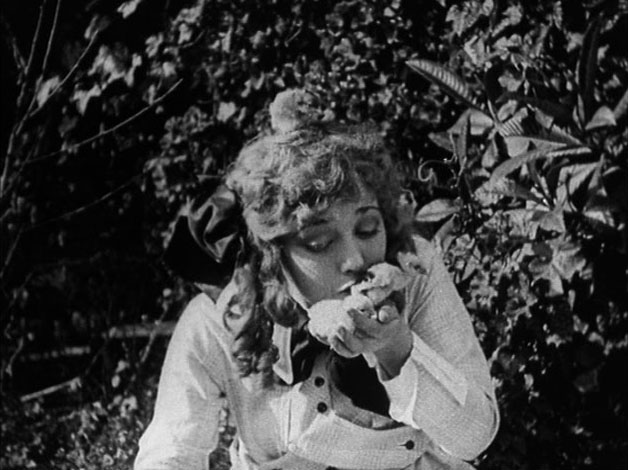
Her grandfather dies – she gets the house and inheritance if she lives in it for a year with her husband – but she has no husband! I thought I’d be in for 25 minutes of haunted-house hijinks, but the husband problem has to be solved first (Harold Lloyd is rejected by his rich dream girl, picked up by our girl’s lawyer while attempting to commit suicide) so we don’t get to the house until minute 17. After introducing some superstitious-negro stereotypes, the girl’s crooked uncle proceeds to “haunt” the house to drive her away and steal the inheritance.


Cute movie, but what I liked best were the illustrated intertitles.

Chess Fever (1925, Vsevolod Pudovkin)
Fever has gripped the whole town. Chess breaks up a relationship, drives two people to attempted suicide, then happily reunites them. I guess from important-sounding Pudovkin, with his grim-looking video covers, I wasn’t expecting a comedy, but this was light (despite all the suicide) and wonderful. Wikipedia says it includes documentary footage of the 1925 Moscow chess tournament.

Charleston (1927, Jean Renoir)
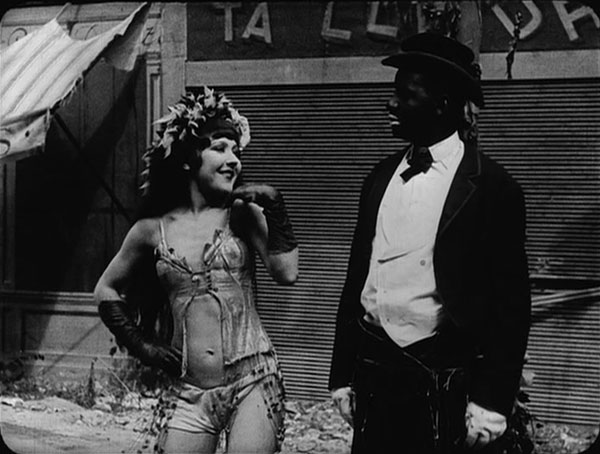
A scientist from central Africa (a white guy in blackface and a tuxedo) flies in his aircraft (a marble on a string) to post-apocalyptic Paris, runs into a sexy Euro-girl and her pet monkey. The girl (Catherine Hessling, Renoir’s wife) teaches him the Charleston, filmed in cool slow-motion. Maybe this wasn’t as surreal in ’27 as it is today. The first (credited on IMDB anyway) film produced by Pierre Braunberger, who would go from Renoir to Resnais/Rivete/Rouch to Truffaut/Godard to Shuji Terayama.
The Little Match Girl (1928, Jean Renoir)
New year’s eve, a poor girl (Catherine Hessling again) can’t sell any matches, starves/freezes to death on the street after hallucinating a better life. The first Renoir film I’ve seen with stop-motion (there’s only a tiny bit) but not the first to focus on clockwork machines. Also reverse and slow-motion and a horse race through the clouds – much more ambitious than Charleston. In her fantasy she plays at the toy store, shrunk to toy size herself, and meets a handsome soldier who looks suspiciously like the handsome cop who was nice to her in the snowy street. It’s all fun and games until Death comes and wrestles her from the soldier. Both these shorts were shot by Jean Bachelet, who would be cinematographer on three separate films of The Sad Sack including Renoir’s.