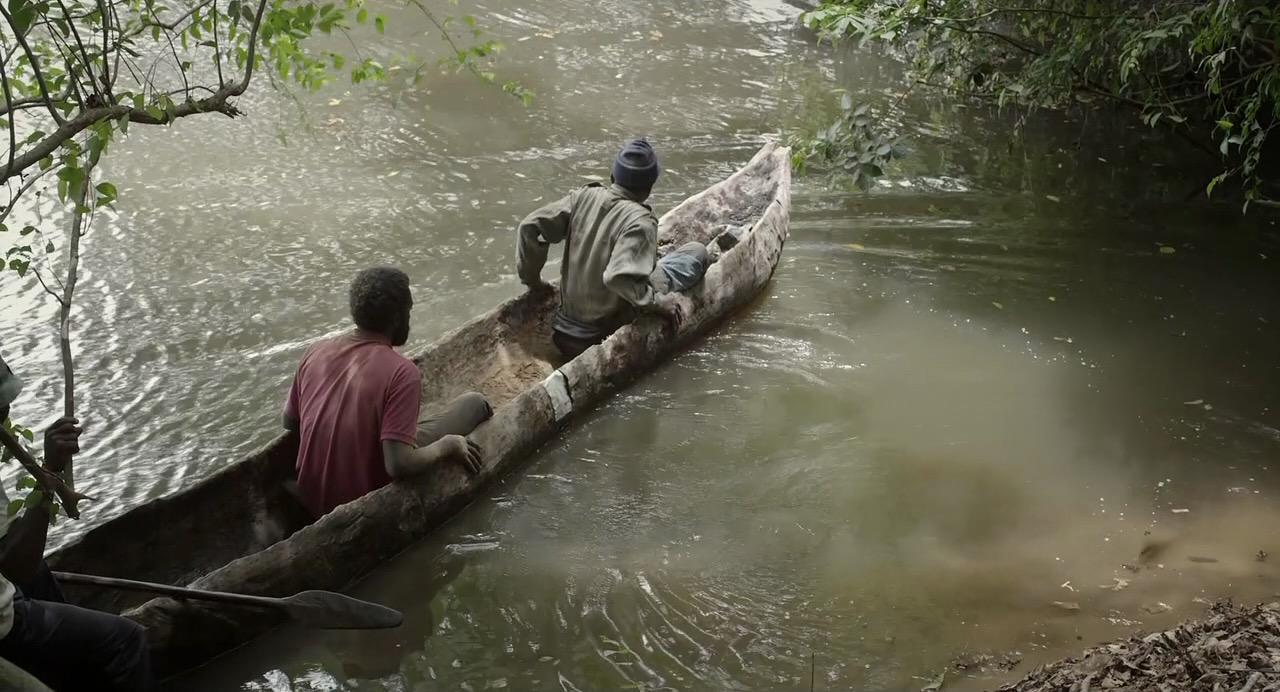
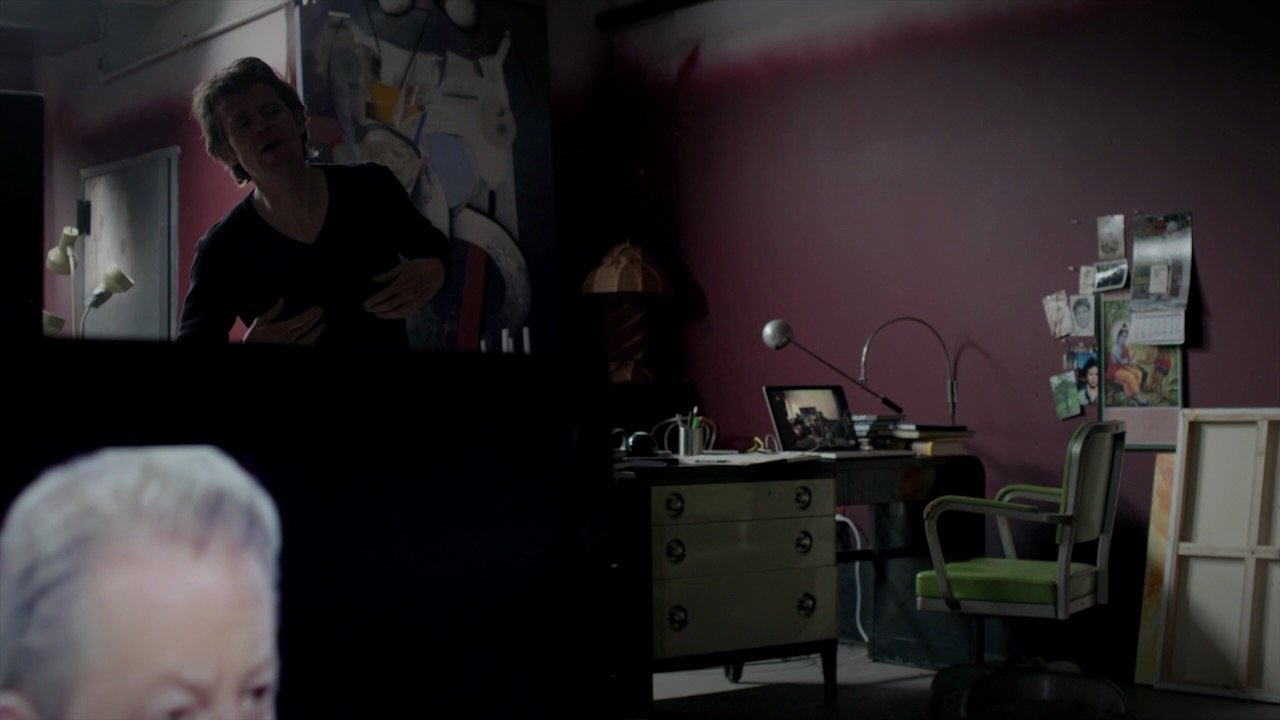
White doctor Ebbo has opened a clinic in Cameroon and is sorry to be leaving. Three years later Black doctor Alex arrives to find that WD never left and the clinic’s finances and practices are problematic. As the tension ramps up, WD disappears, possibly shot and/or eaten by a hippo.

Produced by Maren Ade, this won a prize at Berlin alongside The Turin Horse and A Separation. White doctor was in Prospero’s Books, Black doctor in 35 Shots of Rum, wife in The Strange Little Cat, and fellow white doctor Hippolyte Girardot was in everything, including the last couple Resnais movies. Hippolyte, Hippo… hmmm.

Mark Peranson in Cinema Scope:

The masterstroke in Kohler’s screenplay is how the destabilizing aspects of the narrative place viewers – for entirely different reasons – in the same off-balance mental space as Alex, who comes across as permanently jetlagged, despite the fact that Cameroon and France share a time zone. Something has instilled a bit of the Kurtz in Ebbo, and though Kohler surely has some idea, he leaves the gaps in for us to fill – daring simpletons to proclaim the cause as “Africa” – and then takes it up a notch. In the last extended sequence – one might say the film’s third part – Kohler places us in the nighttime jungle, and lets us get lost again.

Hardware was silly fun, Color Out of Space a real cool time, this movie is the Richard Stanley tiebreaker, and… I can dig it. We got just-okay storytelling, but baller filmmaking – South African post-Twin Peaks cult-killer stuff, with at least three cool birds.

Shelter me from the power of the finger:

Chelsea (one of Deborah Unger’s girls in Lynch’s Hotel Room) is on the run, and connects with roaming psycho Robert John Burke (between Hal Hartley movies). Everything this guy does, he does ominously. Her husband (of Space Mutiny: MST3K season 8) is after Chelsea and cops Joe and Ben (both of Cry Freedom) are after RJB. Eventually everyone will die except Chelsea, but she takes on the serial-psycho spirit and becomes the new RJB. The DP supposedly shot Highlander III: The Sorcerer in 1994, but that must be an AI hallucination – there were only two Highlander movies.

Some movies are long because they need to be and some just don’t respect our time. This one plays a wobbly three-minute piano song over black with the opening title, and I’m already suspicious. Some guys talk shit over drinks, then piano, farmers, polaroids. People are filmed from a far-off obscure angle with locked-down camera, so I’m not sure if the couple of people organizing these bunches of daikons and talking about past new year holidays have been in the movie before. A guy facing away from us tells a long story about passing an exam when he was 24.

This is what I imagine Oxhide was like:

I made it the length of a normal movie before I started fast-forwarding – that seems fair. I learned that every 100 minutes there’s a chapter break, and there are some good birds (below) in section two. Tayoko’s husband gets sick and dies at the end.

Mark Peranson says I missed out:

Though the process of watching the onset of life’s end yields gut-wrenching moments, some recorded, some reconstructed, it makes little sense to extract one scene from the whole picture, as the film’s ultimate strength lies in its refusal to privilege, well, anything: an image of a tree means as much as a visit to an onsen, three people walking in the dark, a farmer hoeing her land, or a black screen with no image at all, only an intricately composed soundscape (as the quote introducing the film reads, “Until the moment you are dead you can still hear”).

Winter:

We entered into pre-production imagining that the film, in part, would be some sort of portrait of Tayoko and her husband, Junji. He had been diagnosed with a heart ailment and had been given one to two years to live. And so we imagined that some of what we would be filming would end up being their last months together. However, two weeks before we were to begin, Junji suddenly died … In the last year of Junji’s life, there had been tension and arguments in their marriage. The sort of thing that hadn’t much occurred since their first couple of years together. And Tayoko was remorseful that things had ended this way. But in those few days after his death, as she talked to Junji at the shrine set up for him in the house, the facts of her faith were revealed. She knew with certainty that Junji could still see and hear everything she was doing and saying: expressions of love and sorrow and apology. And, in seeing this, what would be the undergirding of the film was revealed. The film, at least in part, could, for Tayoko, be a second chance. A chance to go back, to relive the previous year, and to do the things she wished she’d done with Junji and to say the things she wished she’d said, knowing that he would be watching and listening. Tayoko was moved enough by this proposal that we agreed we’d weave these sorts of moments in throughout the film. To do this, we cast Junji’s childhood friend, Iwahana, to play the role of Junji. And from there we got back to work.
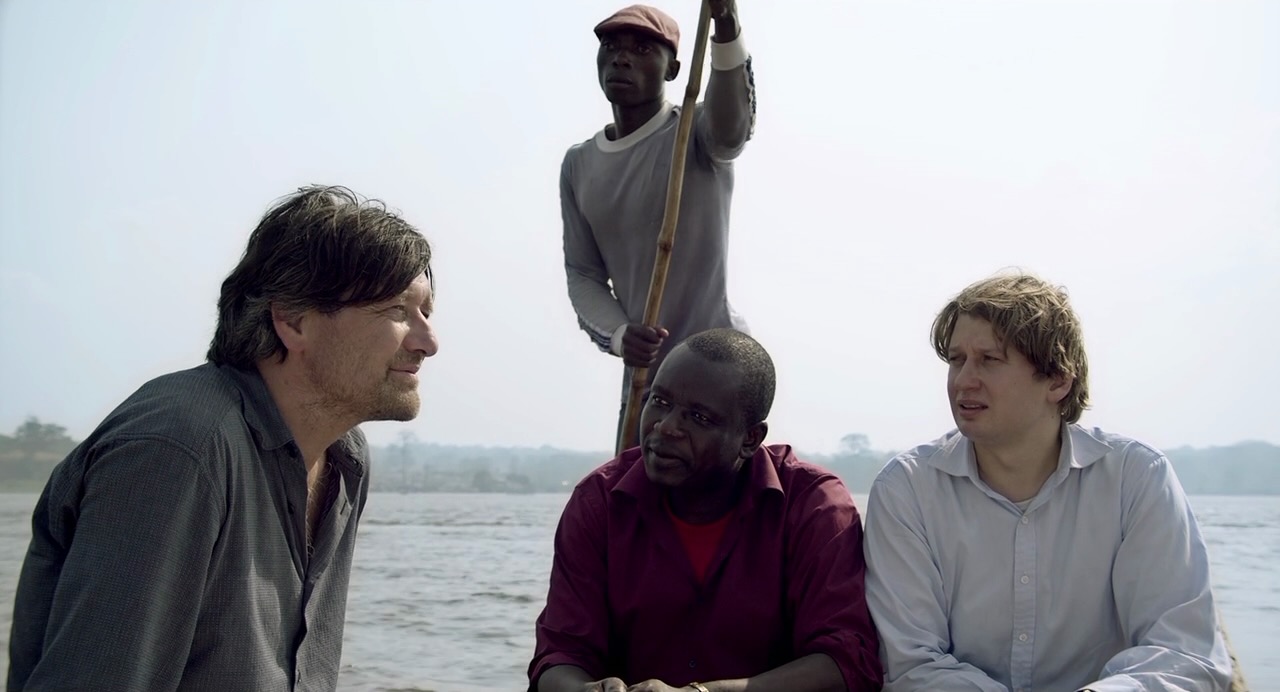
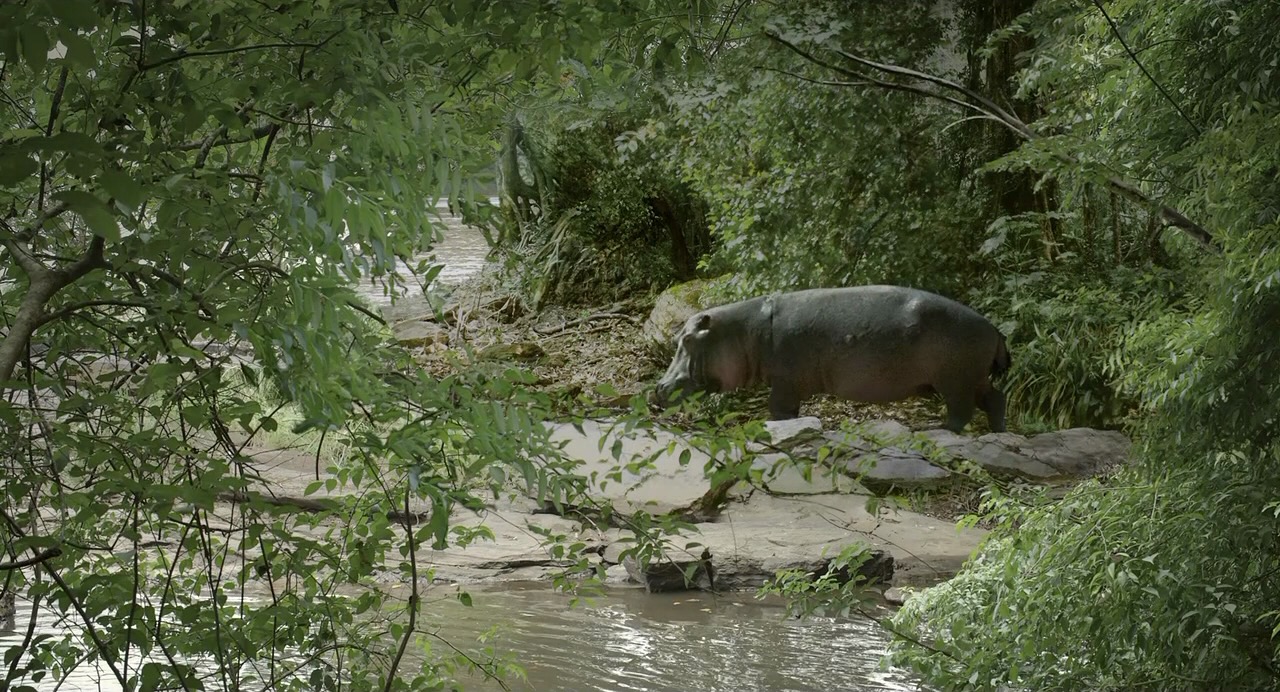
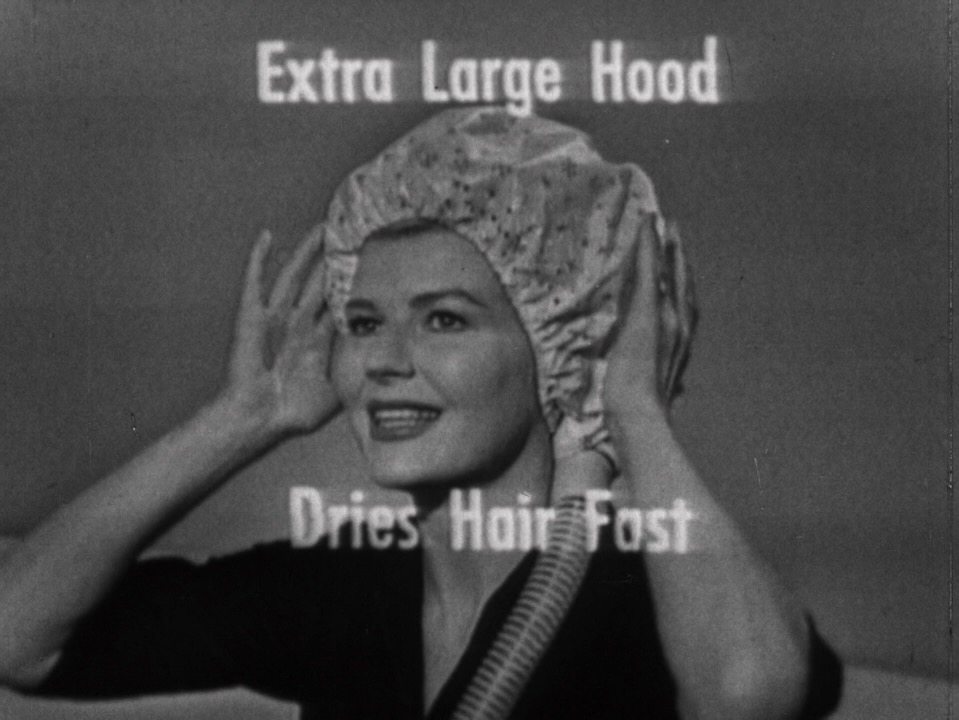
Somebody took a season’s worth of MST3K movies and Forbidden Room-ed them together. It keeps starting new stories, cutting them off for something new, then occasionally returning to one in progress, like how I’m currently reading ten books at once. Learned: You Bet Your Life was hilarious. Goofy Vietnam-era song over a mantis attack. Where’d the fake ads for headache pills and baby powder come from? Where’d this “House of the Rising Sun” music video come from?

Elisha!

Once an occasional cult cine-club screening, now this has more lboxd views than Trapped Ashes. I figured from half-understood descriptions that this would be an artless junk montage, but it’s entrancing… if Movie Orgy was a channel you could turn on at will, like Maddin’s Seances on Tubi, I’d hang up the blog and tune in forever. Don’t crowd me, Joe.

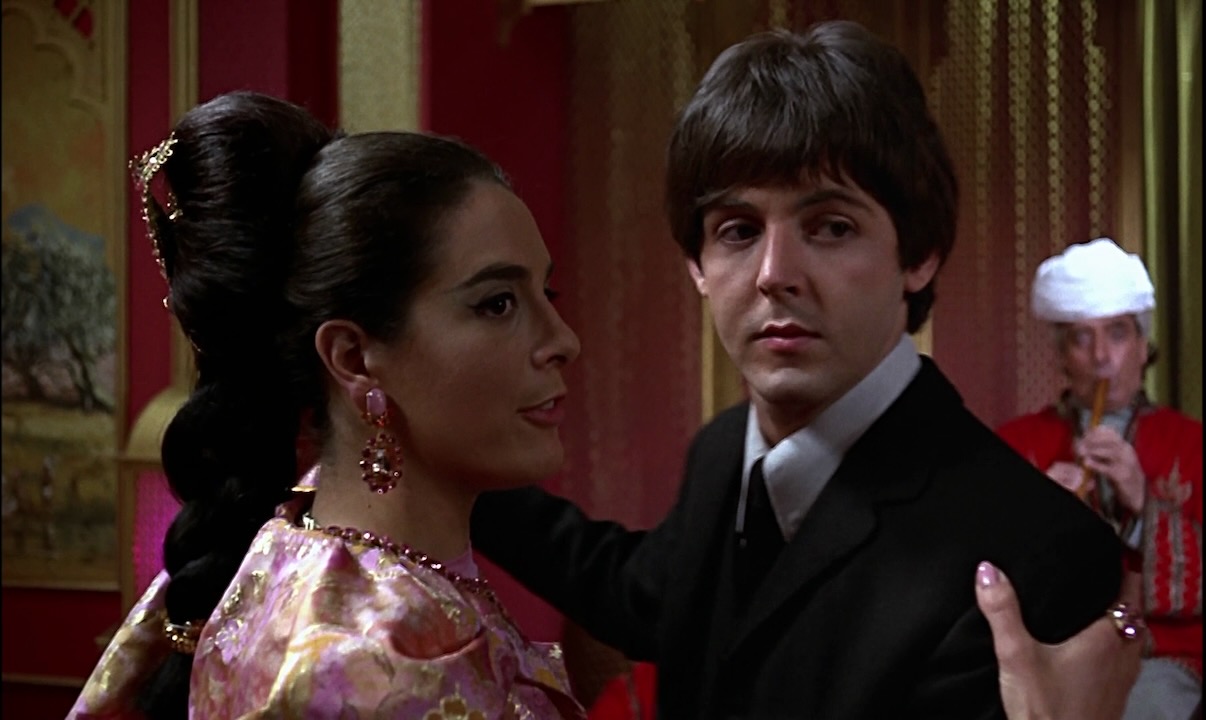
I’m on a 1960s rock & roll kick. Rewatched this a few months after Anthology, getting some nice HD screenshots of Eleanor Bron, including when I seen her in the arms of Paul saying “I can say no more.”

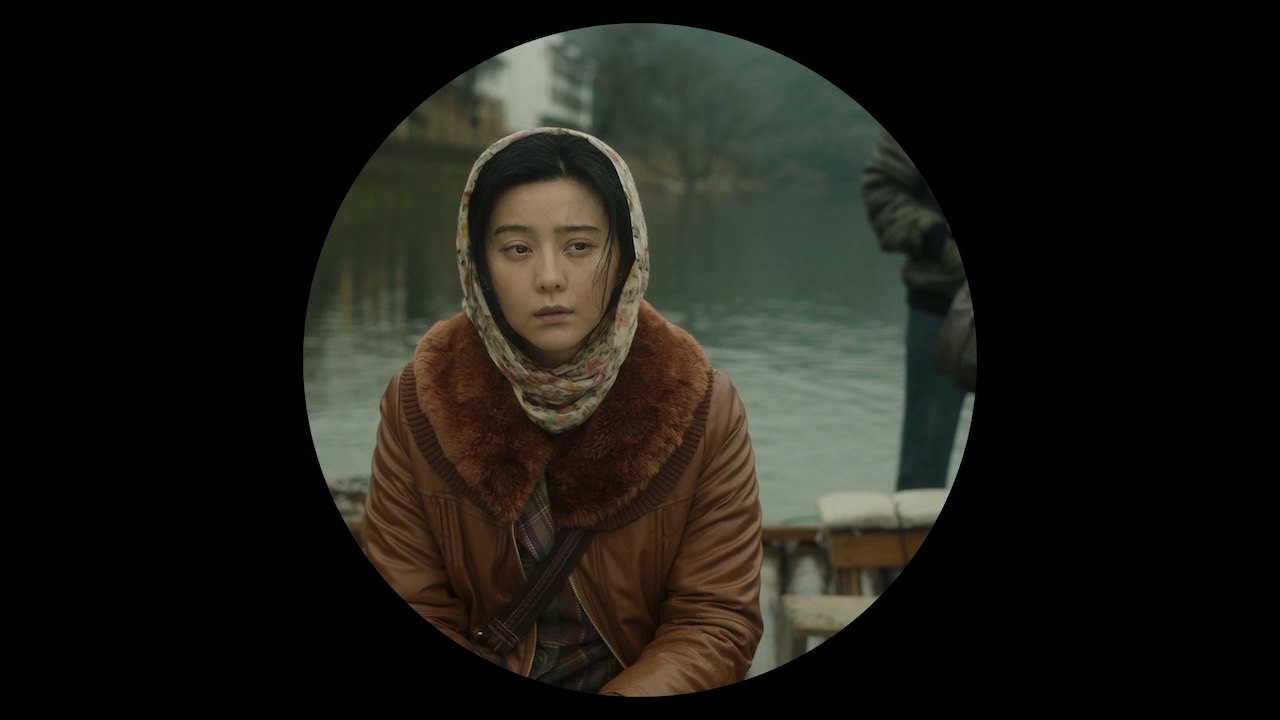
Watched this for its circular frames and I had an enjoyable time. The title is a translation quirk, the English-language equivalent of a notorious cheater, but movie is based on the novel I Did Not Kill My Husband which would’ve been catchier.

Mike D’Angelo compares it to the Zhang Yimou movies, and that checks out. Bingbing Fan (best known as a tax criminal, also 17th-billed in an X-Men movie) fake-divorces her husband as a real-estate scheme, and when he goes off with another woman instead of remarrying her, she pesters the government for decades (until his death) trying to get the fake-divorce reversed. By the end all the government officials are new people because she got their predecessors fired, and nobody knows how to stop this woman from causing a scene every year.

Beijing:

The Mayor was in Touch of Sin, her “cousin” Wang in Hidden Blade, seducer/traitor/rapist Datou was Andy’s rival cop in Blind Detective, and the court guy who hired the seducer starred in Cliff Walkers.

Another good downbeat movie about the last day on earth. Willem Dafoe very relatable on his last day: he complains about being allowed to sleep, he skypes some friends and when they start playing blues guitar he mutes them. Excellent scene with a delivery driver. Dafoe lives across from the old Essex Market location, over a Popeyes Chicken on Delancey Street. He fights with his ex, and his current girl (of Go Go Tales) freaks out. He sees his buddy Paul Hipp (Bad Channels) at a drug dealer’s apartment – there’s some last-minute grappling with drugs and sex and religion (all Ferrara hallmarks). I’m way behind on my Ferrara films – this came between some late-2000s documentaries and the 2014 Pasolini and Welcome to New York, none of which I’ve seen.

Al Gore whining about climate change, Willem Dafoe singing the blues:

When the world is ending and also your laptop battery is dying:

Before the world ends you should always check in with Natasha Lyonne:

Why did I have this listed as A Life Well Spent? Hangout doc with blues guitarist Mance Lipscomb. There’s a rock doc out there for everyone who ever picked up a guitar, and most are in the style of the Beatles or the Devo things, but we need more that are like this.

A couple years after earning his eyepatch, Walsh directed the first widescreen 70mm epic sound western, and gave John Wayne his first starring role. And it’s got title cards – I love title cards in a sound film. In the end it’s a bit awkward and overdone, but good effort.

Villains:

Wayne is on the trail of ugly murderer Red, who’s about to lead a wagon train west. Wayne gets himself invited along, so Red hires an evil blackhat cheating gambler as protection. There’s a girl of course, better known from Dracula’s Daughter and The Walking Dead, and a fake Swede, who played fake Swedes all his life. Red is Tyrone Power’s dad, in his final role before a fatal heart attack. He and the gambler (of Queen Christina) keep trying to murder Wayne even though he’s friends with the Cheyenne and arranging peaceful passage through their territory. Finally, grizzled John Huston-looking Zeke (of The Cat & The Canary) shoots the gambler.