Archive for November, 2008

The Death of Cinema (2001, Paolo Cherchi Usai)

For the first time, this is an entry about a book I’ve read, not a movie I’ve watched. It’s a book about film though, so I think it fits in.

I enjoyed P.C. Usai’s writings in the “1000 Movie Moments” book, so I finally tracked this down. Full of short (never more than a page long) interrelated statements about film destruction and preservation, mostly over-academic. But for each statement on the right-hand page, there’s an interesting captioned photograph on the left-hand page, so whenever I’d read the words on the right with no understanding or enjoyment, at least I’d get the photo to keep me turning to the next page. Short book, anyway, and ends with a “reader’s report” which nicely condenses the long-winded despair of the author into a few pages of focused and readable despair on the impossibility of any sort of complete archive of film history – not that such a thing would necessarily be desirable.

Some bits I liked:

p. 19: “If all moving images were available, the massive fact of their presence would impede any effort to establish criteria of relevance – more so, indeed, than if they had all been obliterated, for then, at least, selective comprehension would be replaced by pure conjecture.”

p. 49, given the degradation of the original image, and the viewer’s lack of total attention (including blinking of the eyes), “no viewer can claim to have seen a moving image in its entirety.” That one-ups F. Camper’s claims that if you’ve seen a movie on video, you haven’t seen the movie. Not even he has seen the movie!

p. 51: “It is expected that a time will come when the loneliness of the spectator will be detrimental to the pleasure of experiencing moving images.”

p. 89: “The ultimate goal of film history is an account of its own disappearance, or its transformation into another entity.”

p. 109: “The real questions is, are viewers willing to accept the slow fading to nothing of what they are looking at? Is it fair to encourage them to believe that they will never witness the inevitable, and that its actuial experience will be left to someone else?”

p. 129: “…all lost moving images have at least existed for some viewer in the past. The unseen is an integral part of our lives, even if not directly our own. … The fact that the unseen is beyond our control is an excellent antidote to our claim of authority over the visible world, and administers a good shaking up to our deluded obsession with permanence. Sooner or later you and I will both disappear, along with our visions and memories of what we have seen and the way we have seen it.”

Tags: , , , ,

Comments

Ashes of Time (1994, Wong Kar-Wai)

Redux is playing in theaters, so I watched the original first to get all the plot and characters straight. I know that Plot And Characters Do Not Make The Movie, but even with crazy movies like this and Out 1, I like being able to keep all that stuff straight before I can lose myself in the atmosphere of the film. Also, although there are about eight mega-superstar actors in this, I only recognize half of them. My Hong Kong/Chinese moviewatching has fallen sadly behind. A study guide follows.

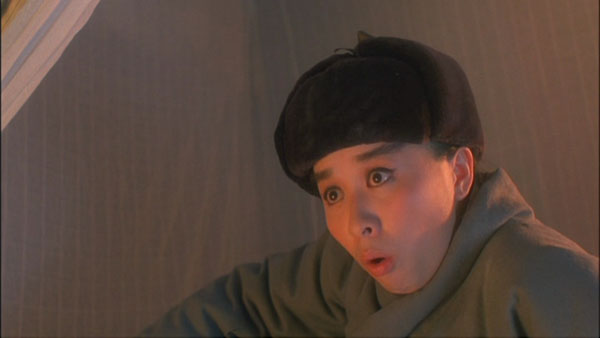
Leslie Cheung is in all the framing-device scenes, probably the single star of the movie. Easily recognized throughout by the mustache. Moved out to the desert to forget his true love, Maggie Cheung, who got tired of waiting for him and married his brother. Sort of a swordsman matchmaker – hooks up would-be killers with people who need somebody killed. One day will be called Malicious West.
image
Seen him in: Farewell My Concubine, The Chinese Feast
Still need to see: A Chinese Ghost Story, A Better Tomorrow

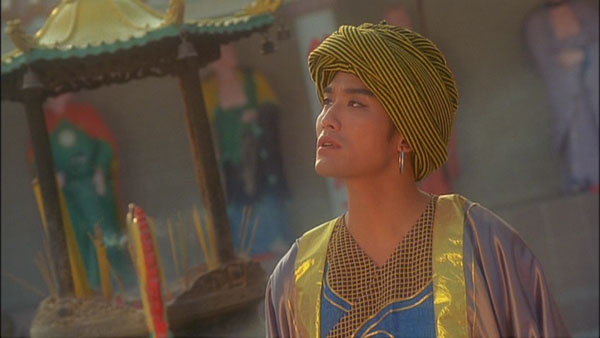
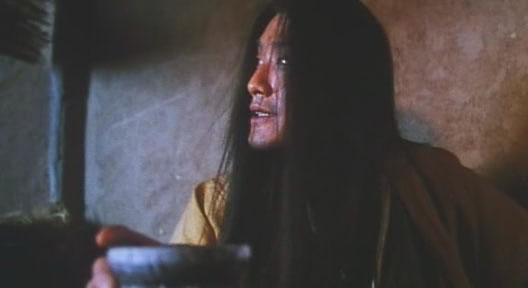
Tony Leung Ka Fai, or “Tony 2″ – old friend of Leslie’s, comes around once a year. This time he brings a wine of forgetfulness for Leslie to drink, but ends up drinking it himself. Visited Maggie Cheung once a year, gave her an update on Leslie. A ladies man, I think he’s in love with Carina Lau. Will later be known as Evil East.
image
Seen him in: Dumplings
Still need to see: Election, The Lover

Maggie Cheung – object of affection of the above men. She gives the wine to Tony 2 to be given to her ex, Leslie, in hopes that Leslie will forget her. Dies of an illness before most of the movie takes place, but we don’t find that out till the end.
image
Seen her in: Irma Vep, In The Mood For Love
Still need to see: Comrades, Centre Stage

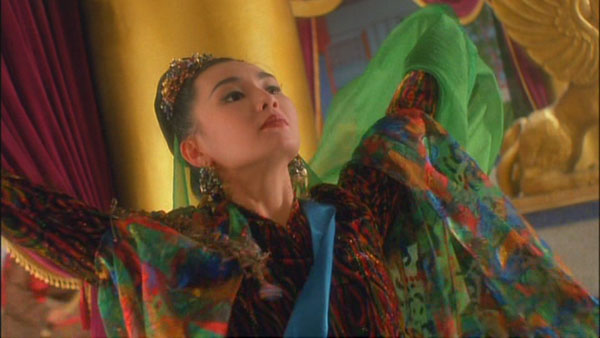
Brigitte Lin – crazy woman who comes around as a “man” trying to hire a killer for Tony 2, then comes back as herself trying to hire a killer for her “brother”. She fights and almost kills ex-flame Tony 2 herself at one point, maybe when she first met him, then later becomes obsessed with him. Finally goes off into the desert practicing sword skills on her reflection.
image
Seen her in: Chungking Express, Royal Tramp 2
Still need to see: Bride With White Hair, Swordsman 2, Police Story

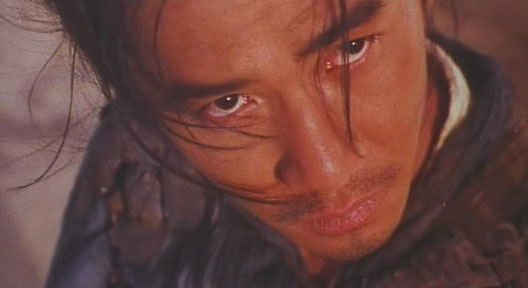
Tony Leung Chiu Wai (“Tony 1″) – former best friend of Tony 2, is quickly going blind. Needs one last high-paying job so he can afford to go home and see “the peach blossoms” (see below) before his vision fades completely. Hires on to protect a nearby town from bandits, but the bandits take too long to show up, he loses more of his sight, and he dies in the battle when clouds darken the sky. Perfect role for Tony 1, the saddest of all actors.
image
Seen him in: 2046, Infernal Affairs
Still need to see: Cyclo, City of Sadness

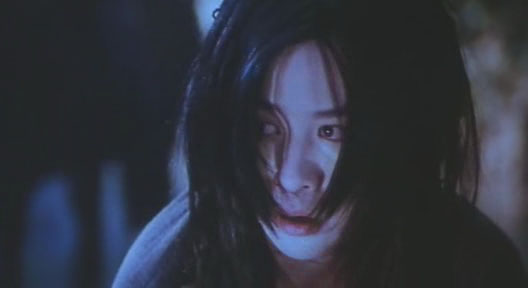
Carina Lau – beloved of Tony 1, named Peach Blossom. Mostly crouches in flashback looking awesome… has hardly any lines. She fell in love with Tony 2 years ago, which is why Tony 1 is alone and sad.
image
Seen her in: 2046 (she’s Lulu/Mimi), Flowers of Shanghai
Still need to see: Curiosity Killed The Cat, Intimates

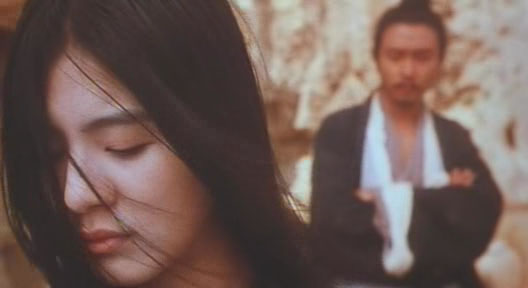
Charlie Yeung – poor girl who wants to hire a swordsman to avenge her brother’s death at the hands of the militia with some eggs and a mule. Leslie and Tony 1 turn her down, and Tony breaks her eggs.
image
Seen her in: Seven Swords, Fallen Angels
Still need to see: Butterfly Lovers

Jacky Cheung – dirty, barefoot, badass swordsman. Leslie hooks him up, gives business and strategy advice. Jacky is well paid for defeating the bandits, and also takes on the militia in exchange for Charlie’s egg (but almost dies). Rides off with his wife (not Charlie) in the end. One day to be known as the Northern Beggar, will fight a doubly-fatal duel with Leslie years later.
image
Seen him in: Once Upon a Time in China, As Tears Go By
Still need to see: Bullet in the Head

Movie is an imagined prequel to popular novel “Eagle Shooting Heroes.” All the cast members also appear in film The Eagle Shooting Heroes, a parody dir. by Jeffrey Lau, with supposed participation by Wong and Sammo Hung. Will have to see to believe. Edit: Found it, watched in between Ashes and Redux, reviewed here, still not sure if I quite believe it! Other filmed versions of Eagle Shooting Heroes all seem to be TV series, although Royal Tramp and the Swordsman series are based on other books by the same author.

Screenshots above are from a scrappy foreign DVD (still not half as scrappy as the American disc looked), then a week later I ran out and watched Ashes Redux on lovely new 35mm (minus the topmost and leftmost 5% of the picture – thanks, Landmark). I am not considering these two separate movies, of course. Don’t know why the IMDB has a new page for Redux – they don’t have five different pages for The New World. Besides being able to see what’s going on and properly appreciate the glorious cinematography, Redux straightens out the plot threads at the start and end, the bits about the memory wine, Tony 2, Leslie and Maggie. It also cuts out a whole fight scene, the one that the original drops the viewer into at the beginning without explaining a damned thing. I miss that fight scene – it was awesome, and one of my favorite shots of the video was in it: a black-eyed, wild-haired Tony 2 giving a monstrous, slow-mo, silent scream.

I did understand everything better while watching Redux – but is that because Wong re-edited, or because I’d spent the week before studying the movie? I don’t think of myself as the type who champions straightforward stories over complex mood pieces, but Redux does probably work better. Movie leads up to this grand emotional moment of Maggie crying over her lost Leslie, talking about her failure to spend the best years of her life next to the person she loves most, and if you didn’t couldn’t make sense of the wild first ten minutes of the film, that’s not going to hit very hard. I’m apparently only good at summarizing plot and character, which, as I said three pages ago, isn’t what makes the movie. The desert, the mountains, the spinning birdcage, the haze, eclipses, sudden swordfights, and endless stories of lost love all add up to a pure and excellent film. I’m not saying it’s my favorite – most of Wong’s films are excellent – but it’s up there.

Writes T. Brogan on the film vs. novel:

The original plot actually dealt with two characters nicknamed “Evil East” and “Wicked West”, aged, respected and feared demi-gods in the pugilistic world. Arch rivals, their tussle for power was the backdrop against which Cha’s main protagonists (a pair of lovers from the entire trilogy series) were tested in terms of their wits, loyalty and love for one another. In Wong’s film, however, the hands of time have been turned back, and the focus is primarily on the two men, now portrayed in their prime, and seeks to “explain” the beginnings of their bitter feud in a progressive manner.

Wong:

Basically the film is about emotions. It’s a love story about Dongxie [Tony 2], Xidu [Leslie] and a woman, spanning half a life time. Certain emotions are eternal. When I got to the film’s ending I finally realized what Ashes of Time is about, and its relationship with my previous films. They are all about refusal and the fear of refusal. Everyone in Days of Being Wild has been refused. They become afraid of being refused, so they refuse other people before other people have a chance to refuse them. It’s the same in Chungking Express. But I think I have changed, so the film has an open ending. Tony Leung and Faye Wong don’t really know where they stand with each other, but they know they can accept each other. Ashes is most deadly. It sums up the three previous films. How do you go on with your life after you’ve been refused, and you’re afraid of being refused to begin with? So [Brigitte] Lin Chin Hsia becomes schizophrenic, Tony [1] resorts to the most destructive method to solve his problems; Leslie Cheung hides in the desert; Tony [2] drinks himself to amnesia. The only exception is Hong Qi [Jacky]. He doesn’t think being refused is a big deal. He just goes ahead to do what he thinks is the right thing.

Tags: , , , , , , ,

Comments

Eagle Shooting Heroes (1993, Jeffrey Lau)

I read about this when researching Ashes of Time and wasn’t sure I believed it existed… but whattaya know, the video store has it on DVD. And in crystal-clear quality with good subtitles, versus my blurry, half-assed copy of Ashes of Time. How’s that for justice? Oh well, Ashes gets a sparking theatrical reissue with a blu-ray disc to follow, so I guess time heals.

If you’d run these two movies back-to-back I wouldn’t have even suspected they’re both based on the same novel. Yeah, I’d be aware that most of the same actors are here, and some character names are the same, and both movies have borderline-incomprehensible plots, but the only person who seems vaguely similar is Jacky Cheung’s beggar king. This was exec-produced by Wong Kar-Wai, with great fight choreography by Sammo Hung, and shot at the same time as Ashes. Of course, this came out a year earlier because of Wong’s legendary slowness. And it was a bigger hit, because of Wong’s legendary artiness.

It’s actually a good movie… I enjoyed it more than Katy was enjoying Smart People in the other room. Some of the jokes are funny, some of the action is awesome, color is bright, editing is controlled and coherent, and it never drags. Everyone seems dubbed, though. It’s stupid as hell, but in a fun way. I’m not gonna try too hard to get the plot details straight, but here’s an actor/character spread to match the one I did for Ashes:

Tony “Tony 1″ Leung Chiu Wai held his title as “the saddest of all actors” for three days, before it was revoked. This screen shot should indicate why. Here he’s an unexplained evil dude who chases the princess to obtain the royal seal and usurp the throne. It doesn’t go well… despite his very powerful toad-style kung fu, he’s beaten to hell (in self-defense) by Jacky Cheung and defeated at the palace by the combined forces of the good guys, so he decides he’s a giant duck and happily joins the cave monsters. Tony 1 has probably got the most complicated story and the most screen time, and he does a great job, really, as an evil goofball warrior. His name is Ouyang Feng (Leslie’s role in Ashes).
image

Veronica Yip is Tony 1′s evil partner. I don’t know where she goes between the first few scenes and the last few.
image

Brigitte Lin is the princess being chased by those two. Everybody humors her one kung fu attack, which is powerful but lacks any accuracy. She’s poisoned at the end, but that turns out to be nothing. She was engaged to Prince Duan, but that also turns out to be nothing.
image

Leslie Cheung is Yaoshi, a kung fu master chosen to protect the princess. He has a mark of three sixes on his chest, which for some reason doesn’t make him the devil, but rather Tony 2′s one true love. He is sweet on Suqiu, who is the only girl he’d ever seen until the princess comes along. He’s playing the role Tony 2 did in Ashes.
image

Joey Wang is Suqiu, Leslie’s sweetheart who fears losing him so follows him and the princess. I think she gets him back in the finale, from the way they’re fighting together. Joey was supposed to be in Ashes of Time, but when she couldn’t do re-shoots, was replaced by Charlie Yeung, another girl with a boy’s name.
image

Carina Lau is Zhou Botong – she’s actually playing a male monk, not ambiguous like Brigitte in Ashes. When her master is killed by a magical boot discarded by Tony 1, she thinks it’s Leslie’s fault, and follows them parallel to Suqiu to take revenge. Movie ends with her dreaming of her master returning to requite her love – weird.
image

Tony “Tony 2″ Leung Ka Fai is Duan, a lame but extremely powerful guy who speaks English in his first scene. He’s engaged to the princess, but wanting to be immortal, he goes looking for his immortal true love. When he finds Leslie and tricks him into saying “I love you” three times (there is cross-dressing involved, and a floating disembodied head), Tony 2 ascends to heaven, returning in the finale to kick Tony 1′s ass.
image

Jacky Cheung is Hong Qi the beggar king, cousin of Suqiu who wants desperately to marry her. She won’t marry him so he decides to die instead, tries to get every passing kung-fu master to kill him, but he’s too powerful and ends up hurting them instead. Funny that the only happy guy in Ashes should end up playing a suicidal version of the same character in the comic parody.
image

Maggie Cheung barely appears in this, just like she barely appears in Ashes and 2046. Maybe it’s an in-joke, or maybe it’s because IMDB lists twelve other 1993 movies she acted in (not including 1994′s Ashes). She is a sorceress who gives the evil duo some malfunctioning equipment (magic flying boots and invincible killer bees) and shows up in the finale to help kick ass.
image

Director Lau made some Stephen Chow movies and another Wong Kar-Wai parody (Chinese Odyssey 2002), again produced by Wong himself.

Excerpts from DVDTalk’s review:

written by no one apparently (there is no credited screenplay)… Lau and his cast appear to have never met a silly joke they haven’t liked, even resorting to Three Stooges-style eye pokes and rubber gorilla suits… I was never entirely sure who was after what mystical book or royal seal, nor could I always tell who hated whom and why… everyone gets chased by the vengeance seeking, chubby homosexual Zho Botong (2046′s Carina Lau playing a man). Most of the characters change allegiances at least once, several do so while hallucinating… Really, it’s the fights that are the best part of Eagle Shooting Heroes, when the movie can take a break from the headache-inducing script (or lack thereof) and show off a little… Eagle Shooting Heroes was shot by the awesome Peter Pau (Crouching Tiger, The Promise), which only adds to the incredible roster of talent that threw standards to the wind and made this goofball adventure. It makes it all the more of a waste that Wong Kar-Wai didn’t hire a real comedy writer to whip the material into shape. All of his people are ready to totally go for it, just what “it” is seems to confuse them all.

Tags: , , , ,

Comments

Synecdoche, New York (2008, Charlie Kaufman)

This demands to be seen two or three times in order to piece together all the meanings and layers and characters. Unfortunately, with Milk and Ashes of Time in theaters, I don’t really feel like watching this again…

Charlie Kaufman directs his own script, presumably to have total control over his most complex scenario yet. Anyone would have to say he does a fine job with it, using effects and sets and makeup very well, and getting super performances out of his actors – anyone who hadn’t seen the Jonze and Gondry adaptations of Kaufman’s previous scripts, that is. Adaptation, Malkovich, Human Nature and Eternal Sunshine all had their share of the sad, dark grunginess that pervades this movie, but they also had amazing visual stylists as directors, who could add delirious highs to all those Kaufman-depressive lows through their staging and casting (note that the more successful films, Malkovich and Eternal Sunshine, put comedy actors in the dramatic roles). Synecdoche ends up being a movie I enjoy discussing with Katy, an admirable film, but not something I feel I can love.

Phil Hoffman is Caden, a Schenectady theater director – yes, Kaufman is doing it again. After screenwriting a movie about a screenwriter, he’s directing a movie about a director. Anyhow, Hoffman is married to Catherine Keener, a more ambitious artist than himself. Friend/nanny(?) Jennifer Jason Leigh is Maria, who watches over their young daughter Olive. Keener leaves Caden, takes the kid and moves to Berlin, which prompts a psychic break in Caden, so when he wins a grant to produce a play in NYC, he makes it a SYNECDOCHE (noun, the part which stands in for the whole) for his life. Eventually, as the play-Caden starts to produce his own play with its own play-Caden, Caden’s life may be becoming a synecdoche for the play! I think!

Anyhow, play-Caden is an interesting guy named Sammy (Tom Noonan). Emily Watson and Samantha Morton, two actresses I’ve admired who I always thought looked similar, finally appear in a movie together playing the same-ish role… bravo for that. Morton is Hazel, a girl who has long had a crush on Hoffman, and Watson is the girl hired to play Hazel. Hazel does get to be with Caden for one day before dying of smoke inhalation in her long-burning house. Hope Davis plays an unhelpful family therapist. And Dianne Wiest (do I only know her from Edward Scissorhands?) is hired as Caden at the end, and told to “direct” the real Caden, which she does, to his death.

Meanwhile there’s stuff about Caden’s daughter growing up in Berlin, falling in love with Maria and dying of a skin disease, never forgiving Caden for ruining his marriage with his secret gay life (not otherwise referenced, as far as I know – unless Caden “being” Dianne Wiest is a reference). Sammy commits suicide (referencing an attempted-suicide of Caden). There’s lots, lots more that I’m sure I have forgotten.

Kaufman’s real strength here are his collapsing of time, and strangely simultaneous expanding of time (see the burning house) – more haunting than his collapsing/expanding of reality – and all the philosophy on human existence he crams into such a short movie. I’m sure he’s aware that there’s no warmth in his movie, but is he aware that we would’ve liked some?

Tags: ,

Comments

Story of a Cheat (1936, Sacha Guitry)

A washed-up gambler (played by the writer/director) sits at a cafe recounting his life. We watch different episodes while he narrates. These episodes have no spoken dialogue except for this narration. So we are listening to Guitry talk for eighty straight minutes – no easy task.

Begins as a promising comedy. Our guy (“The Cheat”) steals from his mom, so isn’t allowed to eat the poison mushrooms that kill his entire family. Goes to live with an uncle, gets a job, this is when I start to realize that he’s never going to stop talking, and it gets less fun. It’s an okay movie, light, and funny at times, but seems nothing special.

Anyway, our cheat lives honestly and works hard after the mushroom incident, but seems to attract scoundrels. Eventually he embraces it and gets rich from cheating casinos – but one day his dealer is a guy who saved his life in WWI, and he takes it as a sign to stop cheating… but now he’s addicted to gambling, so he loses his fortune. Along the way he meets a woman who tries getting him to join her jewelry-robbing schemes, he marries a girl for tax purposes (it’s a business-only relationship, but years later he has sex with her in disguise, heh), he moves to Monte Carlo and becomes a croupier, and he tries to avoid an old woman (present-tense, in the cafe) who was his first fling back when he was an elevator operator.

I liked the opening credits best – filmed like one of those knowingly cheesy behind-the-scenes pieces from classic Hollywood, Guitry introduces all the major cast and crew on-camera. This is one of Guitry’s two most well-regarded films. I’m not gonna knock myself out to see the other (incidentally it’s Pearls of the Crown).

Tags: , ,

Comments

Let The Right One In (2008, Tomas Alfredson)

For once, it actually worked out. I read rave reviews of a foreign film in magazines, a month or two later there’s an enticing trailer on the apple site, another month later the film actually opens – on film, in a real movie theater, in Atlanta. Compare to Opera Jawa: rave reviews in magazines, no trailer, two years later it gets two barely-advertised DVD screenings at GSU – and that’s still better than most Cinema Scope-blessed foreign films, which will never even see a video release here.

Movie has a striking look, everything so well composed (minus 10% of the top, which Regal chopped off as usual), really drew me in. An absorbing film. Bloody violence and death is handled unusually well, keeping the gruesome parts offscreen but leaving you no doubt at all what just happened. Not to say there’s no graphic horror – severed head falling into the pool, the guy falling out a high window and whanging into the building on the way down – but the horror was never the draw, movie was never reveling in gore, so when some is shown it’s more shocking. Yeah, I loved this.

Oskar, 12, has divorced parents, lives with his mom in an apartment complex, visits his dad every couple weeks, and gets relentlessly bullied at school. Eli, 12 in appearance, is a neighborhood vampire girl he meets and befriends. Eli’s caretaker-human, father-figure Hakan, moves himself and Eli from town to town, kills people and brings Eli the blood, but doesn’t seem too competent at it. A group of middle-aged friends starts to catch on to the killings and circle in on vampire and crew (in a very grounded way, no movie-hero vigilantes). Blond weakling Oskar gains confidence from his new friendship, starts to work out after school and assert himself, bashing his longtime bully in the head on a school trip. As all the threads start to come together, Hakan is killed, Eli is left to her own devices, and the bully’s crazed older brother decides to kill Oskar, leading to a breathtaking (ha) climactic scene at the school swimming pool. Ends with Oskar & Eli leaving town by train, Oskar likely to become the new Hakan, bittersweet.

Tomas Alfredson made a much-loved 3+ hour ensemble drama a few years ago called Four Shades of Brown, before that did mostly TV miniseries. Director of Cloverfield will supposedly be remaking this – a movie which is great because of its beauty and stillness. Makes sense. Sweden should respond by having Liv Ullmann remake The Dark Knight.

EDIT: Saw this again with Jimmy, because it’s still playing to enthusiastic audiences three months later… hooray!

Tags: , , ,

Comments

The Lady (1992, Dariush Mehrjui)

This film was banned by Iranian authorities for no declared reason, then released six years later, uncut, again for no reason. Also no reason why, a decade later, its director came to Emory to present it in person followed by a confrontational Q&A. Screening was packed – must’ve been every Iranian-Atlantan in that building at once.

Banoo (Miriam, “The Lady”) is left by her international-businessman husband (who has been having an affair abroad with a younger woman), frightened to be in the huge house by herself. Meanwhile, her neighbor the groundskeeper and his pregnant, sick, bitchy wife, are kicked out of their shack and she invites them to move in. They invite other family members, including a friendly young woman with babies, and one of their fathers, Khan Salar, a good cook but a habitual liar and thief. The maid quits and the poor family takes over the rich house (a la Viridiana). Banoo is pleased with her new family, and they have a lovely feast of a dinner one night, the peak of happiness in the movie.

After that, it’s all downhill, mostly because Khan Salar starts stealing everything in the house and selling it with his crooked partner, while Banoo retreats upstairs into a daze and stops eating or talking to anyone. She’s friends with a doctor, who says he always wanted to marry her, but she acts strangely cold towards him in the second half and never tries to get his non-medical help. Finally the husband comes home, pays off everybody to leave permanently, and tries to fix up his wife.

Also watched 30-minute Dear Cousin Is Lost from a 2000 compilation film (involving M. Makhmalbaf), which the director claims is his favorite work because it’s more freeform, with a more experimental narrative than his others. A movie is being filmed, but the director is fretting over the shot of an actor on a high tower at the beach, yelling for him not to allow the despair of the sunset to reflect in his eyes. Actor, meanwhile, spaces out on his long-lost girl who disappeared into the sea. She reappears as a ghost, wanders around with him while the movie crew wonders why their actor has just died up on the tower. As paramedics are rising to bring his body down, he returns, wakes up. I don’t think the director gets his shot, though. Oh, and there’s dream-logic stuff about stealing electronic equipment and getting in fights.

Director got upset at people who think the characters in the movie represent all of Iran, who suggest the lead female character wasn’t strong & independent enough, and who ask what he thinks of other Iranian filmmakers, but still managed not to come off as cranky. I enjoyed the interview and the movies.

Ezzatolah Entezami (played old guy Khan Salar) starred in M. Makhmalbaf’s Once Upon a Time, Cinema the same year, and Mehrjui’s debut feature The Cow in 1969. Guy who played the doctor is better known as a cinematographer – shot Offside, The Wind Will Carry Us, Salaam Cinema, and the short we just watched. Banoo herself only in a few other movies, including Mehrjui’s earlier Hamoun. Screening was dedicated to Khosro Shakibai, an actor who played the lead(?) in the short and the husband in The Lady, who died in July of this year.

Tags: , , ,

Comments

Opera Jawa (2006, Garin Nugroho)

First, the bad. Was a slow afternoon and I forgot to bring candy. Movie was projected on DVD, all low detail. Lot of long shots, someone singing in back of the room so I can’t even make out his face. Starts singing reeeeal slow, so I read the subtitle then have to wait a minute for them to finish singing what I’ve already read, so I figure I can close my eyes for the rest of the shot, then when I open ‘em something else is happening and I don’t know how much time has passed.

But other than this one glitch, the movie was incredible. Beautiful imagery, wild colors and costumes, amazing music, cool story. It’s an adaptation of an Indian legend about a woman who cheats with another guy when her husband is away, and when he returns the two men fight over her. The movie references the legend while retelling it (with different character names). Don’t know if the original ends with the husband killing his rival then stabbing his wife to death, ripping out her heart and singing to it, but the movie sure does. Overall an excellent way to spend a sleepy weekend afternoon. Only me and one other guy thought so, though. Will have to see again under better conditions – sorry, Cinefest, but screening blurry DVDs for paying audiences is Not Okay.

Writer/director Nugroho has won awards for a bunch of his movies, been working since ’91.

If I may borrow chunks of what C. Huber wrote for Cinema Scope:

Nugroho’s staggering Opera Jawa—presents the contradictions of society, its values and (resulting) problems, including the capacity for violence, in such a layered manner that it’s impossible to untangle the myriad levels of inspiration.

Alternating between the core drama, Brechtian commentary, and social crowd scenes, the film is played out in the palaces and temples and on the beaches of Yogkharta and Solo, two centres of Javanese culture crucial in the shaping of Javanese art. (Additionally, palace, temple, and beach represent the three pillars of government, religion, and culture.) Yet it also makes use of modern installations, including a barrage of golden and red waxheads (some of these are later hung over body models, lit inside and dripping red), hanging corpses made of white cloth, a metal sedan-creature whose helmet-head carries the inscription “Viva Lamuerte,” and a huge stretch of red cloth running through the village streets, connecting two main locations. Meanwhile, the style of singing and choreography keeps changing throughout; not exactly a juxtaposition, but no smooth merging either, despite the magnificent, measured flow of music and sound as well as the exuberant colours and symbols Nugroho orchestrates. Rather it produces a dazzling dialectic, perfectly expressing the conflicts of society as enacted on a daily basis, which are both classical and modern.

Tags: , ,

Comments

Sullivan’s Travels (1941, Preston Sturges)

One of the least jokey of Sturges’s films (up there with Unfaithfully Yours), but makes up for that by being completely wonderful. Katy and I watched together for the first time. Even when I know it’s coming, I can’t help but jump when Sullivan says how much he wants to make O Brother Where Are Thou. No plot overview needed, watched it enough times.

William “Muggsy” Demarest, one of my favorites, plays the same type as always. More prominent in this movie are the butler and valet, Eric Blore and Robert Grieg, who were apparently professional butler-actors throughout the 30′s and 40′s. Veronica Lake was 21 when this was shot, looks younger. As famous as I thought she was, I’ve only heard of three of her movies (also The Blue Dahlia and I Married a Witch). Looks like after the 40′s, she switched careers from acting to drinking. I mainly know Joel McCrae from this, but apparently he was in a bunch of westerns. The poor “colored chef”, Charles R. Moore, has 100+ movie roles, all of them listed as porter, driver, bootblack, elevator operator or prisoner. Lot of in-film shouts-out to Capra and Lubitsch, who at this time were working on Meet John Doe and To Be or Not to Be.

image

Todd McCarthy calls Sturges “the first screenwriter to decisively break through as a director”… guess I never realized that’d never happened before 1940. Now it happens all the time (see Synecdoche New York).

The DVD commentary starts out funny, mostly a good time but sometimes one of them will resort to narrating and saying “that’s so great”. The Rise and Fall of an American Dreamer doc is better, with a full career overview of Sturges, going into the whole post-Conquering Hero part of his life which I had wondered about – it’s sad stuff.

Tags: , , ,

Comments

« Earlier entries Next Page » Next Page »