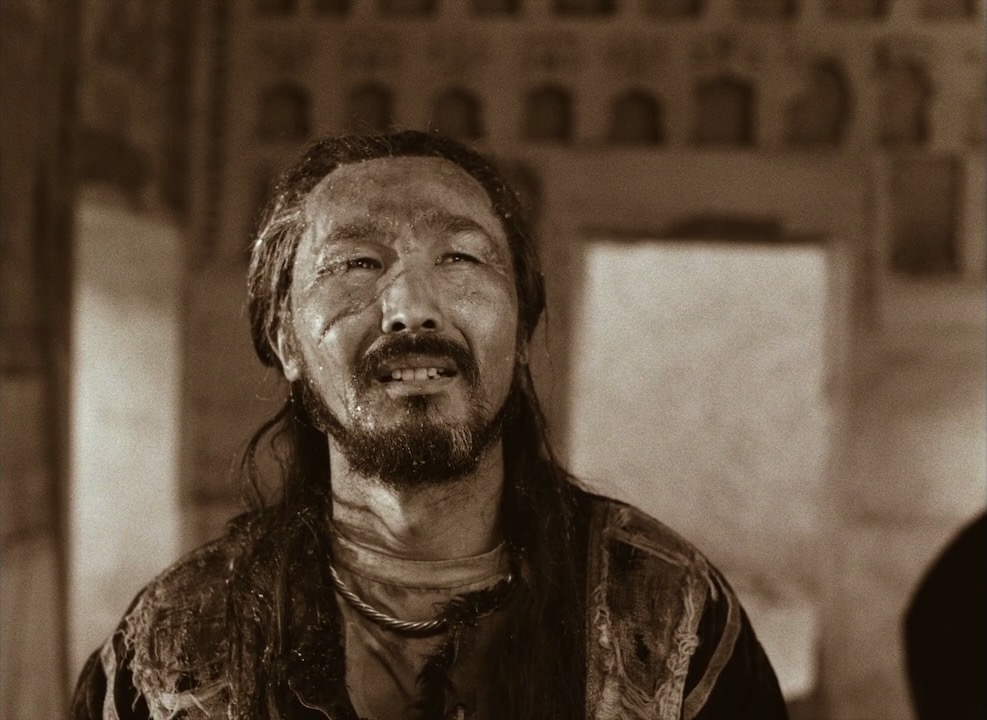
The Odyssey from the Trojans’ POV. Guy with an eye injury arrives in town and does everything he can to get the king’s ear and warn everyone about Genghis Khan (the actor also played a Khan in Andrei Rublev), but is tortured and mocked for his troubles. The ruler destroys a caravan and finds a merchant with Genghis’s secret symbol, then kills Khan envoys, bringing total destruction upon his town, if it hadn’t been coming already, while the eye guy watches it all happen. Filmed in Kazakhstan over four years with great difficulty with finances and sets, my second movie this month like that.
Paul Duane gets it.
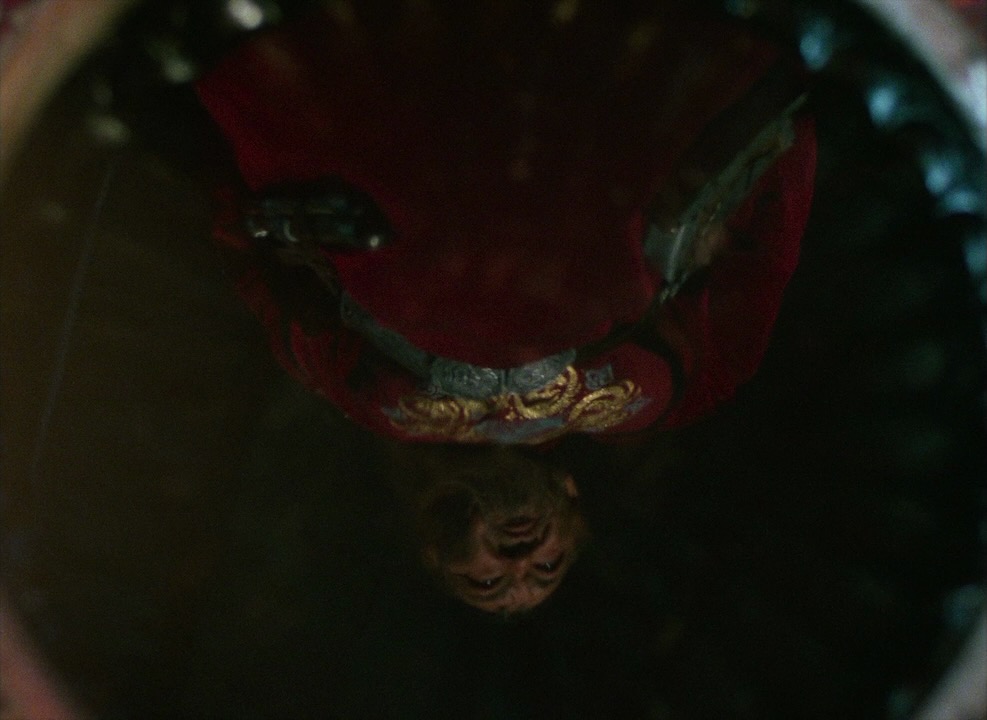
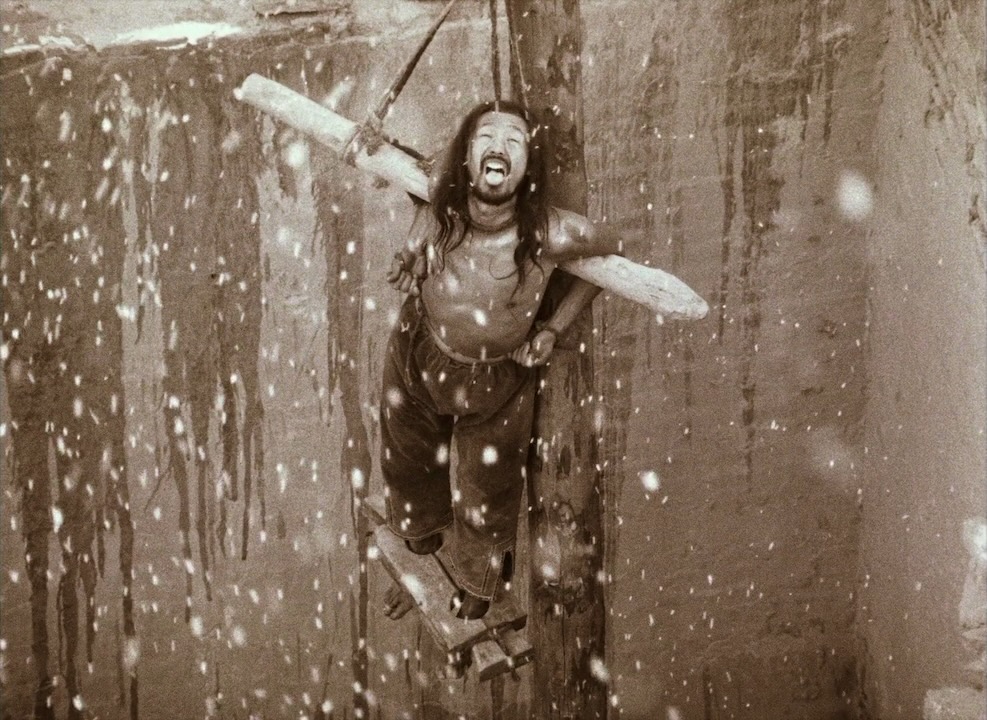
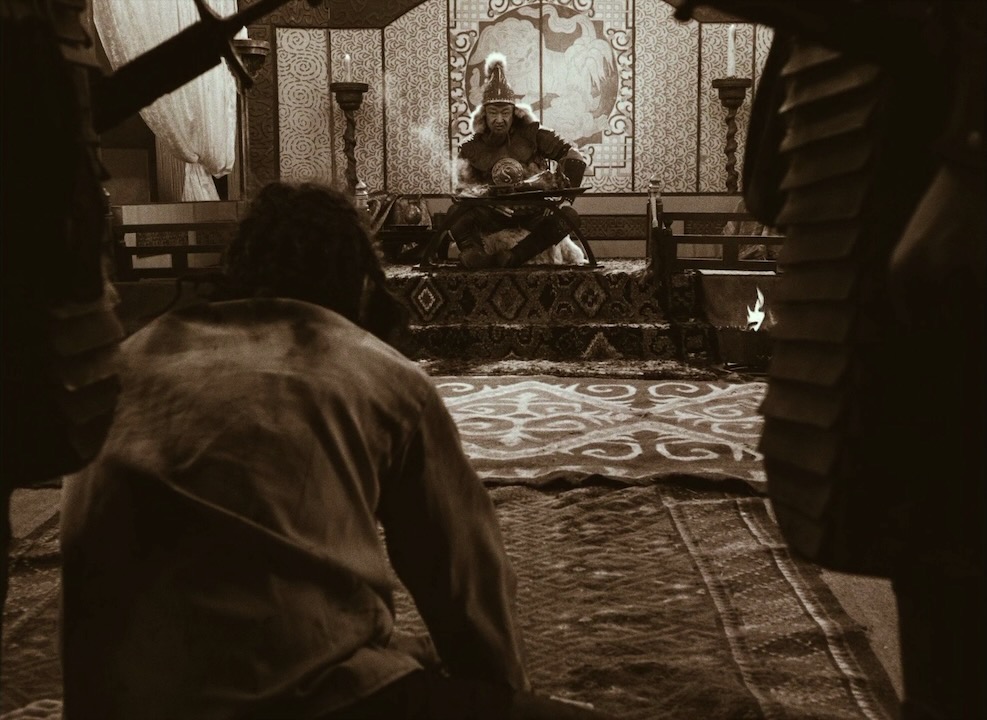
The narrative energy in The Fall of Otrar, just as in Khrustalyov, is generated by a beleaguered but headstrong character trying to cut through layer after layer of resistance to knowing the painful truth — the vanity of Kairkhan as a supreme leader, the duplicity of his Chinese advisers, the reflexive human habit of disbelief, and above all the sheer fact of torture and humiliation as the common currency of everyday life in this Eastern medieval world. If someone utters a thought that suggests a bad outcome, if they make a move or speak a word that somehow implies a violation of the absolute supremacy of the leader or the state, if they are even faintly suspected of anything at all, they are hung with chains from a crossbar in the blazing sun, burned with a hot iron, beaten to a pulp, or pushed to the ground and relieved of their tongue with iron shears.
…
In [Alexei] German’s films, and in Otrar as well, we are dropped into a mazelike world with no apparent points of entry or exit, where nothing is certain and where nothing makes complete sense apart from absolute power and its merciless enforcement. As the films unfold, the horizontal narrative progression is overtaken by a vertical accumulation of details, repetitions, strange proclamations and rituals, sudden capricious assaults, and coded transactions, layer upon layer of unease gradually evolving into horror.