The Cat Came Back (1988, Cordell Barker)
Runaway (2009, Cordell Barker)

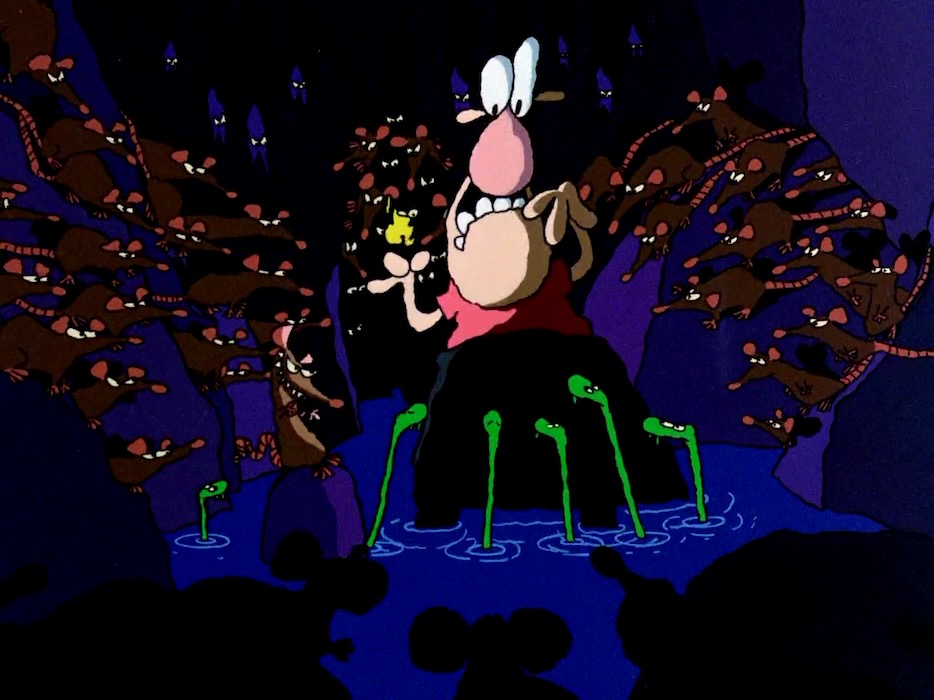
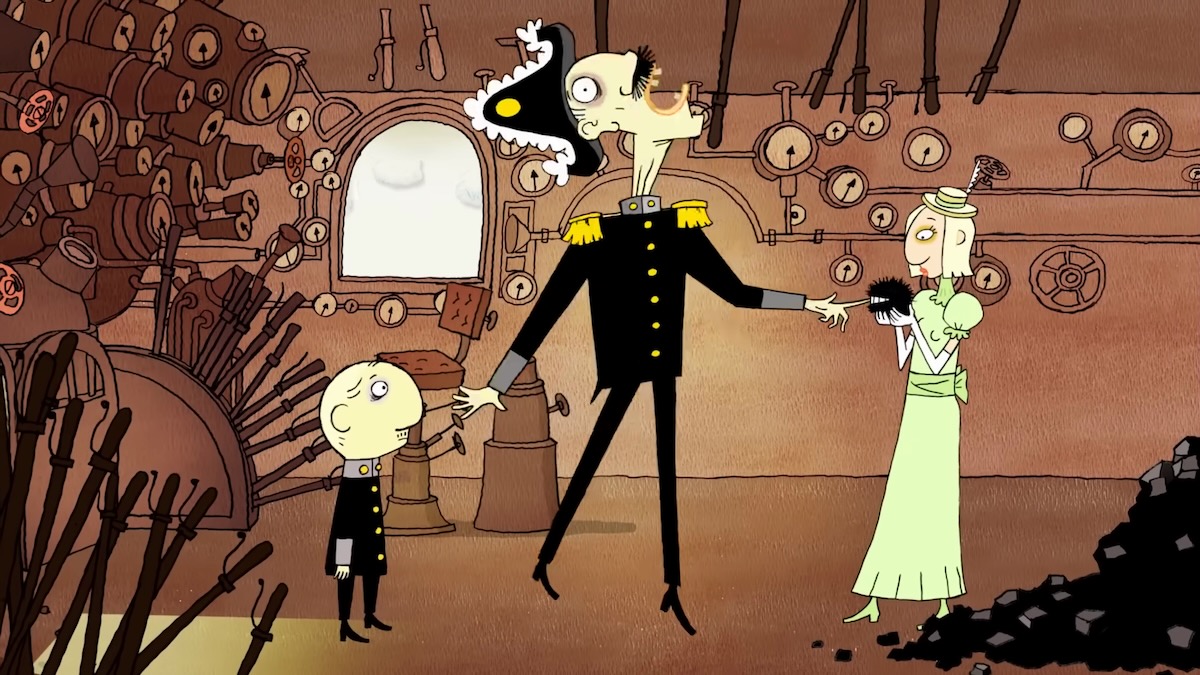
Another good batch: two movies where a cow is on the railroad tracks. The cow makes a quick appearance in The Cat, while cow vs. train is the whole show in Runaway. The train engineer runs off with a passenger leaving the coal boy in charge as the train goes out of control after hitting the cow (which survives, unlike the engineer who gets incinerated). The Cat I’d seen ages ago and was afraid to rewatch lest the song get stuck in my head, but it gets stuck in my head just thinking about rewatching it, so what’s the harm. My recollection was that the guy keeps getting rid of the cat, it keeps returning and wrecking his house, but actually he keeps failing every attempt to get rid of it, until the perfect ending when it haunts him into his afterlife. Canadian animation #1 forever, I must find Barker’s latest, Good Luck to You All.
Love and the Zeppelin (1948, Jiri Brdecka)
Prince Copperslick (1980, Jiri Brdecka)

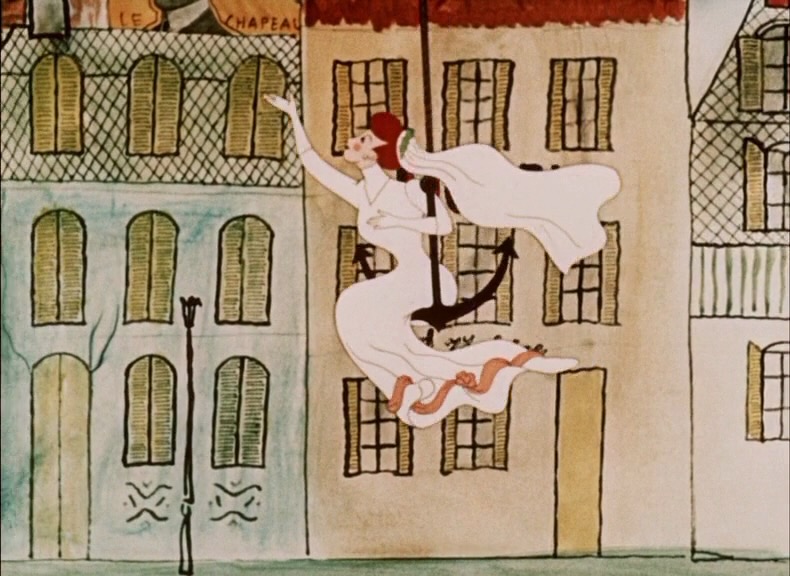
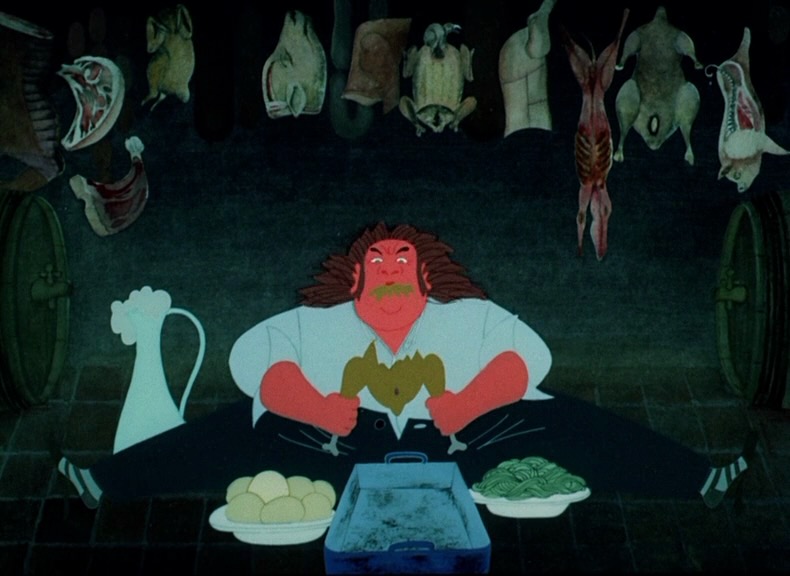
My first by Brdecka, here’s a very early and a very late one. The first is about flying machine invention mania, pretty girl likes the inventor and not the important rich man she’s set to marry, animation recalls the Khitruk Winnie-the-Pooh movies. The late one is about a prince who only eats meat in a happy marriage with a princess who only eats fruits and veg, hiding from her that he’s a carnivore until he’s discovered in his secret meat room (his 13th chamber, so a Bluebeard parody) and promptly chokes to death. More limited animation here, using that style where still images are crossfaded.
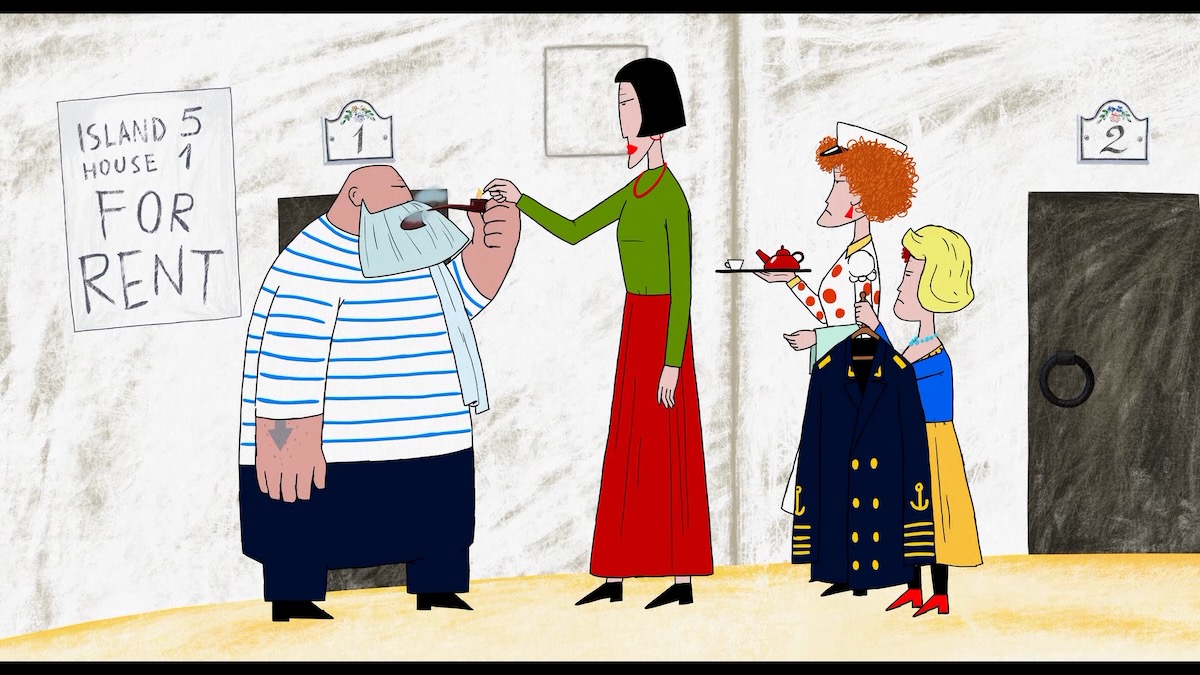
The Three Sisters (2025, Konstantin Bronzit)

At least this guy’s second movie about people living in a house on a steep hill. The sisters compete for the attention of their new sailor tenant. Cute, wordless.

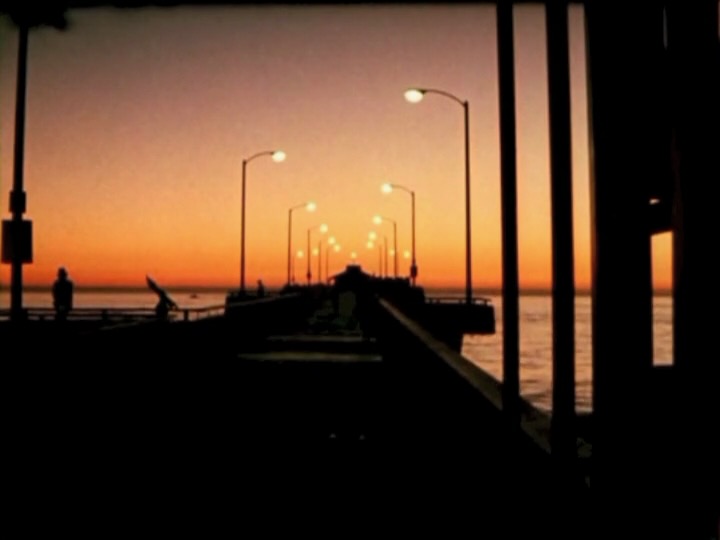
Venice Pier (1976, Gary Beydler)

Camera faces down a pier from the shore end, then jump ahead to a different time of day or another day, jump again and again, each time our position moves a little further down the pier, until it gets to the end and we get a timelapse shot out to sea. Lovely work, would be greatly improved if I had a decent quality copy.

Canyon: “Shot spatially out of order over the course of a year, Gary recomposed the footage in editing to make it proceed consistently forward in space, resulting in an intricate mixing up of chronology, so some cuts could represent a jump of months either forward or backward in time.”

Gary had a short filmmaking career, giving up after getting no interest for this film.

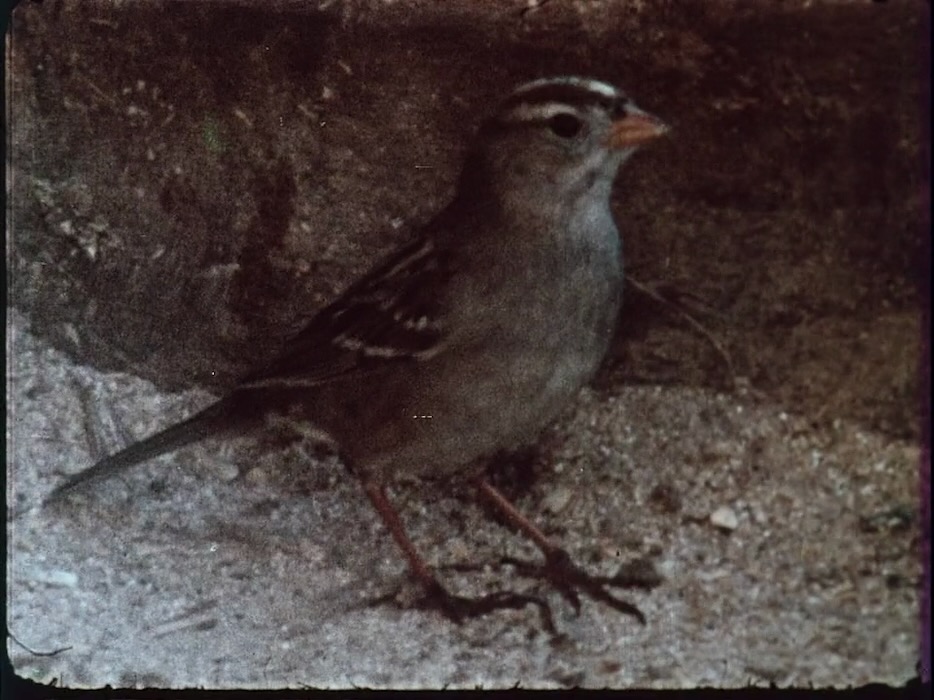
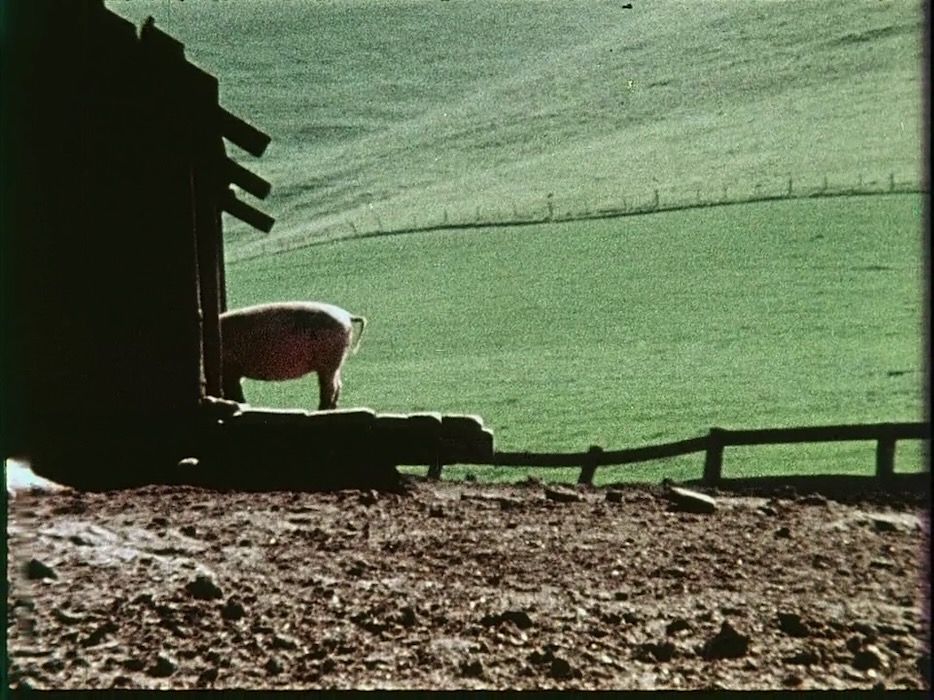
Pigs! (1965, Carroll Ballard)

Nicely edited wordless piece about pigs, with little montages showcasing their terrible snouts, then their horrible tails, then their awful feet, and so on. Ballard shows us cuter animals (sparrows, geese, sheep) looking disdainfully at the pigs, even the film music mocking the beasts. They do have their moments.
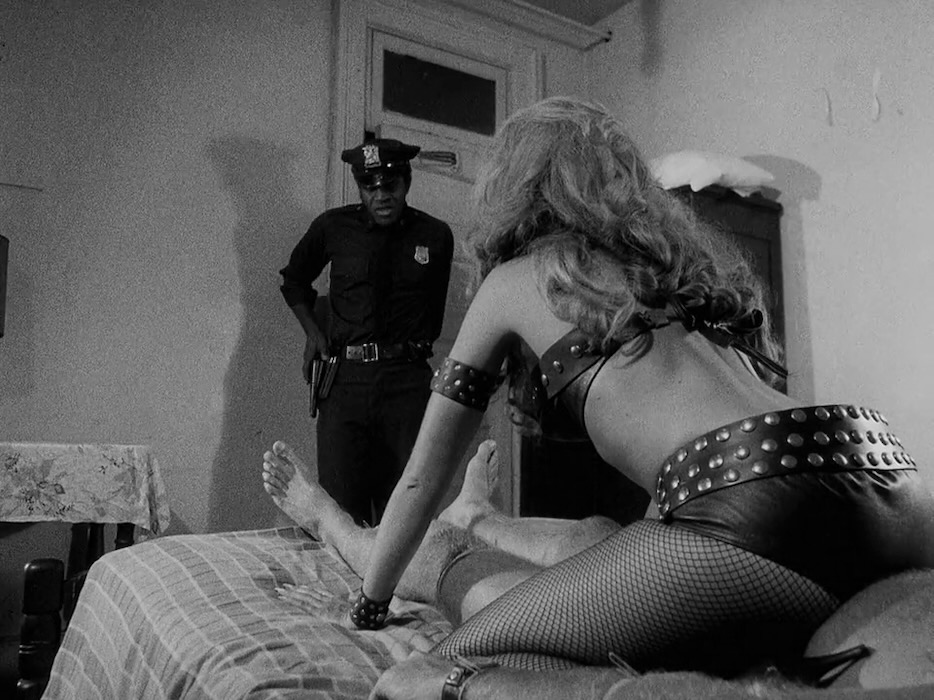
Naughty Nurse (1969, Paul Bartel)

Nurse Dorothy cries about being so besotted with a doctor that she nearly killed her patient, then we instead follow a naughtier nurse to a hotel where she torments a blindfolded man. A cop comes to “arrest” them, but is really in on the game – all three are having a semi-scripted, sexy romp on their lunch break.
Before Schwarzenegger starred in The Running Man, before Stephen King even wrote it, Schwarz’s rival Stallone starred in a better movie about a deadly future game show (based on an Ib Melchior novel). In a totalitarian USA (I cannot relate) David Carradine is a clone puppet masked hero representing the establishment, targeted by the resistance but secretly also planning to destroy the president, as belatedly revealed to his navigator/spy Simone Griffeth. Stallone is his toughest competitor Machine Gun Joe – other quickly-dispatched competitors are Mary Woronov, nazi Roberta Collins (between Caged Heat and Eaten Alive) and Martin Kove (professional Karate Kid antagonist). Most get blown up, the nazi takes a Wile E Coyote detour off a cliff.

A familiar pose:

Frankenstein kills the president and so becomes president – is that really how it works? I’m not very smart now but I was even worse in 2012, so I won’t link to my review of the remake, which is probably fine though I’m not running out to rewatch/reassess it, and we’ll see if the rumored Running Man remake comes out. Am I hallucinating, or did Eric have an Amiga game based on this movie?

Bartel is protective of his creation:

The Secret Cinema (1967, Paul Bartel)

Jane’s bf Dick dumps her for not caring enough about the cinema, she runs home crying and tears down her Jacques Tati poster, then the next day she overhears her sexual-harasser boss complaining at the bf over the phone that he went off-script during the breakup. Turns out a cinema society is ruining Jane’s life while covertly filming it, and all the cool cinephiles in town are laughing at her in nightly screenings. Are they bowfingering Jane (I haven’t seen Bowfinger)? Jane is killed off as conspirator Helen is chosen as the next subject. Why has it taken me so long to catch up with Bartel’s films?

Jane accepts the boss’s invitation to a club:


Black TV (1968, Aldo Tambellini)

Shakily filming a flickering TV set, sometimes zooming rapidly in and out, then the image edited and split-screened to a different edit so they never match up. The sound is harsh noise then a loop of the aftermath of Senator Kennedy getting shot, then (blessedly) back to the harsh noise. Pretty intense – “TVs screaming at you” summarized one lboxd viewer. Once again I didn’t have the patience or viewing conditions for The Flicker, this was a good substitute.


Damon the Mower (1972, George Dunning)

Poetry and animation, with the full page and frame numbers visible, then two animations side by side. The right half is usually the mower (old-school sickle-style) and the left is anything from dancing creatures to exploding mills. Cool at the end when the swish of the sickle starts to reposition the animation paper within the frame. Looks like Dunning made a ton more shorts and also Yellow Submarine.


UFOs (1971, Lillian Schwartz)

Super trippy video animation with equally trippy electronic music. This might have spawned both Pac-Man and the phrase “liquid television.” I’ve seen her Pixillation, and I guess she made lots more movies if you can find ’em.


H2O (1929, Ralph Steiner)

Steiner gets just the kinds of wild patterns that Schwartz would painstakingly produce with her video equipment, by aiming his camera at the surfaces of water in motion. Reproduces pretty poorly as stills, the movement is the point.

Square, uptight couple Paul [Bartel] and Mary [Woronov] have been saving money from their retail and nursing jobs to open an old-fashioned restaurant. Their realtor is coming over for dinner, but a swinger comes into their apartment by accident, Paul punches him and he dies. After a financial setback they realize they can get the money they need by attracting more swingers to their place, then killing and robbing them – “This city is full of rich perverts.”

They take pervert lessons from Doris The Dominatrix, and cut in Raoul the locksmith after realizing he’s a criminal, saving spare keys to apartments with new locks so he can rob them later. After Raoul seduces Mary, Paul follows him around and learns Raoul has been making even more money off the dead swingers, selling their bodies to a dog food company and their cars to a chop shop. Paul gets even and serves Raoul when the realtor comes over to make the deal for their new place.

Loan officer “Mr. Leech” (Buck Henry) getting fresh:

How is this movie so good? Obviously made by weirdos who chose to play the straight roles. Every normal-seeming person is a pervert in their spare time, and every professional pervert (like Doris The Dominatrix, and eventually Mary) is perfectly wholesome at home. Would make a good double bill with Parents.