Everyone wanted Vangelis the year after Chariots of Fire, and the two movies who landed him were Blade Runner and this downbeat drama. It’s a dialogue-heavy movie, light on the music, but whenever those classy synths kick in, you float for a little while.

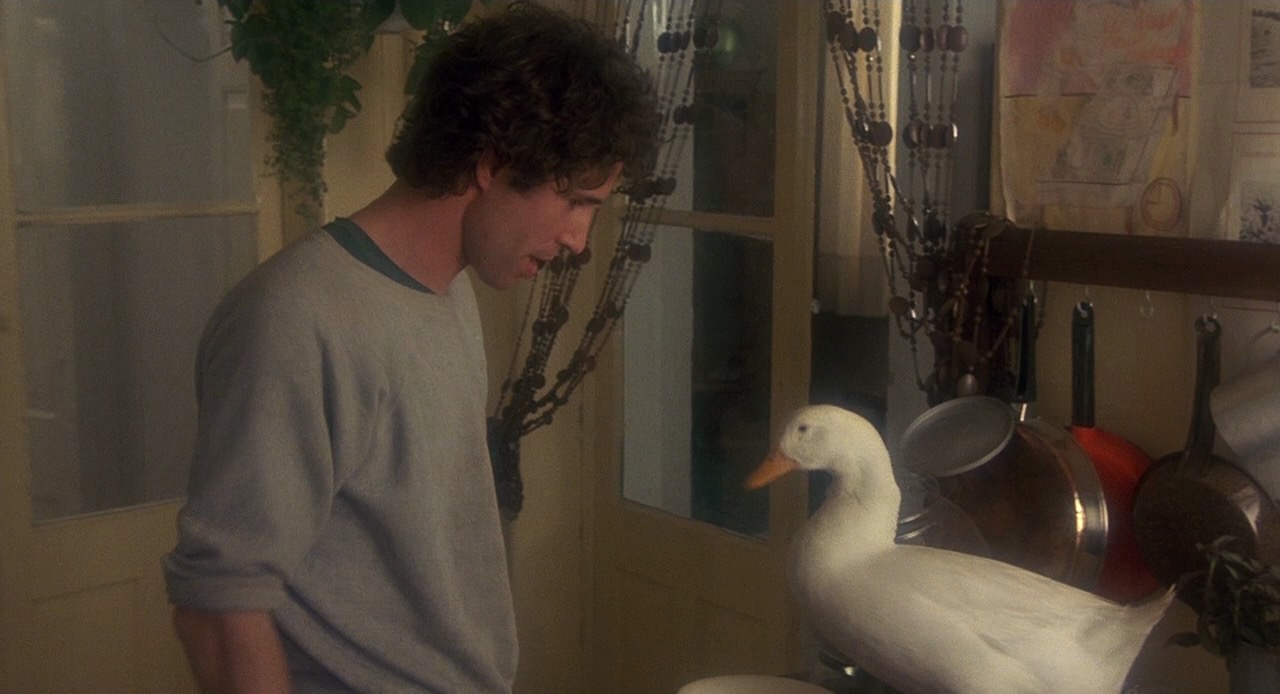
Missing Charles aka TV’s Lex Luthor, talks with his pet duck:
Gavras was by now typecast as the guy who makes depressing movies about leftists getting destroyed by oppressive military governments, so the coup in Chile was right up his alley. Shot and cut like a standard prestige drama, without the nervy energy of Z. The physical action can be clunky too, but casting late-career Jack Lemmon and post-oscar Sissy Spacek as the leads really helps for authenticity. The most impressive thing here is the shifts in perspective, following one character then another, jumping through time, and rewriting history (showing different versions of a past event depending who’s telling it).
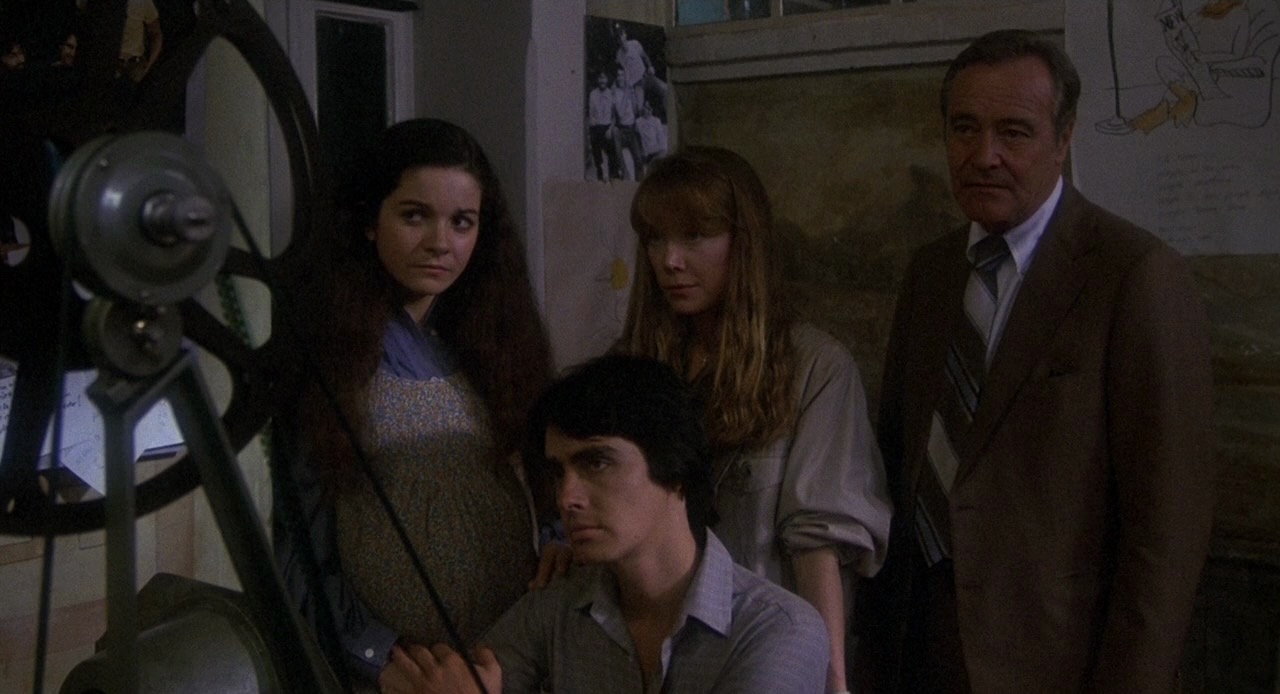
Was there a rash of “parents’ worst nightmare” movies around then, or have I just seen the poster for Hardcore too many times? Lemmon’s son has disappeared during the coup, but surely he’s fine because he is a documented American, and therefore immune to foreign political violence. Straightlaced Jack reluctantly teams up with the son’s wife Spacek and their dirty leftist friends, scouring hotels and hospitals while the embassy is being prickly. Faith begins to falter in the “helpful” men in suits, the American exceptionalism, and the safety of the son, as the bodies mount up – it doesn’t help that their government contacts are played by the stalker/murderer of Klute and the guy who fails his blood test in The Thing.

Young mother Jennifer Lawrence is behaving oddly. It’s implied that she’s a threat to others when we watch her cat-stalk though the grasses with a knife in hand, or when she borrow/steals Sissy Spacek’s gun to shoot their injured dog. She keeps smashing herself through glass things, or raking the walls till her fingers bleed, or trying to ladybird herself out a moving car, finally walks into a previously unseen (except in the opening titles) forest fire, a Petzold move but without any aftermath, so we can wonder whether it’s a metaphorical fire. Lot of odd-looking day-for-night shots. Ramsay be like: protagonist crazy, so movie crazy – I’m used to her being hit-or-miss, but this one is more almost-hit. Robert Pattinson very good as her befuddled husband. I would not be surprised if LaKeith Stanfield and Nick Nolte didn’t know what the movie is about or why they appeared in it. Thoughts from Josh Lewis, Lena Frances, Adam Nayman, Katie Kadue.

Writer/director Altman, “third woman” Janice Rule, her cheating husband Robert Fortier and the actors who played Pinky’s parents (Ruth Nelson of Humoresque and blacklisted 30’s and 40’s director John Cromwell)? All dead now.

More similar in tone and style to 1972’s Images than to anything else I’ve seen by Mr. Altman. Unlike Images it’s not shot subjectively, showing the hallucinatory visions of a lead character; everything on screen is assumed to be happening. But there’s the tight psychological focus on just two characters and the slow (and sometimes overlapping) motion shots of the mystical ancient-looking paintings set to creepy flute music.

Woman 1:
image

Story goes that three sad women with names similar to “Millie” meet in a small California town (desperate, pathetic but high-spirited single Shelley Duvall, childish Sissy Spacek, and Janice Rule, a painter pregnant by her cheating husband). After each of two harsh breaks in their routine (Spacek’s attempted suicide and ensuing coma, then Rule’s stillborn birth attended by the other two), the women assume different identities. First Spacek becomes an unleashed and attractive version of Duvall’s character and Duvall becomes withdrawn and passive, then in the finale, the three move in together (the husband having met a mysterious shooting death) assuming the roles of daughter, mother and grandmother and speaking in spookily robotic tones. D. Sterritt says the ending “presents a parody of American family life as desolate as it is surreal.”

Woman 2:
image

Good movie, but I found it a little slow and wondered at the symbolism. Lots of humor, absolutely perfect performances by a post-Carrie Spacek and pre-Shining Duvall, and an extreme yellow-and-purple color palette.

Spacek uses Duvall’s social security number in her job application, an early sign of the current identity-theft crisis!

Woman 3:
image

Altman: “I’m trying to reach toward a picture that’s totally emotional, not narrative or intellectual, where an audience walks out and they can’t say anything about it except what they feel.”

image

Sissy Spacek is tormented daily (most memorably in a shower-room scene full of naked high-school girls), then just when she’s made to feel special (via rigged prom queen vote), down comes the pig’s blood and out pours the psychic rage (school fire), which later also takes out her tormentors (car crash) and her mother and herself (collapsing their house). A classic for obvious reasons. Spacek was memorably nude in Prime Cut also, and probably in Badlands but I don’t remember. She was 26 in this so it’s okay to get naked.

image missing

image missing

image missing

image missing