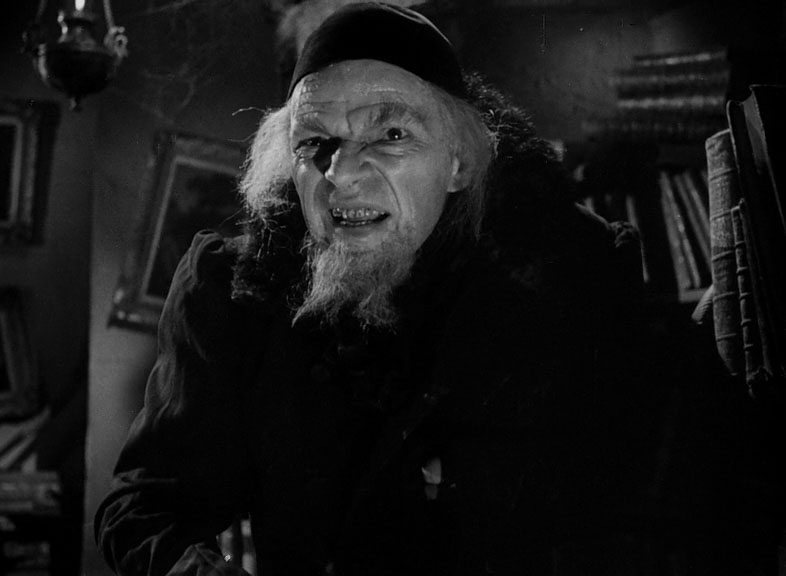
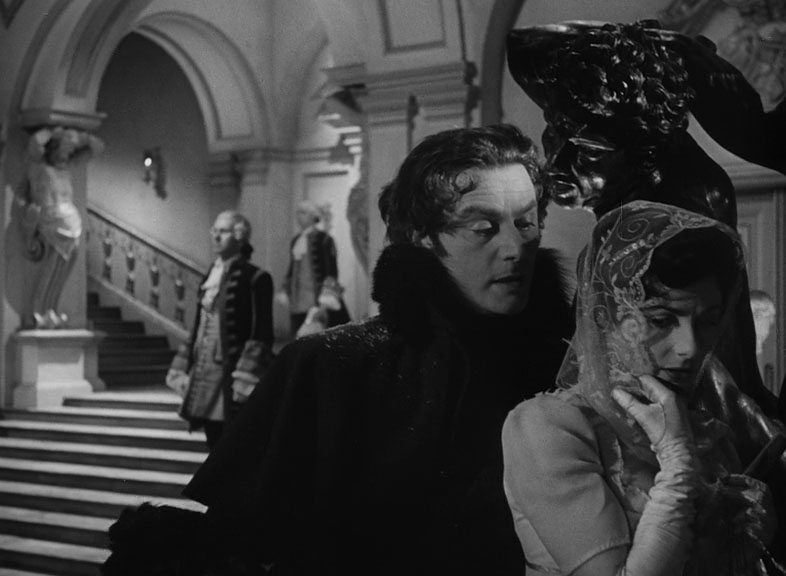
I thought I’d be a clever boy and watch the 2020 remake followed by the 1940 sequel and see which is better. Neither really holds a candle to the James Whale movie, but remake definitely has the edge over this clunky, cheapie sequel. As far as German directors who worked with their wives, directed versions of The Indian Tomb, and emigrated to the USA in 1933 go, I prefer Lang – who made his own sequel with the word “Return” in the title this same year. Fellow German Curt Siodmak (Robert’s idiot brother) was beginning his Hollywood writing career, having wowed his home country with classics like F.P. 1 Doesn’t Answer.

Nan Grey (a soft-voiced automaton) was supposed to marry a very young Vincent Price (a full decade before The Baron of Arizona), but he’s inconveniently on death row because he killed his brother… or DID he?? (he did not). Fortunately, Price is friends with another man with a dead brother – O.G. I.M.’s bro Frank (John Sutton would also appear in Return of The Fly). Frank, not a great scientist (he lets cigar-smoking cops into his chemical lab), turns Price invisible to spring him from prison, then hopes he’ll find a cure before Vince goes mad (the movie lets this drop, Vince never starts slipping). So this time the girl’s in on the plan and the invisible man’s a good guy – kinda anticlimactic as far as horror sequels go.

I.M. sits down for a nice meal with his girl and his brother’s killer:

Cedric Hardwicke (Hitchcock’s Suspicion) likes Nan and is sadly obvious about it, seems so glad to have Vince out of the way that you almost suspect him of having murdered the brother, ah, of course he did, as Vince learns after playfully tormenting a drunk whom Cedric confided in. Movie is extremely British, and plods along… the dialogue obvious, the invisibility effects good but some other filmmaking techniques lacking (they have animals “die” by freezing the picture, a non-barking dog is overdubbed by a very-barking dog). Vince kills the killer and I suppose nobody can prove it was him, then gets his body back.

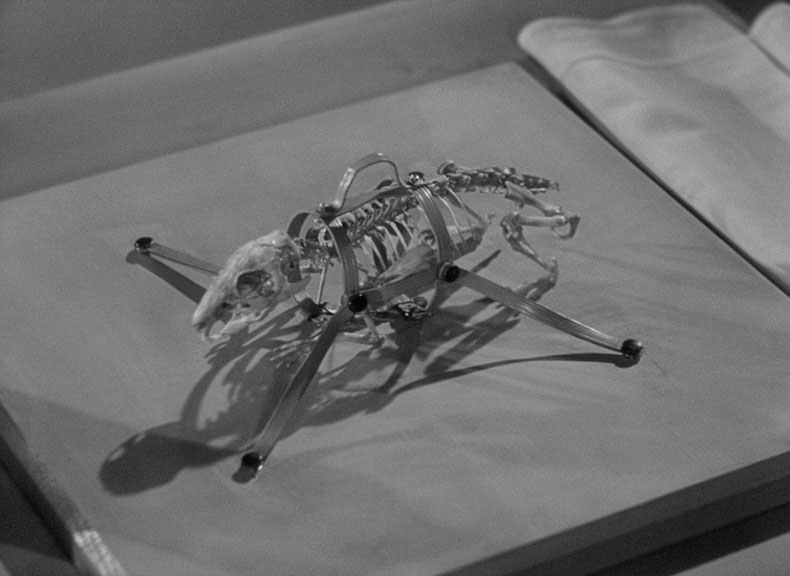
Mouseover to watch a guinea pig get visible:
image

A more specific title would’ve been Bronte Sisters In Love. Charlotte is writing the more popular Jane Eyre while Emily is writing the critical fave Wuthering Heights, but we don’t see much of this, mostly we follow their fascination with their boringly strict minister-father’s bland employee (Paul Henreid, Bergman’s husband in Casablanca).

Oldest Charlotte is Olivia de Havilland in long tight curls (same year she played twin sisters in The Dark Mirror), Emily is Ida Lupino (just a few years before she’d start directing), and their drunkard painter brother Branwell is Arthur Kennedy (whom we recognized from the westerns). There’s also the youngest sister (Anne: Nancy Coleman) and mostly we amused ourselves by trying to tell the three girls apart.

Bran paints his sisters:

Part of a flurry of Brontë interest, after the 1939 Wuthering Heights, 1943 Jane Eyre (with Joan Fontaine, sister of de Havilland), and (purportedly based on Jane Eyre) I Walked With a Zombie. Mostly a stodgy, joyless costume drama from Warner Bros and Bernhardt (Joan Crawford’s Possessed), and the writers of Undercurrent and National Velvet and Above Suspicion.

Emily in the sky:

This remake of Howard Hawks’s Ball of Fire is very scripty – so much screenwriting that there’s no room for anything else. Maybe a powerful performance could break through the scriptiness, but Virginia Mayo (ah, who?) is no Stanwyck, and Danny Kaye (I can never remember who he is exactly, and think of him as “Fake Donald O’Connor”) is no Gary Cooper (and I don’t even like Gary Cooper), so we’re boned. Mayo and her gangster boyfriend “Tony Crow” get in some real good slang, at least, while Kaye avoids Mayo because of her distracting body and the demoralizing effect of her presence, and hides out with his music scholar buddies, none of whom are Cuddles Sakall (but one of whom is Benny Goodman). Popular musicians Tommy Dorsey and Louis Armstrong look on as Kaye finally gets the girl, and picking up the second half of this movie a day later, we forgot why we’d ever started it, until we saw the Hawks name again – he remade his own pretty-good movie as a pretty-bad movie in the same decade.

Named after the song, for some reason, since mostly it’s a Christmas movie – a semi-remake of The Shop Around the Corner, with Van Johnson as the insensitive lunk. Tom Hanks and Jimmy Stewart are extremely likeable actors, offsetting the insensitivity of their character, but here the producers were mostly focused on finding excuses for Judy Garland to sing old-fashioned songs, so they changed the shop to a music store, hired a bunch of comedians for the support roles, and accidentally cast a lunk to play the lunk.

Cuddles Sakall (this is his latest film that I’ve heard of) is their boss, a music store owner who plays his expensive violin very badly, with his Devil and Miss Jones costar Spring Byington as his secretary/fiancee, plus nordic-sounding Minnesotan Clinton Sundberg (Good Sam), and Buster Keaton! Keaton gets to smash the offending violin (actually another violin, long story) and directed the chaotic scene when Judy and Van meet – which we knew because the P-Bog doc just showed it. Van’s violinist friend was actually a violinist, who had just appeared on a Life magazine cover.

Opens with heavy narration, which thankfully peters out. Judy looked and sounded great onscreen – this was a brief productive spell between The Pirate and Summer Stock during the period when she kept getting fired from movies. Mostly she sings period-appropriate songs for shop customers looking to spend 15 cents on sheet music, but she gets to stretch out at a company party, following a lively barbershop song with the crazy-energetic “I Don’t Care.”

Criterion posted a pile of MGM musicals, and I got Katy to watch The Pirate, which she didn’t like, even though it’s about a circus-boss scam-artist ladies’ man who pretends to be a notorious pirate in order to win over a pretty girl, then discovers her fiancee is the real notorious pirate, fat and retired.

Stars: Gene and Judy

Blustery and Loud: Walter Sleestack (The Clock King of TV’s Batman) and Gladdie Cooper (Mrs. Higgins in My Fair Lady)

Yitz: Lester Allen as Capucho, the movie’s secret star

Michael Koresky:

In The Pirate, Garland’s unhappily betrothed Manuela, who craves romance and adventure, insists, “Underneath this prim exterior, there are depths of emotion, romantic longings.” It’s a statement that could be made by virtually any character in any musical. These are hardly frivolous matters. The musical is for anyone who has ever longed for something or someone — that is to say, everyone. What is life without fantasy? To be firmly grounded, one must occasionally walk on air.

Based on a then-twenty-year-old novel, which somehow hasn’t been remade yet, but I suppose every movie about no-good men coming into money then turning into paranoid murderers is a remake in spirit. Damn good movie, but the true stories about the contested identity of the novel’s author are even better! John Huston’s fourth non-doc feature won oscars for himself and his dad, and his other movie that year won Claire Trevor an award.

A couple of downluck laborers overhear Walter Huston (just off playing “The Sinkiller” in Duel in the Sun) bragging about his prospectin’ skills, and they ask if he’d join them on an expedition. I didn’t know who was the bigger sucker, but it wasn’t the two Americans since Huston indeed had the knowledge and skills to find all the gold dust you please; it was jolly Huston for taking on these bozos as partners. I guess Tim Holt (prolific cowboy star, an Earp in My Darling Clementine) isn’t so bad. especially compared to his villainous partner Humphrey Bogart (what?) who becomes gold-crazed, tries to kill the others and finally gets murdered by banditos who lose all the gold dust to the wind (making The Killing another semi-remake).

We heard that someone, somewhere, was having a Jean Arthur marathon, so we decided to participate and found this. Jean’s neglectful husband Fred MacMurray is lost at sea and presumed dead, but returns to find she has a new neglectful husband, his business partner Melvyn Douglas, and Jean enjoys having two men fight over her. The guys try leaving it to chance, but Melvyn cheats – the movie is pretty much on Fred’s side from the start. I guess Wes Ruggles was popular in his time, since his photo appears on the movie poster. I was not a fan of the first thing I saw him direct – looks like his thing is to cast all my favorite actresses opposite Melvyn Douglas. Written by Somerset Maugham, the highest-paid author in the world, also featuring butler Melville Cooper, who had played the Sheriff of Nottingham vs. Errol Flynn a couple years earlier.

Katy found us a new Christmas movie. Aloysius McKeever (Victor Moore, star of Make Way for Tomorrow) is a squatter who lives in mega-rich Michael O’Connor’s summer house during the winter (and his winter house in the summer). He starts inviting other unfortunates to stay with him during a post-war housing shortage, leading to a More The Merrier situation where roommates Jim (Iowan Don DeFore, who somehow played a German later in a Douglas Sirk movie) and Trudy (Gale Storm of some Joseph Kane westerns) fall in love. Jim is blandly unmemorable, so fortunately there’s more going on – Trudy is the homeowner’s daughter pretending to be down on her luck, and she invites both divorced parents (Lubitsch actor Charles Ruggles and Ann Harding of Double Harness) to play along – I forget why they go along with it, but Ruggles eventually reveals himself to Jim, donating land to his housing-crisis alleviation project, after all the family togetherness somewhat unscrooges him. They never clue in McKeever, who heads merrily to another mansion in the new year.

Pretty straightforward biopic of Wonder Woman and lie detector inventor Marston, his wife and their live-in lover… a solidly-made film with good performances. Usually “solidly-made with good performances” isn’t much of a recommendation for me, but it’s also thrilling that something this deviant played in the months between Wonder Woman and Fifty Shades Freed at the Grand, where I’m always subjected to trailers for Dennis Quaid Christian dramas. Seems a bit slow/long at times, but it’s covering ideas as well as incidents, and allowing each one the breathing space to feel natural so the characters don’t come across as sexy weirdos. Luke Evans (the documentarian in High-Rise) and Rebecca Hall (Christine) are the Marstons and Bella Heathcote (an evil model in The Neon Demon) is his teaching assistant who gets invited into their marriage long-term, though they have to keep it quiet since this is the 1940’s. From the writer/director of D.E.B.S., which I’ve been mildly wanting to watch for over a decade now.