Won best screenplay at Cannes, nominated for the golden palm. I was startled to recognize the lead guy from Werckmeister Harmonies as the German bookshop owner. Didn’t notice that his aunt Tunde in Werckmeister played Mrs. Straub, through I knew she looked familiar so I should’ve figured that out.

Well shot, edited, scored, etc., with no real attention-grabbing technical aspects. VERY well written and acted – focus here is on story and character. One of those interweaving-narratives things, but not annoyingly so. Emotional human story, multilayered, examining freedom and moral decisions and parent/child relationships, but subtly. When Ayten is spit upon by her former comrades as she abandons their cause in prison to go home with her girlfriend’s mother, there’s just that moment to think about later, not a whole conversation about the relative importance of family, love, freedom and politics. It’s a moral tale.

Prostitute Yeter Öztürk is estranged mother to young rebel Ayten. Ali Aksu is father to German professor Nejat. Susanne Staub is mother to student Lotte. The parents are all widow(er)s, the kids all unattached, until Ayten, in hiding after a political rally gone bad, stays with Lotte and they fall in love. Ali “rescues” Yeter from her prostitute life, but later he drunkenly strikes her, she dies and he goes to prison. Nejat disowns his father and moves from Germany back to Turkey, settling in Istanbul to find Ayten, tell her about her mother’s death and offer to fund her studies. Those two never connect, even though Lotte (and eventually her mother) stays with Nejat. All of the characters end up staying with each other, and not counting Ali’s attempted ownership of Yeter, it’s all out of love, compassion, generosity. Ali is the worst of the six, but he’s not a monster, and the film ends with Nejat (and us) going to Ali’s hometown to reconcile with him as Lotte’s mother Susanne works on forming a bond with her murdered daughter’s lover Ayten. Ayten is abandoning her rebel cause, which has good values at heart but also had an obsession with guns and violent protest that indirectly led to Lotte’s death, so you feel that Ayten is doing the better, more human thing by leaving, that by living her life (with or without new mother-figure Susanne) and holding onto her values she can do far more good than she could imprisoned in solidarity. Ends on such a spiritual high that it made my face hurt from wanting to cry. A beautiful movie, rivaling Paranoid Park as the best thing I’ve seen in theaters this year.

A good movie, watched with Katy and the solo piano score. Very “modern” story of Louise “Lulu” Brooks with her bobbed black hair and grinning sexuality and the trouble she causes all the men in her life.

image

Lulu’s gonna marry Dr. Scho(e)n, but his son Alwa is secretly in love with her… as are Lulu’s former pimp (?) Schigolch, the first lesbian character in film history Countess Anna, and even at the end Jack The Ripper. Hilarity doesn’t exactly ensue… Lulu stays semi-oblivious as the situation gets worse. She gets Schon in trouble at the opening of her own big stage show, causing the cancellation of his wedding and the fight that leads to his death at Lulu’s hands. Alwa grieves his father for all of a minute before grabbing Lulu and running off to hide, taking Schigolch (a drunken load) along for the ride. They end up destitute with Lulu cheerfully offering herself to a serial killer by the end.

image

Louise Brooks is electrifying, and the film looks terrific and kept our attention easily. Great piano score, more interesting and complex than the little sound sample on the menu would imply. The rare Criterion-issued film that is more interesting from a star perspective than a director/filmmaking one… everyone then and now has been more concerned with Louise Brooks as/is Lulu than anything else.

image

image

Movie 1 of the Key Sunday Cinema Club. The post-movie discussion really helped, made the movie more memorable, made its intentions and plot twists more clear. Thanks, Katy!

In West Berlin: Wiesler (meticulous rule-follower) works for Grubitz (ambitious, opportunistic dullard) works for Minister Hempf (fat awful bureaucrat). Georg Dreyman is a theater writer, Christa-Maria Sieland is Georg’s actress girlfriend, Albert Jerska is his blacklisted former director, and Paul Hauser is their anti-gov’t buddy.

Wiesler bugs Dreyman’s apartment to find proof that Dreyman is an anti-gov agent so he can be locked up and Hempf can be free to sleep with Sieland. But ever-loyal Wiesler learns the motivations for his operation, as he learns that Dreyman is not anti-gov at all, but becomes anti-gov as a result of all the spying, sleeping around and other rude behavior. Wiesler becomes unhealthily engrossed in “the lives of others” (oooh) and is eventually demoted after Dreyman is provoked to write an anti-gov scribe in a West German paper, and Sieland throws herself into traffic, remorseful for having informed on her boyfriend. Tragedy! All of this proves that Germans can never be trusted.

A neat movie and a story well told. AV Club says “von Donnersmarck largely keeps the emotion at a distance, preferring to intellectualize the action rather than letting the audience fully feel what Mühe and Koch are going through… makes the meaning of every moment thuddingly clear, and doesn’t move on until he’s sure everyone’s gotten it.” At least they agree that the actors and story are great. True the film’s a little dry and long, but it’s also in the head of the very formal Stasi cop Wiesler, so it only seems appropriate. And it had a lot to say about a system that I previously knew little about, so I found its straightforwardness helpful, but I guess I’m not clamoring to see it again anytime soon.

Black Book (2006, Paul Verhoeven)
Nice, twisty little nazi suspense drama. Watched on the plane, a little drowsy, so IMDB will help remember the plot details: “When the hiding place of the beautiful Jewish singer Rachel Steinn is destroyed by a stray bomb, she decides with a group of other Jews to cross the Biesbosch to the already liberated south of the Netherlands. However, their boat is intercepted by a German patrol and all the refugees are massacred. Only Rachel survives. She joins the resistance, and under the alias Ellis de Vries manages to get friendly with the German SS officer Müntze. He is very taken with her and offers her a job. Meanwhile, the resistance devise a plan to free a group of imprisoned resistance fighters with Ellis’ help. The plan is betrayed and fails miserably. Both the Resistance and the Germans blame her. She goes into hiding once more, with Müntze in tow. Together they wait for the war to end. Liberation does not bring Ellis freedom; not even when she manages to expose the real traitor. ‘Every survivor is guilty in some way.'” Edit April ’07: saw again in theaters – a real interesting movie. I definitely like it, glad Verhoeven is directing his talents away from stuff like The Hollow Man these days. Awesome final shot, with Rachel living in Israel, having moved from one besieged state to another. I don’t think Jimmy or George liked it much.

Jackass Number Two (2006, Jeff Tremaine)
Watched in the plane right after Black Book, when everyone around us was going to sleep. KLM didn’t censor it as far as I know. Completely awesome, hilarious movie. A masterpiece in its own way. Katy says I laughed too much/loud and annoyed my fellow passengers. Most other people watched that Kevin Costner movie with Ashton Kutcher for some reason.

Badlands (1973, Terrence Malick)
After a few days at the World Social Forum, finally one evening Katy and I were both awake enough to sit through a movie. I suggested Badlands, which we both ended up enjoying. Sheen kills Spacek’s father (Warren Oates) and they go on a little shooting spree before getting captured. Another quiet and beautiful movie by Terrence Malick. EDIT: JUNE 2007: after reading a great Adrian Martin article in Rouge, I realized that Malick is the only director I’ve seen whose EVERY film I would consider great… Charles Laughton excepted.

My Migrant Soul (2004, Yasmine Kabir)
On the last day at the Forum, I found the movie tent. Watched this half hour doc about a guy from Bangladesh who got a job in Malaysia in order to send money home to his family. But the guy who sends him gives him a forged passport, and he gets hard work for short periods of time, then sits idle the rest of his weeks, unable to find other work or complain to anyone without a legitimate ID, finally gets sick and dies. Sad.

Words on Water (2003, Sanjay Kak)
They’re building dams in India that destroy small towns, I guess. I fell asleep in the first ten minutes, then left the movie to wander the Forum and listen to the drumming, so I can’t tell you much more than that. Got back just before the credits when some protestors from the village are being arrested. Sad.

7 Islands and a Metro (2006, Madhusree Dutta)
I was drowsy and it didn’t make a strong impression. Some overlong shots (because the longer you hold a shot, the artsier it becomes) and some disconnected stories about Mumbai/Bombay. The director came out and said the movie reflects how people from all over got together to form this big city, and now the city is splintering into smaller communities again, without a firm focus or center (which of course reminded me of Atlanta), and told many stories of displacement, of trying to make a home in an overcrowded metropolis. I was disappointed that so many of the stories were made-up, and some of the actors were really overdoing it, as if in a soap opera. Decent enough movie I guess. Sad.

Early in the Morning (2006, Gahité Fofana)
The next day we went to the Alliance Francaise, checked out an excellent photo exhibit and saw some free movies. This one retells the true story about two kids from Mali who froze to death in the landing gear of a plane to Europe, having written a letter to Europe’s heads of state explaining that they’ve got it bad in Guinea and need some help. A well done movie, underplayed, not sensationalistic, quietly calling attention to the country’s problems without setting up some overbearing horror of war. The kids don’t even experience the war firsthand, so we don’t see it either, just hear about it in a single scene. Sad.

Bamako (2006, Abderrahmane Sissako)
Next up at the French Alliance was this awesome movie, which we wanted to see all week and surprisingly made it out to. Good thing the Alliance was walking distance from our hotel. A (mock?) trial is being held in the center of town and broadcast on the radio, with the people of Africa (Mali in particular) versus the European powers (the IMF and World Bank). A plea for debt forgiveness, for Africa to maintain its identity and stop to think how it wants to deal with foreign countries without getting exploited. Meanwhile small-town life carries on around the trial, the central story being about a family with a husband who can’t work, a wife who sings at a nightclub and their sick child. Wonderfully and humorously shot, with strange collisions of culture and a much talked-about bit where a TV movie starring Danny Glover suddenly takes over the screen. Must see again.

Garden State (2004, Zach Braff)
Katy watched on our last night in Nairobi, after the safari. I was just listening to the dialogue and music, and finally watched the second half with her. It’s an easy movie to make fun of after the fact, but while it’s playing, it’s very convincing.

Fighting Elegy (1966, Seijun Suzuki)
An action/comedy from Suzuki! Extreeeeme sexual tension leads Kiroku (lead actor from Tattooed Life) to join a fight club, and finally form his own gang and have huge fights with other groups of kids. IMDB guy says “a satire of the militaristic attitude that eventually lead Japan into WWII”. Wonderful. Watched this and 39 Steps on the portable DVD player on the flight home.

The 39 Steps (1935, Alfred Hitchcock)
Watched twice in a row, the second time with commentary. Robert Donat, a very capable leading man, gets caught up in a plot to smuggle government defense secrets out of the country when a woman he meets at a show is murdered in his apartment. He runs all over, never believed or trusted, Hitchcock’s original “wrong man”, predicting North By Northwest in structure and the final theater scene of the Man Who Knew Too Much remake during the great ending when, about to be captured again, he shouts to Mr. Memory onstage “what are the 39 steps”, revealing the plot to everyone. Very easy to watch… one of the better Hitchcocks I’ve seen, even if completely unbelievable.

The Royal Tenenbaums (2001, Wes Anderson)
For some reason, I thought about this one during the whole safari. Is it the boar’s head that Royal rehangs on the wall? I don’t know, but I was itching to see this again, and watched it as soon as we got home. One of my favorite movies ever.

The Lion King (1994, Allers & Minkoff)
Of course we thought about this one too, and watched it the next night. Didn’t finish it, though. Best not to.

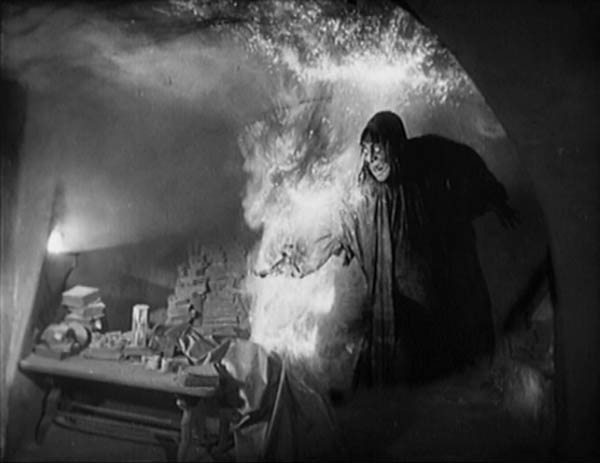
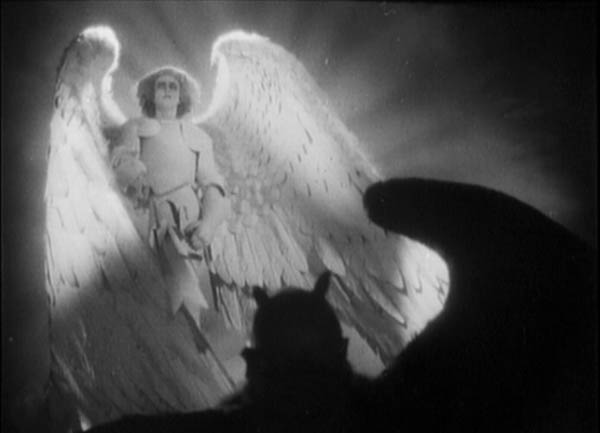
Watched the German version with orchestral score. Movie made me feel ten feet tall, with wings. Score is nothing to worry about, I turned the volume down… will have to try the harp score next time. Brilliant, full of harsh angles and crazed effects and loopy overacting. Presence! The movie booms with exclamation points! Guy Maddin must love it.

image missing

image missing

An angel stupidly bets the devil (err, Emil Jannings as Mephisto) that he can’t corrupt humanitarian scientist Faust (a swedish actor who died of pneumonia in the late 30’s), with the world at stake. Emil first brings a badass plague, then allows Faust the power to cure a few people to make him feel like he’s all good. Then, the devil offers Faust youth so he can lust after some very white young woman (Camilla Horn, who acted through the late 80’s). Faust never really gets the girl, though he sleeps with her once… then is blamed for killing her brother and flees on his magic carpet. The girl’s mother dies, she’s put in the stocks, has a baby, loses it homeless in the snow because nobody will help her, then is burned at the stake accused of killing her own child. Faust hears her cry for help at the last minute, holds her and they die in the fire together. Faust goes straight to hell but for some reason the world is saved?

image missing

image missing

Emil is awesomely sinister. Movie is a visual delight, a story well told, everything a movie should be. Will have to check out the commentary, the harp score, the export version, etc etc.

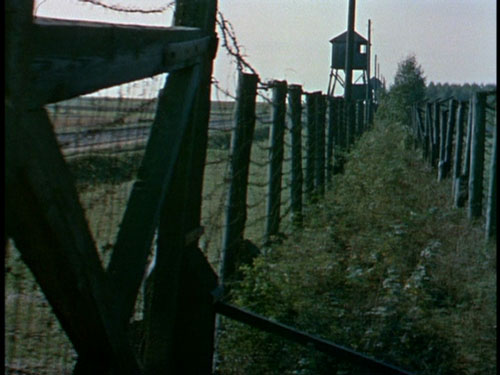
More straightforward and less poetic than it usually gets credit for, pretty much a straight half-hour documentary about the holocaust.

More educational, more heartbreaking, more shocking, more horrible and a far better movie than any of the 60-minute PBS documentaries I’ve seen on the subject, any two-hour fictionalized concentration-camp movie, any three-plus-hour Steven Spielberg feature.

The poetic parts are mostly at the start and end, and in the juxtaposition between the 50’s color film and the 30’s-40’s b/w stock footage. Must be hard to craft an artistic film against this sort of imagery. Jean Cayrol (Muriel ou Le temps d’un retour) wrote the commentary and Chris Marker was assistant director.

Katy, if I seemed a little depressed on Sunday night, this is why.

1

2