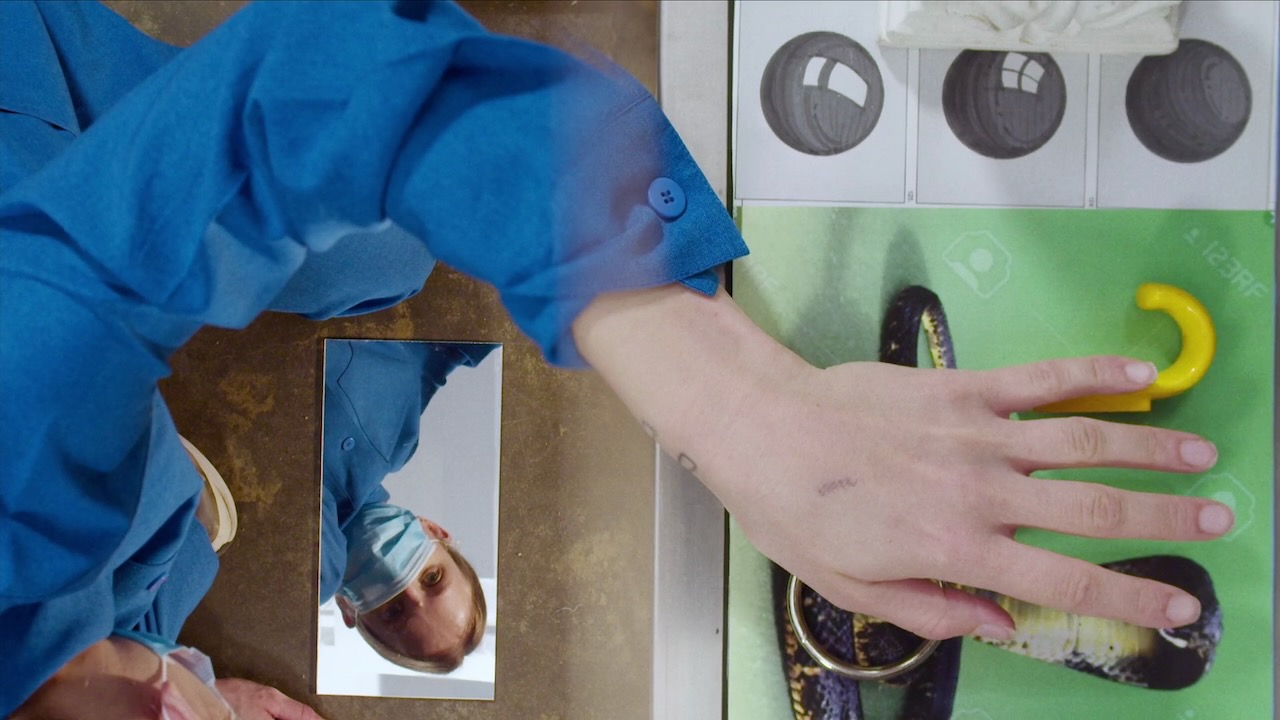
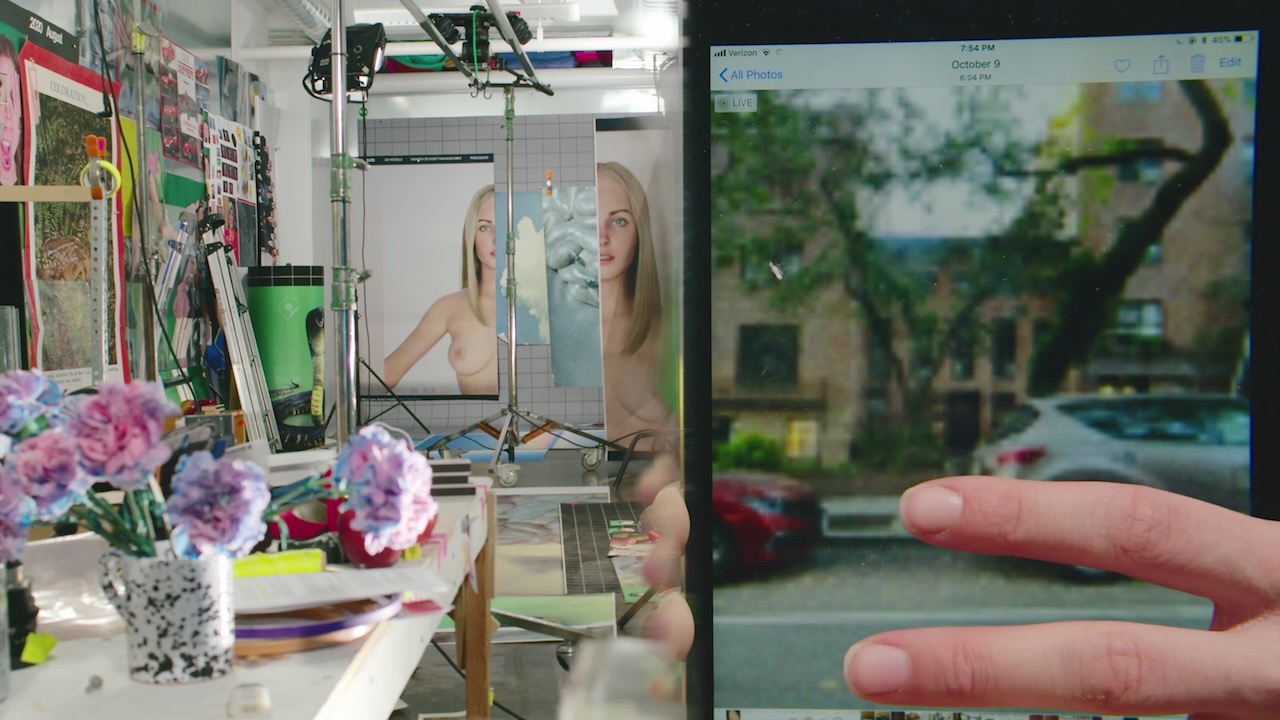
Glass Life (2021, Sara Cwynar)

Photo-studio collage scroll with extreme digital compositing, music and voiceover tracks reinforcing or canceling each other, choice quotes from every modern philosopher, many objects and alphabets recognized from the gallery exhibit we saw, this 20-minute film itself refactored from a different exhibit. Daniel Gorman gets it.
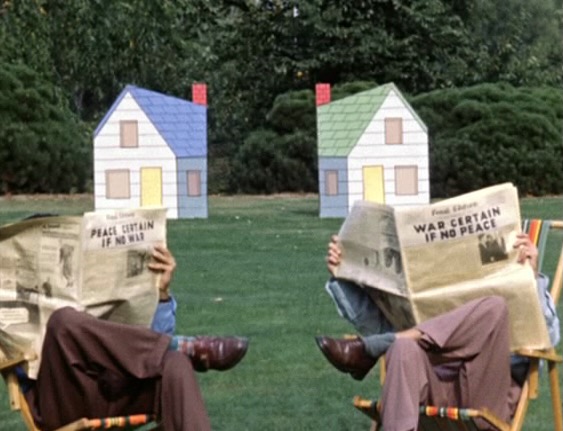
Neighbours (1952, Norman McLaren)

Two guys get along until a sweet-smelling flower grows on their property line and they ultimately murder each other’s families and each other to gain possession of it. It’s bad politics, say both Alex and McLaren’s studio boss, but terrific live-action stop-motion, and the source of the Mr. Show knees-levitation effect.

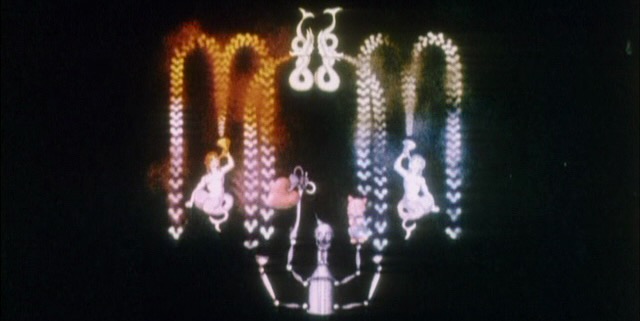
Oz: The Tin Woodman’s Dream (1967, Harry Smith)

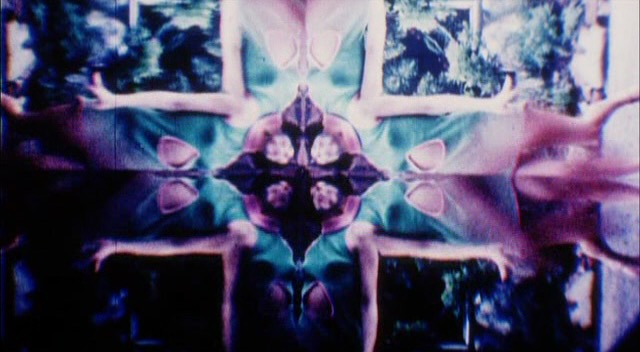
Smith loves transformative destruction, so the woodman whacks a tree with his ax, turning it into a pile of furniture and creatures, which eventually whirl around to form mystical fountain patterns. Psychedelic kaleidoscope setup starts with a Suspiria dance and leads to his most magickal images yet. Hoping to see this again next year with a live John Zorn performance, so instead of being obvious and playing Zorn with it now, I put on the middle third of Prefuse 73 One Word Extinguisher, which worked great during the dance scenes.
Ghosts Before Breakfast (1928, Hans Richter)

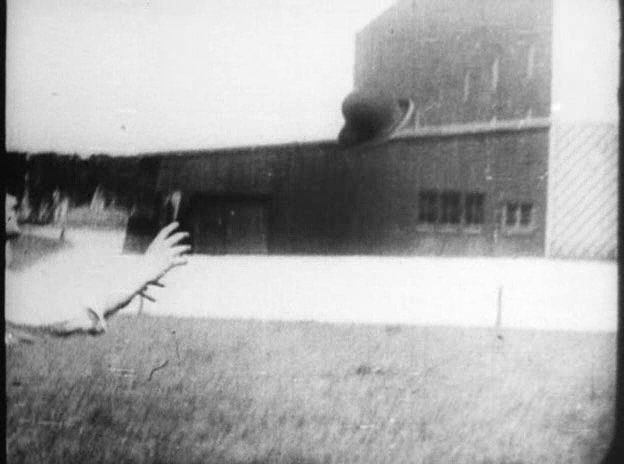
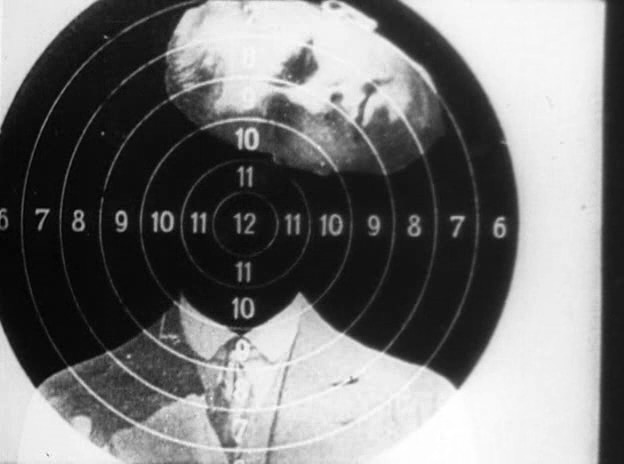
When Tom Regan said “Nothing more foolish than a man chasing his hat,” he had probably just watched this, a silly movie about flying hats and the men who chase them. Fun to see stop-motion with live actors 24 years before the McLaren short. My version has a new Sosin score since the original sound version was burned by nazis.

Lost hat:
Lost head:

Cosmic Ray (1962, Bruce Conner)

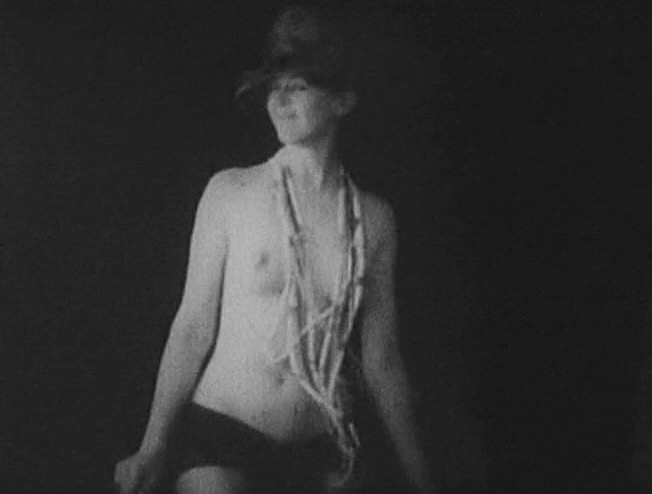
Nude dancing and fireworks set to a boogie-woogie Ray Charles song, after an excessive amount of countdown leader. It’s Conner, so there are quick shots of nationalism, Mickey Mouse, the atom bomb.

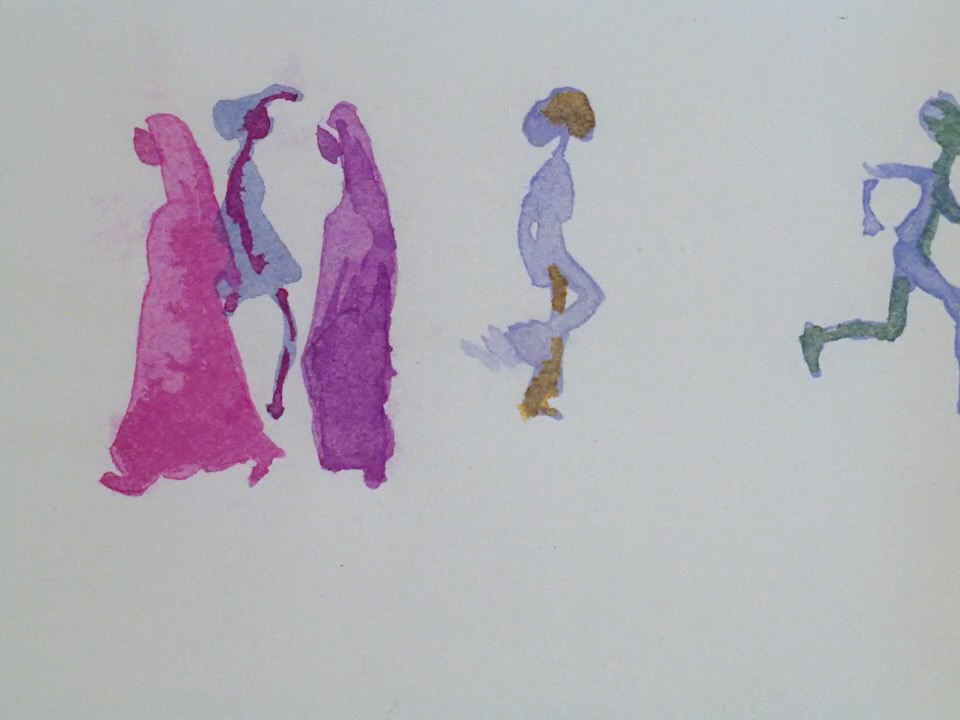
Walking (1968, Ryan Larkin)

More and less abstractly-rendered people and their walk cycles. Now that I’ve seen the Hubley short and the Disney doc about birds, that’s all the 1969 oscar nominees, and I’m gonna say they are all winners.

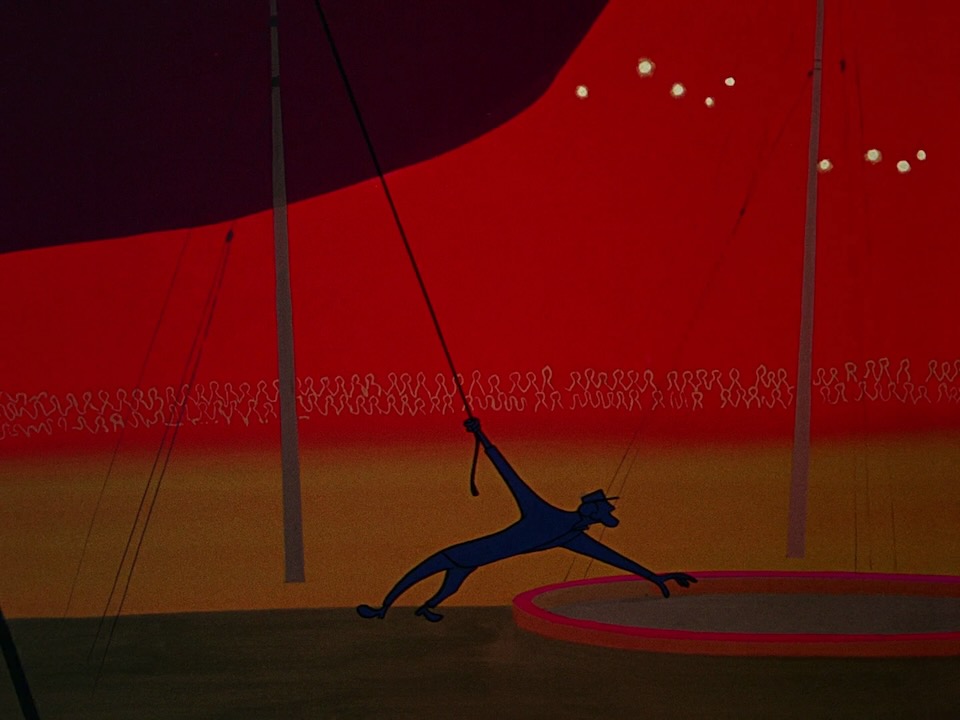
The Man on the Flying Trapeze (1954, Ted Parmelee)

Speaking of Hubley, here’s a UPA short. Talentless loser’s girl Fifi runs away with the circus to be with the handsome and graceful trapezeist Alonzo, turns out she’s a gold digger who leaves every man after they’ve showered her with gifts. Maybe the Popeye or W.C. Fields versions are better.

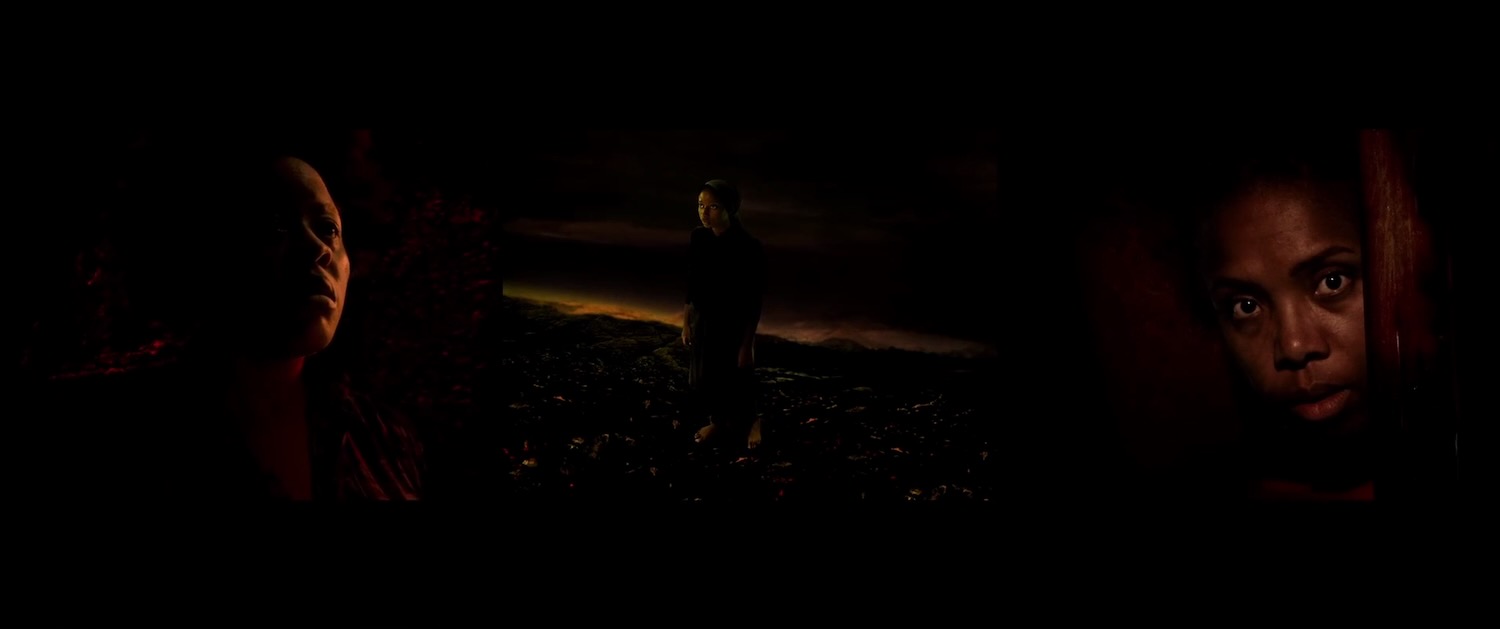
The Daughters of Fire (2023, Pedro Costa)

A Costa musical: after six minutes of split-screen, three women singing about their suffering, the last two minutes is landscapes. Paired at Cannes with Wang Bing’s Man in Black.
Giovanni Marchini Camia:

Continuing in the ever-darker visual trajectory of his previous films, in Daughters of Fire Costa pushes even further towards an obsidian palette … Over a string quartet rendition of 17th-century violinist and composer Biagio Marini’s Passacaglia (Op. 22), the three women, all professional singers, intone a hymn-like song whose lyrics speak of solitude and suffering, toil and exhaustion, and fortitude in the face of neglect. Given that the women are Black and singing in Creole, and that the themes they invoke are familiar from Costa’s films about Cape Verdean immigrants, it’s a surprise to learn from the end credits that the lyrics belong to a traditional Ukrainian lullaby.

Bleu Shut (1971, Robert Nelson)

Goofy prank film with structuralist tendencies – a no-stakes boat-name guessing game punctuated by half-minutes of weirdness (naked man in mirror chamber, dog gets Martin Arnolded, scenes from classic films, porn with intertitles). After minute three, a woman explains the rules of the movie and gives some coming attractions. I once saw about a third of this from one room away at an art gallery, maybe the same day we watched The Clock, and have wondered about it ever since.

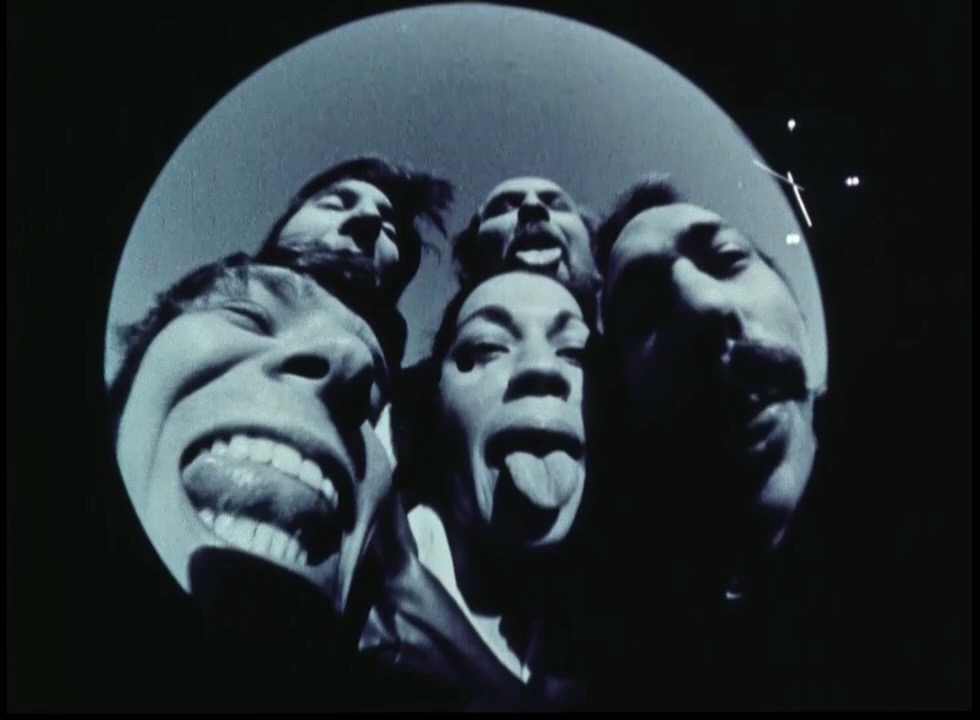
It’s 19 minutes before either guy gets a single name right. The game show is abandoned towards the end for three minutes of people sticking their tongues out, then Nelson explains what the movie has been about, or he starts to before he’s interrupted by technical difficulties. Chuck Stephens did a Cinema Scope writeup, but I feel I’ve covered things pretty well.

The Garage (1920, Roscoe Arbuckle)

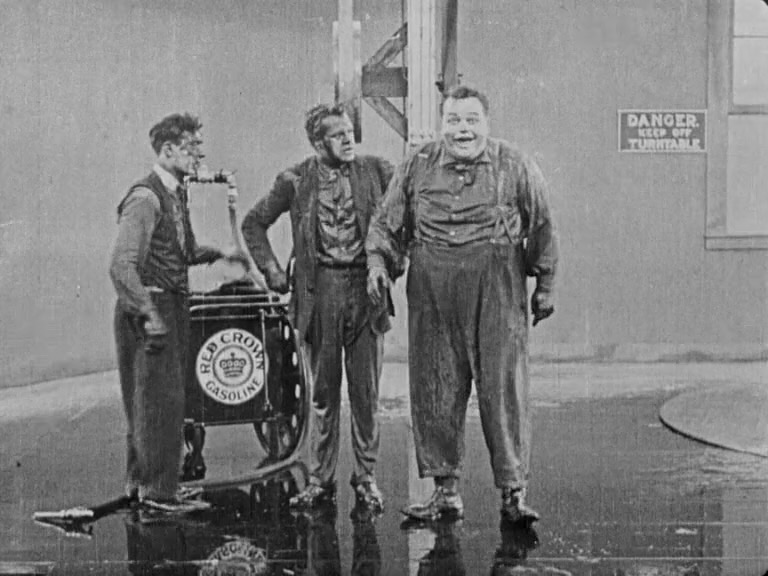
Our guys work at a garage, managing to get every thing and everyone covered in black oil without making any racist jokes, nice. The boss (a White Zombie witch doctor) has a cute daughter whose annoying beau manages to burn the place down, and it becomes a rescue operation. I got a good laugh from the ending of the Buster-has-no-pants segment.
All Dolled Up (2005)

Based around lo-fi backstage and onstage video of the Dolls in their heyday playing grungy NY punk clubs, also a local news report. It’s all archival, with plenty of hanging out – scenes and songs fade out abruptly. Primary source footage of artists is inherently interesting but when the cameraperson follows them on a trip to San Francisco, there are whole minutes of aimless filler.


New York Doll (2005)

This one plays more like a standard rock doc – famous talking heads tell us the Dolls were important, then the filmmakers follow bassist Arthur Kane, now working part-time at a Mormon library, en route to the big reunion shows curated by lifelong fan Morrissey. There’s some tension (moments before going onstage Johansen antagonizes Arthur over the church) but largely plays like an advertisement, feel-good story of a forgotten man getting to re-live his rock & roll youth, with a twist ending (Arthur dies of cancer days after the gig). But the most shocking thing in the movie was learning that the golden key society of hotel concierges from The Grand Budapest Hotel really exists.


Personality Crisis: One Night Only (2022)

Like with his George Harrison doc, Scorsese pulls together the previous sources – we see Morrissey bits from the Arthur Kane movie and stage footage from the archival doc. This is built around a live performance in a small club – David admits that his cabaret show is for his friends, and a wider audience wouldn’t understand it, and I didn’t, but the song “Totalitarian State” was good. Between live songs the movie nicely roams across art-related topics: Harry Smith stories, love of opera, song title inspirations. David says “intelligent ridiculousness” appeals to him, and I can get behind that.

When Anthology Film Archives first opened in 1970, its inaugural screening – presented during a private event on November 30 – showcased four highlights from the foundational repertory cycle that would come to be known as the Essential Cinema Repertory Collection … The four films represented a short survey of film history, spanning from the turn of the century all the way up to the (then-)present day.

Voyage Across the Impossible (1904, Georges Méliès)

The hand tinted color is supremely excellent, the handcrafted, cardboard-looking sets and props very nice, and I couldn’t care less about the slapstick steampunk nonsense plot. More or less a sequel to A Trip to the Moon, this time to the sun. Jules Verne died the following year, so could potentially have seen this. When some passengers accidentally freeze into an ice block in the protective cooler car, their guide hurriedly warms them up by starting a fire with some hay… on the sun. I like the copyright notices hidden in plain sight, on cliff walls and the sides of trains and submarines.


The Midnight Party (1940s/1968, Joseph Cornell & Lawrence Jordan)

Stock Footage: The Movie. Sometimes the shots are flopped or frozen or repeated, with flashes of intertitles in between. The whole thing feels like it was made by mistake.


The Canaries (1969, Jerome Hill)

Canary songs and chirps are visualized as color blobs, which finally form new canaries made of pure sound and light which float away from the cage, visiting lovers on the beach. I wish I’d thought of this one.


Film No. 11: Mirror Animations (1956, Harry Smith)

I just watched this last year, probably my favorite of all the Harry Smith films I’ve seen.

Not part of my slow delve into Film as a Subversive Art – my copy has no index, so I don’t yet know if Smith is covered within – rather a holdover from when I read Visionary Film. Quotes below are by Smith, as printed in the latter book.


Film No. 1 (1939)

Fast, blobby, hand-drawn animation morphs along a speckled screen. I likened the characters to amoebas, then blew my own mind thinking about the similarities between actions on a microscope slide and on a film frame. “The history of the geologic period reduced to orgasm length.”


Film No. 2 (1941)

Full moon circles pendulum and pac-man across the screen, a 2×2 grid of squares joining them center screen.


Film No. 3 (1946)

Hashtag: The Movie… rectangles form the number sign, then more complicated grids and block patterns, some diamonds thrown into the mix, a lot more complex than the last couple films. The rapid-fire circles of the second movie broke up in compression artifacts on my video copy, but the brilliant colors of this one made up for that. “The most complex hand-drawn film imaginable.”


Film No. 4 (1947)

Short, using an actual camera I think. Familiar circle and grid shapes, as lights, smearing across the screen in multiple exposure blends. “Made in a single night.”


Film No. 5: Circular Tensions (1949)

The technique of the previous piece, refined and improved, with more colors coming in.


Film No. 7 (1951)

Long and great, a huge leap forward. Looks like someone got a proper animation rig (courtesy of the Guggenheim Foundation) and applied all his favorite colors, shapes and patterns to it – brings to mind Oskar Fischinger (I wrote this before discovering that Film No. 5 was aka Homage to Oskar Fischinger).


Film No. 10 (1956)

Another big change – instead of just shapes, we’ve got character-objects. They seem to be based on foreign historical/religious icons, dancing around and forming miniature pantomimes. “An exposition of Buddhism and the Kaballa in the form of a collage.”

Snake made of eyeballs:


Film No. 11 (1956)

Some of the same religious icons/patterns as the previous movie, nicely synched to a Thelonious Monk piece. Possibly the previous films had also been synched, since per the literature, “Smith spoke of his films in terms of synesthesia, the search for correspondences between color and sound,” but the earliest films had no synched soundtracks, and Smith kept changing the music – including at one point awkwardly overlaying Meet The Beatles over the whole collection, as in my copy.


Film No. 12: Heaven and Earth Magic (1962)

Small man with a hammer reconfigures objects, animals and women from/into pieces. Narrativish with sound effects, no music. Fully Gilliamesque, cut-out characters, always with something else hiding behind/beneath them. A house grows feet and walks off, machines with multi-hinged arms, umbrellas, syringes, eggs and watermelons, dripping liquid. One scene reminds me I haven’t seen Guy Maddin’s Odilon Redon in a while.

“8 shots for a quarter, win a kewpie doll,” funny to hear the carnival barker on the soundtrack the day after watching Gun Crazy. I don’t know if I can recommend watching 70 straight minutes of Harry Smith cutout animation. About the 20th time the magician brings out the hammer to reconfigure all nearby objects into new forms, I wondered if this wouldn’t be better served as an installation. And it might be appropriate to the depicted characters, but the sounds of crying babies and yowling cats never improve a movie.

“The first part depicts the heroine’s toothache consequent to the loss of a very valuable watermelon, her dentistry and transportation to heaven. Next follows an elaborate exposition of the heavenly land, in terms of Israel, Montreal and the second part depicts the return to Earth from being eaten by Max Muller on the day Edward the Seventh dedicated the Great Sewer of London.”