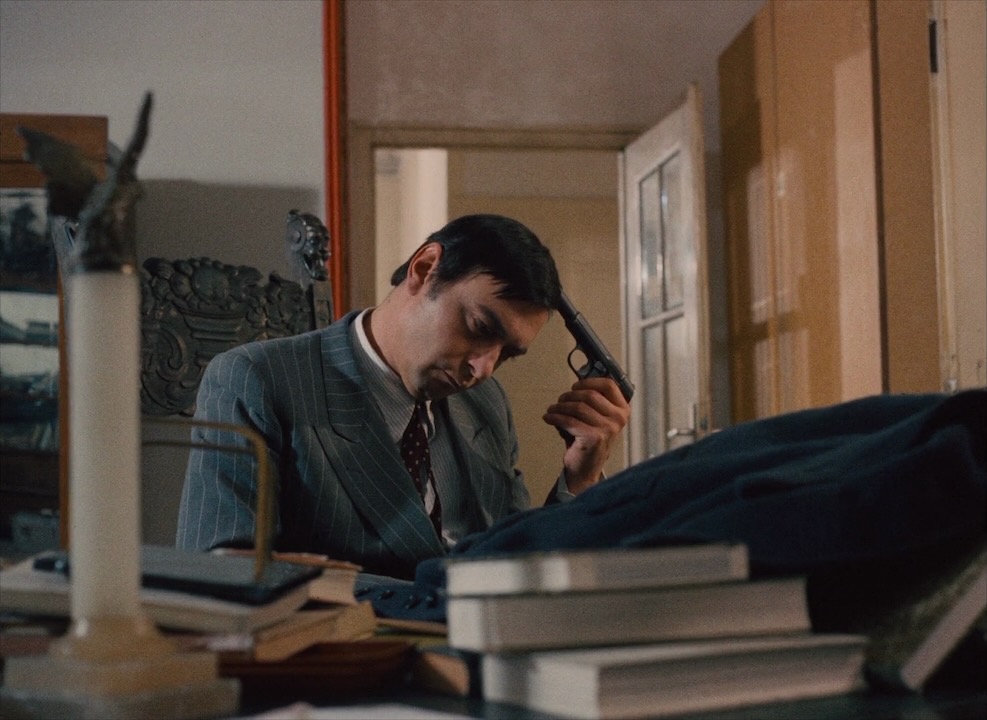
Not many places the story can go after opening with our guy in jail. It rewinds to him building a house for his hateful mom, then further, as a boy also failing to please mom. After the house, he moves new wife Erika to Munich and gets a construction job, where he works himself half to death (this is my second movie of the week where someone finances some furniture). Sure he’s a shopaholic capitalist, but he simply bought into the dream that if you work hard at a job you’re very good at, you can afford a comfortable life for your family. She gets pregnant, moves in with her parents, and he takes it hard, working more overtime and buying more stuff until he cracks under the strain and murders a friendly landlord.

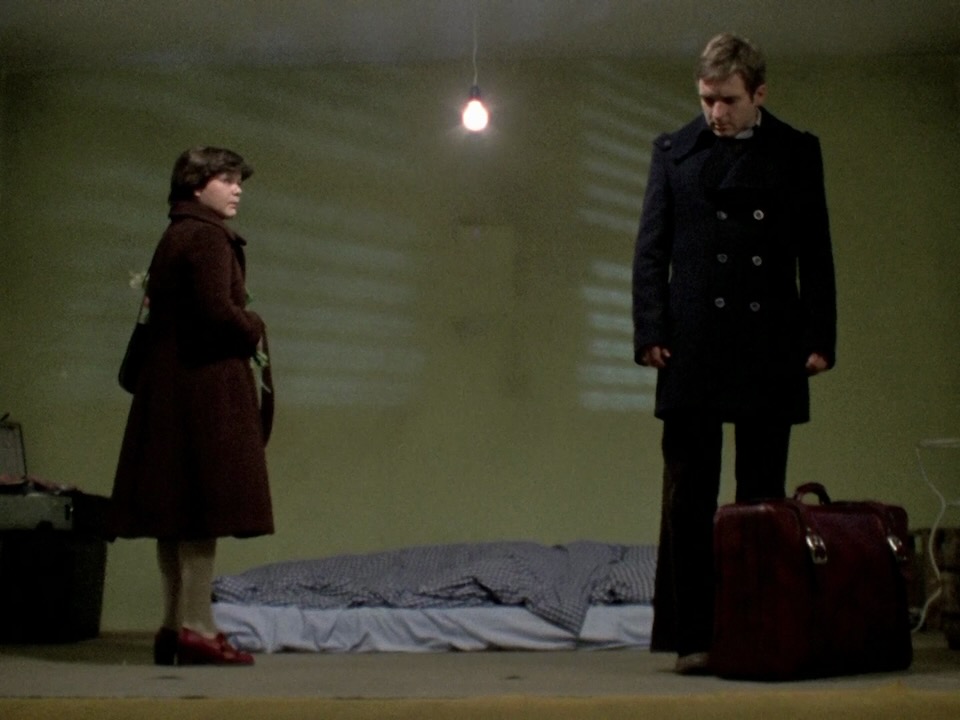
Before the furniture arrived:

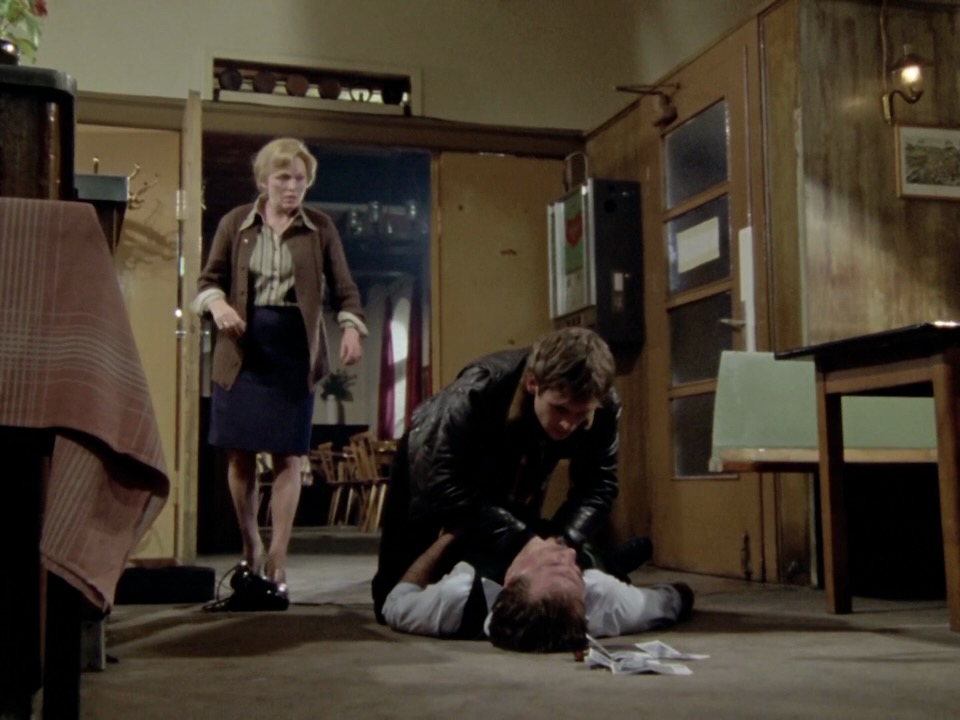
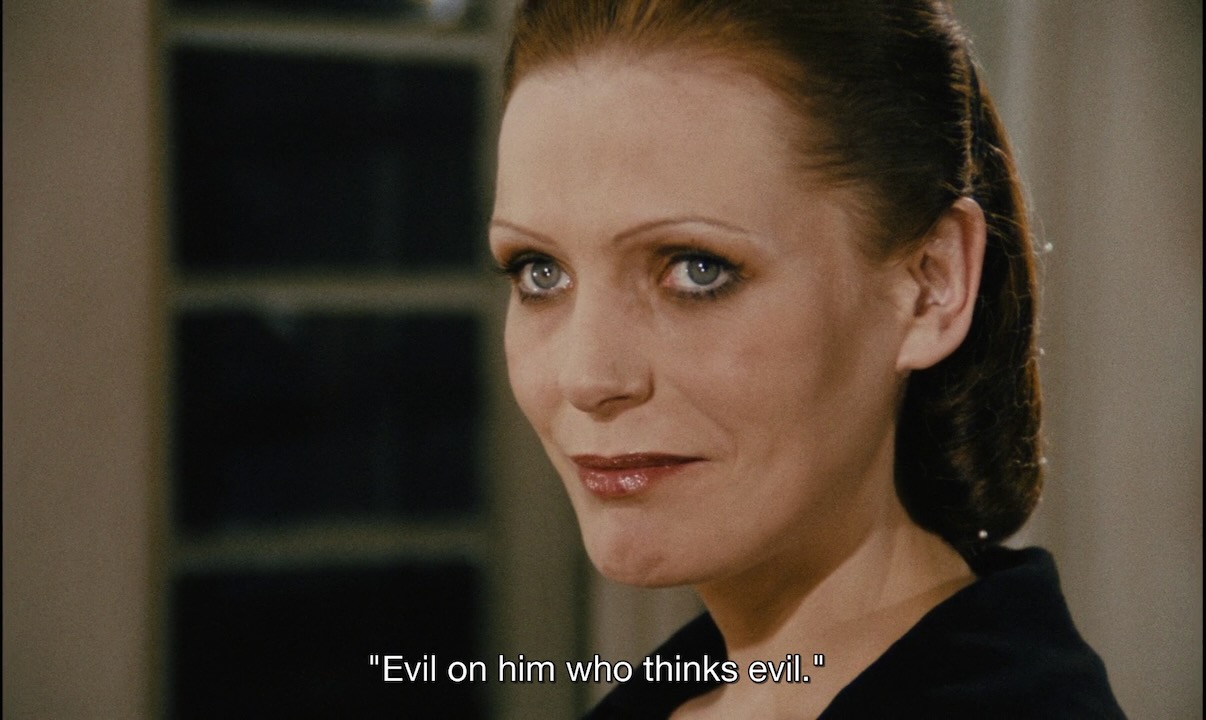
Mouseover to turn your murder-witness neighbor into your disappointed mother:
image

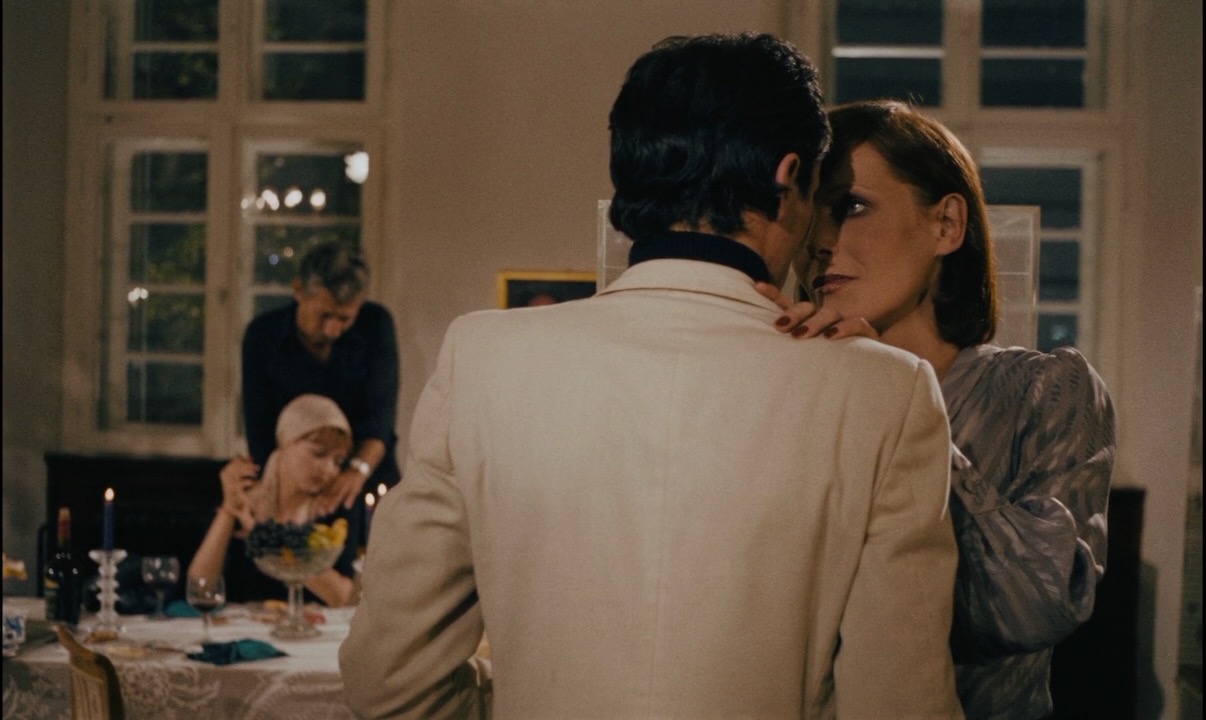
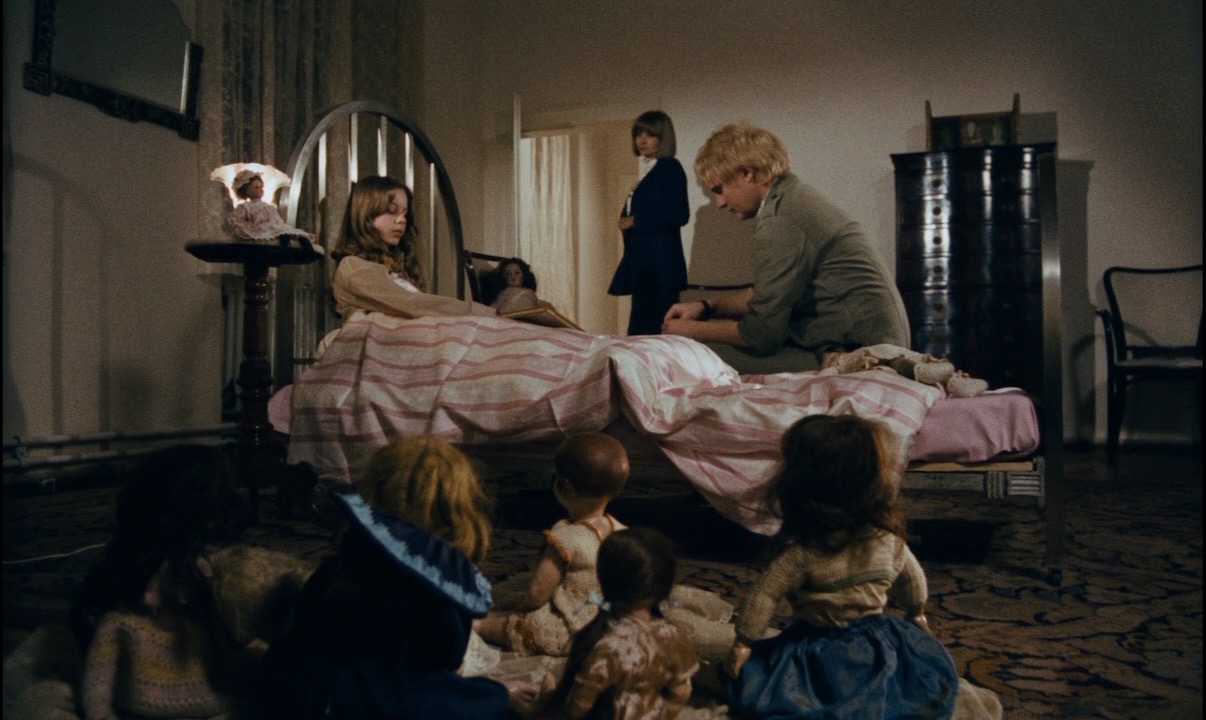
Mom (Petra von Kant) and Dad (Alex Allerson of all the ’76 Fassbinders) are leaving town on separate business trips, leaving their daughter with the mute nurse (Godard’s Married Woman). But all three adults are having secret affairs, and head to the same country house, where they try to play it off and have a good time together since they’re all equally busted. Dad is with hottie Anna Karina, mom is with dad’s employee Bruno, the nanny is with blonde Volker Spengler (fly guy of Satan’s Brew).

This is too many major actors in one place, and the daughter can’t hold her own, also is weirdly dubbed, but she gets to dance on her crutches to Kraftwerk’s “Radioactivity.” Of course the adults end up playing mind games, and the vibes turn very sour during the titular Q&A guessing game, then Mom shoots the Mute Nurse, kind of a bum ending.

honi soit qui mal y pense:

Good manic pervert movie, like a euro-arthouse John Waters, with rapid banter and exclusively eccentric characters. I’ve seen Kurt Raab in four other Fassbinder movies, always in minor roles. Here he’s the lead, a broke poet, having become violent and desperate with writer’s block. His put-upon wife and shut-in brother (a fly-plucker whom Kurt once calls a guter junge, hmmm) are supportive, but he finds a devoted fan of his work in Petra von Kant. Illness, murder and fake murder all follow, as Raab starts plagiarizing a famous poet and acting as if possessed by that poet, until pulled back to earth by his mess of a family.

A writer contemplates his work:

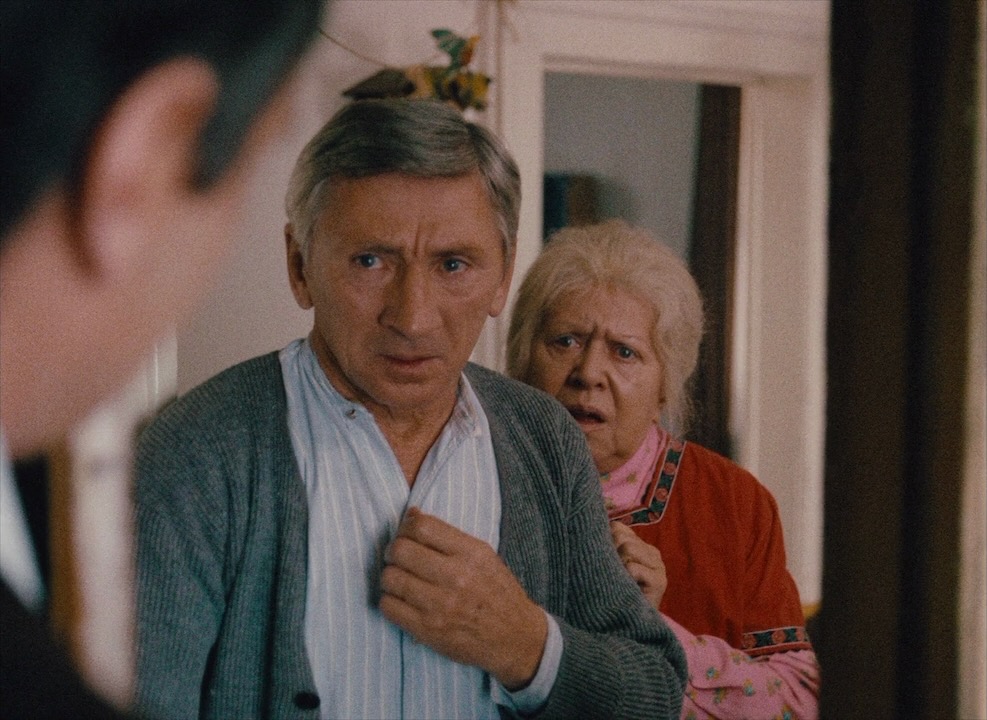
Kurt’s parents are… pleased? to see him:

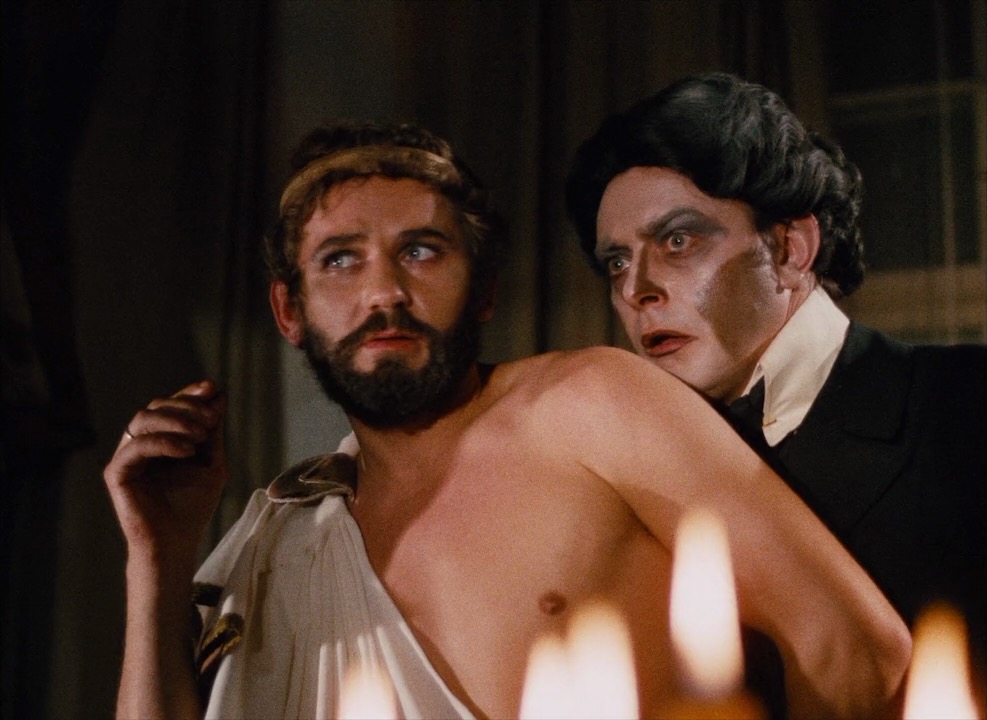
A writer attempts to channel a better writer:

Mother K receives a bit of bad news: her husband went to work and murderer-suicided his boss. She gathers the family (son Ernst and his wife Irm Hermann, dancer daughter Corinna), and their situation attracts reporter Jorg and a communist couple. Everyone involved exploits the tragedy in their own way, also a sharp movie about political fractures within families.

L-R: Mother K, son, Irm, bearer of bad news

Communists:

Mom is the lead from Fear Eats the Soul in another big role. Ernst (star of Fear of Fear the same year) and wife Irm Hermann get the hell out of there and return pregnant. Mom’s daughter Ingrid Caven (a Year with 13 Moons star and a Suspiria Remake teacher) shacks up with the reporter (the large-faced star of Eight Hours Don’t Make a Day) and finds a job in town playing off her family’s infamy. After the daughter leaves, mom calls up communists Peeping Tom and Petra von Kant, who were the last people to be nice to her, but she wants real action while they say things like “it’s a slow process / we can’t work miracles / we won’t forget you.” Falling in with increasingly radical groups, Mother K meets anarchist Horst (Matthias Fuchs of Decoder) whose plan is to bring guns to the newspaper and demand a retraction of the reporter’s sensationalist article. We get a couple of possible ways out of this: a bloody shootout via intertitle, then a happy fantasy where Mother K survives, is abandoned by everyone again, and meets a nice lonely man.

dancer, reporter:

Following Love is Colder and Katzelmacher, more crime plots with carefully composed scenes and actors with flat affect, though he’s beginning to allow Hanna Schygulla to be glamorous.

Harry Baer gets out of jail, sees all his people again, puts together a grocery store heist which goes bad because Hanna has tipped off the police inspector – in the meantime, every character sleeps with every other character.

Harry with Margarethe von Trotta and Günther The Gorilla:

Brigitte Mira (The Enigma of Kaspar Hauser) plays the most naive German woman ever, who hasn’t heard about racism. She wanders into a bar full of foreigners to get out of the rain, doesn’t know how bars work, and Moroccan mechanic Ali is coerced into dancing with her. He starts coming over, and she blurts out that they’re married as a cover story to the landlord, so they really do get married, and her kids (incl. Irm Hermann and the director) disown her. The grocer bans her, coworkers stop speaking to her, only the landlord doesn’t seem to mind, weird to make a landlord the sympathetic one. When the happy couple returns from vacation everyone warms up to them, realizing they each need something from Brigitte. Marital woes – he is after all 20 years younger and she refuses to make couscous, then strange ending, he’s hospitalized for a stress ulcer after they’ve made up. Movie lives up to its high reputation, looks beautifully Kaurismakian, people standing very still when it’s not their turn to speak.

Long takes of people moving slowly, dramatically across a single room, an air of seductive repression. The blu extras say he films “beautiful women suffering,” yet this is far more tolerable than the same year’s Bergman, which could be described the same way.

Petra is Margit Carstensen – I’ve seen her in Possession. She is very lazy, whining that her mom wants to borrow money, dictating a letter to Joseph Mankiewicz to her servant Marlene (Irm Hermann, a Fassbinder associate from the start). When friend Katrin Schaake visits she brings along young Hanna Schygulla. Hanna is married, husband off in Australia, seems unsophisticated. Petra gets her alone, offers her money and seduces her into a modeling job.

Katrin and Petra:

Hanna’s grand entrance:

Next time we see them, they’re gripey with each other and the power tables have turned, Hanna seeming to be in control of Petra’s actions and emotions. She learns that her husband has come to Germany, abruptly breaks up with Petra and leaves – so we saw their first and last day together. The next day Petra’s classist daughter visits (Eva Mattes, murdered wife of Woyzeck), Petra has a drunken breakdown in front of everyone, and Marlene finally leaves her.

Marlene:

Broke mopey people have sullen conversations against plain backgrounds, all referring to some plan but not cluing us in, their relationship swapping getting out of hand. Nihilist movie full of banalities, even in love, some pleasant repeated shots like a couple walking toward camera with different characters every time.

The director plays a Greek who everyone turns on, painting him as a large-cocked rapist, while he just wanted to be friends. Hanna Schygulla and Hans Hirschmüller return from Fass’s debut, which I watched in 2015 – maintaining six years between features, I’ll get to Querelle in the year 2183. But maybe I’ll increase the pace since watching this drab movie improved my drab week – funny how art can work.

…or, Death of a Samourai

Opens with bunch of tough guys getting beaten up, one at a time, by pro gangster Bruno. They’re indie thugs being intimidated to join the local criminal syndicate. I can’t tell if asshole/pimp Franz (our round-faced director) eventually joins or why Bruno teams up with him – the movie is short on explanation – but those two and Franz’s girl Joanna (a frequently topless Hanna Schygulla) go on a crime spree.

In the most amusing scene, they stop at a department store, torment a shop girl and steal sunglasses, after which Bruno looks like he’s doing a Le Samourai impression. Bruno likes to brag about past crimes, and they end up killing a lot of people, especially for a movie in which nothing ever seems to be happening. It’s a gangster movie so inevitably it ends in a shootout, though I’m actually confused as to who kills Bruno, or why he was asked to kill Johanna (but doesn’t). Franz’s last word to her is “whore”, and as they drive away and presumably don’t live happily ever after, the scene slowly fading to white.

Fassbinder’s first feature and the filmmaking is bizarre, with long-held shots then abrupt editing. Sometimes the music sounds like a TV theme song, once it seems to overlay opera with some quavering sci-fi noise which the characters are shopping. One long nighttime shot out the side of a car, flying past dull buildings barely visible, gave me flashbacks to The Bridegroom, The Comedienne, and the Pimp (also starring Fassbinder).

Besides the Samourai and the overall mood of a disaffected early Godard piece, a few more cinema references and dedications: Erika Rohmer is the name of a waitress they kill along with their rival gang member The Turk. Bruno was Ulli Lommel, regular Fassbinder star and director of cheap, poorly-reviewed films based on true killings throughout the 2000’s. This won a couple of German Film Awards, and played the Berlin fest alongside The Bed Sitting Room, Greetings and Midnight Cowboy.

M. Koresky:

Other first-time filmmakers might have been discouraged by the response Love Is Colder Than Death received at its Berlin Film Festival premiere in June 1969. Not Fassbinder. Though jeered at onstage by an audience put off by his film’s distant, clammy aesthetic, he clasped his hands and shook them over his head in a gesture of victory.