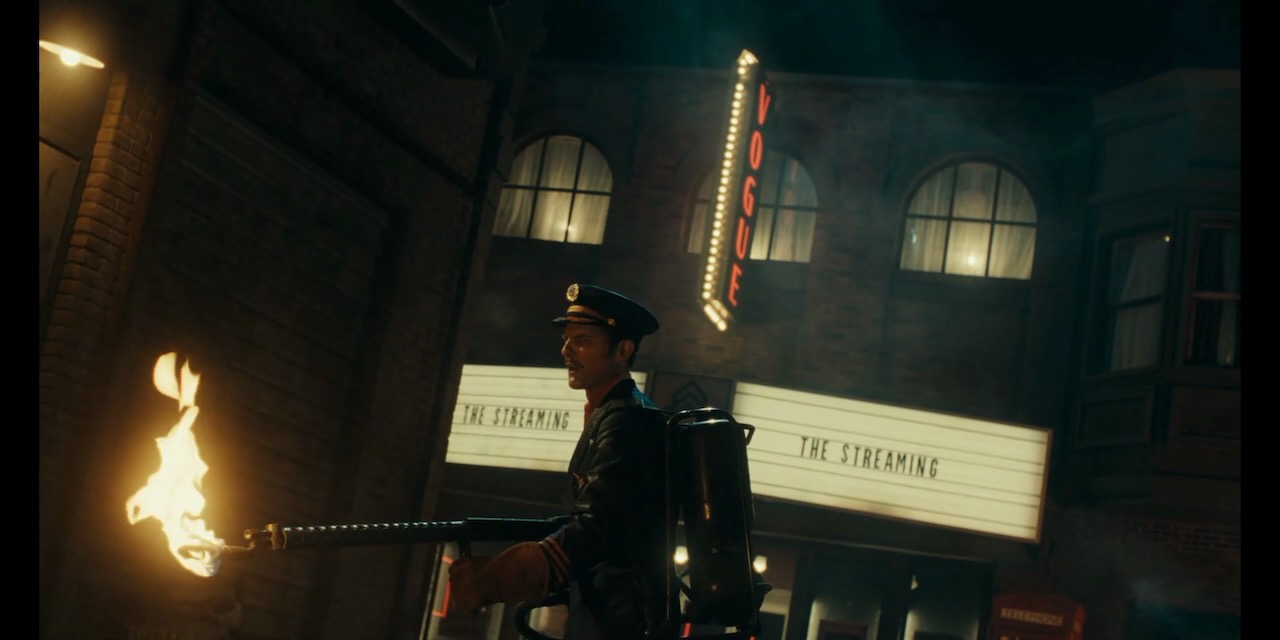
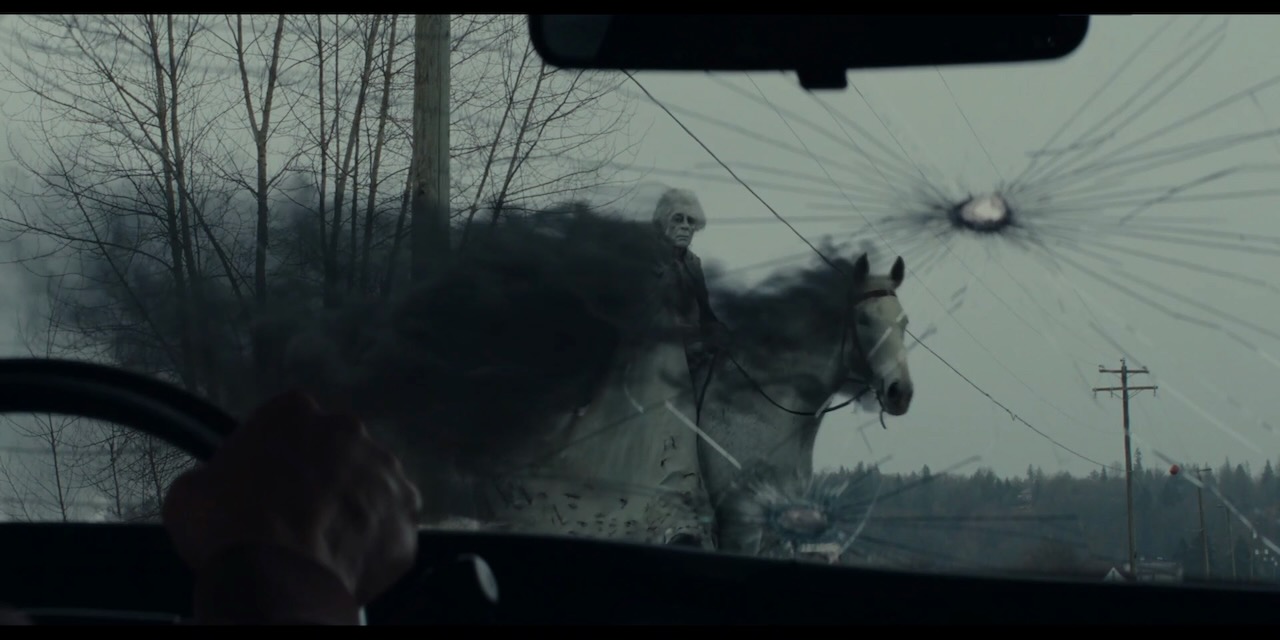
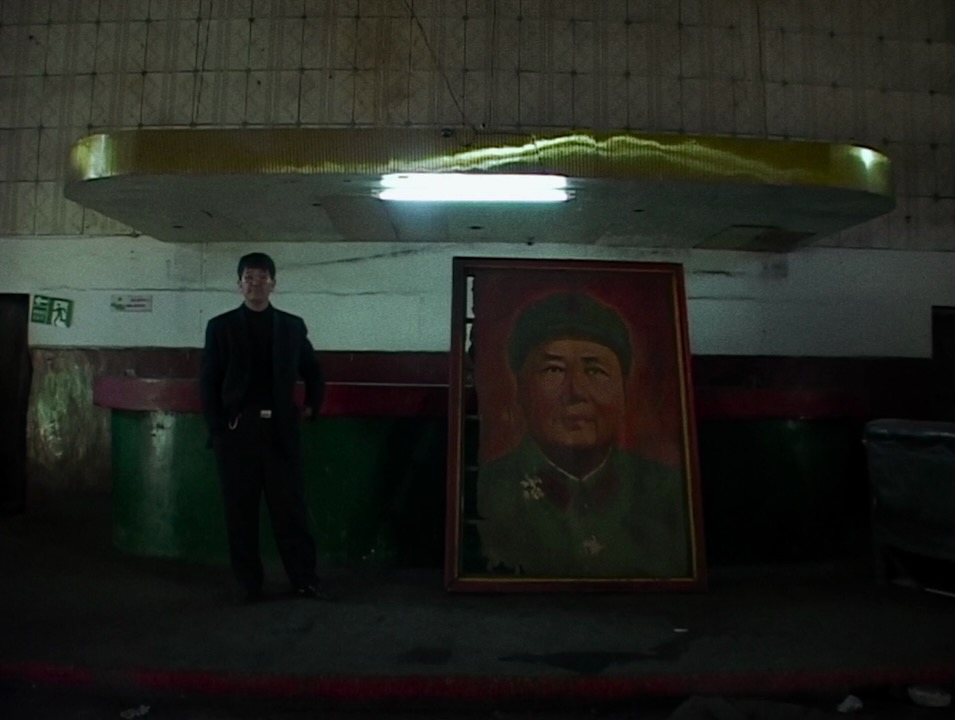
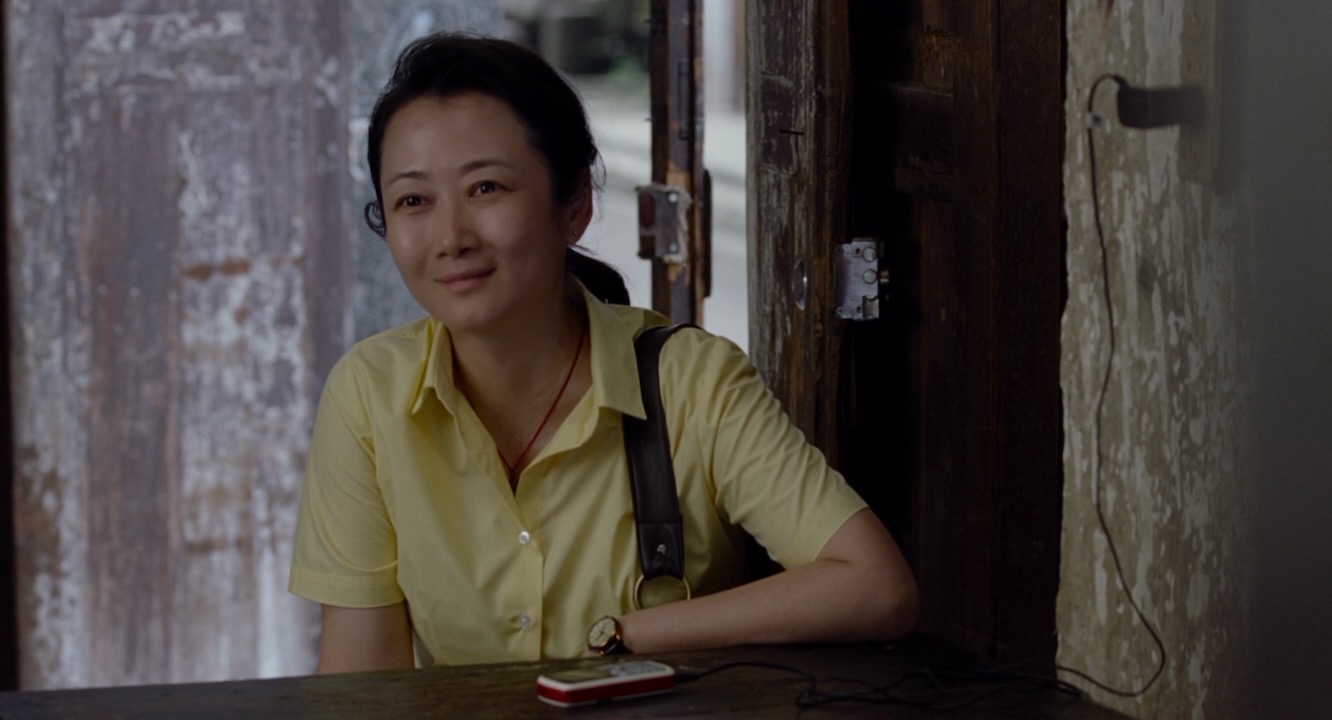
Oddball adventure movie post-Conan the Barbarian with modern slang/language, setting up a love triangle for young JJ Leigh between dim warlord Rutger Hauer and rich wannabe-scholar Tom Burlinson (title role in The Time Guardian), both of whom are dicks to her anyway. Sure it’s full of raping and pillaging, and a nun gets conked in the brain, and plague meat is catapulted over the walls, but most of the fun is in guessing Leigh’s intentions as she goes from captor to queen of the gang after they conquer a castle, earning Rutger’s respect by teaching him to eat with a fork, then trying to rescue both of her men during the final showdown.

Rutger vs. Octopus:

Untrustworthy bounty hunter Jack Thompson is in all the big Australian movies I haven’t seen (Breaker Morant, Wake in Fright, Jimmie Blacksmith), Rutger’s ex-pregnant ex-queen Susan Tyrrell specialized in weirdo comedies (Forbidden Zone, Cry-Baby, Big Top Pee-Wee). Brion James pops up a fair amount. Matt Lynch: “an incredibly skeptical story of superstition & tradition giving way to pragmatism & capital. Money, religion, love, sex, class; spoiler alert: power is power, everyone’s full of shit, survival is the only cause.”

Displaced Barbarian Queen Susan:

Brion James fate foretold:


Starship Troopers (1997)

“Oh Johnny it’s us… it’s home.” All the kids are supposedly South American but no two people can agree how to pronounce “Ibanez.” Holds up, never looks cheap, Verhoeven firing on more cylinders than on the 1985 movie. Neil Bahadur: “One gets the sense that Verhoeven took this god-awful script and flipped it without changing a word.”

Where’d these people end up? Jake “Son of Gary” Busey played murderers in The Frighteners and Contact. Dizzy was a cop in the first four Saw movies. Caspar has only ever appeared in two other movies: Sleepy Hollow and Alita, both of which are due a rewatch, and Denise was in Edmond and Wild Things, which, same. Sgt Clancy “Mr. Krabs” Brown has achieved Vaguely Recognizable status after I’ve seen him in twelve movies. Michael Ironside is so cool that I might actually watch that Bob Odenkirk revenge movie now that I know he’s in it.


Mission: Impossible III (2006)

Semi-rewatch while assembling furniture, really much better than part two if you’re not looking directly at the screen, despite tediously starting with the final showdown instead of making up a cool secondary pre-credits adventure.

I got hung up on the “Straining Towards the Limits” chapter, also covered in posts 12 and 13, where Vogel discusses the elimination of: reality, the image, the screen, the camera, the artist.

Paul Sharits:

N:O:T:H:I:N:G (1968)

Color fields flicker and fade. Would be a different experience in the front row of a screening, swallowing the colors with your eyes, but if you can see the whole frame on TV your lasting impression is Square, like a flipbook of colored post-it notes. Our only figures among the fields were titles and lightbulb, and I figured this was silent so I put on the new Animal Collective live album, but a chair appeared halfway through with a buzzer noise that was pretty much absorbed by the music.


T,O,U,C,H,I,N,G (1969)

A guy having his face clawed off in two-frame flicker-motion, the soundtrack repeating the word “destroy” – then he’s cutting off his tongue with scissors Ichi-style. The flicker motion changes speed and intensity, reds and purples prevail, and the single letters appearing on occasion spell out the title. Pretty annoying! I’m missing the point as usual by watching a good video of this at home in 2025 with an IPA instead of at an underground film screening in 1969 out of my mind on hallucinogens.


Peter Kubelka:

Arnulf Rainer (1960)

Simply square black-or-white flicker patterns with stuttering static noise. I would have proposed swapping the titles of the flicker-film (Arnulf Rainer) with the mini-doc of Arnulf Rainer (Pause!) but that’s why Kubelka had a significant influence on the European and American avant-garde and I did not. Vogel: “This is the first frame-by-frame abstraction that entirely dispenses with the image and consists solely of carefully orchestrated alternations of blank black or white frames.”

Unsere Afrikareise (1966)

Germans on safari, blasting every wild creature they see and staring at nude women, a travel doc with sound, re-edited into more interesting structure than these things usually are, but not interesting enough to make it worth watching these dudes shoot zebras and elephants.


Robert Breer:

Inner and Outer Space (1960)

I think he’s animating airplanes (over Germany) in a very abstract way, all dots and lines, bombers and skywriting. Explodes into new subjects: red ball in obstacle course, brief sketch of people on the subway. Cool one.


Horse Over Tea Kettle (1962)

Opens with a frog then introduces a whole range of objects and creatures (no horses or tea kettles that I noticed). These things will eventually fall down on the scene like rain, then fly back up into the sky. In between, everything transforms into something else, because why even work in animation unless you’re gonna transform things into something else?

Sitney:

he directly attacked the conventions of the cartoon while working within it … he transforms and moves these conventional figures within an intricate orchestration of expectations and surprises involving changes of scale, direction, virtual depth, and above all movement off the screen at all four edges

PBL 2 (1968)

The year 1968 got to Breer, who turned away from abstraction to make a one-minute two-part social issues parable, craving the oscar nomination that Windy Day got instead.


Rubber Cement (1976)

Captioned scenes of the dog playing in the yard, animated in different styles, becoming more complex and intense, with periods of strobing. Focus turns to the means of production (xerox machine and rubber cement), aircraft are introduced, the whole scene melts into pure shape and color.

Before Schwarzenegger starred in The Running Man, before Stephen King even wrote it, Schwarz’s rival Stallone starred in a better movie about a deadly future game show (based on an Ib Melchior novel). In a totalitarian USA (I cannot relate) David Carradine is a clone puppet masked hero representing the establishment, targeted by the resistance but secretly also planning to destroy the president, as belatedly revealed to his navigator/spy Simone Griffeth. Stallone is his toughest competitor Machine Gun Joe – other quickly-dispatched competitors are Mary Woronov, nazi Roberta Collins (between Caged Heat and Eaten Alive) and Martin Kove (professional Karate Kid antagonist). Most get blown up, the nazi takes a Wile E Coyote detour off a cliff.

A familiar pose:

Frankenstein kills the president and so becomes president – is that really how it works? I’m not very smart now but I was even worse in 2012, so I won’t link to my review of the remake, which is probably fine though I’m not running out to rewatch/reassess it, and we’ll see if the rumored Running Man remake comes out. Am I hallucinating, or did Eric have an Amiga game based on this movie?

Bartel is protective of his creation:

It’s Not Me (2024)

Real Godardian (complimentary)


Sans Titre (1997)

Possibly the genesis of the new film, a rare Cannes film made of short clips (magma, classic cinema, war, home movies, the in-progress Pola X) with voiceover, Leonard Cohen, Scott Walker. At least one clip of The Crowd appeared in both films.


Strangulation Blues (1980)

Mostly nighttime scenes, invisible under the low-res video murk. Collette’s occasional guy Paul comes home and everything he says is a cine-reference, then after fearing he might have strangled her in his sleep (he didn’t) Paul drives off again. I think it was mainly voiceover, but as I mentioned, I couldn’t see much.


My Last Minute (2006)

Gag video, where he types onto his computer that he’s quitting smoking, puts out the last cigarette then immediately shoots himself.


and a couple 2002 music videos he did for Carla Bruni – first a single take of her singing and playing acoustic on a couch while a guy carrying a candle stalks the next apartment over. The next one seems like it will be a single take of her walking through a cobwebby tunnel, until she stops during the guitar solo to dance with an old man who was walking the other way. Bruni is the sister of Valeria Bruni Tedeschi – these songs are from her smash hit debut album released six years before she married the president of France.

Rock Hudson’s Home Movies (1992)

Would’ve been a neat essay film about Rock’s secret gay life as interpreted through his film scenes, but a few things lost me. Putting made-up words into Rock’s voice is one thing, but why show the Rock-voice narrator onscreen, who is that guy supposed to be?


Two For The Opera Box (2021)

I prefer these 15-minute pieces – this one’s not as deep as Turhan Bey, just examining the reuse of props and sets in classic Hollywood, particularly a theater with distinctive opera boxes that showed up in different films for decades.

Decided this movie was very silly, but as death grew nearer, I upgraded(?) to “very uneven.” Opens with so-called good friends discussing their backstories for apparently the first time, all on-the-nose dialogue, real “foreign auteur working awkwardly in English” sort of stuff, then gradually accumulates a shockingly high number of The Dead quotes. Julianne Moore is a void of a character, agreeing to vacation with terminal Tilda but sneaking away with John Turturro, all three of whom are writers. I had no idea when watching some Buster Keaton the night before that they’d unwind in this movie by watching Buster Keaton. Novelist Nunez had a second movie adaptation come out the same awards season, The Friend with Naomi Watts, which hasn’t come out yet but sounds bad from early reviews.

Convict 13 (1920)

Buster goes from incompetent golfer to escaped prisoner to prison guard via costume changes. He foils a one-off super-violent prisoner and a full-scale riot using makeshift weapons. More people get killed or injured by sledgehammers in this than in any other movie. His girl is the warden’s daughter, at least until he wakes up, the whole prison stint a dozing golfer’s dream. Running down the street from a horde of cops is always funny, as is the painter/bench bit.

When you are beginning to suspect that Joe Roberts is behind you:


Hard Luck (1921)

These made a good double feature – from trying not to get hanged to trying to hang himself. Unemployed and suicidal (I cannot relate), Buster stumbles into a gig catching armadillos for the zoo. He never finds one – we get increasingly large fishes, a fox, some horse stunts, and Buster tied to a bear. As all movies must, it ends with him rescuing a woman from bandits. Pretty good shotgun shells-in-the-fire gags.


The Black Tower (1987, John Smith)

Something completely different: male narrator is haunted by a tower appearing in all different parts of the city. He tries not going outside anymore, living on snacks from the passing ice cream van, then is hospitalized, then while recovering in the country he sees the tower again, walks up and steps inside. Story starts again with a female narrator who sees the tower while visiting his grave. Calm movie with various tricks and playing around, narrating over color fields later revealed to be closeups on household objects, editing back and forth in time to make buildings re/disappear, or masking the image so passing cars are swallowed by a mid-frame tree.