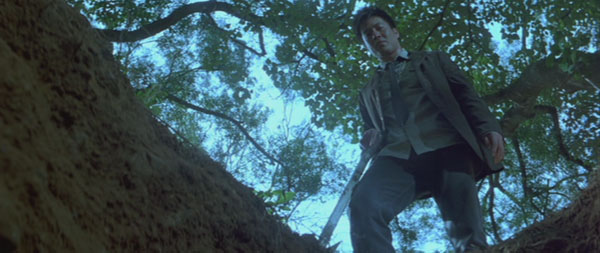
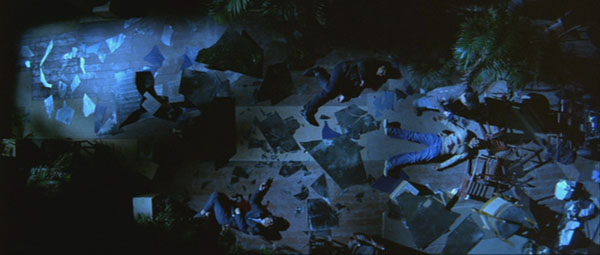
A high-quality euro-arthouse movie like Roman de gare (but probably better), more subtle than its subject matter would seem to warrant. Chabrol’s rep as the French Hitchcock is either exaggerated or based on his movies that I haven’t watched yet, because this and L’Enfer and Le Beau Serge aren’t so Hitchcockian.

Gabrielle (Ludivine Sagnier of Love Songs and 8 Women) falls for rich old guy Charles (François Berléand of the Transporter trilogy and Au revoir les enfants). Charles has an unexplained antagonistic relationship with young flamboyant rich guy Paul (Benoît Magimel, the young lover in The Piano Teacher). Paul falls for Gabrielle and wants to marry her, take her away from Charles.

Paul looks dangerous; is dangerous
image

This isn’t all happening at once like the trailer implies, though. First G. has a long impassioned affair with lying, married, sexually deviant Charles, who often acts cold towards her and pretends he doesn’t want her anymore. Girls love that, so she keeps coming back. Then after he’s left her for good and she’s super-heartbroken, she finally agrees to go out with Paul, who arrives screaming with crazy hair, all Written on the Wind, being held in check by his chauffeur. He cleans up his act so G. will go out with him, but sometimes he loses it and tries to strangle her. Girls love that, so she keeps coming back, and a year later they get married. Then at a ball, Paul shoots Charles to death, goes to jail, and disowns Gabrielle, who goes on to act as the beautiful assistant that gets cut in half in her uncle’s magic show.

I liked, but didn’t love it. Fun ending, great acting. I thought Caroline Sihol as Paul’s mom looked familiar, but I haven’t seen anything else she’s been in (some Truffaut and Resnais and La Vie en rose). Based on a true story in 1906 New York, but transplanted to modern Europe. Movie contains a conspicuous mention of Woody Allen, who himself is from early-1900’s New York and transplanted to modern Europe.

Gabrielle with peacock tail (washed-out color courtesy of online trailer)
image

There’s no shortage of online reviews for this… I liked best the one by K. Mitsuda in Reverse Shot:

Serving as both subject and object, Gabrielle is a deliberately confusing amalgam of striking dualities. […] The appeal Gabrielle holds for Charles and Paul in particular is symbolized in the shorthand of her last name: Snow. Attracted foremost to her youth and naivete – signifiers of virtue – the competing suitors often affectionately describe her as either “innocent” or an “angel.” […] Chabrol ingeniously suggests that the inability of the men to accept her complexity results in a reductive worldview that inexorably leads to a violent ending.

And S. Tobias:

The film takes the form of a thriller, but it doesn’t have the pace of one. Still, all that careful, deliberate table-setting allows Chabrol to establish the complex dynamic between the three characters and underline the role that money and privilege plays in sabotaging Sagnier’s life.

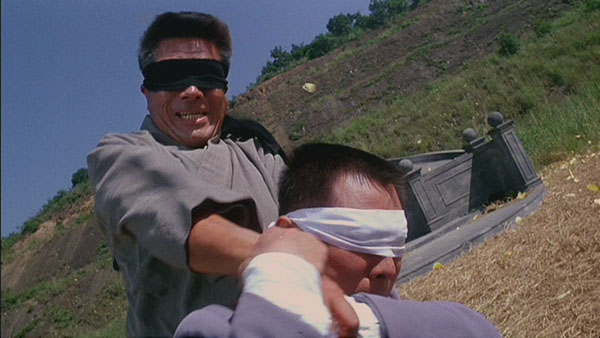
AKA The Ordeal. A single young dude, Marc Stevens, is a traveling, singing showman for old folks’ homes. His van breaks down somewhere (movie was shot in Belgium, France and/or Luxembourg) and he stays with Bartel, the Paul Giamatti-looking innkeeper. But Bart is way crazy, destroys Marc’s van, dresses Marc up as his ex-wife Gloria and threatens bloody revenge if “she” ever runs off again. Marc runs off, gets caught by villagers (sharing the delusion that Marc is Gloria) who rape him, gets re-caught by Marc who crucifies him, escapes again and gets his leg caught in an animal trap, and so on. It’s tough going for Marc until the townsfolk attack Bartel’s place and Bart is killed by a just-as-crazy Malcolm McDowell-looking guy. Marc runs off, pursued by Malcolm who sinks into the swamp. The end, although Marc is far from safe and sound, all hurt and hungry in a swamp with villagers possibly still looking for him. Also, as a side-suspense, a man named Boris is looking for his dog.

Marc watches Malcolm drown
image

This one goes less for sustained tension/suspense than Them did, more for bizarre WTF-horror. It’s an ugly, somewhat effective little film… good enough that I could give his next movie, another rural-horror starring Emmanuelle Béart and Rufus Sewell, a shot. No music except for a piano tune played during a Bartel’s visit to a Bela Tarr tavern. I guess the message here is “don’t stray outside the city and get lost in rural areas”, a message that has been well hammered home by previous horror movies.

Bartel seems like a nice guy deep down
image

Laurent Lucas, who did a fine job as terrorized Marc (except that when he’s most afraid, he kinda looks like he’s drunkenly grinning) was in mysterious films Pola X and In My Skin. Boris, who finally finds his dog, was in Luc Besson’s Taxi 4 last year. The dangerously deluded innkeeper appeared in Olivier Assayas’s Cold Water. And the cinematographer shot suspense films Joshua, Day Night Day Night and Irreversible.

Interviewer: “How do you think female viewers will react to Calvaire?”
Director: “Well, I realise my film could go over badly, even very badly. Though personally, I really think the film is feminist. It is a brutal work, like Deliverance or Straw Dogs, for example.”

WTF
image

Andy: “Since the early 1960s, Nathaniel Dorsky has been one of the great practitioners of meditative cinema. Projected at the non-standard rate of eighteen frames per second (which he refers to as ‘sacred speed’), Dorsky’s films are an explicit invitation to increase our awareness of moment-to-moment existence and experience a sense of reverence for the visual world.”

Nice program with perfect-quality 16mm prints of four silent twenty-minute shorts. Gotta remember to attend all of Andy’s screenings from now on.

Alaya (1987)
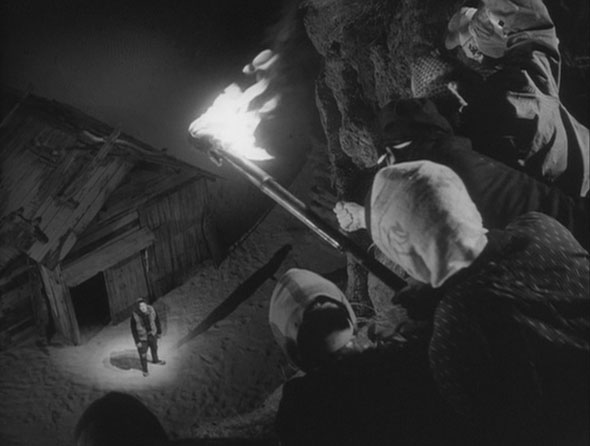
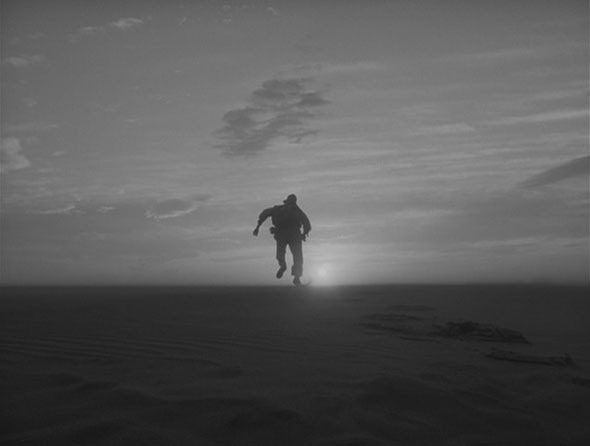
The first one was just shots of sand. Just sand (one special appearance by an insect). No camera movement, but the sand is always moving, blowing in the wind. Goes from wide, wide shots of a huge desert (Death Valley) to extreme super-closeups, the sand crystals looking like boulders on the screen (but boulders that flit about in the breeze). An intensely beautiful movie, my favorite of the bunch.

Triste (1996)
Variations (1998)
The next two were similar to each other, and reminded me of Warren Sonbert (though I couldn’t remember Sonbert’s name until Andy announced that they reminded him of Warren Sonbert). Shots of varying length (8-45 seconds), extremely well-composed, of almost anything Dorsky came across: people, nature, the city. Second one was more exciting, with more quick bursts of shorter shots, and seemed to have a visual theme of seeing, looking, through glass and mirrors. Halfway through the first film the ceiling fan stopped making its rhythmic knocking sound which had made me think of the editing sounds in Zorns Lemma, so I had to imagine my own soundtrack (’twas TV On The Radio for a while). Fun and difficult to try to figure out relations between the shots while watching.

The Visitation (2002)
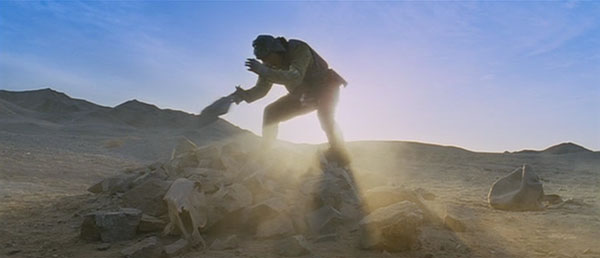
Then came a discussion, during which Andy talked about film stocks (these were all made on a Bolex, just like Sonbert) and mentioned that of course the second movie was called Triste, which means “sad”, which is why it felt like a lull, edit-wise, between exciting films. There’s all this hidden meaning in these films which the simple likes of ourselves can never understand. I don’t like being made to feel stupid by avant-garde filmmakers so I was determined to assign meaning to every last shot in the bonus fourth movie The Visitation, and I succeeded easily. Visitation = alien invasion. Lots of shots of light from above, and representations of alien bodies (mostly tentacles, via cords and long plant leaves). Aliens have many eyes – we see the eyes, and their view of our world. Ends with a gorgeous shot representing their planetary invasion, two low waves approaching each other over sand, the alien wave easily covering the human wave, but the human wave slowly fighting back at the end, regaining victory. A lot like War of the Worlds.

“A gradual unfolding, an arrival so to speak. I felt the necessity to describe an occurrence, not one specifically of time and place, but one of revelation in one’s own psyche.” -N.D.

The “stars” are Ashley Judd (Frida, Heat) as a hopeless burnout and Harry Connick Jr. (Excess Baggage, Mad About The Mouse) as her abusive ex just out of jail, but the star performance here is by Michael Shannon as a single dude who shows up one day wanting to be Ashley’s friend and ending up in bed with her.

right: H.C. Jr.
image

That’s when the part I knew from the trailer kicks in… new dude (Peter) sees bugs. They are in the hotel room, in the air and under their skin. He watches ’em with a kids’ microscope, sprays the place constantly and talks about the secret government project that unleashed the bugs upon him, while Ashley confides about her missing son and bad husband, and clings more and more to Peter.

Turns out there are (probably) no bugs – Peter is a bug-crazy paranoid lunatic, and Ashley is so love-desperate she starts to see what he sees. At the end after Peter knifes his doctor who comes to talk sense into him, he easily convinces Ashley they should set themselves on fire.

Doctor threatened with knife! Peter all bloody! Walls covered in tinfoil!
image

Movie looks real good. Not particularly tense or scary, but the crazy, oh there is so much good crazy. Camera stays on our heroes, gets shaky and blue when Peter hallucinates helicopter-spies. Based on a play – no surprise there, given the movie’s single location (not counting a few flashbacks). As for Friedkin, he made French Connection, Exorcist, then ten+ movies that everyone’s either forgotten or wish they had forgotten. This is a good adaptation, an exciting movie, but nobody oughtta claim the Second Coming of Freidkin unless he pulls it off again.

Ashley’s head hurts from looking at imaginary bugs
image

Based on the story of the Texas woman who hit a homeless man who wedged, still alive, in her windshield and instead of helping him she parked in the garage and let him die over a period of a few days, then went to jail when the story broke. Only now, in Stuart Gordon’s hands, the man escapes from the car and gets his bloody revenge! I had high hopes, and this movie did not let me down.

Seconds before the accident
image

Mena Suvari (the object of desire in American Beauty) is a partying nurse at an old folks’ home with a cheating drug-dealer boyfriend (Russell Hornsby of Edmond) and a horrible, manipulative boss (Carolyn Purdy-Gordon in her eighth S.G. picture). Stephen Rae (V For Vendetta and every Neil Jordan movie) is a hard-luck dude who can’t get a job and just got kicked out of his apartment. Anyone watching this has seen the film poster or video box and knows what’s coming when Rae is looking for a place to sleep at 3AM while Mena is driving home alone on liquor and ecstacy.

There’s some web-controvery over Mena’s cornrows – apparently the true-story driver was black, so why not cast a black actress?
image

But instead of turning this into a David Mamet psychological drama with our two characters conversing in the garage, Gordon expands the part of the original story that horrified people, which is not the accident but the fact that she did not try to help him, the lack of compassion. He spreads that lack of compassion Edmond-like across the city, showing all the people who could have helped poor Rae but did not: a cop who wouldn’t turn around and look at the car, the 911 operator who doesn’t try too hard to locate the garage (Jeffrey Combs audio-cameo), the next-door neighbors who wouldn’t get involved for fear of cops showing up and deporting them, the dude whose dog comes out of the garage covered in blood but he only worries about his clothes getting dirty, and of course the landlord and the employment-agency drone who help Rae into this position in the first place. But most of all we’ve got the woman from the newspaper story herself, who looked a dying man in the eye and opted not to help him. This is portrayed not just by Mena Suvari, who hits Rae with a plank of wood to shut him up and finally tries to burn her garage down to cover up the crime, but by her boyfriend, sent to assassinate Rae after getting challenged on his tough-talking, ending up defeated by a ballpoint pen to the eye. Gordon’s brand of horror is going in an intriguing new direction, keeping the suspense and the outrageousness and applying them to real-life situations, like the urban crime-horror of early Abel Ferrara.

He actually doesn’t drop the match – the girl lights her own stupid self on fire
image

Unusually great acting for a Stuart Gordon picture – I especially liked Russell Hornsby as the awful boyfriend, always trying to cover his ass, a perfect match for Suvari’s character. Plenty of gory bits – a windshield wiper in Rae’s side, the ballpoint pen, a broken leg with a bone sticking out, and the dog, oh jesus the dog! I tried to get Katy to watch this with me, but it’s a good thing she didn’t.

Russell finally offers to smother the dude with a pillow
image

Gordon: “that’s the world we are living in now. People are very selfish and afraid.”

Speaking of selfishness, the DVD is missing ten minutes of the movie and has no special features, so it’s sort of an anti-special-edition DVD. That is no fun.

Purdy-Gordon with co-worker Tanya
image

This year, directors Dave & Xave helmed the Jessica Alba remake of The Eye, so it’s only fitting that a few months later their own movie got a Hollywood remake starring Liv Tyler. The Strangers also reportedly contains traces of Funny Games, a movie that remade itself, so it’s best to stay away from that whole mess.

Bound by love… separated by chainlink fence
image

Producer Richard Grandpierre (Brotherhood of the Wolf) thinks he’s quite important, pastes his name all over the credits. Movie spends a lot of time setting up that its loving French couple (who have just moved to rural Romania) love each other. They are a teacher (Olivia Bonamy of La Captive) and a writer (Michael Cohen of Lelouch’s Les Mis) and they love each other. They feed the dog. They watch TV. Then, a half-hour in, their car disappears and people come in the middle of the night terrorizing them in their house. A couple of these “strangers” get hurt, possibly killed, but finally our loving couple is lost in the woods, led into the sewers, and wiped out by… children! Twist, they are children!

OMG they are children!
image

Everything is handheld shaky-cam, of course, to give us the proper sense of intimate urgency a la Blair Witch. The dude is pretty ineffectual, hurting himself early on, but the girl is our pseudo-survivor character, all tough and good-looking under pressure. Character/story-wise I preferred American horror The Descent, which this occasionally reminded me of, but Them def. had me jumping in the dark. Manages to sustain its suspense much better than most movies of this type, so even though nothing of interest is ever happening, it’s tense as all hell (and with good sound/effects). Guess that’s all you can ask.

Soon as she started crawling through a dark tunnel with a bright light at the end and I saw the distance was out-of-focus, I knew this would happen.
image

“Dario? Mr. Argento? Is anyone there?”
image

OMG I totally forgot I watched this until Katy mentioned it today at dinner. Had Shocktober on the mind, I guess. So yeah, there were two new movies playing that I badly wanted to see, couldn’t decide between them, so Katy decided we’d see this instead. A harmless flick about being super-fuckin-cool kids in New York City. See, they don’t seem cool – the Michael-Cera-talkin’ nervous kid (aptly played by Michael Cera) and the shy girl who everyone uses because of her famous dad – but they are cool because they’ve got their own scene and they totally dig each other and they like the same music.

Music: the movie’s got music on the brain. Nick’s in a band and makes killer mix CDs, Norah (Kat Dennings, principal’s daughter in Charlie Bartlett) likes his band, and her dad owns Electric Lady Studios… but we see about a minute of live rock ‘n’ roll, and all the other music we hear is way in the background. Juno showcased music much better than this movie did. So we turn instead to plot, and it’s alright, a long night in the city during which N&N get together, part, then get together again. And there’s a drunk friend, two gay dudes with a van, an awful ex-girlfriend (Lolita from Broken Flowers!), an ex-boyfriend, a very drunk friend who gets lost (she was in Game 6 – anyone remember Game 6?) and a cameo by John Cho (and I didn’t recognize Devendra Banhart). Katy liked it despite the vomiting and the long-lasting chewing-gum running joke.

I had to interrupt this movie the first night I watched it, and I finished it the next night. In between, I was at Acapella and picked up the book on K.K. by Jerry White and flipped to the back, where he calls this movie an utter failure of storytelling. I didn’t read any more, wanted no spoilers, but I hope White at least found something to like about this one, if not the story, because I liked it quite a lot, and thought it was better than Kurosawa’s follow-up Retribution.

Starring Miki Nakatani of the Ring series and Chaos, title star of Memories of Matsuko
image

It’s similar to Retribution… a ghost-revenge story with only a few characters set in old, run-down buildings with sudden shocks and supernatural occurrences in broad daylight. Atmosphere and cinematography (by the same guy as Retribution) are ace. Movie is horror, but it doesn’t seem to know that it’s horror. As with all of Kurosawa’s movies, the genre cliches aren’t there, the music and camera and lighting and characters don’t do what you’d expect. They do get panicked and frightened, but they’ll also walk knowingly into danger and stare at the ghosts, looking slightly sad or tired, not necessarily afraid. Very cool movie, not one of Kurosawa’s very best but it’s got me looking forward to Tokyo Sonata again.

At right, Reiko’s book editor Hidetoshi Nishijima, star of License to Live, Bug House and Kitano’s Dolls
image

The story is a little baffling, but KK also wrote Charisma, so baffling ain’t unusual. Reiko’s editor gets her a quiet place in the country where she can write her next book. She meets her neighbor Yoshioka, a university professor with a 1000-year-old mummy (which moves by itself occasionally) in his room. The professor isn’t sure if this is the same mummy that was dug up 80 years ago, but he watches a time-lapse film of that previous mummy just to confuse us a little more. We’re not sure if he’s dangerous or just a crappy professor, but he seems nice enough to Reiko.

The anthropologist is Etsushi Toyokawa of The Great Yokai War and Boiling Point
image

Besides the mummy moving about, Reiko is being haunted by the ghost of a young girl. Graves are dug, bodies are carried around, a foggy pier is discovered, Reiko is vomiting black mud (this was happening before she even moved into the house) and somehow Reiko gets her book written. Her editor shows up and terrorizes her for no clear purpose until it turns out he rented the same place to a previous writer (the young ghost-girl) and murdered her. Reiko would be next but the cops bust him just in time. She burns her book and Yoshioka burns the mummy. Then they go for a walk to the foggy pier, where the ghost knocks Yoshioka into the swampy water for some reason!

Spooky loft
image

The ghost/girl isn’t in every scene, she’s just somehow in all of my captures
image

I’d heard this was a sequel to Suicide Circle, so I assumed it was a horror movie. A natural assumption, since Suicide Circle is very much a horror movie. But by no means is this a horror movie, nor is it any good at all, and it is almost three hours long, which means I could have watched two short, good horror movies instead of this one. Tragedy!

Lots of steadicam, with the low-budget video look of MPD Psycho. First hour is a bunch of teen girl crap, with Noriko getting tired of her family and wishing she was as accepted in real life as she is online, where her screen name is Mitsuko. The online community is related to the Suicide Circle cult (it’s the website with the colored dots), but besides a couple flashbacks to the intro train scene of that movie, some “Desert” posters on a wall and some dodgy explanations at the end by a group member, there’s no real mention of the events of the other movie. Instead, we are presented with a wholly different view on Sion Sono’s ideas of group and individual identity, life and death, and the social problems of modern Japan. Maybe it’s deep if you think about it long enough, but it doesn’t make for a very interesting movie, with its amateurish cinematography, excessive length and dull repetitive voiceovers about the boring family problems of teen girls.

Happier times. But WERE they really happy? Are the kids smiling? ARE THEY?
image

So, right, Noriko/Mitsuko runs away and meets her online buddy Ueno Station 54 (named after a locker full of junk she found). That’s #54, as in the 54 kids who jumped from the train station… you can look for explanations all day long, but it’s not gonna solve anything. Noriko’s sister Yuka runs away a few months later, changes her name to Yoko, and the sisters meet up in the city. With US54 they work for a family-rental business pretending to be family members of lonely people for an hourly fee. Meanwhile, their real parents are crazy with grief over their disappeared daughters, and after a year the mother kills herself so the father (Ken Mitsuishi of The Pillow Book, Chaos, Eureka, Audition, Invisible Waves) starts combing their rooms for clues and finally comes to the city to find them.

Death is no big thing in Japan
image

All is well in the family rental business. Sometimes a client kills a “family member”, as above, but there’s Kumiko/US54 on the left taking his money as if nothing special has happened. The dad gets a friend to help, moves all his stuff from the old house and sets up a new place just like it, then gets the three girls to come over, climactically bursts out of a closet and… stands there like a damned fool. Um, some cult dudes show up and pummel the friend, but dad kills ’em all with a knife. Finally the girls somewhat snap out of it, and go oh yeah it’s our dad. I think Noriko runs away again at the end. I’m probably forgetting something, but whatever.

Separated by sun
image

Hints:
– the suicides kept going after the last movie ended… they did not stop with Dessert’s final performance.
– “What about the suicide club – it’s the result of Kumiko’s grudge, right?”
– “The world is the suicide club, with far more suicides than our circle.”
– “Being close to death gives living value”
– Dad is told by a club dude at a diner: “Feel the desert. Survive the desert. That’s your role.” Get it – Desert? Dessert? Get it?? Phthhhht!

What, no floss?
image

If this was better lit you’d see “Kiyoshi Kurosawa wuz here” on the windowframe
image