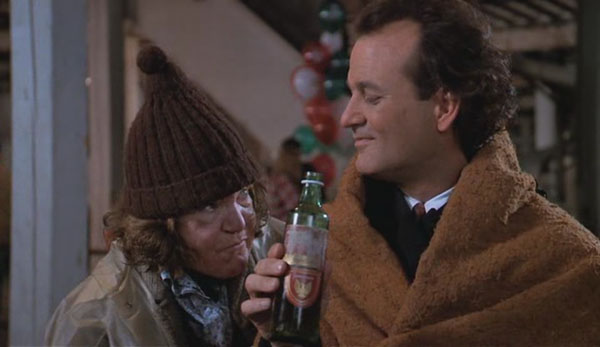
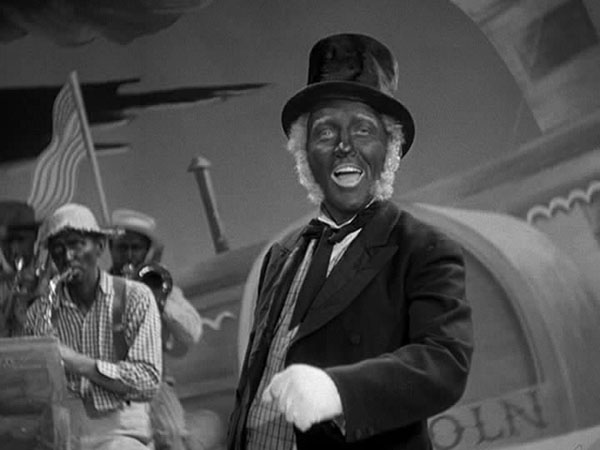
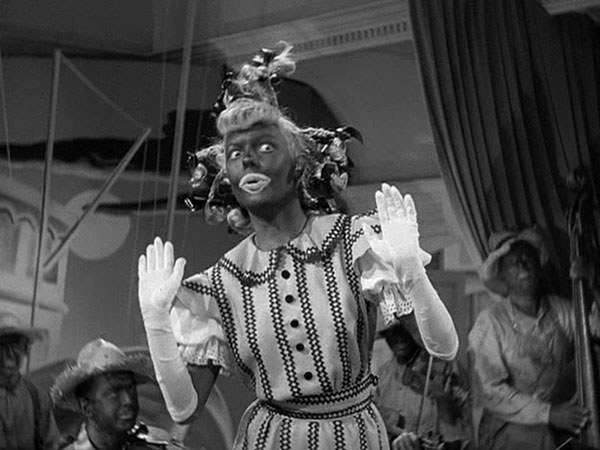
As Katy said, it’s like a whole new season packed into 2.5 hours. I liked the mexican vacation / food poisoning episode, and the Christmas one where Carrie watches Meet Me In St. Louis, but the others were ehhh. Not any better or worse than sitting down with the series for that long. Of course this means that the S&TC Movie is less damaging to the S&TC legacy than the new Indiana Jones movie is to its own series legacy. Jennifer Hudson was shoehorned into the plot, so now I’ve seen half of her movies.

image

The always-fascinating adventures of Big Edie and Little Edie. I’d picked it as a must-see for our short-lived Documentary Month, then decided there was no time to waste since there’s a fictionalized version with Drew Barrymore and Jessica Lange later coming out this year. Katy liked it, I think, or at least we talked about it a lot. I love how Little Edie draws the Maysles into her arguments, flirts with them, tries to knock them over…

image

Listened to the commentary at work. Albert Maysles says when they were done editing, the first people they showed the film to were the Beales… they took it to the house and set up a screening in a room of the house they’d never been in before. After the movie ended, a long silence while little Edie paced the floor, then she looked up and announced “The Maysles have created a classic.”

image

The beginning of cinema verite, and the beginning of the most celebrated documentarian’s ongoing project to film America’s cultural institutions seemed like a fine place to start Documentary Month.

Movie is just what we thought it’d be, an unflinching look inside a Massachusetts state prison for the criminally insane. We see the inmates’ terrible conditions, their shower and recreation facilities, harassment from the guards. One inmate rebels against his circumstances (leading to force-feeding and death), another lucidly argues to whoever will listen that he doesn’t belong here and that the place is doing him harm. No wonder the state of Mass got hysterical when they saw what Wiseman had exposed, suing him to prevent the movie’s release while hurriedly renovating their prison system to address the imminent protests.

Worth watching for Shakespearian legend John Barrymore alone. He plays a stage director who is a huge drama queen himself, with wild hair to match. After an idiosyncratic casting session, he picks an inexperienced girl (Carole Lombard, later oscar-nom for My Man Godfrey, star of Mr. & Mrs. Smith and To Be or Not To Be) to be his new star and gives her a new name: Lily Garland. He directs the hell of her, telling her exactly where to move and what to do, and she obeys. Next thing you know, she’s the biggest star on Broadway, more famous than her still-celebrated director, and the two now have equally huge egos. Angry at him for being controlling, she sets off on her own, and he tries to create a new star to replace her, but fails hugely, and now he’s running from creditors and she’s starring in Hollywood films.

All that happens in the first half of a 90-minute movie. Then the two find themselves on the same train (the Twentieth Century, duh) headed back to New York and it gets crazy and I start forgetting plot details. She’s with her straight and proper boyfriend (where in Hollywood did she find him?) who is jealous of her former relationship with Barrymore. There’s a short man plastering “Repent!” stickers all over the train and gleefully writing bad checks for huge sums to everyone on board, including one to JB to stage the passion play with Lily Garland as Magdalene. Barrymore’s assistants (a publicist and a stage manager, I think) keep threatening to quit then rejoining JB’s schemes. It all works out in the end.

Hawks is said to have invented the screwball comedy with this one. Writers included Ben Hecht of His Girl Friday fame, and rumored help by Preston Sturges.

Watched in Boston instead of ponying up for pay-per-view. Katy liked it pretty well.

Carole Lombard is sad:
image

John Barrymore gives the conductor hell:
image

Left: Walter Connolly, playing Barrymore’s ever-faithful assistant. Right: the faux-rich, “repent now” loony played by Etienne Girardot. Both of these actors, along with stars Barrymore and Lombard, would be dead within ten years.
image

Kick-fight!
image

Commandment I: I Am the Lord Thy God

image

Boy lives alone with his father. They love (erm, “worship”?) their all-knowing computer, which calculates that the ice outside is thick enough to skate on. Kid’s aunt thinks the kid should have a more spiritual education, but dad disagrees because science and computers are where it’s at. Needless to say, the ice was not thick enough to skate on.

Sad, cold, dreary, dark episode, opens with a sad man sitting in front of a fire by the lake. DVD extras say that we’ll see him again. Starts/ends with the aunt watching TV news broadcast showing the kid running through school hallway with other kids a few days before the ice incident. Maybe this was a fine episode to begin the series theatrically, when you’re sitting wondering what’s coming next, but on DVD, I was bummed by this one (and by the circumstances of trying to watch it) so it took over a month before I made it to part 2.

The sad man acted in Kieslowski’s No End. The kid is my age, appeared in Schindler’s List.

image

———————————-

Commandment II: Thou Shalt Not Take the Name of Thy Lord God in Vain

image

Sad woman’s husband is deathly sick, is neighbor to sad doctor whose family died in bombing years ago. Doctor does his best, but it’s not looking good for husband. Thing is, wife needs to know if he will live or die, because she’s pregnant from another man and wants to know whether to keep the baby.

The episode might’ve seemed grim and dreary if it hadn’t followed the dead-child segment. Both were pretty affecting, but this one sucked me right in. Kind of a soapy sounding plot, but Kieslowski obviously not a soapy director, so it works. Doctor warms up to the wife, finally tells her the husband will almost certainly die, she phones boyfriend and breaks up with him (more or less) but keeps the baby and stays with the husband, who improves against all odds. Lot of close-ups, more dead animals and warm clothes, no sign of the sad man by the lake who introduced the series.

The doctor (above) played lawyers in both White and No End. The woman (below) starred in Wajda’s Man of Iron and in something called Life as a Fatal Sexually Transmitted Disease.

image

———————————-
Commandment III: Honor the Sabbath Day

image

Cab driver’s ex shows up on Christmas eve and leads him on a wild goose chase, supposedly looking for her missing husband. In fact, her man left three years ago, and she is so lonely over the holidays that she tricks her ex into spending time with her. He catches on to some of the lies, maybe all of them, but he comes along anyway and returns to his own wife at daybreak.

A weird one, all deception with little truth about the background of these two and their former relationship… unless their past was mostly deception. I liked it, but not one of my favorites.

The woman is from No End. The cab driver appeared in The Unbearable Lightness of Being, currently a soap opera star.

image

———————————-
Commandment IV: Honor Thy Father and Mother

image

When Anka’s dad Michal goes out of town, she opens a letter marked “to be opened after my death.” Dad comes home and she shows him the sealed letter inside, in her dead mother’s handwriting, telling Anka that Michal is not her real father. Anka says that she’s always felt this to be true, and suggests they could be lovers instead of father and daughter. He doesn’t go for it… but Anka is toying with him, having written the letter herself and never opened the real letter (although the real letter very likely says the same thing).

Oh good, a real crazy one. Was Anka serious about any of it or was she only trying to expose her father? I liked it, though I started pondering alternate titles for the Decalogue and came up with Sad People Telling Secrets & Lies In The Dark. Sums up the last three pretty well. Our mysterious young man makes an appearance, carrying a white canoe.

The “father” was third-billed in Kieslowski’s White.

image

———————————-
Commandment V: Thou Shalt Not Kill

image

An antisocial youth, an antisocial taxi-driver and an idealistic young defense lawyer collide Crash-style. Youth is tired of dropping rocks off overpasses, damaging property and pushing men into urinals, decides to kill a taxi driver. Gets sent through the justice system, where our lawyer passionately but unsuccessfully defends him, finally hangs for his crime.

Good story, one of the more obvious and political ones. I mean, thou shalt not kill, you know? The sad young man shows up right before the murder, giving our antisocial youth a pleading look. I’d kinda prefer if this guy was obliviously walking through all ten tales, rather than acting like a helpless Wim Wenders angel all the time.

The cinematographer Slawomir Idziak (who had worked with Kieslowski before on The Scar) went hog wild on this one, filming the whole first half in sepia tones with encroaching shadows around the edges. It worked out well for him – he was hired back for the gorgeous Double Life of Veronique and Blue, and later did Gattaca, Black Hawk Down and the latest Harry Potter.

The beginning of the young lawyer and criminal’s acting careers, but veteran actor Jan Tesarz (the murdered taxi driver) went on to appear with Bruce Willis and Colin Farrell in Hart’s War. I recognized the woman with the dying husband from episode 2 as a would-be customer from whom the taxi driver speeds away.

They arrested the wrong guy for the murder! Check out the white chalk “M” on the shoulder of the guard at Jacek’s right arm:
image

———————————-
Commandment VI: Thou Shalt Not Commit Adultery

image

A more conventionally shot episode, a voyeur movie that watches us watch it. Tomek, who lives with his “godmother” (his absent best friend’s mom) spies on Magda through a telescope every night, and stalks her in various other ways. She either warms up to the idea or decides to fuck with him, I haven’t figured which, and gets him over to her place one night for just a few minutes… after which he runs home and tries to kill himself. She is crazy with worry, finally he resurfaces and I guess he has gotten over her.

Extended version, A Short Film About Love, apparently has a different ending. This episode and the previous one (which also has an extended theatrical version) were both letterboxed.

Magda starred in No End, Tomek was Kieslowski’s assistant director on half the Decalogue episodes, and the godmother died in April ’88 – this was her last role.

image

———————————-
Commandment VII: Thou Shalt Not Steal

image

Lot of close-ups in this one. Young mother Majka and daughter Ania live with Majka’s mother Ewa (Anna Polony) and father (Wladyslaw Kowalski, star of that ugly live-cartoon movie Avalon). Elder Ewa treats little Ania as if she was daughter, not granddaughter, and Ania doesn’t even know Majka is her real mother. Majka solves this by kidnapping her own six-yr-old daughter during an outing and running away to the house of her former lover & high school teacher, now a teddy bear maker, giving it a sort of fairy-tale edge from the kid’s perspective. In the end Ewa gets the kid back but Majka flees on a train, and we’re left wondering where the kid really belongs, and whether Majka somewhat succeeded by convincing the kid that she is the real mother.

I liked. Same kind of morally questionable situation as parts two and five, but without the sour death tone hanging over it. If I ever get around to showing Katy a Decalogue episode, this would be a good starting point. Most of it takes place away from the apartment complex, and I didn’t see our Observer or anyone from another episode.

image

———————————-
Commandment VIII: Thou Shalt Not Bear False Witness

image

“Why do some rescue others, while others can only be rescued?”

Opens with a memory/flashback. Not showy camerawork, some handheld, a few intense close-ups. Zbigniew Preisner’s musical style is easy to recognize. Listened to hours of his soundtracks between the last episode and this one. A very good episode.

Old woman Zofia (Maria Koscialkowska, above, appeared in famous unfinished Polish film Passenger 25 years earlier) keeps herself in shape while everything around her is falling apart – pictures won’t hang straight, lights won’t stay on and car sounds like it’s always on the verge of dying. Zofia teaches a college course on ethics, featuring an extended reference to episode two (“I can tell you that the child lives”), where she is visited by middle-aged interloper Elizabeth (Teresa Marczewska, below). E. claims that as a young Jewish girl during WWII, she came to Z.’s house for protection and was turned away. Later she studied Z. from afar, wrote books about her, but wants to know why. Turns out there was some bad info about the people with E. being nazi collaborators and Z. couldn’t risk it. The women seem to trust each other now, but there’s a shady, uneasy tone to the episode, somewhat lightened when Z. comes across a friendly contortionist during a jog. At the end, Z. takes E. to a man who did help her during the war, now a tailor (Tadeusz Lomnicki, narrated Passenger and appeared in Blind Chance and Man of Marble) but he won’t talk about the old days.

image

———————————-
Commandment IX: Thou Shalt Not Covet Thy Neighbor’s Wife

image

And now it’s the actual music from Blue, with heavy references to Double Life of Veronique in the story. A girl tells the surgeon “I’m not allowed to sing because my heart wouldn’t stand it” then recommends him some Von Den Budenmayer and adds “I know I’m someone else.” Cinematographer uses lots of light in almost every scene, a Decalogue rarity. Some lovely shots. Same cinematographer as part 3, later shot Red, then some random Hollywood stuff before his early death in 2001.

After former philanderer Roman learns he is impotent, he allows his wife to have affairs, but then becomes jealous and regretful. Roman hides, spies, believes that she loves the younger man more, when in fact she’s trying to get rid of him to stay with her husband. When she goes on a ski trip and Roman finds out the younger man is following her, he attempts suicide by bicycle, but survives for a tearful hospital reunion (and btw, he’s not impotent after all). Played a lot better than it sounds from my description.

image

———————————-
Commandment X: Thou Shalt Not Covet Thy Neighbor’s Goods

image

Involves death, robbery and deception, and does not end well for our heroes, but it seems lighthearted in comparison to the others, full of dark humor. One of the least believable of the series, which adds to the humor… these guys don’t quite seem real, so their loss isn’t as sad as it might be. Had the degree of obsession they show at the end (studying new stamps they bought for a few cents at the post office) been shown before the Scott Thompson guy opted for surgery to trade his kidney for a rare stamp, it might’ve turned more into a horrifying drama than a comedy.

Lead singer of a punk act Artur (Zbigniew Zamachowski, star of White) and family man Jerzy (Jerzy Stuhr, also of White and star of Camera Buff, who looks like Scott Thompson) are brothers who unknowingly inherit the largest, most valuable stamp collection in the country from their father. First they consider selling, but they’ve inherited their dad’s collector bug as well, so they move to protect and then to expand the collection (Jerzy trades a kidney for a one-of-a-kind stamp to complete a series). But all the stamps (except that one) are stolen while Jerzy is in the hospital.

Episode opens with Jerzy singing about breaking all the commandments. A kid who scams the brothers on behalf of other collectors was Tomek, the peeping tom from part six. Minimal music, uses drum rolls for punctuation, adding to the comic effect.

image

———————————-

I didn’t watch these all at once. Started this entry August 2007, posted June 2008, whew.

Kieslowski: “When you work with the ten best cinematographers in the country, a kind of contest develops. … We managed to avoid the rut you fall into when you make films that take longer than two or three months to shoot. Things were different all the time. … I gave great freedom to my coworkers and friends the cameramen.”

Here’s to the cameramen! Some more screenshots:

image

image

image

image

image

image

image

There have been many films about aliens made by Steven Spielberg (E.T., Close Encounters, Men in Black, War of the Worlds) and George Lucas (Howard The Duck, Captain EO, The Ewok Adventure) but never have they made a film about aliens TOGETHER… until now. Of course the trailer misleadingly doesn’t tell us it’s about aliens, and it isn’t really, until it goes all M. Night on us towards the end, thanks to a story by Jeff Nathanson (Speed 2: Cruise Control) and screenplay by David Koepp (Death Becomes Her, Zathura).

Solid cinematography by Spielberg’s usual guy Janusz Kaminski (who also shot Diving Bell and the Butterfly and Cool As Ice). Editing by Michael Kahn, Spielberg’s main man for the last thirty years. These two along with S.S. give the movie its only interesting quality, the occasional feeling that this is good ol’ classic filmmaking, not a 2008 Hollywood blockbuster but something produced back when complicated shots couldn’t be corrected digitally in post, and when scenes were edited for clarity and not for “energy”. Of course, the scene of Shia The Beouf swinging on jungle vines with commie-hatin’ digital monkeys spoils that, but it’s a nice feeling while it lasts.

The story is a bunch of silliness… Indiana is kidnapped by commies and forced to lead ’em to the titular skull, which is an actual alien skull, one of thirteen from the peruvian lost city of gold. Skull is returned, lost city turns into a spaceship and flies off. Oh and Shia The Beouf is Indy’s son, which I saw coming as far back as the trailer.

Better than following the story is to follow the touchstones… the pointed references to history and past Indy movies. I haven’t seen a movie more desperate to establish its setting (1950’s America! 1950’s America!) since the Spielberg-produced Back to the Future. From little things like college-town diner gang rumbles between The Wild One-attired Beouf and some preppie kids, and comments on how large and thick refrigerators used to be (also done in BTTF 3) to big boys like nuclear bomb testing and anti-communist blacklists. Then we’ve got the presence (and child and climactic marriage) of Marion from Raiders and loving tributes to dead former collaborators Dr. Brody (Denholm Elliott, actually dead) and Henry Jones Sr. (Sean Connery, alive but retired), that theme music, Wilhelm screams, references to Indy hating snakes, nazi-like villains (hot chick-in-uniform Cate Blanchett) getting their faces melted Raiders-style by supernaturally powerful artifacts, the actual Ark of the Covenant in a comic cameo, and so much more. This, not the story, is the true reason the movie was made… to make us remember how much we loved Raiders in an attempt to make us love this one by association. Too much association!

H. Ford lacks some of his former charm and either his speech is slowing or he’s overplaying the old-man angle. The Beouf, a decent leading man, is really going places after this and Transformers. Nice to see Cate B., Ray Winstone from Sexy Beast, and Karen Allen who was apparently in In The Bedroom. Ringers Jim Broadbent and John Hurt (best of the bunch) round out a cast overqualified for an action flick, but not for a Spielberg action flick.

My mind is a blank.

Only thing I can say for this movie is that it cast a guy as GW Bush who doesn’t really look like GW Bush and gave him a full scene, instead of only showing the back of his head dubbed by a pro voice impersonator or any of that shady stuff. Here’s a guy, he’s playing Bush, get used to it. I appreciated that.

Otherwise the movie’s not so bad that you wish it was never made, nor so good that you’re glad you saw it. It mostly says “hey, remember what we did in part one? Remember most of the jokes? Here they are again – remember that?” Kinda like Indiana Jones 4.

Rare Exports Inc. (2003, Jalmari Helander)
One of those one-joke comedy shorts. The joke is that this elite group of skilled hunters are capturing wild “father christmases” and training them to sit at mall displays listening to children request gifts. It’s got a nice visual style (if you dig watching naked old men get captured, hosed down and beaten), and I guess besides the Eija-Liisa Ahtila short it’s the only film I’ve seen from Finland.
image

The Official Rare Exports Inc. Safety Instructions (2005, Jalmari Helander)
And since I didn’t like it much, I watched the sequel and didn’t like that much either. Like all sequels, it’s longer with more effects and new characters. This time the santa-hunters teach safety and behavior lessons and execute an unrehabitable santa.
image

OïO Cinepainting (2003, Simon Goulet)
Took over a decade to make with the participation of 100+ Canadians. Looked like gloopy claymation swamp monsters wrecking countless painted glass vases.
I liked it, would watch again.
image

Workers Leaving The Factory (1995, Harun Farocki)
A catalogue of scenes of workers leaving factories, including the Lumiere film shown about ten times along with Intolerance, Red Desert, Clash By Night, I think Modern Times, Man of Iron, Metropolis, some German movies, and an industrial advertisement for heavy-duty equipment to protect your factory from attackers. Female narrator tells us that there oughtta be more scenes of workers leaving factories, or that there are too many, or that we need to see inside the factories instead of staying out at the gates? I dunno, because she speaks with all the excitement of a hired narrator reading academic text from a translated script, and it put me to sleep twice – impressive for a 35-minute movie. Saves its poetic deep-thought summary for the end: “If we line up 100 years of scenes of people leaving factories we could imagine that the same shot had been taken over and over… like a child who repeats its first word for 100 years to immortalize its pleasure in that first spoken word… or like far-eastern artists who repeatedly paint the same picture until it is perfect and the artist can enter the picture. When we could no longer believe in such perfection, film was invented.” Cute, but I prefer Kaurismaki’s take on the Lumiere short, and all these shots of people leaving work make me want to see Joe vs. The Volcano again.

From the director’s article on the film:

I have gathered, compared, and studied these and many other images which use the motif of the first film in the history of cinema, “workers leaving the factory,” and have assembled them into a film, Arbeiter verlassen die Fabrik (Workers leaving the factory, video, 37 minutes, b/w and color, 1995). The film montage had a totalizing effect on me. With the montage before me, I found myself gaining the impression that for over a century cinematography had been dealing with just one single theme. Like a child repeating for more than a hundred years the first words it has learned to speak in order to immortalize the joy of first speech. Or as though cinema had been working in the same spirit as painters of the Far East, always painting the same landscape until it becomes perfect and comes to include the painter within it. When it was no longer possible to believe in such perfection, film was invented.

In 1895, the Lumières’ camera was pointed at the factory gates; it is a precursor of today’s many surveillance cameras which automatically and blindly produce an infinite number of pictures in order to safeguard ownership of property. With such cameras one might perhaps be able to identify the four men in Robert Siodmak’s The Killers (1946) who, dressed as workers, enter a hat factory and rob the payroll. In this film one can see workers leaving the factory who are in fact gangsters.

The first camera in the history of cinema was pointed at a factory, but a century later it can be said that film is hardly drawn to the factory and is even repelled by it. Films about work or workers have not become one of the main genres, and the space in front of the factory has remained on the sidelines. Most narrative films take place in that part of life where work has been left behind.

The Phantom Museum (2003, Quay bros.)
Starts with John Carpenter-style music, setting up the camera and lingering too long on each shot, but it picks up the pace soon. Don’t think they were being modest with the post-title card calling this a “random” trip through the museum of medical oddities. Showing off items they thought were interesting, bringing them to life with stop-motion whenever possible. Nothing much revelatory in the hospital (except the spiked chastity belt, ooh) or the film, but it’s nice that the Quays are still out there.
image

Made thirty years ago, opened at the New York Film Festival when I was two weeks old. Director Truffaut died in the 80’s, cancer got star Denner in the 90’s, AIDS got DP Almendros in the 90’s, co-writer Suzanne Schiffman (Out 1 colllaborator) died in 2001, aged cameo-appearers Jean Daste and Roger Leenhardt are dead, but most of the actresses are alive except for Nelly Borgeaud, who died only recently.

Movie seems a teeny bit dated. Charles Denner is a man who works in a wind tunnel, lives alone, and loves women. He wanders around loving women for a while, finally gets the idea to write a book about how much he loves women and all the women who he loves. His book gets published, but due to a woman-love-related car accident, our man doesn’t live much longer. Movie opens and closes on his funeral and the long line of lovely women attending:
image

Our guy Bertrand at his wind tunnel – Charles Denner of Chabrol’s Bluebeard, Costa-Gavras’s Z and two or three other Truffauts.
image

Our guy’s mom in flashback. She used to walk around in her underwear ignoring her son and dating lots of men. Could this have somehow contributed to our man’s uninhibited love of women? Marie-Jeanne Montfajon, no other movie credits, alas.
image

Mistaken identity girl whom Bertrand chases down at the start of the movie, to set the whole woman-loving theme: Nathalie Baye (Le petit lieutenant, Truffaut’s Green Room and Day For Night, Godard’s Slow Motion, Chabrol’s Flower of Evil)
image

After the whole mistaken identity thing, Bertrand takes home the rental car girl as a consolation prize. Sabine Glaser hardly appeared in anything after this.
image

Lingerie store woman (Geneviève Fontanel) has always been flirty with Bertrand, so he asks her out to dinner and is shot down. She only likes younger men.
image

Former waitress (Nella Barbier) who loses her job while Bertrand is around, so he gets her hired as his company’s receptionist. Never makes a play for her, for some reason.
image

Wakeup-call girl: Aurore. Bert has to convince her to go out with him without ever seeing each other first. Doesn’t work.
image

The typist who transcribes Bertrand’s novel, until she quits for moral reasons.
image

The publisher who stands up for Bertrand’s book, and later lies down for Bertrand: Brigitte Fossey (the little girl in Forbidden Games 25 years earlier)
image

Sad girl on the stairs who gets cheered up by Bertrand. At first seems like a scene to gain our not-always-totally-likeable lead man some sympathy, but later we revisit it as Bert edits his novel to tweak details. Rather than making himself look better, he changes the color of this girl’s dress.
image

Ex-girlfriend who dumped Bertrand years ago: Valérie Bonnier, of Madame Claude (a Just Jaeckin call-girl movie with Klaus Kinski) and Spermula (a “sci-fi/horror sex comedy” with Udo Kier).
image

Another ex-girlfriend who he runs into at a restaurant: Leslie Caron, star of Lili, Gigi, An American In Paris, Is Paris Burning?
image

Married woman who has a not-so-secret long-term affair with Bertrand, attempts to kill her husband, goes to prison, is released a few years later, and shows up mysteriously in Bert’s apartment for a menage-a-trois: Nelly Borgeaud of Truffaut’s Mississippi Mermaid and Resnais’s Mon oncle d’Amerique
image

The last pair of legs our man ever chased.
image

Special appearance by Jean Daste:
image

Katy and I both kinda liked it!