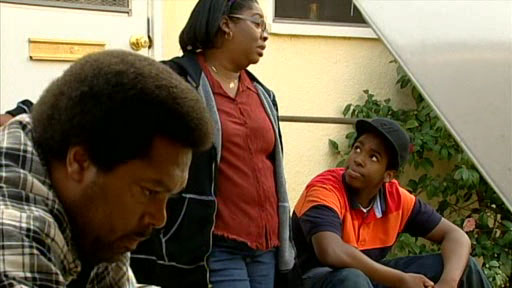
Made and released before My Night at Maud’s, but it’s part four of the Moral Tales. I made a moral decision to watch the films according to their numbering in the DVD box set, and not in the order they were made.

It’d be almost Antonioni-esque without the voiceover. Hardly anything actually happens, but Adrien always keeps us filled in on what he’s thinking. I considered disliking the movie for a while, a movie about idle rich young artists having self-conscious affairs, but it turns out Adrien and Haydée aren’t rich (only idle and leeching off their rich friend) and never manage to have an affair. I ended up liking it.

image

Buff 30ish Adrien comes to the beach to take his “first vacation in ten years” prior to an art opening, hopes to sit around with buddy Daniel and do absolutely nothing, not even think (they read so they don’t have to think). 21-yr-old Haydée is also at the house sleeping with a different guy every night. We don’t get much insight into Daniel – he’s the third wheel here – but Adrien and Haydée are both trying to find themselves, define their own moral codes, playing off each other and never quite getting together. At the end, Adrien pulls a standard Moral Tales move. Chances are good that he’s got Haydée for the night, but he leaves her in the middle of the road, deciding that sleeping with her would be against his character, and books a flight for London to see the girl he’s with (briefly) at the start of the film.

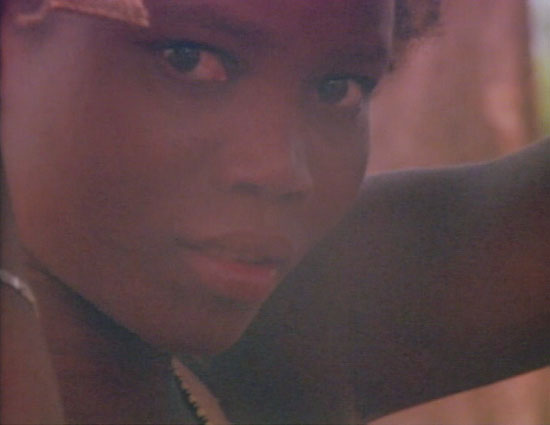
Leisurely-paced movie, but never slow or dull. Differently structured than the other films, with a few-minute prologue for each character before the main section of the movie begins. Rohmer and his cameraman would be happy to just stare at Haydée all day – her entire prologue is shots of her barely-clad body. Apparently that’s what defines her character.

image

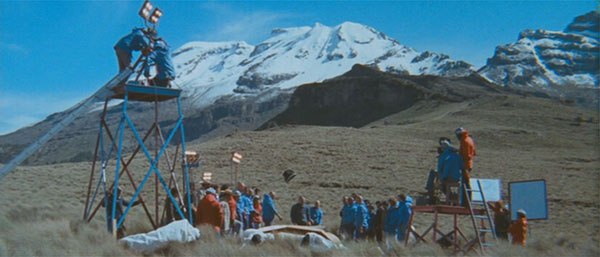
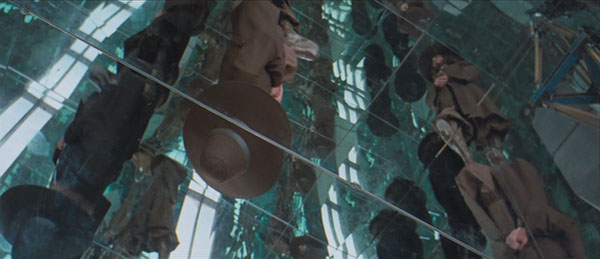
Have I mentioned that it is in color? Guess that’s another good reason to watch it fourth instead of third. Nice, rich color, too. Much of the look is in the bleached grays and browns and blues of the beach and the plain interior of their villa, so what colors we get in clothing and city life and an antique vase all stand out. Adrien and Daniel wear some hilarious clothes throughout (see above). Must be a 60’s artist thing.

Adrien was Patrick Bauchau, had a smallish part in Suzanne’s Career, later in American stuff like The Rapture and Panic Room. Haydée was Haydée Politoff, immediately turned to Spanish and Italian horror movies, had a small part in Love in the Afternoon, and mostly quit acting after that. Daniel was Daniel Pommereulle, appeared in Godard’s Weekend the same year, then two by Philippe Garrel.

image

from V. Canby’s NYT review:

Much of the comedy in La Collectionneuse, as in Rohmer’s later films, is provided by the otherwise aware hero’s elegant self-deceptions about his own motives, followed by his dimly seen perceptions of what could be another truth. In this context, it is a momentous event (and, comparatively speaking, momentously funny) when Adrien begins to have doubts about the affair of Haydée and Daniel. “I couldn’t be sure,” he tells himself with complete seriousness, “that their complicity was entirely for my benefit.”

There is a certain chilliness and lack of spontaneity to all of the performances, especially Bauchau’s, which, I suspect, has as much to do with the tiny scope of the film as to the actor’s talents. My Night at Maud’s and Claire’s Knee suggest living worlds outside the films’ rarefied milieus, whereas La Collectionneuse exists in splendid, arrogant isolation. Adrien is tiresome. Daniel is enigmatic, and Haydée is sweet, and great to look at, but, after a while, sadly commonplace.

A note of interest to local film buffs: the Seymour Hertzberg who is listed in the credits (he plays Sam, the American art collector whom Adrien solicits), is the nom d’écran of Eugene Archer, a former New York Times film reviewer who, I’m told, has absolutely no intention of acting again. He is an excellent reviewer.

“Seymour Hertzberg”:
image

From P. Lopate’s Criterion essay:

Haydée is not the most articulate young woman, though she says just enough to cast doubt on the men’s interpretations. There will be other Rohmer films that take us deep into the psyches of women; this one does not, but it gives us a very daring, precise portrait of the misogynistic, entitled, self-loathing psyches of men. And unlike, say, most Woody Allen movies, it does not let the rationalizing male character off the hook. Rohmer explicitly warned us, in an interview: “You should never think of me as an apologist for my male character, even (or especially) when he is being his own apologist. On the contrary, the men in my films are not meant to be particularly sympathetic characters.”

From an appreciation in The Guardian:

Drama, for Rohmer, is made up of a number of frequently small incidents which culminate in an inevitable denouement. There are many kinds of film-making but Rohmer’s would be very difficult to beat within the confines of his chosen metier.

A Modern Coed, 1966

image

“People used to say girls went to college only to land a husband. Though today’s coed might find a husband, she isn’t necessarily looking.”

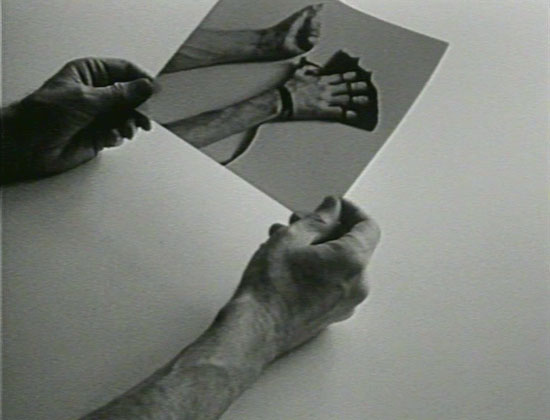
Just a short doc to tell the world that there are female college students, and some of them even study science. Its main reason to exist today is to document mid-60’s Paris hairstyles. Narrated by Vidal from Maud’s.

Foreground: our coed. Background: a cat with a hat in a box.
image

Rohmer on La Collectionneuse in 1977:
“It’s the only film I made that followed the era’s fashion. Audiences loved the new fashions, the long hair, the blue jeans. Then there was Haydée, whom audiences adored. Marcel Carné signed her for his next film right after that.”

He speaks proudly of a conversation scene in the 1976’s The Marquise of O, calling it “tiresome and static” but saying nobody else would have dared film it as written.

“This is a problem that concerns me. In the past, I was drawn by the way people spoke. I’m deeply interested in language. Currently, I find a kind of sloppiness has crept into the French language and I don’t like it very much. I like colloquial language, but today, especially as it’s used in intellectual circles, I find little of interest in it. … That said, I also believe characters in film should speak naturally. I’m getting around this currently by shooting films set in the past. When I return to contemporary films, I don’t know what my position will be. Perhaps by then language will have evolved further. Today’s spoken language is so extremely impoverished that it doesn’t inspire me. You find the same dialogue in every film now.”

image

An ugly, gray horrors-of-war movie. The twist here is that instead of simply running through all the reasons why war is hell, this one brings sex into the picture – not just the usual love and desire stuff, but a variety of situations dealing with sexual need during wartime.

image

Our titular heroine (Nishi) is a nurse in an army hospital in 1939 during Japan’s war with China. She spends some of her time at a base hospital where men with illnesses and minor injuries rest up before they are sent home or back into combat, and the rest of her time at an understaffed camp hospital at the front dealing with a constant flow of critically wounded men, fatalities and amputations. She is raped by a soldier who is sent back into combat to his death as punishment. She sexually services a man who lost both arms and can’t take care of himself anymore (but he commits suicide soon afterwards). Then she ends up at the front in love with a morphine-addicted surgeon, in a platoon where the local “comfort women” are spreading cholera to the troops, but the troops keep visiting them anyway. Mishi manages to get Dr. Okagi off the morphine so he can make love to her, but the place is destroyed in a Chinese raid a few hours later, everyone killed but Nishi. She finds Okagi’s body on the ground. The end!

image

A pretty interesting movie, definitely not the kind of war film I’ve seen before. Compassionate, but also somewhat hopeless given the surroundings and situations. I liked it, but can’t say I’m itching to watch it again.

Nishi is played by Ayako Wakao, who starred in a bunch of Masumura’s films (Seisaku’s Wife, Manji, A Wife Confesses, A False Student, Afraid To Die) as well as Mizoguchi’s Street of Shame (played the money-lending girl who opens her own shop at the end) and A Geisha, Ozu’s Floating Weeds, and Kon Ichikawa’s An Actor’s Revenge. Dr. Okagi appeared in Suzuki’s Underworld Beauty. And the armless guy starred in Oshima’s Naked Youth.

image

J. Rosenbaum:
“Roughly contemporary with M*A*S*H (as in Altman’s film, scenes of war-front surgery provide a corollary to Vietnam), it sometimes suggests a less comic treatment of the same theme–how to preserve one’s humanity amid impossible circumstances–but its ethics are considerably more developed.”

J. Sharp for Midnight Eye:

Made for Daiei Studios, Masumura’s stark wartime drama, an adaptation of a novel by Arima Yorichika, is one of the handful of films made in the mid 60s dealing with the personal experiences of those involved in the war, including the same director’s previous Hoodlum Soldier (Heitai Yakuza, 1965) and Seijun Suzuki’s Story of a Prostitute (Shunpuden, 1966). Both Masumura and Suzuki had been active towards the end of the war, and both used their experience to examine the conflicts and interpersonal dramas that arose on the frontline in order to question such concepts as duty and loyalty to their country. To this end both directors approach their subject using strong female protagonists whose role in the war is often forgotten, with Story of a Prostitute focusing on a group of prostitutes sent out to the frontline to service the soldiers, and Red Angel almost making analogous use of the nurses (although Masumura’s film does feature a group of prostitutes and takes pains to point out that the nurses duty is not the same as theirs!) In a world gone mad it is these female characters who provide the only source of stability and comfort, even morality, whilst the shell-shocked, emasculated walking wounded dream of returning home to their families.

image

Whew, a not-too-good late-70’s-looking thriller with hardly any thrills, this wasn’t nearly as good as I’d hoped it’d be. Funny how in a week I went from watching John Cassavetes masterpiece Faces to watching a movie that ends with John Cassavetes exploding.

Boom!!:
image

Movie opens in “Mid East 1977.” Kirk Douglas (below) loses his psychic son Robin to evildoer Cassavetes who subjects him to experiments we’re barely shown for reasons we are never told (and JC doesn’t seem to sweat it when Robin is killed at the end). Kirk goes deep undercover to rescue his son, enlisting Carrie‘s Amy Irving (who gets killed by a car in a botched escape) and psychic troubled girl Carrie Snodgress to help him infiltrate the secretly Cassavetes-backed psychic rest home run by Charles Durning (the president in Twilight’s Last Gleaming). Kirk finds his son but Robin has turned evil and they both plummet to their deaths from the roof. Carrie is miffed and explodes John Cassavetes again and again from fifty-six different camera angles.

image

A brief timeline of stories featuring psychic kids and exploding bodies:
Carrie (King, 74)
The Fury (John Farris, 76)
Carrie (De Palma, 76)
The Fury (De Palma, 78)
Firestarter (King, 80)
Scanners (Cronenberg, 81)
Firestarter (Mark Lester, 84)

One of those cool De Palma signature perspective shots:
image

Cassavetes (you can tell he’s evil by the black-gloved hand in a black arm cast) with Charles Durning:
image

Robin (Andrew Stevens, vet of 70+ crappy movies) looks like he’s wolfing out, but really he’s hanging off a rooftop from his father’s arm full of psychic rage:
image

Sembene’s third-to-final film, the one before Faat Kiné. His usual feminism is in effect here, but it’s mostly pushed to the background because he has more pressing issues to worry about.

Guelwaar (Thierno Ndiaye, below, also in Karmen Gei) has just died when the movie begins but we meet him in flashback. He has been killed because of his outspoken political beliefs, that it is better for a person or a nation to live poor than to accept handouts. He and his family are Catholic, and when his expatriate son Barthelemy goes to retrieve the body for the funeral, he finds that there has been a mix-up and Guelwaar was buried in a Muslim cemetery. A cop somewhat-assists, but when he finds out Bart lives in France he suggests that Bart appeal to his ambassador instead of asking the local police for help.

image

Meanwhile at Guelwaar’s house, the funeral party drags on longer than anyone had anticipated. His widow Nogoy, younger crippled son Aloys, and prostitute daughter (the prime breadwinner of the family) socialize with the guests (who include the daughter’s coworker, actress who played Rama in Xala). When word gets out about the fate of Guelwaar’s body, the Catholic priest and Muslim imam have a showdown, each craving peace but backed by an angry and armed mob of their people. The Muslims only back down when a government man (on whom they depend for food) drives up and convinces them of their burial error. Guelwaar is returned to the Catholics for his funeral, Bart has a newfound patriotism, and on the way out, the Catholics, in solidarity with Guelwaar’s climactic flashback speech (and as an outlet for their pent-up rage) destroy the shipment of food headed for the Muslim town in a passing wagon.

image

Interesting that Guelwaar defends the fact that his family lives off the daughter’s prostitution trade, over his wife’s protests. At least it is work, he argues, and they are not relying on handouts from others. This scene cuts down his noble martyr status by a couple notches. Nobody’s perfect. Also I like that the imam (above) is portrayed as a good man who listens to reason and tries to sway his angry followers to do the same. The only group that is portrayed as irredeemable is the corrupt government officials who silence Guelwaar’s voice that decries the handout system, since they skim a large share from foreign aid money before distributing it to their people, and they’d like to keep it that way.

Whoa, I thought I knew lead actor John Marley, but I guess I’ve only seen him in The Godfather. Definitely know Gena Rowlands, the greatest of all actresses, as John’s new girl. Lynn Carlin is best known for this, and was oscar nominated for it, as was Seymour Cassel in his first big part, looking very young and smooth as Chet.

Cassavetes’ second canonical film after 1959’s Shadows, although he directed some others in between and co-wrote Too Late Blues.

Film looks terrific, all blown-up grainy b/w, sometimes a nice long take to let an actor’s piece play out, but it seems less like an improv than Shadows was. Wouldn’t mind reading up on Cassavetes to see how the film was conceived and constructed.

In short: Richard and Maria are rich, bored, and have no sex life, so Richard leaves her for Jeannie and Maria has an affair with Chet the same night, but they end up at home together, not exactly reconciled, but maybe resigned. Ruminations on love, sex, fidelity, aging, and being too obsessed with yourself and your wealth to have a real human relationship.

Supremely non-entertaining, an honest and hurtful film, one of the best I’ve seen.

Some faces:

image

image

image

image

image

image

I started off the year talking about how there are so many great movies I’d like to see, it’s stupid to waste time watching bad movies… see also “The Finding Forrester Effect“. And here I am watching two bad ones in a row (this and Doomsday). Sure both viewing decisions were vaguely auteur-based since I’ve liked work by these directors before, but wasn’t Finding Forrester itself directed by a renowned film auteur? Oh well, there is no discovery without risk.

image

Chow plays a poor, uneducated, overworked, widowed single father. On top of that, his son is bullied at school, failing his classes, and can’t play sports because his shoes are falling apart. On top of THAT, Chow falls off a building at his construction job and dies. and his son cries and cries, and so does his nice teacher, and so do the only other people in the movie theater besides myself.

On the other hand, there are poop jokes and dream sequences, and the kid has a cute flubbery alien that his dad found at the dump.

Back on the first hand, the alien is beaten and squished and drowned and exploited and abandoned. Finally it kills (?) itself to resurrect Chow, god only knows why.

Movie alternates between bland and cruel. When it’s not making one of its main characters suffer, it’s not doing anything particularly exciting or interesting either. The good parts (most of them involving two extremely oversized middle-schoolers) are few, and not good enough to make this a movie worth watching.

image

It’s rare that we get a foreign film here in Atlanta less than two months after its opening date in its home country. I guess this didn’t play the festival circuit and was maybe pre-sold for US distribution after the 1-2 punch of Shaolin Soccer and Kung Fu Hustle. Anyway, it closed in a week and we’ll hopefully never hear from it again. Better luck next time in Kung Fu Hustle 2

Supposed to be the first great work by Para(d)janov, whose other work I haven’t seen yet.

young Ivan:
image

Film is divided into sections. At the end of each one the world turns red, then a bold title card introduces the next. Time is fluid here, sometimes passing slowly, sometimes quickly, and it’s hard to tell how much of it has passed… this is because Parajanov refuses to film anything that is not awesome for purpose of story or character clarification. This is a cine-poem, a work of art, not even the same medium as the David Schwimmer and Jim Carrey and Neil Marshall movies playing in theaters right now.

grown Ivan discovering Marichka’s body:
image

Only a minute into the film we have a shot from a falling tree’s POV. Later, we see naked children, multiple axe-fights, a long-take shot travelling from a giant raft over an unseen bridge onto shore. Vodka. No sex, but suggested sex. A sorcerer and voodoo dolls, many deaths.

Palagna:
image

Story is divided in half. When he is young, Ivan(ko)’s brother and father are killed in the same week, he meets a girl (Marichka, daughter of his father’s killer), they grow up in love but she drowns before they can wed. Second half, Ivan is depressed, brightens up enough to marry Palagna, then goes back to being depressed. She just wants to be rid of him, eventually gets her wish.

Actually sounds kind of depressing, but it is so beautifully told (and Ivan meets Marichka in a death dream at the finale, so it’s sort of a happy ending), a pleasure to watch.

Marichka reborn:
image

There was a movie a few years later, The White Bird Marked with Black, directed by this film’s cinematographer, with the same lead actress (Marichka), written-scored-and-starring our Ivanko.

One tiny little complaint: I wish movies would not blatantly show characters biting into apples when they are about to give in to temptation.

image

A film worth watching even when Pere Ubu is not performing a live score. The movie doesn’t have a lot of incidental music so they were playing most of the time, and they added some other fun stuff (rimshots at the bad jokes, soundtrack-looping to repeat lines of dialogue). Got applause after an intense few minutes of music when Ray is driving away pursued by a helicopter towards the end.

An intense but oh-so-stiff (like he’s in a trance) Ray Milland (Ministry of Fear, Dial M for Murder, Panic in Year Zero) stars as Dr. X. He has an empty shell of a beautiful doctor friend to fall in love with, two male co-stars who both appeared in Kubrick’s Spartacus, and a shifty manager played by Don Rickles. Plot, he invents an eyedrop that lets you see through things, tests it on himself, accidentally kills his friend, escapes to a circus, becomes a mystical healer (well, diagnose-r) under Rickles’ supervision, is finally hunted down by the cops who chase him to a bible revival tent where he claws his eyes out and does not scream “I can still see!!” over the end title.

Corman wastes so little time on character development that he actually has to pad the runtime to make the movie count as a feature. So we get more bubbling lab equipment at the start, and more blurry perspective shots of Las Vegas at the end (apparently gazing at Vegas through x-ray eyes just makes it look skewed and blurry). Among the blurry bits there’s a repeated shot of a half-constructed building pasted skeletally against a flat sky with X’s narration about watching the city become unmade. This bit conveys the horror of X’s condition far better than the hundred shots of Ray Milland looking nervous ever could, and along with the over-the-top ending it gives the movie a real sense of terror peering out from all the camp and sci-fi silliness, elevates it far above its MST3K-worthy contemporaries.

Because of pacing problems and mostly uninteresting writing and acting and sets, I wouldn’t want to watch X more often than I do, once every three or four years. But I wouldn’t want to watch it any less often either. It’s a crap classic, and I enjoy it every time.

Happy 10th anniversary to the funniest comedy of the 90’s!

In honor of this anniversary, I intended to post pictures of Jeff Bridges’ smiling eyes, but the DVD crashes my VLC player on both computers, so I will abandon this post before I am tempted to start quoting lines.