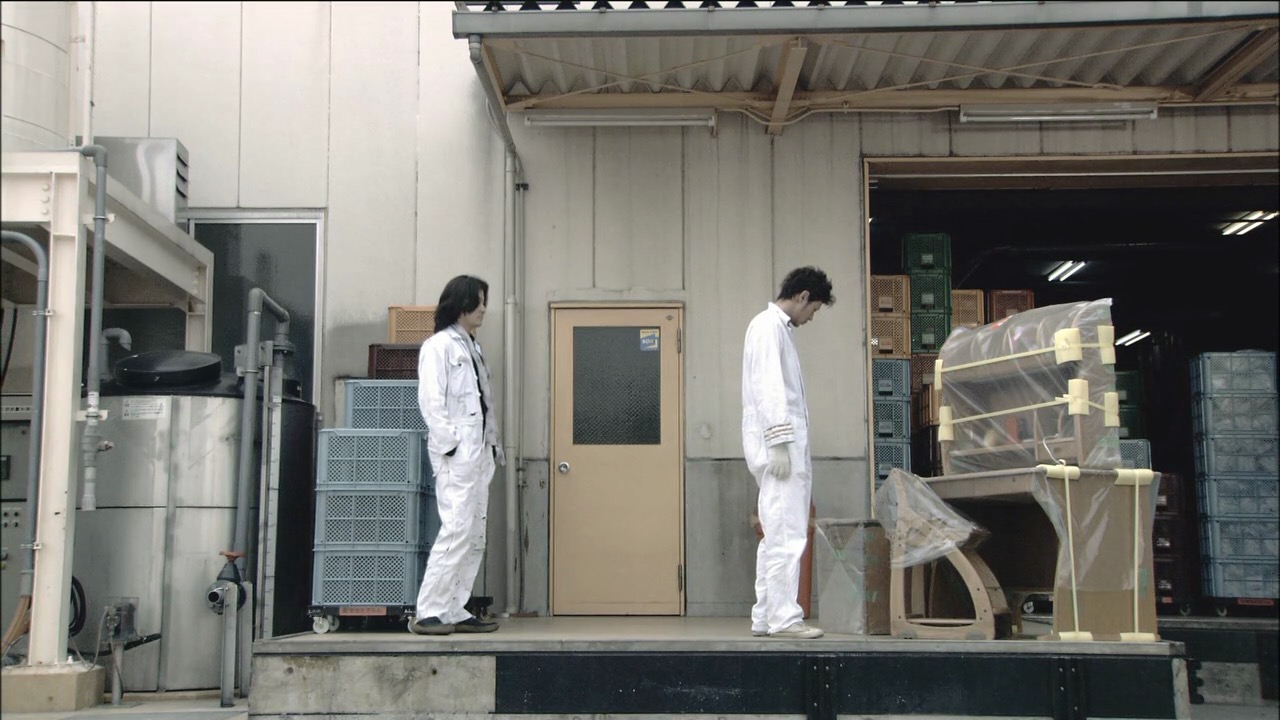
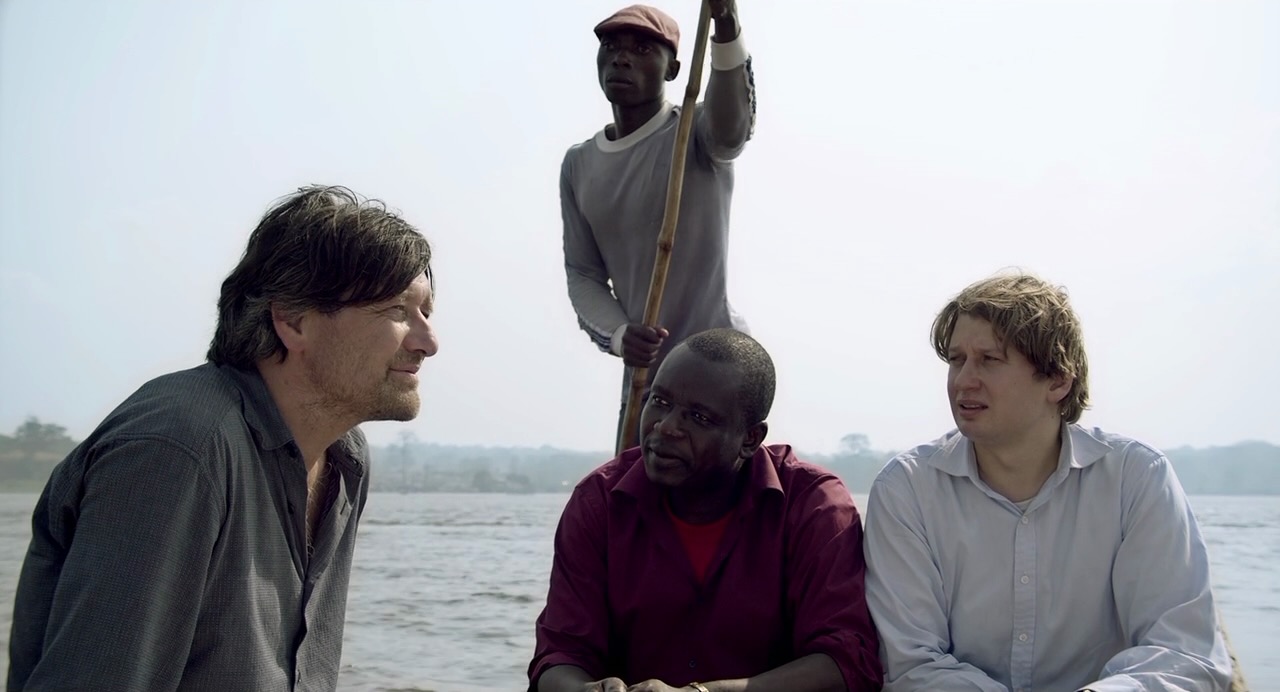
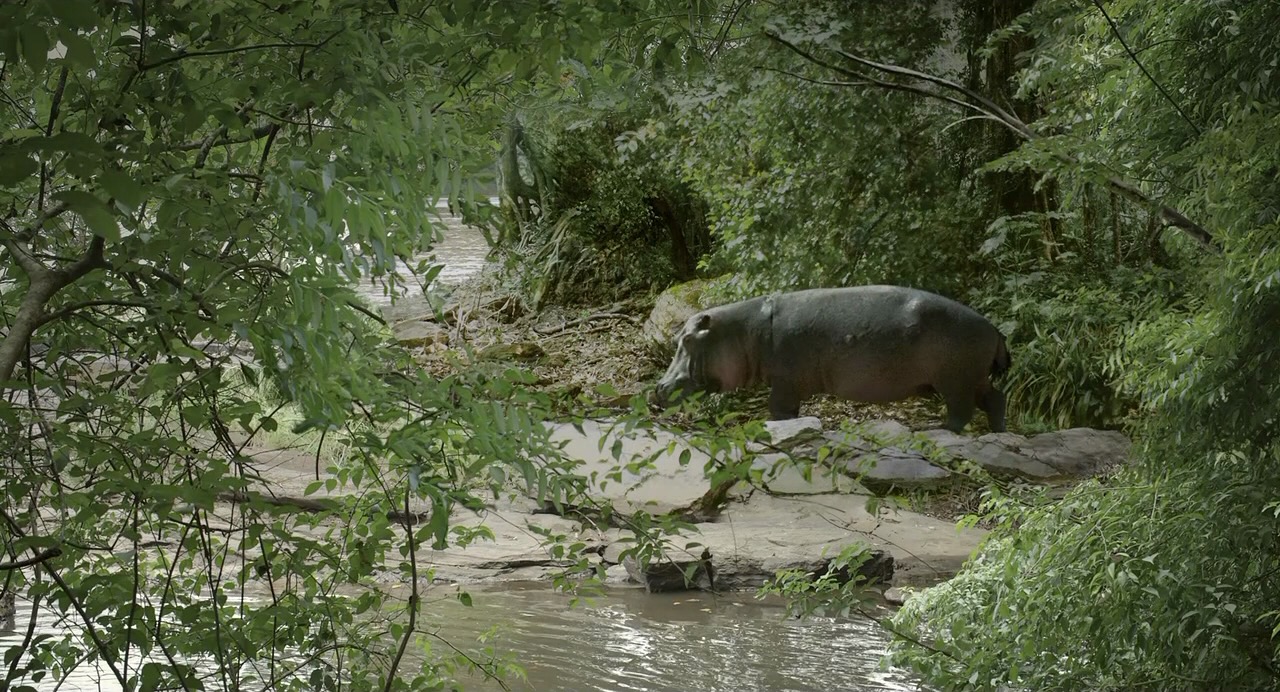
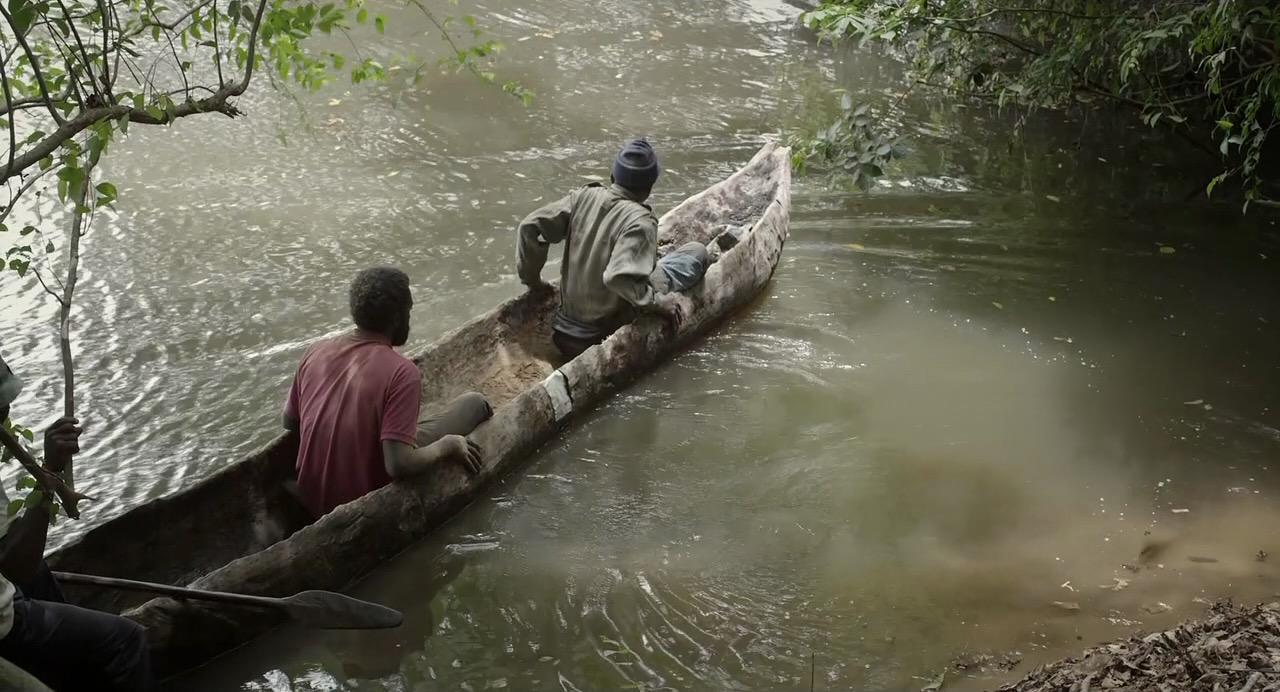
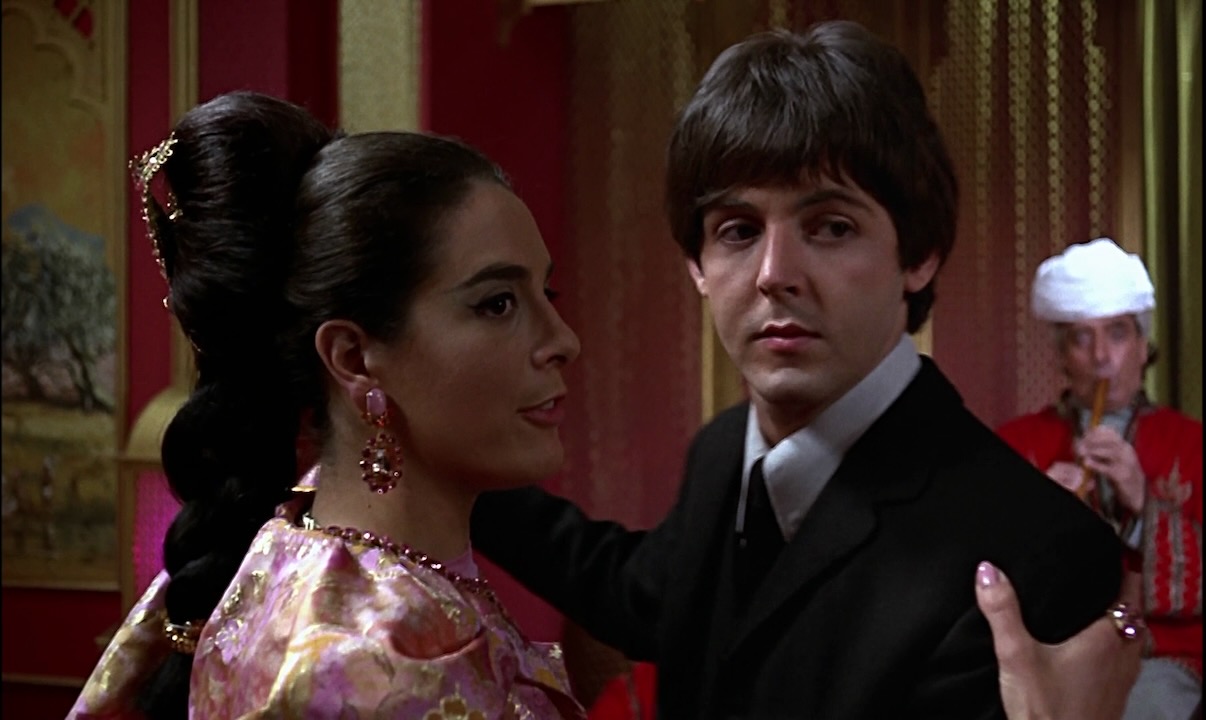
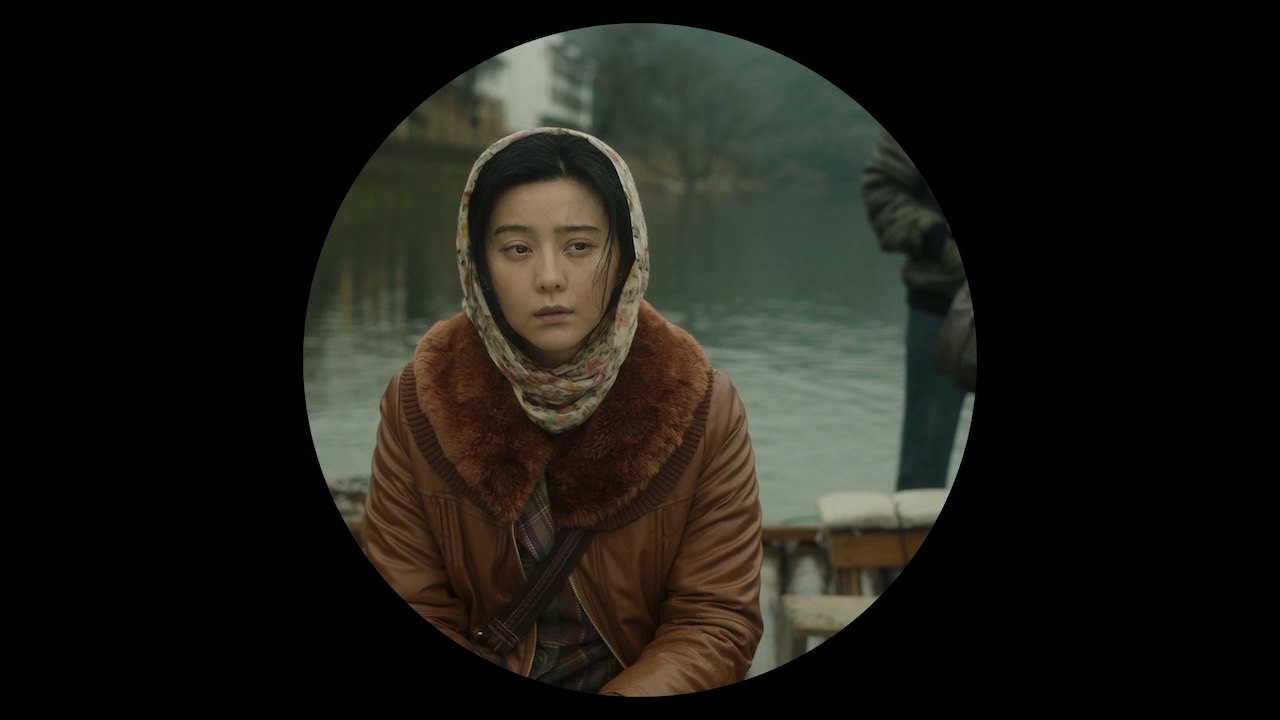
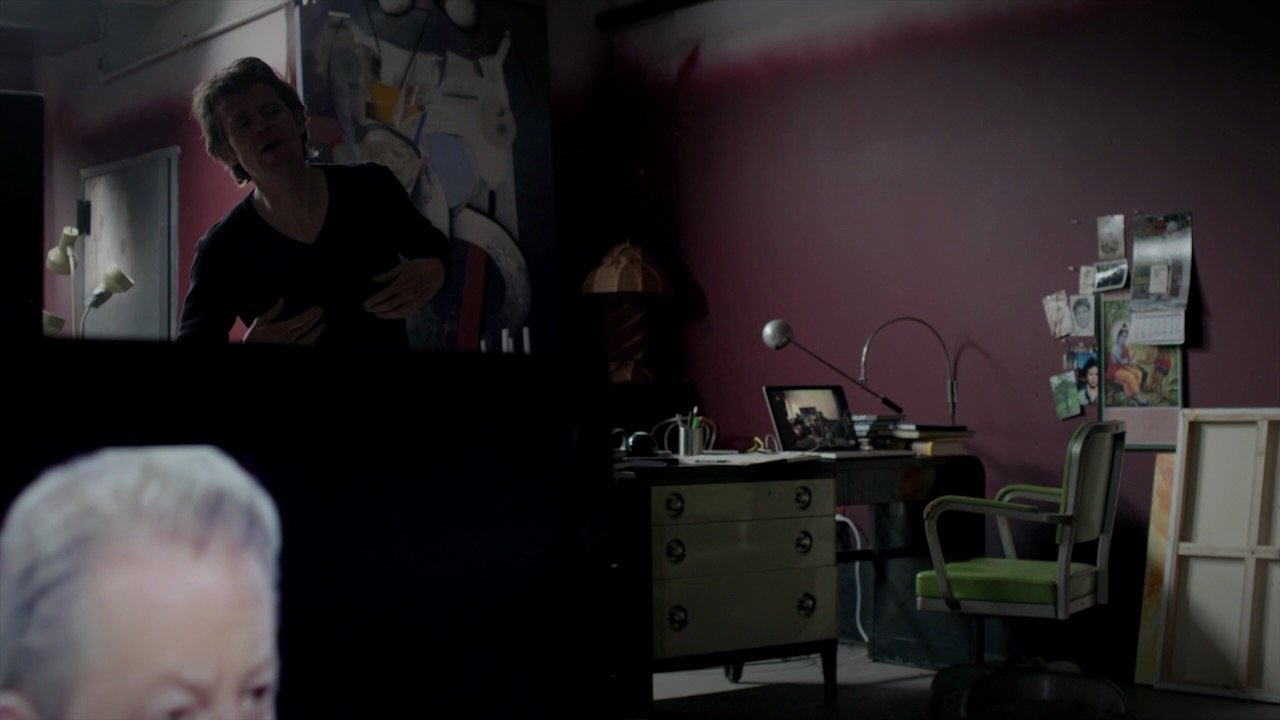
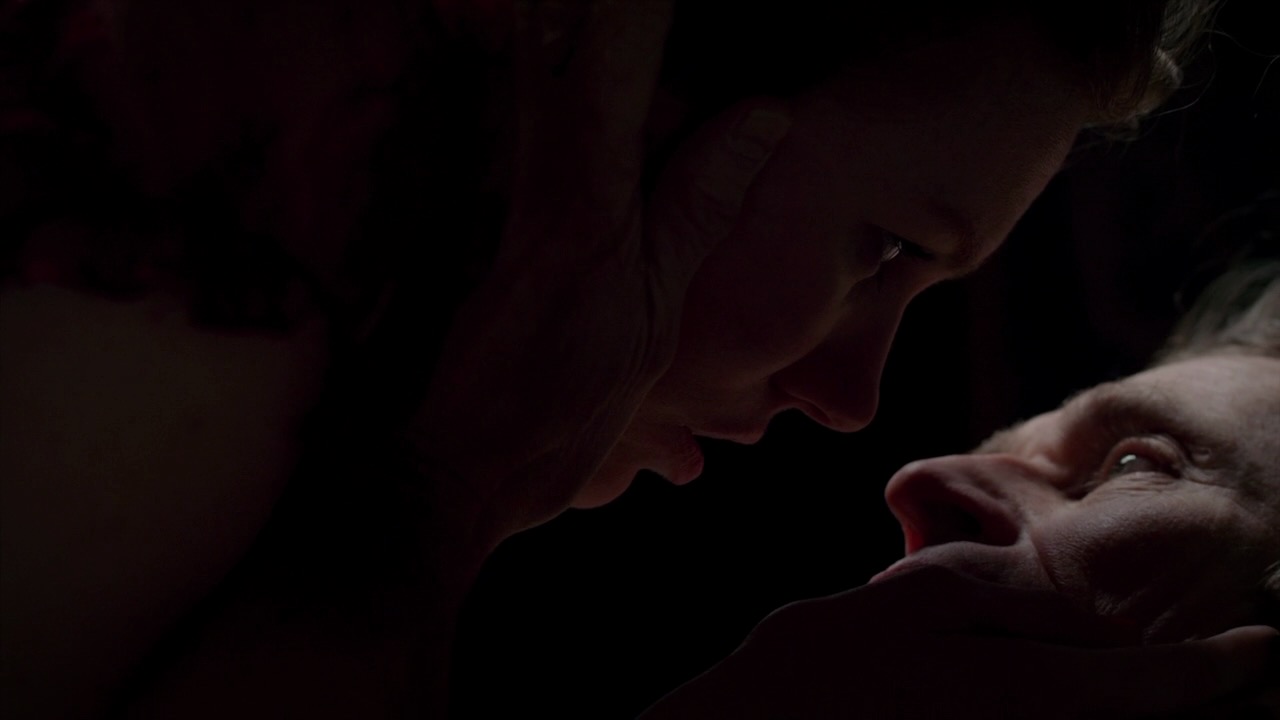
A TV movie that feels like a TV movie, except for a couple moments of the most nightmarish imagery which would stick in my head for the decade between when I first watched this until I guess Coppola’s Dracula.

But mostly it’s a TV movie, a version of Needful Things where everyone is fascinated with new shopkeeper James “Bigger Than Life” Mason, but he doesn’t sell anything and nothing happens, then eventually in the second half his Nosferatu boss arrives to kill everybody. First we’ve gotta spend a lot of time with writer Ben (played by a TV cop) fascinated with a house in town. “There’s a connection, I just know it,” says a fat cop about Ben and the house, but Ben already told us the connection, why don’t they ask him? Then there’s high schooler Mark (later of Enemy Mine) – they didn’t know about autism in 1979 but this kid loves monster movies and models and “keeps his feelings in hand.” In the end Ben and Mark will team up to defeat evil, two heroes with haircuts for which they both should be embarrassed.

Meanwhile we’ve got three hours to fill, so Ben finds himself a girl as soon as he gets into town (Bonnie Bedelia of Needful Things, haha), angering her dad Dr. Bill (head priest of Exorcist III) and her ex Ned, who punches Ben straight into the hospital. George Dzundza (Species II) is gonna murder realtor boss Fred Willard for cheating with his wife Julie Cobb (of a three-hour Brave New World), but lets Willard escape, to be instantly killed by yard monsters. Gravedigger Mike of Lawnmower Man gets bit (I saw him a couple days ago in a Rob Zombie movie), making his whitehair friend Lew Ayres (Omen II) sad.

Tobe (who would soon make Poltergeist) lingers on the writer thinking a house is evil, and maybe so, but I think it’s the foreign Nosferatu that is more evil here. It kills Ned at least, then our guys shoot James Mason to death (he’s not even a vampire), burn down the town, and leave the girl behind. I watched the sequel relatively recently, do not remember the Rob Lowe/Rutger Hauer remake, or the version last year that everyone hated.

And especially featuring Elisha Cook Jr. as the town drunk:

This movie is terrific at having characters stand next to their names

I don’t get the version of christianity where a popsicle stick crucifix can ward off evil

Dixie (Toothpaste girl Phyllis Brooks) arrives in Shanghai from Brooklyn, immediately runs into trouble due to being broke and clueless, has to be rescued by hat-guy Vic Mature (before his postwar breakout in My Darling Clementine). At the casino, “Mother” is Ona Munson of Scandal Sheet (not that one). Neither of these gals are no Marlene Dietrich, though Ona does call herself Lily at one point – but the movie is rescued by a delightful Gene Tierney (year after The Return of Frank James), who is the lost daughter of bigwig Walter Huston.

In fact everyone’s got Big Secrets and half the room wants to kill the other half when Mother invites all the major players to her new year’s table – between this and Mildred Pierce I met my melodrama quota for the month. Unfortunately these secrets and rivalries aren’t interesting, and the movie fizzles after a first half that was full of possibility. Rosenbaum: “Given the censorship of the period, much of the decadence is implied rather than stated.”

Mother has been watching Uzumaki:

This movie needs a restoration, I demand one:

Kathleen Turner and Sam Waterston and Ricki Lake and Matthew Lillard are the perfect family, except mom has started making dirty anonymous phone calls to her supposed friend Mink Stole, then she escalates her naughty behavior by murdering her kid’s teacher with her car, and expands her victims list to anyone who annoys her for not rewinding videotapes, or not recycling. Turner and Waters are on top of their games here, and it’s a great movie, but if it was made as an answer to Falling Down then it might be the greatest movie.

Good Hair Scotty is Andy from Child’s Play 3:

Mom gets arrested at an L7 show:

Very first character is an asshole cab driver, the second is a cop who mutters to the camera how many weeks he’s been on the force (six), movie seems off to a bad start then they’re both immediately killed by a newborn mutant baby, yay.

Where did my friend go?

The plot is: the dad of a mutant baby has a viral moment in a courtroom, the gov’t decides to exile the dangerous babies to an island instead of exterminating them, a few years later the dad with nothing left to lose joins a scientific(?) expedition to the island (“surely they’ve developed a language of their own”) where everyone else is killed and he helps the mutants escape to the mainland then he and his ex run off with the only surviving baby.

Karen burns her ex’s tell-all book:

But the movie is less about plot than it is about letting dad Michael Moriarty go hogwild. Between his early courtroom antics, his late no-fucks-given mode, and his ability to psychically communicate with mutant babies, it’s his show. She’s not in it much but it’s funny to watch a Karen Black movie the day after not seeing her in The Devil’s Rejects. Cohen throws in new ridiculous plot points (sympathetic Cubans smuggle Moriarty to Florida, the last adult mutant lives just long enough to hurl ten cops off a rooftop). Easily the best of the Alive trilogy, all those times I wanted to rent this video in the late 80s, I was right.

Moriarty freaks out Maniac Cop star Laurene Landon:

Glass Life (2021, Sara Cwynar)

Photo-studio collage scroll with extreme digital compositing, music and voiceover tracks reinforcing or canceling each other, choice quotes from every modern philosopher, many objects and alphabets recognized from the gallery exhibit we saw, this 20-minute film itself refactored from a different exhibit. Daniel Gorman gets it.


Neighbours (1952, Norman McLaren)

Two guys get along until a sweet-smelling flower grows on their property line and they ultimately murder each other’s families and each other to gain possession of it. It’s bad politics, say both Alex and McLaren’s studio boss, but terrific live-action stop-motion, and the source of the Mr. Show knees-levitation effect.


Oz: The Tin Woodman’s Dream (1967, Harry Smith)

Smith loves transformative destruction, so the woodman whacks a tree with his ax, turning it into a pile of furniture and creatures, which eventually whirl around to form mystical fountain patterns. Psychedelic kaleidoscope setup starts with a Suspiria dance and leads to his most magickal images yet. Hoping to see this again next year with a live John Zorn performance, so instead of being obvious and playing Zorn with it now, I put on the middle third of Prefuse 73 One Word Extinguisher, which worked great during the dance scenes.


Ghosts Before Breakfast (1928, Hans Richter)

When Tom Regan said “Nothing more foolish than a man chasing his hat,” he had probably just watched this, a silly movie about flying hats and the men who chase them. Fun to see stop-motion with live actors 24 years before the McLaren short. My version has a new Sosin score since the original sound version was burned by nazis.

Lost hat:

Lost head:


Cosmic Ray (1962, Bruce Conner)

Nude dancing and fireworks set to a boogie-woogie Ray Charles song, after an excessive amount of countdown leader. It’s Conner, so there are quick shots of nationalism, Mickey Mouse, the atom bomb.


Walking (1968, Ryan Larkin)

More and less abstractly-rendered people and their walk cycles. Now that I’ve seen the Hubley short and the Disney doc about birds, that’s all the 1969 oscar nominees, and I’m gonna say they are all winners.


The Man on the Flying Trapeze (1954, Ted Parmelee)

Speaking of Hubley, here’s a UPA short. Talentless loser’s girl Fifi runs away with the circus to be with the handsome and graceful trapezeist Alonzo, turns out she’s a gold digger who leaves every man after they’ve showered her with gifts. Maybe the Popeye or W.C. Fields versions are better.


The Daughters of Fire (2023, Pedro Costa)

A Costa musical: after six minutes of split-screen, three women singing about their suffering, the last two minutes is landscapes. Paired at Cannes with Wang Bing’s Man in Black.

Giovanni Marchini Camia:

Continuing in the ever-darker visual trajectory of his previous films, in Daughters of Fire Costa pushes even further towards an obsidian palette … Over a string quartet rendition of 17th-century violinist and composer Biagio Marini’s Passacaglia (Op. 22), the three women, all professional singers, intone a hymn-like song whose lyrics speak of solitude and suffering, toil and exhaustion, and fortitude in the face of neglect. Given that the women are Black and singing in Creole, and that the themes they invoke are familiar from Costa’s films about Cape Verdean immigrants, it’s a surprise to learn from the end credits that the lyrics belong to a traditional Ukrainian lullaby.


Bleu Shut (1971, Robert Nelson)

Goofy prank film with structuralist tendencies – a no-stakes boat-name guessing game punctuated by half-minutes of weirdness (naked man in mirror chamber, dog gets Martin Arnolded, scenes from classic films, porn with intertitles). After minute three, a woman explains the rules of the movie and gives some coming attractions. I once saw about a third of this from one room away at an art gallery, maybe the same day we watched The Clock, and have wondered about it ever since.

It’s 19 minutes before either guy gets a single name right. The game show is abandoned towards the end for three minutes of people sticking their tongues out, then Nelson explains what the movie has been about, or he starts to before he’s interrupted by technical difficulties. Chuck Stephens did a Cinema Scope writeup, but I feel I’ve covered things pretty well.


The Garage (1920, Roscoe Arbuckle)

Our guys work at a garage, managing to get every thing and everyone covered in black oil without making any racist jokes, nice. The boss (a White Zombie witch doctor) has a cute daughter whose annoying beau manages to burn the place down, and it becomes a rescue operation. I got a good laugh from the ending of the Buster-has-no-pants segment.

After 3 From Hell, I’m revisiting the original movie and this sequel for probably the last time. Part one was a good time, introducing a Texas Chainsaw-style murder family who slaughters tourists. Part two is just torture and torment (our three killers and their pursuer William Forsythe taking turns as torturers and torturees), part three is needless rehash.

Along the way Brian Posehn gets killed, the guy from The Hills Have Eyes is hanging out with Ken Foree, Danny Trejo and someone else call themselves The Unholy Two, a film critic is called in to analyze character names (all stolen from The Marx Bros), Callahan from Police Academy substitutes for Karen Black, and everybody dies (or DO they).

This is clever in its visual transitions and I like the early bits of the soundtrack composed of chill slide guitar (and Iggy Pop as a wacky DJ), but ultimately feels like a cool robot design with a movie loosely hung around it.

Dylan McDermott (also of future-robot movie Automata) and his sidekick Shades (of Jarman’s Edward II) bring the scavenged head of a self-healing military attack robot to Dylan’s off-again girlfriend Jill (Phantasm II). She puts on some Ministry before integrating the head into one of her artworks (Spielberg would use the same band to convey dystopian junkyard aesthetics a decade later).

Three guesses which one is Shades:

Unfortunately the robot was built as part of a government program to kill all the humans, and it reactivates to complete its mission. First it lets the girl’s creeper neighbor (Wm Hootkins of Death Machine) make a slow fool of himself before it megakills him. Jill lowers her body heat to undetectable levels by jumping into an open-door fridge for five seconds, then they throw the robot in the shower and it does the whole “I’m melting” bit.

It Has to be Lived Once and Dreamed Twice (Rainer Kohlberger)

Soothing sea of television static and electric popcorn sfx. Soft voiceover wanted to tell us about carbon dioxide on earth, and the background noise of living, but I was adrift until an evil racket woke me up at the halfway point. She goes on about the nature of thought and matter and individuals while the image features a Frankenstein face melting in a digital snowstorm.

Blake Williams in Cinema Scope:

A half-hour sci-fi essay on posthumanism, cinema, and artificial intelligence, the work all but announces itself as its generation’s La Jetée. Beneath a monotonous voiceover (written by Kohlberger and spoken by British-German singer-songwriter Anika) that drowsily questions the nature — and the disappearance — of being and thought (“Something is not right…”), we find Kohlberger’s most complex assortment of digital textures yet. Drawing from an image bank that the artist says was generated from approximately half of science fiction cinema history, it has to be lived flips through channels of deeply crushed visual information, the frame a radioactive wasteland of scrolling zebra patterns and lo-fi grey goo. The effect is one of radical liminality, caught in transitions between form and formlessness, declaration and lyricism, foreshadowing and aftermath … We see things we know we’ve seen but no longer recognize, and consider thoughts constructed from sentences that themselves know they cannot achieve clarity (“Everything we’ve received so far has been confusing or incomprehensible”). Short of generating images that might be determinably “real” or artificial, it has to be lived meets both sides halfway, documenting the afterlife of subjectivity from the perspective of sentient objects. Like the glitch aesthetic that these images have settled into, this is a promise of failure at the end of the age of the individual, presented with a fundamental ambivalence that is as frightening as it is pacifying. If everything we know and hold is destined for renewal and reprocessing, subject to boundless capacities to be reconfigured into anything, then who is to say it all won’t be even better than before? For in an age where everything is an image, the sky may well be the limit.


Palace of Colours (Prantik Basu)

Narrated creation myths over very colorful shots of landscapes, natural rocks, painted walls
Such a peaceful 26-minute movie it might take you a couple hours to watch due to pausing for a nap in the middle.


27 Thoughts About My Dad (Mike Hoolboom)

Listed everywhere as 27 Thoughts About My Father, but the film itself and the full transcript at the director’s website say “Dad.” Mike tells his 27 stories about Canadian immigrant (via Holland via Indonesia) engineer dad while the early visuals are his experiments with light and focus, trying to create Malick scenes and/or advertisements. Some scenes are extremely digital, and the scene that’s all shots from 2001: A Space Odyssey made me wonder if the earlier shots were from actual Malick scenes and/or advertisements.


Cezanne (Luke Fowler)

Rapidly edited shots from mostly outdoors, sometimes the title/name appears, light atmospheric birdsong on the soundtrack.

Firing Range aka Polygon (Anatoliy Petrov)

Professor’s son died in colonial wars, the prof invents an autonomous tank that can detect fear and sets it loose on his own army in revenge. Nice little sci-fi war drama, too bad about the grotesque rotoscoping. Not the Old Man and the Sea guy, this is a different Petrov, and okay it’s from 1977 not ’75, sometimes my dates are off.


Great (Bob Godfrey)

Comic attack on the British empire, very good illustrations with Monty Python-style motion gives way to slightly more traditional animation full of newspaper-caricature characters, and settles into focus on Brunel, a builder of very large bridges and ships, with photographed segments and musical numbers. Not one of my favorite things, but I also believe there should be more farcical musical bio-pics of obscure historical figures. Won the oscar over Sisyphus and a Bafta over Caroline Leaf. A very naughty Brit, Bob is also known for Instant Sex and Kama Sutra Rides Again.


Perspectives (Georges Schwizgebel)

Roughly drawn figures keep changing form and direction over nice colored backgrounds and oppressive piano music.


Ventana (Claudio Caldini)

Thin rectangles flit past over some ambient music. Made me sleepy.


Sincerity II (Stan Brakhage)

Playing with the dog in the yard, playing with the wife in bed. I thought my copy was faded and orange with exposure problems, but sometimes you’ll get a clear, balanced shot or a strong blue-green, so who knows. Sincerity was Stan’s multi-part “autobiography” composed of footage shot by himself and friends. With ten minutes left we start seeing Stan himself, and the editing goes haywire. Naked children, a family train vacation, some trick photography play with the kids, a visit to Canyon Cinema. Silent; I listened to the latest Mary Halvorson album since her group is playing Roulette tonight.


The Seasons (Artavazd Peleshian)

Opens alarmingly with a man and a sheep going over a waterfall. Then the frame is taken over by clouds, then a mountain – maybe the title was mistranslated from The Elements. Cattle and sheep drive, men and horses getting a truck unstuck from rainy mud, a hay-sledding party, a sheep-sledding party. After all the hard work, everyone (even the sheep) get fancied up for the wedding of the man from the waterfall scene. No narration, but a couple of intertitles – postsync sound and nice orchestral score. Ah, this is Armenia, the title refers to the Vivaldi music, and it’s shot by The Color of Armenian Land director Vartanov.