Thought I was supposed to be impressed with Jane Campion. I’ve liked her movies that I’ve seen – this, Sweetie and Holy Smoke – but I can’t say I love ’em to death. Very capably-made dramas with unique performances, nothing especially transcendent though. Maybe my expectations were too high… I’ve been hearing that this is a must-see classic important film for a decade and a half now.

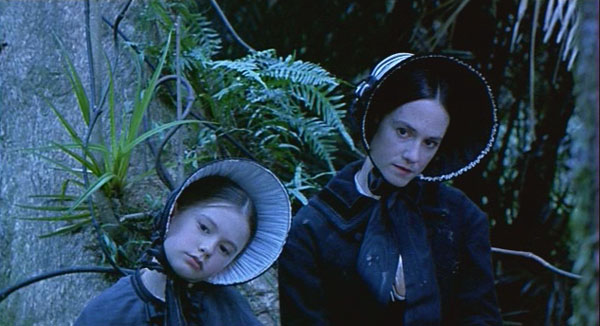
Local Georgia girl Holly Hunter, who I haven’t seen since O Brother Where Art Thou, is a mute pianist come to secluded New Zealand in the mid-1800’s with her daughter (10-year-old Anna Paquin) to marry landowner Sam Neill (the year before his finest hour: In the Mouth of Madness). Right away, Holly meets brutish tattooed native-wrangler Harvey Keitel (on a roll, in between Bad Lieutenant and Pulp Fiction). He takes ownership of her precious piano and invites her over to play, offering her it back in trade if she’ll let him touch her. Harvey is obsessed with her and a music lover, which is more than Sam Neill’s got going for him, being impatient with Holly’s muteness, her music and her daughter, so eventually Holly is sleeping with Harvey. Sam finds out and chops off her finger, then apologizes and lets her go away with Harvey to live happily as a piano teacher with a Harvey-made false finger.
I didn’t mean to watch a bunch of oscar-nominated films from 1993 all in a row, it just worked out that way. So now I can look at the list of nominees and see how this stacked up to Orlando and The Age of Innocence, while cursing Schindler’s List and Philadelphia. At least it’s good to see that Dave and Farewell My Concubine each got a chance, and can’t argue with Nick Park winning for a Wallace & Gromit movie. Personally, in ’93 I was more psyched about Jurassic Park, In the Line of Fire, Groundhog Day, A Perfect World and Wayne’s World 2.

So this movie, The Piano Teacher and The Pianist all contain scenes of horror and mutilation, and Shoot The Piano Player has a perfectly unhappy ending. I wonder what awful things lie in wait with The Page Turner, The Tuner and The Piano Tuner of Earthquakes.