Kelly’s follow-up Southland Tales starring The Rock and Buffy is finally getting released later this year, or so I’ve heard.

Forgot how GOOD this movie is. Somehow I’d chalked it up as a sentimental underdog fave, but I still really like it.

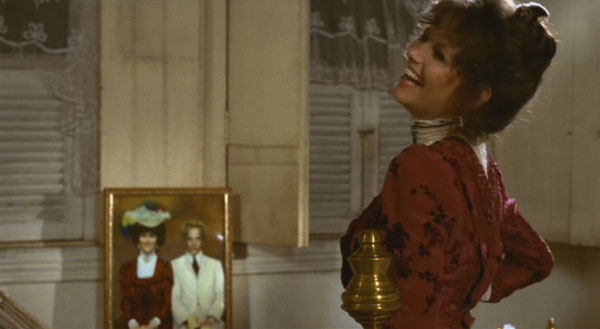
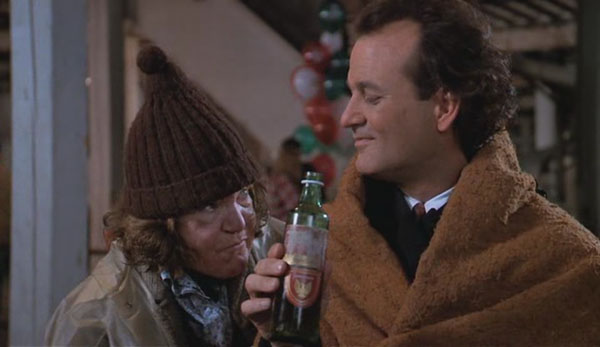
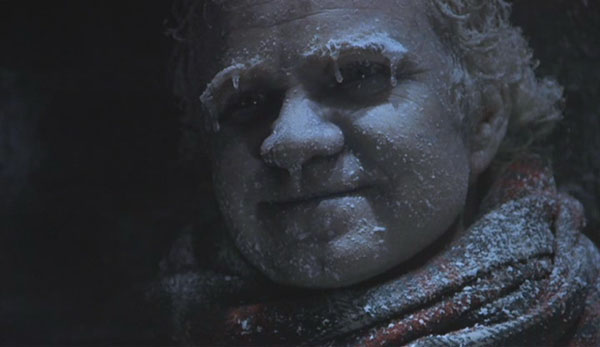
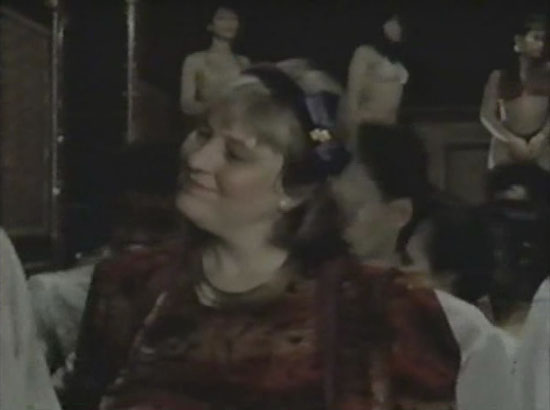
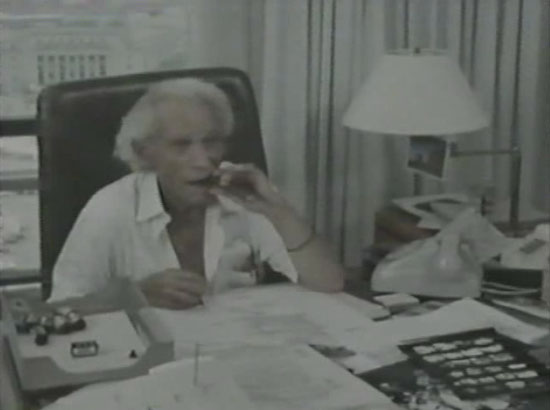
Donnie’s dad will be in Southland Tales, and we caught him last night in Bring It On.
Donnie’s mom plays the president of Battlestar Galactica.
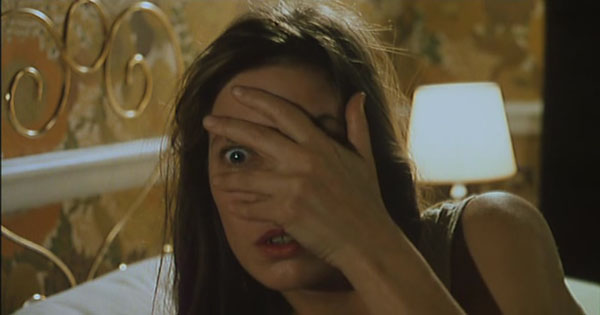
Samantha Darko is Lilo in Lilo & Stitch and a regular in Katy’s Big Love.
Bunny Suit Frank was in every “cool” teen movie in the 90’s.
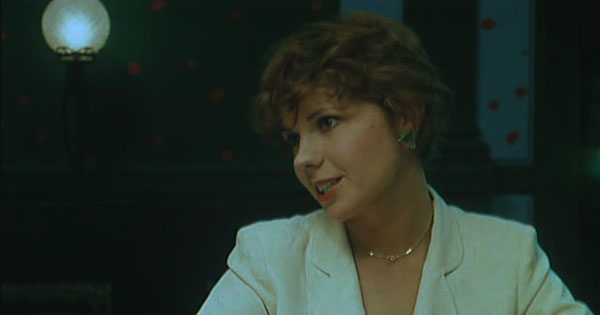
Donnie’s teacher is in Southland Tales, No Country For Old Men, and Little Miss Sunshine (as a pageant official).
Recording artist Jena Malone will be in Into The Wild and The Ruins.
Seth Rogen of Knocked Up was apparently in there somewhere.
Donnie’s psychiatrist had starring roles in Butch Cassidy/Sundance Kid, The Graduate, The Final Countdown and Stepford Wives.

image

image

image

image

Seems from the quotes below like this was a pioneer work for African film in the early 80’s, but today on video it’s not too interesting to me. Pedestrian filmmaking, awful music and a voiceover that doesn’t seem too sure of itself.

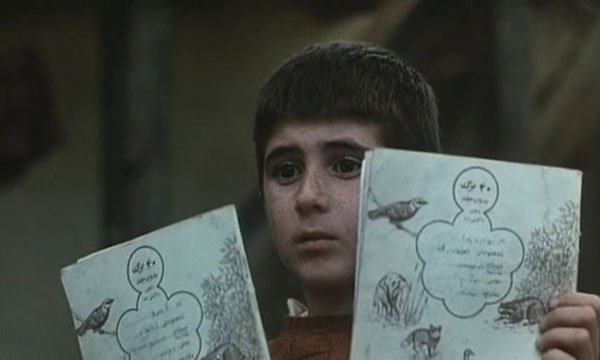
To be fair, the music and voiceover are hardly ever around, and what’s left is a simple story of a mute boy who gets adopted by a weaver, befriends a little girl, and finally sees something traumatic (suicide body of older guy who got publically shamed by his young wife) that causes him to start speaking about traumas past (mother who was chased out of town for being a witch because she wouldn’t remarry).

People converse in a casual, disinterested way – guess that’s a cultural thing, since the usual tendency with inexperienced filmmakers/actors is to over-emphasize everything.

Kino says it is “a clever fable demonstrating how traditional values can heal and unify a modern African state.”

American University Library says it “demonstrates how cooperation and caring can overcome bigotry and intolerance.”

Library of African Cinema notes that it was the first prominent feature film produced in Burkina Faso, and a pioneering attempt to “Africanize” film language. Dialog was kept at a minimum, to maximize understanding among different language groups.

Harvard Film Archive: “One of the first films to adapt the measured rhythms of traditional African storytelling, Wend Kuuni recasts a precolonial tale of village life during the Mossi empire into a lyrical cinematic form.”

Cineaste: “Kabore’s work, however, does not merely project a lost paradise, it also has contemporary overtones in its depiction of bold actions by women in defiance of the patriarchal order.”

Buud Yam in 1997 was a sequel, a Wend Kuuni coming-of-age story, which doesn’t seem to be on video.

Was beaten out by a Maurice Pialat film for the Palme d’or at Cannes, but it still won the jury prize (not the GRAND jury prize – I don’t know exactly how things work at Cannes).

Terrific-looking, bizarre film from Mali (large, landlocked, northwest Africa).

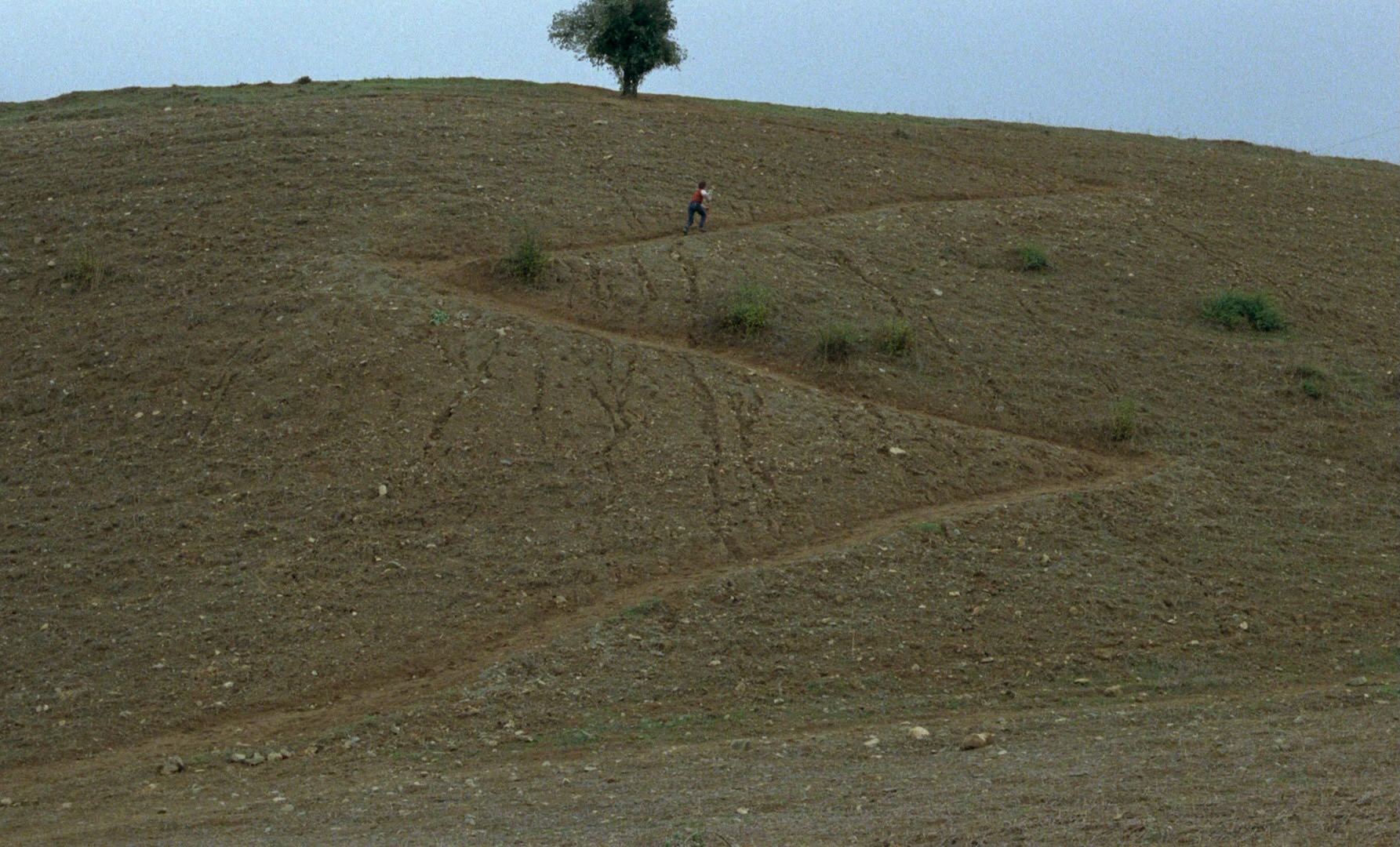
Niankoro (N.) has some sort of magical powers. He and his mom have been hiding out, but dad is hot on their trail, so they go off to find help. While she prays in the swamp, pouring milk over herself, N goes looking for an uncle. His father Soma has a magical post (and two non-magical post-carriers, AND a twin brother with his own post) which may lead him to N. N stops in a village, tries to help out, defeats some bandits and offers to help the king impregnate his youngest wife. But then N impregnantes her himself and gets to keep her. N finally gets a wooden wing from the good uncle, combines it with the gem he got from mom, and confronts his dad with apocalyptic results. Overall, it’s sort of a goofy Western. Or a Malian Star Wars?

The web tells me “Yeelen is the adaptation to film of one of the great oral epics of the Bambara people, set in the thirteenth century, during the period of the Mali Empire.” Katy sent me a long PDF file explaining the mythology but I haven’t read it yet.

Movie opens with a rooster being burned to death… Soma also burns an albino man but not on-screen.

Michael Dembrow helpfully interprets:

Though set in a time far from history, Yeelen clearly reflects Mali’s contemporary situation in 1987, when Mali was firmly in the grips of the military dictatorship of Moussa Traoré. Cissé has acknowledged the difficulty that he would have had in mounting a direct critique of the regime: ‘As my own experiences have shown, what you narrate may also put you into trouble. Sometimes in order to survive a hostile environment one is forced, not necessarily to disarm, but to construct a narrative that is not too political nor devoid of pungent criticism of the system’.

It is difficult not to connect Niankoro with the young men and women who were willing to risk their lives for positive change in the last days of the Traoré regime. Looking within the tradition, taking guidance from those elders whose connection with the positive aspects of the tradition remains intact, they are attempting a synthesis of tradition and the modern. These are people who know how to listen to the song of the Sankofa bird–those who heed the values of the past in order to proceed to a moral, community-building vision of the future. From the vantage point of 1987, the film predicts the violent upheavals of 1991 that would produce many sacrifices, but ultimately new hope for the generations to come.

A sad ending to Anderson’s famed trilogy that began with If… (which I did not watch this week because Vdrome didn’t get it in) and O Lucky Man! (which I half-remember from watching on tape five years ago – a musical, right?).

If the first of the trilogy mixes “color and black and white as audaciously as it mixes fantasy and reality” and “remains one of cinema’s most unforgettable rebel yells”, according to Criterion, and the second was a fun, “surrealist musical [which] serves as an allegory for the pitfalls of capitalism”, according to the IMDB, then what’s left for this little apocalyptic satire? It feels flat, unfunny and bizarrely plotted, with Malcolm McDowell barely present and not much holding the whole thing together.

image

The final scene (after M. McD’s beheading death) features a long dull speech railing against all of human society by a mad scientist (Graham Crowden of O Lucky Man and The Ruling Class) who unveils a computer named Genesis that will somehow solve everything. Before that, McDowell is an ineffectual investigative reporter, with stoned colleagues Mark Hamill (post-Big Red One, pre-Jedi) and Frank Grimes.

image

Movie felt sucky at the time, but it had noble intentions, throwing all of British society into the title hospital, staging a joint protest against both the way the country (err, hospital) treats its less-wealthy citizens, and the way it coddles corrupt and brutal foreign dictators. It’s against both the boss who expects too much and the worker who provides too little, it makes a small mockery of the royal family (midget and tranny royal reps) but shows the Queen’s handlers to be resourceful, sneaking her past the mob incognito, it tosses hatred at the labor unions (portrays them as killing patients through negligence and unnecessary regulations) and it throws some police violence, mob rule and frankenstein medical experiments into the mix. The lead actor is actually hospital director Leonard Rossiter, who mostly keeps his composure, except when he murders a striking electrician to turn the hospital’s power back on.

image

Best online source I could find on the film, an unsigned article on britmovie.co.uk site, sums up:

The question posed at the end of the film is ‘Is man intelligent enough to survive?’ The speech concluding the film is not sentimental; it’s much more the speech of an angry rationalist who is appalled and irritated by the stupidity of mankind. He proposes that the only solution is intelligence. But, of course, having made this speech, which most people would agree with, he then proposes a solution that is even crazier and more horrifying than anything the establishment represents. He produces the idea of a disembodied intelligence, this brain we see, which he tells us will be combined into a silicon chip. So, the challenge at the end is a question, If only intelligence can save us how can that intelligence be controlled? The film does say, I hope, that we must mistrust institutions, power, the instincts for power within us, and in that way I think Britannia Hospital is an anarchist film. It puts the responsibility squarely on the individual to develop first the intelligence and the moral awareness by which alone man can control his destiny.

The film’s location manager is quoted as saying “Unlike a lot of directors, [Anderson] doesn’t make films just for money but because he has something to say.” This was clearly a low-budget effort, with big stars (McDowell, Hamill) working for free, and the film had too much of a social conscience to dismiss by saying “ehh, the plot didn’t grip me and McDowell wasn’t in it enough and it was too disjointed” and give it the C- rating it may deserve on the grounds of a pretty poor final product. I’m upgrading to a B- for honorable intentions.

Lead actor (hospital director) Leonard Rossiter would die of a heart attack in 1984, with director Anderson following a decade later.

image

The extremely cute Diane Franklin (Monique) later starred in Terrorvision (with Jon Gries – Uncle Rico in Napoleon Dynamite) and played a princess in Bill & Ted’s Excellent Adventure.

Paperboy who wants his two dollars isn’t in anything else, sadly.

Funny damned movie, a little slack but still good. The racecar brothers, one of whom speaks no English and the other speaks like Howard Cosell, are the best part. Jimmy and Katy liked it, I suppose.

“Masturbating much?”
“Constantly! I have a talking boil on my neck.”

I think I was supposed to watch Withnail & I first, since it’s the one that got all the bonus features on the Criterion disc, but I felt like starting with this one. Somebody I know has warned me about these two movies once… can’t remember who, but anyway I liked this just fine, and will check out Withnail sometime.

image

A usually-funny comedy about the advertising business. Dude is high-power ad exec until one troubling assignment to come up with a slogan for a zit cream. He has such trouble that he starts to question the entire practice of advertising… and that’s when a talking boil shows up on his neck, representing his bad ad-man self. It eventually takes over the body (with added mustache) with a good-guy-within boil on HIS neck. A little more gross than the usual angel/devil on your shoulder, but same idea. More anarchist (or communist) speeches (by the good anti-ad-man persona) than in most films. Remember the bizarre animated lovebirds, too.

image

Writer/director Bruce Robinson (also wrote The Killing Fields) put together a good comedy, with an excellent lead performance by Richard Grant (Karaoke, some latter Altmans, and Franz Kafka’s It’s a Wonderful Life).

image

Movie feels not like an advertisement but like a political attack, like a speech, but without the actual speeches interrupting the comic flow of things. Energetic and fun(ny), worth watching for sure.

image

Wasn’t expecting this at all. Has a real amateur-theater feel to the acting and dialogue, wasn’t knocked over by the direction or editing, so all I’m left with is the story/moral… which is pretty alright.

Pierce just wants to hang out with his cool friend Soldier, but his family’s bugging him about his college-grad brother’s impending marriage to a rich hottie (with whom Pierce does not get along). Well, Soldier dies and his funeral’s on the same day as the wedding. What will Pierce do? Idiotically, he races from the wedding to the funeral before his bro+girl have walked down the aisle. The wedding ring in his pocket, he doesn’t even make it to the funeral on time. What a douche.

Nothing against marginalized director Burnett’s intentions… making a little film about family and friendship and personal responsibility and “doing the right thing” (some six years before Do The Right Thing), focusing mostly on small things and small events, but the thing struck me as amateurish. Maybe my expectations were high for this one (“Burnett, lost masterpiece director”) and lowered for Killer of Sheep, which I loved a few weeks later.

A lonely mute girl gets raped, robbed, and raped again, all in one night. She stops the second guy though (kills him with an iron, chops him up), grabs his gun and goes on a vengeance spree through the city, killing just any man she can.

image

All this killing takes its toll on her daily life, and her seamstress friends at work start to notice the change. She sort of goes from righteous victim to homicidal maniac, but then she never quite loses our affection either. A lot more carefully measured and watchable than the grating Driller Killer.

image

One “victim” actually takes the gun and shoots himself out on a park bench. She doesn’t kill the dog (screen shot below). Eventually puts on the nun suit and goes all Carrie at a halloween party before she’s taken out.

image

Scott Ashlin says:
“What we get instead is… a film that depicts men in the harshest and most unforgiving light, presenting them as legitimately deserving a substantial proportion of Thana’s wrath. Simply put, Ms. .45 has no patience with mitigating circumstances. In this movie, people, both men and women, are defined entirely by what they do rather than by who they are. It doesn’t matter, or so Ms. .45 contends, whether an exploiter had a rough childhood or a bad day at work or a steady stream of shitty luck with the girls he dated in his formative years. Violence buys violence, end of story.”

image

September 2011: Great to see this again on 35mm at Cinefest.

I think the title Hurlevent means something about the wind.

Well-bred Catherine loves Roch, an orphan her family has raised from a young kid with the help of servant Helene. Catherine’s brother William has taken over their estate and wants to get rid of Roch. Cat meets Olivier by chance and stays at his estate, gets to know him and his sister Isabelle, he eventually proposes. Roch disappears after overhearing a conversation about his being below Cat’s social class, comes back rich three years later, Cat and Olivier are now engaged and William is a drunken gambling addict. Roch wins the estate from William and hangs around until Catherine dies from illness.

image

Movie opens with a great looking dream scene of Catherine and Roch on a rocky hill while William watches, hidden. Has a few interesting parts like that, but mostly just a good-looking literary adaptation of a dreary story. Rivette’s not especially proud of it either… I think we can mostly ignore this one.

Interesting soundtrack, only used in a few scenes. Valérie Hazette in her Senses of Cinema article says: “The only concession to lyricism can be found in the magical accents of Le mystère des voix bulgares, a Bulgarian choir’s album.”

image

Rivette says about the adaptation: “I had decided not to re-read it: I asked Pascal to summarise it for me. I only wanted to have the outline of the story and of the characters, that’s all. And from the start, I told him: “Only the first part”, because I knew about the second part. I had a very strong memory of the Wyler movie – because I hate it – and of the Buñuel movie because, as you know, I find it very beautiful. The characters are 40, but still, the movie remains very, very powerful.”

image

Francois Truffaut died a few days after the shoot. “For the whole length of the shoot, every single day, we were expecting to receive the phone call that would tell us ‘François has died…’ it was a truly harrowing situation.”

“Since it was necessary to condense quite a lot, by force of circumstance, I believe that it is indeed the most elliptical of all my movies. Otherwise I might have made a three or three-and-a-half hour movie, like I usually do. But there, we were obliged to simplify, to keep to the essentials. It might have given a more vigorous and energetic feel to it …”

image