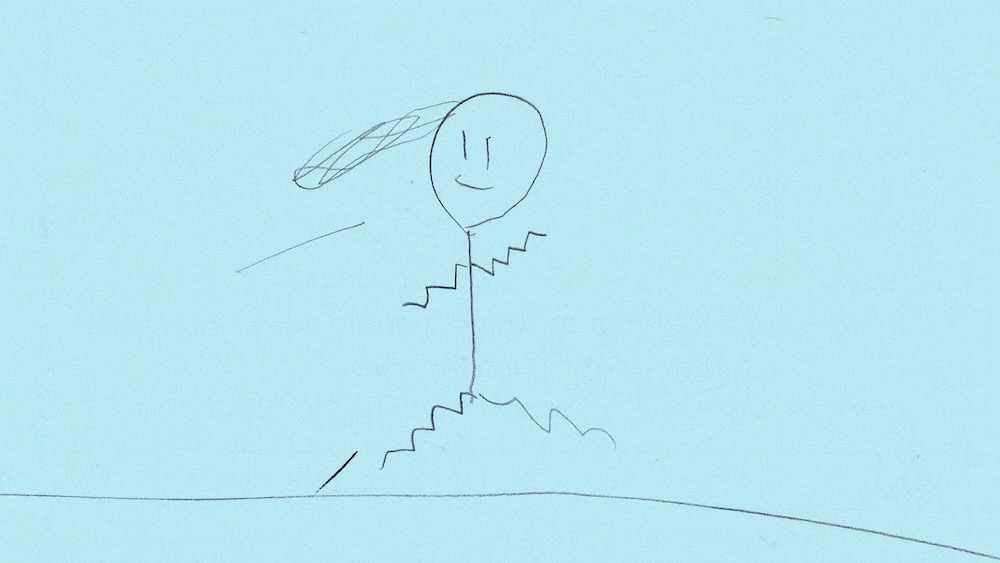
Paper Trail (2026, Don Hertzfeldt)

Following the life of a guy named Steven through marks he has made on paper, all kid drawings then love letters then lease agreements then forty years of signing off on bland work documents. Subtle! Will revisit it at a later date (haha).

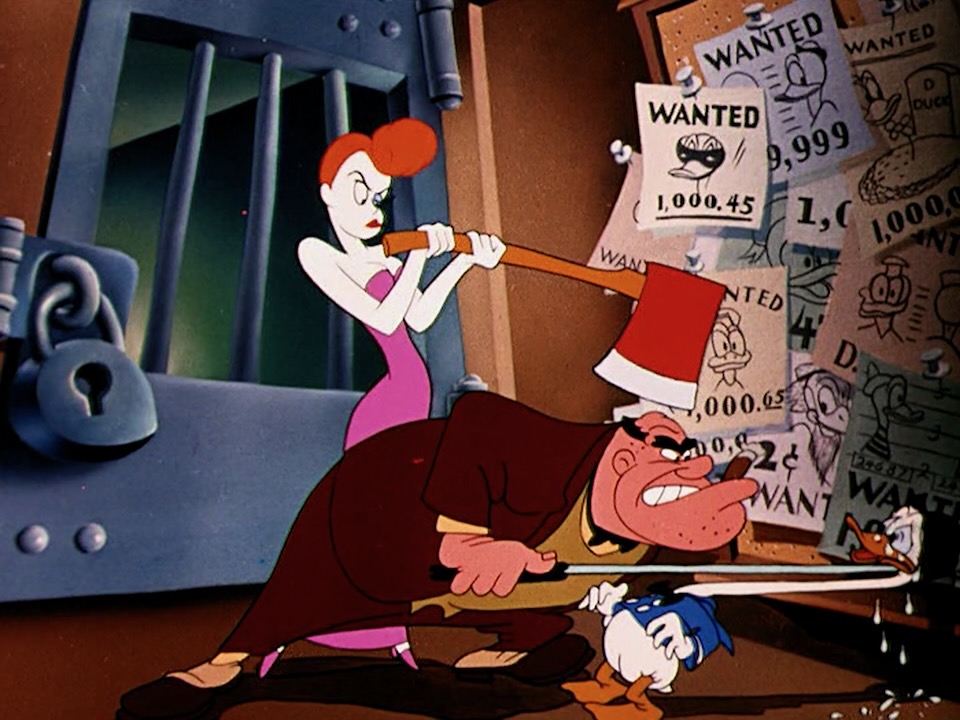
Duck Pimples (1945, Jack Kinney)

Hoped from the title this would be a Daffy, but it’s a Donald – fortunately one of his more insane ones. Home alone and easily scared, he’s attacked by scary stories from inside radio and books, culminating in an imagined crime story between himself, a thug, and Jessica Rabbit.

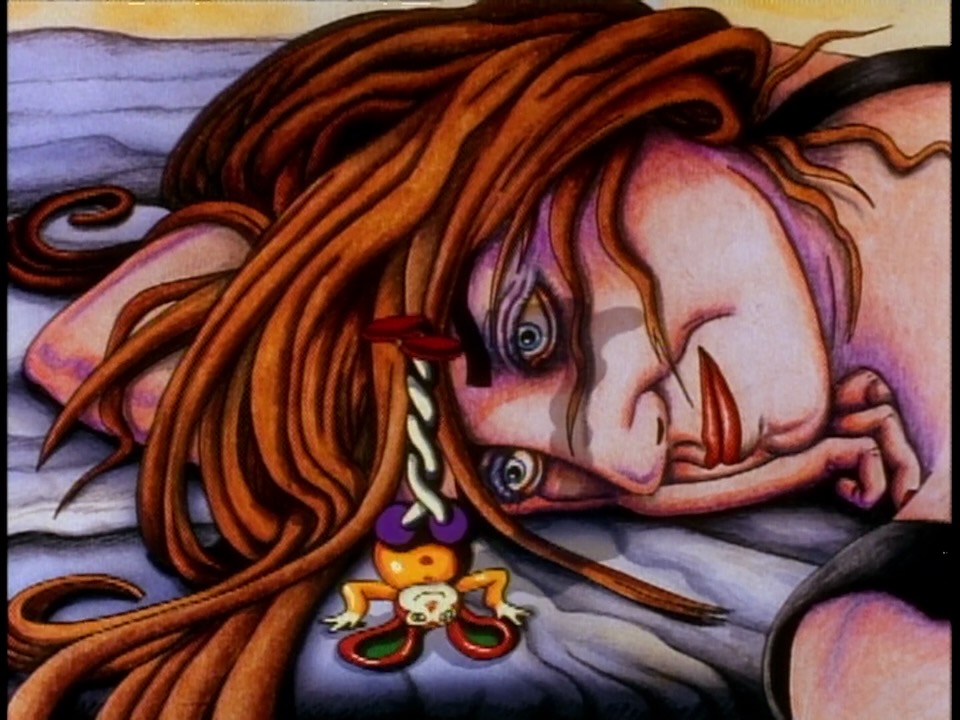
Joy Street (1995, Suzan Pitt)

Depressed woman kills herself… loopy balloon creature comes alive from her ashtray and dances whimsically around the house before discovering her. Then I honestly don’t know what happens, but the animation is top-notch as per Pitt’s usual, and the woman’s alive at the end as Debbie Harry sings over the closing credits.
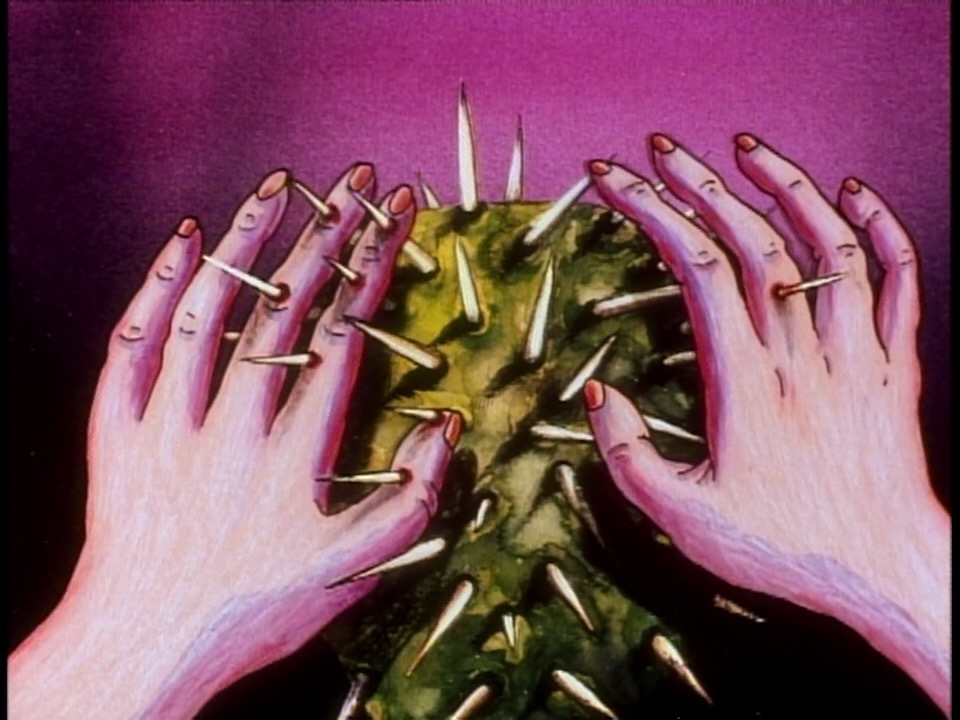
Fun on Mars (1971, Sally Cruikshank)

Absolute anarchic dance-party nonsense. If I’d known what this would be like, I would not have watched it right after Joy Street since it out-wackies that movie’s whimsy. This 1971 movie set to an early 1930s song would be the equivalent of someone now making a short to a song from… oh no, a mid-80s song.

The 500 Hats of Bartholomew Cubbins (1943, George Pal)

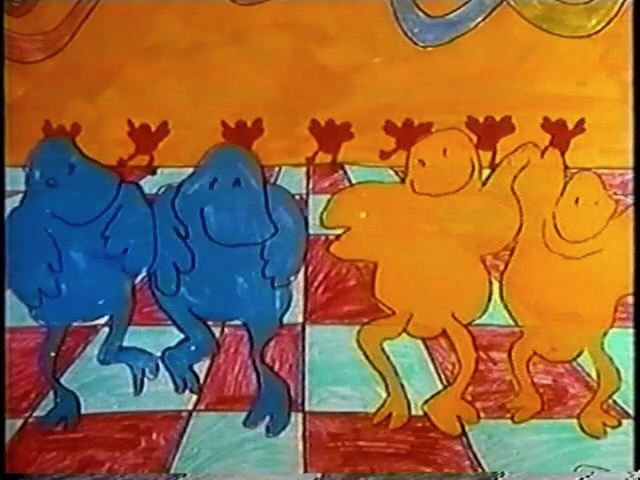
Bart is cursed with a seemingly infinite supply of hats until he trades with the dickhead king. A “Madcap Model,” not a Puppetoon. I like that it’s full of light and shadow.
Praise Be To Small Ills (1973, Tadanari Okamoto)

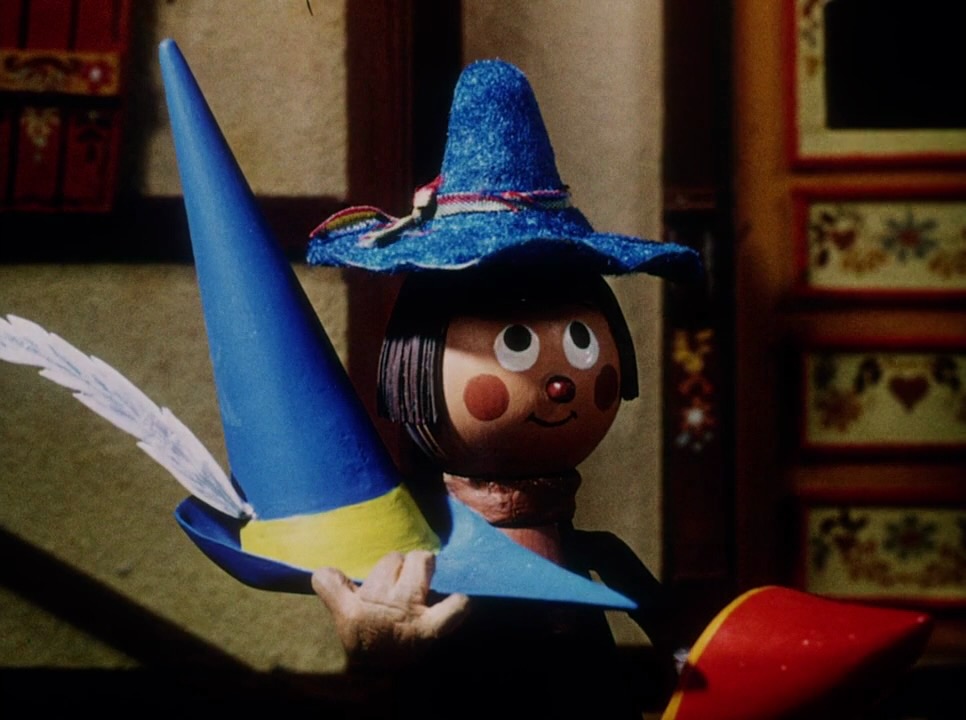
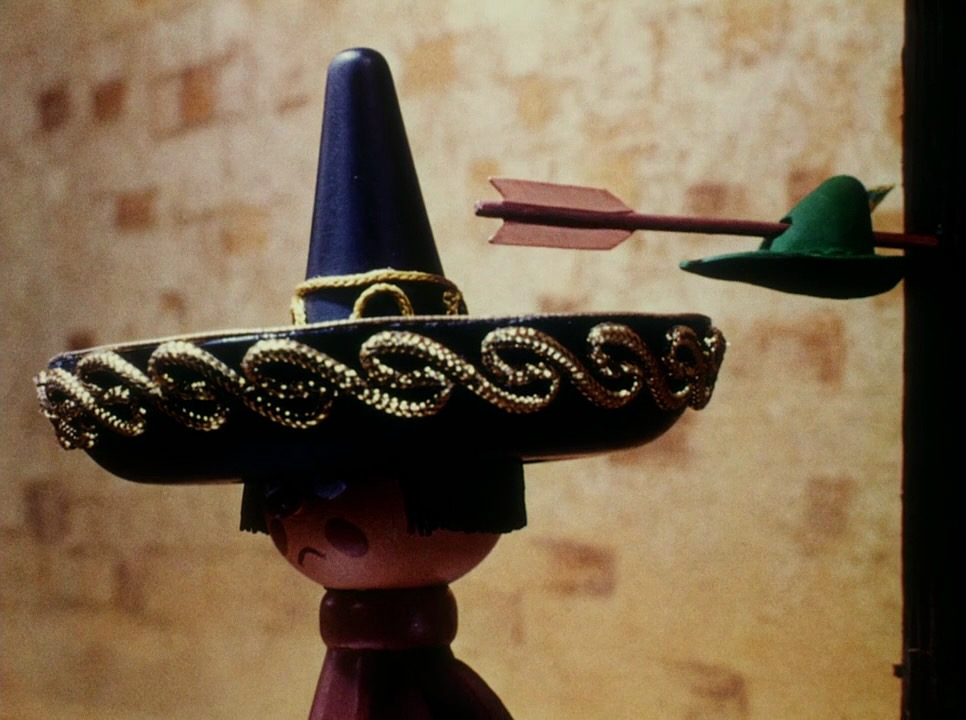
A rare Katy pick, this was a musical story about two men who lived with demons: one a sickly father of many children who managed to get by for forty years despite being weakened by a demon, the other a big strong manly man whose entire family was exploded by 13 demons on the night their first baby was born. We chose to ignore the life lesson you’re supposed to learn from all this (??) and focus on the music and cool paper-diorama animation.


Gorilla My Dreams (1948, Robert McKimson)

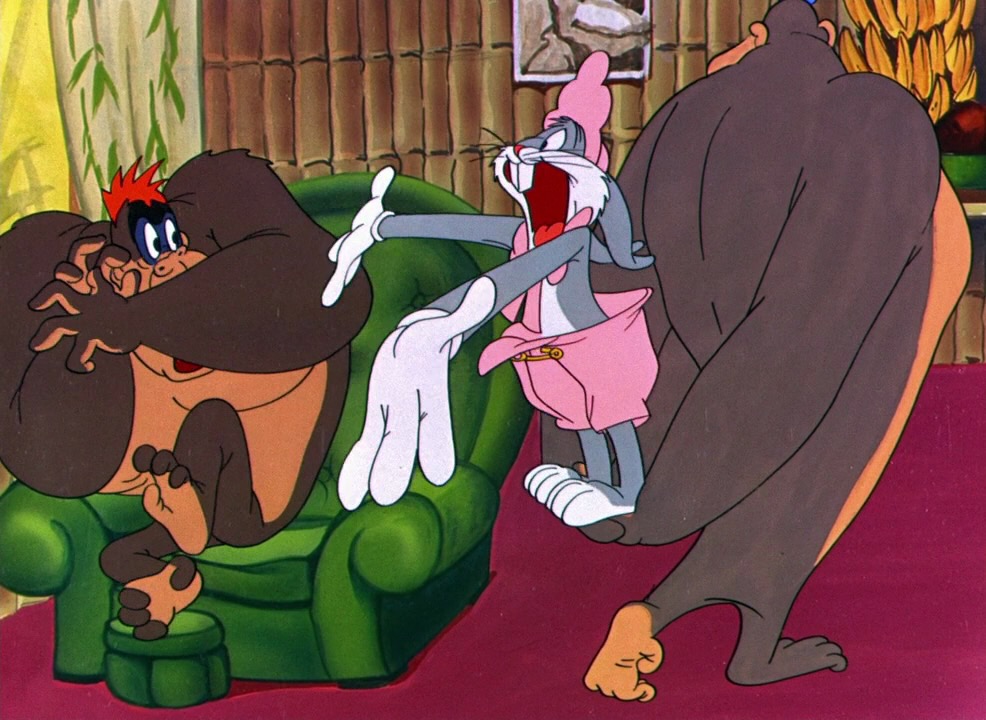
Also not a Daffy but a bugs, who washes up on an ape island and gets adopted by a baby-crazy ape mom then gets attempted-murdered by her husband. Fortunately no cannibals here, just quick a Tarzan cameo.
The Emperor’s New Clothes (1953, Ted Parmelee)

Everyone pretends they can see the emp’s “invisible clothes” until a kid gives the game away. The writing and dialogue is odd, Emp’s face-symmetry oval is visible, UPA maybe not firing on all cylinders here.


The Unicorn in the Garden (1953, William Hurtz)

A pleasant man finds a unicorn eating his flowers one morning, wakes up his shrew wife to show her. She calls the cops instead to have him committed, but when they arrive he acts cool and she’s hopping around talking unicorns so they nab her instead.


Steamboat Willie (1928, Walt Disney)

My favorite out-of-copyright Disney short… but wait, why did I not know that this movie is a cavalcade of animal cruelty? Mickey throws things at a parrot, a cow is force-fed, A goose and a goat and pigs are turned into musical instruments, a cat is swung by its tail, a baby pig is kicked. On top of this the ship captain aggressively chews tobacco and Minnie gets lifted by her undies. On the plus side, Mickey invents the Anvil Orchestra.


A Corny Concerto (1943, Robert Clampett)

Two mini-musicals as Elmer conducts Strauss.
McKimson, Tashlin, and Stalling – all the boys turned out for this one.

1. Porky and his dog hunt Bugs in time to the music.

2. A quacking swan rejects the grey duck until he violently rescues her babies from a vulture.


Felix in the Ghost Breaker (1923, Otto Mesmer)

Why does the Felix DVD open with a text crawl telling us that after Mickey Mouse stole Felix’s merchandise sales, producer Pat Sullivan’s wife “fell or jumped from a hotel window?” Why not add that Pat had a history of incompetence, was a convicted child rapist, and drank himself to death the following year? Anyway, we’ve all decided to give New Jersey’s own Otto Mesmer the credit for Felix and these films, and Otto continued the Felix legacy for another sixty years.

A ghost is tormenting a farmer and his animals, Felix leads it away with a bottle of rum (which ghosts love) then holds it at gunpoint (future note: Felix is armed) until the farmer arrives for the scooby doo ending. When did ghost breaking become busting… there were Ghost Breaker films through 1940, and Ghost Busters and Chasers in the early 1950s, then busting became the default after the famously unprofitable 1984 film.

In the 1920s Felix looked like a snaggletoothed black cat – I’m more familiar with his 1930s character model.

Useful meme for later this election year:


Felix in Hollywood (1923, Otto Mesmer)

That’s more like it – now Felix is pranking people. He makes his wannabe-actor owner rich through shoe sales, then the owner is off to Hollywood to find a job in the movies. Felix does get another gun… his magic bag of tricks wasn’t invented until the 1950s but he disguises himself as a black bag to stow-away to Hollywood, where he meets caricatures of nobody I recognized (reportedly Gloria Swanson, Ben Turpin, Tom Mix, and Cecil De Mille) and poses with Chaplin. These are mildly meta, then, since he’s already in a movie, and in the previous one the ghost came towards camera and threatened the viewers.


Face Like a Frog (1988, Sally Cruikshank)

Absolutely wild all-things-possible animation at a frantic pace, like a PG-rated 1980s Superjail. I guess a frog gets seduced into entering a spooky house, then escapes through the basement. I was gonna say this has insane music for a short, turns out it’s by Danny Elfman, same year as Beetlejuice.


Quasi at the Quackadero (1976, Sally Cruikshank)

Quasi (pronounced KWAH-zee) lives a decadent life in bed watching TV programs of other people doing work. Anita and Rollo take him to a psychic carnival, plotting to lose him there, and succeed in knocking him down a “time hole” into the dinosaur age. All the best animators come from New Jersey. The score composers wrote a book called “The Couch Potato Guide to Life” which is also about getting warped from watching too much TV.

After Quasi’s disappearance, Chairy found a new home in Pee Wee’s Playhouse:

The roll-back-time mirror also rolls back your clothing:

And with that I’ve seen all of Jerry Beck’s 50 Greatest Cartoons, and written up all but nine in the book – five of those being Tex Avery shorts. Now to rewatch those nine, and find the sixty-ish runners-up. A man’s life work (watching cartoons on the couch) is never finished.