Bead Game (1977, Ishu Patel)

Stop-motion beads create a series of creatures devouring each other until inevitably, as most animated films do, it becomes a cautionary tale about senseless human violence. Really impressive work, fast and complex, synched to a percussion soundtrack, and I don’t know how they got that 3D light effect in the final minute. Up for the oscar that The Sand Castle won.


Paradise (1984, Ishu Patel)

A completely different kind of thing, bright 2D animation, frames fading into each other to create a slow dreamy blur-motion on everything. All very bird focused. A black bird flies into a magic castle made of a million points of light and sees a human king and a parade of colorful exotic birds. Back in the real world he brutalizes all the local birds and flowers, stealing colors and patterns and props to make himself look prettier, does a crazy dance for the king who locks him outdoors in the cage of shame. After escaping, I guess he lives in harmony with his fellow wild birds. Lost the oscar to a shorter British thing I haven’t seen.


Labirynt (1963, Jan Lenica)

This is exciting since I’ve watched the Lenica & Borowczyk shorts but not any of his solo work. Man in a wingsuit descends into the city and hides from various beasties and sees different animal-based horrors. Surreal low-motion clip-art animation, full of birds and moths and traps. He’s finally captured, scanned and identified, rescued by his hat-bird, then shredded when he attempts to escape in the wingsuit. Verdict: cool. This won a prize at Annecy, where Borow also won for his Concert de M. et Mme. Kabal.


The Cameraman’s Revenge (1912, Wladyslaw Starewicz)

One-ups the Lenica by using actual dead bugs (with wire legs) as stop-motion puppets. A cheatin’ movie, a couple of beetles make out with other bugs and get caught. A jealous grasshopper films the husband with a hot dragonfly – including through their hotel keyhole – and projects it when the beetle couple go to the movies, causing a riot that ends with the beetles in jail. Robert Israel soundtrack on the now-rare DVD.


The Frogs Who Wanted a King (1922, Wladyslaw Starewicz)

Clay frogs, a hundred times more expressive than the insect cadavers. Fed up with democracy, the frogs pray to the gods to be sent a king. He sends them a stone idol and they get pissy, so he sends a stork which eats all the frogs it can find. An original Aesop fable (he sent a water snake instead of the stork).


Little Bird Gazouilly (1953, Wladyslaw Starewicz)

I can’t resist watching another bird short and catching Starewicz forty years later. It’s a beautiful one, adding camera movement to the complex stop-motion. Baby birds are born in the trees over the city, and the bulk of the story follows their first day in the human world, getting into hijinks. A bird gets mad at a mirror, just like my birds did earlier today. Wladyslaw had moved to France after 1917, and this film and many more were co-credited to his daughter Irene.


There Will Come Soft Rains (1984, Nazim Tulakhodzhayev)

Opens with an egg, but it’s not another bird movie, it’s a breakfast-making machine. The humans have disintegrated but the household automation carries on. The concept (by Ray Bradbury) and illustration is cool, but the animation is nothing much. Aha, it’s a bird movie after all, as a bird flies in the open window while the automation is celebrating the new year 2027, and the anti-intruder robot arm tears the house apart. It doesn’t end great for the bird either.

Symphonie Diagonale (1924, Viking Eggeling)

Patterns of curved and diagonal lines rhythmically shift and unmake themselves. Good modern soundtrack by Sue Harshe.


My Childhood Mystery Tree (2008, Natalia Mirzoyan)

A Russian kid whose main fear is that hawks will steal his teddy bear has an intricate dream of human-held cities of junk collectors atop a giant tree. After a dogged chase, he refuses to give up his bear when asked, leading to the collapse of their entire owl-bug society.


Kitty Kornered (1946, Robert Clampett)

Porky has too many cats, tries to put them out for the night but they revolt and take over the house. I like that the red-nosed cat’s whole personality was “the drunk one.” Their leader is a proto-Sylvester. A shadow-puppet dog and a martian invasion get involved.

A Dream Walking (1934, Dave Fleischer)

The soundtrack makes good use of the title song as Olive goes sleepwalking across rooftops into a construction site, while P and B beat each other up for the chance to be her rescuer. P “wins” and takes credit, but O gets home safely on her own. Some good 3D movement through the girder grid. Wimpy’s voice is different than I remembered it.


Adventures of Popeye (1935, Dave Fleischer)

Something different, a live-action child holding a Popeye comic gets beat up by the local bully, Popeye jumps out of the book and runs a clip show of action scenes from previous shorts, the kid gets the message, eats his spinach and pummels the bully.


Minnie the Moocher (1932, Dave Fleischer)

Betty thinks her parents are cruel for making her eat sauerbraten, so she runs away with Bimbo. They hide in a cave where Cab Calloway and his band perform the title song (they appeared in person over the opening titles but an animated walrus is his stand-in here) and this scares them into returning home. Anyway we’ve learned that Betty’ parents are German immigrants, so the name Boop might’ve been an Ellis Island misspelling of Boos or Rupp or Hoppe.


The Merry Musicians (1936, Aleksandr Ptushko)

Puppet animation: four old mistreated animals run away from home and form a traveling band, playing the same song over and over. Needing a place to stay, they find a house of thieves in the woods and scare away its residents, and live happily ever after. Not as much fun as it sounds.


The Barber of Seville (1944, Shamus Culhane)

I haven’t seen one of these in a while – is Woody meant to be chaotic evil? He goes into a barber shop to get a Victory Haircut to support the troops, but the shop is vacant so he takes over, terrorizing anyone who walks in. He does sing Figaro in the last scene.


Who Killed Cock Robin? (1935, David Hand)

How many Disney murder mystery musicals are there? A lady wren seems like a Mae West caricature. The cops respond to the crime with a wave of random brutality (actual lyric “We don’t know who is guilty so we’re gonna hang ’em all”). Turns out Cupid shot the robin, who was only dazed, wakes up to kiss Mae Wren in court. Travis Wilkerson later made a film with the same title. Oscar nominated, beaten by the same director/studio’s Three Orphan Kittens.


The Band Concert (1935, Wilfred Jackson)

Another orchestra toon, people were really into orchestras back then. Mickey’s conducting the William Tell Overture, and an early-model Donald interferes, as does a bumblebee and finally a tornado. Much violence ensues, excellent animation. The first technicolor Mickey, won an award at the third Venice Film Festival.


Clock Cleaners (1937, Ben Sharpsteen)

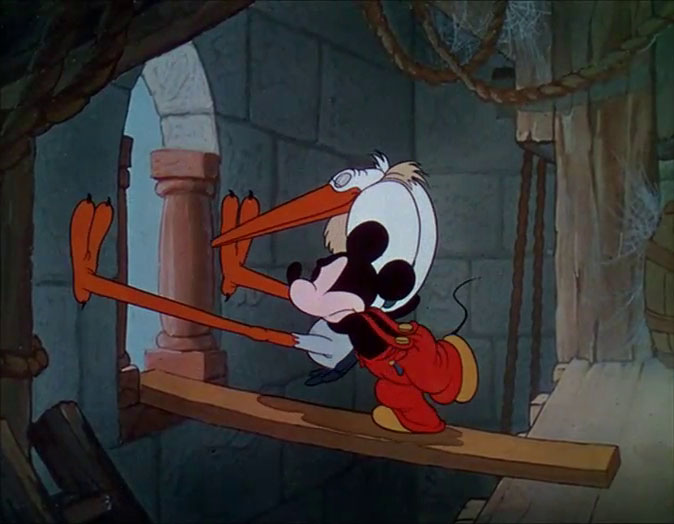
Literally clock cleaners, like with feather dusters on a clock tower, none of them especially competent. A nesting stork interferes. Some better aerial antics than the Popeye sleepwalking thing.


The Brave Little Tailor (1938, Bill Roberts)

A misunderstanding has Mickey appointed the town giant slayer, offered millions of “pazuzas” and the hand of the princess if he succeeds. I must’ve seen this short a hundred times as a kid, one of the few readily-available Disneys. MM getting swallowed is still a cool scene, and the giant swatting at MM in the same way that MM was swatting flies in the opening scene is nice. Our guy prevails, and the town harnesses giant-snores for wind power. Another oscar-nominated Disney short that lost to a rival Disney short, the far inferior Ferdinand the Bull.


Night on Bald Mountain (1933, Alexander Alexeieff)

Animated engravings? Ah, it’s pinscreens, invented by the director and his wife. Blobby 3D rotations, back-and-forth repetition, transformations, what looks like a photographed miniature town. This goes in a bunch of different directions, all set to familiar music. Can’t say I got what it’s going for (ghosts rampant on the mountainside?) but it’s a change of pace from the Disney stuff.


Fétiche / The Mascot (1933, Ladislas Starewicz)

No subtitles, but a feverish kid is haunted by the roomful of dolls he’s resting in, seeing them come alive in glorious stop-motion. A wizard conjures an orange, fought over by a cat and monkey.
Dollmaker mom takes the dolls out to the city, presumably to sell, but if you’re sewing together evil dolls with souls, it’s a mistake to create a knife-wielding thug. He arranges an escape from the moving car, but rather than a fun Toy Story 2 romp through Fontenay-sous-Bois, they get trashed and broken and lost, only the cute dog surviving to the shop, though he escapes his buyer immediately and then it does become Toy Story 2. The blending of controlled puppetry and live-action chaos is beautifully done. Suddenly the devil is there, resurrecting the skeletons of eaten animals, summoning creatures made of paper and shoes and vegetables to his lair, where they party all night. Our doggy comes too, with his prize orange, which he never bites into, so it keeps getting stolen. Some of his old housemates are there helping cause havoc. The devil tries to sow discord and provide entertainment but gets his ass beaten to death – as does everyone else when puppet cops with clubs start brutalizing the innocent. The dog makes it home with his two uncredited-actor people (while Ladislas, who appears for ten seconds in the film, gives himself a prominent opening credit).


L’Idee (1932, Berthold Bartosch)

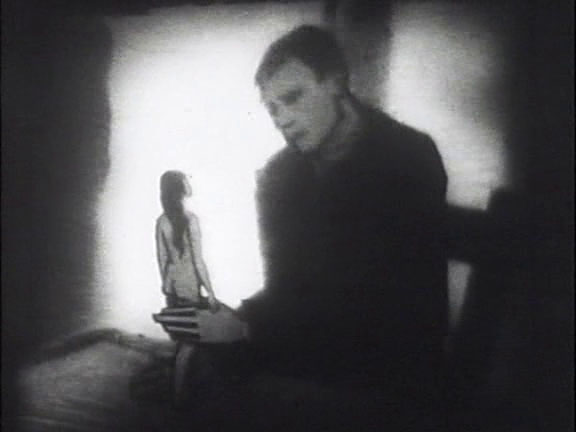
Guy has a good idea – his idea is for a miniature naked woman he can hold. He puts her in an envelope and mails her to the society of overdressed men, who don’t appreciate her at all, wishing her to be overdressed. The dreamer reimagines her fullsized then goes to town square to convince others that his naked-woman idea is good, but they are dicks and have him arrested and killed. A creepy guy who hangs out in crypts rediscovers the idea in the modern era and has her mass-produced on paper, and this idea givess an overdressed guy a new idea: that he should send people to war in order to get rich. Thousands die, while the original idea re-merges with the cosmos. Dour black and white animation, hard to tell what technique was used from my low-res copy, but the wikis say it’s multiple layers on glass with paper backgrounds.


The Little Match Girl (1937, Arthur Davis)

The barefoot girl’s matches are battered by a merry bustling new year’s crowd. She finds a quiet spot and starts lighting matches in a futile attempt to stave off the cold. From other versions I’ve seen, I don’t remember her lovely fantasies (having shoes and a doll and a parade of naked angels, etc) getting destroyed by a violent storm as she dies.


Galathea (1935, Lotte Reiniger)

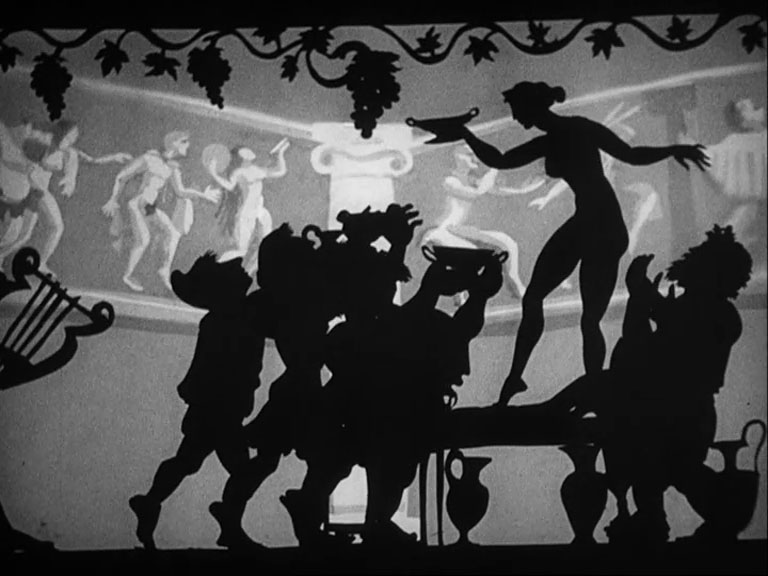
An excellent followup to L’Idee, about a guy who sculpts a naked woman who comes to life, to the distress of his wife. He assumes he’s got a new sex slave, but Galathea trashes his studio and runs off. When the sculptor hears that she’s carousing at the pub he brings her home, where the wife tries to solve the problem by putting clothes on Gal, but that doesn’t go well. While everyone’s fighting, Gal transforms back into a statue and all the town’s women get their men back. Shadow-puppet animation of course, nice and crisp looking.


Daffy Duck in Hollywood (1938, Tex Avery)

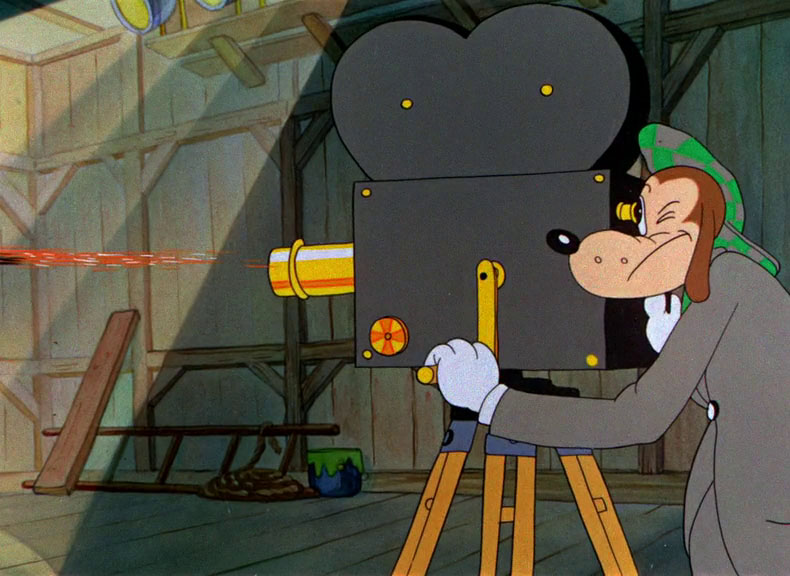
Daffy causes chaos at a movie studio, then cuts a bunch of random pictures together onto a single reel, driving an Italian pig director insane.