A difficult story to film, but major film artists keep trying for some reason: Bela Tarr, Joel Coen, Polanski, Kurosawa. Welles turns in one of the crazier versions, the actors having a great time with their Scottish accents then lipsyncing (very well) their own performances on an abstract paper-mache stage. The opening 8-minute overture over black would be impressive if it wasn’t big symphonic 1940s music.
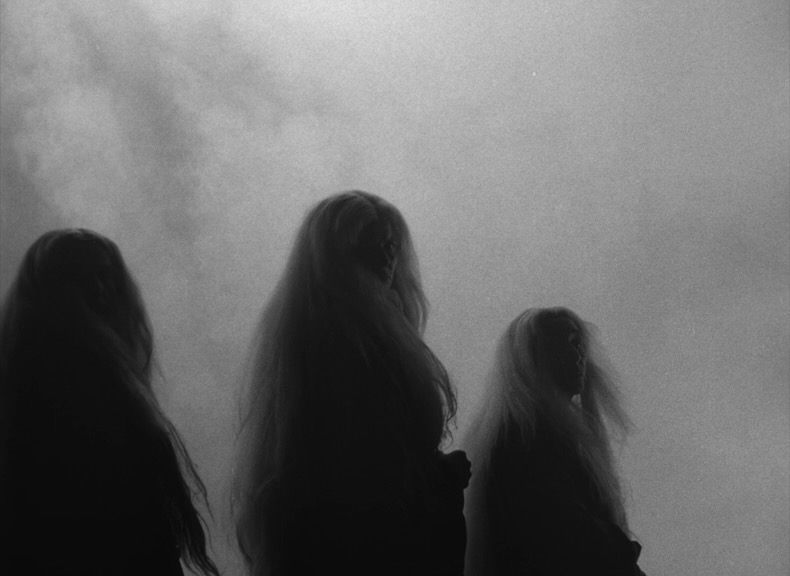
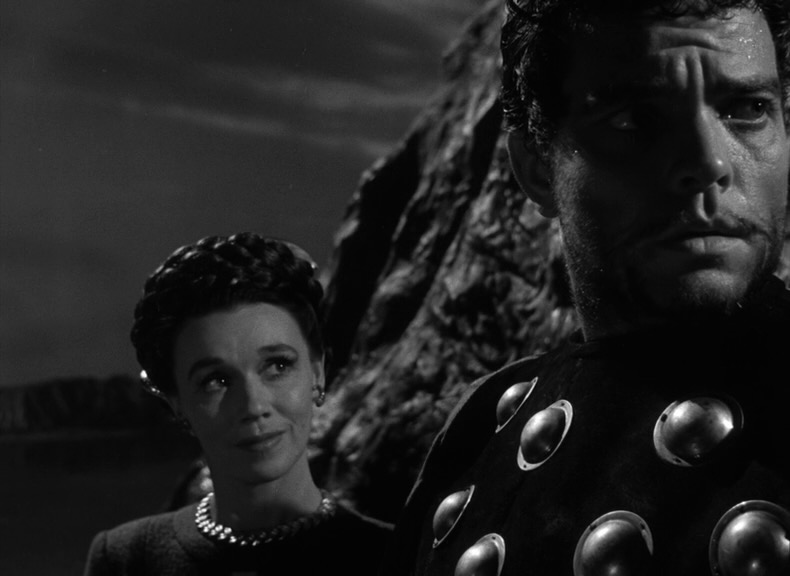
Lady M would not become a star, but had decent parts in Ford and Lang films and voice roles in major Disney movies. Mac’s destroyer Macduff is Dan O’Herlihy, Bunuel’s Robinson Crusoe. Heir resurgent Malcolm is Roddy McDowall, unrecognizable from either Planet of the Apes or Fright Night. Mac’s short-lived witch-prophesied friend Banquo and the late King Duncan are original Welles Mercury players. The Joseph McBride commentary is much better than the Tim Lucas, from what I played of ’em.
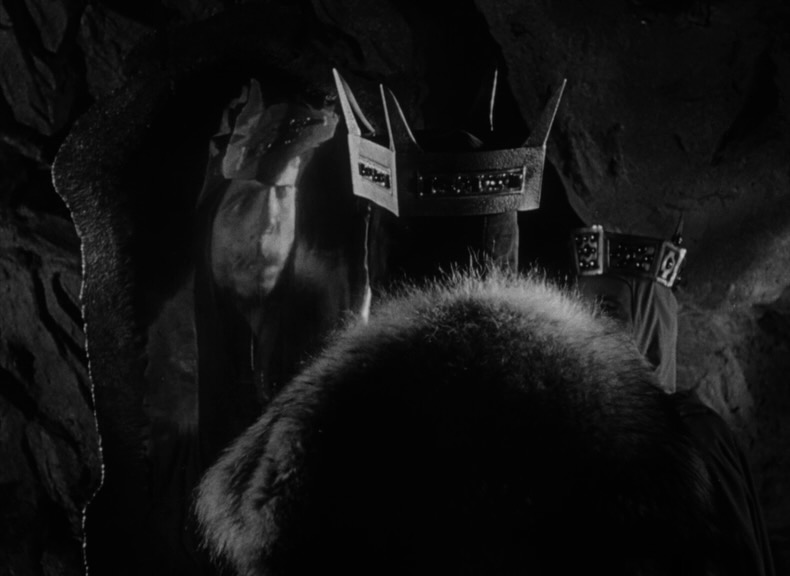
Welles’ approach to the material is wildly neo-primitive and so expressionistic that one can never be entirely sure whether the action is taking place in interiors or exteriors; the same ambiguity persists in the spoken text, where off-screen internal monologue and on-screen external speech often seem only a breath apart. The witches’ foaming, bubbling cauldron and Macbeth’s equally unstable consciousness are the closest we can get to any continuous sense of location, and the unabashed B-movie artificiality of the sets confirms that Welles wanted to draft something closer to a charcoal sketch than a finished canvas.
James Naremore:
Welles has cut extensive passages from Shakespeare’s opening scenes, scenes establishing Macbeth as a trusted soldier whose ambitions gradually take control of his better instincts. As a result of the cutting, Lady Macbeth enters the film sooner than she does in the play, and we are given very little sense of her as a malevolent, psychologically interesting influence over her husband. The film simply shows the pair as evil conspirators and plunges immediately into murderous barbarism.