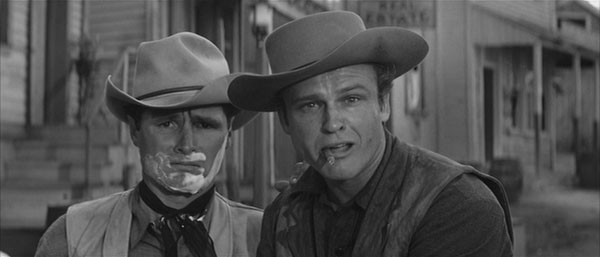
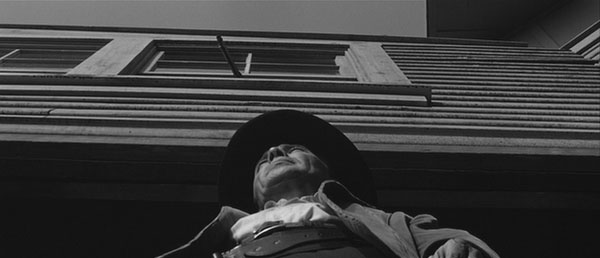
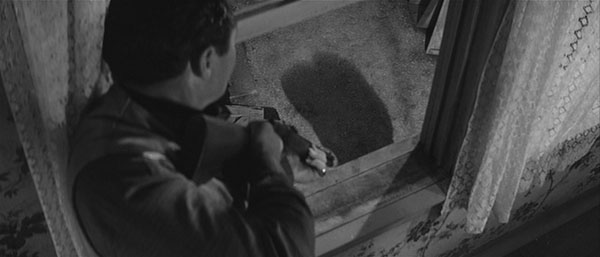
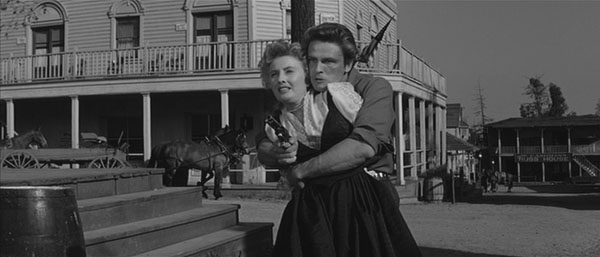
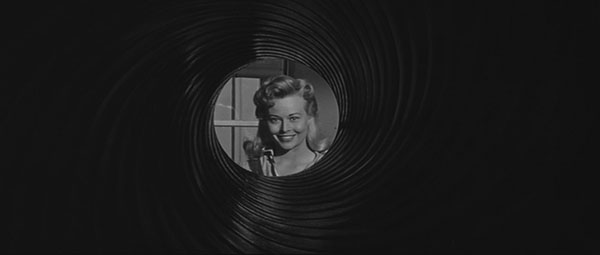
“Send this by pneumatic tube, quickly!”

This is now the earliest feature film I’ve ever seen (and the next two runners-up are also by Feuillade). Really this is five movies, each a multi-part serial, so maybe it’s the five earliest feature films I’ve seen…


PART ONE: IN THE SHADOW OF THE GUILLOTINE

The criminal master of disguise Fantomas is introduced robbing a rich woman of her jewels in a clumsy-ass fashion… he gets caught in her house then just walks up, looks at her threateningly, and walks away with them. They couldn’t think of a better scenario for the opening of their movie? I guess it shows that he’s an imposing character, and his appearing-ink business cards are cool (see bottom of page). Then it’s on to introduce Inspector Juve with his funny mustache and his reporter buddy Fandor. A man has been found murdered, so Juve questions his widow (Lady Beltham), who it turns out is having an affair with Fantomas. When inspector and reporter discover this, they easily capture the criminal, who is imprisoned to await the guillotine. But through a convoluted scheme, the widow springs Fantomas – she flatters an actor celebrated for portraying Fantomas on the stage to agree to meet her, and pays off the incredibly dense prison guards to spring Fantomas to come meet her at the same place (with the understanding that he’d be returned to prison within an hour) and they do the ol’ switcheroo – but Juve notices before the actor can be mistakenly executed (in the novel he was too late).

The regular Feuillade style is apparent here – people with comical mustaches who look conspiratorially into the camera, lots of crime, outdoor scenes with actors in cool black capes, convoluted scenarios and a plot that seems to be making itself up as it goes, helping the cliffhanger feeling.

Some nice outdoor shots in this movie. Feuillade is fond of long walls. I like them too.
image

The actor has all these admiring women, yet he sneaks off eagerly when he gets the letter from Lady Beltham? I guess her letter made her seem more “loose” than the ladies in his dressing room.
image

Juve, triumphantly stymied. Fandor (on left) looks on.
image


PART TWO: JUVE VERSUS FANTÔMAS

Opening credits are cool, showing the main actors crossfade into their characters-in-costume (in Juve’s case it’s changing into a hat, a fake mustache and a less-nice suit). At the start, Lady Beltham is presumed dead – but actually she’s organizing a gang of bandits who rob passengers on a train car then cause a train accident to cover up their crimes. Or was that another woman? Either way, our reporter is on the train and escapes with another passenger. He and Juve are lured into a gun trap, but they escape and tail the woman, getting her to lead them to Fantomas, who escapes by putting on his suit with false arms then simply running away, leaving Juve and Fandor each holding an arm. Brilliant! Okay, then Fantomas has a list of people he’s having mysteriously squeezed to death, so Juve wears spiked bands over his body when he goes to sleep and has Fandor hide in the room – wakes up being choked by a boa constrictor, ouch. Later, they’ve figured out where Fantomas hides out, so they storm the house and kill the boa (for real, on camera, uncool) but the criminal mastermind was hiding in a tank of water in the basement, escapes, and blows up the house!! Will the cops survive?? Great episode, action-packed.

great train robbery:
image

wrestling a boa – notice the spiked suit:
image

awwwwwesome closing shot – note sprocket holes:
image


PART THREE: THE MURDEROUS CORPSE

Oh man, this is not gonna be a strong plot summary. I was tired, and I thought it’d be 50 minutes but it was 90. Wasn’t doing anything else while watching but somehow I still got confused. So Juve is missing presumed dead from the house explosion and Fandor is investigating stuff on his own. Fantomas I think is dressed as an old woman who trades stolen goods, or maybe that was an actual old woman, and Juve is made up as a retarded homeless guy who helps her out. A dude is framed for a murder, then killed in prison, then abducted from the prison… WHY this happens I never figure out, but Fantomas makes gloves out of the man’s hands (seriously) and commits a bunch more murders leaving the dead dude’s fingerprints behind. The cops are, of course, mystified, but Fandor comes across a list of the murder victims in the order they’re killed. He finally hooks up with Juve again, Lady Beltham reappears for a minute, probably some other stuff happens but our heroes end up tracking Fantomas to a house and cornering him in the one place where there was a secret trap door. Whoosh, through the trap door and our heroes are empty-handed (actually they got the skin-gloves). NOT as radical an ending as the previous part, and maybe a bit long and convoluted.

Fandor on the rooftops of paris:
image

Juve (in disguise) approaches Fandor (studying list of victims):
image

They’ve got him cornered! Note trap door and icky gloves:
image


PART FOUR: FANTÔMAS VERSUS FANTÔMAS

Juve is arrested straight away on suspicion of being Fantomas (what, because he couldn’t catch the guy?). The movie is telling us that the written situations are more important than the characters, since our hero Juve sits out most of the movie, making Fandor the hero by default. Fantomas reappears as Tom Bob (seriously, that’s his name!), American Detective. Lady Beltham has remarried and become the Grand Duchess Alexandra. She organizes a costume ball to collect reward money for the capture of Fantomas, and Fandor, not thinking things through, goes to the ball dressed as Fantomas. So do a police captain and Fantomas himself. A Fantomas-fight ensues, the master criminal escapes and the captain is killed.

After Juve is finally released, he’s captured about ten seconds later by Fantomas’s men, who believe that Juve is really Fantomas and want their share of the loot that they’ve helped steal (Fantomas ripping off his own men is a running theme). Fandor is on top of the plot and helps bag the men, capture the loot, rescue Juve and even capture Fantomas, but F. slips the men by walking them into two holes in the ground, the silliest escape in the whole series. I’m starting to doubt that this is a planned five-part series which is building up to something… think it’s just a regular movie franchise that makes it up as it goes along (nope, turns out they are closely based on a series of novels).

Left: “Tom Bob” Right-center: blood leaking from hole in the wall, 70+ years before Evil Dead 2
image

Fantomas vs. Fantomas at the costume ball:
image

Juve, kidnapped, hears Fandor hiding in the barrel. People are always hiding in barrels and baskets in these movies.
image

Juve fingers the crooked guard, an inside man who works for Fantomas:
image


PART FIVE: THE FALSE MAGISTRATE

I was hoping for an awesome ending but it seems the series peaked with part two. The plot gets more ludicrous, with Juve voluntarily taking Fantomas’s place in a Belgian prison under the logic that F. was gonna break out anyway, and Juve’s men can just catch him at the border to France. Of course Juve’s men suck at catching Fantomas, so F. runs around impersonating a judge while Juve rots in jail for the first hour of the movie. Fandor buzzes around of course, but doesn’t do all that much… this one is mostly about the criminal, with his disguises and lucky breaks, ripping off the wealthy and his own gang members.

These gang members scammed a rich guy and his jeweler, no big deal. F. takes it a step further, killing the thief with the jewels in a horrible way (he is rung to death inside a giant bell), killing the rich woman’s husband then blackmailing her for more money. Fandor finally figures out what’s up, Juve is released and they corner Fantomas… but a few hours earlier, as the judge, he’d told the warden to release the master criminal Fantomas secretly at midnight because it would actually be Juve in disguise. Juve, unwittingly this time, helps Fantomas escape again!

Fantomas helps dude up into the bell where jewels are hidden. Dude throws empty jewel case down and Fantomas takes away the ladder. The next day at a funeral when the bell is rung, blood and jewels rain down on the crowd. Wiiicked.
image

Note how the Belgian prison looks awfully like the French prison (above):
image

Fantomas, as the judge, feeling the pressure:
image

So is this one of the first great features of cinema? Does it meet expectation? Is it still a good movie today almost a century later? Is it as cool as that classic poster which now graces the DVD box cover? Well, no to that last one, but yes to the others. I still enjoy Judex better, but Feuillade’s crime serials are amazing fun, winking at the audience (sometimes literally) at times, getting cruel and serious at others, but always a good time to watch. And you can probably find someone who claims that they changed cinema forever… let’s see… yep, J. Travers says it introduces “not just the idea of a film series, but also [establishes] the crime thriller. The essential ingredients of film noir and the suspense thriller can be seen in this film which, remarkably, (when you consider when the film was made) still appears surprisingly modern.”

He qualifies the five movies: 1. most dreamlike and innovative, 2. best action, 3. most sophisticated, 4. most convoluted, 5. the weakest, comparatively mundane Each movie was divided into chapters with title cards – I didn’t realize each of these was a different serial episode! That means to see the complete Fantomas at the time of release, you would’ve had to go to the theater twenty-one times!

People are always mentioning how much the Surrealists loved these movies… I just read a whole website about it. Watched the bonus feature, wherein K. Newman immediately pronounces it “Phantom-ass.” Now I have to rethink the whole series, imagining Juve, wide-eyed, telling cops “this is the work of phantom-ass!” No wonder they eventually locked him up. Newman says the authors originally wanted to call it “Phant-o-moose” and now I think he’s just messing with us, under the “nobody watches DVD extras so we can say whatever we want” theory. Ahh, he says Diabolik was Fantomas-influenced – I can see that.

Edmund Breon (Juve) was in Les Vampires, took the 1920’s off, then appeared in fifty-some mostly British movies for the next two decades, waiting to die until after he’s been in Howard Hawks’ The Thing From Another World, a good move. René Navarre (Fantomas) was in movies through the 40’s, including a sound version of Judex. Georges Melchior (Fandor) barely made it into sound films. Renée Carl (Lady Beltham was in 180+ silent films – her only sound role was in Pépé le Moko (but last-billed).


“Did you folks in the audience just SEE that?”
image


This just in: a great article by David Bordwell on the series.

Finally it is SHOCKtober and I can watch Stuart Gordon movies again. This one is prep for Stuck, which should come out on video next week. It’s similar to Dagon in many ways: pretty good classic-lit-inspired story, foreign/period setting with cheap-but-good production values, spots of humor, sexual transgression… They’re fun movies to watch with some great characters, but our leads are bland, straightforward, naive dopes. It’s not like I’m rooting for Lance Henriksen, but I can’t bring myself to root for the baker and his wife either.

image

Set during the Spanish Inquisition in 1492 (when Columbus sailed the ocean blue), Lance stars as an evil monk who claims to be extremely religious but tosses the church aside when it interferes with his plan, a man who tortures people for confessions and insists what he’s doing is right. If the movie was released today, it’d be attacked for all the heavy-handed GW Bush comparisons. Lance is surrounded by his cronies: Stephen Lee (the toy-loving dude in Dolls), crazed torturer Mark Margolis (a Darren Aronofsky regular) and by-the-books Jeffrey Combs, and together they torture and kill a woman whose character name sounds like Contessa Alfred Molina (played by the director’s wife Carolyn) and one who claims to be an actual witch (played by the creeeepy hotel woman from In the Mouth of Madness).

Jeffrey Combs:
image

Thrust into this lunacy are a baker and his wife. The baker (also in Gordon’s Castle Freak) is a regular boring dude who can inexplicably take out three knights in full armor using only a spoon, and the wife (her only other role is in a rarely-seen Raul Julia movie) is honest and religious and doesn’t trust the Inquisition. She’s arrested and accused of witchery after she protests a public execution scene, but evil Lance falls for her and tries to get her by alternately threatening to torture her/her husband and offering to release her/her husband. He cuts her tongue out, she escapes by faking death (with help of the real witch – who swallows gunpowder so her body will explode and her bones impale the crowd during her burning at the stake, which I don’t think would really work), the couple escape and Lance dies (torture-free) in his own spike pit beneath the pendulum. Oh, and in the middle there’s a visit from a cardinal (Oliver Reed from The Brood, The Devils and Burnt Offerings!), but Lance locks him up inside a wall a la Poe’s “Cask of Amontillado.”

image

Lance is fun to watch as the monstrous monk. Lots of loving care is paid to torture equipment. Movie’s action scenes are weak, but overall I liked the thing. Happy Shocktober, everyone!

Tonight we will be Liveblogging the Japanese horror movie House!

2 Minutes In: Already I have seen editing tricks I have never seen in a movie before (maybe because they are a bad idea), an animated opening title sequence, continuity problems, poor (or poorly translated) dialogue, and music that emphatically does not fit the action. Only 85 minutes to go!

image

10 Minutes In: Cruising the IMDB… director has made forty movies since House. This is kind of like when I discovered Takashi Miike with Ichi the Killer and realized there are FORTY more things like this somewhere in the world. Only this is much stupider. Woman who plays the grandmother (below) used to be in Imamura and Mizoguchi films, and now she’s in this.

image

20 Minutes In: Holy crap is this music ever awful. So far I am not buying that this is a horror movie. If there’s any “horror” here, it’ll be extremely goofy and everyone will turn out okay (and best friends) in the end. The visual style, editing and sound mixing are all crazed. Wipes and irises all over. And there’s cat tossing!

30 Minutes In: Definitely not a horror. I feel ripped off.

image

40 Minutes In: yep, the goofy horror has begun… but it’s SO goofy it puts Sleepaway Camp to shame. It puts The Great Yokai War to shame! This one might out-goof even Princess Raccoon!

Dead fat girl’s head, mistaken for a watermelon, flies through the air and bites another girl on the butt in front of crazy-fake backdrop:
image

50 Minutes In: I wonder if Sam Raimi might’ve seen this before making Evil Dead 2. Hmmm, and I just found an unauthorized pseudo-sequel to Evil Dead 2 from Italy called House 3/Ghosthouse. So one could rename ED2 “House 2” and form a whole new trilogy. Then we can use the American House IV to finish it off… fitting, since there was no actual House 3 in that series.

image

60 Minutes In: Movie gets tiring after a while. It’s still super goofy, I’ll give it that… not quick bursts of stylistic flourishes – they are ever-present. Must have taken an age to make, with all the insert shots and models and effects and editing nonsense going on. There was some nice piano music earlier but now it’s back to the ol’ spastic theme song. Should we be seeing nude high school girls? Is that okay?

image

70 Minutes In: They just found some sort of leather-bound book of the dead, giving credence to my sequel theories. Also, a piano just ate someone. Maybe we can replace House IV with Death Bed: The Bed That Eats. Hmmm, blood spraying out of a hole in the wall and filling the room… definitely Evil Dead 2-ish. One girl you can tell is the smart one, because she wears glasses, has her hair in no-nonsense ponytails, and knows what to do when they find a book (she reads it).

image

80+ Minutes In: I think the movie just ended, but there’s another 15 minutes on the file. Oh good, here’s a music video. Are they burning the girl’s stepmom’s head? Some voiceover craaaap about the nature of love, then illustrated credits, which I always appreciate.

image

Whew, so what was that? Some kinda teen comedy horror, I suppose. There’s an intro bit where a girl is sad that her dad is remarrying, then she tries going to camp but camp is cancelled. So she and her camp friends go off to her gramma’s house instead. But gramma is an evil witch who gains power from killing children in hilarious ways. I’m not sure who is still alive at the end because I was sleepy, but apparently the stepmom shows up at gramma’s house there, and I think maybe the main girl takes control of the witch activities and something bad happens to gramma. Whoa, I made 221 screenshots… hold on and I’ll sift through them looking for plot clues. No, it’s no clearer. But needless to say, I highly recommend this movie.

image

The director is still alive and working, but the executive producer, Tomoyuki Tanaka, creator of Godzilla?? Dead, dead, dead.

Thanks to Andy, I finally had the chance to see one of the most talked-about avant-garde films of all time. While it’s important to talk about experimental film, it’s more important to actually see the damned things – and while anyone can order a copy of Visionary Film for $26.95, it’s nearly impossible to see Wavelength on any given day.

Unfortunately, it’s one of those times (see also The Leopard) when I check out one of the Great Important Works of Cinematic Art and come out less than impressed. I didn’t find the audiovisual experience very enlightening compared to the descriptions I’ve read of the film. Didn’t dislike it (though I came close to disliking the soundtrack) but not an overwhelming experience like Zorns Lemma, either. A few updates to those written descriptions: (1) It’s not a single, continuous zoom a la Last Days – the zoom moves sporadically and the camera slightly changes position from time to time. (2) There’s sound – a sinewave tone that starts low and ends high, with other quieter tones joining it at times and sync sound during the four action scenes. Those action scenes: Woman gets bookshelf delivered, two women listen to “Strawberry Fields Forever”, man dies, girl makes phone call expressing concern that there’s a dead man in her apartment. (3) There’s a twist ending – after zooming the full length of the apartment, the photograph on the wall is of waves in the sea. I get it, ha ha. After reading Sitney and Snow, I see why the movie is interesting, even exciting in theory, but the viewing experience just wasn’t there… wouldn’t want to see it again anytime soon.

P. Adams Sitney: “This is the story of the diminishing area of pure potentiality. The insight that space, and cinema by implication, is potential is an axiom of the structural film.”

Snow: “I wanted to make a summation of my nervous system, religious inklings, and aesthetic ideas. I was thinking of planning for a time monument in which the beauty and sadness of equivalence would be celebrated, thinking of trying to make a definitive statement of pure Film space and time, a balancing of ‘illusion’ and ‘fact,’ all about seeing. The space starts at the camera’s (spectator’s) eye, is in the air, then is on the screen, then is within the screen (the mind).”

Hollis Frampton: dead man:
image

Actors included Joyce Wieland and Hollis Frampton (as the man who dies). Assisted by Ken Jacobs, and sound by Ted Wolff, who unsurprisingly didn’t do any other film sound after this. Snow screws with the camera a bunch: focus, filters, film stocks (supposedly – I hardly noticed), light settings, time of day and lighting inside, etc. My favorite part is one or two frames where the picture on the wall towards which we are slowly zooming is highlit by a sunburst of drawn lines (screenshot below). I’m glad I got to see it anyway, and glad Andy played this and not Warhol’s Empire or something.

image

When I got home, watched WVLNT (2003) and Prelude (2000). The former was a shortened version of Wavelength “for those who don’t have the time” – he cut the movie into three equal parts and superimposed them. Except for the now-intolerable soundtrack, I liked this version much better! There’s much more to look at.

image

Prelude was a cute intro bit from the same Toronto Film Festival that brought us The Heart of the World. It’s hard for me to tell exactly how cute since my copy is such low-quality (think it came from streaming realvideo on the TIFF site), but it seems to be a single camera take, clean picture on a clean set, with unsynched sound edited in all over the place – actors and film crew talking about films in general and the one they are presently inside. This and WVLNT travel a similar road as Snow’s SShtoorrty, with its color-coordinated set, single camera move and superimpositions.

image

White kid with single parent is kicked out of his expensive prep school for disciplinary reasons and finds himself at public school, where he wants desperately to be popular so he takes to doing semi-illegal things and ends the movie a hero. Meanwhile, an adult and semi-father-figure to the kid expresses his depression and disconnection by hanging out at the pool behind his house and looking sad. Prison is involved, the school bully is fought then befriended, Cat Stevens songs are heard… but enough about Rushmore, I’m supposed to be writing about Charlie Bartlett! I don’t really want to, though – I wanna write about House and Wavelength and Fantomas instead, so I’ll keep this short.

Pretty good movie… kid becomes the psychotherapist of his whole school, prescribing drugs he gets from his own analyst after finding out you can get high off Ritalin. His dad is not dead but in prison, Charlie ashamed doesn’t walk to talk about/to him. RD Jr. is like a dull cross between Bill Murray in Rushmore and the principal in Ferris Bueller, but a good and sympathetic character. Hope Davis is actually better than Downey as Charlie’s crazy/spacey mother. Charlie has a crush on the principal’s daughter, and consults one kid into attempted suicide before he’s caught. Principal is fired (and ends up with a happier job as a teacher) after students (only slightly provoked by Charlie) trash the school as a protest against cameras in the student lounge.

Jonathan Rosenbaum compares it not to Rushmore but to Pump Up The Volume and Mumford. “Charlie Bartlett might not be as bold as its predecessor. Yet given how politically gutless most teen movies have become, it may provoke audiences as much as [Pump Up The Volume] did 18 years ago. I’ve lost count of the number of times its opening has been delayed since I first saw it last July, so clearly it has somebody worried that its defiant spirit will cut into its profitability—which is entirely to its credit.”

Shot immediately after Nosferatu. Kinski looks worn out, stupid and insane. IMDB says “The entire 80-minute film was shot with only 27 cuts.” but I remember five or six in the opening credits alone, so nice try. I didn’t know there was a best supporting actress award at Cannes, but Eva Mattes won it. Movie was trounced by Tin Drum and Apocalypse Now for the grand prize, though, and it’s not on either of the top 1000 movies lists that I track, but it’s now on mine. Looks just like Nosferatu, same crew worked on it. All giant buildings and city and space dwarfing our characters. Feels like a play – you can totally tell the way people talk to themselves that it was written for the stage. Dialog is awesome. Writer Georg Büchner is famous mostly for Woyzeck, and this is one of twenty film adaptations of it.

image

Kinski is a soldier, or a military barber I guess, in the 1800’s. He’s seeing Marie, and has been for a while since they have a son together. Lately Marie likes a drum major, no surprise since Kinski is completely nutty and nervous, due in part to the all-peas diet his doctor (above) has him on. After a movie’s worth of foreshadowing that crazed Kinski will kill someone and most likely his wife, he kills his wife down by the river. That’s it, except the film and script are way more poetic than my description.

The Noroit-ian band:
image

V. Canby in the Times: “At the heart of each Herzog film is a mystery, not because information is arbitrarily withheld, but because every Herzog film is a record of the director’s questions and speculations about his subject — which is, I suspect, why he chooses to do the films he does. To do anything else would be storytelling of a kind that doesn’t interest him. Questions for which the answers are simple aren’t worth asking.”

image

The Drum Major had been in Herzog’s Heart of Glass, would eventually turn up in Haneke’s Code Unknown. The Captain had been in Herzog’s Signs of Life after small parts in Rivette and Welles films. Eva Mattes had been in Strozek and In a Year of 13 Moons.

image

Shadow of the Vampire should’ve portrayed Klaus Kinski as a demon instead of Max Schreck. Anyway, I’d like to see Malkovich playing Werner Herzog.

IMDB says ’87, websites say ’90 but the movie’s own credits say 1989, so there.

It’s not the first time I’ve watched a painfully low-quality downloaded video of a rare art film on J. Rosenbaum’s list of 1000 favorite movies only to come out scratching my head… and it won’t be the last. It’s impossible to tell if the handheld b/w photography is any good because my copy was so poor, but hey it might’ve been.

JR himself says the movie “charts the adventures of a nearly naked heroine who leaves the corpse of her dead lover in a country house, goes to a bar and sets in motion a scabrous free-form orgy before returning to her house to die. The film manages to approximate the transgressive poetic prose of Bataille (a mixture of elegance, raunchy defilement and barbaric splendor) while celebrating female sexual desire without the usual patriarchal-porn trimmings.” That’s Georges Bataille, famed French semi-philosophical writer, whom I know nothing about except from glancing at his wikipedia.

Marie drunkenly wrestles/dances with a dude in the bar:
image

JD Rhodes: “The film’s events more or less follow those of the story. Ahwesh has said that she was drawn to adapt the text because she liked ‘how Bataille does not explain the emotions of the characters’. The camera actually seems to savour its exteriority to the events of the profilmic. The use of silent film intertitles, all actual lines culled from the original Bataille story, reinforces the exteriority of the film’s narration.” Aha, Rhodes also says the cinematography is often under- or over-lit, so my bad copy might not have been as bad as I thought.

Me, I didn’t get it… but then I’m not all that deep, and while watching a nude woman romp through a “purposely” amateur-looking super-8 movie is still more interesting than the recent Batman flick, I never sit there thinking “ah, it’s exactly this film’s deceptive slackness that constitutes its philosophical and even political rigour: only through its superficially amateurish (often hilarious) elisions and dilations, its mordant tautologies and wilful omissions, its hokey dialogue and its raw display of female sexuality can the film succeed in forcing the kinds of questions it does from its viewers.” [Rhodes again]. Nope, just another WEIRD ART FILM to me.

Rhodes: “We think of Pasolini here, of Jack Smith, of Warhol.”
Me: Exactly.

Marie with the deadman:
image

Fred has a decent life with his wife, who is expecting a second baby, when old friend (actually an old friend’s ex) Chloe resurfaces and they start meeting in the afternoons. Fred lunches with Chloe, then goes shopping with her, then kisses her, then sees her naked, then almost sleeps with her but runs back to his wife for a tearful finale.

Fred & Chloe:
image

Progressions from the previous films:
– Fred is married with two kids, so stakes are higher
– We meet the wife and get to know her more than we’ve gotten to know the other “chosen girls”, again raising the stakes.
– a dream sequence wherein Fred meets the girls from the other movies on the street while wearing a magical crystal
– At the end, Rohmer beautifully shows us (below) Fred’s decision to cut it off with Chloe and return to his wife instead of having Fred explain it to us in voiceover.

image

Felt self-conscious watching this with Katy, who didn’t like it. Overly-talky French films with protagonists who have crappy ideas about women should apparently be watched alone, cuz I felt fine watching the five other talky entries with cad protagonists in this series.

As Fred, Bernard Verley is the guy I just saw playing Jesus in The Milky Way (he’s very different here, and not just because he has no beard and is not playing Jesus). Fred has better hair and a better personality than any guy since My Night at Maud’s. Zouzou (Chloe) appeared in a 1977 Edgardo Cozarinsky revolution comedy with Dennis Hopper. Guy who plays Fred’s business partner Gerard was in Stolen Kisses and Bed & Board. Fred’s wife, unfortunately, was in nothing else of note.

Fred’s wife is def. more attractive than Chloe:
image

“What Rohmer gets better than anybody else, I think, is the way in which we justify ourselves, the way we talk ourselves into such silly and demeaning but human interactions with people, that we can justify just about anything. He’s one of the great justifiers. He loves to watch these men squirm their way along through life.” – Neil LaBute, director of the Wicker Man remake. It’s actually a very nice interview, a ten minute appreciation of Rohmer’s cinema.

The famous shot:
image

Fred with a dream-sequence girl… is that Haydée?
image

also: Veronique and Her Dunce from 1958, before the Moral Tales. Shot by Charles Bitsch, who did Le Coup du berger and Paris nous appartient for Rivette. Veronique shows up to tutor a kid who isn’t too good at math or composition and likes to ask questions. Then she goes home. That’s really it! Not exactly The 400 Blows here, or even Le Coup du berger, but it’s a likeable little sketch. Veronique would return the next year in Charlotte et Veronique written by Rohmer and directed by Godard – it’s on the A Woman is a Woman DVD. As for this short, I liked the tile floor, and am glad they showed it so often.

Veronique before meeting her dunce:
image

Behind the scenes on Akira Kurosawa’s Ran. I didn’t believe the hype that this would be one of Marker’s best films, but the hype was right! Gorgeous movie, more following general daily activity on-set than Kurosawa himself, to the great annoyance of the IMDB reviewers. Besides CM, praise to cameraman Frans-Yves Marescot (no other credits) and the great Tôru Takemitsu whose music is used extensively.

Tôru Takemitsu visits the set looking for musical inspiration:
image

image

“In this kind of shooting the first pitfall to avoid is appropriating a beauty that does not belong to us, to play up the lovely backlit shot. Of course some of that borrowed beauty will come through anyway. But we shall try to show what we see the way we see it, from our eye-level.”
image

On the TV is The Horse, the last movie Kurosawa assistant-directed before beginning to make his own films
image

Movie was shot around Mt. Fuji, but apparently the mountain isn’t seen in Ran.
image

“When cement has been added to the black earth of Mt. Fuji so that the horses’ hooves can kick up clouds of dust, the assistant director and the script girl pitch in as enthusiastically as the grips. It’s as though each person, however great his or her professional qualifications regarded the film as a whole, as a collective endeavor in which there is no such thing as a noble or a menial task. We saw, for example, Kurosawa’s closest aide helping with makeup, the head electrician cutting the grass side by side with the art director, the clapman rehearsing stunts. Most unusual.”

image

Sound recordist Fumio Yanoguchi, who died during the editing of A.K., had worked with Kurosawa since the late 40’s:
image

Ishiro Honda himself – director of Mothra, Rodan and the original Godzilla:
image

Fallen warrior, or an extra taking a nap?
image

“The sensei is he who, by achieving technical perfection, has got a sort of spiritual bonus out of it. The aura of respect that surrounds and protects Kurosawa is nothing like the reign of terror that some lesser directors impose on the set. And just like the great sword masters of the past, sensei has no time for abstraction. When he speaks of his work he reflects on factual experiences. When asked why he did this or that he says “I simply make a film as I want it to be”.

Sensei:
image