Katy picked this, an accidental sequel to my series of George Harrison docs. We got to see choice clips from The Long Good Friday and Mona Lisa, Time Bandits and Withnail and I, interviews with lead actors and Pythons and so on… a successful Saturday night.
Author: Brandon
Brandon's the guy who runs this site.
National Gallery (2014, Frederick Wiseman)
I’ve started to appreciate how fast Wiseman’s cutting is – the movies are long but he wastes no time. We hear from preservationists, lectures on individual paintings, internal meetings. Some unusual perspectives: an art appreciation workshop for the blind, creating ornate picture frames, protests outside. Most mindblowing segment was about researching where a painting was commissioned, how the angles and lighting in the painting match the location where it originally hung.
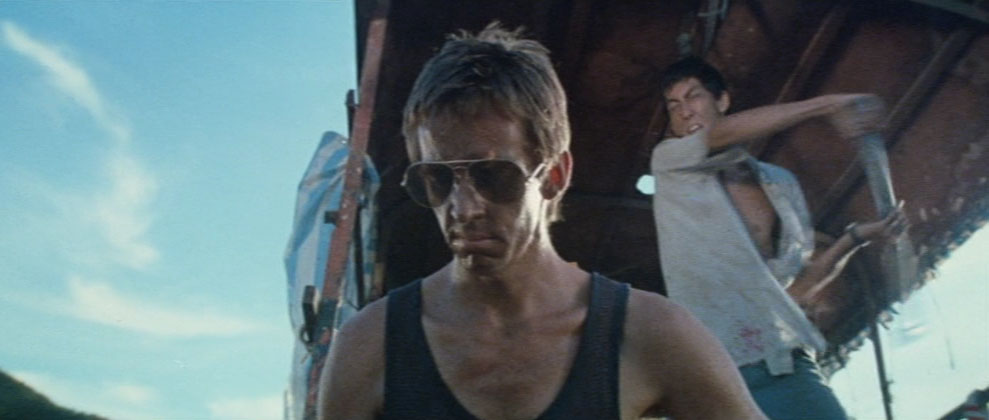
Dangerous Encounters of the First Kind (1980, Tsui Hark)
A bloodier, sleazier and more despairing predecessor to Made in Hong Kong, positing that the world is a violent shithole. I’d be completely in favor of this sleazy punk nightmare if someone would please censor the animal torture scenes for me… they’re sticking pins into mice right in the first scene… not sure if throwing the cat out the window Grand Budapest-style was faked. First movie watched in 2024, bad omens for the year to come.

Three boys are experimenting with antisocial behavior by setting off a homemade bomb in a movie theater. They’re followed by witness Wan-chu, malcontent younger sister of a detective (Five Fingers of Death star Lo Lieh), who blackmails them into committing ever-greater crimes. And she is not fucking around, starts by hijacking a bus full of passengers. She steals a lot of money orders from a foreigner, setting off a whole secondary gangster plot (the guy’s exposition buddy tells us they’re “in a deadly business”). Inevitably, Detective Brother gets involved in the gangster case until disciplined by his boss, the most dubbed white guy of all time. The girl dies in the same way as her cat, while all the boys get shot in a climactic cop-gangster shootout, only one surviving, wounded and poisoned and insane.

Mouseover to waste this foreigner:
Verboten! & Dogface (1959, Samuel Fuller)
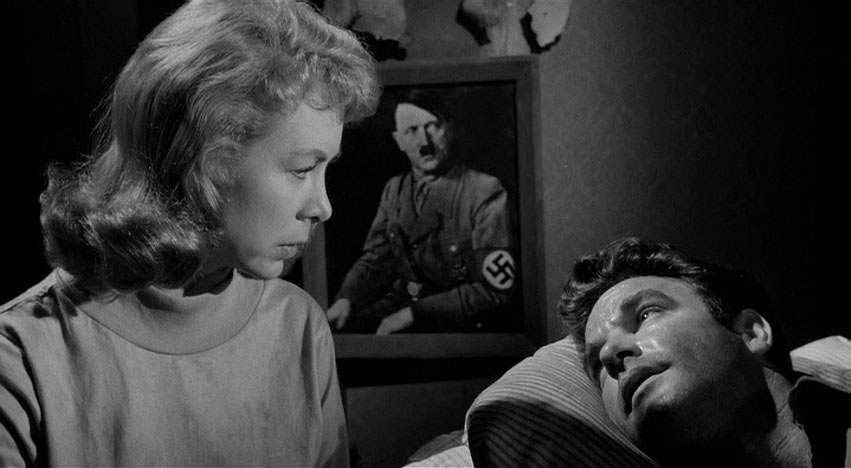
Verboten! (1959)
Fuller WWII film six months before The Crimson Kimono with a Paul Anka theme song (oh no), starring nobody in particular. Our not-so-bright hero Sgt. Brent is The Killer Shrews star James Best. He survives the sniper attack that killed a bunch of his men, is rescued by German girl Susan Cummings (Bavarian, of Corman’s Swamp Women), then stays behind after the war to marry her.
Post-war, Brent works for Captain Harvey (Fuller regular Paul Dubov, a master criminal in Underworld USA) in cleanup, along with wide-mouthed Bruno (star of High School Big Shot), his new wife’s secret confidant and a member of the Werewolves, a secret Himmler youth army aiming to carry on the war after defeat. “Hungry people are easy to bamboozle.” Susan’s little brother Franz (not great) is of course a werewolf, but comes to his senses, rats on his mates and pummels his werewolf boss to a fiery death. “Ride of the Valkyries” soundtracks a bombing/assassination montage twenty years before Apocalypse Now. The cuts to stock footage are hardly seamless but all the postwar Germany film is interesting on its own.

–
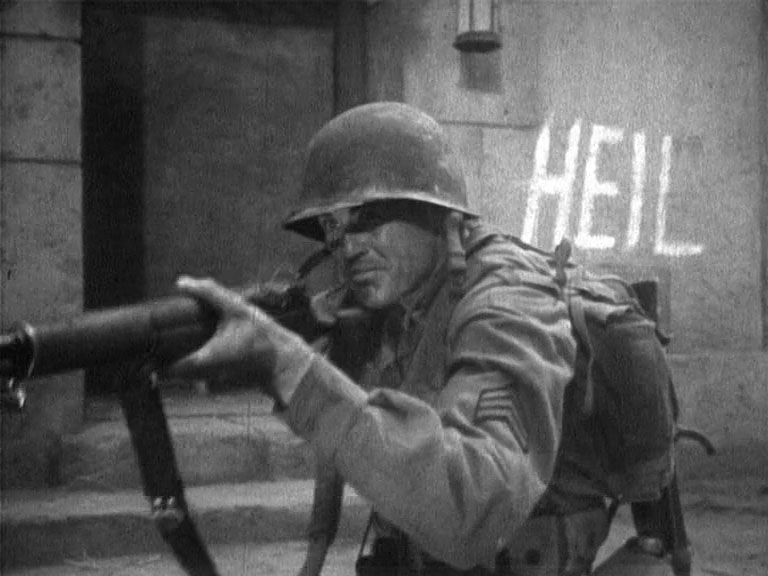
Dogface (1959)
“Siegfried has located the enemy” – the nazis send a dog to locate dogfaces, and Infantry Sergeant Rock’s first mission in this would-be TV series is to assassinate the nazi dog. I imagine network TV execs weren’t on the edge of their seats wondering what unseemly missions Rock would take on next. Good movie though, better than Verboten!. Our lunkhead hero injures the dog but lets it live, and it saves him after a steamy shower shootout. The plan was an authentic war series with basic tech, tough-guy actors, and a ton of military slang – since this never aired, Sgt. Rock’s career went nowhere.
Mad Fate (2023, Soi Cheang)
Catching up… I shouldn’t have watched this within a couple weeks of Detective vs. Sleuths. Johnnie To may be retired but his particular way of lighting street scenes lives on – writer, editor, and DP are all from Drug War, Blind Detective, and Romancing in Thin Air.
Bo from Sparrow is a twitchy guy trying to help people change their fates. His latest client leaves and is immediately murdered, witnessed by a pervert delivery boy whose hobby is killing CG cats, always pursued by a mustache cop. According to fate, Bo will go insane and the delivery guy will do a murder, so they team up to change the future. Then a bad-luck prostitute moves into the apartment building, looking like an excellent victim to both the delivery boy and the real killer whose bag of knives keeps changing hands. My second HK movie lately with scenes in a morgue, as Bo tries some spirit-transfer business, but tragically he ends up becoming an MPD psycho and getting locked up, as the cop retires young and the delivery boy learns to be kind to CG animals.

It’s a Wonderful Life (1946, Frank Capra)
Jimmy Stewart throws away his dreams to run his dad’s bank while his brother Harry is off being a war hero. Uncle Billy (Thomas Mitchell of every great movie in 1939) loses a bunch of money, putting the bank at risk of takeover from evil rival Potter (Mark of the Vampire star Lionel Barrymore). Jimmy tries to kill himself but angel Clarence (The Invisible Man scientist Henry Travers) saves him, shows him that Harry and Billy and his wife Mary (Donna Reed of Scandal Sheet) and the guy at the drugstore (HB Warner, DeMille’s Jesus) would’ve all been ruined without him (Potter would be fine). The townspeople contribute to pay Jimmy’s bank’s debts and he’s newly happy to be alive. Good movie while watching, the moment it’s over I always get annoyed by it again.
Fear Eats the Soul (1974, Rainer Werner Fassbinder)
Brigitte Mira (The Enigma of Kaspar Hauser) plays the most naive German woman ever, who hasn’t heard about racism. She wanders into a bar full of foreigners to get out of the rain, doesn’t know how bars work, and Moroccan mechanic Ali is coerced into dancing with her. He starts coming over, and she blurts out that they’re married as a cover story to the landlord, so they really do get married, and her kids (incl. Irm Hermann and the director) disown her. The grocer bans her, coworkers stop speaking to her, only the landlord doesn’t seem to mind, weird to make a landlord the sympathetic one. When the happy couple returns from vacation everyone warms up to them, realizing they each need something from Brigitte. Marital woes – he is after all 20 years younger and she refuses to make couscous, then strange ending, he’s hospitalized for a stress ulcer after they’ve made up. Movie lives up to its high reputation, looks beautifully Kaurismakian, people standing very still when it’s not their turn to speak.


The Magnificent Butcher (1979, Yuen Woo-ping)
Time for another Sammo Hung movie. This time he’s a butcher, introduced slipping on a banana peel, but the butcher job barely matters – mainly he’s a disciple of Wong Fei-Hung (Kwan Tak-Hing, who’d been playing Wong since the 1940s), innocently helping start a war with another school run by Lee Hoi-Sang (a fighter in Game of Death II). One of the rival school’s guys is evil Ko (Fung Hak-On of Police Story) who has kidnapped Sammo’s little brother’s wife. Meanwhile, a weird beggar gets some chickens drunk, turns out to be drunken master Fan Mei-Sheng (of The One-Armed Swordsman) with an interest in solving the kidnapping. Allies and rivalries get all mixed up, and there’s more crazy plot stuff and some brutal deaths, but we have come to watch great fighting performed with unusual weapons (I just saw the Ko fan fighter as the master in Encounters of the Spooky Kind II) against ludicrous villains (Mad Dog from Yes, Madam! appears here without the mustache as “Weird Cat”).
The brother and the drunken master:

Guess who:

The Movie Year in Review, 2023
Happy New Movie Year!
Again we didn’t go to theaters often enough, again I made a letterboxd list of all the must-see movies released during the year, and again I managed to nearly catch up with blog posts before year-end.
The blog will go down for maintenance as soon as I figure out how to fix the character encodings. It currently hurts to look at old posts since all my old apostrophes have turned into letter-a-with-carat, musical-notation-symbol-maybe, trademark-sign. Maybe I can fix https while I’m at it! Anyone with smart ideas, drop me a line.
The 2023 Lists:
2023 Favorites: New and Recent Movies