Trouble: this would be a nice movie to watch again sometime, since I was falling asleep and not paying close attention, but it’d be a nice movie to not watch again since I didn’t enjoy it much. What to do, what to do?

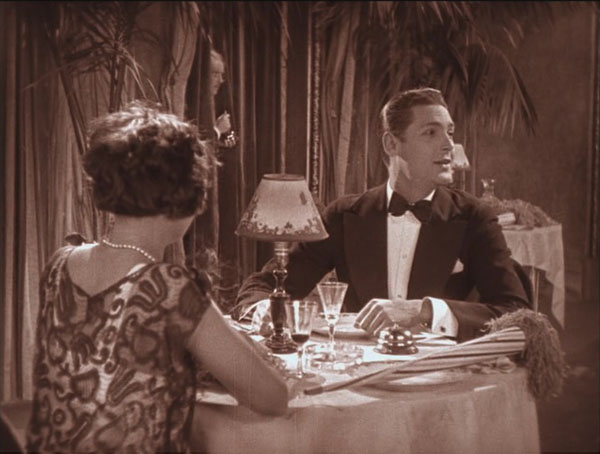
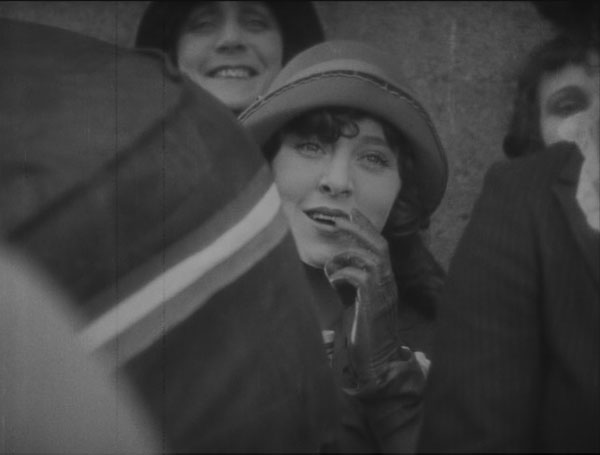
Lorenz Lobuta is a regular doof, a failed poet with a rich aunt, until one day he is run over by a carriage carrying a gorgeous rich woman. After that, he’s fixated on the rich woman, vows to find and marry her, but he never does, never even speaks to her again. During this time he becomes a huge asshole and a naive nutbag and we’re expected to sympathize with his obsession, I think, but after he gets in league with a scummy dude, rips off his own aunt, then gets caught breaking into her house and sent to jail, all I could think was “good” and “finally!” Oh also he meets a girl who looks just like the rich woman (same actress) but that part confused me – I must have nodded off when they explained she was two different people. Whole thing sits inside a framing device, but not one as worthwhile as in Tartuffe. Lorenz eventually (after prison) marries the bookstore girl who always pined for him and stuck with him through his stupidity, and the main story represents the journal he writes to ease his past-haunted mind.

German star Lil Dagover (Tartuffe) plays the wife. Lorenz is Alfred Abel, who appeared in Murnau’s comedy The Grand Duke’s Finances and Lang’s Dr. Mabuse The Gambler. Rich aunt Schwabe, Grete Berger was in some Lang movies as well, and the phantom double-role girl was in Murnau’s Burning Soil.

Watched the DVD bonus that explained how Murnau and his crew pulled off the weird visual effects (ghostly carriage knocks our man down, buildings’ shadows seem to follow him, one crazy dream sequence). Not a lot of trickery in this movie, but what trickery it had was very finely done. Just checked to see what wonderful things D. Cairns said about this, but I forgot he doesn’t have a copy, damn.

I watch all of Clint Eastwood’s recent movies and I always feel they are High Quality Films, but that’s not always my thing. They are oscar-friendly, but not really affecting (exception: Million Dollar Baby) and don’t have anything fascinating to contribute in content (exception: Flags of Our Fathers) or form. But I definitely like ’em enough to keep watching (possible exception: Gran Torino).

We’ve got a true-story historical drama here, with awesome period street scenes of 1928 L.A., nice cinematography, great music (by Eastwood himself!) and very good acting. In her first good movie role since Sky Captain and the World of Tomorrow, A. Jolie plays Christine Collins, a mom whose kid disappears. She reports him missing among mass public distrust in the L.A.P.D., a mistrust led by crusading radio preacher John Malkovich, using his staccato vocal delivery to good effect. Police find kid, but it’s the wrong kid, then when Jolie reports it they intimidate and finally imprison her in a sanitarium to keep people from finding out the truth. Malkie helps get her out, and meanwhile a kid escapes from a rural psycho-killer and reports the murder of twenty kids. Jolie and Malkie lead court fight against the cops, simultaneously kid-killer is prosecuted, she wins, cops go down, killer is found guilty, two years later she watches him hang still unsure whether her own kid was killed or not. In postscript scene, mother of another kidnapped kid finds her son returning home after seven years away, but Jolie still never gets her closure. Saaaad movie.

Manipulative cops include Colm Feore of Titus and TV’s Jeffrey Donovan. Oscar-nom Amy Ryan, who I often see but never recognize, is a prostitute imprisoned with Christine in the sanitarium. Writer J. Michael Straczynski kept me entertained in the 80’s with episodes of He-Man and The Real Ghostbusters, and moved up from there to sci-fi channel to showtime to oscar-nominated films. Good going there, guy.

Great presentation of a not-so-great movie. Nobody ever called episode six of Red Heroine the best-ever silent martial-arts serial from China, but today it is the only surviving silent martial-arts serial from China, and therefore an important fragment of popular film history. The Devil’s Music Ensemble are touring it around the country, providing much better music than it deserves. Not that it’s a particularly bad movie, it’s just a standard piece of fluff to which nobody would give a second thought if it didn’t have to stand alone to represent an entire lost genre of Chinese film. So the D.M.E. is to be highly praised for their work and for enhancing our knowledge of film history, but the movie itself, well, it is what it is.

image

What it is: a 90-minute self-contained revenge drama, the prequel to the prequel to the prequel to Kill Bill. Army invades, girl’s grandmother is killed and girl is kidnapped to become the general’s wife, but before that can happen, crazy-bearded White Monkey kicks the general’s ass and rescues her. Three years later the same thing is happening (minus the dead grandmother) to a new girl, a friend of the old girl’s “brothercousin” (so sayeth the awesome intertitles). Old girl reappears flying through the air (to great applause from the packed Emory crowd) as Red Heroine. She kicks the ass of the general and his hilarious bucktoothed assistant/bodyguard, and rescues the girl whom she suggests should marry her brothercousin. There’s minimal action, all shot wide, and no definite references to the other episodes of the series (maybe White Monkey was in them?).

IMDB’s details are muddled on this film and director, so this is from Kung Fu Cinema Dot Com:

Director Wen Yimin, who can also be seen in a supporting role as a young scholar in RED HEROINE, was a Manchurian who was born in Beijing in 1890. His work for the Youlian studio, which included helming the HEROIC SONS AND DAUGHTERS series (1927-1931) and at least two of the RED HEROINE films (1929-1930), established him as one of China’s first genre directors. In 1934, he moved to the Unique studio, an early venture by the Shaw brothers, who would go on to dominate the Hong Kong film industry decades later. In 1936, Wen co-directed a film, MADAME LAI, with future mogul Shaw Run-me. Wen permanently moved to Hong Kong after the war, where he sometimes worked under the Cantonese version of his name, Man Yat-man.

He is frequently credited as an assistant director to the prolific leftist filmmaker Zhu Shilin. Another frequent collaborator was director Ren Yizhi, daughter of Shanghai pioneer Ren Pengnian. He continued to appear in supporting roles in a number of mid-century dramas and action/adventure films. In 1965, he moved to Taiwan, and worked as an actor there until his retirement. He died in 1978.

When I think of silent horror, one of the first names that comes to mind is Rupert Julian, director of Phantom of the Opera, The Cat Creeps and Midnight Madness. Hahaha, I’m kidding of course, nobody has ever heard of Rupert Julian. But he’s still made quite a cool movie here, with Feuilladian booby traps and secret passages, the great Lon Chaney in his most famous makeup/mask, and some ill color tricks (tinting, hand-coloring and 2-strip technicolor) restored by a tech crew associated with the Alloy Orchestra, who accompanied Phantom at the Rome Film Festival.

Apparently we saw a rare version of this – most existing copies are of the 1929 reedit with added sound scenes. Great atmosphere and sets, lots of cool shadows. Best part is a masked ball, the Phantom’s only public appearance – masked, of course, so nobody realizes it’s him until later. He’s draped in a bright red cape, which looks shocking in a 1920’s film, standing on a statue while the heroes stand below talking about him, thinking themselves alone.

After seeing the musical version, I was surprised that the phantom here gets no sympathy. He’s an outright monster, killing and kidnapping, with no back-story and just the tiniest bit of humanity. He obsesses on understudy Christine, forcing her to leave her boyfriend Raoul and come to his subterranean lair. Raoul finally comes storming down followed by a torch-waving mob, only to get stupidly caught in traps until the Phantom, stupidly fooled by the usually quite stupid Christine, frees Raoul then gets chased into the river by the mob. Yes it’s a movie without much depth of character, but it gets the job done. Katy liked it too, and I got to briefly talk with Roger Miller about silent movies, so I figure it was worth the trip for both of us.

This came out the same year as three other Lon Chaney movies (including The Unholy Three), and before almost any other horror movie I’ve heard of (Nosferatu, and I guess you could count Haxan). Male hero Raoul was played by Norman Kerry, who also co-starred with Lon Chaney in Hunchback of Notre Dame and The Unknown, although he shares almost no scenes with Chaney in this one. Extremely gullible love interest Christine was Mary Philbin, who had worked with Julian and Kerry in Merry-Go-Round and would later star in The Man Who Laughs. The vaguely Lon Chaney-looking Arthur Edmund Carewe (later of Doctor X, The Cat and the Canary) played Ledoux, a suspicious character who turns out to be a secret agent and helps Raoul at the end. Edward Sedgwick, director of a 1920 American version of Fantomas (sadly lost), and director of the early sound-era Buster Keaton pictures which ruined Buster’s reputation, took over for Julian towards the end of the production.

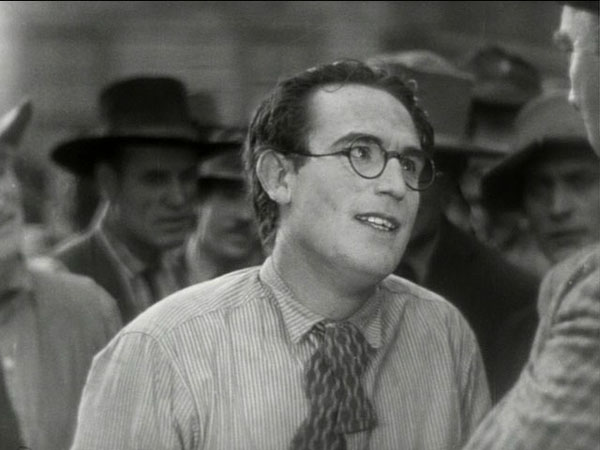
An amusing 80-min comedy, no masterpiece to be sure, but very likeable and occasionally funny. Harold Lloyd is the weak kid in a family of two burly brothers and sheriff dad. Medicine Show comes to town while dad is out and Harold was pretending to be sheriff, so he signs their permit, then can’t tell ’em to get out of town because he has fallen for the cute girl in the act. But note: she’s doing the show against her will along with two slimy characters who run off with the town’s treasury – and the sheriff is blamed! Can Harold Lloyd redeem himself by finding the abandoned ship where the criminals are hiding out and return to town triumphantly with the loot and the surviving thief before his dad is lynched? Yes.

Some real nice staging, more elaborately planned shots than the Keaton (see below; the Keaton was also seven years later, which might make a difference, but I think Keaton camera setups were pretty plain, just make sure the action is in the viewfinder), incl. a cool bit where he climbs a tree, higher and higher and the camera follows on a high crane. Movie also had a trained monkey, slingshots, a burning trailer, and laundry drying on a kite string, so you really can’t complain.

Could you bring yourself to hit this man? Could you?!?
image

Two of Harold’s family members had small parts in Citizen Kane, a medicine show guy was in Sunrise later the same year, and actor Ralph Yearsley who played Harold’s rival died aged 32 a year later. Lloyd was working at a pace of one movie per year, and this came after For Heaven’s Sake and before one of my favorites, Speedy, which would be his last silent film. Speedy also had Ted Wilde as credited director (though IMDB says Lloyd pretty much directed his own films), and Ted died the following year at age 36. IMDB also claims some uncredited direction on this movie by Lewis Milestone, who would soon make All Quiet on the Western Front. The General, Metropolis and October all came out in ’27, pushing the cinematic art ever forward, but so did The Jazz Singer, spelling doom for Keaton and Lloyd (but not for Lang or Eisenstein).

Also watched Neighbors, a 1920 Buster Keaton short which outshone the feature. Buster likes the girl next door, but her family won’t have him. Hilarity ensues. All you really needed for a great Keaton film was a basic premise and thirty brilliant gags – fully-developed plot/characters not required. Terrifically funny movie.

Buster gets into the neighbor’s third-floor window with help from the Flying Escalantes:
image

Blackface is funny; half-blackface is funnier:
image

Checked out a nicely high-quality (if slightly trapezoidal) digital projection of the new edition, pleasingly crowded for a Thursday night. On one hand, Metropolis was plenty long enough, and each scene has always seemed to go on a bit too long (Jimmy didn’t come, saying “I’ve slept through Metropolis enough times, thanks”), but it’s still nice to have more of the film available for study. Half the cut scenes involve “the thin man,” hired by Mr. Frederson to spy on his little raised-consciousness son, who only makes a cameo in the pre-Argentina footage. And it’s easy to tell the footage apart, since the new stuff comes from a scratchy, shrunken 16mm print.

Wrote nothing special in August 2008:

Katy doesn’t want to participate in 2005 Month or in Shocktober, so there’s a semi-theme-multi-month going on with 1920’s Movies instead, beginning with this, one of the most famous and celebrated of the 1920’s Movies.

image

image

image

image

EDIT DEC 2020: watched a restoration of the Giorgio Moroder version, of all the crazy things. The narrative intertitles remain, but for dialogue they use subtitles over the person speaking, a nice touch. The music is fine… if not for the vocal songs! I didn’t know about these… what a bad idea. But even a bad soundtrack cannot ruin Metropolis, and I guess Moroder’s efforts helped preserve the film, so it’s fine, new wave forever.

Keith Phipps in AV Club:

Where Lang’s film still looks timeless, Moroder’s music remains grounded in the time of Reagan and early MTV. (That’s doubly true of the songs, which sound like castoffs even by the standards of, say, Loverboy.) The film feels quaint in a way other incarnations of Metropolis don’t.

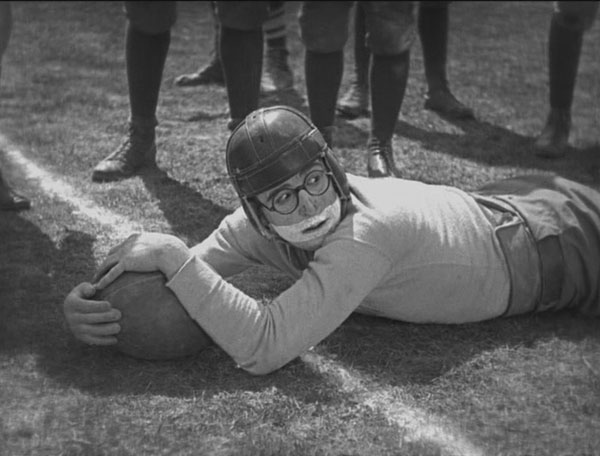
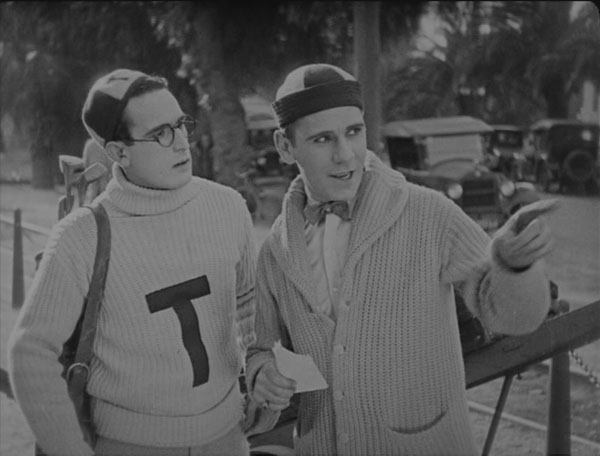
Buster is a nonathletic college kid, stressing academic achievement over sport. But when his girl falls for an athlete, Buster’s gotta prove his versatility on the field to win her back!

image

Or something along those lines. At the end, the jock is threatening to ruin her just by staying in her dorm room and not leaving. If it’s known that she was alone with him for more than a few minutes, her virginity will be in question, and she’ll have to leave college in shame. Fortunately, Buster pole-vaults through the window and pelts him with college memorabilia. A weird little movie, pretty funny but didn’t kill.

image

Also watched The Electric House (1922), a short from back when suicide was funny:
image

Pretty good movie with laughably ludicrous plot.

Ventriloquist Echo (Lon Chaney) teams up with midget Willie (Hans from Freaks) and strongman Hercules (Victor McLaglen, oscar-winning John Ford fave) to form the unholy three, an ill-conceived crime group. In tow are cute pickpocket Mae Busch (Foolish Wives, and some 35 movies between 1931 and ’35) and patsy Hector (Matt Moore).

Hans is maybe better appreciated as an actor in a silent film, since his voice is hard to understand in Freaks… he out-acts everyone but Chaney in this movie. Chaney is fun to watch as Granny O’Grady and Hans as Little Willie. Hercules never has much to do. The giant chimpanzee and out-of-focus cockatoo are cool, too, and the visual speech bubbles when Echo makes the birds talk (funny to have a ventriloquist in a silent film). The dialogue contains “echoes” (repeated lines), appreciated by the English students watching along with me. A few good shots of the shadows of shadowy conspirators conspiring.

The movie’s not scary, more wacky/funny than anything else. Their criminal plot is idiotic and doesn’t work. Hercules kills someone during a heist and gets them all in trouble, everyone’s plotting behind everyone else’s back, Chaney and Hector are in love with Mae, and eventually Herc and Willie kill each other via chimpanzee. Hector is about to be framed for the murder when “Grandma” Chaney comes and saves him. Chaney is then set free by awesome-looking judge Edward Connelly (The Saphead, The Merry Widow) for being such a good guy and goes back to the circus, ho hum. Movie’s got good atmosphere… def. a quality lightweight film with that freakish crime-drama Tod Browning touch.

Not to be confused with the non-Browning sound remake from 1930, the last film Lon Chaney made before his death from cancer.

Liked it better than Unholy Three because of the super fast pace and more exciting atmosphere, the wonderfully (if not accurately) rendered African setting.

Ron on IMDB helpfully summarizes: “Magician Phroso’s wife Anna leaves him for another man, named Crane, who fights with Phroso and leaves him paralyzed. Later Anna returns and he finds her dead, leaving behind a daughter. For 18 years Phroso, known as “Dead Legs” by his cronies, plots his revenge, becoming a pseudo-king in East Africa, nearby where Crane has set up an ivory business. When the daughter is grown, having lived in a brothel in Zanzibar thanks to “Dead Legs”, Phroso put his plan into action, resulting in revenge and retribution all around.”

Lon Chaney is great as Dead Legs, but the great Lionel Barrymore looked pretty generic to me, failed to stand out as the arch-rival. Young wife Anna quit acting the following year (right before sound films) and lived until 1986. Drunken Doc, who falls in love with the daughter, was Warner Baxter, who won the best-actor oscar that same year in the second annual academy awards, for In Old Arizona, the first full-talkie.

Not to be confused with the 50’s British Ealing Studios West of Zanzibar about a good-hearted man (Story of O actor Anthony Steel with wife Sheila Sim of A Canterbury Tale) fighting ivory pirates.