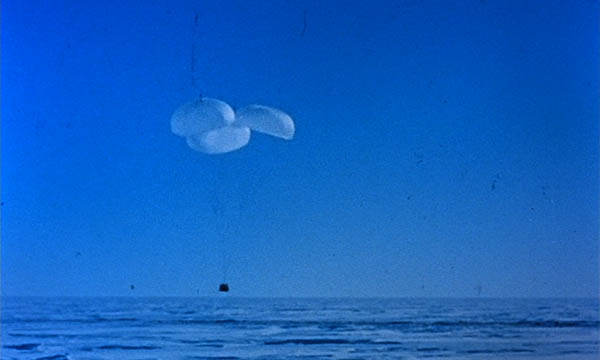
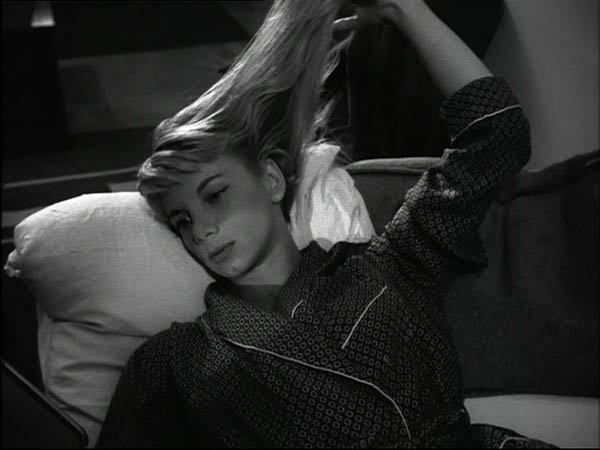
Watched some of the earliest shorts I downloaded, over a year ago, and had never seen before.

The World of Stainboy (2000, Tim Burton)
Stainboy is a hero of sorts whose only power is creating stains. He takes on a giant darth bowling ball, a poisonous chemical hazard, a power-sucking robot, a girl with a hypnotic stare, and a match-prostitute, then in the final episode he flashes back to birth and the orphanage (where “boy with nails in his eyes” has a cameo). Pretty okay little show, short with funny bits.

image

Breakfast (1976, Michael Snow)
Decided not to watch it because the quality is too low. Don’t know how I’m going to see the Michael Snow films, but not like this.

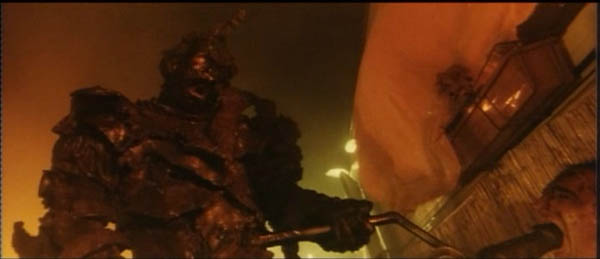
Vibroboy (1994, Jan Kounen)
Loud, cartoonish, full of threatened sexual violence, feels like taking a beating or watching the Shelly and Leo home scenes from Twin Peaks for a half hour. Explorers spirit away ancient statue from Mexico, it’s entrusted to transvestite Francesca, who comes home to his trailer park to find his pet murdered and his neighbors Leon and Brigitte fighting. Leon is a violent shit, and threatens both “women”, ends up shooting F. (not fatally), breaking the statue, retrieving the metal dildo within and turning into Vibroboy, who just goes on beating the two girls but with the dildo now. Stylishly shot, but why film such a piece of shit story? Real disappointing because Kounen is someone I’d decided I was interested in before seeing any of his movies, so now I don’t know what to do about Dobermann and Blueberry. (Update: a Kounen fan advises to check out the uneven Blueberry and the doc on psychedelics and skip Dobermann)
image

Escargot de Venus (1975, Walerian Borowczyk)
Camera pans over color drawings of half-snail-half-women having sex with each other and themselves and various snaily men, while renfest flute music plays. Halfway in, a woman starts narrating in French, didn’t catch most of it except some of the dirty words. We actually see her flipping through the drawings, closes with her feeding a snail to an iguana. Nice, sexy images, liked it better than his DOM short. Internet says the woman is Bona Tibertelli De Pisis, and the drawings are hers.

image

L’Amour monstre de tous les temps (1977, Walerian Borowczyk)
Close-up on a painter at work, nicely edited with music by Richard Wagner. Final painting involved a beast and human nudity, so right up Walerian’s alley. A good one. Can’t find who the bearded painter was.

image

Lapis (1966, James Whitney)
finely detailed geometric images (points of light?) falling inwards and outwards to and from the center into infinity. Sound (indian music) didn’t play right on my copy, but when it did, it adds to the trance effect. Would be pretty awesome to see this in a theater. Apparently used motion-control camera (“analogue computer equipment”) and the circular shape is a mandala, “a Tibetan Buddhist spiritual meditation aid”. Director’s brother designed the motion-control for the title sequence of Vertigo!

image

Recreation (1956, Robert Breer)
extremely rapidly edited shots of objects on plain backgrounds, a little animation, some guy talking in French, FIN.

image

A Man And His Dog Out For Air (1957, Robert Breer)
flowing line drawing animation forming many abstract shapes but nothing quite recognizable until right before the end, when they form a man and his dog out for air. Neat.

image

“this has never happened before… what am i gonna wear?”

image

Starring Steve(n) McQueen as a 28-year-old teenager, with his 25-yr-old teenage girlfriend.

image

Awful dialogue and delivery, low budget sets, long talky parts, nothing-special cinematography, inept sound editing, really it’s near-mst3k fare minus McQueen’s capable lead and a cool premise and neat creature. I suppose the criterion commentary’s gonna go on about how symbolic the thing is (note: no, just talking about the making-of, giving a little context). Weird movie for them to release… is it “important” or is it just a cool sci-fi movie with a big star to which they could secure the rights? Website says it was an indie movie (unusual for the 50’s) but can’t help throwing in that the blob was “comparable to if not incarnating the growing consumerism of 1950’s America). Probably not a must-see… the 1980’s remake will do fine.

image

image

Portrait of a whorehouse at a certain point in time when politicians were discussing whether to outlaw the profession (voted the ban down at the end of the movie, but it eventually passed, some say as a result of the movie). Six or seven prostitutes all with different desperate situations. One has a suicidally depressing home life with sick husband and infant they can’t afford, one is trying to support her son who disowns her when he finds out what she does at work, one is a rich bitch escaping her controlling father, one is aiming to escape through marriage but her husband mistreats her and she comes crawling back, and one is bilking her clients out of extra money so she can quit and start her own business (the only happy ending here).

The same sort of feminine miserablism that I’ve come to expect from Mizoguchi after Life Of Oharu. This one has a more impressive look to it (the main house and the street outside, the costumes, the acting, all exquisite) but still a depressing movie that I didn’t enjoy very much. I may have liked it better than Ugetsu though… have to see that one again, and check out Sansho The Bailiff sometime.

A turning-point year for Japanese cinema: Mizoguchi’s final film, the beginning of the Japanese New Wave, and (according to Reverse Shot) the beginning of “more socially critical efforts” by Yasujiro Ozu. It’s also the year of The Burmese Harp, but I haven’t seen that yet.

Saw this one with Pia from work.

Le Coup du berger, or, Fool’s Mate or maybe Checkmate, with an all-star new wave crew. Rivette directed and narrated, Straub assistant-directed, Chabrol wrote, Truffaut and Godard had cameos, and Cahiers cofounder Jacques Doniol-Valcroze played the husband.

A woman’s lover (Brialy, he of the luxurious hair in Claire’s Knee) gives her a fur coat and she wants to keep it, but she’ll look suspicious to her husband. She they concoct a foolish plan: she pretends to find an airport claim check in a cab and has him pick up the case, where she’ll be pleasantly surprised to get a free fur coat! But he twists the plan by replacing the coat with something cheap and giving them good one to HIS lover. Gotcha!

A decent little flick… worth a look, but as Keith Uhlich in Slant says, it’s more Chabrol’s film than Rivette’s. He also says “the whole thing is shallow and obvious in ways that Rivette’s features never are”. I wouldn’t go that far, but I wasn’t assessing its worth in the Rivette canon, just watching for the fun of it.

image

image

image

Fireworks (1947) – the one where young Ken daydreams that he is beaten by sailors and a roman candle is set off in his pants.

Didn’t blow me away as much this time, but maybe I’ve seen it too many times. Would still recommend to everyone as the definitive statement on being gay & 17, the United States Navy, American Christmas, and the Fourth of July. Just unbelievable that this was made in 1947, with practically no precedent… before even Stan Brakhage had picked up a camera. I guess Anger wasn’t old enough to know that this kind of thing was not done.

Fireworks sailors:
image

Puce Moment (1949) – the one where a glamourous actress lives in her glamorous house, and a bunch of classic hollywood dresses are paraded in front of the camera.

Guess I didn’t see the point because I don’t care about dresses and glamour. Commentary was the best part. Anger’s mom or aunt or someone was a costume designer for the silent films, so he’s filming these dresses in vivid color which have only been seen on screen before in black and white. Part of a longer movie that got scrapped.

Puce woman:
image

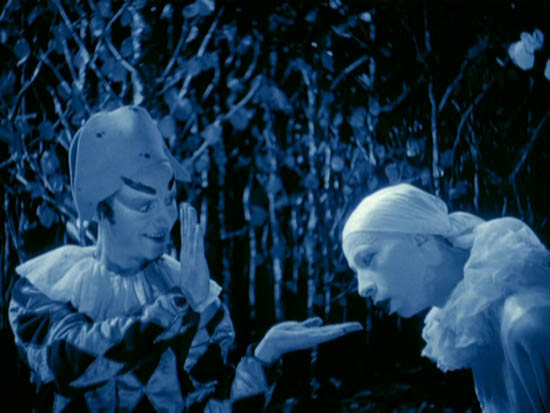
Rabbit’s Moon (1950) – the one where mimes do a dance in a forest, and one tries to reach the moon to impress a girl and I’m pretty sure he dies in the end, oh and there’s pop music playing.

Really neat, wasn’t expecting to find a mime movie on here. Anger says the film was commissioned and the actors were hired from the Marcel Marceau school. He talked about the storyline too, but I can’t remember much of that. Cool little movie – the one from this disc that I’d show off to people in my never-gonna-happen short-films fest.

Rabbit mime:
image

Eaux d’artifice (1953) – the blue-tinged one where Ken just photographs water in some garden fountains and sometimes a woman (actually a very small woman) runs by in a fancy dress.

Maybe my favorite of the bunch. Just light sparkling through water, opera music playing. Peaceful.

Eaux d’artifice:
image

Inauguration of the Pleasure Dome (1954) – the slow one where people in fancy costumes stand around and do stuff and finally blend in weird montages (or “the one with Anaïs Nin”).

I was dozing off, should watch again with the commentary on. A long, pretty, entrancing and colorful movie. Maybe best to watch while dozing, really.

Pleasure Dome montage:
image

I followed up Fritz Lang’s early sound stinker Liliom with this real good western. More of a musical than Liliom, every few scenes we get a troubadour singing the Chuck-a-luck song.

This came after Secret Beyond The Door and House By The River, and right before The Big Heat and The Blue Gardenia, square in the middle of that great ten-year period for Lang. Just like in Big Heat, our hero’s wife gets killed at the beginning, but this time it’s not part of any conspiracy, just mean ol’ thievery and rapery and murderry. Our hero is Vern (Arthur Kennedy from Let Sleeping Corpses Lie, Sam Fuller’s Shark, Bright Victory and Lawrence of Arabia) and when the townsfolk and lawmen won’t help him hunt the baddies past the county line, he goes undercover-vigilante and dedicates his life to revenge.

He follows clues across the country to Chuck a Luck, Marlene Dietrich’s secret baddie hideaway ranch, and fakes being bad long enough to figure out who’s the sumbitch what killed his wife. He thinks it’s this slick-shooting shifty guy for the longest time, but in the end it turns out to have been some cowardly sideman, who gets what for. But Marlene dies trying to save our guy. So heroic and good natured is our guy that even selfish Marlene would die for him!

Cool as hell movie, with Marlene in her early 50’s still looking good and a buncha actors I don’t recognize doing a fine job too. Somehow I missed both Jack Elam and George Reeves (who was already Superman when this came out). Best part is the first few scenes of Vern seeking out the ranch, hearing legends about Marlene via not-necessarily-true flashbacks. That Herr Lang could make a tight little revenge thriller when he wanted to.

TRIVIA: Lang wanted to call this movie “Chuck a Luck” but the studio forced the title “Rancho Notorious”. Both titles, of course, are stinky.

The one where Cary Grant is married to Ginger Rogers (who gets to dance one time) and they take drugs that make them act like children. Marilyn Monroe plays a delicious secretary and gets to be the only actor on the DVD case, even though I thought both Grant and Rogers were a pretty big deal.

It’s a screwball comedy, which means there’s a funny fat posh guy (Charles Coburn) and some clueless nerdy guys and an actual monkey. Kinda funny and delightful, and kinda tiresome, like my reaction to Bringing Up Baby. One of the better comedies I saw this year though, and probably would’ve made a stronger impression if I hadn’t liked Cary Grant even better in The Philadelphia Story.

Tyrone Power (very normal looking white guy who wouldn’t live another decade, also starred in Nightmare Alley) stars as the only American who can save the Philippines from the Japanese. Along with his loyal troops (buncha white guys) and a cute French girl whose father was killed by the dirty Japs (Micheline Presle, still alive, later in Sacha Guitry’s Napoleon, Rivette’s The Nun, Demy’s Donkey Skin and Fuller’s Thieves After Dark), Tyrone stays hidden long enough to set up communication lines, kill off some Jap soldiers and local traitors, and help out the good guys until General MacArthur arrives.

Fritz Lang directs, with no particular style or interest. Crazy-eyed actor Jack Elam was supposed to be in there, but I didn’t see him.

Movie had a story to tell and a side to take, and it set right to work telling that story and taking that side. Nothing more to tell. Glad I was able to tape it off cable and didn’t have to spend $20 hunting it down.

Count with me: thirty-three Fritz Lang movies down, four Fritz Lang movies to go.

Cop Glenn Ford is causing trouble by trying to prove that police-corruption-protected mobster Lagana killed a witness (actually ordered her killed, via lackey Lee Marvin’s lackey). He causes enough trouble that Lagana orders him silenced, but ends up killing Ford’s perfect wife Jocelyn Brando (Marlon’s sister) with a carbomb instead. Whoopsie! Angry Glenn Ford takes it personal and tears down the whole criminal establishment, with the help of Marvin’s girlfriend (who turns on him when he tosses boiling water in her face).

Movie opens with a cop committing suicide beside a letter he wrote to the newspaper exposing the crime-cop corruption coverup. His wife, instead of delivering to the papers, puts the note in a safe deposit box and extorts the gangsters. Lee Marvin’s girl Gloria Grahame (human desire, crossfire, in a lonely place) ends up killing the widow to expose the plot, a cool twist.

Nice, noirish crime thriller. Not the breakout amazing Fritz Lang’s Greatest Achievement that I’d not dared to expect. In fact, after all the movies I’ve seen by Fritz Lang (thirty, more than any other director), I can’t necessarily tell a Fritz Lang film from anyone else’s. That’s where film school would have helped, I guess.

Katy did not watch it.