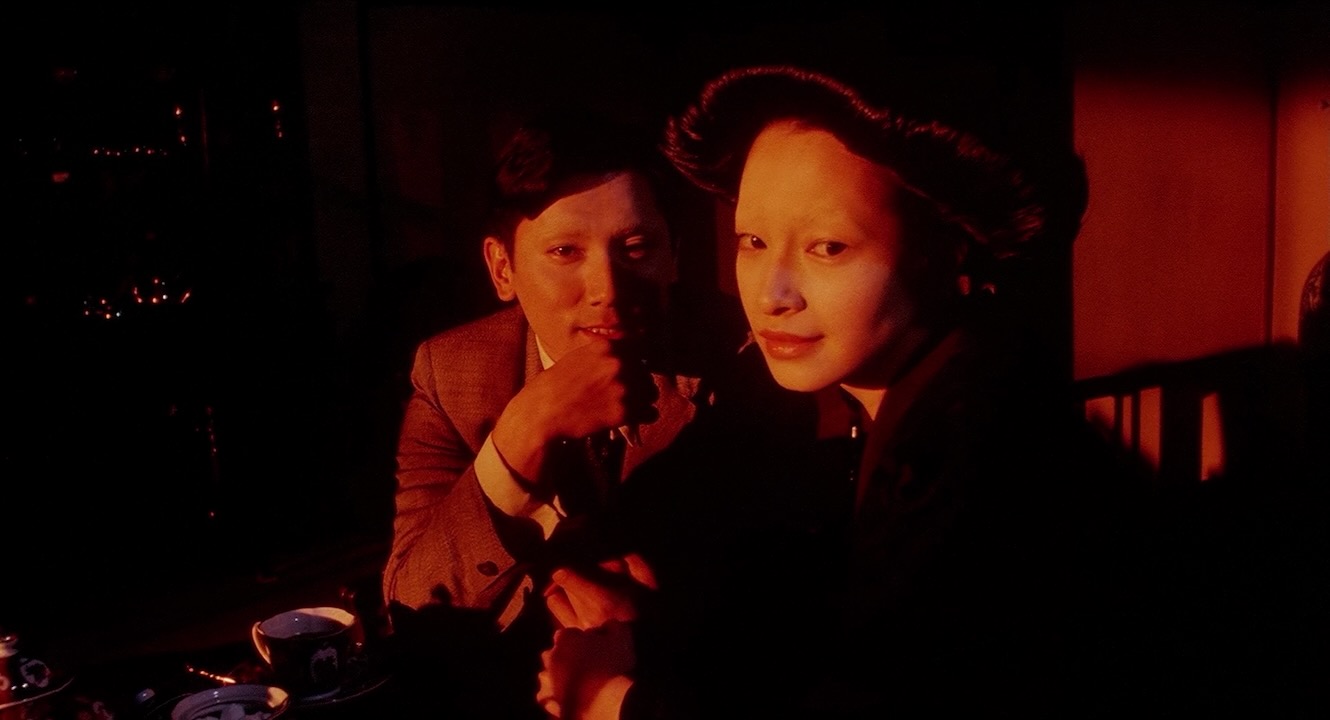
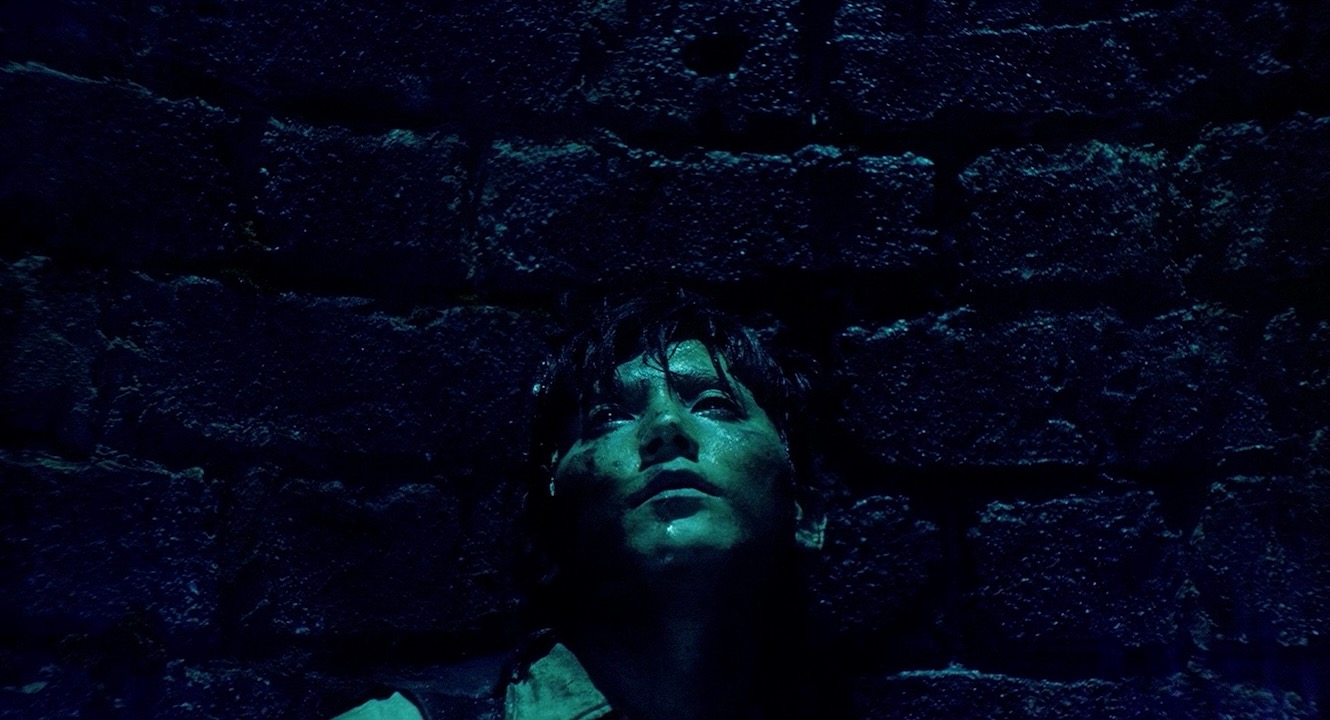
Yukio (Bird People In China star Masahiro Motoki) is a doctor who detests poor people.

Rin (Ryo of Harmful Insect and Scabbard Samurai) is his wife, has lost her memory.

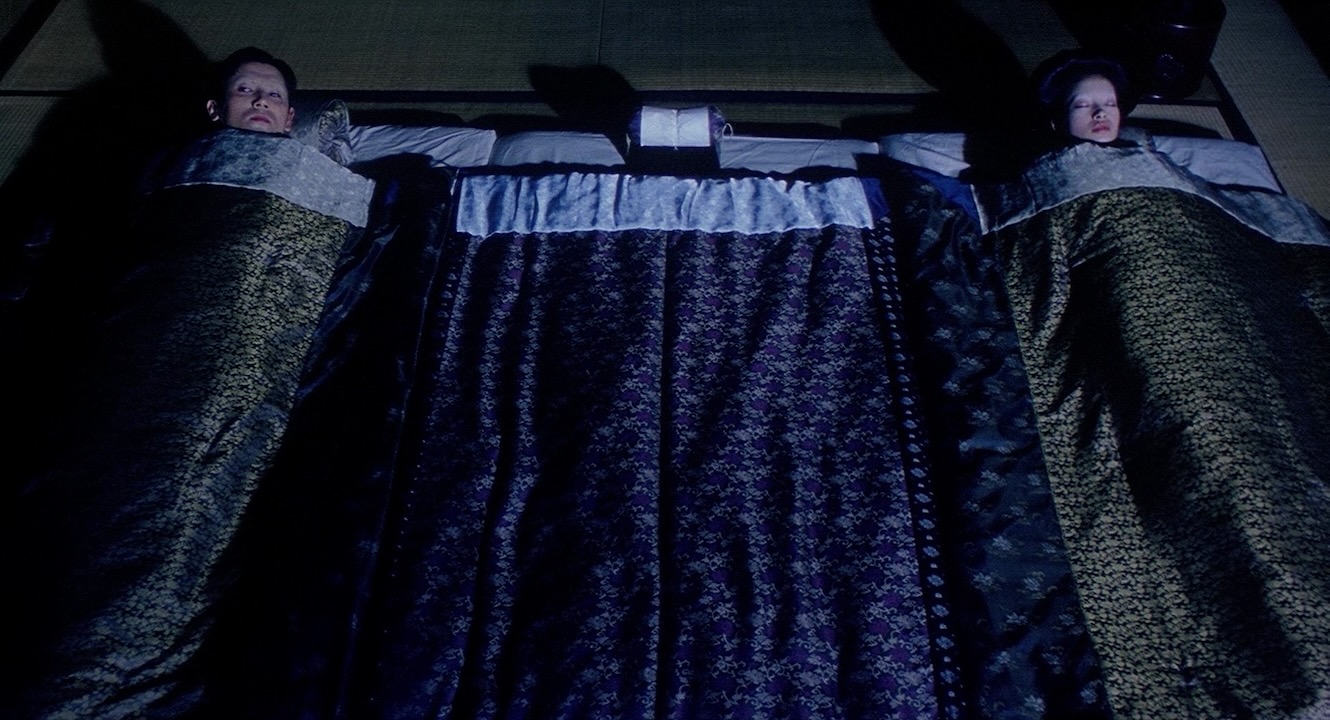
They sleep like this:

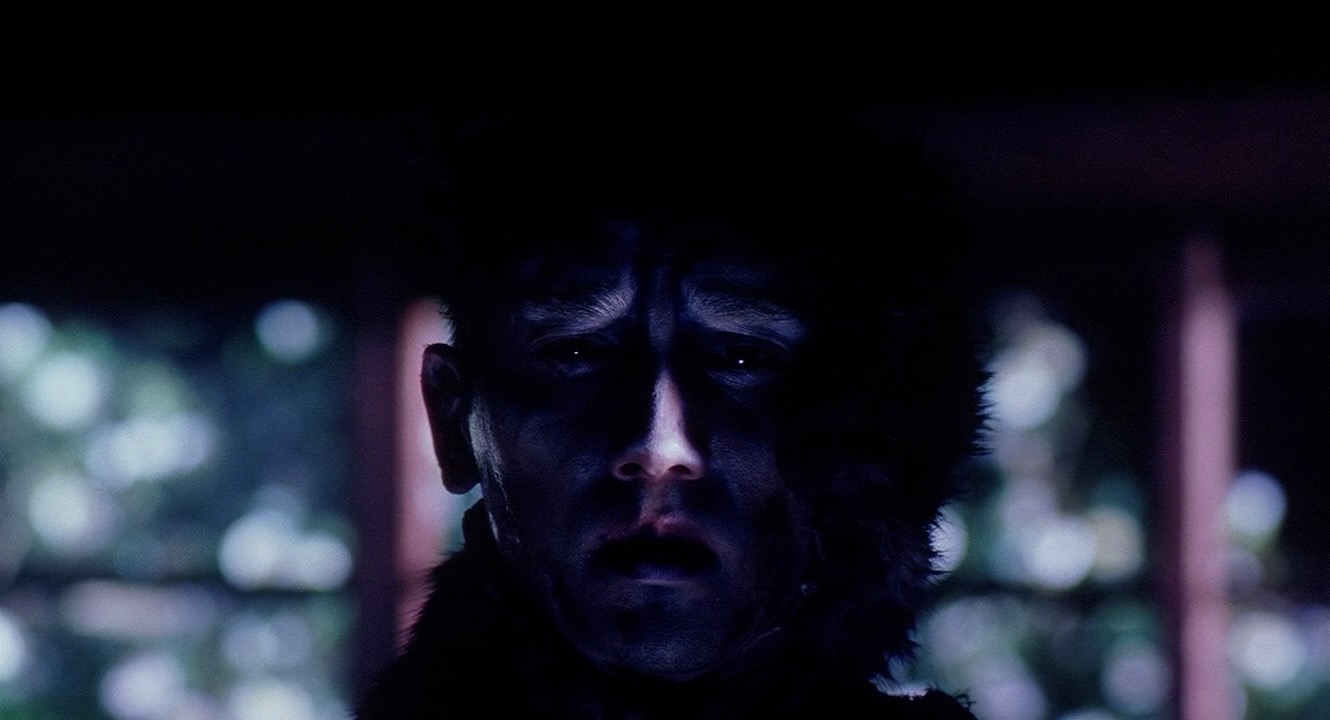
One day, the doctor’s fur-lined bloodshot-eyed doppelganger arrives and kills the doctor’s parents.

Then the doppelganger throws the doctor down a well.

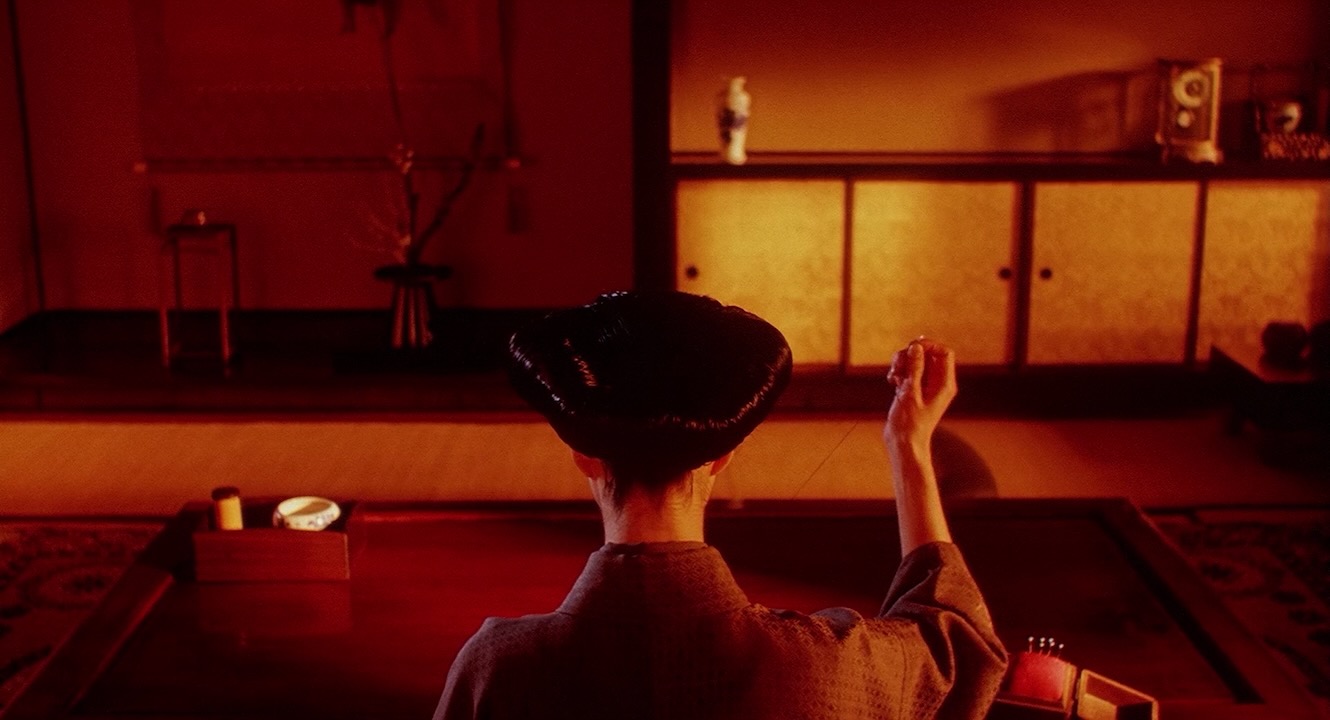
He torments the doctor, reveals the truth about their parents and the wife, all the plotty drama less convincing than the excellent visuals and cool music.

A True/False Poto and Cabengo: twins were raised without ever being let out of the house or taught anything useful (such as language), then are set free by a social worker, who locks the dad into his own house until he agrees to cut it out. Outside, the sisters meet other kids their age, including a boy who fishes for girls with an apple on a string. Rosenbaum liked it.

Not sure if it was worth two whole hours just to see Ving Rhames revive I.B. Bangin’ (played by Paul Simon’s son, who exec-produced Pavements), but the movie also has other pleasures.

Mary Beth Hurt is the nurse who debriefs the patients, asking why they deserve help.
Hospital security guard Griss, who wears sunglasses and third-persons himself, has been in everything from Sankofa to the worst(?) Terminator sequel. The Wire‘s Kima and Omar get a minute of screen time each before they’re killed.

Cage and Arquette are both sleepwalking addicts, wearily observing the chaos of the city, until he takes decisive action by mercy-killing her life-supported dad. Cage’s haunting by a girl he couldn’t save is achieved by some Scorpion King-caliber CG face replacement. The dealer who gets fence-impaled was a Sunshine spaceman and the manic suicidal neighbor who Tom Sizemore maybe murders is pop star/NFL owner Marc Anthony.

Seven year-old Richie Beacon shot his dad then flew off the balcony, filmed in color news-reportage style, the picture stretched out horizontally.

Nancy Olson interrupts Dr. Graves, who then ingests pure, distilled sex-drive potion and becomes the leper sex killer, in 1950s b/w.

A thief goes to jail for the umpteenth time, meets old acquaintance Bolton. “I still could not take lightly the idea that people made love without me.”

Rosenbaum:

The most exciting moments in Poison are those that create a momentary confusion about which of Haynes’s three stories one happens to be watching — moments of vertigo during which two or more of the three stories seem to fuse (or, perhaps more to the point, “bleed” together).

Slow cinema starring a vacant-eyed cop reacting to news of a raped/murdered little girl, whose body we get a nice long leering stare at. The cop just wants to hang out with his neighbor Domino, but she’s dating bus driver Joseph, whose route goes right past the murder site. After some investigation, he finds Joseph arrested in boss’s office, tearily confessing, then our cop goes home and has a long hug and cry with Domino, then cut to the cop in handcuffs. Think I liked this best of Dumont’s pre-Quinquin slow art films, though somehow I missed “a brief shot that shows Pharaon levitating in his garden.”

Part one was a straightforward drama, part two was a reenactment of events that took place after filming that drama, and part three is a reenactment of the filming of part two, whew.

It spins off into a side drama, as the actors cast as And Life Goes On‘s newlyweds know each other – Hossein wants to marry Tahereh, her family says no, and she won’t say anything at all. After filming he follows her and… something happens in extreme-wide-shot which I simply couldn’t make out on the VHS when I first watched this, but seemed clearer now, before Godfrey Cheshire further complicated it.

Or possibly all three Koker movies were made to explore AK’s deep interest in homework, and we’d more accurately call it the Homework Quadrilogy.

Watched all the box set extras. The included Cinema de Notre Temps episode is fantastic, a precursor to 10 on Ten. Crew follows him around as he drives familiar routes and looks for people he knows and interacts with random pedestrians. He finds the Friend’s Home kids yet again, catches up with the star of The Traveler, and teases them all about their acting… talks about truth and fiction, philosophically and in the specifics of his films.

Little-mustached Col. Meekham brings his new genetically-enhanced soldiers to Gary Busey, who commands unenhanced soldiers raised by the military from birth, and the new guys win, so Kurt Russell, damaged and decommissioned, is dumped on a waste disposal planet which for some reason has breathable air, and gains a conscience when the locals who helped him recover start dying when their planet is used as a super-soldier training grounds. Admirably little dialogue, making the soldiers rarely speak pays off.

Lodge 49‘s Wyatt Russell plays Young Kurt, of course, and Kurt’s rival (“Caine,” of course) is Jason “Scott” Lee of Timecop 2: The Berlin Decision. Mustache is Jason Isaacs, who I just saw in A Cure for Wellness. Absolute bonanza of foreground stuntmen vaulting through the air while something explodes behind them. No opening credits, but if you explained to me over the final scenes that Paul W.S. Anderson directed this between Event Horizon (space mission gone badly wrong) and Resident Evil (a company soldier takes revenge upon her creators) I’d reply “shhh, I’m watching the movie.”

A city filmmaker is driving post-earthquake with his kid – per the commentary this is a re-enactment of a trip the director made with his son in the days after the quake – talking to his son with more patience and respect than young Ahmed ever got in the previous movie. For the first half hour they don’t give away the reason for the trip, then he finds a guy from Koker and shows a picture of Ahmed.

So we’re in a new fiction film responding to real events that involve the previous fiction film – but it gets more complicated. “A film has its own truth.” They find the guy who played the slow hunchback in part one, now playing “himself” with his house still standing after the quake, but he breaks character and calls this his “movie house,” says his real house was destroyed and he lives in a tent.

The kid, not understanding the scope of the situation, wants to buy a coke then complains that it’s warm. Later, to a mourning mother: “your daughter’s lucky she died – she’ll never have to do homework.” But the kid getting distracted from his dad’s trip and wanting to hang with some locals and watch soccer gives the movie its title: “The World Cup comes once every four years, and life goes on.”

One of the blu extras opens with an admiring quote from the other AK. Kiarostami made some 200 advertisements before working on features, and he supervised road repairs, which makes a lot of sense.
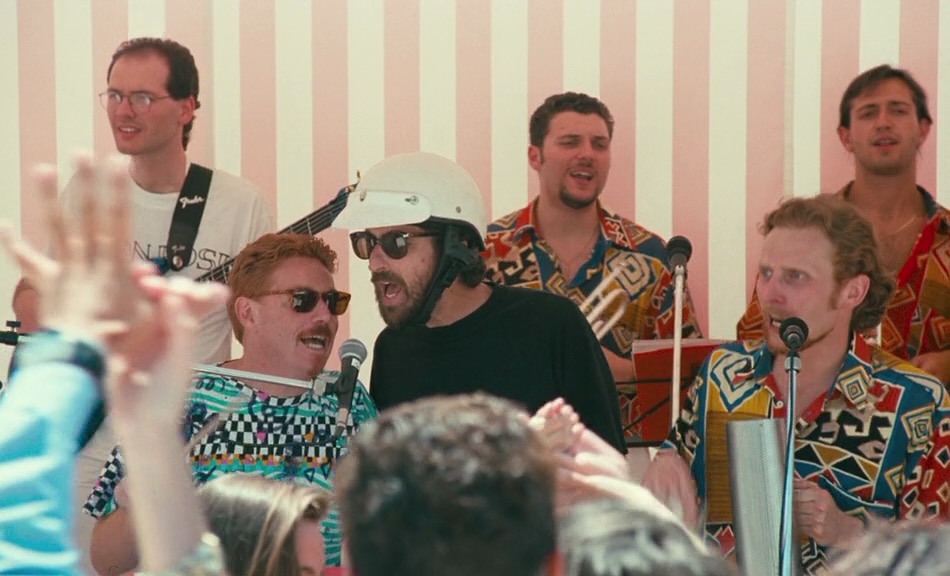
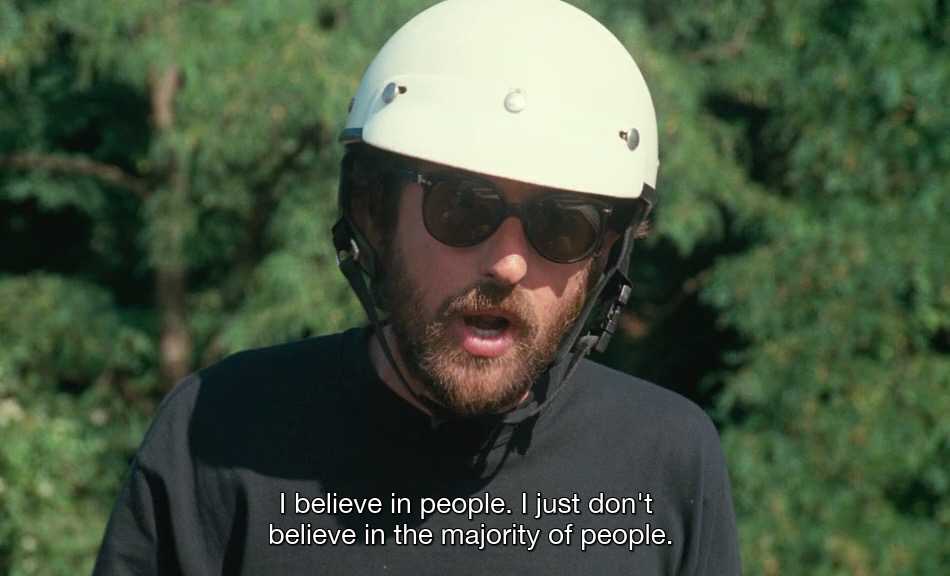
It’s been a minute (twenty years) since I’ve seen this. Officer Kitano lives a depressing life in forced retirement with his sick wife, one friend dead, another crippled and suicidal, and loansharks after him. So he robs a bank, funds the suicidal friend’s new painting hobby, and takes his wife to the beach, fighting off the gangsters and capitulating to the cops.

Won the top prize at Venice, same year as Ossos, Chinese Box, The Tango Lesson, and 4 Little Girls. As usual, Josh Lewis gets it.