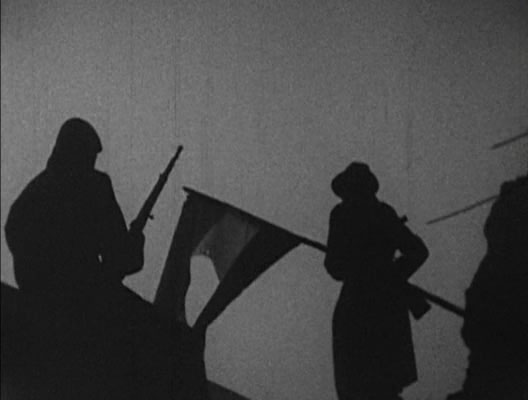
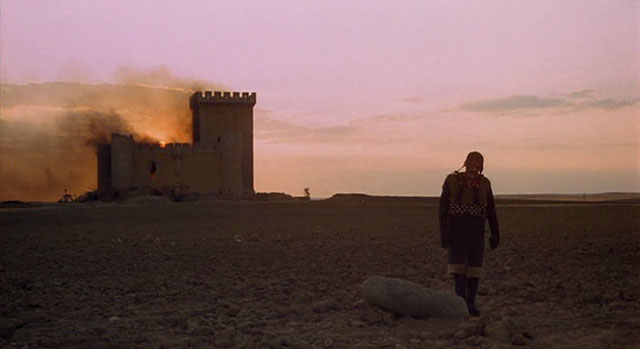
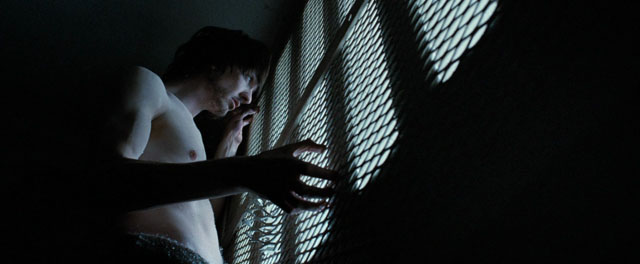
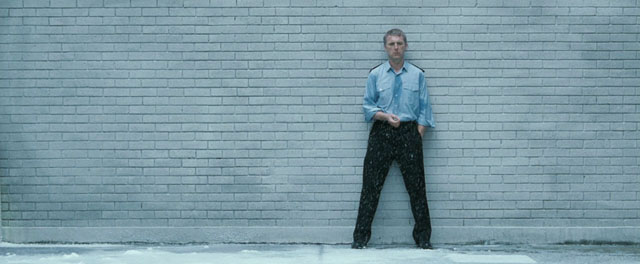
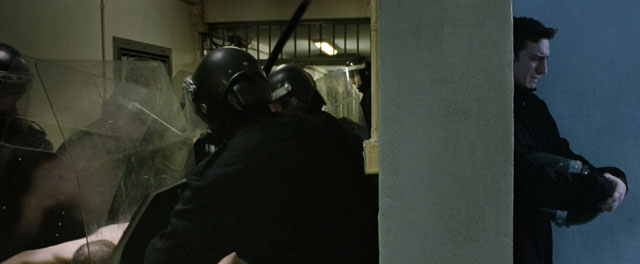
That’s Steve McQueen the artist who everyone pretended to have heard of when this came out, a naked Warholian who recreates Buster Keaton stunts and projects them onto art gallery walls, not Steve McQueen the actor who everyone has actually heard of, who jumped a nazi barbed-wire fence on a motorcycle.

image

For a director who talks up innovation and rulebreaking, he’s made a rather classic-looking film, with much attention paid to capturing beautiful shots in what should be an ugly story – a hunger strike unto death by physically abused political prisoners inside the shit-smeared walls of a British prison. I expected more subjective views, more filmic art-stuff a la Diving Bell and the Butterfly (also by a former art-gallery sensationalist) but it seems most of the experimentalism was narrative, and who knows if that’s due to McQueen or experienced co-screenwriter Enda Walsh.

I ultimately got less, narratively and emotionally, than from the more conventional IRA/prison flick In the Name of the Father.

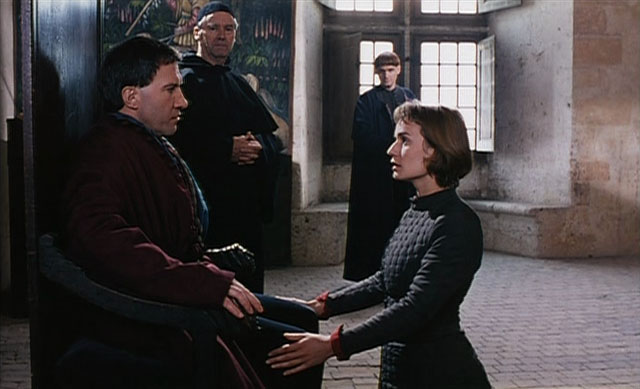
Extremely-long-take centerpiece, in which priest Liam Cunningham (Wind That Shakes The Barley, The Mummy 3) fails to talk Bobby (Michael Fassbender, the Inglorious Basterds brit who gets shot up in the basement bar):
image

Prison guard who gets his own arc, ending with execution in his senile mum’s lap:
image

Another prison guard, who does not enjoy beating prisoners:
image

Secret messages:
image

Precautions Against Fanatics (1969, Werner Herzog)
“Have you ever seen a dishonest man with a chest like this?”
Said to Werner’s cameraman by a one-armed man in a suit: “What are you doing here? Go away!” It’s not clear who is supposed to be here where they’re filming, in the training area of a horse racetrack. Some guy is repeating himself and karate-chopping flat stones. This cannot actually be happening! It is all pretty wonderful, a parody of a behind-the-scenes documentary. Made in between Signs of Life and Even Dwarfs Started Small, both of which I need to catch some day.
image

Organism (1975, Hilary Harris)
Time-lapse footage and readings from biological textbooks portray a large city (New York, of course) as a living organism. The dated 70’s sound design is unfortunate but otherwise it’s completely wonderful. Makes me wish I had a classroom of kids to show it to. He worked on this for years, inventing a time-lapse camera in the 60’s for the purpose. Bits from Scott MacDonald “As late as 1975, Harris apparently felt that time-lapsing imagery was unusual and high-tech enough to justify his frequent use of science-fictionish electronic sounds as an accompaniment. … Hilary Harris shot some of the New York City traffic shots used in Koyaanisqatsi, though apparently Reggio didn’t see Organism until after his film was well under way.”
image

L’Opéra-mouffe (1958, Agnes Varda)
Somehow I missed this during Varda Month – one of her earliest shorts hidden amongst the copious features on a Criterion DVD. Varda films either herself or another pregnant nude women, then goes on a rampage through the marketplace, mostly capturing the faces of people shopping there, with interludes featuring actors (incl. Varda regular Dorothée Blank, as nude here as she is in Cleo) clowning around. Sections highlight public drunkenness, anxiety and affection. I want to say this is my favorite of her shorts so far, but then I remember they’re all so good. Delightfully scored by a not-yet-famous Georges Delerue.
image

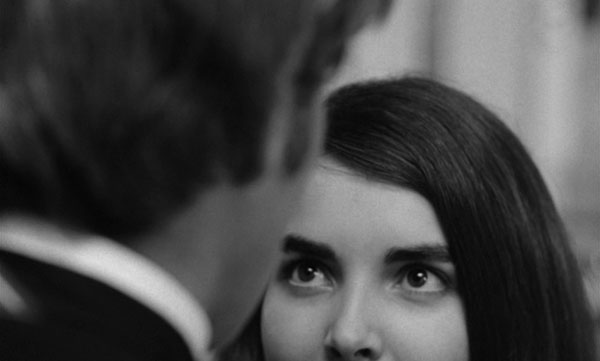
“I was pregnant. I felt the contradiction of expecting a child, being full of hope, and circulating in this world of poor, drunken people without hope, who seemed so unhappy. I felt tenderness toward them, especially the elderly. I imagined them as babies, when their mothers kissed their tummies.”
image

Silent Snow, Secret Snow (1966, Gene Kearney)
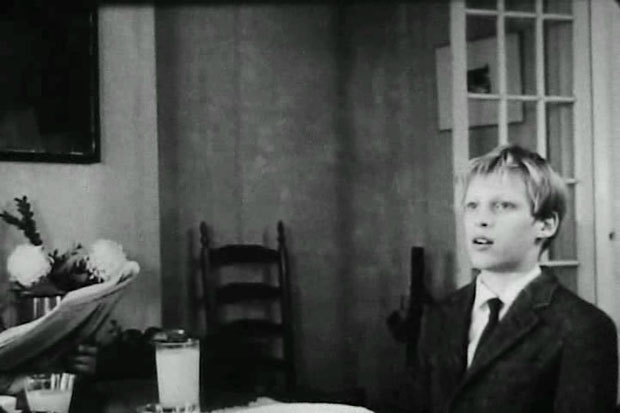
A boy named Paul starts to obsess over snow, allowing the snow in his mind to filter him from reality. Creepy and well shot. Later remade as a Night Gallery episode with Orson Welles narrating. Makes me think of the Handsome Family song “Don’t Be Scared,” with its line “when Paul thinks of snow, soft winds blow ’round his head,” except it’s one of their very few comforting, happy songs and the movie is anything but.
image

Une histoire d’eau (1961, Truffaut & Godard)
A girl wakes up and the whole town is flooded from melting snow. She meets a guy (a young Jean-Claude Brialy) who offers to drive her to Paris before nightfall. Music is weird – gentle flute or horns punctuated with bursts of percussion. Ooh, a Duchess of Langeais reference… in fact there are a ton of references in her quick monologue narration, which ends with spoken credits.
image

The Forgotten Faces (1960, Peter Watkins)
Revolution in Budapest. Nice reconstruction, convincingly documentary-like – where’d Watkins get all those guns? No sync sound, a TV-sounding narrator. One part, the reading of a communist speech turns briefly into a dramatic propaganda montage – don’t see that happen much in Watkins’ films.
image

image

The Perfect Human (1967, Jorgen Leth)
“Today I experienced something I hope to understand in a few days.”
image

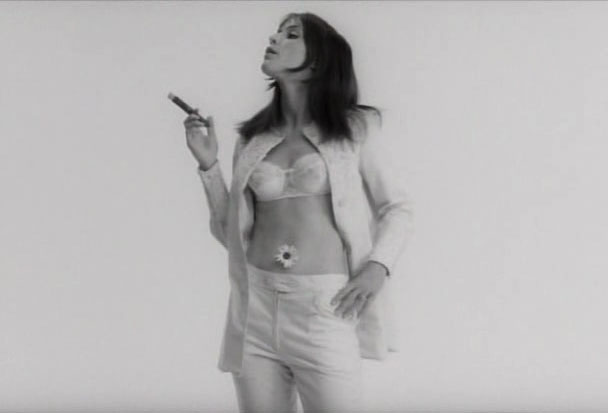
I like the British narrator. “What does he want? Why does he move like that? How does he move like that? Look at him. Look at him now. And now. Look at him all the time.” There’s no diegetic sound, but if this was dubbed in a studio, why does there have to be so much tape hiss? A fake documentary and a stark white delight, with slow zooms in and out, gentle string music, and a general sense of serious absurdity. Only saw, what, a third of this in The Five Obstructions.
image

Les Maître fous (1955, Jean Rouch)
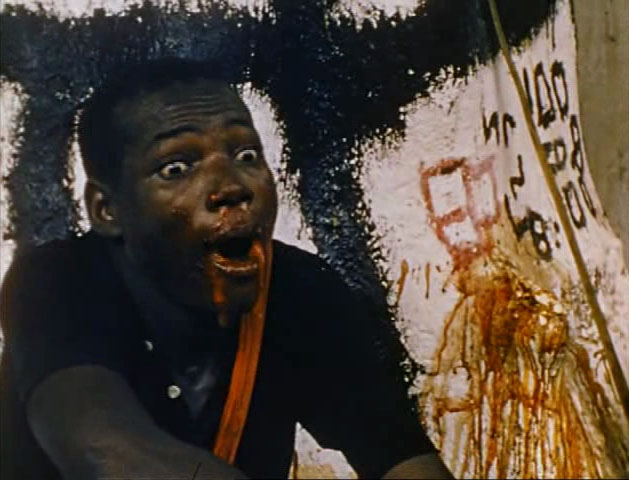
Document of a group in Ghana called the Hauka doing something involving wooden toy guns, red ribbons, chicken sacrifice, dog-blood-drinkin’ and having lurchy foaming-at-the-mouth fits. I’m not ever quite sure, because the French narration has been auto-subtitled by google – whatever they’re doing, the subs call it “having.” After they’ve had, the film crew catches up with them at their day jobs, not freaked-out cultists anymore, just working hard, smiling at the camera. This is one African film that Katy didn’t want to watch, because Rouch is an exoticizing anthropologist. So what’s going on that this film makes the best-ever lists? A Rouch tribute page says he popularized direct cinema/cinema verite, that he was known for rethinking ethnography, and a documentary surrealism (sounds like Jean Painleve). Ian Mundell says the film “drew plaudits from the Nouvelle Vague, in particular from Jean-Luc Godard. They liked the fact that Rouch’s fiction emerged from an encounter between the actor (professional or non-professional) and the camera, and his willingness to break the rules of cinema.” Paul Stoller says Rouch crisscrossed “the boundaries between documentary and fiction, observer and participant,” but I take it that’s more about his later films, which I’m thinking I would like better. So it’s seeming like this film gets awarded because it’s one of the most-seen of his films and because of its influence, not because it’s Rouch’s best work.
image

Nicky’s Film (1971, Abel Ferrara)
A mysteriously silent possibly gangster-related 6-minute film. I can’t imagine even a Ferrara scholar gets much out of this.

The Hold Up (1972, Abel Ferrara)
Super-8 production made when Abel was 21, seven years before Driller Killer. A few minutes in, I realized it’d be much better with the director commentary turned on. “And away we go. Wait, it’s the other way. Which way is she looking?” Um, some guys get fired from factory jobs, hold up a gas station, get caught. The song “Working on a Building” is heard.
image

“A comic strip in 7 episodes on the life of Richard Strauss 1864-1949” Strauss is played as a power-hungry megalomaniac by Christopher Gable (also of Russell’s Tchaikovsky film The Music Lovers). The film itself is fanciful and alive, and surely one of the best biographic movies I’ve seen.

image

Only two years after 2001: A Space Odyssey, Russell accompanies that film’s big opening song with shots of a caveman who soon runs into religious mania and screaming nuns (both of which would be rampant in The Devils the following year).

image

“Alas, the time is coming when man will give birth to no more stars. The dead end of mankind is approaching.” I could quote every line and display stills from every shot. This seems way too extravagant to be a made-for-public-television movie, and too good to be a long-censored rarity. Only ten years until this can be shown legally despite the Strauss family’s objections, unless copyright law is extended like it always is.

image

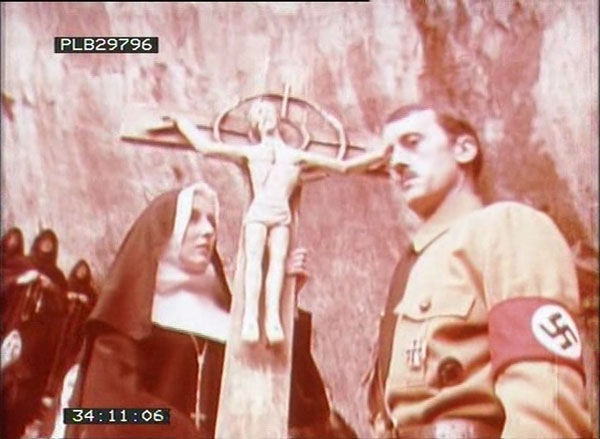
We get a love triangle in the box seats at the opera, scenes of Macbeth, Don Quixote, a fun Salome with two lead actresses, and the infamous garden party with the nazis. Yes, the film does feature Strauss giving Hitler a piggyback ride, both of them grinning and playing violins. Various fantasies, both nightmarish (Allied soldiers interrupt Strauss’s innocent mountain vacation and murder his family) and wishful (his glorious music pounds critics into submission).

image

Kenneth Colley (Jesus in Life of Brian) – the only actor to play both Jesus and Hitler?
image

“A life completely away from politics and war – that is what I’ve always longed for.” Ends with a speech by an aged Strauss distancing himself from the nazi party, “There’s no stain on my character. These nazis are criminals, I’ve always known that.” But a minute later complains about “Jewish stubbornness” before catching himself. Russell partly credits Richard Strauss with scenario/dialogue, saying he used the man’s own words in the script. A scathing portrayal.

image

IMDB has incomplete credits. Judith Paris (a nun in The Devils) played Strauss’s wife Pauline, Vladek Sheybal (camp classic The Apple, Russell’s Women In Love) was Goebbels and Imogen Claire (appeared in and choreographed Lisztomania) was one of the two Salomes.

image

Tape number at top of screenshots provided so the BBC can locate their tapes and release this properly. Timecode (below) provided so you can easily find your favorite scenes. Thank me later.

The MBC:

The complete title reveals Russell’s intention to create a satirical political cartoon on the life of the German composer, who Russell saw as a “self-advertising, vulgar, commercial man . . . [a] crypto-Nazi with the superman complex underneath the facade of the distinguished elderly composer.” And, although, according to Russell, “95 percent of what Strauss says in the film he actually did say in his letters and other writings,” many critics and viewers found Russell’s treatment of the venerated composer itself to be vulgar.

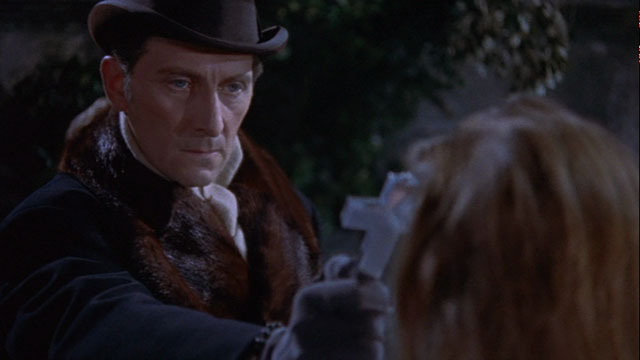
“I’m afraid I don’t understand.” – Harker

This was excellent. I knew Hammer Horror was a major hole in my viewing history, but I’d had the wrong idea about it. Somehow assumed it was a studio of low-budget, slow, decorative films a la Blood For Dracula. Here’s Wikipedia on this film’s predecessor, 1957’s The Curse of Frankenstein: “Hammer’s first Gothic horror went into production. The use of colour encouraged a previously unseen level of gore. Until The Curse of Frankenstein horror films had not shown blood in a graphic way, or when they did it was concealed by monochrome photography. In this film, it was bright red, and the camera lingered upon it.” Of course, Hammer’s Dracula eventually went the way of all horror franchises, with increasingly silly sequels culminating in a showdown between Dracula and seven kung-fu brothers.

Jonathan Harker: John Van Eyssen, with a minor part in Quatermass 2 and no future in the cinema:
image

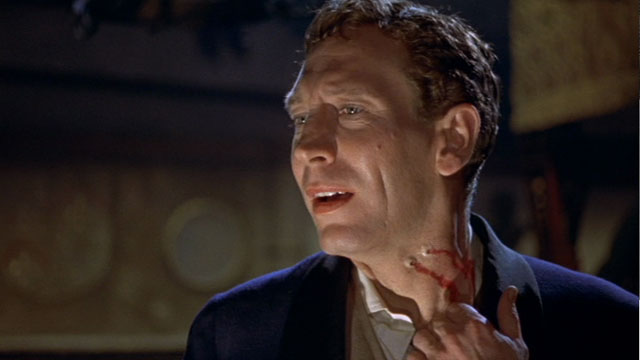
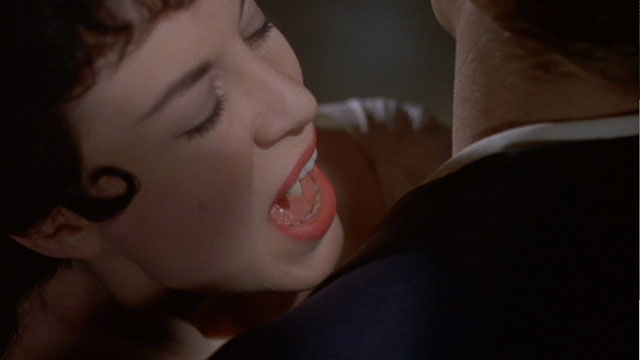
Harker roams around doing a lot of actory business for the first ten minutes, meets a girl who asks for help in vague terms, seems like the usual. But Harker isn’t the usual patsy – he’s actually here to kill Dracula. The girl, Drac’s wife, vamps out and Christopher Lee makes an awesome bloodshot-eyed bloody-mouthed action appearance, tossing her aside and biting Harker himself. JH goes into the basement the next day with stakes in hand, but stupidly kills the girl first, waking the main man who takes care of Harker easily.

Valerie Gaunt, also with no future in cinema, returning from Curse of Frankenstein:
image

Christopher Lee’s first Dracula movie and my first Hammer horror movie (not counting Moon Zero Two’s appearance on Mystery Science Theater). 36-year-old Lee went from minor roles in minor Powell/Pressburger flicks to the new face of British Horror in just two years.
image

Jonathan’s buddy Van Helsing figures things out and goes home to inform the family, but Harker’s girl Lucy dies of vampire-related causes. Lucy is the sister of either Mina or her husband Arthur, I dunno which, and V.H. soon becomes suspicious that Mina is under Dracula’s spell.

I don’t know Peter “Grand Moff Tarkin” Cushing very well. Looks like he didn’t recover from the collapse of his horror career in the late 70’s. He’s very good here, and carries the bulk of the movie.
image

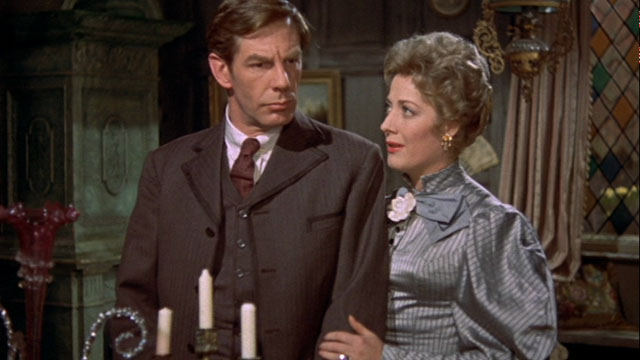
I can’t remember who Mina was in the original novel but here, Lucy (Carol Marsh, star of a puppet version of Alice In Wonderland a decade prior) is Jonathan’s wife, and Mina (Melissa Stribling of The League of Gentlemen: the film thriller, not the TV comedy) is the wife of her brother Arthur (Michael Gough of The Small Back Room, later Alfred in the 90’s Batman films).
image

Mina gets the familiar marks on her neck and Van Helsing discovers Drac is hiding out in his own cellar. Some vampire hunter. Drac flees, tries to bury Mina (?) and gets killed by sunshine. Way more action-packed than the other Drac stories I’ve seen lately.

Hammer respected Dracula’s death less than Universal did – they had Lee play the Count a bunch more times beginning with Dracula: Prince of Darkness in ’66.

Wikipedia again: “The film was an enormous success, not only in Britain, but also in the USA, where it inspired numerous imitations from, amongst others, Roger Corman and American International Pictures. It also found success on the European continent, where Italian directors and audiences were particularly receptive.”

SHOCKtober gets off to a rocky start with this five-part British miniseries. The premise is that there’s an apocalyptic zombie attack which we see through the eyes of reality show Big Brother participants. I think maybe if I’d ever cared about the show (or even seen it) this might’ve made a bigger impact… movie seems geared towards fans.

Who loves Dawn of the Dead?
“Why do they keep coming towards the house?”
“This place used to be like a chuch to them.”

I hope to see no more work from director Demange and cinematographer Tat Radcliffe who provide garbage visuals for Brooker’s cliche but sometimes exciting story. Every time there’s a bit of action the cameraman goes spastic. Since the bits of action are what make zombie movies fun, this one kinda blows. Fun to see zombies unleashed on a reality TV set though, ripping up the only character I liked, a girl whose only line seems to be a dismayed “I don’t like it!” We’re supposed to be thrilled instead at the prolonged, gory death of mega-asshole producer Andy Nyman, but he was too cartoonish to hate – I just appreciated his death scene because it was the only zombie-attack bit where the camera stood still.

MPEG noise over gloomy clouds makes the sky appear to be full of tiny birds.

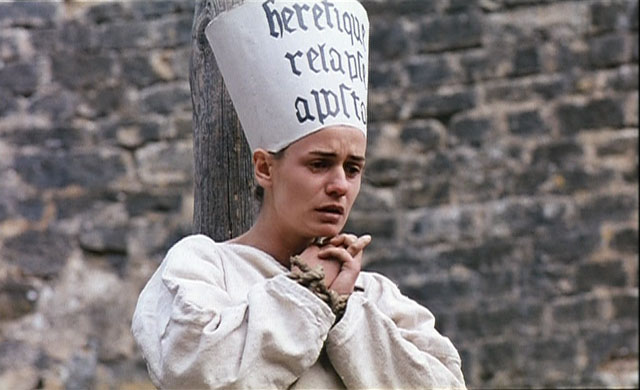
I. The Battles begins with Jeanne having had her angel visitations already, trying to convince local government to take her to the king, and halfway through the film gets to the battles she led against the English. II. The Prisons is half battles (which is good; we didn’t get enough battles in part 1) and half British prisons (with hardly any of the trial/execution scenes that Dreyer would focus on). All set 1429-1431, except for an odd intro in 1455, with Jeanne’s aged mother, a nun, telling of her daughter’s unjust execution.

image

It’s a Rivette film, all right. Long shots with medium natural lighting, deliberate camera movement, same typeface as always on the titles, brief blackouts between scenes, same list of collatorators in the credits. Quite a follow-up to La Belle noiseuse… I’ll bet nobody saw this coming. It works very well to Rivette’s strengths, though, and stays focused on Jeanne and her quest without gimmicks and without getting caught up in the scale of the story and the hundreds of side characters.

image

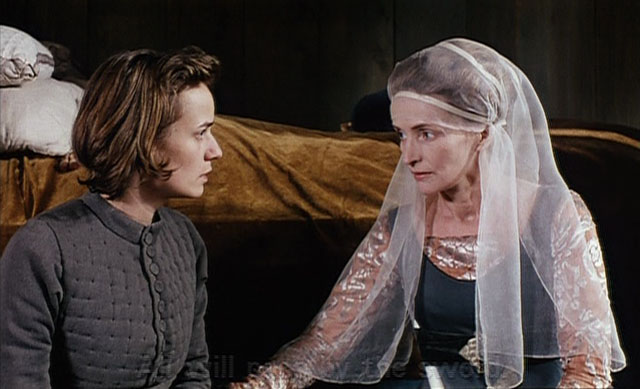
Sandrine Bonnaire, a decade after Vagabond and a year before The Ceremony. I didn’t recognize anyone else besides a cameo by Edith Scob. IMDB says Jean de Metz, the guy who leads her to the king’s court, was in Hurlevent, King Charles (André Marcon) is appearing in Rivette’s new film, and Quentin from Out 1 played Pierre Baillot (who was that?).

with Edith Scob:
image

Joan is charismatic and persuasive, but acts realistic. Her supernatural visions aren’t shown – we know Rivette isn’t above showing supernatural visions, but here he has Jeanne speak of them regularly without portraying them as a reality to the audience.

Unfortunately, this four-hour film has another two hours which I can’t see at the moment. Looks like Artificial Eye has released it on DVD. You know, my birthday is coming up…

image

J. Rosenbaum:

…this is a materialist version of a story that offers no miracles, though it does offer a pertinent attentiveness to gender issues (such as the nervousness and sexual braggadocio of the soldiers who sleep beside Joan) and a Joan who’s girlish as well as devout, capable of giggling as well as experiencing pain; when she wins over the dauphin the scene is pointedly kept offscreen, and when she’s interrogated by priests about her faith she could almost be a graduate student defending a dissertation.

with the king/dauphin:
image

C. Fujiwara:

As Rivette and Bonnaire present her, Joan suggests a novice movie director protected by a seasoned crew that humors her as much as obeys her. (Army life in this film is more sitting around than fighting; in this respect it’s like a film shoot.) She doesn’t do miracles; she just uses common sense and takes the initiative.

This is a spinoff movie from a series called The Thick of It, which also starred Peter Capaldi as the terribly insulting PR guy, and which I must watch soon. Tom Hollander as the wishy-washy but morally secure minister and his head staffer Gina McKee (of MirrorMask) are new to the movie, but Tom’s assistant Chris Addison was in the show playing a different character. Kinda surprising, that, since in the movie he’s the new guy (and kinda our main character).

One lucky break: the new guy/main character isn’t a bland, naive kid who leads us insultingly through the situation, a conceit used by so many crappy movies. Everyone sorta knows what they’re doing here, and even though our guy is a fuckup (misses a major meeting, his girlfriend leaves him for cheating), he knows his way around his job. Anyway, movie follows these government guys as they trade secrets and rumors, fiddle with their publicity, and ultimately start an international war for the stupidest reasons possible – and it’s damned hilarious, and I’ve forgotten every joke so I must watch it again after catching up with the show.

Of course it’s not a british comedy without a Steve Coogan cameo (The Boat That Rocked, therefore, was not a british comedy). Here he plays Tom’s neighbor who starts a PR stink over a crumbling garden wall. I wouldn’t say it’s a non-comic role, but he has less funny dialogue than anyone else in the film, which seems odd.

“Racism was rife in the public school system then, as were silly uniforms”

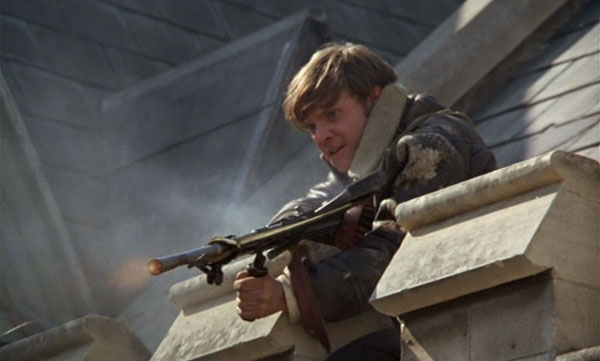
Rented this back when it came out – so about two years ago. More intense than I’d thought. Sets up a miserable, oppressive hierarchical school system, a couple rebel friends in the middle of it, and ends with them on the rooftop merrily blowing everybody away.

Malcolm’s conspicuous entrance, three years before A Clockwork Orange:
image

Divided into numbered and titled sections, each with one or two scenes in black and white for reasons I never figured out. Turns out cinematographer Miroslav Ondricek (who worked with Milos Forman a bunch of times, earning oscar nominations in the 80’s) used it for budget and simplicity in one scene, then Anderson would request that other scenes at random be shot b/w as well. Gave critics something to talk about, anyway.
image

D. Ehrenstein:

When it was first released, it was impossible to look at If…. without thinking of Zero for Conduct, Jean Vigo’s classic 1932 featurette about a schoolboy revolt. But Vigo’s rebels pelted their hated teachers with vegetables. Anderson’s are armed with bullets. And more than teachers and school officials, it is their fellow students—the senior classmates who truly rule their lives, treating them not as equals but as prison inmates they’re guarding—who are the real targets. Consequently, it is impossible to look at If…. today without thinking of the Columbine massacre of 1991 … Still, that was real, and Anderson’s slaughter is clearly meant to be metaphoric. Why else end the film with McDowell firing straight into the camera like the nameless bandit in Edwin S. Porter’s The Great Train Robbery (1903)? By doing so, If…., like so much else of sixties culture, poses a challenging question rather than offers a glib and easy answer.

image

image

image

From the director of Hitchhiker’s Guide To The Galaxy. It seems that after British directors make flop sci-fi epics, they then crank out a life-affirming children-starring film-fest pic to make up for it. Oooh, Jennings also made Blur’s “Coffee & TV” video. That makes up for a lot.

The movie, with cinematography by Jess Hall (Hot Fuzz), was very, very small, all 2.35 letterboxed on our little hotel TV way across the room. But what we managed to see was pretty good, a fun little movie totally worth the rental. Katy says I said it was better than the trailer, which I think is a weird thing to have said but I suppose is true.