Didn’t I read somewhere that this was pretty good? Do I have to make an index of all my film magazines (online and print) and what films they cover, so when I see something like this which I thought came recommended but after watching it I’m not sure why and want to find out if I maybe imagined the whole thing, I could pick up issue X and turn to page Y and see whatever someone wrote two years ago that had me adding this to my must-see list (4100+ titles and growing!)? Either way, this was on the list, but now it ain’t cuz now I seen it. What’s more, instead of sharing any of the three (!) masterpieces I watched this first week of 2009, I had Katy watch this with me (my fault, not hers). What’s more more more is that I just finished saying I wasn’t going to watch any French movies until I got through my language lessons, and now I’m watching one, but my excuses are that I was sick and I forgot.

A musical by Honoré (whose Ma mère might still be good) featuring actors with all wispy voices. I mean, better the wispiness than the psychoenthused camp of Mamma Mia, but better yet, let’s find some actors who can sing and cast them in our singing movies. It totally used to be done that way.

image

Star Louis Garrel (Dreamers, Regular Lovers) with his dark dreamy eyes and sullen expressions plays a dude who works at a small newspaper or maybe magazine. Ludivine Sagnier (peacock-butt from A Girl Cut In Two) is his girl, with whom he’s very much in love but they’ve been fighting lately.

image

Clotilde Hesme (also from Regular Lovers) is Garrel’s coworker. He was having an affair with her, and now they’re trying a threesome. That’s not going so well either. But oops, relationship woes are interrupted when Ludivine suddenly drops dead from a heart attack a half hour into the movie.

image

What follows, besides more forgettable songs, is a straight hour of brooding by professional brooder Garrel. His dead girl’s sister (Chiara Mastroianni of A Christmas Tale, my favorite performer here) continues to look after him. Clotilde helps as much as she can, but he doesn’t really want her in his personal life anymore. Movie is getting less and less romantic (and it didn’t start out all too romantic) and less musical, and yet it’s called Love Songs. I space out for a while and try to remember the name of that Michael Winterbottom sex movie (answer: 9 Songs) while Katy complains about Garrel. However will the movie pull out of this tailspin?

image

Of course! Clotilde’s ex-lover’s young gay brother has a crush on Garrel, keeps stalking him and calling him and showing up at work. Unaccountably, Garrel finally quits discouraging the lad, goes home and makes out with him. They actually end up together, which brings up all sorts of questions that don’t seem worth answering (but they will be answered if there’s a sequel, which Honoré has been threatening). Garrel’s final line is lovely though, “Love me less, but love me a long time.”

image

Double-feature on Turner Classic! Part two has mostly-good somewhat-exciting clips from MGM musicals introduced by Fred Astaire and Gene Kelly. Kelly directed the lame host segments, where he and Fred walk around some giant colorful shapes and dodgy video effects (and also tromp through Paris for a while). Whole thing is quite wholesome. It’s not all musical numbers – there’s a clip from A Night at the Opera and tributes to Frank Sinatra and Hepburn/Tracy – just a big nostalgic lovefest

Things learned:
– Eleanor Powell is pretty amazing.
– Anything with Judy Garland has gotta be worth watching.
– I like Jimmy Durante.
Cabin in the Sky looks good.

Apparently I was wrong in thinking these MGM musicals were on TV all the time in the 70’s, but they certainly were in the 90’s when part III came out, so they spiced it up with behind-the-scenes shots, scenes from rare films and scenes cut from more popular films. Very good idea, and the selections are given better setup with more historical context, making the whole thing seem less random. Written and directed by the editing team of the first two movies. Guess I always wondered why J. Rosenbaum picked part III of this series for his great films list without I or II, but the first two are merely compilations of film moments so if you have access to the source films there’s very little of value there. Part III is full of original content… an alternate camera angle on a dance number showing how the set was deconstructed mid-scene to make room for camera movement, some Judy Garland scenes from a movie in which Betty Hutton replaced her a few days into shooting, a censored scene of Lena Horne in a bathtub and some unused vocal tracks from Show Boat before they were dubbed by a different singer. Scenes are introduced by Horne, Mickey Rooney, Esther Williams and other surviving stars from the era. Neat stuff. I only technically watched three quarters of it, but I’m gonna cheat and take credit anyway.

I’d like to watch more double-features by filmmakers with whom I’m not familiar… gives a better immediate sense of who they are than watching one movie, then a couple years later managing to catch another, and so on. I’ve already watched Terence Davies’s 2000 The House of Mirth but I completely don’t remember it. Must’ve been late at night on DVD or cable… the only evidence that I’ve seen it at all is my 8 rating on the IMDB, which I may have just clicked by accident one day while looking up Eleanor Bron movies. Anyway, since Of Time And The City isn’t out here, I grabbed his other two most acclaimed features Distant Voices, Still Lives (1988) and The Long Day Closes (1992).

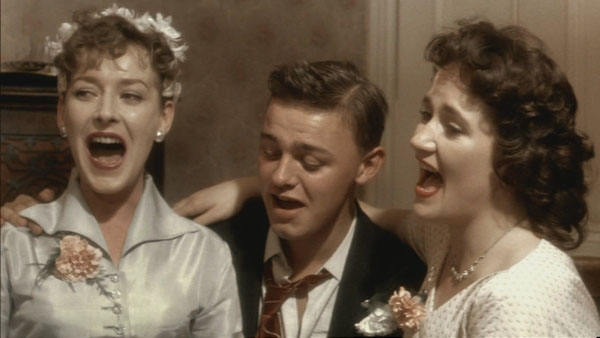
Both movies consist of beautifully shot sketches of memories. Distant Voices (the first half) was actually made as its own movie – about three siblings growing up under their father Pete Postlethwaite’s wrath. It was deemed too short to release, so the second part, Still Lives, was written and shot after – now father is dead from cancer and the kids are grown, moving out on their own and getting married. Episodes are shown in random-associative order, all superbly shot. Lots and lots of singing – movie is basically a musical… “takes a worried man to sing a worried song”… “in the bleak midwinter”… “there’s a man coming round taking names”… “when irish eyes are smiling”… tons more, all sung by the cast in bars, on the street or at home.

It was Pete Postlethwait’s breakout year – he was in two other reasonably big films. Davies in the DVD commentary: “It’s hard to believe that one man could’ve caused so much suffering and that all these years later I would make a film about it.”
image

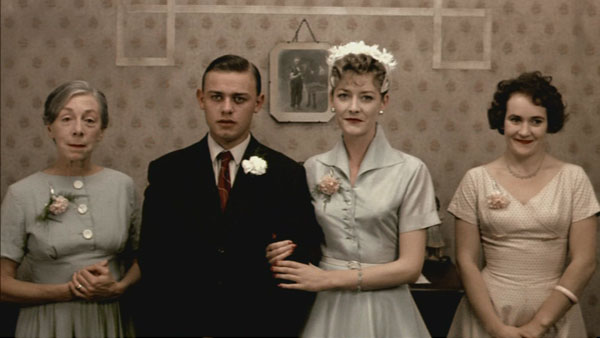
Mom, Tony, (dad), Eileen and Maisie
image

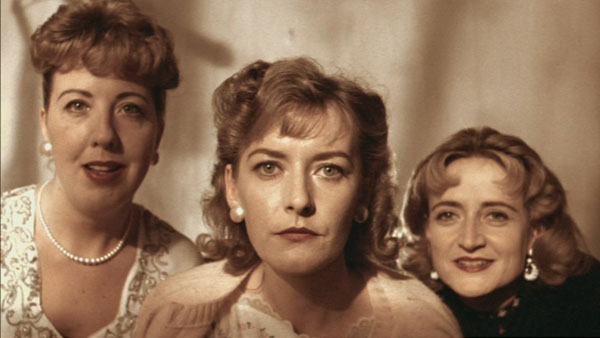
Eileen (center) was in Aki Kaurismaki’s I Hired a Contract Killer. On left is a friend – loud, outspoken Mickey (good singer, too).
image

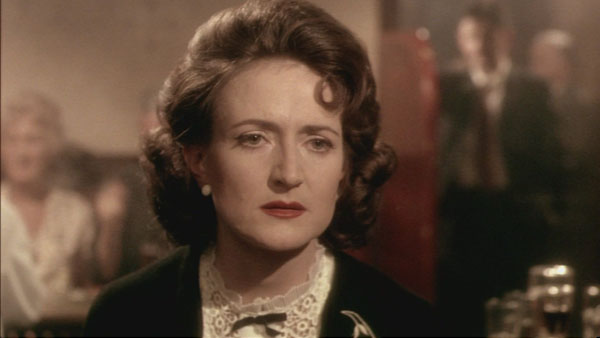
Married life doesn’t always work out… old friend Jingles looks upset.
image

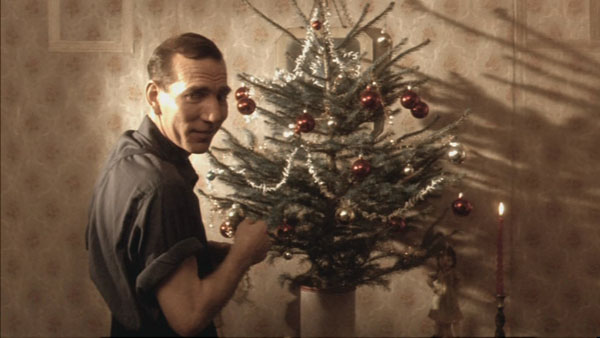
Davies is annoyed that viewers thought the Christmas scenes gave sympathy to the father. He says his father deserves no sympathy. Seems from the commentary like everything actually happened in his life as we see it. Creative liberties are taken, of course… fewer siblings keeps things easier to follow, events and timelines are shuffled, but the movie is a mining of his real life. Reactions from family members to the film were mixed.
image

Davies also has a wonderful voice on the commentary. I could listen to him all day. If he did EVERY dvd commentary, people might actually listen to the things. After watching the movie I assumed influence by Alain Resnais, but he says the structure is influenced mainly by T.S. Eliot’s Four Quartets.
image

Won a whole pile of awards, including at Cannes and Toronto, but lost the European Film Awards to Kieslowski and Wenders, oh well.
image

image

image

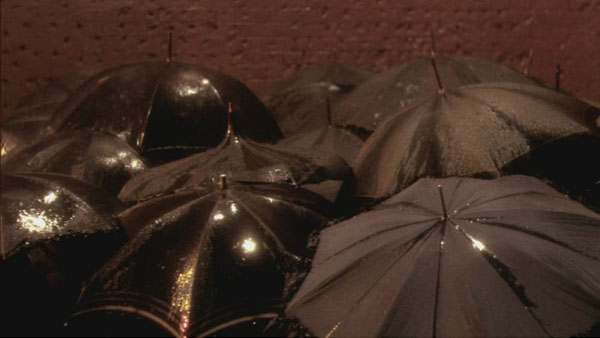
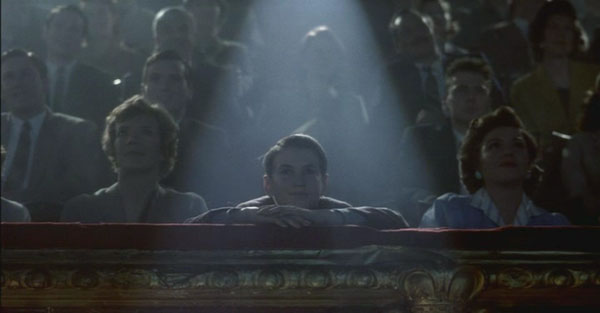
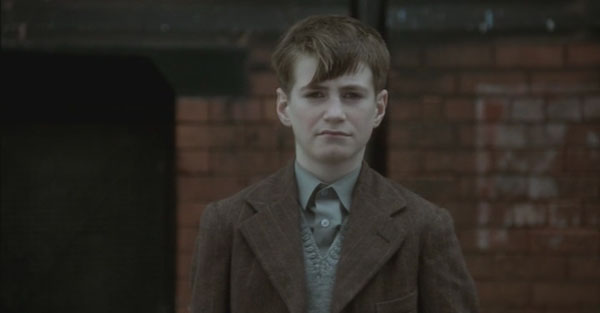
The Long Day Closes is the same kind of thing, but in a shorter timespan and focusing on one kid (young Terence Davies, or “Bud”), his relationship with mother, home life, church and school. Still plenty of singing, though not as much as the other film, and now punctuated by audio clips from classic movies (the kid is happiest at the cinema). Subjective shots through his eyes, memory adding a dreamlike quality to certain scenes, rain and snow are so constant that sometimes they occur indoors.

Exquisite between-scene transitions… this is halfway through one of ’em.
image

I’d say there’s less story here than in the other movie, more impressionistic. I don’t usually love nostalgic childhood reminiscence movies, but that’s because most aren’t as gorgeous as this one.

image

By the time I got to the DVD commentary I’d already heard the one from DV,SL so I took it for granted that everything in Long Day Closes refers to a specific, sharply remembered incident in Davies’ real childhood. Liberties are taken, of course, like how the Christmas dinner table here seems to be out on the street.

image

image

image

August 2012:
If there’s any film that should be watched on 35mm in theaters, it’s this one, and unbelievably, I got a chance. It was playing in Seattle, so Katy grudgingly agreed that we could go. Looked amazing. Nobody else in the theater but us. Katy mostly didn’t like it, dozed through the last 20 minutes, but responded to the audio clip from Tammy and the Bachelor.

image

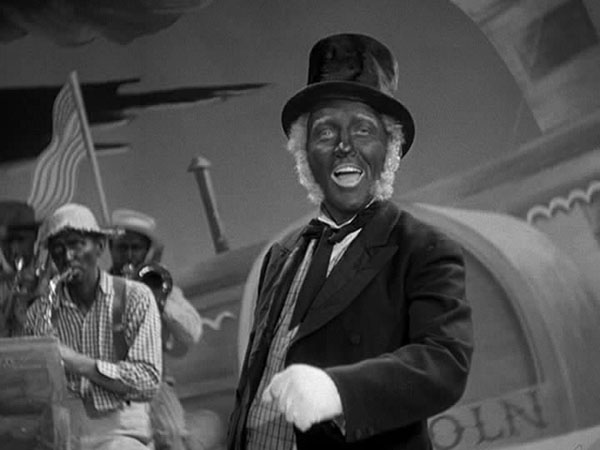
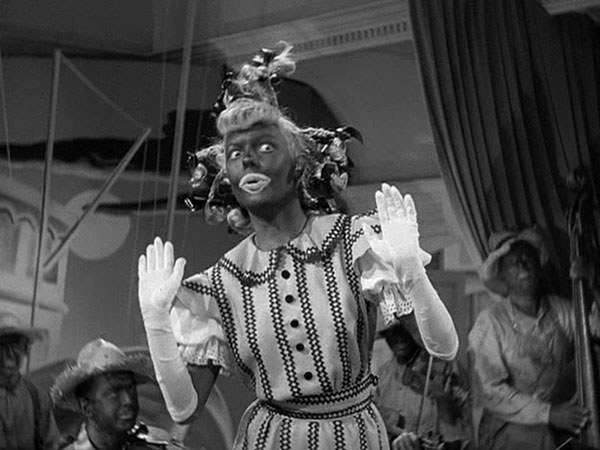
Bing Crosby quits his NYC singing/dancing team with Fred Astaire (eight years after The Gay Divorcee, his head and hands still cartoonishly large) and moves to Connecticut (another CT christmas movie) to open the Holiday Inn, where he can goof off 350 days a year, and put on spectacular shows for each holiday with a custom-written song (incl. White Christmas, Easter Parade). When the girl (Charlotte NC native Virginia Dale) whom Fred stole from Bing leaves town to marry a millionaire instead, Fred invites himself to the Inn and tries to steal Bing’s new girl Marjorie Reynolds (later in Lang’s Ministry of Fear). Lots of singing and dancing ensues, Fred gets the girl and takes her off to Hollywood to make a film about the Holiday Inn (featuring the inn sets we’ve already seen, but with all the lighting now visible – it’s the most meta movie of 1942!). A few holidays later, Bing builds up the guts to ride down there and steal her back – plus V. Dale shows up again, so now everybody’s got a pretty girl, and happy holidays and remember to buy war bonds.

The movie obviously won best song for the bestselling single of all time White Christmas, but lost a writing award to 49th Parallel. Irving Berlin would return with Easter Parade in ’48, and White Christmas (which I didn’t like as much as Holiday Inn) in ’54. Sandrich would die four years later in the middle of filming another Berlin/Astaire/Crosby musical, Blue Skies.

Bing Crosby, in between Road movies, celebrating Lincoln’s birthday:
image

Object of affection Marjorie Reynolds:
image

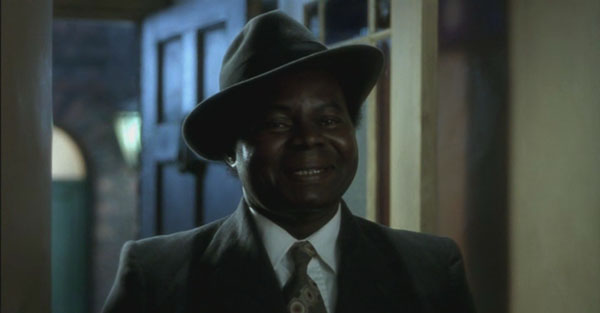
Actual black person Louise Beavers appeared in Freaks a decade earlier, and would become one of the first black sitcom stars a decade later.
image

Okay, so I went overboard in saying this was better than Across The Universe, but I did find it surprisingly tolerable and entertaining and I enjoyed looking at the cool lighting and listening to the songs and watching Meryl Streep whenever she was around, and my mind wandered whenever she wasn’t. There was one great song (not counting the camp greatness of Pierce Brosnan’s awfully earnest singing), and the rest were pretty so-so. Movie is getting mad hatred from web-based critics, fans of good films and classic musicals, but I didn’t go to the screening expecting a good film nor a classic musical so I left unoffended. In that sense, it may not have been better than Across The Universe, but it was better than Indiana Jones 4.

I.
Movie opens exactly how I would’ve opened a Tom Petty movie, with a concert performance of “You Wreck Me”. And this is a four-hour movie, a four-HOUR movie, so I thought we’d have some breathing room and could afford the four minutes to hear the whole song uncut, set the stage for your epic Tom Petty documentary by letting us hear a whole Tom Petty song, just so we know what exactly we’re celebrating here. But P.Bog goes the obvious talking-heads documentary route instead, cutting into the song so people like Eddie Vedder, Stevie Nicks, Dave Grohl and Johnny Depp can tell us that they love Tom Petty and his music so much. Damn, almost had something there. I guess P.Bog doesn’t want people tuning in and thinking it’s gonna be a straight-up concert, but still, I hope in the next four hours he finds time to play one song, just one song all the way through without voiceover. Can you celebrate a musician without actually playing any of his songs?

We may not get to hear a song uninterrupted, but we can enjoy watching Johnny Depp talk without any bothersome on-screen text saying “Johnny Depp”. But I didn’t recognize half the people who spoke, so if he doesn’t eventually start with the text, I’ll just never know.

But look at me complain. It’s an enjoyable show so far, talking ’bout Petty’s early obsession with rock music and his meeting Mike Campbell and Benmont Tench and early days in Mudcrutch. All songs I’ve heard before from the box set with nice home-movie footage to go with it.

II.
Tom drives to L.A. to find a record deal, gets a few of those, Mudcrutch breaks up because the studio wants Tom more than the rest of the band, and the Heartbreakers are quickly formed to replace it. Their record producer wrongly assumes that they mean the name Heartbreakers ironically. Tom is shot in arty black-and-white.

III.
First two Heartbreakers albums are out. There was all of one sentence about the second album being more difficult than the first before they cut to people raving about it. Some good live footage, some talk about drug use. And finally, one entire TV performance of a song with no cuts or voiceovers. Hoorah! A “required monthly test” on my tape cut out one talky segment. The band was initially popular in Britain before they caught on in the U.S.. Someone’s trying to convince us that Tom Petty was part of the Talking Heads/Sex Pistols rebel new-wave/punk movement, since the Heartbreakers’ roots-rock was out of fashion on the radio, replaced by bloated dinosaur rock and disco. I guess it’s a workable theory but I want to hear David Byrne’s opinion first.

IV.
Third album was a big deal. Jimmy Iovine shows up and tells us that third albums are always big deals. Petty found out he was being dicked around by his record company and he sued them… big unprecendented event, led to settlement giving Tom more control and royalties from his music and the eventual release of “Damn The Torpedoes,” feat Refugee, Even The Losers and Don’t Do Me Like That. Movie plays nearly the whole album over the story.

V.
Some pressure for the fourth album, “Hard Promises”, another great one, feat. Insider and A Woman In Love. Very nice segment on The Waiting that starts with Petty singing it acoustic, cuts into music video / studio version, then after an interview piece closes out the song with Eddie Vedder on vocals during a live performance. We lost a bass player (no hard feelings), gained a new one (Howie Epstein), won another fight with the record company (over album pricing), dealt with Stevie Nicks, and played the great Stop Dragging My Heart Around. First time diving into Tom’s angry youth, his abusive father (plenty of hard feelings) and sweet mother who died during the recording of this album after long illness. Iovine presents his theory: missing mother + abusive father = rock star. Towards the end of 1982 I drove back to work blasting Insider with the windows open. Man, it’s only 1982… how long can P.Bog keep this up? Did he ever watch the whole thing at once?

VI.
Next album “Long After Dark” (the one with “You Got Lucky”) isn’t as good as it might’ve been. Producer Jimmy Iovine is blamed for his involvement. Next album “Southern Accents” (feat. Eurythmics-penned “Don’t Come Around Here No More”) isn’t as good as it might’ve been. Producer Jimmy Iovine is blamed for his lack of involvement. We get a full pretty-recent concert performance of the song “Southern Accents”, and a brief description of the drug-fueled two year period around the Accents album leading to Tom’s smashing his left hand into a wall. P.Bog uses an innovative cutting style during this segment, and intimate camera work reminiscent of his film “Texasville”. Haaaa I’m just kidding, it’s the same ol’ interview stuff. I turned it off after a black screen announcing the end of part one. I hope part two is on my videotape!

VII.
The album: “Let Me Up (I’ve Had Enough)” feat. Bob-Dylan-co-penned “Jammin’ Me”. Here in part two, Petty’s rock cred and history firmly established, we take an immediate P.Bog-style veer towards talking about all Tom’s Famous Friends. Tom and his group back up Dylan (who hadn’t played with a band since The Band), hang out with ex-Beatles and Jeff Lynne and Otis Redding and finally form the Traveling Wilburys, marking the point when Tom went from rebel-rocker to a guy whose records my mom would buy. I haven’t seen The Last Waltz but mentions of The Band got me wondering if this is P.Bog’s answer to that movie, a big rock statement blending his two main talents of reminiscing about the old days and namechecking famous friends. Oh but I shouldn’t be mean to P.Bog, don’t really know much about him.

VIII.
Wilburys record comes out and is a huge hit, then Roy Orbison dies so that doesn’t go any further. Tom alienates the band by making a solo-ish record in “Full Moon Fever,” but it’s the biggest hit of his career and the Heartbreakers play the songs live and they don’t seem so bitter anymore.

IX.
Tom continues to alienate the band, this time with the help of Jeff Lynne, “Into The Great Wide Open” producer who likes to record the band members one at a time instead of all together like they are used to doing. New drummer joins during “Wildflower” sessions and is asked to stay permanently when old drummer finally quits. They hang out with Roger McGuinn, Johnny Depp, Dave Grohl, Faye Dunaway. “Greatest Hits” sells ten million copies after Tom is finished grumbling about it. The band gets a little happier. I’m starting to be thankful that the movie is so long. It’s been nine lunch hours so far I’ve gotten to hang out and listen to Tom Petty stories, and I always feel like playing some Petty albums when I get back to work.

X.
I didn’t think I’d end up criticizing a four-hour doc for its omissions, but when it acts like it’s telling the whole story, those omissions seem serious enough to mention. Firstly, they didn’t mention the Petty/Heartbreakers soundtrack to She’s The One. I can see not wanting to spend a lot of time on it, but they could at least mention it in passing… it’s a great album. More importantly, Tom’s cameo as the mayor of Bridge City in the post-apocalyptic epic The Postman went unmentioned. “I heard of you, man… YOU’RE famous.” On the bright side, the band is back together. On the less bright side, nobody seems totally happy with “Echo”, least of all Tom, who was going through a divorce at the time of recording. Back up with a new wife and a hall of fame induction for “The Last DJ”, currently the Heartbreakers’ most recent album and a very good one. And then back down again as bassist Howie Epstein dies from drugs and is replaced in the band by original bassist Ron Blair. Oh, and the band backed up Johnny Cash on “American Recordings”, something else to be proud of.

XI.
Oh augh, the summary chapter. Would that the VCR chewed up my tape sometime between last time and this one. Tom is proud of “Highway Companion” but has nothing new to say about it. There’s some more concert and video footage, but mostly this is where we throw all the clips of people saying nice things about each other to leave us feeling good about ourselves and Tom and rock ‘n roll. Might work better if you’ve been spacing on the movie for four hours and gone through a couple six packs, but as a standalone episode it’s tedious. So I’ll keep my last words to a minimum: good flick, good tunes.

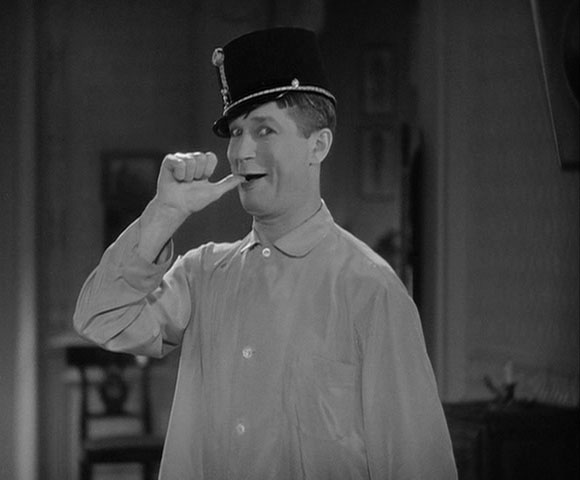
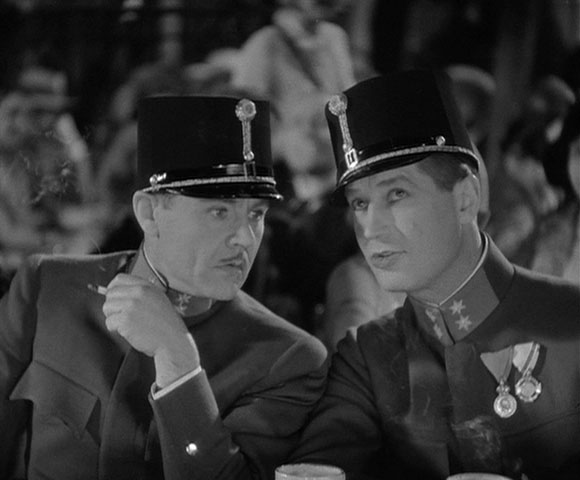
Starring a broooadly overacting, hammy but kinda charismatic Maurice Chevalier as an Austrian lieutenant. Movie opens with a tailor knocking on Maurice’s door vainly attempting to collect on his bill (a year later, Maurice would star in Love Me Tonight as a tailor vainly attempting to collect on an aristocrat’s bill). Nobody answers, and immediately after he walks off, a young girl approaches the door, gives the secret knock and is let in. Yes, there’s actual sex in this movie – offscreen, but it’s acknowledged. It’s that Pre-Code Hollywood that TCM always salivates over before showing tame, dull movies like The Divorcee.

Maurice, a naughty lieutenant:
image

The movie is, as promised, a musical comedy (two genres which encourage broad acting) as well as a romantic drama, and the late 20’s/early 30’s had their share of hugely broad comedy performances in film, so in context Maurice is pretty alright. And he’s got kind of a charming, roguish smile on nearly all the time… sucked me in after about ten minutes. Katy disagrees, but liked the movie despite Maurice.

Maurice joins his friend Max to act as wingman so nervous, married Max can pick up a hot young violinist at the concert, but Maurice falls for the girl (Franzi) and takes her home himself, with some sexy banter about which meals they’ll enjoy together (ahem, breakfast).

Max, left, is Charles Ruggles, the viscount in Love Me Tonight, also in Trouble In Paradise. Chevalier was a big star from 1929-36 – then IMDB says he was falsely accused of being a nazi collaborator and his acting career was derailed for a buncha years, with a big comeback in Gigi in ’58.
image

Claudette Colbert (Franzi) was later Cecil B. DeMille’s Cleopatra, also starred in It Happened One Night, Midnight, and The Palm Beach Story.
image

The young lovers have a good thing going, but flirting in public brings disaster, when Austrian soldier Maurice winks at Franzi across a street just as the coach carrying the king and princess of Flausenthurm drives between them. The wink and the princess’s appalled reaction are photographed and published in the paper, causing an international scandal, but everyone settles down when Maurice explains that he was overcome by the princess’s beauty and is bullied into agreeing to marry her. So M. is off to Flausenthurm, but won’t sleep with his royal bride, preferring to step out on the town. The moody king gets over the inferiority complex he had in Austria, is now smitten with Maurice and tells his daughter not to worry, playing checkers with her every night as a sad substitute for marital sex.

Princess Miriam Hopkins = Savannah-born star of Trouble in Paradise, who won an Oscar a few years later then didn’t do a whole lot of movies I’ve heard of. King George Barbier was in a ton of stuff through the 40’s, including The Milky Way and The Merry Widow.
image

The movie is a musical, but I don’t remember most of the songs or even where they occur, except climactic number “Jazz Up Your Lingerie.” You see, Maurice still loves the loose, free, totally modern Franzi, and he still has not-too-secret affairs with her since her violin group is on tour in Flausenthurm. So one day Princess Anna sorta kidnaps Franzi to ask her advice… Franzi helps Anna out, giving up on her man with the great line: “You mustn’t worry about me. I knew it all the time. Girls who start with breakfast don’t usually stay for supper.”

image

During the music number, Anna’s frumpy clothes all turn magically into hot things, she learns to smoke and play jazz on the piano, and when Maurice comes home he can not believe his eyes. She takes him to the bedroom and wordlessly suggests a game of checkers, but he keeps tossing the board away… finally tosses it onto the bed, and just look at the expressions on their faces:

image

Everyone who sees it today comments on the sexual freeness, but the original New York Times review in 1931 didn’t mention any of that, called it a “highly successful production” with “charming” music and “splendid” performances, and spoiled the entire plot.

J. Weinman: “The Smiling Lieutenant is based on Oscar Straus’s Viennese operetta A Waltz Dream, though Lubitsch relegated all the operetta’s songs to background music and had Straus write a few new songs in a more modern style. As he usually did when adapting a play or an operetta, Lubitsch kept the basic outline of the story but changed everything else.”

Katy showed me this Bollywood movie to wash away the pain of Partner. This one wasn’t hateful, loud, empty, an extended music-video ripoff of an already-bad Hollywood film, but I didn’t love it either. Katy said the camera work was very good and often beautiful, but I found it uninspired, generic. Music was unmemorable but not bad. One nice music segment when a couple is at the movies seeing themselves onscreen reminded me of Pennies From Heaven. Story is alright, a light romance about three buddies and their love lives.

Akash (Aamir Khan – ice candy man in Earth, main dude in Lagaan) has a little beard patch under his lip, kinda arrogant but becomes a Good Guy as movie progresses. Gets sent to Australia and falls for a girl his parents previously tried to set him up with.

Sid (Akshaye Khanna – played Gandhi’s son last year) has an uneven hairline, is an artist and a Good Guy to begin with, falls for an alcoholic older woman with a kid and an ex-husband but she dies in the end.

Sameer (Saif Ali Khan – once played a character named Jimmy, but not THE Jimmy) has no distinguishing features or characteristics except that he falls in love with every girl he sees.

Also some women with names like Preity and Dimple, but don’t confuse me here.

Was nominated for 13 Indian academy awards, but got trampled by Lagaan.

Set in the near-future of summer 2008, which would’ve worked better had the film played more than a couple film festivals in its intended release year of 2006.

image

I could go on and on summarizing plot strands and talking about story bits like Liquid Karma being harvested from the center of the earth and injected into Iraq war soldiers to give them psychic communication powers, TV ads that feature cars fucking each other, multiple sets of identical twins, triple-crossing double-agents in an undercover war between government spy corporations and the neo-Marxist underground… but it’s not worth recounting, really. I find the following bits more interesting:

1. The casting choices. Are they meant ironically, humorously, or meta-post-something? Admittedly some of these people are good actors, but it seems like stunt-celeb casting akin to Steve Guttenberg dancing in a reality show. These people actually appear in this movie:
– teen idols The Rock, Buffy, Seann William Scott, Mandy Moore & Justin Timberlake
– TV comedy vets John Larroquette, Jon Lovitz and Will Sasso
– SNL comics Nora Dunn, Cheri Oteri and Amy Poehler
The Princess Bride‘s Wallace Shawn
– Christopher “Highlander” Lambert
– The ghost expert from Poltergeist (now in her 70’s)
– Donnie Darko’s uptight teacher, but with an unpleasant fake accent
– Donnie’s dad Holmes Osborne
– Janeane Garofalo (somehow I did not recognize her)
– Kevin Smith in heavy old-man makeup
Mulholland Drive‘s Rebekah Del Rio (below)
– 80’s movie nerd Curtis Armstrong (Cusak’s wired friend in Better Off Dead)
– Miranda Richardson of Spider and Sleepy Hollow
– Bai Ling of Dumplings and Sky Captain

image

2. Apparent product-placement for Bud Light in both the movie and the comic, and empty references/namechecks of Robert Frost poems and Robert Aldrich films and Philip Dick novels. A location called “Fire Arcade” could fit in this category as well.

3. The post-modern fractured storytelling aspect, complete with lots of internetty technology business in plot and presentation. Doesn’t work as well as it did in Redacted, and it remains to be seen whether this concept will ever work completely in any movie (a fixed-length linear medium) or whether movies should simply not try to emulate DVDs, CD-ROMs and websites. At least the story was told in chronological order (as was Redacted).

A scarred and blood-drenched teen idol, who must’ve shot a lot of scenes that got cut out of the picture since he never quite seems to fit in:
image

4. The gall of this thing to exist, with its bad acting, big budget and mishmash story. It truly feels like Kelly was afraid that this might be his last film (it won’t – his Cameron Diaz and Cyclops starring follow-up with hardly any stunt casting is in post-production) and wanted to make it about every single idea he’d ever had all at once. Global warming! Internet privacy! Individual identity! The US perpetual war machine! Fart humor! Religion! If you want to be unkind you could say the fractured storytelling wasn’t even purposeful but just reflects Kelly’s total lack of focus on a single story or concept.

5. Commonalities with Darko (Kelly’s continuing obsessions with pop songs, 80’s culture, time travel and memory).

Parts of the comic, like the rapidly-growing baby and the bit about certain people evolving beyond the need to defecate are missing from the film except in coded messages. You poo too?
image

But these are the most interesting aspects of a kinda uninteresting movie. I’d have to say the whole enterprise was a waste of time, time better spent watching Stephen Chow kick stuff in Royal Tramp II. At the end there is an explosion, a young guy who goes through a rift in the space-time continuum, and someone who is shot in the eye. Why would a studio pay $17mil for a crappy remake of Donnie Darko? Then there’s a line about the messiah being a pimp. This is the way the movie ends. This is the way the movie ends.