Sembene’s third-to-final film, the one before Faat Kiné. His usual feminism is in effect here, but it’s mostly pushed to the background because he has more pressing issues to worry about.

Guelwaar (Thierno Ndiaye, below, also in Karmen Gei) has just died when the movie begins but we meet him in flashback. He has been killed because of his outspoken political beliefs, that it is better for a person or a nation to live poor than to accept handouts. He and his family are Catholic, and when his expatriate son Barthelemy goes to retrieve the body for the funeral, he finds that there has been a mix-up and Guelwaar was buried in a Muslim cemetery. A cop somewhat-assists, but when he finds out Bart lives in France he suggests that Bart appeal to his ambassador instead of asking the local police for help.

image

Meanwhile at Guelwaar’s house, the funeral party drags on longer than anyone had anticipated. His widow Nogoy, younger crippled son Aloys, and prostitute daughter (the prime breadwinner of the family) socialize with the guests (who include the daughter’s coworker, actress who played Rama in Xala). When word gets out about the fate of Guelwaar’s body, the Catholic priest and Muslim imam have a showdown, each craving peace but backed by an angry and armed mob of their people. The Muslims only back down when a government man (on whom they depend for food) drives up and convinces them of their burial error. Guelwaar is returned to the Catholics for his funeral, Bart has a newfound patriotism, and on the way out, the Catholics, in solidarity with Guelwaar’s climactic flashback speech (and as an outlet for their pent-up rage) destroy the shipment of food headed for the Muslim town in a passing wagon.

image

Interesting that Guelwaar defends the fact that his family lives off the daughter’s prostitution trade, over his wife’s protests. At least it is work, he argues, and they are not relying on handouts from others. This scene cuts down his noble martyr status by a couple notches. Nobody’s perfect. Also I like that the imam (above) is portrayed as a good man who listens to reason and tries to sway his angry followers to do the same. The only group that is portrayed as irredeemable is the corrupt government officials who silence Guelwaar’s voice that decries the handout system, since they skim a large share from foreign aid money before distributing it to their people, and they’d like to keep it that way.

“Human beings will always betray you. You can only trust the numbers.”

Well-chosen images (sometimes picked for more comic effect than illustration) keep the thing entertaining while it lectures us. Good use of stock footage and music (incl. Yo La Tengo’s “return to hot chicken” and “nowhere near”).

image

PART 1

Post-Depression-and-WWII expansion of American gov’t in order to “control the economy and protect society from the dangerous self-interest at the heart of capitalism.”

Friedrich Von Hayek predicts tyranical outcome from gov’t planning and control of society, says everyone pursuing their own individual self-interest should lead to social order.

Intro of game theory and cold war strategy.

John Nash enhances Hayek’s theory, shows that “rational pursuit of self-interest” leads to a happy equilibrium, but after Nash was locked away to treat his schizophrenia, his coworkers tried to adapt his theories. Nash one of the few theorists and politicians who comes off looking kinda good at the end, saying that he was wrong and that his theories were mis-used.

RD Laing investigates schizophrenia, discovers a treatment (getting affected people the hell away from their horrible families) and a related scary fact, that sane people can be sent to an asylum and believed to be mad. Develops system to quantify personality disorders and remove subjectivity from diagnosis.

James Buchanan argues that politicians’ working for what they call “the public interest” is deceptive, greatly influences Margaret Thatcher. Sets up number-based productivity targets for health-care employees to “free” them based on Nash’s simplified vision of purely selfish individuals.

PART 2

John Major sets out to harness the individualism of public servants through liberating paradigm of the free market via performance targets.

Greenspan and Clinton’s economic advisor tell Clinton that his programs won’t work, needs to move to market-driven society and government.

“Freedom was redefined to mean nothing more than the ability of individuals to get whatever they wanted.”

When he talks about misinterpretations leading to this market-driven society, John Carpenter’s sinister “Halloween” theme kicks in… nice.

An anthropologist actually named Napoleon did a bizarre observational experiment which “proved” that game theory can be applied to the genetic level, that humans, like other animals, are self-interested machines.

“With the rise of this machine model of human beings a new idea of how to change society began to emerge, not through politics any longer but by adjusting how well the individual machines function” and into “a new form of order and control” in the form of imagined new mental disorders and treatments such as prozac. And the drugs turned them into simpler beings, closer to the machine model.

Meanwhile, performance targets weren’t working, corporate crime was huge, and class division was greatly increasing.

PART 3

Overview of how these simplified machine models of human behavior and other stupid theories led to increasingly bad policy decisions in England and the US, into an intro to Isaiah Berlin. I thought I kept notes during this one, even remember spelling out “Isaiah Berlin” but I can’t find them. So here’s wikipedia:

“Berlin is best known for his essay Two Concepts of Liberty, delivered in 1958 … at Oxford. He defined negative liberty as the absence of constraints on, or interference with, agents’ possible action. Greater “negative freedom” meant fewer restrictions on possible action. Berlin associated positive liberty with the idea of self-mastery, or the capacity to determine oneself, to be in control of one’s destiny. While Berlin granted that both concepts of liberty represent valid human ideals, as a matter of history the positive concept of liberty has proven particularly susceptible to political abuse.”

Tony Blair tried at least, sending Berlin a letter asking for advice, but Berlin was on his death bed and never responded. Bunch of sadness ensues, and the movie’s ray of hope for humanity’s future only appears in the final sentences. I will have to watch this part again.

Overall a helluva terrific movie. I want to see it again and I want everyone everywhere to see it also. Katy even almost watched it with me.

Addendum JAN 2011:
Watched again with Katy and I was thrilled that she loved it also. We talked about how damned clever, well-researched and respectful of its audience it seems to be, and how all other documentaries seem lessened in its wake.

Co-directed with Vincent Paronnaud. Tied with Silent Light for the jury prize at Cannes.

Beautifully illustrated and well-animated story, alternately light and heavy, following author/director Marjane’s life from the mid-late 70’s to the mid 90’s. I have to grudgingly admit that the people who say the second half of the film isn’t as good are kinda right, but overall it’s such a wonderful movie, the kind that I wish I could make everybody watch: an artistic movie promoting peace, cross-cultural understanding and individual integrity. I love that the phrase “the price of freedom” is invoked not to justify the loss of lives in a “freedom fighting” war, but as a personal cost, that Marjane’s final flight from Iran to France for the sake of her personal freedom will mean never seeing her grandmother again.

Since I don’t know anything about Iranian history or politics, here’s a timeline combining this movie’s events with stuff from wikipedia and IMDB:

1921 – Qajar Dynasty ends, the “good” Shah is in power
1941 – Shah’s son takes control
1950s- new Shah becomes “increasingly autocratic”
1963 – The House Is Black
1969 – The Cow
1969 – Marjane Satrapi born
1970 – Kiarostami’s first short film
1974 – The Traveler
1977 – The Report
1979 – Shah leaves the country, Iran becomes an Islamic Republic under supreme leader Ayatollah Khomeini
1980 – Iraq invades Iran
1984 – Marjane goes to Vienna
1987 – Where Is The Friend’s Home?
1987 – The Cyclist
1988 – Iraq/Iran war ends
1989 – Ayatollah Ali Khamenei becomes supreme leader
1989 – Khameini issues fatwa against Salman Rushdie
1989 – Marjane gets married in Tehran
1990 – Close-Up
1994 – Marjane gets divorced
1995 – The White Balloon”
1997 – Taste of Cherry
1998 – The Apple
1999 – The Wind Will Carry Us
2000 – The Circle
2000 – Persepolis book published
2001 – Kandahar
2002 – Ten
2005 – Mahmoud Ahmadinejad is president (still under Khamenei)
2006 – Offside

“I’m very happy to announce that we’ve destroyed at least half of the country. I hope now they’ll understand that aggression does not pay.”

That sums up the whole movie. It’s so obvious and loud and obnoxious and garish and that’s probably just what it intends to be. But it makes for an unpleasant viewing experience. I can’t imagine this movie screening in theaters without walkouts by exasperated viewers saying “I GET it already” (but probably saying that in french).

All-American titular superhero is introduced blithely massacring a black family in the middle of their dinner. Then Dr. Freedom (Donald Pleasence) calls to tell him that his French equivalent Captain Formidable has been killed and commies are invading France from neutral Switzerland. It’s up to Mr. Freedom to save the ungrateful French, not for any love of the country but to stop the dreaded domino effect and protect the world from communism.

Doesn’t play like a proper movie at all. Sometimes it feels like an advertisement (America’s priorities are more Capitalist than Democratic), and sometimes like a bunch of people goofing around and pretending to make a movie. The dubbing ain’t great, either.

Some funny touches: the american embassy in France is a wal-mart full of dancing girls. And sometimes the cheapness of the project turns into a lo-fi charm. Superfrenchman is played by a balloon with easily confused henchmen, and the also-inflatable Red China Man breathes frozen fog that settles on the ground.

Freedom of course ends up destroying most of France, his french guide Marie-Madeleine turns out to be a commie traitor, Russian Moujik Man is somewhat of an ally but can’t really be trusted. Freedom, not too fazed by the death of all his compatriots and followers, prevails through violence. Sadly it’s not a dated period piece and what Klein’s saying about American foreign policy applies perfectly well today.

Criterion: “Delightfully crass, Mr. Freedom is a trenchant, rib-tickling takedown of gaudy modern Americana.” It’s funny to think how many Criterion completists will soon own this movie.

Movie plays better in stills. When considering the screen shots I took, it seems almost like a good movie, clever and funny and ramshackle without the loud, boisterous, stagey dialogue to distract. In other words, it’s a much better movie when you’re not actually watching it. And since Klein was renowned in the 50’s as a still photographer and appears in Marker’s still-composed La Jetee, I’ve kept more screenshots than the film might deserve.

The introduction of Marienbad star Delphine Seyrig as Marie-Madeleine, yowza.
image

Dr. Freedom:
image

Captain Formidable is played by classy French icon Yves Montand:
image

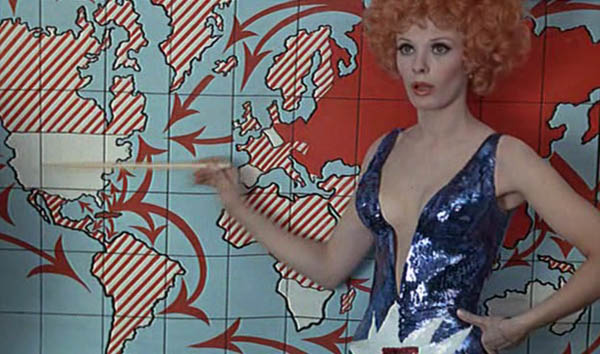
“Anti-freedomism is at a new high.” Can’t get enough of that dress. Note Marie-Madeleine’s placement in front of the red portion of the map, foreshadowing the revelation that she is a communist spy. Just kidding.
image

Over a temporarily fallen Freedom, L-R: Moujik Man, Red China Man, Jesus & Mary
image

Freedom celebrates the defeat of Superfrenchman… I don’t remember exactly what went on here:
image

Forcing the maid to taste the poisoned food she brought. Nice shot setup:
image

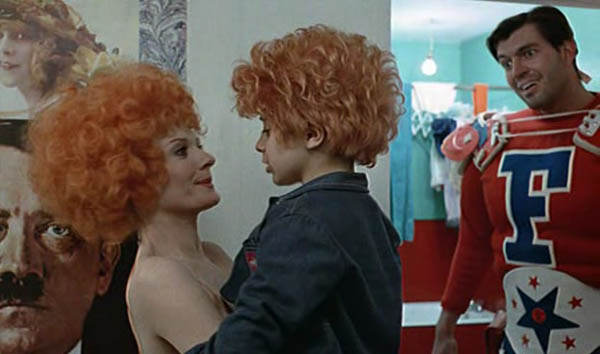
I love this shot so much. The matching hair, the goofy look on Freedom’s face, the unexplained picture of Hitler hanging on Marie-Madeleine’s wall:
image

Serge Gainsbourg very nearly survives to the end:
image

Freedom! Now available in a convenient spray!
image

I hate to be so down on the movies Katy picks, but I can’t help myself any more than she can pretend to enjoy watching “ace in the hole” or “pennies from heaven”.

This felt like an obvious and uninteresting adaptation of an alright story about the partitioning of India and creation of Pakistan as symbolized by a conveniently diverse group of friends in Lahore and as seen through the eyes of a young innocent.

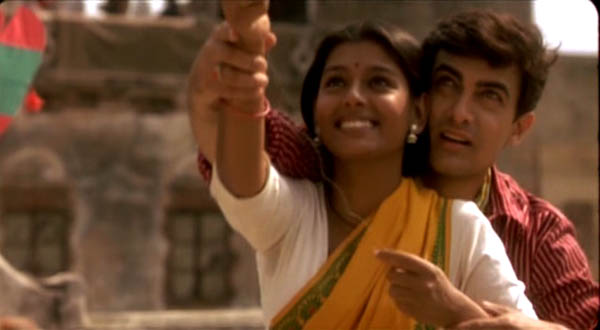
The young innocent is rich-girl Lenny-baby (of a neutral parsee family) whose hindu caretaker Ayah (a cover girl from Fire) is one of the friends. Also in there are muslims Hassan The Masseur (guy from Bollywood/Hollywood) and Dil The Ice Candy Man (Lagaan), a sympathetic sikh whose name I can’t find right now, and Lenny’s cousin Adi who has an arranged marriage to a short old man.

I took it as a history/culture lesson, though I had to ask Katy lots of questions because this movie doesn’t spell out as much as Water did for the uninitiated. Had the feeling of a postcard yearning for old peaceful times, so I didn’t see the violent atrocities of the second half coming… turns into a giant bummer.

peaceful days:
image

friendly chat:
image

an ice-candy betrayal, baby:
image

Movie is set on Sunday Nov. 16, 1981.

The President: “Screw church.”

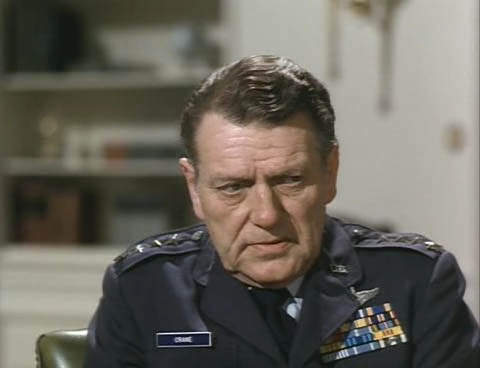
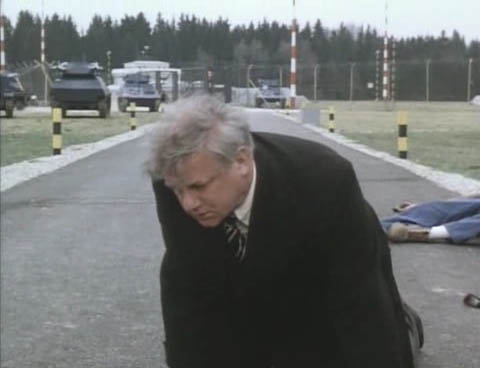
The Vietnam War was a show for the Russians, which we intended to lose, just to prove that we had the will to sacrifice troops for no good reason. General Burt Lancaster knows this and is going to force the President of the United States to publically admit it on the air. This is our premise.

Wait, it gets better. Burt will achieve this goal by taking over a nuclear missile station and threatening to launch nukes at Russia unless the President obeys.

Burt breaks in:
image

What goes wrong: Burt doesn’t count on the very evil military (who stay in power because of their legacy of secrets) being willing to kill his hostage, the President (who hadn’t even known about the vietnam conspiracy).

President Charles Durning (Waring Hudsucker, also in The Sting and Hi Mom):
image

Lancaster’s buds are Burt Young & Paul Winfield. Young gets shot in an almost-successful anti-Burt operation towards the end, and Winfield is mostly on Burt’s side but manages to reason with him a little, convince him of the futility of launching the missiles.

Winfield, of White Dog:
image

I don’t know a whole lot about Aldrich. This seemed a kinda low-budget effort, with a 70’s TV-movie look to it, except in the hugely stylish split-screens which sometimes divided into three or four simultaneous actions or angles.

image

But wait, have I mentioned that Thee Great Richard Widmark plays Burt’s nemesis General MacKenzie?

image

Widmark does go to church, seen below with his wife, one of the only appearances of a woman in the film.

image

This was the final film of Charles McGraw (below), star of “The Narrow Margin”, appeared in “The Birds” and “The Defiant Ones” and “A Boy and His Dog”, and previously appeared with Burt Lancaster over thirty years earlier in “The Killers”.

image

Other things:

Paul Winfield: “Jive-ass honky!”

Widmark’s pager goes off in church, back when that was socially awkward rather than business as usual.

Multiple product-placements for Coke.

Burt: “Gentlemen, we are now a superpower.”

image

image

image

Starts with the ending, no opening credits.

Written by Aaron Sorkin, dude who made “West Wing” and “A Few Good Men”. Director of “Closer”. Where have Tom Hanks and Julia Roberts been? Only in one movie each for the past three years. Phil S. Hoffman stole the show just like everyone said. I watched all three of his 2007 movies in a two-week period, and would say he was the most likeable in this one. Tom’s assistant Amy Adams was the princess in “Enchanted” and a naked girl he almost has sex with was Emily Blunt from that fashion comedy.

Story of senator Charlie Hanks Wilson who, with the support of FBI nerd Hoffman and crush christian society woman Roberts, gets congress to eventually funnel a half billion dollars into arms and training for afghani forces to fight back soviet forces and thus turn the tide in the cold war towards the defeat of communism. It’s an engrossing and exciting story even though it’s just a buncha guys talking fast at each other and making phone calls, and the movie gets its reason to exist in the last few minutes. Half a billion for arms, then a year later Charlie can’t get one million approved for rebuilding schools in Afghanistan.

“These things happened. They were glorious and they changed the world… And then we fucked up the end game.”

Another movie with a killer ending. There were a bunch of those this year. Throws a ton of information your way but doesn’t quite connect all the dots for you, and avoids mentioning in postscript anything about our current Iraq/Afghan situation. Okay, so you’d have to be some kinda “August Rush” loving moron to not draw those connections immediately by yourself, but still Katy appreciated its restraint. I think Paul is complaining that it didn’t go far enough in criticizing the American war-waging machine, but I think it’s pretty awesome to drop this movie right before the presidential caucuses, in the middle of award season, starring three huge oscar winners, with an extremely relevant message to our wars in the middle east, and besides I’m not sure that Paul even saw it. I guess “Lions For Lambs” tried the exact same thing, but I hear it sucked. And I know the western union quote about message movies, but this week I’m into the idea that a mass-market movie should have something to say besides “look at all the pretty killing”, which is why I’m starting to think I like “Juno” better than “No Country For Old Men”.

This and “Enchanted” were the first movies I saw in ’08, but I’m behind on my journal entries so stuff like “The Savages” is showing up in January.

Katy liked it too.

BIG UPDATE: I got harshly corrected by the film group on this one, and now have to add that Charlie Wilson’s War (and everyone involved in its making) is fascist. And I’m not so sure that I like Juno anymore either. Bleah.

“Every faction in Africa calls themselves by these noble names – Liberation this, Patriotic that, Democratic Republic of something-or-other… I guess they can’t own up to what they usually are: a federation of worse oppressors than the last bunch of oppressors. Often, the most barbaric atrocities occur when both combatants proclaim themselves freedom-fighters.”

Funny, a riot of a movie, and the most I’ve enjoyed watching Nic Cage since “The Rock” (though I hear he was awesome in Wicker Man remake).

Nic has no morals and neither does the film. Rather than preaching all Hotel Rwanda and Last King Of Scotland on us, the movie takes Nic’s side, making its violence funny and nihilistic, just an unfortunate side effect of business as usual. The downfall comes as expected… Nic loses his uncle (blown to bits), then his brother (shot down trying to destroy some weapons) and his wife (leaves him, takes the kid) and finally gets arrested for illegal arms dealing. But the movie subverts expectation one last time by having a powerful general (based on Ollie North) set Nic free, because the U.S. armed forces need people like him to do things that they can’t be caught doing themselves.

Funny I was thinking how it’s an all-male movie with a token part for the wife when she comes out with this dialogue: “I feel like all I’ve done my whole life is be pretty. I mean, all I’ve done is be born! I’m a failed actress, a failed artist… I’m not much good as a mother. Come to think of it, I’m not even that pretty anymore.”

Pretty stylin’ movie, nice CG-assisted intro following a bullet from factory to a shocking war-zone head-shot. The movie is amoral to make its point, but it doesn’t expect its viewers to be.

Watched again, this time on film, and confirmed that it’s one of the greatest movies I’ve seen this year. Fiery badass political in a more artful way than Michael Moore could ever dream, the culmination of Sissako’s filmmaking styles from Waiting For Happiness and Life On Earth merged with a long, deep-seated desire for change. Too bad it’s almost impossible to recommend as good art and entertainment to people not already interested in African cinema… they’ll never believe me. Jimmy liked it too!