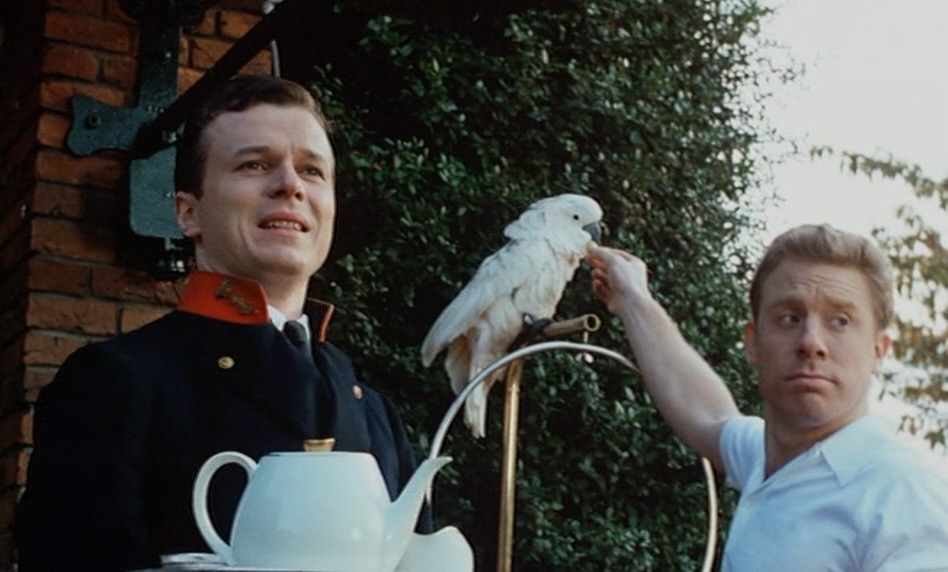
Ethan Hawke showcase, playing a songwriter whose partner has found success with a different partner. He flails around his favorite bar, chatting with bartender Bobby Cannavale and random patron EB White, waiting for Margaret Qualley to show up (script is based on letters they wrote each other), but she mostly wants to meet ex-partner Rodgers, the man of the hour. Feels more filmed-theater than Nouvelle Vague, besides whatever effect they used to shrink Hawke so everybody will dwarf him, but I had a better time with this one.

Nausicaa (1971)

Episodic in different styles, like The Silence Before Bach, and more engaging about Greece than her friend Chris Marker’s The Owl’s Legacy. A big improvement over Lions Love. Varda’s last movie before Mathieu was born and she took a few-year break, returning with Daguerrotypes.

Interview with Pericles, arrested and tortured in Greece after the 1967 coup. Flamboyant sketch about greek art led by advertising guy Mr. ID, jeered by an unseen audience when it ends. Salesgirl selling greek art books instead of bibles (of course you can pay in installments). Newscaster-like guy gives us a history lesson on the coup. Interview with a greek soldier who fled. A geologist found work as a night watchman, misses the sun and the sea, his friends and family now in prison.

Varda makes her first appearance in the next segment, a gathering of exiled Greeks, and a drama starts to come together. We get a recurring character in the salesgirl, and some scripted drama as a young Gerard Depardieu steals her books. The girl and her roommate are hosting a Greek refugee journalist in her apartment until he can get his own place.

Street interviews with tourists who love Greece and don’t think about the politics, and a visit to the Club Med office. A scene purportedly set in Greece, but the backdrop of sea and mountains is transparently fake. Narration by one of the guys who tore down the nazi flag from the Parthenon during WWII. Skit with a girl named Democracy being whipped by her authoritarian mother, asked to sign a loyalty oath.

Democracy hiding under the table:

Episode narrated by Varda about her family history. She talks about a harbor trip she took with the actor playing the refugee journalist, throwing her producers under the bus for not having enough crew to capture sound on their trip.

A factory secretary tell the journalist her secret family history – she turns out to be the mom of one of his hosts, the one from Golden Eighties. After he sleeps with the non-Eighties girl, instead of having them speak to each other, Varda reads both their lines from the script as narration.


Documenteur (1981)

A vaguely depressing one, made during Varda’s second Los Angeles residency, the same year as Mur Murs (and also interested in street murals). Sabine Mamou (Varda and Demy’s editor) and her son (Mathieu Demy) are in LA, she is a typist bouncing between residences, staying with friends until she gets her own place. The movie is very into watching local people, not clear where the actor/documentary line is drawn, with wordy narration, full of wordplay and association.


Pasolini/Varda/New York (2022)

Shot on a walk through NYC in 1966, with sound and editing done the following year, then lost until Rosalie restored it in 2022. Pasolini has essential thoughts about New York and filmmaking.


Ô Saisons, Ô Châteaux (1958)

Maybe her most picturesque movie, an elegant tour of fortresses and castles, with a light jazz soundtrack and poetry excerpts. Torn between thinking this is great and thinking it’s a piece with the tupperware advertisement she directed. Reading the Carrie Rickey book now, which says this was an important step in getting Varda connections and respect and funding for her next steps after La Pointe Courte.


One Minute for One Image (1983)

Commentary on photographs by (mostly) other artists. Old woman’s face, naked boy held by old women, boats with person in foreground, hand surgery, family in open house, mass grave (this has second narrator Jacques Monory), handshake with fish hand (below), family portrait (with guest commenter Agnes’s mom), mud wrestling, hippie facing soldiers, mirror shard and purse contents on street (a still from Cleo from 5 to 7), kids on a Chinese wall, nude mirror polaroids.


Les Enfants du Musée (1964)

Short doc of a youth program at the museum for aspiring artists.


Les 3 Boutons (2015)

No shade on Varda, this is just an overpriced fashion commission. Teen girl leaves her goat farm after receiving a package full of magic fabric, floating through the city in a robe, losing three buttons and gaining three wishes. Good color, nice focus tricks, and standard ugly CG. Also checked out the DVD extras/follow-ups to Daguerrotypes and a couple others – there is a wealth of material on Criterion.

That’s it, the final nail – capitalism is finished. Tired of getting mixed up with the Parasite guy, Park decided to make his own Parasite and win Best Picture himself – which he should. Dad (Lee Byung-hun, lead cop in I Saw the Devil, Storm Shadow in the GI Joe movies) was laid off from the paper factory, is having a bad time on the job market. He stages fake job interviews to find all the candidates in similar positions and eliminate them, so next time there’s an opening he’ll be the only candidate.

If I’m following the story (lol), Young Mr. Diman (Yannick “brother of Jeremie” Renier) played Superspy John in a movie series, got recast after his movie vs. diamond Serpentik failed. Now older Connery-looking Mr. Diman (Fabio Testi of a Zulawski movie) is getting kicked out of his hotel after trying to pay with fake diamonds, and thinks Older Serpentik (Maria de Medeiros) might be living next door.

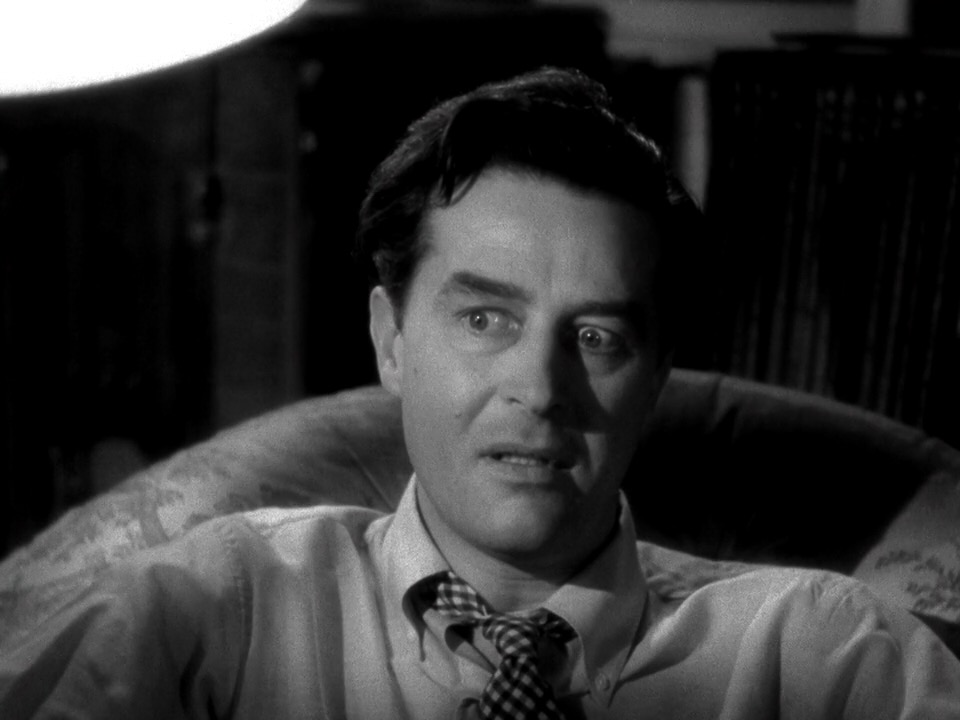
But really it’s just a fragmented romp of distilled genre pleasure. Maybe half dreamed/imagined (there’s a character who hypnotizes victims into believing they’re in a film). A surprisingly high number of Hellraiser-reminiscent scenes, what with the fishhook-haired woman raking people’s faces off, all the skin-cutting in closeup (sometimes with hooks), and fragments of victims’ exploded faces on the ground. Sicinski liked it.

On the run from his fiancee Molly, our guy Edward goes from Burma to Singapore to a train derailment to a farming village to Bangkok to Saigon to Manila. He gets feverish and so does the movie. On to Osaka to a temple in the north mountains, deported to Shanghai, hop a boat up the Yangtze, to Chengdu. This is 90% b/w with unexplained color segments, set in 1917 but with modern vehicles plainly visible and sometimes anachronistic clothes. Edward hanging out while his guide stops to smoke opium, the movie suddenly switches to Molly.

Molly loves Burma, soon runs into Diogo Doria. In Saigon, Ngoc says her master Mr. Sanders wants to marry Molly, so the girls run away from him together. The movie does a good job of making me want to visit Vietnam. In China they visit the same giant Buddha we saw. Molly gets sick, pushes hard but dies along the way.

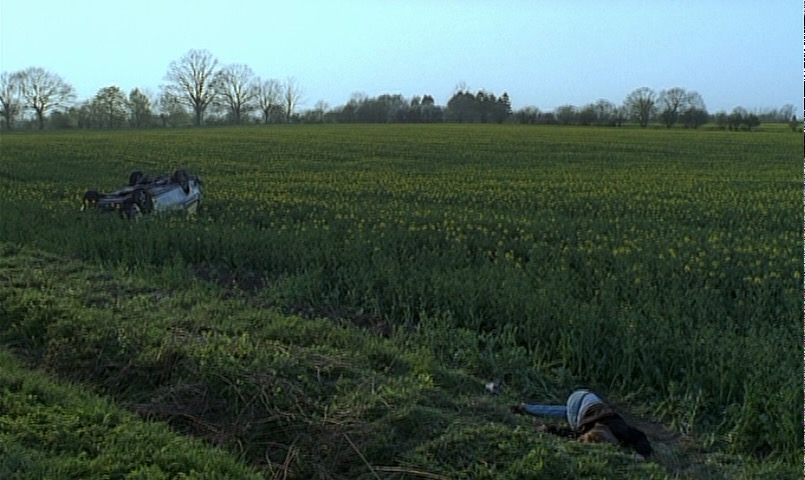
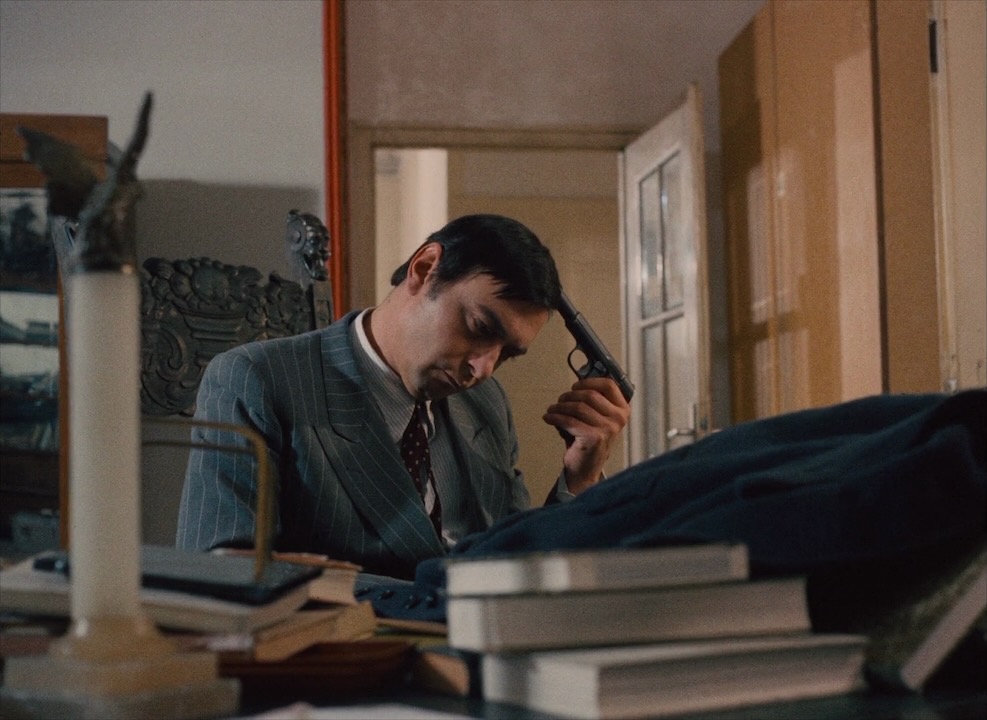
Original title A Simple Accident was more elegant, presumably referring to the inciting car crash. A mechanic thinks he recognizes the wrecked driver as his government tormentor, kidnaps him and shops him around to other formerly-imprisoned people (photographer, about-to-be-wed couple, unhinged guy) to get identity confirmation and a decision on further action. But the more people become involved, the cloudier the plan of action, until they end up helping the guy instead of murdering and burying him. Chilling ending, just the back of the mechanic’s head and the sound of the man with the artificial leg walking up behind him.

“This film is made for a time for which there is no history yet.” Inspired by a post-Offside adaptation of Death and the Maiden, per a contentious Vulture interview:

It’s sneakily funny and thrillingly paced, a story about vigilante justice punctuated by long one-take shots in which the characters debate the ethics of violence and what’s worth fighting for … Better than any director working today, Panahi understands how detention can change a person on an atomic level, chipping away at their humanity.

Won the top prize at Cannes versus Die My Love (which I saw the previous day), The Phoenician Scheme, and a bunch I have yet to watch: Sentimental Value, Resurrection, The Mastermind, Sirat, Sound of Falling, The Secret Agent, Eddington, Alpha, Nouvelle Vague.

Joel Edgerton (very good in those two Jeff Nichols movies a decade ago) hits new heights here as a capable logger, quiet and gentle, who finds love (Felicity Jones of Taymor’s Tempest) and loses his family to a wildfire. This is an ambitious movie that tries to poetically represent our country, society, and history by following one man with hardly any friends, and somehow it succeeds. Met an old friend of the director’s at the screening, didn’t yell at him but was thinking “your buddy made this movie AND cowrote its theme song with Nick Cave?!” I must read more Denis Johnson. However, people who know the book are very upset about this movie online – some writers I respect think it’s a bad adaptation, and some are defending the changes it makes. Brian Tallerico for Roger Ebert.