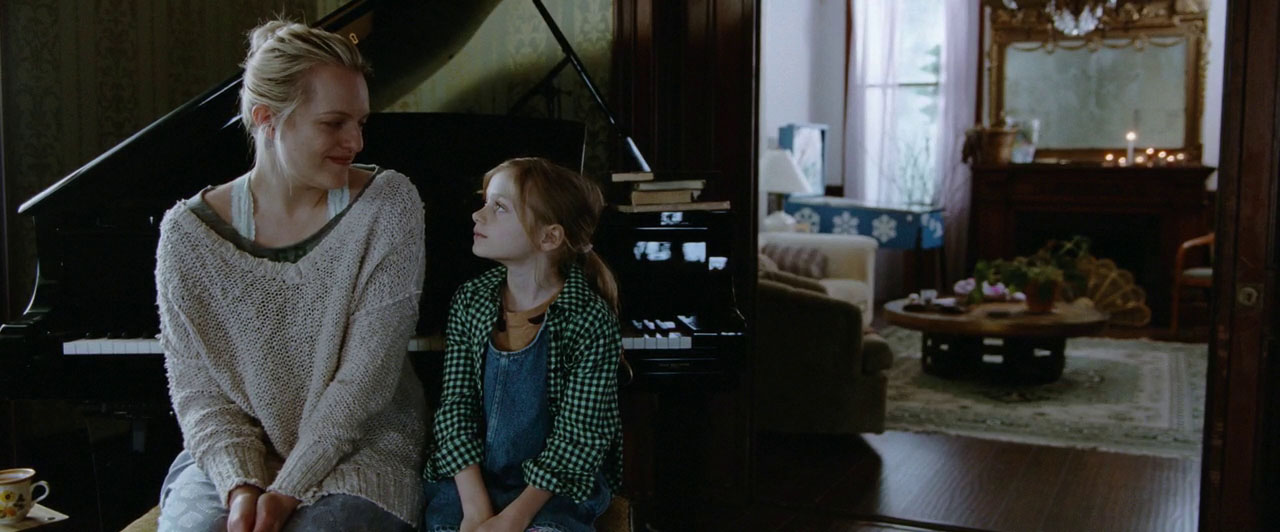
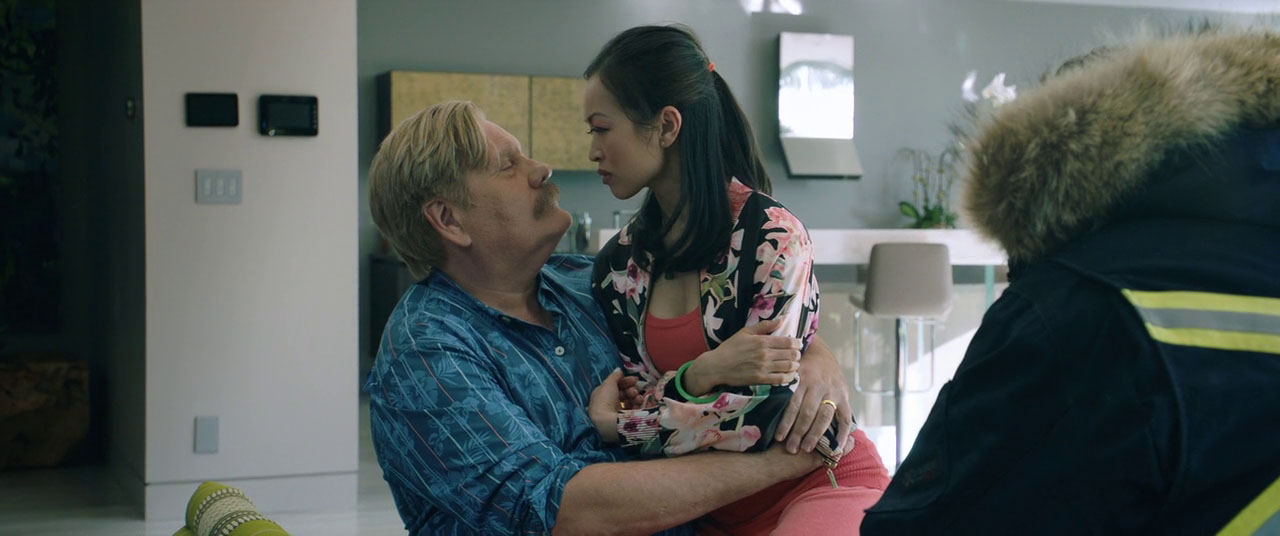
It’s a good thing Criterion is releasing the slow-moving serious-art early Dumont films on blu-ray, because I need to catch up, and this also gives me auteurist justification for absolutely loving this goony miniseries where aliens visit the town of Lil Quinquin and start duplicating the residents. The twitchy racist cop is given more screen time than ever, but I’m into it this time. Random resident Mr. Leleu gets copied, then Coincoin’s brother Dany, his ex-girl Eve, D’nis, then the captain himself. The Captain and Carpentier find out about the clones, are on the case, guns drawn, with the kids at their side, and then instead of solving the alien mystery, the “Cause I Knew” girl returns as a zombie and the series ends with a full-cast singalong.

It becomes less random as the series goes on and sketches start calling back to each other or continuing from previous episodes. It is pretty random tho, also one of the most imaginative series I’ve ever seen. Seems like a high-budget Adult Swim thing, with sketches and animation and music and interviews – can’t believe it’s on HBO, or that creator Terence Nance (An Oversimplification of Her Beauty) landed a big-budget live-action cartoon on the heels of this.

Very many participants, including actress Dominique Fishback, the Ghanaian director of Afronauts, and Solange Knowles.

Shula is not a witch, but is tied to a leash and sent to live in witch camp, with other women who are actually not witches but have proven inconvenient to keep around. From the enraging first section (mob superstition meets government corruption) and the tragic/triumphant ending, it’s a beautifully shot movie, and our first from Zambia.

I keep thinking I haven’t watched a Gaspar Noé film since I Stand Alone, but that’s because I forget about Love, which if I’d remembered, I might not have gone out to let this movie mess up my mind on an especially heavy weekend. But Love is forgiven, because this totally worked for me, as horror and a filmmaking exercise and an ensemble dance piece and an extended collective freakout. Every player gets their own solos (in interview, dance and neurosis), and their interactions after the spread of the drug punch (and/or the collective paranoia) prove horrible, sometimes fatal. It’s all shot with a confident, formalist flair, unafraid to get ugly.

Blake Williams in Filmmaker:

The film ends up reaching, or at least approaching a state where it can’t even decide itself who is fucking and who is dying — the camera, now upside down, even loses its own bearings on gravity and horizons. It’s a monumentally liberating film, and so what if it offers us nothing other than the pleasure of being entirely there with it for the time it’s in front of us.

This wasn’t supposed to be our closing night movie – it was gonna be an early night to make up for Treasure Island the night before, then our third Chinese movie One Child Nation in the morning, an undecided afternoon, and The Magic Life of V before the drive home, but a snowstorm changed our plans.

This was an endurance test along the lines of The Task, but far less easy to figure out what is happening and why. Supposedly they are recreating “happenings,” and there’s some mysterious tension but very little happening when a group is approached by a helicopter then asked about about the experience, or when we spend an eternity in a room with a handful of people waiting to be interviewed. These are separated by wandering academic discussions in a library with no tension at all. I focused hard on every detail at the time, hoping to unlock any meaning, even after Katy ditched the movie to go drinking at the Craft Beer Cellar, but no time for post-film note-taking then a stressful drive home has wiped out any useful thoughts. “Repetition is the main concept” says Felipe on letterboxd, and I’m starting to think you need to have studied the Oscar Masotta theories to grasp the film at all… in fact, I’ve belatedly discovered the accompanying 320-page book online.

I wrote that “Nicholas from Iowa” opened, “quiet and GOOD,” so I guess he was this year’s Lomelda. We managed to get a stout at Ragtag, but it’s madness there. Long single takes at first separated by black and/or film leader, but sometimes it’s multiple shots with sound continuity and straight cuts between. Scenes from around the country, sometimes natural scenes and some posed. My faves are when everyone acts natural except one person stands still, staring into the camera. Michael Sicinski has useful context and references in his letterboxd writeup.

We picked up a biscuit with butter and jam from a biscuit-focused food truck, stopped at Gunther Hans, then headed to the Globe for a double feature… and there was The River Arkansas again, still good. I believe this was a new restoration – shockingly clear photography with lots of close-ups. Journey film with slightly confusing storyline, though it seems like it should’ve been straightforward, intertitles explaining each phase. Katy is concerned with shooting India as an outsider, not understanding the Hindu rituals or family dynamics. I don’t know what anyone else thinks, since this was missing from letterboxd until now, but the Finnish director was present to tell horror stories of the difficulty of filming (or maybe I read that in the Neither/Nor book afterwards, I forget).

Back to Main Squeeze on Saturday morning, then our third film of the weekend at the Missouri, preceded by a guy with one of those whirlygig keyboard amps. This doc felt longer than its 95 minutes, but I wouldn’t mind watching it indefinitely. Wide variety of New Yorkers asked about their futures with good photography. I kept feeling that like Treasure Island, a central point of focus wasn’t coming through, but I also wasn’t hoping for a climate change essay doc, so I went with it. Starts to revisit its subjects – somewhat racist ex-cops in a bar, a white couple concerned about media reports of crime, the Afronaut. I need to watch more NYC movies – maybe In Jackson Heights.

Story in Filmmaker:

I’m interested in how power circulates, the ways in which it micro- and macro-confines us and can liberate us . I also think that, sure, we can call all films in some ways political, insofar as they’re made within certain power structures and get launched into the world within existing power structures. They can either reinforce the status quo, because they do very little to shake up our understandings of how the world works, or they can enable us to grapple with things differently … I also dislike message-y films, or whatever you want to call the films that see their role as delivering a particular policy line and/or demanding that people respond in very narrow terms to whatever they’re seeing. I’m much more interested in how cinema can reawaken the senses and our critical capacity to be in the world differently. That, for me, can have longer term results.

Jenn Takahashi opened, promoting her website where she makes fun of things people say on neighborhood message boards, I’m not sure why. My notes say “a variety of weird-tempo rock songs, each better than the last – get the EP” but who was the band? Summer Like The Season? They also say “Katy very tired, did not like movie, then hotel stole her toiletries,” which is accurate, and the Hilton Garden Inn still owes us restitution.

My notes do NOT say anything about the movie, which was a multi-angled portrait of youth at a French water park, mainly memorable for the extremely confident dude who picks up a bunch of girls to meet him after hours.