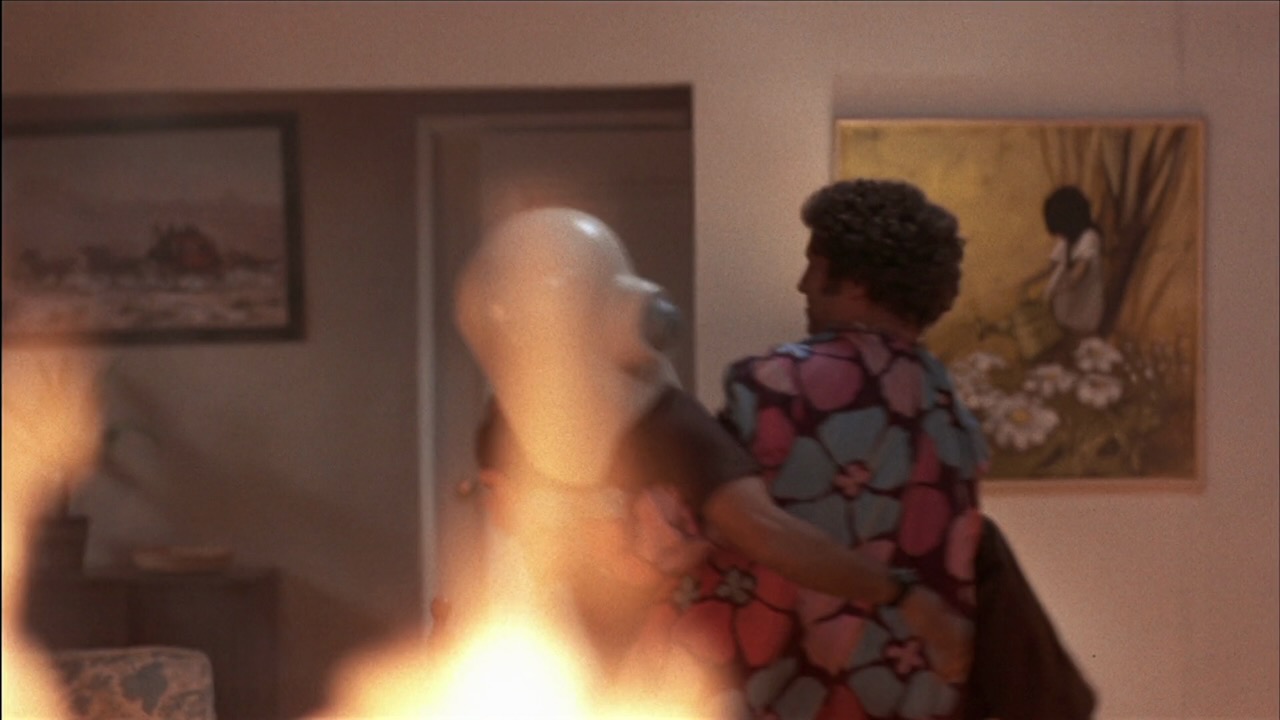
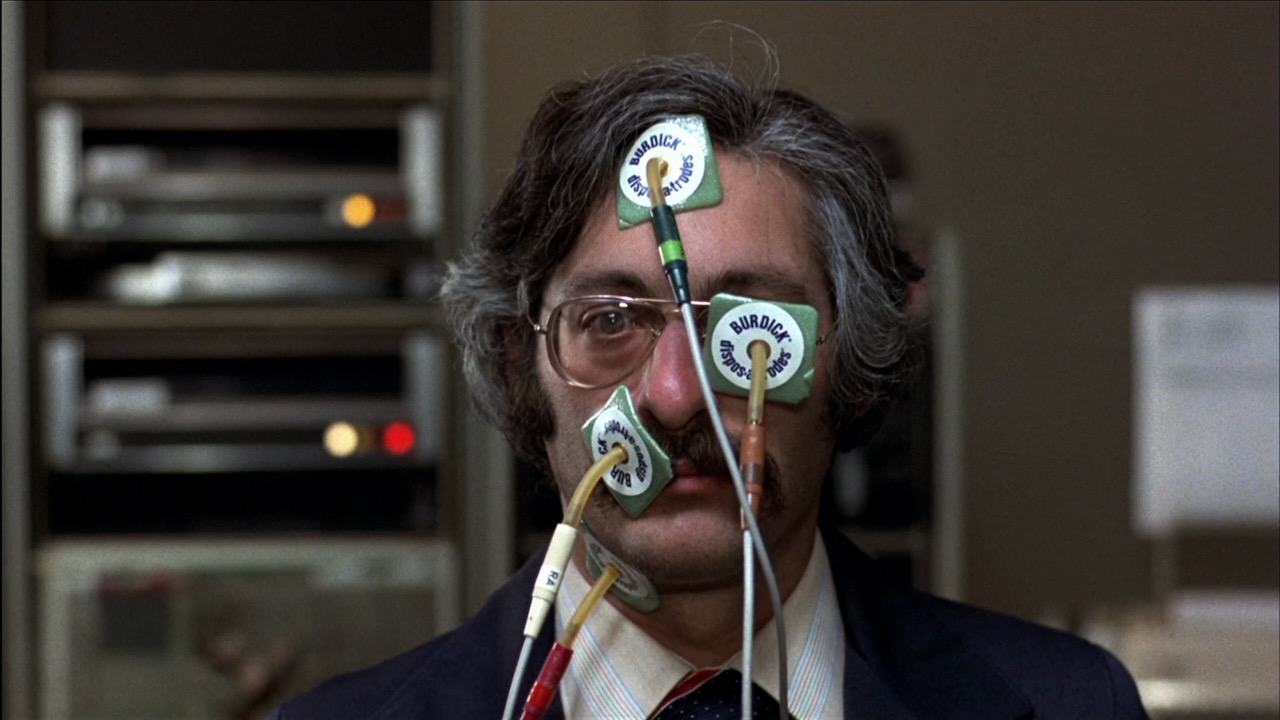
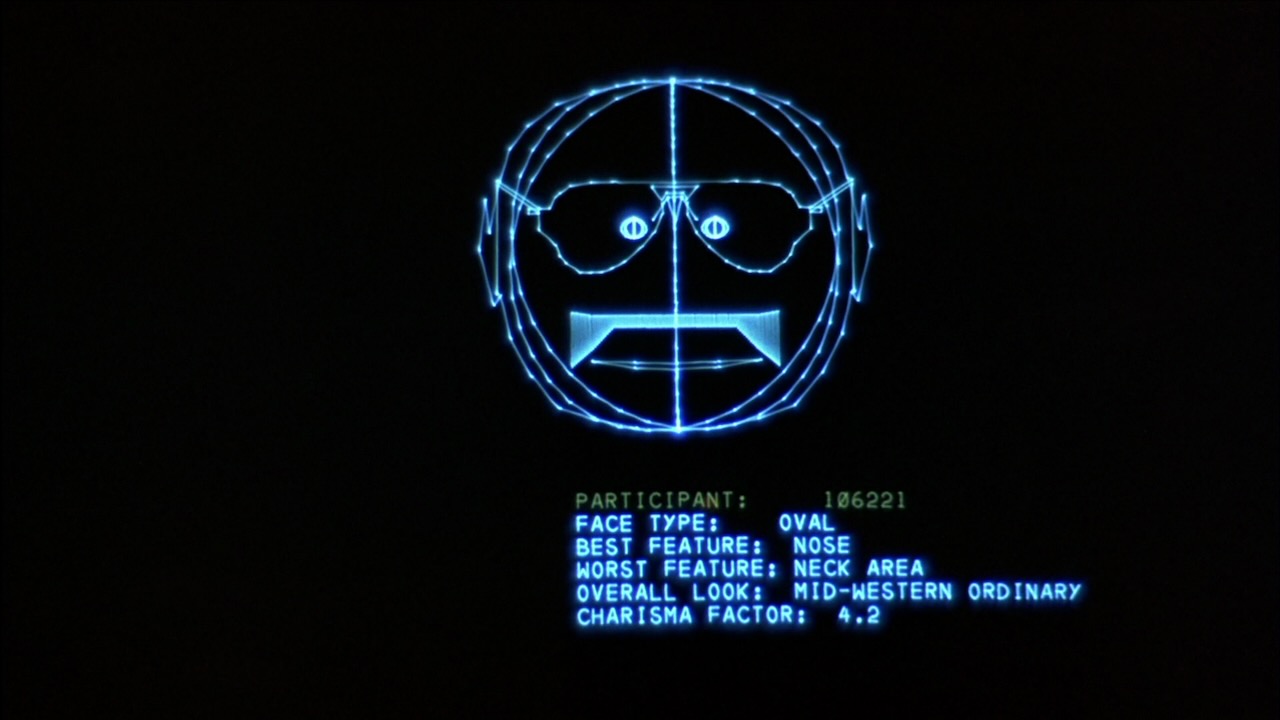
Dour noirish plotty Hollywood blackmail thing, mostly valuable for getting to watch Ida Lupino’s eyes for half the movie. She’s the estranged wife of Jack Palance, back at their fancy house to try convincing him to reclaim his art and not sign a lucrative long-term contract with a crap producer. Various friends and gangsters and agents get themselves involved, but Palance signs to make the bad guys go away, then goes upstairs and kills himself. Just six months after Kiss Me Deadly, with fancier lighting – not the kind of drama I go for, but very nicely shot and acted.

Rod “Run of the Arrow” Steiger as the producer, getting overexcited:

Singin’ in the Rain lipsyncer Lina Lamont knows everyone’s secrets:

Shelley Winters (shortnin’ bread in The Visitor) knows too much:

Welles fave Everett Sloane as the agent, with a naked Palance:

Children (1976)

Watched this after an episode of Shifty to reinforce how terrible is England. Everyone’s catatonic or an arsehole or both. Kid is bullied, his mom cries on the bus, his dad is violent, has fits, then dies. The kid also appears a decade later, gay and depressed. As far as miserable British youth movies, it’s no The Wall, whose soundtrack I happened to hear last week.

Hearse reflection:

Lawrence Garcia in Cinema Scope:

From the perspective of Davies’ later work, the film is most notable for its eschewal of a causal dramatic progression — and I use that term advisedly, for Davies’ construction refuses the temporal asymmetry that one might be inclined to impose on the film, resisting one’s impulse to fix the adult Tucker’s scenes as the stable present from which the childhood sequences would be merely reminiscence. Children is unique in that it is as much premonition as recollection. Although not yet marked by Davies’ singular use of music, it established something arguably even more central to his cinema: the principle that the tides of time flow backward as well as forward.

Every inch of England is filled with horrors, but this sign was the worst thing I saw:


Madonna and Child (1980)

Same guy (different actor) dotes on his mum, prays, suffers extreme catholic guilt. He goes to work (as an accountant, possibly). He puts on his leather and goes out to clubs or tattoo parlors or to pick up men at the toilets. Both have lot of stillness and prayer, but I liked this one better than Children. Not as much of the mother as you’d expect from the title, and she’s asleep in half her scenes (Sheila Raynor also played a mother in A Clockwork Orange).


Death and Transfiguration (1983)

Same guy (now Wilfrid Brambell of A Hard Day’s Night) old and dying, having flashbacks to when he was played by different actors. Finally Davies is using melodramatic pop songs mixed in with the christmas carols and hymns.

Garcia:

With even more concentrated force than the films that would follow, it depicts an entire life as a kaleidoscopic whirl of disjunctive images and sounds, most notably the alarming, unabated death rattle of an elderly man on his hospital deathbed, gasping for breath as the screen fades to white. It is a haunting distillation of a remark Deleuze attributes to Fellini, that “we are constructed in memory… simultaneously childhood, adolescence, old age and maturity.”

“Everyone say amen for the technical difficulties … give the technician a big hand for the difficulties.”

Aretha murdered the audience, then the choir, then the band leader, and the movie’s only half over. The choir leader (who is named Alexander Hamilton) survived. Please give everyone in this church a bottle of water.

Christoph Huber in Cinema Scope:

Franklin conceived the album as a return to her spiritual roots (her father, also a reverend, delivers a moving speech in the last quarter of the movie), and one of the reasons she set out to record it live rather than in a studio was to capture that feeling which could only be generated by audience participation. Apart from being a musical document of the highest order, Amazing Grace emerges as a skillful orchestration of communal rapture.

Max Goldberg, 13 issues later:

Whatever they say, the music documentary gets jittery in the face of actual music. Perhaps it’s not so surprising: the most potent element of the movie — in some real sense its reason for being — is the one thing the filmmaker had no part in. Is it so hard to imagine this situation creating ambivalence, even anxiety? The film needs to do something, so it cuts … For me, the story of Amazing Grace serves as a kind of parable, articulating our wildest hopes for the music documentary: to bring sound and image back into alignment, to make the music whole again.

I was kinda dreading this, but after putting it off for a couple months I hit on a music plan, put a bunch of not-terribly fast/aggressive instrumental albums in a folder, hit shuffle, and it was perfect. Righteous story of poor girl and her blind sister who come to the cruel city and get kicked around until the French Revolution arrives and solves everything. A couple mistaken identities and a pile of blustery men later, all is well.

L-R: Gishes Dorothy and Lillian

A self-conscious sequel, Swanberg directing the first act (in which Swanberg tells Kent he doesn’t want to make a sequel and Kent should make it without him), then Rohal taking over as Kent explores simulation theory, wonders whether his reality is real, then takes charge when the apocalypse comes to comic con.


Get This Party Slammin’ is a very pandemic-looking home time-lapse movie in which Kent wakes up at 10:42pm and energetically cuts his own hair in the bathroom.

Rat Pack Rat (2014)
Woman with newspapered-over windows hires a Sammy Davis impressionist off craigslist to entertain and possibly masturbate/mercy-kill her bedridden son Steve Little. Star Eddie Rouse was a David Gordon Green regular who died the year this short came out, the mom’s only other credit is one of the few Bob Byington movies I haven’t seen. Jennifer Prediger of the Uncle Kent series is also a Byington regular. Kent was in another Swanberg joint with Jane Adams called Build The Wall, which I guess I’ve gotta watch next.

Unique structure, starting with the girls in a crime town gazing at the local criminals, then spiraling into the lives of the criminals themselves. Who here is a Kanto wanderer, though?

Gutsy chick Hanako (Fukasaku regular Sanae Nakahara) gets sold into prostitution, sidelining the young women, while scarfaced Kat (Akira Kobayashi, between Rusty Knife and the Yakuza Papers) tries in vain to protect his boss while the rival gang’s warrior Diamond is on a bloody rampage. Kat is also hot for Diamond’s gambler-hustler sister (Hiroko Ito of Tattooed Life), flashing back to when he got his scar over her years earlier.

It’s a pretty okay story, but sometimes leads to great moments like this:

Listened to Cracow Klezmer Band at work, had a Czech lager, watched a klezmer movie – good day. Wedding videographer Leandro likes musician Paloma, fakes that he’s making a klezmer documentary to get her interest, then follows through, traveling from Argentina to Austria to Ukraine to Romania to Moldavia, chasing music that no longer exists in its origin lands (we hear plenty of performances but are told that technically they’re not klezmer, ha). It’s a true-falsey travelogue through folk tales and tunes, adding up to nothing much narratively but quite a lot cinematically.

Victor Covaci, Romania:

Morris Yang:

The Klezmer Project also incorporates a third, folkloric narrative in Yiddish voiceover, centered around Yankel, a gravedigger’s assistant, and Taibele, a rabbi’s daughter, as they face excommunication from their community over support for the heretical philosophy of Baruch Spinoza … The Klezmer Project meticulously subverts its structural expectations in service of a hybridized docu-fiction register, working best both as ethnomusicology and as meditation on its intrinsically whimsical and rewarding process.

Finally a period movie that acknowledges that everyone is named Johnny. Altman took note of Jennifer Jason Leigh in the Hudsucker Proxy‘s 1930s and cast her in his own 1930s flick. It’s less a follow-up to Hudsucker than a precursor to Uncut Gems (someone tears around town making a lot of noise and pissing people off until they are shot in the head).

Rosenbaum calls the story “borderline terrible”:

It counts on the dubious premise that a gangster (Harry Belafonte) would fritter away a whole night deciding what to do with a thief who rips him off — thereby enabling the thief’s significant other (Jennifer Jason Leigh) to kidnap a society lady (Miranda Richardson) and Altman to crosscut to his heart’s content as he exposes the inner workings of a city on the eve of a local election.

“Democrats: they’re whatever they’re paid to be.” I could take or leave the Belafonte plot with Dermot “Johnny” Mulroney or the election rigging plot with Steve “Johnny” Buscemi (another actor cribbed from the Coens’ period films), but greatly enjoyed hanging out with Leigh and Richardson, the stars of Cronenberg’s eXistenZ and Spider.

Jane Adams:

Christian McBride:


Jazz ’34

All the music performances from Belafonte’s club in Kansas City allowed to run at their full length, with multiple narrators giving context. Not exactly a rock doc, but not far off – 1990s jazz guys pretending to be 1930s jazz guys, but they’re actually playing the music, so it’s a concert film. It is popular to say that this movie is better than parent film, but only I have the bravery to say: they are both good.

Ron Carter:

Eclectic mix of good songs on the soundtrack, which is fortunate since we’re mostly following him tool around in his vespa and listening to music. It’s very False/True: half the movie is him/us just viewing the Italian scenery from the bike, but he finds time to stop for silliness (he gets insulted by Jennifer Beals, funny bit at Stromboli asking american tourists about soap opera developments). Moretti thinks he can literally coast through an entire feature on scenery, music and charm – and he’s right. Rosenbaum