A Diary for Timothy (1945, Humphrey Jennings)

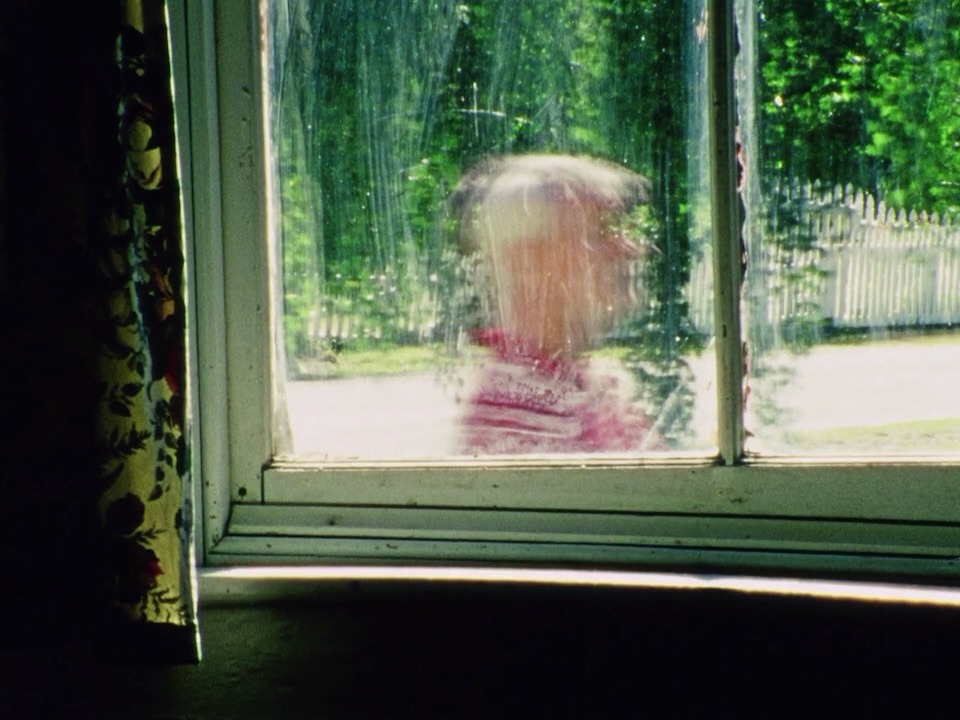
Narrator explains to Baby Tim on his birthday – also the fifth anniversary of Britain entering WWII – what we’re fighting for, and how we’ve got a difficult recovery ahead. He sketches out the next six months, closing by asking whether the kid will make the world a better place (spoiler: he did not). Starts out as boring wartime propaganda and gets increasingly complex, until by the end I almost see why this keeps popping up on best-movie lists.


The Stranger Left No Card (1952, Wendy Toye)

“They’d never seen anything like me before,” says the stranger, an overly facial-haired street magician, but that’s because Andrew Lloyd Webber musicals hadn’t been invented yet. All the townspeople take interest in this guy as he runs around being whimsical. Some sync sound issues, but mostly narrated by our self-delighted stranger (Alan Badel of Day of the Jackal and Children of the Damned). After establishing himself all week as someone who shows up everywhere playing harmless tricks, he shows up in a contractor’s office at closing time and revenge-kills the guy for sending him to prison years earlier. It’s the perfect crime, but it’s also the 1950s so he can’t quite get away clean, leaving a trail of glitter to the train as he’s leaving town.

There’s a lotta plot here, but Jackie ends up working for his bar-brawl rival Yuen Biao (Rat/Weasel of Eastern Condors) and teaming up with gangster-gambler Sammo to fight corruption and then take on pirates. After a dumbass white admiral gets captured by dread pirate Lo (Dick Wei of Visa to Hell), Chan’s ex-coast-guarders go rogue, beat the shit out of a pirate collaborator to figure out how to contact them, and smuggle Sammo aboard in a barrel. When Chan goes through some gears then hangs from a clock tower, it’s hard to miss the classic silent comedy references, and since this is the week for great bicycle scenes, we get a chase where he beats up guys with a bike in ten different ways.

Jackie was just in Locarno:

I think back to when we made those films, and we had so many problems [on the set]. It would be raining terribly. Something serious not working. On Project A, we got seasick, the [scenes of the] pirates on the sea were so difficult to do… but we kept going, and no matter what, we finished the movie. Then when it came out it was a success, and 40 years later people are still watching it. That’s what I signed up for. You see so many movies, so many directors – and nobody remembers them today. But then a few movies, 100 years later, are still there. At some point, I said to myself: I want to make this kind of movie, no matter how difficult it will be. When I pass away, I want the next generations to say there’s Bruce Lee, there’s Chaplin, there’s Jackie Chan.

Locorazo screening number one. A change in the formula this year, we’ll get into it later. Really nice to see a soft, grainy movie from this decade that doesn’t look like digital glop.

Solange was doing fine at school until her parents decided to get divorced – now she gets detention, steals from a store, cries during class. Mom (Lea Drucker, very good as usual) is an actor, dad (one of the guys I didn’t mention who Juliette Binoche dates in Let The Sunshine In) runs a guitar shop and has been seeing his coworker. Solange says she knows her parents don’t love each other, but she’ll try to stay alive anyway. Axelle wrote La France and Mrs. Hyde and Don Juan, and plays the dean in Bozon’s Mods.

While a young couple is having their trite relationship drama, flesh-eating fungal tentacles are literally hellraisering inside their mattress. This movie has stop-motion tendencies, and a lot of fabric-level textural views with insectoid rumbling audio. Death Bed meets She Dies Tomorrow: many other movies have aimed for this synthwave cronen-core vibe and missed.

I did not like the lab scene where they implanted an eXistenZ gamepod port into a dog’s underside. After that, I felt free to skip ahead during the other b/w lab horrors. Observational long takes of Moscow street dogs pays off when one is filmed catching and killing a housecat. Or maybe “pays off” isn’t the term, since Kedi played theaters across the country, and this one played nowhere. Narrator (the star of Leviathan) tells of Russia’s history of firing animals into space, intercut with observational doc scenes of Moscow street dogs. The directors followed up with another Moscow street dogs movie, and their first film about people debuts in a couple days at Locarno. The Tori Amos song > the movie… Katy’s least-favorite shorts director edited.

The directors didn’t have space in mind when they started filming [Seventh Row]:

Suddenly, when we found out that Laika had been living on the streets, the film became so rich. These street dogs we see in the film are real explorers. They have to be in order to survive. They have to understand every movement in the city. They have to know how the city is changing and how they can find a place to stay and survive. We found it interesting that there were similarities between these dogs and their ancestors, the heroic cosmonaut dogs.

Space explorers set out to find a home beyond the reach of monopolist capitalism – sounds serious, but the actors in the rebel mission’s crew are absolutely goofing around. Early on, their ship catches fire and they’re not sure whether to try to save it or to sell it for scrap.

Some good montage, and the lo-fi outer space effects are fun, but the actors reading from scripts with indifferent blocking is too much. I guess this is self-consciously bad, but it is bad. Raymond Gun-Virus speaks for us all: “Extra .5 star for the 100+ individually designed intertitles and a live-in-space performance by Amon Düül II.”

My first by film-philospher Kluge, falling somewhere in the middle of his features both chronologically and in popularity. I don’t know what his whole deal is yet, besides that his career spans from Lang’s latest works to our all-digital present, and Cornell calls him “the German Godard.” This movie’s janky space-travel aspect reminds me of Ga-Ga, which I loved – am I not supposed to be watching more of Szulkin’s weird sci-fi films instead of digging up new German nonsense?

Hark Bohm, Fassbinder regular and a doctor in Underground:

Returning from part one are determined detective Lau Ching-wan (suddenly listed as Sean Lau online) and incompetent commissioner Hui Siu-Hung. Not returning is criminal mastermind Andy Lau, who wasn’t faking his fatal illness. In his place we get impossibly suave and brilliant magician-thief Noodle Cheng (the 2001 Zu Warriors), who keeps assaulting the police and playing mind games (is this where the Now You See Me movies came from?). You don’t think of Johnnie To cops & robbers movies as having CG-crud animal companions, but Noodle’s got a bald eagle, and Lau’s men track him down with help from some eagle-tracking ornithologists. Kelly Lin (Sparrow) is a boring important businessperson whose company is being blackmailed by art thief Noodle, and Lam Suet a gambling-addict cop who the thief is personally tormenting. The point of the thief’s scheme was to robin-hood the money from the company to charity, or some such thing. It’s all beautifully shot by the usual crew, Stephen Chow’s regular composer working extra hard on the score. A collapsing-bicycle race joins To’s pantheon of perfect nighttime street scenes along with Throw Down‘s dollar-chase and tree-balloon, Don’t Go Breaking My Heart‘s headlight-silhouette, Sparrow‘s finale, and half of PTU.

1960s movie about the threat of artificial intelligence, shot in high style for a British spy drama, which is medium-low style for a Ken Russell picture.

Caine covering up Karl and Francoise:

Villain Ed Begley is a wacked out texas oilman whose computer tells him how to overthrow communism. Oskar Homolka is the KGB man trying to stop him from starting WWIII. Karl Malden and Francoise Dorleac are getting rich playing multiple sides, toting a carton of eggs injected with lethal viruses. Guy Doleman is the British spy boss trying to retrieve the eggs. And all of these groups befriend and/or kidnap special agent Michael Caine, who doesn’t exactly solve the case, but is at least present while it solves itself.

Nazi-coded Texan:

A True/False Poto and Cabengo: twins were raised without ever being let out of the house or taught anything useful (such as language), then are set free by a social worker, who locks the dad into his own house until he agrees to cut it out. Outside, the sisters meet other kids their age, including a boy who fishes for girls with an apple on a string. Rosenbaum liked it.