If you go by the IMDB date of original release, nearly all the 2008 movies I’ve seen have sucked. Good stuff like My Blueberry Nights, Paranoid Park and The Edge of Heaven count as last year’s movies. Why is there always a year delay on quality movies, while crap is available immediately? And why do I ask questions on a blog nobody reads?

I never intended for the new Coens comedy to be lumped in with the 2008 crap, but there you have it. This would probably be below Intolerable Cruelty in their pile of late-career misfires, but I’m not about to rewatch that one to find out for sure. Katy “detested” this movie. I thought it was pretty okay, watchable for a few good performances and favorite actors but certainly not for story or humor. I heard this was supposed to be a comedy, so where was the funny?

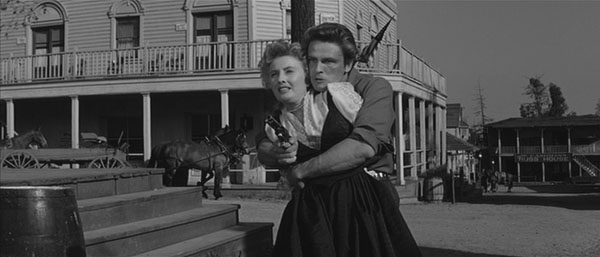
Plot rundown so I don’t forget everything and feel compelled to watch this again soon: Bearded G. Clooney has seemingly good relationship with wife, but he’s also a huge sex addict, sleeping with Tilda Swinton and Frances McDormand, so his wife has hired private investigators to catch him (which is not too hard). John Malkovich is a gov’t flunky who is getting demoted at work and divorced by wife Tilda Swinton and locked out of his house and bank accounts. Frances McD works at a gym with Brad Pitt and wants surgery to look younger. An energetic Pitt accidentally gets a disk of Malkie’s private files and tries to blackmail him with Frances in tow. When blackmail fails, Pitt breaks into Malkie’s house to get more files to sell to the Russians, and is memorably killed by Clooney. Pitt/Frances’ nice boss visits the house trying to help and gets killed by Malkie. Then some bunch of mid-rank government fellas puzzle over what has happened, and tell us about some stuff we did not see, then end the movie with a big godlike zoom-out mirroring the zoom-in at the start, either to show us how far above this story the filmmakers consider themselves, or to point out that nothing of significance actually happened.

Music, recognizably, by Carter Burwell. Good cinematography by Coen newbie Emmanuel Lubezki, who just finished shooting two of the most amazing films of the decade, The New World and Children of Men. Lubezki keeps the film looking alive even when it’s set in a series of depressing buildings (a gym, McDormand’s apartment, government offices), and adds touches of comic terror to the scenes of Malkovich obsessing on his boat or Clooney getting paranoid in the park. He does all he can, I guess. Everyone did all they could… it’s a high-quality production with good acting, but to serve an empty story. The Coens think it’s hilarious to create an amoral world populated by a couple likeable people, then have the rest of the cast bloodily murder those likeable people. I’m aware that they’ve done this plenty of times before, but when the story is tight (Miller’s Crossing, Man Who Wasn’t There) or the humor is funny (Hudsucker Proxy, Raising Arizona) I give their sociopathic tendencies a pass. Not here, bros. Better luck next time.

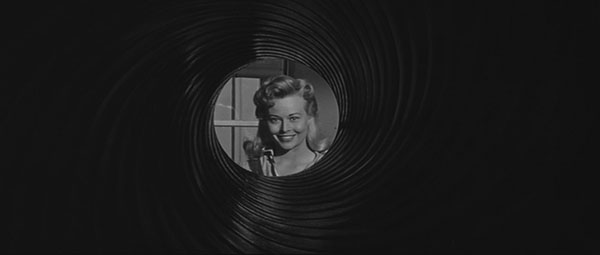
When bad American drug guys feed 007’s friend to big fish, there will be many fish-related revenge killings! But when Bond is fired by the British government for going vigilante, he goes… well, even more vigilante to continue the revenge stuff. Movie soon turns less aquatic, with more dirty, dusty drugs-and-oil-type crime going down. This is the movie where Bond drives a tanker truck up on half its wheels to avoid a missile blast, which is only slightly less laughable than the rocket vs. handcart scene in Darkman III: Die Darkman Die, but looks cooler.

From John Glen (the director of a Christopher Columbus movie with Tom Selleck) and the writer of The Great Gatsby (according to IMDB, anyway). Timothy Dalton of Hot Fuzz is Bond. Movie seemed long; was long.

Must’ve been sponsored by velcro – the stuff pops up everywhere.

Most importantly, Benicio Del Toro:
image

Benicio Del Toro!
image

Benicio Del Toro:
image

This is one of Buñuel’s anarchic sketch films (see also: Simon of the Desert, Phantom of Liberty) which he made in between his relatively more normal, subversive upper-class films (in this case between Belle de Jour and Tristana). I still think I appreciate his films more than I enjoy them, but the more of them I watch, the more I feel that his career is unassailable, that his last twenty years of filmmaking produced one long masterpiece. It turns out I had seen this before, though I barely remembered it. Must’ve rented the tape from Videodrome. Don’t think I finished it last time, because it got foggier around the halfway point.

image

Such a smart and well-researched movie, I don’t feel qualified to discuss it. I can discuss the cinematic aspects though. Good photography with no surprises, unusually long shots but not noticeably/showoffy long. Buñuel’s movies always feel the tiniest bit too slow for me, too perfectly calm and collected, the acting and sets and camerawork too high-quality for their content, which I suppose is the point.

The plot is a “picaresque”, two beggars wander into various scenarios during their long walk from Paris France to a holy pilgrimage spot in Santiago Spain – although it turns out they’re not on a pilgrimage themselves, they just heard there’s a huge crowd in Santiago where they can get rich on spare change. Different historical periods and bible stories blend into their present-day 1960’s voyage without anyone batting an eye. They meet Satan(?), the Whore of Babylon, and lots of people discussing the six central mysteries of Catholicism and their associated heresies. They do not meet Jesus, the Virgin Mary, the Marquis de Sade or the Pope, but they’re all in the movie via sidetracks from the main action (though one could argue that it’s all sidetracks). Plenty of surreal moments keep the movie lively even when the dialogue is all obscure religious debate.

image

French cinematographer Christian Matras was about Buñuel’s age, had also shot most of Max Ophüls’ best films, also The Eagle Has Two Heads with Cocteau and Grand Illusion with Renoir. Co-writer Jean-Claude Carrière (also an occasional actor) worked on most of Bunuel’s 60’s-70’s stuff and over a hundred other movies, including recent ones like Chinese Box, Birth and Goya’s Ghosts. The guy who played Jesus starred in Rohmer’s sixth moral tale a couple years later. Virgin Mary Edith Scob was in Franju’s Judex in the 60’s, and lately in some Raoul Ruiz films and the newest by Olivier Assayas. Of the two tramps, the older would be in the next two of Buñuel’s French films, and the younger would star in Clouzot’s La Prisonnière and Godard’s Détective.

image

In the DVD interviews, Ian Christie tries to make us feel better for not knowing the historical references – he says nobody knew them. He got a press kit. The film was influenced by The Saragossa Manuscript, which sounds cool. “What heresy means for him is a kind of metaphor, I think, for human beings’ fascination with arguing about the immaterial, the invisible, trying to bolt it down and make it literal.” Screening when it did, it was alternately seen as cleverly reflecting or having nothing to do with the political and social upheaval in late 60’s France. Interview with the writer and documentary on the DVD are both pretty alright, nothing that needs repeating here.

Our two bums with the whore of babylon:
image

Michel Piccoli as the Marquis de Sade:
image

Alain Cuny as the mysterious walkin’ guy:
image

L’Age d’or reference:
image

Bahrani has Iranian heritage but was born in North Carolina, and this movie was clearly made in the USA so it sadly doesn’t count as part of Iranian Month.

I liked it a lot. It’s got the realist approach, child protagonist and hopeful ending of Where Is The Friend’s Home, but set in the auto junkyards in the shadow of Shea Stadium in Queens. Ale(jandro) and older sister Isamar live and work in an auto garage. He hustles cars into the shop and helps the mechanics by day, and sells bootleg DVDs by night; she works a food stand by day and dabbles in prostitution by night. Together they hope to afford a $4500 food-service truck of their own, but after they buy it the dream comes crashing down. The vehicle can be fixed and painted but the kitchen is unusable so they scrap their just-bought truck for $1000 in parts. Meanwhile, Ale finds out his sister is sucking dicks in the parking lot and wonders what to do/think about that.

Whole movie I’m thinking “indie dramas about poor people in poor neighborhoods always ends in tragedy”, but this one didn’t. The truck is a setback, and nobody wants their sister to be a prostitute, but at the end the kids are still together, making money, with friends and a place to live. They’re making plenty, really… doesn’t seem like it took that long to afford the truck. Nobody is physically hurt or killed, Ale’s secret cash stash is never found/stolen, they’re not kicked out of the garage and back on the street, drugs are never mentioned. Not that big a deal, but jeez do movies love to pile on the tragedy when it comes to poor people, so it was refreshing.

Camerawork is nice, all handheld, nothing that stands out except the awesome final shot (Isamar scares pigeons, camera follows pigeons quickly up, lingers on white frame of the sky, then cut to black). I don’t know if everyone read this in the same place or if they’re all just having the same idea, but every time I hear about this movie it’s compared to Italian Neorealism (fair enough) and they say if it wasn’t for the stadium it would be easy to believe it was set in some foreign country. I don’t know what country they’re talking about, and it seems neither do they. Felt pretty American to me. The kids are very good. My favorite part of the movie was Isamar’s voice, actually. Predictably this kid-salesman movie won the “someone to watch” independent spirit award over Munyurangabo (kid movie) and Frownland (salesman movie).

The setup: Nematzadeh has been warned three times to write his homework in his book, and not on scraps of paper – next time he will be expelled. Ahmed takes Nematzadeh’s book home by mistake and wants desperately to return it. Defying his mom (who completely does not listen) and grandfather (who chats to a neighbor about discipline, saying kids need to be beaten without cause), Ahmed goes off to a neighboring town, asks around, and looks for his friend. Ultimately unsuccessful, he goes home and does the homework twice in both books, sneaking Nematzadeh’s book back in time to avoid punishment. Besides the grandfather bit, there’s another slowdown sidetrack with an elderly man who leads Ahmed to the wrong house while bemoaning that the townsfolk are replacing the wooden doors he made for them forty years ago with new iron ones. If the grandfather/disciple and old man/wood doors bits come together into some grand meaningful theme with the accidentally stolen book, I don’t know what that would be exactly. Maybe the still-in-print book on Kiarostami co-authored by Jonathan Rosenbaum would help me figure it out. Wow, it’s under $14 at amazon, and me with a birthday next week…

Site of the schoolbook mixup… Ahmed helps, while Nematzadeh checks the camera:
image

Ahmed explains the situation:
image

Ahmed listens patiently to his elders:
image

MAY 2025: Of course this became the first part of a trilogy, which makes less sense when you watch the films in reverse order and years apart, so now I’m rewatching ’em properly via the Criterion box set.

Kiarostami’s signature shot, blu edition:

When I think of silent horror, one of the first names that comes to mind is Rupert Julian, director of Phantom of the Opera, The Cat Creeps and Midnight Madness. Hahaha, I’m kidding of course, nobody has ever heard of Rupert Julian. But he’s still made quite a cool movie here, with Feuilladian booby traps and secret passages, the great Lon Chaney in his most famous makeup/mask, and some ill color tricks (tinting, hand-coloring and 2-strip technicolor) restored by a tech crew associated with the Alloy Orchestra, who accompanied Phantom at the Rome Film Festival.

Apparently we saw a rare version of this – most existing copies are of the 1929 reedit with added sound scenes. Great atmosphere and sets, lots of cool shadows. Best part is a masked ball, the Phantom’s only public appearance – masked, of course, so nobody realizes it’s him until later. He’s draped in a bright red cape, which looks shocking in a 1920’s film, standing on a statue while the heroes stand below talking about him, thinking themselves alone.

After seeing the musical version, I was surprised that the phantom here gets no sympathy. He’s an outright monster, killing and kidnapping, with no back-story and just the tiniest bit of humanity. He obsesses on understudy Christine, forcing her to leave her boyfriend Raoul and come to his subterranean lair. Raoul finally comes storming down followed by a torch-waving mob, only to get stupidly caught in traps until the Phantom, stupidly fooled by the usually quite stupid Christine, frees Raoul then gets chased into the river by the mob. Yes it’s a movie without much depth of character, but it gets the job done. Katy liked it too, and I got to briefly talk with Roger Miller about silent movies, so I figure it was worth the trip for both of us.

This came out the same year as three other Lon Chaney movies (including The Unholy Three), and before almost any other horror movie I’ve heard of (Nosferatu, and I guess you could count Haxan). Male hero Raoul was played by Norman Kerry, who also co-starred with Lon Chaney in Hunchback of Notre Dame and The Unknown, although he shares almost no scenes with Chaney in this one. Extremely gullible love interest Christine was Mary Philbin, who had worked with Julian and Kerry in Merry-Go-Round and would later star in The Man Who Laughs. The vaguely Lon Chaney-looking Arthur Edmund Carewe (later of Doctor X, The Cat and the Canary) played Ledoux, a suspicious character who turns out to be a secret agent and helps Raoul at the end. Edward Sedgwick, director of a 1920 American version of Fantomas (sadly lost), and director of the early sound-era Buster Keaton pictures which ruined Buster’s reputation, took over for Julian towards the end of the production.

Where did this movie come from, and what happened to it? How come this and Chacun du cinema, anthology films with tons of super-famous directors, aren’t well known and out on video? Paris, Je T’aime did pretty well, right? Whatever… we’ve got two 90-minute anthologies here, “The Trumpet” (the first seven listed below) and “The Cello”. Each has short films with the theme of ten minutes, or else something to do with time and the number ten. Each begins with some light jazz, abstract images of water, then the signature of the director on a black background and the title of the short.


The Trumpet

Aki Kaurismäki – Dogs Have No Hell
image
More dry wit from Aki. Guy spends the night in jail, gets out and has ten minutes until the train leaves for Siberia (via Moscow). In that ten minutes, he finds a girl he knows, proposes to her, buys a wedding ring and gets them both train tickets. Not much in itself, but a good start to the anthology, setting up the whole ten minutes thing.

Víctor Erice – Lifeline
image
A sleeping baby starts bleeding while its twenty-or-more family members are each doing their own thing. Time passes, tension mounts. Someone finally notices the baby and fixes him up, no problem. Great camerawork here! The kid above is listening to a watch he drew on his wrist.

Werner Herzog – Ten Thousand Years Older
image
A sad ten-minute documentary. Twenty years ago in Brazil, contact was made with the last tribe of people anywhere in the world who didn’t have watches and t-shirts and chicken pox. We gave them all three of those things, the chicken pox killed most of them, and now there aren’t many left. Werner, along with a member from the original team, checks up on them. The younger generation is embarrassed by their parents, want to move to the city. The older ones, represented by the war chief (above right, with his brother on left) ponder their fates and the passage of time.

Jim Jarmusch – Int. Trailer Night
image
Chloe Sevigny tries to unwind in her trailer on a film shoot for ten minutes. There are interruptions. It’s pretty, but what else is it?

Wim Wenders – Twelve Miles to Trona
image
Wenders manages to make a ten-minute desert road movie. This is kinda hilarious actually… straight guy accidentally overdoses on unknown hallucinogenic drug, has to drive himself to the hospital in another town ten minutes away. He doesn’t make it, but a passerby gets him there and he’s okay. Looked a bit like one of those Masters of Horror episodes where they mess with the camera to make things look trippy, but it pulled me in pretty well. They played two loud Eels songs from the Souljacker album.

Spike Lee – We Wuz Robbed
image
A compressed mini-doc about Bush II stealing the 2000 presidential election from Gore (with help from the mass media and supreme court), snappy and nicely done, using all interviews and TV news graphics.

Chen Kaige – 100 Flowers Hidden Deep
image
Crazy guy brings a moving company to a dirt lot to move his furniture. Finally they pretend like they’re moving furniture to appease the guy, until one mover “drops” a “vase” and breaks it. Not great, but cute. Wish it didn’t end with an awful, sub-2046 wireframe 3D animation though.


The Cello

Three of the seven Trumpet shorts made me tear up with emotion (hint: Spike Lee yes, Wim Wenders no), but most of the Cello disc left me sad, tired or bored. Huge difference there, but I’d rather have it that way than have the crap diluting the good stuff over both discs. If only the Michael Radford short had been on the Trumpet disc, I could’ve just sold Cello.

Bernardo Bertolucci – Histoire d’eaux
image
I kinda liked this, but it still gave me a sort of “uh oh” feeling about The Cello when it started. Foreigner (Indian?) is in Italy with a pile of other foreigners, confused thinks he’s in Germany. Old guy wanders away from the group asks our man for a drink of water. Our man finds a girl, fixes her motorcycle, marries her, has kids, gets a nice job, buys a car, crashes the car, wanders off from the car crash site and sees the old man still waiting for his water.

Claire Denis – Vers Nancy
image
A dry, academic conversation on a train about outsiders & foreigners, with the writer and one of the actors of Denis’ 2004 feature The Intruder. I haven’t seen Intruder, but this is obviously a companion piece, prequel or commentary on it. It almost put me to sleep, and I wasn’t even tired.

Mike Figgis – About Time 2
image
Figgis was the oscar-nom director of Leaving Las Vegas, but I don’t think the producers of Ten Minutes Older realized that in 2002 his career was on the verge of death after Timecode and the critically bashed Hotel (it would die for real the following year with Cold Creek Manor). This is a nonsense short, shot Timecode-style. So far, it is the least-bearable ten minutes I have watched this year… I was itching to fast-forward.

Jean-Luc Godard – Dans le noir du temps
image
In collaboration with Anne-Marie Miéville, I think this was actually a trailer for Histoire(s) du Cinema. They’re definitely related. The most unfortunate similarity to Histoire(s) is that this was only partially translated – none of the onscreen French text has subtitles.

Jirí Menzel – One Moment
image
A very nice tribute (using archive footage) to Czech actor Rudolf Hrusínský who acted in more than ten of Menzel’s movies and died in 1994.

Michael Radford – Addicted to the Stars
image
Guy travels 80 light years in suspended animation in a space capsule, gets back to earth and doctors say he has only aged ten minutes. Goes to visit his son, who was a young boy when he went away, now a very old man. Movie has an awesome sci-fi look to it, and I liked the story and atmosphere – a very nice short, my favorite of the Cello bunch. Fresh off Lara Croft Tomb Raider, Daniel Craig starred as the astronaut.

Volker Schlöndorff – The Enlightenment
image
Camera zooms around an outdoor party while unseen narrator ponders the nature of time. At end camera flies into a bug light and dies. It turns out we have been a mosquito. Har!

István Szabó – Ten Minutes After
image
Szabó is the Hungarian director of Lovefilm and Sunshine – I haven’t seen anything else of his. A husband comes home extremely drunk and angry, starts storming around the house while his wife watches upset, “what’s wrong? you never drink!”, finally he tries to strangle her, she stabs him, emergency crew arrives in like fifteen seconds, cops question her, the end. Why? I thought it was gonna be all one long shot, but then I saw a cut towards the end, so there were probably a couple others.

When the movie began, I immediately noticed Jean-Claude Brialy’s hair. Who is this guy? I’ve seen him in earlier films (Paris Belongs To Us, A Woman is a Woman and Le Beau Serge) and a later film (Phantom of Liberty) but I can’t remember him. I think he might be the guy on the right in my middle screenshot of Le Coup du berger but without the beard and the hair it is impossible to tell. That hair… so distracting. Laying on the couch, I alternated between taking in the luxurious outdoor camerawork and watching Brialy’s hair. The birds fought on me for the first ten minutes before Our Bird settled on the couch in front of my head and New Bird camped on my shoulder with his tail right in my eye. So I thought about the birds, and Brialy’s hair, and the sunlight in the film, then I realized that a half hour had passed and I still wasn’t paying attention to the dialogue.

Brialy & Laura:
image

So maybe not the ideal screening of Claire’s Knee… or maybe it was! Either way, I got the feeling that I liked the previous two movies better, despite expectations that this would be the masterpiece of the Six Moral Tales. Seems like the Tales are wearing themselves thin. Guy in picturesque location with distant girlfriend flirts with young girls but ultimately stays with his girlfriend… it’s La Collectionneuse again.

Claire:
image

This time the guy is bushy Brialy, spending the month before he gets married in his old home town (I think), possibly to sell the family home, though we never see him do anything productive. His co-conspirator (see also: Vidal in My Night at Maud’s) is an Italian writer with a distracting accent, Aurora. Brialy flirts first with big-haired 16-yr-old Laura, then with her (slightly older?) step-sister Claire, whose knee we don’t see until towards the end of the picture. Laura is happy to lightly play around and talk with Brialy but they both know there’s nothing serious, then he is briefly tempted by Claire, tries to break her up with her boyfriend, then comforts her when they are stranded in the rain together by rubbing the titular knee. He goes home to his fiancee, thinking himself a dark stranger who changed these two young girls’ lives, but Laura hardly seems to notice him in the last few days, and Claire is back with her boy two minutes after Brialy has left. Even if the rest of the story was nothing special, I liked this ending, which gives more of an inner life to the female characters than previous entries have done.

(R-L): Sad Claire, her knee, Brialy:
image

Beautifully shot by master of light Nestor Almendros the same year he did Bed & Board and The Wild Child for Truffaut. Hardly any of the actors besides Brialy had been in any films before, but most would appear in later Rohmer films from time to time. This won best film from both the U.S. and French critics societies, but lost a best-foreign Golden Globe (with fellow loser The Conformist) to an Israeli movie that isn’t out on video (which itself lost the best-foreign Oscar to The Garden of Finzi-Continis).

image

My (comparatively) negative feelings about this one extend to the DVD extras, too. First we’ve got a nothing TV interview with the cast, where we learn that Brialy has been Rohmer’s friend for a long time, and the girls somewhat enjoyed working on the film, and everyone is miffed that Rohmer won’t appear on the show himself. Then there’s The Curve by Edwige Shakti, a short based on a basic scenario by Rohmer. Shekti herself stars as the usually topless girlfriend of an art-obsessed young man. She challenges his remarks that he was drawn to her because she reminded him of different specific artworks. It’s a cute enough short, but its appeal lies more in watching the director’s breasts than in the uninteresting 30fps video work or the consciously Rohmer-talky dialogue.

The Curve:
image

It’s Iranian Month here – 2005 month flopped, and the 1920’s are just on break. This movie has been on my shelf for four years still in its cellophane, so it was my first pick.

image

Noqreh (above) lives in the ruins of Afghanistan immediately post-war in 2002 with her father, her brother’s wife, and the wife’s baby. She’s supposedly attending religious school, but secretly changes clothes and attends a progressive regular school when she’s out of sight of her very traditional muslim father. There’s trouble finding water, finding work, and keeping the baby healthy, then busloads of refugees move into the ruins so our crew moves into a crashed airplane.

image

Meanwhile, Noqreh is being courted by a poet (Razi Mohebi, above on the bike, assistant director of this film and Osama) and having discussions with everyone she sees (including, memorably, a French soldier) about the female president of Pakistan, presidential speeches, and ways that she herself could become president of Afghanistan. The refugees follow her family to the airplane, so they move into an abandoned palace, the most spectacular of their picturesque homes, though it has an oppressive air about it. Then the tragedy starts flying – the father decides they can’t live in such a godless city anymore, so they set off into the desert. On the way, he hears word that his son, the baby’s father has died from a landmine. Then in the desert they encounter a lost soul, a man who does not know where to go, who talks as the father buries the baby who has died from illness. It sounds depressing, and at the end it really is, but it’s a powerfully good movie – beautiful and interesting and moving, and likely shot in actual crashed planes and abandoned palaces while Afghanistan was still a war hotspot.

image

With writing, editing and production assistance from her father Mohsen and very nice cinematography from Ebrahim Ghafori. Would love to see her other movies.

image