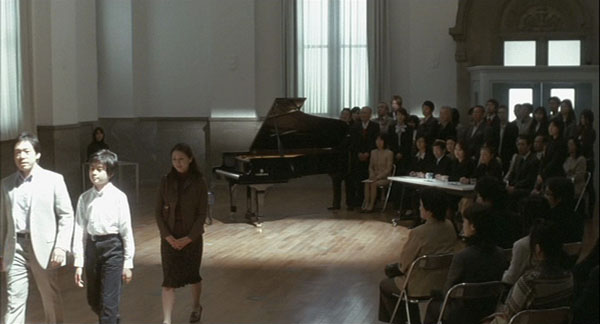
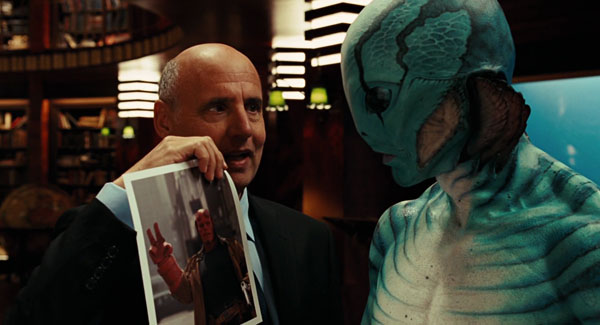
These were all theatrical (film) screenings of non-current movies.

1. George Kuchar film program at Eyedrum
Mr. Kuchar himself talked about the films, which Andy projected for us on 16mm. I’d never seen any of the Kuchar brothers’ films before… a revelation!

2. Eraserhead (1977, David Lynch) at the plaza
Unbelievable on the big screen… no wonder it was a midnight cult flick.

3. “To Hell with Hitler!” at the plaza
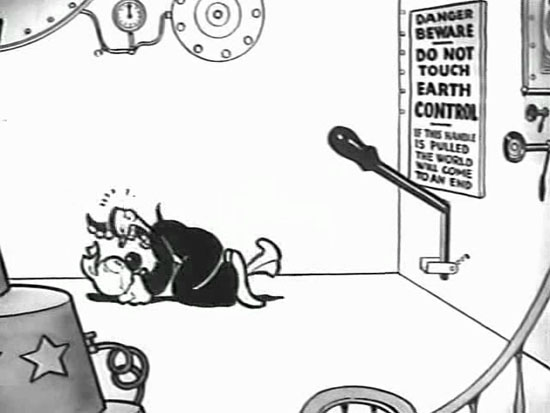
Clay’s collection of WWII cartoon shorts for an appreciative audience.

4. What Is It? (Crispin Glover) at the plaza
More for the full in-person experience than the film itself

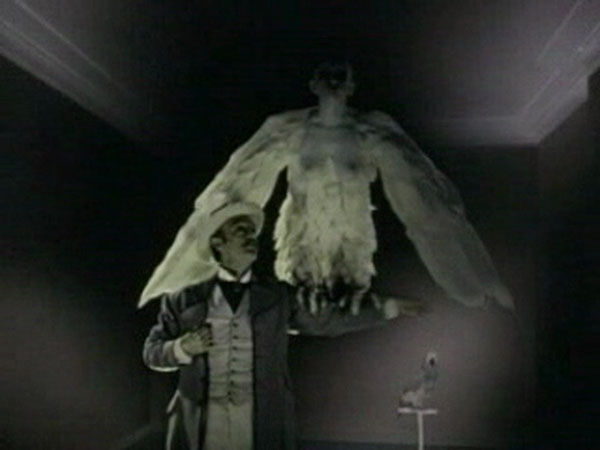
5. Phantom of the Opera (1925) at the Rome GA Film Festival
With live music by The Alloy Orchestra

6. Zorns Lemma / Lemon / Scorpio Rising at Emory
Extreme avant-garde flicks for an unappreciative audience… I was mesmerized both by the films and their reception.

7. Canyon Cinema program at Nashville Film Festival
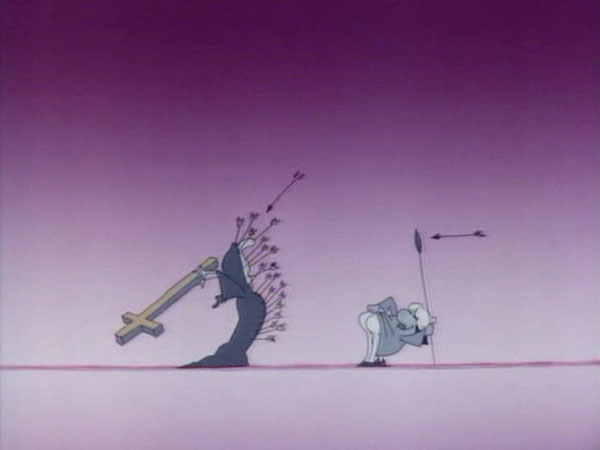
A tamer version of the avant-emory screening, worth the whole drive to Nashville just for the Martin Arnold and Len Lye selections.

8. X: The Man With X-Ray Eyes (1963, Roger Corman) at the plaza
With live music by Pere Ubu

9. Forest of Bliss (1986, Robert Gardner) at Eyedrum
An entrancing feature, courtesy of programmer extraordinaire Andy

10. Four-way tie between my next favorite Emory screenings:
Written on the Wind (1956, Douglas Sirk)
Pather Panchali (1955, Satyajit Ray)
Shadows of Our Forgotten Ancestors (1964, Sergei Parajanov)
Story of Floating Weeds (1934, Yasujiro Ozu)

A lighter picture from the year of Vertigo and Touch of Evil. It’s Ingrid Bergman’s second Hollywood film after returning from her European Exile From Hollywood (where she’d met Jean Renoir, just back from his Hollywood Exile From Europe – she starred in his Elena And Her Men). Cary Grant, right between An Affair to Remember and North by Northwest, was still a household name. Movie about a potentially scandalous love affair starring two lead actors who had publicly scandalous love lives at the time must’ve added up to big box office bucks.

Based on a play, and you can tell since most of the big scenes take place in the same location. Rich actress (Bergman) meets rich NATO diplomat (Grant), they date and fall in love. Only catch is he claims to be married – not true, but an escape clause for someone who never plans to settle down. There’s lots of talk of “making love” (which we all know only meant “kissing passionately” in 1958, since sex-before-marriage wasn’t invented until the mid 60’s) and late-night sneakings-around. Katy points out that Cary seems awfully comfortable lounging in her bed during one visit. There is one time when they’re in bed “together”, actually a clever split-screen effect during a phone conversation.

Cary’s secret finally comes out in a convoluted final scene. He’s leaving town for months, plans to surprise Bergman on her birthday the night after he supposedly left. She finds out about the surprise and about his single status, plans to humiliate him by having Another Man (actually the servant in a robe) lurking in her bedroom at the appointed hour. All cleared up at the end, she forgives his huge lie because he decides he wants to marry her after all. So there’s never any actual scandal except among the six characters in the movie. Good, light movie with some snappy dialogue, mostly worth watching for the star acting.

Director Donen (still alive, sued The Gap this year for their classic-film-thieving marketing) had made three comedies the year before, would put out Charade five years later. Writer Norman Krasna was also behind Let’s Make Love and the stories for Lang’s Fury and Borzage’s Big City.

No big, memorable moments by the supporting cast, which means I probably won’t recognize ’em next time I see ’em. Skittish servant David Kossoff, who pretends to be Bergman’s suitor in the final scene, had been in a bunch of British films with interesting names in the 50’s (The Bespoke Overcoat, A Kid For Two Farthings). His pushy wife Megs Jenkins was in Green For Danger, a late 40’s film of The Monkey’s Paw, and something called The Gay Dog. Then there’s Bergman’s ever-present sister (Phyllis Calvert, later in Twisted Nerve) and brother-in-law (Cecil Parker, the colonel in Quartet, also appeared with Bergman in Under Capricorn).

Hooray, my first Borzage movie, and certainly not my last thanks to the giant Box o’ Borzage that Katy gave me.

Camera glides around a giant street set of Naples, while inside her room Janet Gaynor is being told by the doctor that she needs expensive medicine for her dying mother. Janet goes outside to imitate the local prostitute, gives up in about one minute and steals some money, is immediately caught and sent to the workhouse. What crappy luck.

image

Escapes just in time to watch her mother die, then evades the cops by hiding in a drum owned by the travelling circus.

image

Works at the circus for a while, meets a handsome painter (dark, curly-haired Charles Farrell of City Girl and Seventh Heaven)

image

Still thinking about her secret fugitive life, Janet falls when she sees a cop talking to Charles and breaks her leg.

image

They return to her home, he gets a huge contract and proposes to her. The night before the wedding she’s caught by the cop.

image

Cop incredibly gives her one last hour with her man before getting arrested (this hour feels like an hour, though it’s Janet’s big oscar-winning chance to get emotional).

image

Dark days follow… our painter, abandoned, can’t work so gets fired from the mural job, while a painting he sold for very little is manipulated by an art fraud group and sold for a fortune, and of course Janet’s slaving away in prison.

image

The day she’s out, Janet wanders the streets ashamed, while upstairs the neighborhood prostitute tells Charles his fiancee is a dirty streetwalker arrested for stealing. Charles finds Janet, chases her around, is about to strangle her when he looks up and sees his painting of her transformed into an angel – he repents, they have happy ending.

image

I know when they say Borzage was heavily influenced by Sunrise I’m supposed to look at mood and style, but the whole almost-killing-your-wife thing was similar as well. Good story (I thought), not overburdened with intertitles. Favorite bits were the wild street set, the drum escape, the strangulation rage scene (very dark) and the leg-breaking bit (excellent editing there mounts tension from both the cop questioning Charles and Janet’s balancing on stilts).

The movie likes to show us FEET:
image

Katy seemed underwhelmed but probably didn’t want to disparage the mighty Borzage. Not having watched the documentary on his career yet (or knowing a damned thing about him), I expect the thing is that he was creating artistic features at a time when few others were. This fact doesn’t hit me as hard because I didn’t go to the pictures in ’28, watching a steady stream of whatever crappy, gimmicky dramas were in theaters at that time… I’ve been seeking out the artistic ones all along. So films I’ve seen from the year Street Angel came out include great comedy like Speedy, Steamboat Bill Jr. and The Circus, thrillers Spies and West of Zanzibar, early avant-shorts like Überfall and The Life and Death of 9413, and all-time great The Passion of Joan of Arc – not exactly a representative selection.

Our introduction to Janet’s circus life:
image

Pan down:
image

Janet Gaynor won the first best-actress oscar for this (in conjunction with Seventh Heaven and Sunrise).

Janet with monkey:
image

Director of photography Ernest Palmer shot a pile of Borzage pictures, also Michael Powell’s Lazybones (not to be confused with Borzage’s Lazybones), later won an oscar for Blood and Sand.

image

According to IMDB, the director of All The President’s Men was born the week this came out – neat.

AV Club: “The script comes from Eric Roth, who would probably by accused of borrowing too liberally from Forrest Gump if he hadn’t written that too.” Wow, dude also wrote that Eric Bana gambler love story I was just mocking yesterday, and my favorite film to hate, The Postman. No wonder writing seemed to be the weakness in this would-be-spectacular movie. Huge issues (hello, racism) were ignored, episodes (hello, Tilda Swinton) weren’t well integrated with the rest of the film, and Button ended up seeming like an unambitious blank who doesn’t do much with his so-called remarkable life.

Katy suggested the unambitious-blank part and some Forrest Gump comparisons, but I wonder if that wasn’t the point, to show a regular guy with parental issues who meets a girl, goes to war, has a kid, rambles around and never quite finds his place in the world, the whole aging-backwards thing being the only remarkable thing about him. That and the movie’s obsession with mortality make it a meaningful story about life and how to live it. Maybe we unrealistically expected Button to be some kinda sci-fi superhero, while the movie was trying to speak to us about life and death, love and loss, or maybe on Christmas day we weren’t in the mood for an extended monologue about mortality, but this came out feeling like a pretty alright movie, a tearjerker to be sure but maybe not the acclaimed masterpiece to which we’d been looking forward.

Pretty nice music by Alexandre Desplat was loud and fuckin’ clear, since 45 minutes before the end of the film our dialogue track almost entirely cut out leaving us with whispered words under a huge score… thanks heaps, Regal. At least we could still hear when we tried hard, since most of the audience was either heavily concentrating or fast asleep by then. Shot NOT by Fincher’s Zodiac guy, and boy am I relieved, cuz in the parking lot I was bemoaning the lack of surprise or interest in the camera setups (figuring the CG effects left no room for surprise), comparing it negatively to the immaculately-shot Milk, which we’d snuck into before our feature started… forgetting that the Zodiac guy actually shot Milk, and some nobody (the D.P. of the last M. McConaughey romance flick) shot The Ben Buttons, thus preserving my aesthetic intuitions.

So right, Ben kills his mom being born in New Orleans on the day WWI ends, is abandoned Penguin-style by his dad, discovered and raised by Queenie and (boyfriend?) Tizzy in an old folks’ home, where unsurprisingly, people die from time to time. Ben meets a girl who is not yet Cate Blanchett but one day will be. Ben, BTW, is incredibly old, confined to a wheelchair, then learns to walk with canes as he grows ever younger. He gets a job on a tugboat, has regular sex with married Tilda Swinton in a hotel, and helps in the WWII effort while Cate becomes a dancer with hip bohemian friends & spontaneous lovers. The time is not right for those two to get together, but one day after Cate’s career-destroying car accident the time is right and they do and are very happy and have a kid. Ben finds out that his real dad is Mr. Buttons, who dies and leaves Ben the button factory he ran. Also dying: war friends, Tizzy then Queenie. Ben is afraid when he grows too young he’ll be a burden (he is) so he leaves Cate and bums around the world instead. Interesting how as his brain becomes less developed and he gets smaller, it’s effectively alzheimer’s disease – he forgets more and reverts to childish behavior living in his childhood home. Cate’s daughter grows up, her “dad” dies, and while caring for her dying mom (still played by Cate, unrecognizably) the day before Hurricane Katrina hits, she learns the whole story in a huge framing device.

Brad Pitt, after a brief spell of manic energy in Burn After Reading, is back to his brooding-as-acting style, which should work just fine in next year’s Terence Malick picture with appropriate wistful voiceover. Cate is wonderful as fucking always – the acting highlight of the movie, she can do no wrong. Brad’s Coen-costar Tilda Swinton is fine with the tiny role she gets.

People I Thought I Should Have Recognized But Actually Shouldn’t Have include TV’s M. Etc. Ali as Tizzy, an otherwise uncredited actor as the African fella who takes young Ben to a brothel, Cap’n Mike: Jared Harris (Lady in the Water), and adoptive mom Taraji Henson (Talk To Me). People I Recognized But Didn’t Know From Where include Guy Ritchie action star Jason Flemyng as Mr. Button. People I Did Not Recognize At All include framing-story secret Button daughter Julia Ormond (Inland Empire), and People I Should Have Recognized But Somehow Missed include Elias Koteas as the blind clockmaker who kicks off the story.

First we watch a Christmas movie from the writer of the Lethal Weapon series, now here’s one from the director of the Lethal Weapon series. Next year we’ll have to simply watch Lethal Weapon, which the internet tells me begins with the song Jingle Bell Rock.

Funny how I can convince myself that something I loved when I was twelve is still worth renting. Sorry, Katy and Jimmy! This was lame, overlong, cheap-looking and not all that funny anymore. Eventually I’m gonna rewatch other beloved 80’s comedies like Big, Three Amigos, Midnight Run, The Money Pit, Innerspace, Real Men, Moon Over Parador, and Max Max Beyond Thunderdome, and I hope at least some of them hold up.

Bill Murray, in between Ghostbusters flicks, is just fine as the soulless corporate TV exec who gets schooled by various ghosts of christmas. Some funny bits involving a live TV special he is producing featuring Mary Lou Retton, Buddy Hackett and John Houseman (this is one of six movies Houseman did the year he died at age 86). As ghosts we’ve got New York Doll David “Poindexter” Johansen (just breaking into movies this year) and Carol Kane of Annie Hall and Transylvania 6-5000. These two are the life of the film, not Murray, love interest Karen Allen (some years after Raiders), or the future ghost played by a robed dude with muppets in his guts.

Robert Mitchum (almost 40 years after Holiday Affair!) had been biding his time for a decade on remakes, miniseries and horror flicks before appearing in this. John Glover as a hot young exec moving in on Murray’s job played the same sort of corporate go-getter role as the building owner in Gremlins 2. And Alfre Woodard has the Kermit The Frog role as Murray’s assistant.

Nothing says Christmas Spirit like Bobcat Goldthwait with a shotgun.
image

Cameo by Anne Ramsey, the Oscar nominated (she was beaten by stupid Olympia Dukakis) title character from Throw Momma From The Train.
image

Frozen homeless man, about whom Bill Murray somehow gives a shit. I think this is Logan Ramsey, Anne’s husband, who was in the Monkees movie Head 20 years earlier. (nope, CORRECTED in the comments)
image

Found this on Videodrome’s Christmas shelf and couldn’t resist. Completely fun movie with Robert Downey Jr. as a thief playing actor playing detective and Val Kilmer as a gay detective playing acting coach. It’s an action-comedy with snappy dialogue, but since those were way out of fashion in 2005, it’s a meta-action-comedy with snappy dialogue, featuring pauses and rewinds and lots of narration and self-conscious movie-cliche jokes. Somehow this all works and doesn’t annoy the shit out of me, which is what I’d imagine it would do if I were reading this instead of watching the movie.

Anyway, Downey gets the girl (Michelle Monaghan of Mission Impossible III) and they collectively take out the bad rich guy (Corbin Bernsen!) and his henchmen (incl. Dash “Doll in Thin Red Line” Mihok and Shannyn “One Missed Call Remake” Sossamon). Katy liked it but didn’t think Val Kilmer was a very convincing gay detective.


April 2025: Watched again (RIP Val) by myself, cackling aloud for 100 minutes, how could Katy stand to watch this with me? I don’t think it’s Kilmer’s fault that Downey ran away with the movie.

The large family house still stands, where once lived two parents, two sons and a daughter (now grown with children of their own), and one best friend who often visited. They’re all somewhat miserable now, especially the daughter, a playwright who never smiles. The family reconvenes for the first time in years (after one had been banished for a time) in the big house because of a life-threatening illness. Old problems re-emerge, along with some new ones, and there’s a secret love affair involving the best friend. BUT ENOUGH ABOUT THE ROYAL TENENBAUMS, here’s the acclaimed new holiday picture from the director of the even-more-acclaimed Kings and Queen.

An IMDB review of K&Q calls Arnaud’s earlier 1996 drama “a rambling, shambling, thoroughly engaging 3 hour trip through the lives of a group of rambling, shambling, lost characters, made by a director looking to pour as much raw life into a film as possible and let the rest sort itself out. He has no interest in a well-knit story.” The same goes for this one, much to Katy’s frustration. This is roughly the same kind of movie as Happy Go Lucky, but instead of following the quirky life of one main character for two hours, we’ve got ten main characters for two and a half, so obviously we come away with less depth from anyone here than we did with Poppy in H-G-L – another Katy complaint. I liked the movie a fair bit. It’s an engrossing family sketch with great performances and no big scripted moments, fake-sounding climactic speeches or tidy resolutions, and the filmmaking was spot-on, tracking skillfully between a hundred different people and events (and featuring a hundred different music styles), cutting quickly without every becoming wearying or losing the threads of things. But then again, the Traumatic Family Drama isn’t really my bag, and while I’d happily watch this again over Rachel Getting Married (our last big family trauma film similarly featuring lots of shaky-cam cinematography), I’d even more happily forget both of ’em and sit through another show of Happy-Go-Lucky (or, ahem, The Royal Tenenbaums).

Junon (Catherine Deneuve, last seen in A Talking Picture) is sick (not visibly), needs marrow transplant. Her jolly, supportive husband Abel (Jean-Paul Roussillon of Same Old Song) rigorously calculates her chances of survival. Hot-tempered middle child Henri (star Jean-Do in Diving Bell and the Butterfly), eventual marrow donor, bounces around with his new girlfriend Faunia (Emmanuelle Devos, star of La Moustache and Read My Lips) joking around and getting people upset at him. Tormented oldest child Elizabeth (Anne Consigny, Jean-Do’s dictation assistant in Diving Bell) tries to protect her schizophrenic, suicidal teen son Paul, usually without the help of her husband Claude (Hippolyte Girardot, intrusive downstairs neighbor in Flight of the Red Balloon). Meek youngest child Ivan (filmmaker and regular Raoul Ruiz actor Melvil Poupaud) hangs out with wife Sylvia (Chiara Mastroianni of Love Songs and Ready To Wear, daughter of C. Deneuve and Marcello M.) and their two kids, and best friend/cousin/painter Simon.

Whew. So having introduced the characters, here’s where I lay out their story arcs and intersections, but I can’t think of a whole lot of those. There’s some to-do about Paul, a potential marrow donor, and whether his mental state is up for it. Junon and Faunia go shopping. Sylvia sleeps with Simon, in one of the only forward plot developments.

Easier to list are things the movie brings up which are not fully explored (or only barely). The childhood death of a sibling (who also needed a marrow transplant). Why Liz went from tolerating her brother Henri to hating him. Ivan’s reaction to catching his wife in bed with his cousin. And so on… but maybe it’s all comprehensible in hindsight, removed from the kinetic hustle of the movie. Take Henri’s Jewish girlfriend Faunia: a veiled attack on his possibly antisemitic mother, with whom he’s had a bitter history, plus, as an outsider who has never met the family, a window for the audience into the family home, someone for whom old family frictions can be described without the movie having to resort to narration (although it does – main characters talk to the camera), her outsider nature reinforced by her Jewishness on Christmas eve (she goes home before the day). Hmmm, that actually wasn’t so hard.

Shot by Eric Gautier, an impressive Assayas and Resnais D.P. who also did Into The Wild and Gabrielle. References include Shakespeare, Emerson, Funny Face, The Ten Commandments, The New World, and Angela Bassett’s ass.

Bing Crosby quits his NYC singing/dancing team with Fred Astaire (eight years after The Gay Divorcee, his head and hands still cartoonishly large) and moves to Connecticut (another CT christmas movie) to open the Holiday Inn, where he can goof off 350 days a year, and put on spectacular shows for each holiday with a custom-written song (incl. White Christmas, Easter Parade). When the girl (Charlotte NC native Virginia Dale) whom Fred stole from Bing leaves town to marry a millionaire instead, Fred invites himself to the Inn and tries to steal Bing’s new girl Marjorie Reynolds (later in Lang’s Ministry of Fear). Lots of singing and dancing ensues, Fred gets the girl and takes her off to Hollywood to make a film about the Holiday Inn (featuring the inn sets we’ve already seen, but with all the lighting now visible – it’s the most meta movie of 1942!). A few holidays later, Bing builds up the guts to ride down there and steal her back – plus V. Dale shows up again, so now everybody’s got a pretty girl, and happy holidays and remember to buy war bonds.

The movie obviously won best song for the bestselling single of all time White Christmas, but lost a writing award to 49th Parallel. Irving Berlin would return with Easter Parade in ’48, and White Christmas (which I didn’t like as much as Holiday Inn) in ’54. Sandrich would die four years later in the middle of filming another Berlin/Astaire/Crosby musical, Blue Skies.

Bing Crosby, in between Road movies, celebrating Lincoln’s birthday:
image

Object of affection Marjorie Reynolds:
image

Actual black person Louise Beavers appeared in Freaks a decade earlier, and would become one of the first black sitcom stars a decade later.
image

Three movies that I’ve never heard of, all Christmastime classics if Robert Osborne is to be believed. Nice to see Primal’s new open (featuring myself) introducing them.

The Bishop’s Wife (1947, Henry Koster)

Robert Osbourne tells us before every single movie on TCM that the studio wanted to get Cary Grant. With every 1947 picture to choose from, you’d think he could’ve livened up Unfaithfully Yours, starred in Moonrise or cameoed in Key Largo, but instead he did this inert religious drama with David Niven (a year after Niven appeared in P&P’s probably much better angel drama A Matter of Life and Death). Niven is a bishop with pretty wife Loretta Young (of Man’s Castle, also costarred with Niven in Eternally Yours). She misses doing nice romantic things with her husband, going out to eat, seeing old friends, so when actual angel Grant shows up, in addition to helping the bishop with his church work, he starts treating the wife right and falling in love with her. In the end it turns out he’s sabotaging Niven’s attempt to build a grand cathedral, and getting the lead sponsor (Gladys Cooper, Henry’s society mom in My Fair Lady) to invest in smaller, less gaudy charities instead. A real rogue prankster of an angel, he also inspires their lonely professor friend to start writing his long-delayed history book and gives him an infinite bottle of port.

Nominated for best picture and director, but twice beaten by Elia Kazan’s important issues drama. From the director of Harvey, another movie with a Hitchcock star and an imaginary friend. Movie seems to rely entirely on Grant and a few “miracle” fx tricks for charm, otherwise full of draggy scenes and dull dialogue.

Christmas In Connectitut (1945, Peter Godfrey)

Updated: here

Another romantic comedy based on a Big Lie, Barbara Stanwyck (post Lady Eve and Double Indemnity, lacking the fire and energy of either of those) writes a newspaper column where she’s a perfect CT housewife and mother full of amazing recipes. Her editor (Casablanca’s Sydney Greenstreet, big guy) invites himself over for Christmas, so she fakes it by borrowing a house and a baby from a dapper dullard (Reginald Gardiner of The Great Dictator) and inviting her master chef buddy Felix (Hungarian Cuddles Sakall, also in Casablanca). Also over for dinner is hot young WWII hero Dennis Morgan (of Affectionately Yours & The Return of Doctor X), who makes his desire for Stanwyck and her fake life known by meddling in simply everything and being overall a nuisance houseguest. It’s all seen as good and romantic though – after all, a guy who enjoys changing diapers is a real catch – and after the Lie falls apart, Barbara barely avoids marrying the dullard and snags Dennis instead.

Director Godfrey made a nazi shock drama starring Peter Lorre the same year. Despite having the least interesting plot of the three movies, this was the best written, and Cuddles Sakall steals every scene he’s in, very friendly to everyone except the big boss, whom he calls “fat man”, conspiring to ruin Barbara’s secret wedding to the dullard so she can end up with our hero.

Holiday Affair (1950, Don Hartman)

This one raises the stakes a little. Janet Leigh, just two years into her film career, has a real kid (not fake babies like Barbara Stanwyck), and a real threat to her happy, stable relationship (not a horny angel like Cary Grant) in the form of noir hero Robert Mitchum. Working as a secret comparison-shopper for a rival department store, she accidentally gets Mitchum fired. Forced into near homelessness without a job, he doesn’t whine about it, instead takes the opportunity to stalk Janet before departing to pursue his dream job of building sailboats. Janet tries to convince herself she’s happy with her extremely boring long-term guy (Wendell Corey, Stewart’s buddy in Rear Window, costar of The Furies), whom her little boy dislikes, but eventually she falls for our Mitchum. There’s some junk about an overpriced toy train which she buys for her store, then returns, then he buys for the boy, then the boy returns to give the money back to Mitchum when he finds out Mitchum is broke. It’d be a decent subplot if the kid himself (also in The Narrow Margin a few years later) hadn’t been unbearably crappy.

Don Hartman was writing Hope/Crosby Road movies before he followed Preston Sturges into directing. This was the middle of his five-year directing career. No word what he did after (besides die in 1958). Movie is full of arbitrarily placed mirrors and stupid framing (there’s a joke about a girl roller-skating on the ice rink, but her skates are blocked from view by a park bench), but is pretty watchable just for our two stars.

All three movies got 1990’s remakes: Holiday Affair made for TV from the director of Police Academy 5Bishop’s (Preacher’s) Wife from Penny Marshall starring Denzel and Whitney… and Xmas in CT from director Arnold Schwarzenegger (his only film) with a cast too baffling to list (plus a rumored 2009 remake with Jenn. Garner).