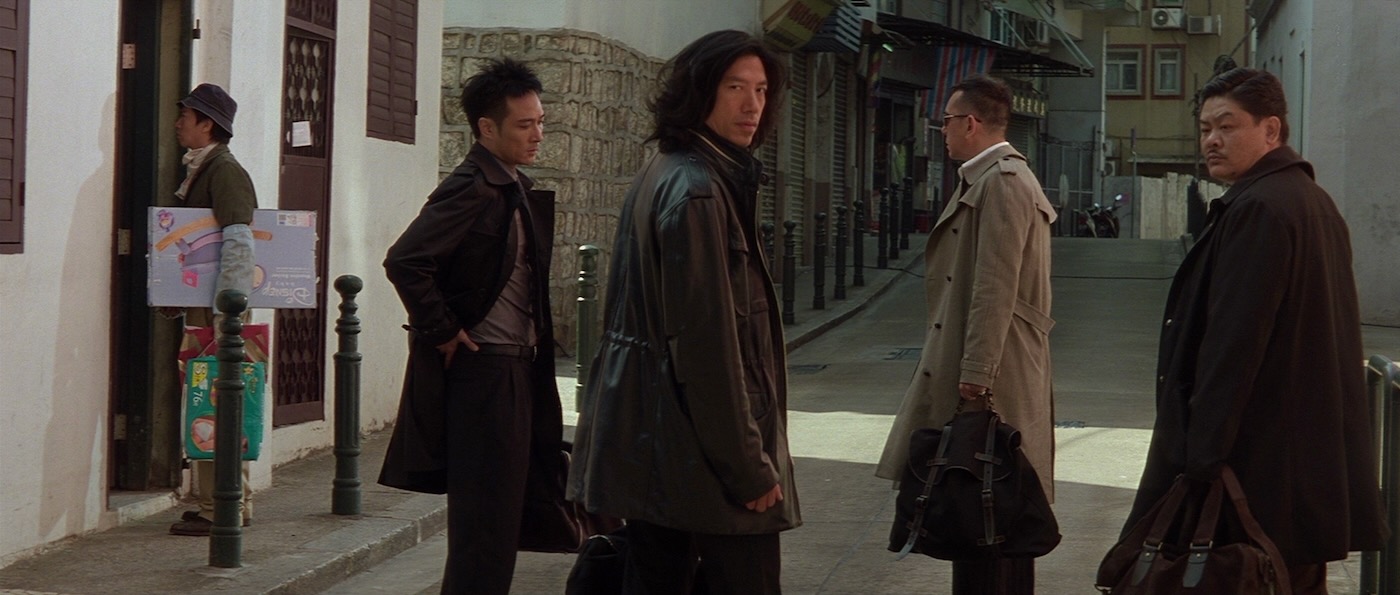
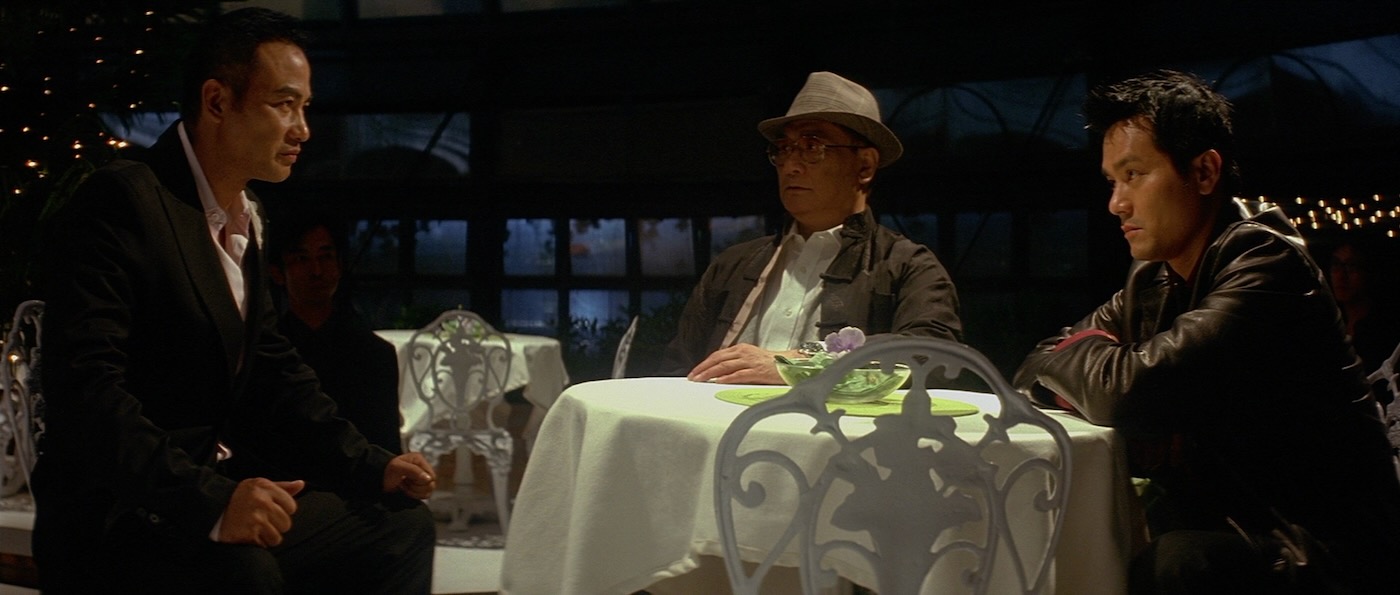
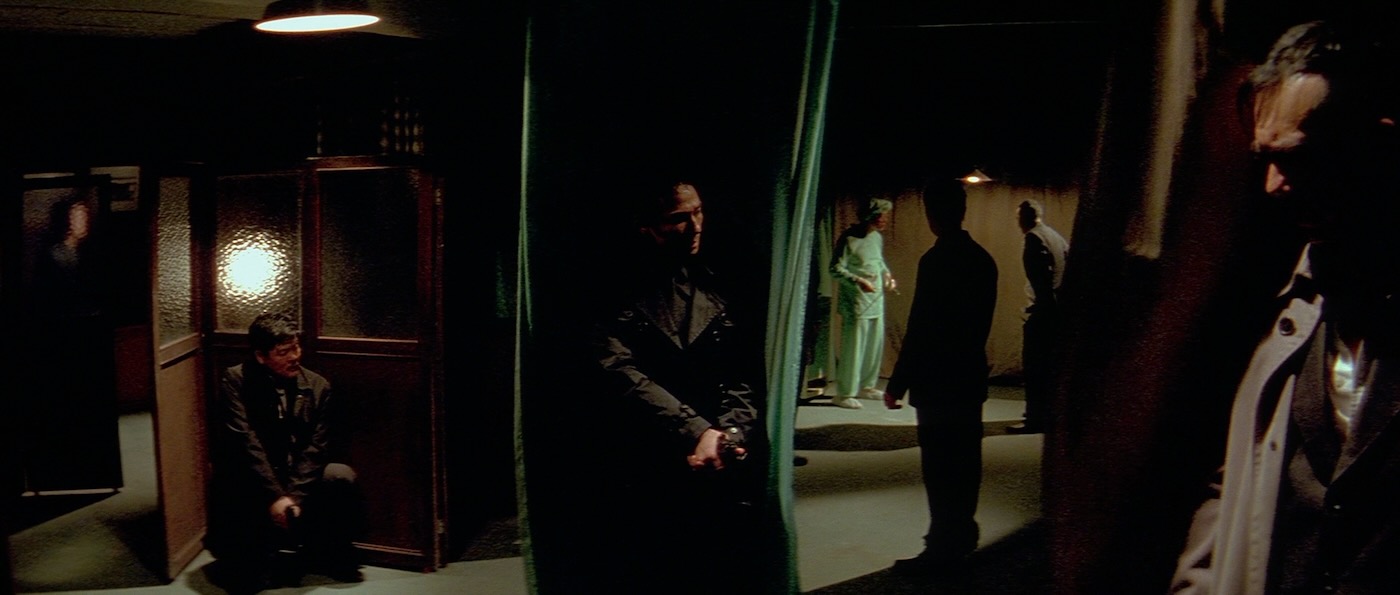
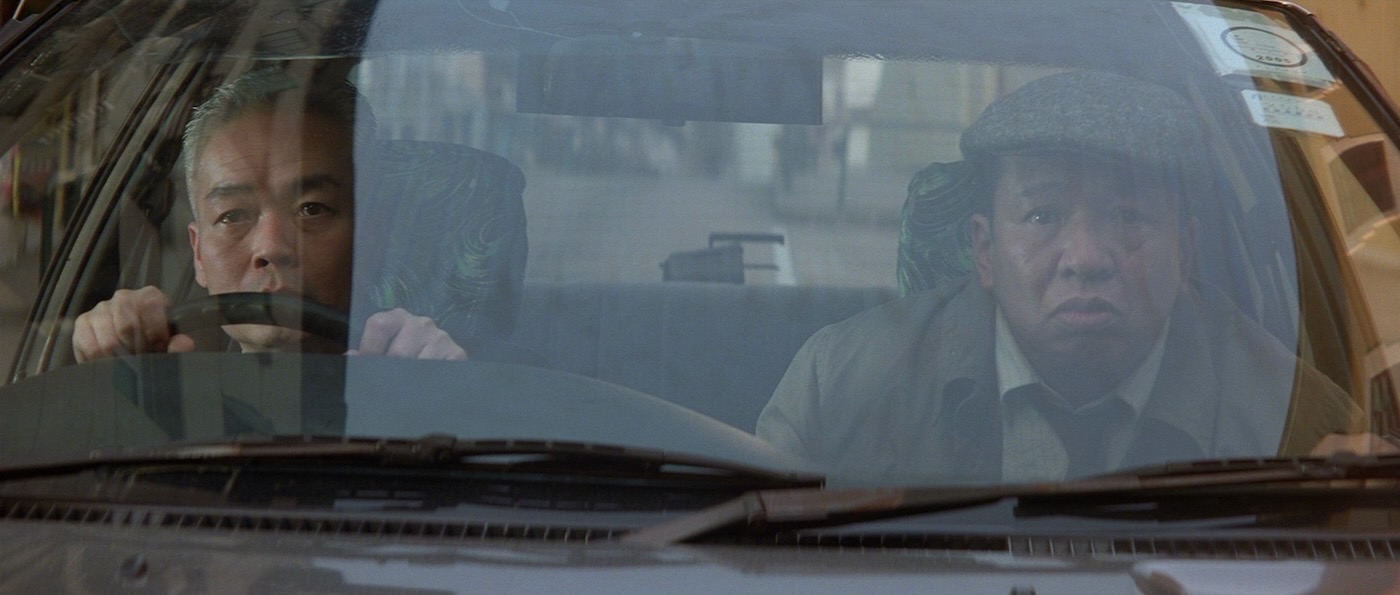
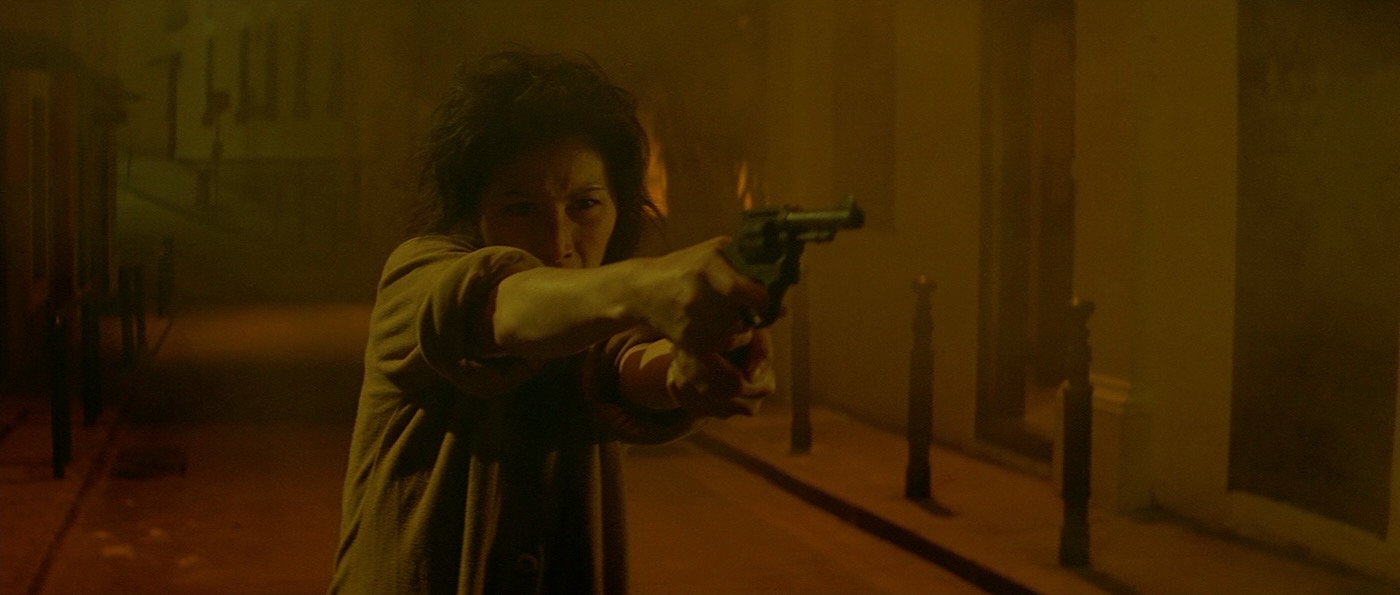
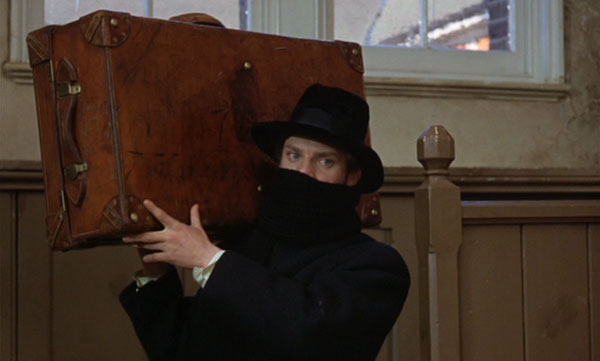
Watched the DVD version – the reissue with Chaplin’s score and a little song he sings over the opening titles. This came between The Gold Rush and City Lights, same year as Steamboat Bill Jr. and The Cameraman, Lloyd’s Speedy, and the first Laurel & Hardy shorts.

Cute movie. Katy liked it because she knew exactly how long it would be. Charlie/Tramp has a run-in with a thief, ends up with a rich dude’s wallet. Chased by cops through a funhouse (featuring the hall of mirrors), runs right into a lame, tired circus and makes the audience laugh for the first time in the show. Hired by the ringmaster (the steel company president in Modern Times) as a clown, but does the routines just as sadly as everyone else, only funny when he doesn’t mean to be – so he stays on as a prop guy while secretly the hit of the show. Meanwhile, ringmaster’s daughter (Merna Kennedy, who retired 6 years later when she married Busby Berkeley), object of affection (and parental abuse), falls for the tightrope walker (played by Chaplin’s assistant director). Charlie does a tightrope act of his own (involving monkeys!) to impress the girl, but when they’re both fired he hooks her up with the tightrope guy in order to get her accepted back into the circus, then Charlie lets it ride off to the next town without him. My favorite bits involved CC trapped in a lion cage, and pretending to be an automaton conking the thief in the head to avoid police.

Movie won an honorary “versatility and genius” award at the first Oscar ceremony.

Three from A. Vanneman:

1. “The darkness and despair that are the flip side of the artificial glamour and gaiety of the circus have been a potent symbol in art at least as far back as the haunted pierrots of Watteau. The classic film version is the classic of classics, The Children of Paradise. The fifties brought more treatises on three-ring existential despair, Bergman’s Sawdust and Tinsel and Fellini’s La Strada.”

2. “The shots of a 38-year-old Chaplin 40 feet off the ground with no net and no wire are not faked.”

3. “The Circus is the only Chaplin feature that has an unhappy ending.”

Proud father of three Morten Borgen has carved out a name for himself in the community. A devout Christian farmer, his beliefs differ somehow (I wasn’t exactly sure how) from those of the local prayer group and he’s trying to win more converts to his side. His son Mikkel’s wife Inger, the only woman of the house, is a mother of two with a third on the way.
image

Son Johannes was supposed to be a religion scholar, but he had a terrible time with Kierkegaard and lost his damned mind, now walks the house claiming to be Jesus Christ when he isn’t wandering the countryside lost.
image

Youngest son (right) Anders wants to marry the daughter of Peter Petersen (left), leader of the town prayer group, but he’s disallowed because of the two older men’s religious feud.
image

When Inger’s pregnancy is suddenly in trouble, Peter wishes her death.
His wish is granted.
image

Johannes reappears mid-funeral during a reconciliation of the two stubborn men, who put aside their differences of belief so their children can be together. In front of the men, the kids, the doctor and Inger’s atheist husband Mikkel, Jesus-Johannes raises Inger from the dead.
image

Movie is set in 1925, so only the doctor has a car. Moves rather slow, glad I had some coffee in me. Didn’t seem like my thing for a while – flashbacks to Gertrud, a movie I didn’t get – but an hour later I’ve gotta admit it’s one of the most beautiful works of cinema ever made. Just look at these fucking stills. I’m sure there’s more reading I could do, tons and tons of articles written about it, but I’m gonna skip ’em and let it stand for itself right now.

Same director, writers, cast & composer (Craig Wedren!) as Wet Hot American Summer – but also the same as The Ten – so this could’ve turned out a beloved favorite comedy, or something worse than My Name Is Bruce. Instead it took the middle road, sort of a Richard Linklater’s Bad News Bears sort of thing – a nice, but somewhat generic and forgettable comedy about troubled adults trying to mentor troubled kids.

Two kinda-famous comedy actors play a total slacker and a dude with anger issues who work as energy drink reps. After they fuck that up, their community service is to be big-brother types to two boys, boobies-obsessed foul-mouthed young black kid and live-action-role-playing bully-magnet older white kid. Lessons are learned, lots of State alums show up, angry dude gets his girlfriend back, roll credits.

A decent way to pass the time. Made me laugh. Oh man I just found out David Wain has his own TV series. Why’s no one tell me anything?

I suppose this was probably just as bad as Man With The Screaming Brain, but for that one I was in the theater, forced to contemplate its obvious, unfunny crappiness on the big, big screen surrounded by unquestioning fans who just came to get an autograph. This one I could half-pay attention to while searching the internet for Silkworm bootlegs, a much better idea.

image

Not even half as good as Maniac Cop, which kinda sucked, this stars Bruce as the cult version of himself (washed-up loser asshole with huge ego). He’s kidnapped from the set of his latest awful horror sequel by an obsessed fan who wants Bruce to save his small town from a resurrected Chinese warrior demon, which he sorta does, even though the kid awoke the thing himself by stealing some stone that he doesn’t think to just put back. Bruce is an anti-hero throughout, killing townsfolk with his cowardice and incompetence.

Ted Raimi plays a bunch of characters, including a couple offensive stereotypes:
image

Directed, of course, by Mr. Campbell, along with the writer of Time Cop, producer of Barb Wire, and cinematographer of Command & Conquer (the videogame series!), and a bunch of actors whose secret hopes that this would be their big break into the movies were surely dashed when they saw the premiere.

December 2008:
Watched again on video, and it only gets better. Five (five!) commentary tracks to go, and two discs full of extras, wooo!

Peter Jackson as Father Christmas:
image

image

Marsha from Spaced:
image

image

image

March 2007:
The trailer set it up right – supercop Simon Pegg is making the department look bad in comparison, so he’s shipped to the safest small town in England and paired up with lazy son-of-the-chief Nick Frost. All is well until the town elders turn out to be involved in a Wicker-Man-like conspiracy to beautify their town by any means possible (usually murder). Very suddenly it turns into an all-out war, with the police dept. (minus the evil chief) and Simon and Nick (or Shaun and Ed, as I still think of them) against the neighborhood watch.

Extremely funny and a great action flick. Nothing much or bad to say about it. The crowd gave big response to particularly gruesome killings, the jump kick to an old woman’s head, and Bill Nighy. Edgar says they were happy to be working with an ex James Bond (Timothy Dalton) and three oscar winners in this one (Cate Blanchett, Peter Jackson and Jim Broadbent, the former two uncredited). Such a very fun movie, this and Grindhouse have put me in the mood to watch less serious-minded movies, hence the appearance of Saw 3 on this page.

Immediately after watching Milk, I unaccountably wanted to watch something else featuring Diego Luna, who was the worst part of Milk. Not necessarily his fault though, and he’s been great before (in Y Tu Mama Tambien and Criminal) so I thought I’d give him (and hated Nashvillian Harmony Korine) a second chance.

image

Here he’s a Michael Jackson impersonator who meets a Marilyn Monroe impersonator. She takes him to her commune retreat, staffed only by other celeb impersonators, including her abusive cheating husband Charlie Chaplin and their cute daughter Shirley Temple. Meanwhile in an entirely different movie, Werner Herzog is a priest who airdrops supplies to people in need. One of his nuns accidentally falls out of the plane and lands unharmed. A miracle is proclaimed, and all the nuns start skydiving without parachutes and landing unharmed.

image

And that is good enough for me. That storyline (provided it’s done well, which it is) combined with moments of euphoria (MJ’s dances with sfx but no music, the camerawork on the falling nuns) is good enough. Korine is redeemed, Luna rises above being the crazy, clingy boyfriend in Milk, lovely Samantha Morton is freed from the dour prison that was Synecdoce New York, and all is well.

image

Of course all is not well, exactly. Why does Werner annoyingly repeat everything he has just said? What is the connection between the nun bit and the impersonator bit? How come Michael is so easy around others and never seems all that lonely?

image

I enjoyed it and didn’t worry too much about the questions above. Katy only watched the first half, which was all setup, and missed most of the story. The commune’s sheep are sick and have to be killed (with shotguns by the Three Stooges) and after that everyone’s depressed. They pick themselves up and decide to hold a spectacular show, open to the public. After much prep, the show is just okay and only ten people show up. That night Marilyn is discovered having hung herself from a tree. Charlie is painfully distraught (it’s a great turn in an interesting performance by French actor Denis Lavant, looking rough, star of Lovers on the Bridge). Michael takes the bus home and tells his agent (Leos Carax, director of Lovers on the Bridge, hmmm) that he’s quitting the impersonator business and is going to be himself from now on (after he is sung an uplifting song by the ghostly heads of his commune buddies upon some painted eggs). Meanwhile, in the other movie, the nuns set off in Werner’s plane for the Vatican to get their miracle blessed by the church, and the plane crashes on a beach killing everyone, heh.

Leos Carax:
image

Movie is divided into four sections titled by MJ songs: “man in the mirror” (luna/michael)… “beat it” (leaving town for the commune)… “thriller” (drama and death)… and “you are not alone” (the finale). Very nice music by J. Spaceman and the Sun City Girls and camerawork by Michael Winterbottom’s reguar guy. Actors were good (and surprisingly not overdoing it), especially young Buckwheat, who may be a bit nuts. As The Pope and The Queen were James Fox and Anita Pallenberg, two stars of the movie Performance… interesting. And playing Samantha Morton’s daughter was actually Samantha Morton’s daughter.

image

Very enticing trailers have been advertising this film “from the director of Good Will Hunting,” and I have been anxiously looking forward to it and hoping that’s not true. The visionary director of Paranoid Park or My Own Private Idaho would be ideal, but as long as we didn’t get the bored, paycheck-cashing director of Finding Forrester, I was willing to settle for the director of Good Will Hunting, a movie with good story and acting but no artistic merit that I can recall. Fortunately, he injects more ambition into the mix for Milk, enough to make it a pretty damned good movie… for a bio-pic.

Dustin Black, staff writer on Katy’s Big Love, does a good job, don’t get me wrong, but everyone seems pretty well simplified. There’s only time to hit all the major points of Milk’s political career – his decision to take charge of his life, his camera shop, first boyfriend, bunch of failed campaigns, main collaborators, community-building, exercise of political power, second boyfriend, election as supervisor, passing of anti-discrimination bill, boyfriend’s suicide, assassination. That’s a lot to cover in two hours. Movie covers it all well, neatly packages Milk’s life into an oscar-ready event.

J. Rosenbaum, out of context: “Milk addresses a mindset I would associate with campaign agitprop mode, a mindset that forsakes nuanced and complex analysis for the sake of immediate uplift.” But oh, the uplift! D. Ehrenstein examines the uplift: “As someone who has spent the better part of his life involved in gay activism, to say that I found Milk moving is an understatement. Genuinely political Hollywood films are rare; gay-activist Hollywood films are nonexistent. Milk is both. It’s also a film whose emotions and ideas speak directly to every audience, regardless of political commitment or sexual orientation.” Moving is right – I felt moved. Movie moved Katy in another direction, unaccountably making her depressed. So she wasn’t as pleased as I was, but I didn’t love Slumlord Millionaire as much as she, so now we’re even.

Stars:
– Mr. Milk: Sean Penn, a favorite target of Bloom County in the 80’s, first I’ve seen of his acting since Mystic River, justifiably acclaimed.
– Enthusiastic campaign kid: Emile Hirsch of Into The Wild. He was mostly alone in that one so I didn’t realize he’s the size of a hobbit.
– Milk’s low-key first boyfriend: Spider-Man bad-guy James Franco
– High-drama Boyfriend #2: Diego Luna, star of Criminal and Y Tu Mama Tambien, also appeared with Penn in another gay biopic, Before Night Falls.
– Milk’s Christian coworker and eventual killer: Josh Brolin of No Country.
– The Mayor of Town: Victor Garber (whatshername’s dad in Alias).
– The Only Woman In The Movie: campaign manager Alison Pill was in Dan In Real Life (which I keep thinking I’ve seen, but no, that was Lars and the Real Girl)

Music by Danny Elfman doesn’t draw attention to itself. Cinematography by Harris Savides (Zodiac, Elephant) does – it’s lovely.

One of three TV-movies Fuller made in ’90, a year after his final theatrical film Street of No Return (and I still don’t know where to find the other two).

Earnest photographer Jennifer Beals (Flashdance, Chabrol’s Dr. M) is in the Philippines in the mid ’80’s (soon before the downfall of Ferdinand Marcos) looking for shots of strife and poverty to bring global attention to the local slums. She meets up with her ex, opportunistic photographer Luc Merenda (a vet of 1970’s Italian cop movies who cameoed in Hostel II).

Highlight of the movie is this local kid they meet. He learned hardboiled American gangster-speak from the movies and follows our couple around calling her “doll” and him “frenchy” while keeping them out of trouble. Trouble comes when Frenchy snaps a pic of a military man shooting an old woman in the head for not giving up a rebel camp location. From then on, it’s a chase for that roll of film, with more screen time for Frenchy than Beals, even though she’s the “star”.

Christa Lang plays Mama, who runs a sorta casino-brothel. N. Vera says: “It’s got a good Filipino cast–Behn Cervantes is an old friend of Lino Brocka and a theatrical legend… Pilar Pilapil is (or was) one of the most sensual actresses in Philippine cinema.” Pilar plays a girl forced to “work” at Mama’s until boyfriend Behn can afford to buy her out. They seem sympathetic to our heroes’ cause until the end, when Behn is discovered to be a pro-Marcos spy and is machine-gunned in the middle of a rally by the kid – an event captured by both photographers, getting ’em well-paid cover shots for a happy ending.

Fuller no longer had the budget or prestige for a studio shoot, but B. Krohn calls Madonna and some other late works “great films, despite the loss of control from location shooting.” Functional cinematography except for a fun shootout at a movie house, the action on the screen echoing the firefight in the theater.

Music sounds like the percussion of the backing track to that “Oh Yeah” song from Ferris Bueller with some hideous keyboards over it. Fuller wrote the title song (movie’s alt title is Tinikling, named after a game played by street kids in the movie, like jumprope with bamboo poles). Nice lyrics actually, but there’s no adequate performance of it in the film – first the kid belts it out in a moving car, then this guy Samuel Euston puts too much heart and soul and lameness into it.

Oh I forgot to mention this guy Pavel, who’s sorta all over the place trying to cut deals, played by Patrick Bauchau (star of Rohmer’s La Collectionneuse 20 years earlier, also in The Rapture).
image

The doll:
image

Frenchy:
image

Mama:
image

Sam Fuller, nearly 80, wouldn’t direct again after ’90, but would stick around as an actor for a few more years in films by Gitai, Wenders and Kaurismäki.
image

A happy result of my French Film Hiatus is that I’m getting around to seeing some English-language movies I’ve put off for a long time. This one is particularly long-awaited, part of my decade-spanning quest to see Every Fritz Lang Film. I announced the end of the quest a year and a half ago with The Return of Frank James, but actually I still had this one and Harakiri to go, I just didn’t know where to find them.

This is Lang’s version of the same story Renoir filmed as La Bete humaine, with the writer of Clash By Night and cinematographer of In a Lonely Place, and his two lead actors from the previous year’s The Big Heat. It was a prime year for noir, and this movie acts like noir, but I’m not sure that it counts… after all, the hero gets a happy ending and only the bad people get punished. So it’s more like Shockproof than Clash By Night.

Gloria shouldn’t smoke inside – it’s bad for the birds.
image

Glenn Ford, who I couldn’t pick out of a lineup right now, plays a railman returned from the Korean War. Nervous, pinched-voiced fatale Gloria Grahame (Bogart’s neighbor in In a Lonely Place) is the dame he falls for. Then there’s a dichotomy of gruff middle-aged guys: Broderick Crawford (of The Black Cat and Born Yesterday) is Gloria’s mean, jealous, drunk, murderous husband, and Edgar Buchanan (later of Ride The High Country) is a kind friend and landlord to our man (with a daughter who’s hot for Glenn).

Glenn and Broderick:
image

Gloria’s husband murders her (ex?) lover in a train car and makes her watch, keeping the note she wrote the lover to lure him into the train as protection so she won’t turn him in. Although if he wanted this protection to be more effective, he would’ve had her write the guy’s name on the letter… this note could’ve been addressed to any of her lovers.

The incriminating (?) note:
image

Now tied to a husband she no longer loves (he also beats her – have I mentioned?) Gloria seduces Glenn and gets him to agree to murder the husband so they can run off together. Edward G. Robinson would’ve gone through with it, but Glenn Ford does not, telling off Gloria, who promptly blows up at her husband on another train and gets killed by him. Glenn ends up with his friend Edgar Buchanan’s underage daughter, to everybody’s delight.

Glenn and the good girl:
image

At the emotional height of a movie where sleazy characters are having secret meetings and lots of off-camera sex, and Gloria Grahame’s sharp, pointy breasts are poking right out of her sweater, in the background we can see that she and her husband have separate beds, and so America’s morals are safely upheld. Reminds me of the scene of The 40 Year Old Virgin I caught on cable today where every kind of sex is loudly discussed but the word ‘shit’ is safely bleeped.
image