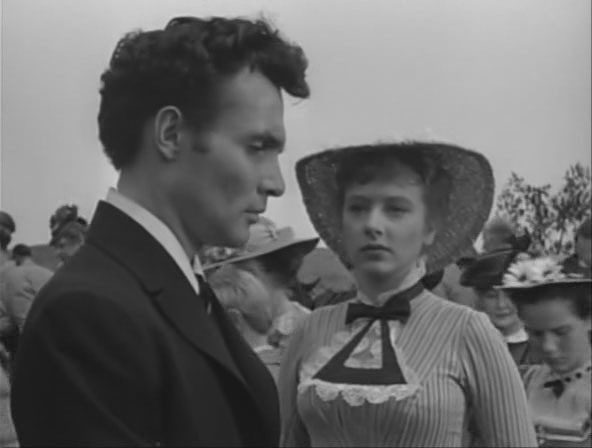
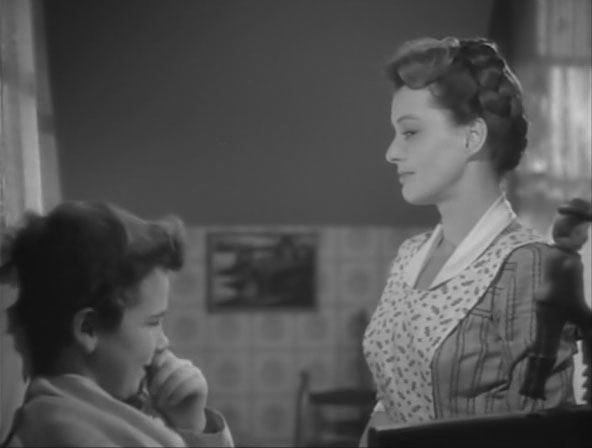
Kid is on a game show being asked a series of questions to win 20 million rupees. How does he know all the answers? Is it luck? Fate? Or does each question somehow relate to an incredibly depressing detail of his life? Yes it’s that last one, because this is the most toilet-diving, poo-covered, mother-killing, tourist-swindling, prisoner-torturing, implicitly-sexually-violent movie to ever be marketed as the award-winning feel-good love story of the year.

image

Jamal, brother Salim, and hot girl Latika live in the Mumbai slums, parents are killed over religion so they hang out together. Join the local beggar group, but the beggarmaster is gonna blind them to rake in more sympathy cash, so the boys skip town and become Taj Mahal tour guides. Back into the city because Jamal is fixated on finding Latika, just in time to rescue her from being sold for sex by the beggar dude. Salim kills the king beggar and joins a gangster group, turns on Jamal and rapes Latika, eventually gives her up as live-in lover to the king gangster. Jamal, meanwhile, gets a straight job as intern at a call center, gets himself on the Millionaire show, wins 10m one day, gets arrested and tortured by police chief Irfan Khan (dad in The Namesake), tells Irfan (and us) his life story the whole next day, then back to the show and wins the other 10m on the final question. Salim shoots his boss, gets killed (having raped the heroine, he has to get killed), but releases Latika who has a happy ending (with train-station dance sequence) with our rich boy.

Boyle got the writer of The Full Monty and Mira Nair’s co-director, and used his 28 Days Later / Millions cinematographer (who also shoots Dogme stuff). The camerawork, along with a high-energy MIA and A.R. Rahman soundtrack and great editing (ooh it’s Edgar Wright’s regular guy) make for a rockin’ good time of a movie, despite the story. Maybe I’m missing something, because Katy loved it, story and all.

Briskly plotted and barely over an hour long, seems like a good first movie… but it was his second, after The Great McGinty, which I enjoyed a bit more.

If you can’t sleep at night, it isn’t the coffee – it’s the bunk!
image

A very blustery, fast-talky movie with maybe one too many blustery fast-talking characters. We’ve got the president of our loving couple’s coffee company employer (Ernest Truex, a reporter in His Girl Friday the same year – the guy whose desk the killer hides inside), our guy’s direct boss the strict office manager (Capra veteran Harry Hayden), the president of their largest competitor, the company which is running the contest (Capra veteran Raymond Walburn), and department store head Alexander Carr (of Bela Lugosi movie The Death Kiss, which sounds good). Then there’s the most blustery man of all, the virtuoso, the blustermaster, Capra veteran William “Muggsy” Demarest, as the stubborn contest jury holdout who, in the most predictable twist ending of Sturges’s career, picks our man as the grand prize winner after his previous grand-prize-win had been exposed as a fraud.
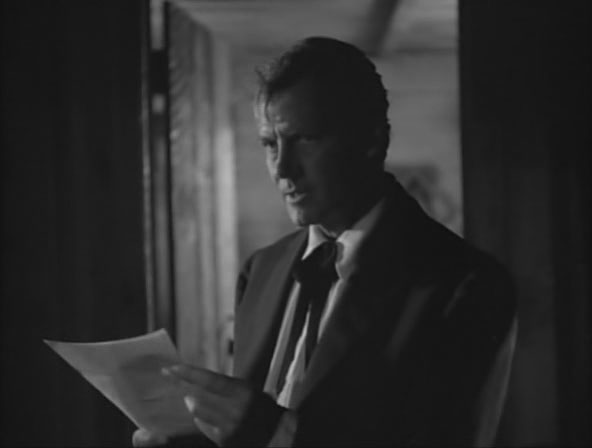
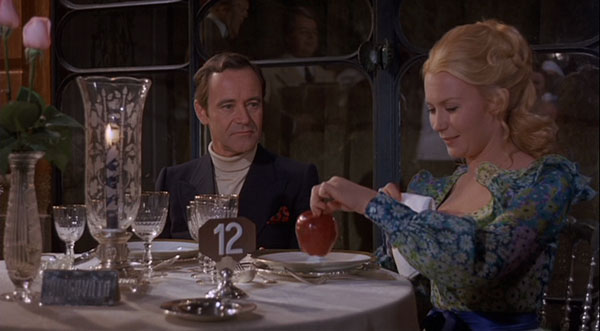
Our heroes:
image

Dick Powell was already a star, having appeared in all three of Busby Berkeley’s big 1933 musicals. No singing or dancing here. Katy called him a poor man’s Jimmy Stewart. Ellen Drew was saddled with the worst Sturges-penned female role, just grabbing her man’s arm and breathlessly saying “Oh, Jimmy” with a variety of inflections. She was just getting started in the pictures, would spend the next decade acting in movies I will probably never see, ending up in Stars In My Crown, which I probably will.

Other familiar faces: Capra veteran Frank Moran as an Irish cop (the bus driver in Sullivan’s Travels), below with Alex Carr.
image

Capra veteran Franklin Pangborn as the radio announcer (played a realtor in Palm Beach Story), below with Ray Walburn.
image

And Capra veteran Snowflake as the janitor (terrified bartender in the Ale & Quail club car in Palm Beach Story). Lots of Capra actors here… maybe Katy’s right, and Sturges tried to get Jimmy Stewart and throw a total Capra-party.

Muggsy!
image

This will sound awfully disrespectful, but you’d think the renowned master of montage Eisenstein, he who reinvented movie editing, could pick up the pace a little. This movie drags. Each shot has a wonderful composition, and each shot is held for a second or two too long. And to be more disrespectful still, I beg to differ with E. Von Mueller calling Prokofiev’s score the best in history. But maybe he’s kicking back at home with an LP of the full orchestral arrangement, not the weak bits on the film itself (Criterion essay on the director/composer collaboration calls the soundtrack on the film “like a chamber ensemble recorded over a telephone”). I’ve still got to hear the re-recorded score sometime. And I intended to… but after the movie and the DVD commentary, I didn’t feel like going through it a third time.

The bloodless battle on the ice wasn’t exactly choreographed by Sammo Hung… buncha overarmored guys clumsily smacking into each other with weapons. But I’ve made fun of the acclaimed classic film enough now. Composition-wise it is beyond reproach… some of the most amazing-looking shots of the 30’s. A beautiful movie and a swell piece of anti-German propaganda (which is why it was celebrated, then banned, then celebrated).

How you know the Germans are Bad Men: they toss naked babies into fire:
image

Russia is under Mongol rule, but this is mostly ignored. Nevsky kicked the asses of the Swedes or some other country previously, so he’s called on to protect Russia from the invading Germans, who have already conquered one major town and killed everyone in it, including babies. Meanwhile in another town, two tough guys are competing for the only pretty girl. She says she’ll marry whichever fights the most bravely. So off they go with Nevsky, the town armorer (who dies from being too generous, giving away his best armor and saving the leftovers for himself) and a hot warrior woman. Battle on the ice lasts some 30 minutes. Crowd scenes outdo most of your Braveheart / Lord of the Rings epic battles with lovely, artistic shots of actual masses of people (outdone later in Ivan The Terrible), but close-ups of battle are a little lame. After, one guy is dying, other guy generously tosses the pretty girl at him and goes after the hot warrior chick. The glory of Russia is restored (well, they’re still under Mongol rule) and Nevsky goes back to his humble fishing life, after issuing a stern warning to the Germans which is screamed across the screen in giant bold text!

Mr. Nevsky:
image

Is this the best we can do? Foggy, low-res, windowboxed, interlaced versions of Chaplin’s classic shorts? Oh wait, no I see i can get nicer copies from BFI for $70. Bah.

One A.M. (Chaplin Mutual #4) has been a favorite since I first saw it a couple years ago. Weird Thing #1: This is a Chaplin one-man show, a solo slapstick performance interacting with props and sets (actually one other actor, a cab driver, but he barely moves). Weird Thing #2: Chaplin is rich in this, apparently a big-game hunter with his own two-story house. Our man comes home very, very drunk and tries to negotiate the cab door, his bunches of stuffed animals, treacherous furniture and slippery floors, two staircases, a clock with a murderous pendulum, and a self-aware hideaway bed. Hilarity ensues.
image

The Immigrant (Chaplin Mutual #11) returns us to the guy we know – poor, but sweet and resourceful. In the first reel, he’s on the boat coming to the U.S., thwarting a card cheat and helping out Edna Purviance (seen next to C.C. below).
image

The second reel is essentially a whole new movie – Charlie finds some money so takes himself out to eat – sees Edna and treats her too. But the money has disappeared, and now C.C.’s got to figure a way out of the place lest he be beaten to death by head waiter Eric Campbell. Fortunately more money shows up rolling around on the floor (streets paved with gold, and all that), but another guy grabs it, and through some trickery, Charlie pays with that guy’s tip. He celebrates this victory by practically forcing Edna to marry him.
image

Since Fantoma is not ever going to release this on DVD (with Christa Lang commentary) like they promised to do, the dirty rats, I found a copy elsewhere and finally watched it. And it’s good! Criterion started our national reappraisal of the great Sam Fuller mid-career with The Naked Kiss and Shock Corridor, then moved on to the early films with that Eclipse set, now this week they’re hitting his late period with White Dog, so I’m participating with this pre-Big Red One episode from his forgotten days in the ghetto of television.

This is an episode of a German cop show from 1970 which is still running. I can’t imagine why an American director was allowed to write and direct a German TV episode in English… we’d certainly never invite Werner Herzog to shoot an all-German episode of Law & Order. The producer must’ve been a Naked Kiss fan. Anyway, it’s over 90 minutes long and there’s no indication of regular characters or a running plot or a teaser for next week’s episode, so I’m not sure what format this cop show takes… this played like a standalone film in TV picture-ratio.

I enjoyed the movie quite a lot. It’s technically excellent at times, but when time or budget didn’t allow for excellence they played it loose and fun. Acting isn’t so strong – Christa (Sam’s wife) overdoes it at times, and lead man Sandy (Glenn Corbett of The Crimson Kimono) is generically TV-crappy. I wouldn’t call the incidental music by “The” Can amazing, but has its moments. Fuller (or whoever) gets points for hiring the ultra-hip Can in the first place. The double-agent spy story is pretty cool, but the way it’s pulled off visually is beyond cool. Check it:

How our hero is introduced – he’s the dude in the middle, and that’s his murdered partner on the table:
image

How Christa is introduced, walking past a giant poster of Frank… this movie is very clued-in musically:
image

Some Citizen Kane hole-in-the-floor cinematography:
image

Fuller is having fun with this movie. They watch Rio Bravo, there are characters named Novak and Bogdanovich, and Fuller cameos offscreen as The Senator with a framed picture of Nixon on the wall and a novel by one Samuel Fuller prominently placed on the desk.
image

And then there’s this guy, with the fantastic name of Charlie Umlaut. I’m not sure what his deal is – I think he might’ve killed our cop’s partner, then at the end he shows up in a parade in clownface, screaming his own name until he’s caught and killed. Whatever it meant, it certainly livened up the picture.
image

Very nice cinematography of German cities (Bonn, Cologne) by Jerzy Lipman, who shot early Wajda films and Knife in the Water.
image

Oh right, the plot. Christa works for fey evil rich guy Mensur. She drugs famous people, poses with them in lewd positions, then blackmails them with the photos. Sandy, our cop, shows up far-fetchedly claiming to be in the same business and happening to pick Christa to perform the same job she does for Mensur. Eventually she’s in on his plot and supposedly helping him, but it all gets twisted up, and in the end he’s challenged to a hilariously unconvincing fencing duel in Mensur’s office, which Mensur inexplicably loses.

Mensur, top, is Anton Diffring (of Tusk and Fahrenheit 451).
image

Christa:
image

Christa:
image

Christa!
image

“My life, though ordinary enough, seems to haunt me in uncommon ways.”

And so, fictional amateur filmmaker Holzman sets out to film his life because, after all, film is truth. By studying the film, he will discover the truth about himself. But the film of his life begins to replace his life… and forty years before Synecdoche, New York. I think the movie’s claim to fame is that it’s a fake-documentary two decades before This Is Spinal Tap – but it’s a full decade after Peter Watkins got started, and two of his masterpieces were out already.

Holzman in his apartment:
image

Not a lot of scenes, many are one shot. McBride says there was lots of rehearsal beforehand, since there wasn’t much extra film to burn. D.H. wastes no time making his girlfriend leave by filming her naked in her sleep (below), then wanders the city, filming people on park benches, following a woman out the subway, becoming more of a camera-voyeur a la Peeping Tom / Rear Window, alternated with long nowhere-conversations with himself and a camera/mirror. There’s actually not much to Holzman or anything else in this… it’s a good enough movie, but I wouldn’t call it a favorite. Probably has less of an impact now that everybody’s got a camera and every fifth person under 30 has put a fictionalized documentary of himself up on youtube.

image

David Holzman gets as excited as Brendon Small over his fisheye lens:
image

Also watched My Girlfriend’s Wedding, which I liked better. J. Rosenbaum: “In many respects, the best ‘critique’ of David Holzman’s Diary that I know is McBride’s 1969 63-minute follow-up to it.” He’s right on – the is great to watch after the other one, with life-imitating-art actual similarities, and some obviously planned ones (Bartleby The Scribner is mentioned in both movies).

My Girlfriend, cameraman, Jim McBride:
image

Grainy and foggy as hell, nice and filmy-looking, gets off to a slow start with girlfriend (her name is bleeped out) giving us a select history of her life by pulling out everything in her purse and explaining it. She’s a Brit trying to stay in the States legally by marrying one of Abbie Hoffman’s Yippies whom she doesn’t even know, and McBride interviews her about this, watches the wedding, and talks to her new husband afterwards. The doc is simplicity itself, but the subject is well worth watching.

image

McBride went on to direct the Richard Gere remake of Breathless (co-written with the actor who played Holzman – who also worked on Bottle Rocket and Texas Chainsaw Massacre 2) and Great Balls of Fire. Guy who shot both movies directed Woodstock and an Albert Finney werewolf movie called Wolfen.

An update of one of my earliest entries. Practically all I wrote last time was “funniest movie ever, when drinking.”

Stubborn failed inventor Joel McRea (fresh off Sullivan’s Travels) is in love with his wife Claudette Colbert (puffy-cheeked oscar-winner, played the modern girlfriend in The Smiling Lieutenant). Thanks to a random cash infusion by the Weenie King (below), she’s able to leave him and go searching for a new husband, a rich one, so she can support Joel’s ridiculous airplane net idea.
image

Along the way she meets… William “Muggsy” Demarest!
image

And other members of the Ale & Quail club, who torment her until she almost crawls into bed with this extremely rich Rockefeller stand-in (played by former megaphone crooner Rudy Vallee, who would appear in two more Sturges movies)
image

Ah, but Joel also got random cash from the Weenie King and flew down to intercept her. He’s caught in a web of lies and ends up an object of lust of Rudy’s flighty sister Mary Astor (who was on a roll, having just won an oscar and starred in The Maltese Falcon)
image

Toto ain’t too happy with this, since he was after Mary Astor before Joel arrived.
image

Uh oh, Joel and Claudette are still in love. How can we keep nice rich guy Rudy from being disappointed and keep our happy-again couple from returning to their life of poverty?
image

Easy: Joel and Claudette are both identical twins, and their twins marry the lusty megawealthy siblings for an extremely goofy happy ending!
image

Katy wasn’t too sure about the goofy happy ending, because she’s unable to be satisfied by any comedy that does not star Reese Witherspoon (see also My Man Godfrey). We both thought Joel needed to lighten up a bit. It’s hard to be the straight man.

March 2025: Watched again with K’s mom, who pronounced it “weird.”

For the first time, this is an entry about a book I’ve read, not a movie I’ve watched. It’s a book about film though, so I think it fits in.

I enjoyed P.C. Usai’s writings in the “1000 Movie Moments” book, so I finally tracked this down. Full of short (never more than a page long) interrelated statements about film destruction and preservation, mostly over-academic. But for each statement on the right-hand page, there’s an interesting captioned photograph on the left-hand page, so whenever I’d read the words on the right with no understanding or enjoyment, at least I’d get the photo to keep me turning to the next page. Short book, anyway, and ends with a “reader’s report” which nicely condenses the long-winded despair of the author into a few pages of focused and readable despair on the impossibility of any sort of complete archive of film history – not that such a thing would necessarily be desirable.

Some bits I liked:

p. 19: “If all moving images were available, the massive fact of their presence would impede any effort to establish criteria of relevance – more so, indeed, than if they had all been obliterated, for then, at least, selective comprehension would be replaced by pure conjecture.”

p. 49, given the degradation of the original image, and the viewer’s lack of total attention (including blinking of the eyes), “no viewer can claim to have seen a moving image in its entirety.” That one-ups F. Camper’s claims that if you’ve seen a movie on video, you haven’t seen the movie. Not even he has seen the movie!

p. 51: “It is expected that a time will come when the loneliness of the spectator will be detrimental to the pleasure of experiencing moving images.”

p. 89: “The ultimate goal of film history is an account of its own disappearance, or its transformation into another entity.”

p. 109: “The real questions is, are viewers willing to accept the slow fading to nothing of what they are looking at? Is it fair to encourage them to believe that they will never witness the inevitable, and that its actuial experience will be left to someone else?”

p. 129: “…all lost moving images have at least existed for some viewer in the past. The unseen is an integral part of our lives, even if not directly our own. … The fact that the unseen is beyond our control is an excellent antidote to our claim of authority over the visible world, and administers a good shaking up to our deluded obsession with permanence. Sooner or later you and I will both disappear, along with our visions and memories of what we have seen and the way we have seen it.”

Redux is playing in theaters, so I watched the original first to get all the plot and characters straight. I know that Plot And Characters Do Not Make The Movie, but even with crazy movies like this and Out 1, I like being able to keep all that stuff straight before I can lose myself in the atmosphere of the film. Also, although there are about eight mega-superstar actors in this, I only recognize half of them. My Hong Kong/Chinese moviewatching has fallen sadly behind. A study guide follows.

Leslie Cheung is in all the framing-device scenes, probably the single star of the movie. Easily recognized throughout by the mustache. Moved out to the desert to forget his true love, Maggie Cheung, who got tired of waiting for him and married his brother. Sort of a swordsman matchmaker – hooks up would-be killers with people who need somebody killed. One day will be called Malicious West.
image
Seen him in: Farewell My Concubine, The Chinese Feast
Still need to see: A Chinese Ghost Story, A Better Tomorrow

Tony Leung Ka Fai, or “Tony 2” – old friend of Leslie’s, comes around once a year. This time he brings a wine of forgetfulness for Leslie to drink, but ends up drinking it himself. Visited Maggie Cheung once a year, gave her an update on Leslie. A ladies man, I think he’s in love with Carina Lau. Will later be known as Evil East.
image
Seen him in: Dumplings
Still need to see: Election, The Lover

Maggie Cheung – object of affection of the above men. She gives the wine to Tony 2 to be given to her ex, Leslie, in hopes that Leslie will forget her. Dies of an illness before most of the movie takes place, but we don’t find that out till the end.
image
Seen her in: Irma Vep, In The Mood For Love
Still need to see: Comrades, Centre Stage

Brigitte Lin – crazy woman who comes around as a “man” trying to hire a killer for Tony 2, then comes back as herself trying to hire a killer for her “brother”. She fights and almost kills ex-flame Tony 2 herself at one point, maybe when she first met him, then later becomes obsessed with him. Finally goes off into the desert practicing sword skills on her reflection.
image
Seen her in: Chungking Express, Royal Tramp 2
Still need to see: Bride With White Hair, Swordsman 2, Police Story

Tony Leung Chiu Wai (“Tony 1”) – former best friend of Tony 2, is quickly going blind. Needs one last high-paying job so he can afford to go home and see “the peach blossoms” (see below) before his vision fades completely. Hires on to protect a nearby town from bandits, but the bandits take too long to show up, he loses more of his sight, and he dies in the battle when clouds darken the sky. Perfect role for Tony 1, the saddest of all actors.
image
Seen him in: 2046, Infernal Affairs
Still need to see: Cyclo, City of Sadness

Carina Lau – beloved of Tony 1, named Peach Blossom. Mostly crouches in flashback looking awesome… has hardly any lines. She fell in love with Tony 2 years ago, which is why Tony 1 is alone and sad.
image
Seen her in: 2046 (she’s Lulu/Mimi), Flowers of Shanghai
Still need to see: Curiosity Killed The Cat, Intimates

Charlie Yeung – poor girl who wants to hire a swordsman to avenge her brother’s death at the hands of the militia with some eggs and a mule. Leslie and Tony 1 turn her down, and Tony breaks her eggs.
image
Seen her in: Seven Swords, Fallen Angels
Still need to see: Butterfly Lovers

Jacky Cheung – dirty, barefoot, badass swordsman. Leslie hooks him up, gives business and strategy advice. Jacky is well paid for defeating the bandits, and also takes on the militia in exchange for Charlie’s egg (but almost dies). Rides off with his wife (not Charlie) in the end. One day to be known as the Northern Beggar, will fight a doubly-fatal duel with Leslie years later.
image
Seen him in: Once Upon a Time in China, As Tears Go By
Still need to see: Bullet in the Head

Movie is an imagined prequel to popular novel “Eagle Shooting Heroes.” All the cast members also appear in film The Eagle Shooting Heroes, a parody dir. by Jeffrey Lau, with supposed participation by Wong and Sammo Hung. Will have to see to believe. Edit: Found it, watched in between Ashes and Redux, reviewed here, still not sure if I quite believe it! Other filmed versions of Eagle Shooting Heroes all seem to be TV series, although Royal Tramp and the Swordsman series are based on other books by the same author.

Screenshots above are from a scrappy foreign DVD (still not half as scrappy as the American disc looked), then a week later I ran out and watched Ashes Redux on lovely new 35mm (minus the topmost and leftmost 5% of the picture – thanks, Landmark). I am not considering these two separate movies, of course. Don’t know why the IMDB has a new page for Redux – they don’t have five different pages for The New World. Besides being able to see what’s going on and properly appreciate the glorious cinematography, Redux straightens out the plot threads at the start and end, the bits about the memory wine, Tony 2, Leslie and Maggie. It also cuts out a whole fight scene, the one that the original drops the viewer into at the beginning without explaining a damned thing. I miss that fight scene – it was awesome, and one of my favorite shots of the video was in it: a black-eyed, wild-haired Tony 2 giving a monstrous, slow-mo, silent scream.

I did understand everything better while watching Redux – but is that because Wong re-edited, or because I’d spent the week before studying the movie? I don’t think of myself as the type who champions straightforward stories over complex mood pieces, but Redux does probably work better. Movie leads up to this grand emotional moment of Maggie crying over her lost Leslie, talking about her failure to spend the best years of her life next to the person she loves most, and if you didn’t couldn’t make sense of the wild first ten minutes of the film, that’s not going to hit very hard. I’m apparently only good at summarizing plot and character, which, as I said three pages ago, isn’t what makes the movie. The desert, the mountains, the spinning birdcage, the haze, eclipses, sudden swordfights, and endless stories of lost love all add up to a pure and excellent film. I’m not saying it’s my favorite – most of Wong’s films are excellent – but it’s up there.

Writes T. Brogan on the film vs. novel:

The original plot actually dealt with two characters nicknamed “Evil East” and “Wicked West”, aged, respected and feared demi-gods in the pugilistic world. Arch rivals, their tussle for power was the backdrop against which Cha’s main protagonists (a pair of lovers from the entire trilogy series) were tested in terms of their wits, loyalty and love for one another. In Wong’s film, however, the hands of time have been turned back, and the focus is primarily on the two men, now portrayed in their prime, and seeks to “explain” the beginnings of their bitter feud in a progressive manner.

Wong:

Basically the film is about emotions. It’s a love story about Dongxie [Tony 2], Xidu [Leslie] and a woman, spanning half a life time. Certain emotions are eternal. When I got to the film’s ending I finally realized what Ashes of Time is about, and its relationship with my previous films. They are all about refusal and the fear of refusal. Everyone in Days of Being Wild has been refused. They become afraid of being refused, so they refuse other people before other people have a chance to refuse them. It’s the same in Chungking Express. But I think I have changed, so the film has an open ending. Tony Leung and Faye Wong don’t really know where they stand with each other, but they know they can accept each other. Ashes is most deadly. It sums up the three previous films. How do you go on with your life after you’ve been refused, and you’re afraid of being refused to begin with? So [Brigitte] Lin Chin Hsia becomes schizophrenic, Tony [1] resorts to the most destructive method to solve his problems; Leslie Cheung hides in the desert; Tony [2] drinks himself to amnesia. The only exception is Hong Qi [Jacky]. He doesn’t think being refused is a big deal. He just goes ahead to do what he thinks is the right thing.