My first Plazadrome movie! Very sorry that it’s taken so long, but this was fun. Apparently a teen-energy youth-in-revolt movie where striking-looking high-energy kids take the city by storm, but it’s got more serious problems on its mind and finally everyone ends up dead or missing. I only knew Fruit Chan from Dumplings, though we considered a screening of Three Husbands while we were visiting HK.
Category: Movie
The Conversation (1974, Francis Ford Coppola)
It was instructive to watch a perfect 35mm print of a 1970’s movie at the Plaza the night after watching a 4k DCP restoration of a 1980’s movie from the same seat. The 35mm cost more to attend, since screenings are increasingly rare – this is probably my first time seeing a movie on film since The Grand Bizarre 3.5 years ago. I forget who it was who said digital projection is just watching television in public but… I couldn’t really tell the difference?
I remembered the very end of this – Hackman playing sax in his ruined apartment after failing to discover how he’s being surveilled – but not most of the rest, and especially not that his secretive rich client Robert Duvall is the one who gets murdered in the hotel – presumably by the client’s wife and bf whom Hackman’s group was recording in the park at the beginning.
Hackman’s character is especially memorable here – he’s catholic, lives by a strict code, appears to be a master of his craft, but keeps taking jobs that end in murders, getting tricked and betrayed and spied on. Nice spy-movie construction too – we never learn everything, like what the Director’s assistant Harrison Ford was up to. If this was influenced by Blowup, then Blow Out is kinda a remake of both movies.
RoboCop (1987, Paul Verhoeven)
For not having seen this in 20 years, I recalled some scenes very well. Funny to watch a 4k restoration of a movie with so many SD-video elements (three long TV newscasts, Robo’s POV screen). Not so many people in the theater on a weeknight, which bodes well for tomorrow’s screening of The Conversation.
Since I’ve recently rewatched Peter Weller in Naked Lunch, it’s time to complete the trilogy and rewatch Screamers. Our other cop hero is Brian De Palma muse Nancy Allen, whose rocket attack on Ray Wise is a comic highlight. Robert DoQui of Coffy gets a good role as the sarge; other cops are incidental, disgruntled and trigger-happy.
As the invincible druglord crimewave baddies, That 70’s Dad and Laura Palmer’s Dad are joined by a Shawshank guard, a Greatest American Hero regular, and a doctor in The Day After.
At the Company that controls the cops, RoboCop project lead Miguel Ferrer is killed by corrupt ED-209 project lead Ronny Cox (he’d play another evil authority figure in Total Recall), who is fired to death by bossman Dan O’Herlihy (Twin Peaks sawmill owner who dies twice).
Something Different (1963, Vera Chytilová)
In the mood for another 1960’s Czech movie after Loves of a Blonde. Chytilová pre-Daisies doing the hybrid-doc thing before it was invented. The mom having an affair with a light-haired guy isn’t terribly enlightening – I came for the dance segments. Good photography overall, but one particular shot, the camera upside-down then rotating rightside in sync with the dancer’s flip, takes your breath away.

Loves of a Blonde (1965, Milos Forman)
Opens with a catchy pop song about turning into a hooligan. At least half the movie is the party scene (dudes chasing after blondes) and her at the musician’s house with his parents, waiting for him to come home (blonde chasing after dude). Forman must’ve stayed in touch – the blonde cameos in Amadeus.
One love of a blonde, a dodgy musician:

Dave Kehr called it “certainly one of the most sweetly seductive films ever made, an ironic quality in a film whose main theme is the cruelty of seduction and its costly aftermath.”
Harsh party scene, soldiers have a bottle of wine delivered to the wrong table of girls:


Boxcar Bertha (1972, Martin Scorsese)
Barbara Hershey, who also appears in two (but not all) of Scorsese’s movies where someone gets crucified, sees her cropduster daddy die then hits the Depression-era road. She and family friend Von (Bernie Casey of The Man Who Fell to Earth, In the Mouth of Madness) and railworker Bill (David Carradine, whose dad plays a railroad bigwig) meet up in various places and get into hijinks. Good performances, especially in the second half, and some sharp editing, but this is more a Roger Corman period adventure story than anything else.
Bertha caught between two Carradines:

The cops and strikebreakers in this are real pieces of shit. She meets a moneyman called Rake, she shoots a guy who calls everyone he dislikes a red, and she jailbreaks her friends… there’s a nice classic car wreck off a cliff, another gets smashed by a train, there are some shotgun murders, and Bertha and friends become professional bank robbers. She’s freed from a whorehouse by Von, but both guys finally get busted.
Von taking care of business:

Strikebreaker on the left would become a Scorsese regular, mustache guy would disappear.

El Gran Movimiento (2021, Kiro Russo)
City-symphony intro with foreboding music. Among protests in La Paz, Bolivia, ailing Elder has arrived with his friends. They look for work, but Elder is getting worse. He’ll end up meeting old man Max who has been walking towards town having wolf visions, but not before we’re treated to an 80’s dance video in the street.
Wolfy Max:

I liked the onion ladies:

The Beatles: Get Back (2021, Peter Jackson)
Some notes I took along the way:
Day 2 opens with them looking thru Beatles fan magazines
Michael L-H is kinda an ass
Cutting between 1966+69 on “Rock & Roll Music” at end of day 4 is great
Mal is round-headed guy who plays anvil on Maxwell’s
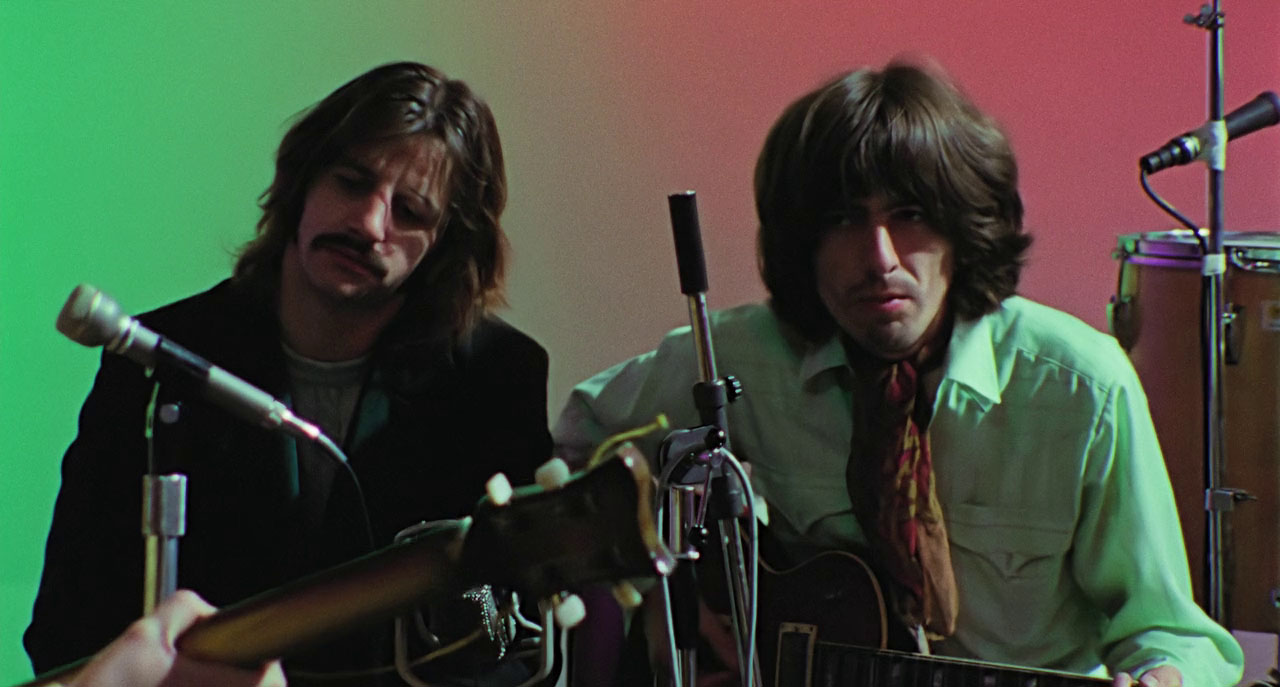

We know that it’s magic to spend time with the Beatles, but episode two presses its luck, showing us different views of a flowerpot while John and Paul argue near a hidden mic
Peter Sellers shows up after The Magic Christian sets arrive
Reminiscing on their India trip, discussing the footage, which we get to see

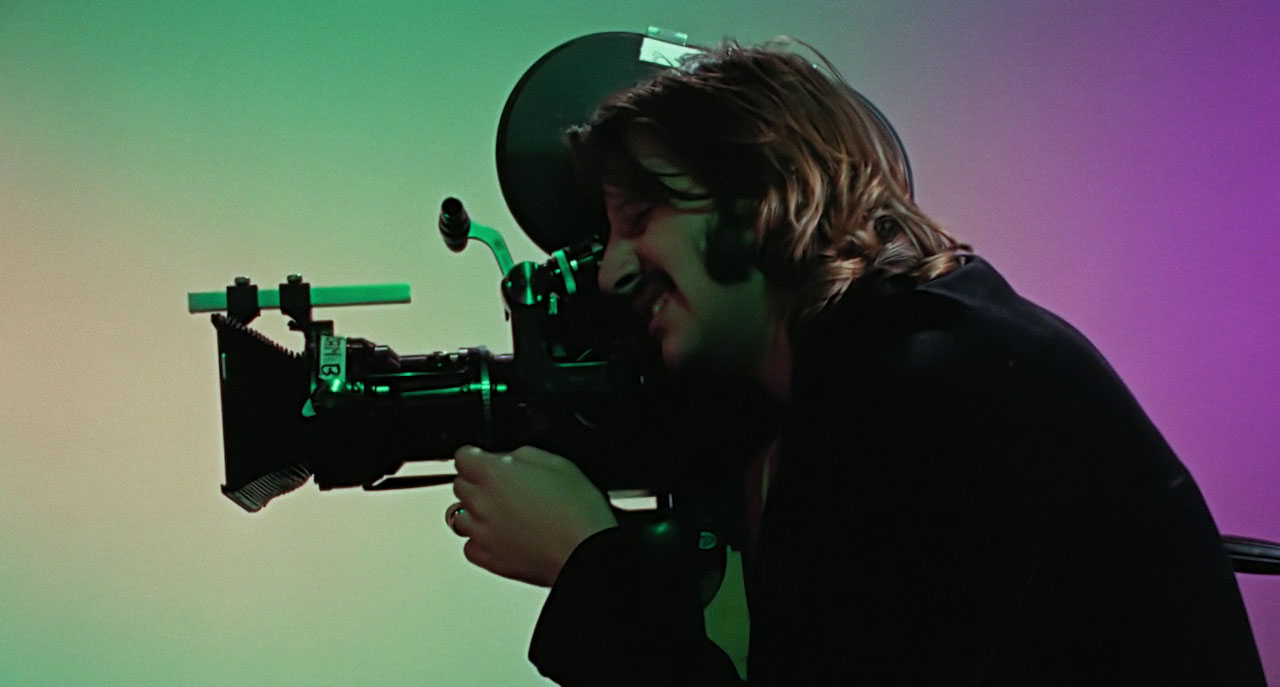

Michael and Glyn are credited with the roof idea
Jackson has overbaked everything since Frighteners
Soon before the concert, John simply sings the setlist, wow
During the concert the movie thinks we want to hear everything the teenaged chinstrap-chewing pigs say, but we’d like to hear the music please
Problems with the crowd interviews on the street: British people are boring, and clearly Beatlemania is over

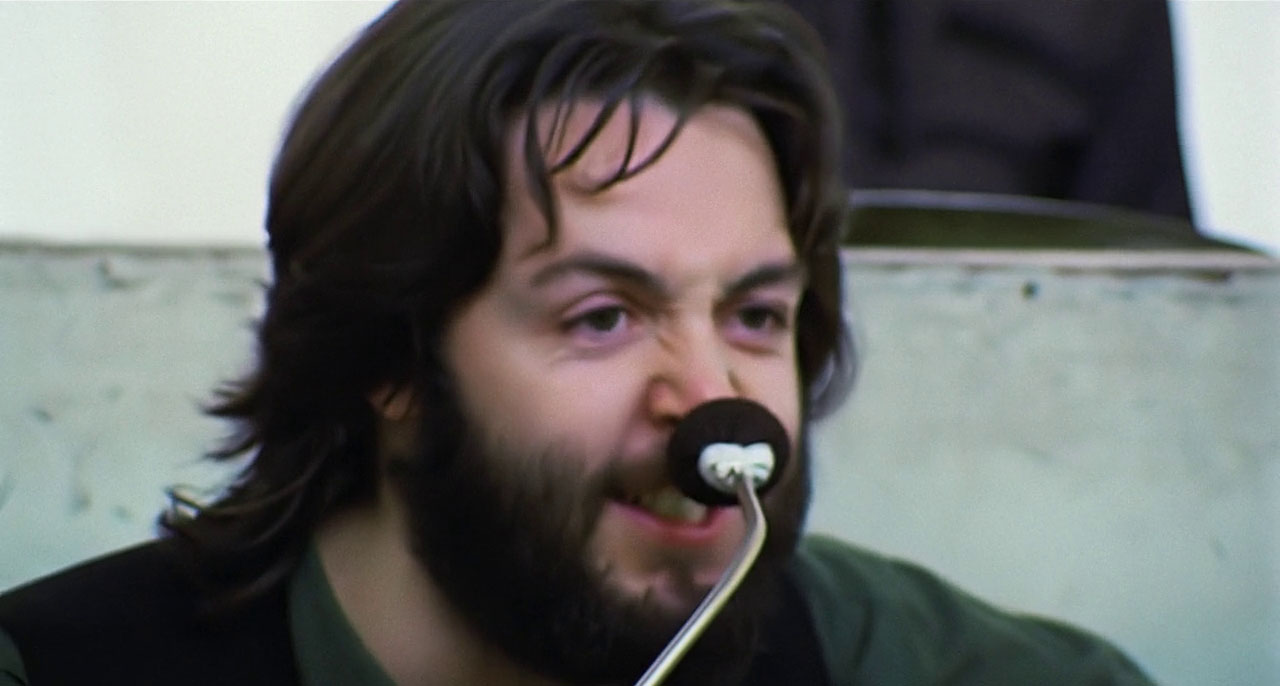

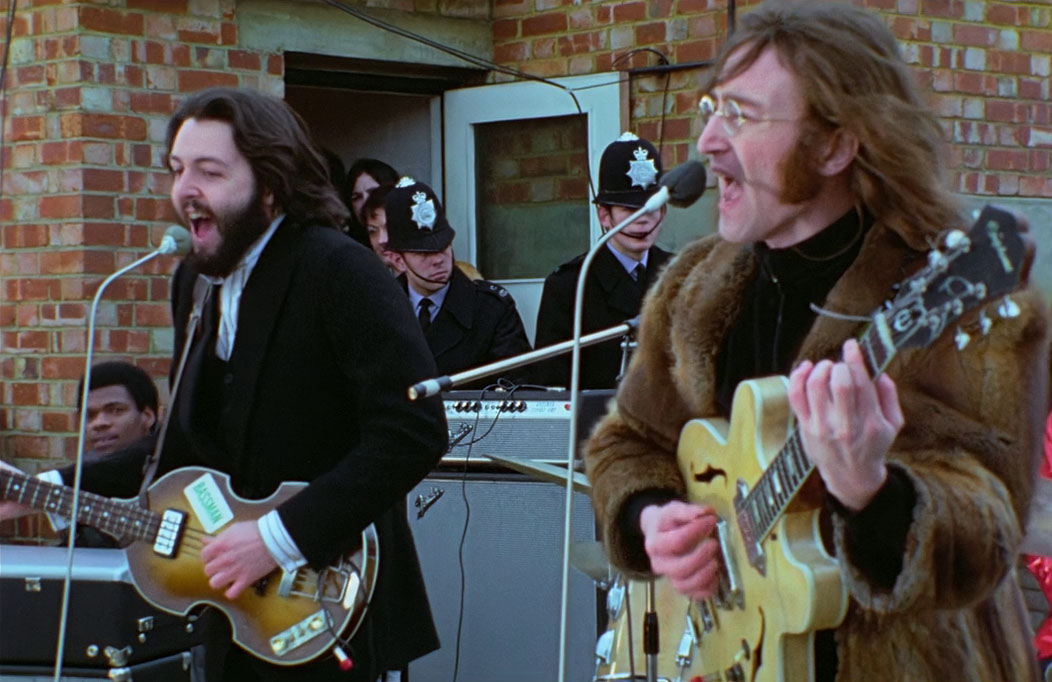
Beatlemania is back on in our house, though.
Aspirational Post-Beatles Media To-Do List
– The Magic Christian (1969)
– Ringo: Beaucoups of Blues (1970)
– George: All Things Must Pass (1970)
– John/Yoko: Plastic Ono Band (1970) + Imagine (1971)
– Paul: McCartney (1970) + Linda/Ram (1971) + Wings/Wild Life (1971)
– The Concert for Bangladesh (1972)
– Concert for George (2003)
– Beatles Anthology (1995)
– Beatles Love (2006)
– Rock and Roll Circus (1968)
– How I Won the War (1967)
– The Last Waltz (1978)
– Jimi Plays Monterey (1967)
– George Harrison: Living in the Material World (2011)
Inu-oh (2021, Masaaki Yuasa)
Cursed Mutant kids meet up and share a musical connection. Tomona was blinded by the magic sword that killed his father, and Inu-Oh was born a mutant due to a deal his serial killer father made with a magic mask. Stories of mutants and curses are usually good, and Yuasa’s animation is playful and unusual, especially when visualizing how blind Tomona “sees” the world through sounds. But then after a half hour it abruptly becomes a hard rock musical… returning to sum up the kids’ stories at the end, but too late. And while some directors will shoot the plot scenes normally then make the style come alive during musical numbers, Yuasa does the opposite. The whole hour of rock & roll theatrics is full of repeated shots and movements and angles, third-rate early-MTV stuff.